Tag: positive psychology

  • Self Love Positive Affirmations: Boost Confidence and Well-being

    Self Love Positive Affirmations: Boost Confidence and Well-being

    In a world that constantly demands more from us, turning inward with kindness can feel revolutionary. The practice of using self love positive affirmations offers more than feel-good phrases; they are tools for gently rewiring our inner dialogue, especially when navigating challenges like workplace stress, anxiety, or burnout.

    Rooted in positive psychology, these simple statements help cultivate resilience and challenge negative self-talk. To harness their power, it's helpful to understand the power of setting intentions, as this focuses your energy and makes each affirmation more meaningful. This practice can transform a simple sentence into a catalyst for positive change.

    This guide offers affirmations for different parts of life, from body positivity to setting healthy boundaries. With an India-first context that remains globally relatable, this list is a supportive resource on your journey toward greater well-being.

    1. I Am Enough

    Of all the self love positive affirmations you can practice, "I am enough" is perhaps the most foundational. This simple statement confronts feelings of inadequacy that can fuel anxiety and stress. It acts as an antidote to the internal critic that says you need to achieve more to be worthy of love and respect.

    This affirmation reinforces that your value is inherent and not tied to your productivity, appearance, or others' validation. Embracing this concept is effective for challenging perfectionism, a common struggle for many professionals and students.

    Why This Affirmation Works

    Pioneered by figures like Louise Hay and popularised in research by Brené Brown, "I am enough" works by helping to form new thought patterns. Consistent repetition can interrupt long-standing negative self-talk, replacing it with a more compassionate internal dialogue and building resilience.

    Practical Ways to Use "I Am Enough"

    To integrate this affirmation into your life, try these specific techniques:

    • Morning Mirror Work: Start your day by looking at yourself in the mirror and saying "I am enough" out loud three to five times. This can feel awkward at first but becomes a powerful ritual for self-acceptance.
    • Situational Anchor: Before a stressful event like an interview, take a moment to breathe deeply and silently repeat the phrase. This can help calm your nervous system and centre your thoughts.
    • Visual Reminders: Write "I am enough" on sticky notes and place them where you will see them often, such as on your laptop or bathroom mirror. These visual cues serve as gentle nudges throughout the day.
    • Thought-Stopping Technique: When you notice negative self-talk, mentally interrupt it by firmly thinking or saying, "Stop. I am enough." This actively counters the cycle of self-criticism.

    2. I Choose to Prioritize My Mental Health and Well-being

    This powerful affirmation shifts self-care from a luxury to a deliberate choice. It frames mental wellness as an active decision you make daily, countering societal pressure to be constantly productive at the expense of your peace. This helps address common sources of burnout and workplace stress.

    This statement is about giving yourself permission to put your psychological needs first. It validates the importance of rest, setting boundaries, and seeking support, which is crucial for managing academic pressure, family life, or demanding careers. It transforms self-care from a vague concept into a tangible, prioritised action.

    Why This Affirmation Works

    This affirmation is rooted in the psychological principle of agency. Using the words "I choose," you reinforce your sense of control over your life, a key factor in building resilience and combating feelings of helplessness often associated with anxiety and depression. It empowers you to be an active participant in your own well-being.

    Practical Ways to Use This Affirmation

    To integrate this choice into your daily routine, try these actionable techniques:

    • Boundary-Setting Anchor: Before declining a request, silently repeat, "I choose to prioritize my mental health." This reinforces your decision and can help reduce feelings of guilt.
    • Action-Oriented Pairing: After stating the affirmation, take one small, concrete self-care action. This could be scheduling a counselling appointment, taking a five-minute walk, or closing your work laptop on time.
    • Calendar Reminders: Schedule "mental health time" in your calendar and use this affirmation as the event title. This treats your well-being with the same importance as a professional meeting.
    • Daily Wellness Log: To truly embrace mental well-being, explore an ultimate daily self-care checklist and track your activities. This provides tangible evidence that you are honouring your choice.

    3. I Forgive Myself for Past Mistakes and Learn From Them

    This powerful affirmation tackles the heavy burden of past regrets, a significant barrier to self-love. It combines self-forgiveness with a growth mindset, reframing mistakes as learning opportunities rather than sources of shame. This perspective is crucial for releasing self-blame that can contribute to feelings of anxiety.

    By embracing this affirmation, you acknowledge that making errors is a natural part of life's journey. It moves you from being stuck in the past to a position of forward momentum, empowered by the lessons you have learned. It is a cornerstone practice for building emotional resilience.

    Why This Affirmation Works

    Drawing from research on self-compassion and shame resilience, this affirmation works by challenging the brain's tendency to ruminate on failures. Repetition can help soothe the parts of the brain associated with threat and self-criticism, fostering a kinder internal environment. It directly counters the punitive inner voice, replacing it with a compassionate and constructive one.

    Practical Ways to Use "I Forgive Myself for Past Mistakes and Learn From Them"

    To integrate this affirmation into your well-being routine, try these specific techniques:

    • Reflective Journaling: When a past mistake comes to mind, write it down. Then, write out the affirmation and follow it with one specific lesson you have learned from the experience.
    • Compassionate Letter: Write a letter to yourself about a specific mistake as if you were writing to a friend. Offer the same kindness and forgiveness you would extend to them, concluding with this affirmation.
    • Linked with Amends: If your mistake impacted others, use this affirmation as an internal step before making amends. Forgiving yourself can provide the strength needed to repair relationships authentically.
    • Mindful Repetition: During a quiet moment, bring a past mistake to mind gently. As feelings of regret arise, breathe deeply and repeat, "I forgive myself for past mistakes and learn from them," until the emotional charge lessens.

    4. My Body Is Worthy of Love and Respect

    This powerful affirmation is a direct antidote to societal pressures and internalised body shame. It works to heal your relationship with your physical self, shifting the focus from external appearance to inherent worthiness. It is a crucial tool for those navigating body image concerns.

    This practice is not about forcing yourself to love how your body looks, but about honouring it as your vessel through life. It re-establishes that your body deserves care and kindness, regardless of its size, shape, or ability. This can be particularly healing for individuals adapting to physical changes from illness or post-partum.

    Why This Affirmation Works

    Championed by the Body Positive Movement, this affirmation helps neutralise the critical inner voice. By consistently repeating that your body is worthy of respect, you challenge deep-seated negative beliefs often linked to anxiety and low self-worth. This practice encourages a sense of being present and connected to your body.

    Practical Ways to Use "My Body Is Worthy of Love and Respect"

    Integrate this affirmation into your daily routines to build a more compassionate relationship with your body:

    • Body Care Rituals: As you shower, apply lotion, or get dressed, repeat the affirmation. Connect the words to the act of caring for your body, reinforcing that it is deserving of this attention.
    • Gentle Movement Practice: Pair this phrase with gentle, mindful movement like yoga or stretching. As you move, focus on what your body can do and silently affirm its worthiness, building trust and appreciation.
    • Mirror Work with Compassion: Stand in front of a mirror and say the affirmation out loud. Try to look at yourself with neutral or compassionate eyes, acknowledging your body without judgement.
    • An Act of Body Kindness: After repeating the affirmation, follow it with one small act of kindness for your body. This could be drinking a glass of water, stretching your back, or simply taking a few deep, nourishing breaths.

    5. I Deserve Success, Happiness, and Abundance

    This powerful affirmation directly confronts deep-seated beliefs that we are unworthy of good things. It challenges the scarcity mindset and the narrative that we must earn joy through struggle. It works to dismantle feelings of guilt associated with achievement and opens the space to welcome prosperity.

    This statement is a crucial tool for anyone held back by limiting beliefs. It reinforces the idea that your worth is not conditional on suffering, granting you permission to pursue and receive positive outcomes, whether that's a promotion, creative fulfilment, or personal peace.

    Why This Affirmation Works

    This affirmation operates on the principle of abundance consciousness. Repeating "I deserve success, happiness, and abundance" helps to rewire the brain's response to opportunity, reducing the anxiety and stress often tied to striving for goals. It shifts your internal state from one of lack to one of deservingness, a cornerstone of self-worth.

    Practical Ways to Use "I Deserve Success, Happiness, and Abundance"

    To embed this belief into your daily life, try these specific techniques:

    • Goal-Setting Ritual: Incorporate this affirmation into your goal-setting or vision-boarding sessions. Say it aloud as you write down your aspirations to align your desires with your beliefs.
    • Action-Oriented Pairing: After repeating the affirmation, immediately take one small, concrete step toward a goal. This links the belief of deservingness with tangible action, creating momentum.
    • Gratitude Combination: Before reciting this affirmation, list three things you are already grateful for. This grounds the desire for more in an appreciation for what you currently have.
    • Belief Exploration: When you say the phrase, notice any resistance that arises. Use a journal to explore where these feelings of unworthiness might originate, helping you to consciously release them.

    6. I Am Growing and Evolving Every Day

    This statement embraces the journey of personal development. "I am growing and evolving every day" reframes your life as a dynamic process of improvement rather than a static state. It counters the pressure to be perfect and instead fosters a growth mindset, resilience, and adaptability.

    This affirmation is a powerful tool for navigating change, whether you are facing a steep learning curve or noticing gradual shifts in your well-being. It acknowledges that setbacks are part of the process and instils hope, which is vital for managing feelings of stagnation that can contribute to anxiety or low moods.

    Why This Affirmation Works

    Rooted in research on growth mindset, this affirmation works by shifting your focus from outcomes to progress. Repeating it helps build new neural pathways that value effort and learning over innate talent. This mental shift cultivates resilience, making it easier to bounce back from challenges.

    Practical Ways to Use "I Am Growing and Evolving Every Day"

    To integrate this affirmation into your daily routine, try these actionable techniques:

    • Growth Journaling: At the end of each week, write down one or two concrete examples of how you have grown. This could be a new skill you practiced or a new perspective you gained.
    • Setback Reframe: When you face a disappointment, take a moment to breathe and repeat, "This is a part of my journey. I am growing and evolving every day." This helps to neutralise negative self-talk.
    • Combine with Learning Goals: Pair this affirmation with a specific learning objective, such as mastering a new software. Use it as a mantra to reinforce your commitment to development.
    • Celebrate Small Wins: Actively acknowledge and celebrate minor improvements, not just major milestones. Recognise small steps as evidence of your evolution.

    7. I Attract Positive People and Experiences Into My Life

    This powerful affirmation shifts your focus from what you lack to what you can attract. It is built on the belief that by cultivating an internal state of positivity, you become a magnet for people and opportunities that mirror that same energy.

    This statement empowers you to be a deliberate creator of your social and experiential world. It encourages you to actively set the standard for the quality of relationships and circumstances you welcome. This is particularly transformative for individuals healing from difficult relationships or professionals building supportive networks.

    Why This Affirmation Works

    This affirmation operates on the "like attracts like" principle. By repeatedly affirming your ability to attract positivity, you begin to subconsciously filter your perceptions and actions. You become more attuned to positive cues and more likely to engage in behaviours that lead to favourable outcomes.

    Practical Ways to Use "I Attract Positive People and Experiences Into My Life"

    To integrate this affirmation and see tangible results, try these specific techniques:

    • Pre-Socialisation Ritual: Before entering a new social setting, take a few quiet moments. Close your eyes, breathe deeply, and repeat this affirmation to set a positive intention for your interactions.
    • Journaling Prompt: Use this affirmation as a journaling prompt. Write down the specific qualities you want to attract in people (e.g., kindness, integrity) and the types of experiences you desire.
    • Gratitude Pairing: Each evening, identify one positive person or experience from your day. Acknowledge it by saying, "I am grateful for [person/experience], and I continue to attract positive people and experiences into my life."
    • Action-Oriented Mindset: Pair the affirmation with proactive steps. If you want to attract supportive friends, join a club or group that aligns with your interests.

    8. I Am Capable of Overcoming Challenges and Obstacles

    This empowering affirmation builds resilience and self-efficacy. It directly counters feelings of being overwhelmed by reframing difficulties as surmountable hurdles. This affirmation fosters a proactive, problem-solving mindset and encourages perseverance.

    It reinforces the belief in your own internal resources, strength, and adaptability. This is crucial for anyone navigating personal or professional setbacks, from students facing exams to professionals managing workplace stress. It shifts the focus from the size of the problem to the strength of the individual facing it.

    Why This Affirmation Works

    Rooted in the psychological concept of self-efficacy, this affirmation strengthens your belief in your ability to succeed. When you repeatedly affirm your capability, you begin to internalise this belief, which influences your actions. It encourages a growth mindset, where challenges are seen as opportunities to learn and develop.

    Practical Ways to Use "I Am Capable of Overcoming Challenges and Obstacles"

    To integrate this powerful affirmation into your daily well-being routine, try these specific techniques:

    • Recall and Recite: When facing a new obstacle, recall three past challenges you successfully navigated. Then, say the affirmation out loud, connecting it to your proven track record of resilience.
    • Action-Oriented Pairing: Combine the affirmation with concrete action planning. Say, "I am capable of overcoming this," and immediately break down the first small, manageable step you can take.
    • Pre-Challenge Ritual: Before entering a potentially stressful situation, like a difficult meeting, repeat this phrase to yourself. It acts as a mental warm-up, priming your mind for courage.
    • Journaling Prompt: Use this affirmation as a journaling prompt. Write it at the top of a page and then list your strengths, skills, and past successes that support this statement.

    9. I Celebrate My Unique Qualities and Gifts

    In a world that often pressures us to conform, this is one of the most liberating self love positive affirmations. This powerful statement encourages authentic self-expression and appreciation of your individual differences. It acts as a counter-narrative to comparison and the feeling that you must fit a specific mould.

    This affirmation validates that your personal strengths, talents, and unique perspectives are valuable contributions. Embracing this helps dismantle the fear of judgement and fosters the courage to be seen for who you truly are. It is particularly impactful for creatives and professionals bringing new ideas to the table.

    Why This Affirmation Works

    This affirmation works by shifting your focus from perceived flaws to inherent strengths. It aligns with principles of positive psychology, which emphasise that using your unique character strengths is a key pathway to greater well-being and resilience. By celebrating what makes you different, you reinforce a sense of self-worth rooted in authenticity.

    Practical Ways to Use "I Celebrate My Unique Qualities and Gifts"

    To integrate this affirmation and foster genuine self-appreciation, try these specific actions:

    • Create a 'Qualities' List: Dedicate a journal page to list everything that makes you unique. Include personality traits, skills, passions, and even quirks. Read this list when you need a confidence boost.
    • Pre-Expression Ritual: Before sharing creative work or speaking up in a meeting, silently repeat this affirmation. It serves as a reminder to show up as your authentic self.
    • Notice and Reframe: When you catch yourself suppressing a unique quality to fit in, pause and reframe the thought by affirming, "My perspective is a gift I can share."
    • Creative Expression: Engage in hobbies that allow your uniqueness to shine, whether through art, writing, or your personal style. Use these activities as a form of active celebration.

    10. I Love and Accept Myself Completely, Flaws and All

    This comprehensive affirmation champions radical acceptance. It goes beyond simple positivity to acknowledge that true self-worth is not based on being perfect. This statement directly addresses the internal critic that fixates on mistakes and perceived shortcomings, creating space for genuine self-compassion.

    Embracing this affirmation fosters psychological safety, allowing you to be vulnerable and authentic without fear of self-judgment. It is particularly healing for individuals working through deep-seated shame or navigating the complexities of anxiety and depression where self-criticism is often heightened.

    Why This Affirmation Works

    Rooted in research on self-compassion, this affirmation works by actively rewiring your response to your own perceived flaws. Instead of spiralling into negative self-talk, you consciously choose a path of love and acceptance. This practice builds resilience by teaching your brain that imperfections are a normal, acceptable part of being human.

    Practical Ways to Use "I Love and Accept Myself Completely, Flaws and All"

    To integrate this affirmation into your daily well-being routine, try these specific techniques:

    • Targeted Mirror Work: Stand before a mirror and identify a feature you often criticise. Look at it, take a breath, and say aloud, "Even with this, I love and accept myself completely."
    • Self-Compassion Pairing: Combine this affirmation with a self-compassion meditation. Bring to mind a recent mistake or a quality you dislike, and repeat the phrase gently to yourself.
    • Responsive Action: When you catch yourself in a moment of harsh self-judgment, pause. Place a hand on your heart, breathe deeply, and silently affirm, "I love and accept myself completely, flaws and all."
    • Compassionate Journaling: Write a letter to yourself from the perspective of a loving friend. Acknowledge your struggles and perceived flaws with kindness and end the letter with this powerful statement of unconditional acceptance.

    10 Self-Love Affirmations Comparison

    Affirmation 🔄 Implementation Complexity ⚡ Resource Requirements 📊 Expected Outcomes 💡 Ideal Use Cases ⭐ Key Advantages
    I Am Enough Low — simple repetition Minimal — daily practice Strong boost to baseline self-worth; reduces perfectionism Imposter syndrome, pre-performance, morning routines Immediate emotional shift; broad applicability ⭐
    I Choose to Prioritize My Mental Health and Well-being Medium — requires behavior change Moderate — time, boundaries, possible therapy Increased self-care, clearer boundaries, reduced guilt Caregivers, high-stress periods, starting therapy Enables boundary-setting and sustained self-care ⭐
    I Forgive Myself for Past Mistakes and Learn From Them Medium — reflective + reparative work Moderate — journaling, reflection, amends when needed Less shame and rumination; greater resilience and learning After failures, recovery programs, therapeutic reflection Breaks shame cycles and supports growth ⭐
    My Body Is Worthy of Love and Respect Medium — integrates belief with actions Moderate — body-care routines, movement, mindset shifts Improved body image; reduced appearance anxiety Eating-disorder recovery, post-partum, chronic illness adaptation Supports embodiment and healthier self-care ⭐
    I Deserve Success, Happiness, and Abundance Medium — mindset + action alignment Moderate — goal-setting, opportunity-seeking Increased openness to opportunities; less self-sabotage Entrepreneurship, career advancement, breaking scarcity beliefs Shifts to empowered, opportunity-focused mindset ⭐
    I Am Growing and Evolving Every Day Low–Medium — ongoing practice Minimal — tracking, learning goals, journaling Stronger growth mindset; reduced fear of failure Learning new skills, career transitions, therapy progress Encourages persistence and continuous improvement ⭐
    I Attract Positive People and Experiences Into My Life Medium — selective + proactive social effort Moderate — networking, boundary work Higher-quality relationships; more aligned opportunities Ending toxic relationships, networking, raising standards Promotes boundary-setting and expectancy for positivity ⭐
    I Am Capable of Overcoming Challenges and Obstacles Low–Medium — cognitive reframing + planning Minimal–Moderate — recall wins, action planning, support Increased self-efficacy, persistence, better problem-solving Exams, health crises, recovery, workplace challenges Boosts resilience and actionable confidence ⭐
    I Celebrate My Unique Qualities and Gifts Low — awareness and expression practice Minimal — reflection, creative outlets Greater authenticity; reduced comparison and envy Creatives, authenticity work, expressing identity Strengthens confidence in individuality and creativity ⭐
    I Love and Accept Myself Completely, Flaws and All High — deep, sustained integration work Significant — therapy, mirror work, consistent practices Foundational self-compassion; reduced depression/anxiety; resilience Healing shame, perfectionism recovery, long-term therapy Deep, wide-ranging psychological benefits; foundational practice ⭐

    Your Path Forward: Supportive Takeaways

    Using self love positive affirmations is a conscious choice to replace critical inner voices with messages of compassion, acceptance, and resilience. From embracing your worth with "I am enough" to honouring your physical self with "My body is worthy of love and respect," these affirmations are seeds of transformation.

    The true power of these statements lies not in occasional use but in consistent, mindful practice. By integrating them into your daily life, you can actively prioritise your well-being.

    Affirmations are Informational, Not Diagnostic

    While affirmations are a powerful tool for building self-esteem and resilience, they are one component of a holistic mental health strategy. They are meant to support, not replace, other forms of care, especially when dealing with deep-seated challenges related to anxiety, depression, or workplace stress. These tools are for informational and self-help purposes only and are not a substitute for professional diagnosis or treatment.

    It is normal to struggle with these statements, especially when navigating complex trauma or persistent low moods. If affirmations feel jarring or bring up difficult emotions, it may signal that deeper emotional wounds need a safe and supportive space to heal. This is where professional counselling and therapy become invaluable.

    A qualified therapist can help you explore the root causes of negative self-talk and provide evidence-based strategies to process difficult emotions. Therapy offers a confidential, non-judgemental environment to build a truly resilient sense of self. Think of affirmations as supportive scaffolding, while therapy helps strengthen the foundation.

    Weaving Affirmations into Your Life

    Mastering self-love is an ongoing practice, not a destination. It requires patience, compassion, and a commitment to your own growth. Consider these steps:

    1. Choose Your Focus: Select one or two affirmations from this article that resonate most with your current challenges or goals.
    2. Create a Ritual: Tie your affirmation practice to an existing habit, like your morning tea or commute. This makes it easier to stay consistent.
    3. Acknowledge Resistance: When your inner critic argues with an affirmation, don't fight it. Acknowledge the thought and gently return to your chosen phrase.

    The journey toward self-love is the most important one you will ever take. By integrating self love positive affirmations with self-awareness and, when needed, professional support from therapy or counselling, you are making a powerful declaration: you are worthy of your own care and compassion.


    Ready to deepen your journey of self-love with professional guidance? DeTalks connects you with qualified therapists who can help you navigate challenges like anxiety and depression, creating a safe space to complement your affirmation practice. Start your path to holistic well-being by visiting DeTalks today.

  • 8 Powerful Self Esteem Building Activities to Try in 2025

    8 Powerful Self Esteem Building Activities to Try in 2025

    Building self-esteem is a rewarding investment in your personal well-being. In a world often filled with challenges like workplace stress and anxiety, a strong sense of self-worth is vital for resilience and confidence. This journey is about small, consistent actions that reshape how you see yourself.

    This guide offers practical and effective self esteem building activities for your daily routine. Rooted in positive psychology, these exercises help manage stress, foster compassion, and improve your overall happiness. Whether you're a student in India or a professional elsewhere, these tips are globally relatable.

    Consider this list a supportive toolkit for self-discovery, not a diagnostic tool for conditions like depression. Each activity is a step toward understanding your strengths and building a healthier relationship with yourself. The goal is to empower you with strategies to cultivate a stronger sense of self, one step at a time.

    1. Positive Affirmations Practice

    Positive affirmations are simple statements used to challenge and overcome unhelpful self-talk. This practice involves repeating positive phrases about yourself to reinforce a sense of self-worth and confidence. It is a foundational step among self esteem building activities as it directly addresses your inner dialogue.

    This method works by helping your brain form new, more positive thought patterns. Consistent repetition of these statements can strengthen these pathways, making positive thoughts more automatic and weakening negative beliefs that may contribute to anxiety or low moods.

    How to Implement Positive Affirmations

    Getting started is simple, but consistency is key to seeing real benefits for your well-being.

    • Create Your Statements: Write affirmations that are personal and believable to you. For example, instead of a general phrase, try, "I am capable of handling today's challenges."
    • Practise Mirror Work: Stand in front of a mirror and repeat your affirmations aloud while making eye contact with yourself. This technique can be powerful for building self-compassion.
    • Integrate into Daily Routines: Add affirmations into your existing habits. You can write them in a journal, repeat them during your commute, or say them while getting ready in the morning.

    Why This Practice Is Effective

    Affirmations help disrupt the cycle of negative thinking that often accompanies workplace stress. By consciously focusing on empowering thoughts, you actively build resilience and a more positive mindset to face challenges. This practice is a proactive tool for managing your mental well-being and can complement professional support like therapy or counselling.

    2. Gratitude Journaling

    Gratitude journaling is the simple habit of writing down things you are thankful for. This powerful exercise shifts your focus from what's missing to the good things already in your life, improving self-worth. It is a key self esteem building activity that helps cultivate a positive mindset, which is crucial for managing workplace stress and anxiety.

    Grounded in positive psychology, this practice trains your brain to notice and appreciate positive experiences. This counters the natural tendency to dwell on negative events. Over time, this conscious effort can foster greater resilience and a more optimistic outlook.

    Gratitude Journaling

    How to Implement Gratitude Journaling

    This practice only requires a few minutes each day, but consistency is vital for your emotional well-being.

    • Be Specific and Personal: Instead of writing "I'm grateful for my friend," try, "I'm grateful my friend sent a supportive message today." Specificity makes the feeling more real.
    • Focus on People and Experiences: While it's okay to be thankful for things, reflecting on relationships or small moments of happiness often has a deeper impact on your self-worth.
    • Integrate into a Routine: Make journaling a regular part of your day, like writing down three things you're grateful for each morning or before bed.

    Why This Practice Is Effective

    Gratitude journaling helps interrupt the cycle of negative self-talk that can contribute to low moods. By focusing on what you have, you build a foundation of appreciation for yourself and your life. This simple practice provides a tangible tool for navigating challenges and serves as a powerful complement to professional support like therapy for mental well-being.

    3. Strengths Identification and Application

    Identifying your strengths means discovering and using your personal talents and positive qualities. This practice involves reflecting on your abilities and applying them in daily life to build confidence. It is one of the most empowering self esteem building activities because it shifts focus from fixing weaknesses to leveraging what you already do well.

    This method is rooted in positive psychology, which suggests that using your character strengths leads to greater happiness and resilience. By concentrating on your natural capabilities, you create a positive feedback loop that reinforces your self-worth. This can help you better manage feelings of anxiety or self-doubt.

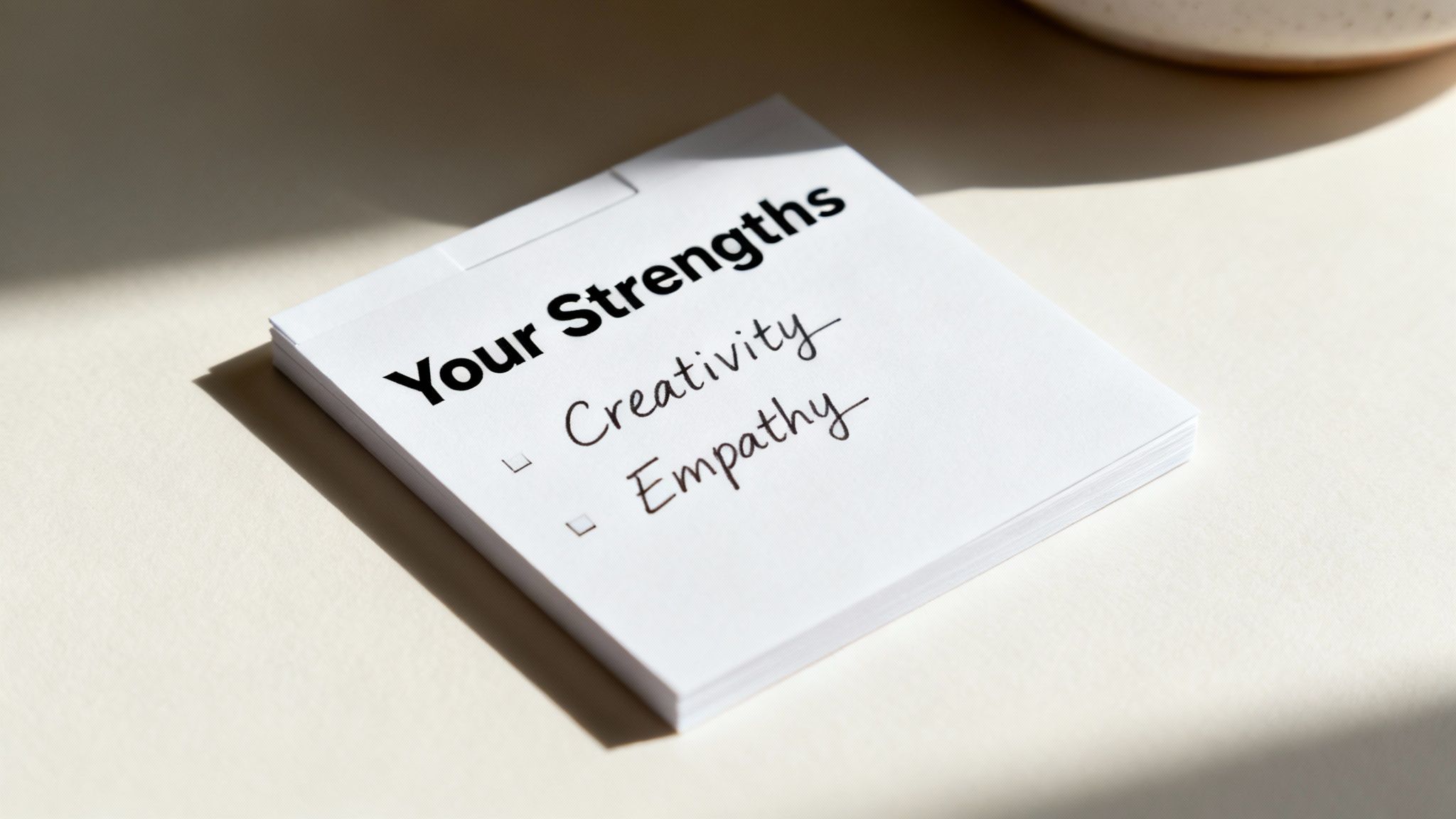
    Strengths Identification and Application

    How to Implement Strengths Identification

    Discovering your strengths is a journey of self-exploration. These tools are for informational purposes and are not diagnostic.

    • Take Validated Assessments: Use free tools like the VIA Character Strengths Survey to get a structured overview of your top qualities.
    • Seek Feedback: Ask trusted friends, family, or colleagues what positive qualities they see in you. Their perspective can offer valuable insights.
    • Create a Strengths Portfolio: Write down specific examples of when you used your top strengths successfully. This creates real evidence of your capabilities.
    • Apply Strengths to Goals: Each week, aim to use one of your signature strengths in a new way, such as at work or in a personal project.

    Why This Practice Is Effective

    This practice builds genuine, evidence-based confidence by helping you value and amplify the best parts of who you already are. For professionals, this can be a powerful tool against workplace stress and burnout. Recognizing how your strengths contribute to your team can reconnect you with a sense of purpose and competence, enhancing your overall well-being and resilience.

    4. Achievement and Success Documentation

    Documenting your achievements is the practice of recording and reviewing your personal accomplishments, both big and small. This creates tangible evidence of your competence and progress, which can help counter negative self-perception. It is one of the most concrete self esteem building activities because it provides a factual record of your capabilities.

    This method helps build a personal collection of successes you can look at during moments of doubt or high workplace stress. Instead of relying on memory, which often highlights setbacks, this log offers clear proof of your skills and resilience. It helps ground your self-worth in real-world evidence, which is helpful for managing performance-related anxiety.

    Achievement and Success Documentation

    How to Implement Achievement and Success Documentation

    Creating your success log is straightforward, and maintaining it can become a rewarding part of your routine.

    • Start with the Past: Begin by listing accomplishments from the last year to build some initial momentum and fill your log.
    • Capture Small Wins: Include daily victories, not just major milestones. This could be anything from solving a tricky problem to receiving positive feedback.
    • Organise Your Evidence: Use a digital tool or a physical notebook to save positive emails, photos of completed projects, or notes from others.
    • Reflect on the Process: When you document a win, briefly note the challenges you overcame to achieve it and what you learned along the way.

    Why This Practice Is Effective

    This practice shifts your focus from perceived shortcomings to proven strengths. For professionals, it's a practical tool for career growth, but its main benefit is psychological. When you feel discouraged, reviewing your log offers an immediate, factual confidence boost, helping you build resilience and a healthier perspective on your journey.

    5. Skill Development and Mastery Challenges

    Skill development is the process of learning and improving a specific ability through practice. This activity builds self-esteem by providing clear proof of your growth, showing that effort leads to real improvement. It is one of the most effective self esteem building activities because it shifts your focus to the empowering process of acquiring new talents.

    This method creates a cycle of positive reinforcement. As you practice and achieve small wins, your brain feels a sense of reward, which boosts motivation and belief in your abilities. This experience of earned success directly counters feelings of helplessness and boosts resilience against workplace stress.

    How to Implement Skill Development

    The key is to choose a skill you are genuinely interested in and approach it with a structured plan.

    • Choose a Meaningful Skill: Select something you’re curious about, whether it's learning a new language, starting a new fitness routine, or picking up a creative hobby.
    • Set Micro-Goals: Break the skill into small, manageable steps. Instead of "learn to draw," start with "practise basic shapes for 15 minutes daily." Exploring essential drawing practice exercises to master new skills can be a great starting point.
    • Track Your Progress Visually: Keep a journal or photo log of your journey. Seeing how far you've come provides powerful motivation and a concrete record of your achievements.
    • Find a Community: Join a group or online class to share the experience with others. Accountability and shared learning can make the process more enjoyable.

    Why This Practice Is Effective

    Mastering a skill builds self-efficacy—the belief in your ability to succeed. When you prove to yourself that you can learn and grow, this confidence can spread to other areas of your life, from managing anxiety to tackling professional challenges. It provides a healthy outlet for your energy and equips you with a stronger sense of purpose, complementing professional support like therapy or counselling when needed.

    6. Compassionate Self-Talk and Self-Compassion Exercises

    Compassionate self-talk means treating yourself with the same kindness and understanding you would offer a good friend. It involves shifting your inner voice from harsh criticism to a gentler tone, especially during difficult times. This approach is a cornerstone of self esteem building activities as it directly addresses the inner critic that can fuel feelings of anxiety.

    This method is built on self-kindness, recognizing that struggles are a shared human experience, and being mindful of your feelings. By engaging with our challenges in this way, we can build profound inner resilience. This is crucial for navigating workplace stress and personal setbacks with greater compassion.

    How to Implement Self-Compassion Exercises

    Integrating self-compassion into your life is a skill that strengthens with consistent practice.

    • Practise the Self-Compassion Break: In a difficult moment, pause and acknowledge the feeling by saying, "This is a moment of suffering." Remind yourself, "Suffering is a part of life," and then offer yourself kindness, saying, "May I be kind to myself."
    • Reframe Your Inner Dialogue: When you notice self-critical thoughts, ask, "What would I say to a friend in this situation?" Then, direct that same compassionate response to yourself.
    • Write a Compassionate Letter: Write a letter to yourself from the perspective of a loving friend, addressing something you tend to judge yourself for. Read it when you need support.

    Why This Practice Is Effective

    Self-compassion offers a supportive alternative to self-criticism, which can worsen feelings of depression and low self-worth. Instead of punishing yourself for mistakes, you learn to see them as opportunities for growth. This practice provides a stable source of internal comfort, equipping you with the emotional resilience to navigate life's challenges.

    7. Boundary Setting and Assertiveness Practice

    Setting boundaries is the practice of clearly communicating your personal limits and needs. This skill involves learning to say 'no' without guilt and is a fundamental self esteem building activity because it demonstrates self-respect. By honoring your needs, you teach yourself and others that your well-being matters.

    This method works by reinforcing your sense of personal control and worth. When you set healthy boundaries, you protect your emotional and mental space. This practice helps create healthier, more balanced relationships where your voice is heard and valued.

    How to Implement Boundary Setting

    Building assertiveness is a skill that strengthens with consistent practice. Start small to build confidence.

    • Practise Low-Stakes Scenarios: Begin by setting small boundaries, like declining a social invitation without needing an elaborate excuse.
    • Use Clear Language: Adopt simple, firm phrases. A statement like, "That doesn't work for me," is often more effective than a long justification.
    • Establish Digital Boundaries: Protect your personal time by turning off work notifications after hours. This reinforces that your time for rest is important.

    Why This Practice Is Effective

    Setting boundaries protects your energy and helps prevent burnout. It is one of the most effective strategies to avoid burnout at work, which directly supports a healthier sense of self. By asserting your limits, you affirm your self-worth and reduce the resentment that can build when your needs are consistently ignored.

    8. Social Connection and Acts of Kindness

    Engaging in meaningful social interactions and performing acts of kindness are powerful self esteem building activities. This approach shifts focus from internal self-criticism to external contribution. It reinforces your value to others and fosters a sense of purpose and belonging.

    This practice is rooted in the benefits of helping others. When we are kind, our brains release feel-good chemicals that boost our mood. This also strengthens social bonds, which helps counter feelings of isolation that can contribute to low self-esteem and anxiety.

    How to Implement Social Connection and Kindness

    Integrating kindness into your life can be simple and doesn't require grand gestures. The key is intention.

    • Start with Micro-Kindnesses: Begin with small, everyday actions like offering a genuine compliment or holding a door open for someone.
    • Join a Structured Programme: For a more organized approach, consider volunteering with a local community group. This provides structure and connection.
    • Practise Intentional Connection: When interacting with others, be fully present by putting your phone away and listening actively. Stronger connections are built on genuine attention.

    Why This Practice Is Effective

    Kindness helps change our perspective by allowing us to step outside our own cycle of negative thoughts. This practice demonstrates our capability and impact, providing tangible evidence that we matter. It is a proactive strategy for improving mental well-being, fostering resilience, and building a compassionate view of both others and ourselves.

    Self-Esteem Activities Comparison Guide

    Item Implementation Complexity 🔄 Resource Requirements ⚡ Expected Outcomes 📊 Ideal Use Cases 💡 Key Advantages ⭐
    Positive Affirmations Practice Low – Beginner-friendly Minimal – time daily 5-15 mins Improved self-worth, reduced stress, rewired self-talk Daily mental health, stress reduction, confidence Free, portable, scientifically activates brain reward centers
    Gratitude Journaling Low – Beginner-friendly Minimal – 5-10 minutes daily Increased positivity, better sleep, reduced depression Emotional well-being, social-emotional learning Supported by 40+ studies, improves relationships
    Strengths Identification and Application Medium – Intermediate Moderate – initial 1-2 hr assessment + ongoing practice Increased engagement, performance, authenticity Career development, personal growth Validated tools, asset-focus, backed by positive psychology
    Achievement and Success Documentation Low – Beginner-friendly Minimal – 5-10 mins weekly + review Enhanced motivation, counters imposter syndrome Career, interviews, overcoming self-doubt Concrete evidence of competence, motivates during challenges
    Skill Development and Mastery Challenges Medium to High – varies by skill Time-intensive – 15-60 mins daily Tangible competence growth, mastery, new opportunities Learning new skills, hobbies, career shifts Builds resilience, measurable progress, growth mindset
    Compassionate Self-Talk and Exercises Medium – Intermediate Minimal – 5-15 mins daily + ongoing Reduced anxiety, increased resilience, better motivation Mental health, handling failure, emotional regulation Strong research backing, enhances emotional resilience
    Boundary Setting and Assertiveness Medium to High – Intermediate to Advanced Ongoing practice Healthier relationships, reduced burnout, increased agency Personal and professional relationships Empowers self-respect, reduces resentment and anxiety
    Social Connection and Acts of Kindness Low to Medium – Beginner to Intermediate Variable – 5 mins to hours Enhanced belonging, increased happiness, reduced loneliness Community involvement, social anxiety reduction Builds social support, releases mood-boosting hormones

    Your Journey Forward: Embracing Progress, Not Perfection

    The journey to building healthier self-esteem is about consistent and compassionate engagement with yourself. The self esteem building activities in this article are powerful tools for your ongoing well-being toolkit. They are daily practices that, over time, can reshape your inner dialogue and perception of self-worth.

    Think of these exercises as a conversation with yourself. Documenting achievements reminds you of your capabilities, while gratitude shifts your focus to what is abundant. Each activity is a unique way to nurture the most important relationship you will ever have: the one with yourself.

    Integrating These Practices into Your Life

    Lasting change comes from consistency, not intensity. Trying to do everything at once can feel overwhelming, especially when dealing with workplace stress or anxiety. Instead, choose one or two practices that resonate with you most right now.

    • Start Small: Dedicate just five minutes each day to your chosen activity. For example, write down three things you are grateful for or repeat a single positive affirmation.
    • Track Your Progress: Notice the small shifts in how you feel or act. Acknowledging these small victories builds momentum and keeps you motivated.
    • Be Patient and Forgiving: Some days will be harder than others, and you may forget your practice. This is a normal part of the process, so simply return to it the next day without judgment.

    The Supportive Role of Professional Guidance

    While these strategies are effective for building resilience, it's important to recognize when professional support can offer deeper guidance. If low self-esteem is persistently linked to feelings of anxiety, depression, or is impacting your daily life, seeking therapy or counselling is a courageous step.

    A qualified professional provides a safe space to explore the root causes of your feelings and develop personalized coping strategies. Therapy is not a last resort but a proactive investment in your mental health and well-being. Every step you take to honor your mental health is a testament to your strength.


    Ready to take the next step in your self-esteem journey with professional guidance? DeTalks offers accessible, confidential online counselling with qualified therapists who can support you in building confidence and resilience. Explore personalised therapy plans and start your journey towards a healthier relationship with yourself today at DeTalks.

  • Top Psychology Books to Support Your Well-being

    Top Psychology Books to Support Your Well-being

    Navigating life's challenges, from workplace stress to personal anxiety, can sometimes feel overwhelming. Understanding your mind is a powerful first step toward building resilience and finding a greater sense of well-being. This list of good psychology books offers compassionate guidance for your journey, helping to clarify how our minds work.

    Written in simple language, these books explore why we think, feel, and act the way we do. They provide useful ways to understand challenges like burnout, anxiety, and depression, while also showing paths toward happiness and resilience. These insights can support professional help like therapy or counselling, offering valuable perspectives for personal growth.

    Whether you're new to psychology or a professional managing workplace pressures, this selection offers a supportive start. The ideas are globally relatable but framed with a thoughtful, India-first context. Think of these books as companions on your journey to better understand yourself and the world around you.

    1. Thinking, Fast and Slow by Daniel Kahneman

    Daniel Kahneman’s Thinking, Fast and Slow is a landmark among good psychology books that helps us understand our minds. It explains that we have two ways of thinking: System 1, which is fast and emotional, and System 2, which is slower and more logical. Kahneman shows how our fast thinking can lead to common errors in judgment and decision-making.

    This book is a practical guide for understanding the "why" behind our choices, from small daily decisions to big life moments. Recognising our mental shortcuts helps build clarity, which is crucial for managing workplace stress and anxiety. If you are interested in improving how you make choices, this book is a great start, and this guide to decision making under uncertainty can also help.

    Who Should Read This?

    This book is invaluable for anyone wanting to improve their critical thinking and make choices with more self-awareness. It is especially helpful for professionals, leaders, and students who want to understand how biases can affect decisions.

    Actionable Tips

    • Recognise Your Biases: As you read, notice which mental shortcuts, like anchoring or loss aversion, you see in your own thinking patterns.
    • Pause and Engage System 2: In moments of stress or when facing a big choice, take a moment to pause. This can help you shift from a quick reaction to a more thoughtful response.
    • Apply to Daily Choices: Practice noticing the two systems at work in everyday situations, like when you feel an impulse to buy something or react to an email.

    2. Flow: The Psychology of Optimal Experience by Mihaly Csikszentmihalyi

    Mihaly Csikszentmihalyi’s Flow is a key book in positive psychology, and one of the most encouraging good psychology books you can read. It introduces the idea of ‘flow’: a state of being so completely absorbed in an activity that time seems to fly. Csikszentmihalyi suggests that these experiences, where our skills meet a challenge, are the key to true happiness and well-being.

    Flow: The Psychology of Optimal Experience by Mihaly Csikszentmihalyi

    This book offers a powerful way to bring more engagement and satisfaction into our daily lives. Understanding how to find flow can be a helpful tool for managing workplace stress and finding meaning in what you do. It turns everyday tasks into more rewarding challenges and supports our overall mental wellness.

    Who Should Read This?

    This book is ideal for anyone feeling disengaged or seeking greater fulfillment, from professionals dealing with burnout to students and artists. It offers a practical path toward improving well-being by transforming daily activities into deeply rewarding experiences.

    Actionable Tips

    • Identify Your Flow Triggers: Make a list of activities that make you lose track of time. Try to schedule more of these into your week.
    • Balance Challenge and Skill: Look for tasks that stretch your abilities without being overwhelming. If a task feels too easy, find ways to make it more interesting.
    • Minimise Distractions: To get into a state of flow, create a quiet space free from interruptions. Turn off notifications and set aside time for focused work.

    3. The Psychology of Persuasion (Influence) by Robert Cialdini

    Robert Cialdini's Influence is a classic that explains why we say "yes" to requests. This book stands out among good psychology books for its practical advice, detailing six key principles of influence: Reciprocity, Commitment, Social Proof, Authority, Liking, and Scarcity. Cialdini clearly explains the psychology that makes these principles so effective in our daily lives.

    This book helps us understand human behaviour in a clear, accessible way. It can serve as a guide for ethical communication and a defence against manipulation, helping you see when these tactics are being used. Understanding these principles can improve communication, reduce workplace stress, and build stronger connections with others.

    Who Should Read This?

    This book is great for anyone looking to improve their communication skills, from professionals in sales and marketing to anyone wanting to understand social dynamics better. It empowers you to make more conscious choices in your interactions.

    Actionable Tips

    • Spot the Principles: Look for Cialdini's six principles in advertisements, work meetings, and everyday conversations to better understand them.
    • Give First: Practice reciprocity by offering genuine help or value to others before asking for something in return.
    • Build Authentic Authority: Establish your credibility by consistently demonstrating your expertise and reliability, rather than just relying on a title.

    4. Mindset: The New Psychology of Success by Carol Dweck

    Carol Dweck's Mindset is a truly transformative read and one of the most empowering good psychology books. Dweck introduces a powerful idea about how we approach challenges: the fixed mindset versus the growth mindset. A growth mindset is the belief that our abilities can be developed through dedication, which helps build resilience and a love for learning.

    This book explains how adopting a growth mindset can improve performance in almost every area of life. It’s not just about thinking positively; it's a way to turn setbacks into opportunities for growth. This is a crucial read for anyone feeling stuck or looking to unlock their potential and manage challenges like workplace stress and performance anxiety.

    Who Should Read This?

    This book is essential for parents, educators, leaders, and anyone seeking personal growth. It offers a clear path for encouraging resilience and a passion for learning in yourself and others.

    Actionable Tips

    • Add 'Yet' to Your Vocabulary: When you think "I can't do this," try reframing it as "I can't do this yet." This simple shift opens the door to future learning and growth.
    • Focus on Process, Not Just Outcome: Praise your effort and perseverance, not just the final result. This reinforces the value of the journey and helps build resilience.
    • Embrace Challenges: See difficult tasks as opportunities to expand your skills and grow stronger, rather than as threats to your abilities.

    5. Man's Search for Meaning by Viktor Frankl

    Viktor Frankl’s Man's Search for Meaning is a deeply moving book that stands as a pillar among good psychology books. Drawing from his experiences in concentration camps, Frankl introduces logotherapy, an approach focused on finding meaning in life. He suggests our main drive as humans is the pursuit of what we personally find meaningful.

    Man's Search for Meaning by Viktor Frankl

    This book offers a powerful perspective on suffering, resilience, and compassion. Frankl argues that even in the most difficult circumstances, we have the freedom to choose our attitude and find a purpose. This idea is fundamental for building psychological resilience and is often used in therapy and counselling to help people find strength in their struggles.

    Who Should Read This?

    This book is for anyone facing challenges, from workplace stress to personal loss, and for those seeking to understand the human capacity for resilience. It is especially helpful for those exploring questions of purpose and looking to cultivate a stronger sense of well-being.

    Actionable Tips

    • Reflect on Your Purpose: Take time to think about what gives your life meaning, whether it's your relationships, work, creativity, or helping others.
    • Find Meaning in Hardship: When facing challenges, ask yourself what you can learn from the experience or how it can help you grow.
    • Focus on Your Choices: Remember that while you can't always control what happens, you can choose your response and attitude.

    6. The Power of Habit by Charles Duhigg

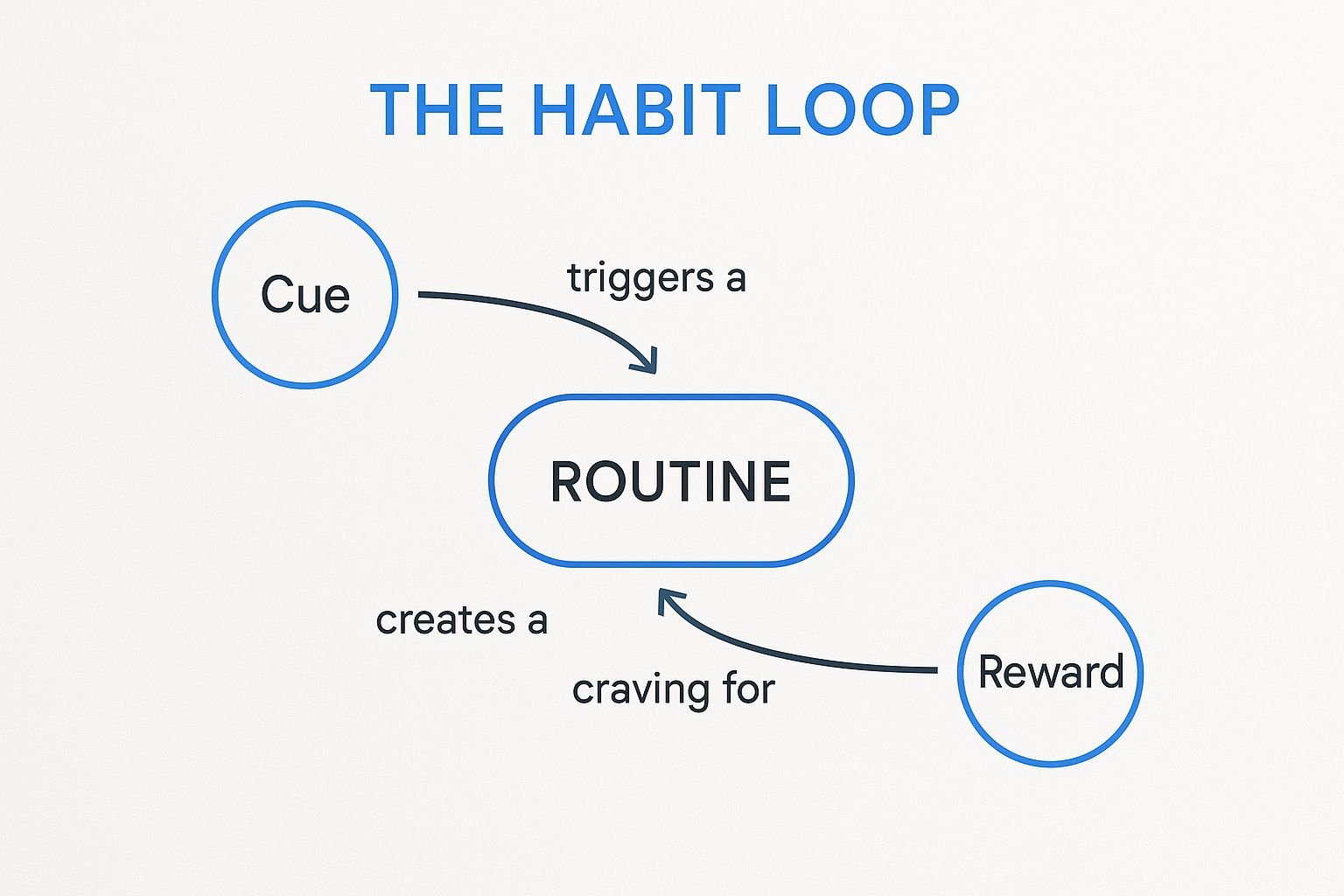
    Charles Duhigg’s The Power of Habit is one of the most accessible and good psychology books for understanding our behaviours. It explains the "habit loop," which is at the core of every habit: a Cue (a trigger), a Routine (the behaviour), and a Reward (the benefit). This simple framework helps us understand how habits are formed and how they can be changed.

    This infographic shows how these three parts work together in a powerful cycle that reinforces our habits over time.

    Infographic showing key data about The Power of Habit by Charles Duhigg

    By understanding this loop, we can learn to build more positive habits. Duhigg’s work shows how these ideas apply not just to individuals but also to organizations. This makes it a useful tool for anyone looking to manage workplace stress and build resilience through supportive routines.

    Who Should Read This?

    This book is helpful for anyone aiming for personal growth, from professionals to parents. It is especially useful for those looking to change unhelpful patterns, manage anxiety by building supportive routines, or improve their overall well-being.

    Actionable Tips

    • Deconstruct Your Habits: Choose a habit you want to change. Observe the cue that triggers it and the reward you get from it.
    • Change the Routine: Once you understand the cue and reward, try a new routine that provides a similar reward. For example, if your cue is boredom, try stretching instead of scrolling on your phone.
    • Focus on Keystone Habits: Start with one small, important habit, like a five-minute walk each day. Small wins can create positive momentum for other changes.

    7. Emotional Intelligence by Daniel Goleman

    Daniel Goleman’s Emotional Intelligence changed how we think about success, arguing that EQ can be more important than IQ. This classic among good psychology books explains that our ability to notice, manage, and understand emotions is a critical skill. Goleman outlines four key areas: self-awareness, self-regulation, empathy, and social skills.

    This book is a practical guide to developing abilities that improve relationships, work performance, and overall well-being. Goleman shows that these skills can be learned and strengthened, offering practical strategies for growth. These ideas are widely used in leadership training, schools, and even in therapy to help manage challenges like anxiety and improve how we connect with others.

    Who Should Read This?

    This book is essential for leaders, parents, and anyone looking to improve their relationships and social skills. It’s particularly valuable for professionals aiming to manage workplace stress with greater emotional balance and build stronger teams.

    Actionable Tips

    • Practise Mindfulness: Take a few minutes each day for mindfulness to increase your self-awareness and notice your emotional triggers.
    • Develop Regulation Techniques: When you feel overwhelmed, try simple techniques like deep breathing or a short walk to manage your emotional response.
    • Listen Actively: To build empathy, practice active listening. Focus completely on what the other person is saying to better understand their perspective and feelings.

    8. Atomic Habits by James Clear

    James Clear’s Atomic Habits has become a go-to guide for behaviour change, making it a powerful addition to any list of good psychology books. Clear’s framework is simple: big changes come from the combined effect of many small, or ‘atomic’, habits. He provides Four Laws of Behaviour Change: make a new habit obvious, attractive, easy, and satisfying.

    This book is about more than just productivity; it's about shaping your identity through small, consistent actions. By focusing on systems instead of just goals, Clear offers a sustainable path to self-improvement. These ideas can help manage everything from workplace stress to building healthier routines, supporting long-term well-being and resilience.

    Who Should Read This?

    This book is ideal for anyone feeling overwhelmed by big goals or stuck in unhelpful patterns. It's especially helpful for individuals looking to build resilience and improve their well-being by creating positive daily routines to manage stress and anxiety.

    Actionable Tips

    • Apply the Two-Minute Rule: Start a new habit by making it take less than two minutes. To read more, read one page. To exercise, just put on your workout clothes.
    • Habit Stack: Pair a new habit with an existing one. For example, after your morning cup of chai, you will meditate for one minute.
    • Design Your Environment: Make cues for good habits visible. If you want to drink more water, keep a water bottle on your desk.

    9. The Body Keeps the Score by Bessel van der Kolk

    Bessel van der Kolk's The Body Keeps the Score is a transformative read on trauma, making it one of the most essential good psychology books today. It explains how difficult experiences can affect both the body and the brain, influencing our feelings, self-control, and trust. The book shows that trauma is not just a past event but something our bodies can hold onto. It is important to remember that the assessments in this book are informational, not diagnostic.

    Van der Kolk explains how trauma can rewire the brain's emotional centres and explores treatments beyond traditional talk therapy. He discusses mindfulness, body-based therapies, and other approaches that help people heal and build resilience. This compassionate work has been vital in creating more supportive care in mental health and other fields.

    Who Should Read This?

    This book is crucial for mental health professionals like therapists and counsellors. It is also an invaluable, though sometimes intense, resource for those who have experienced trauma and their loved ones, offering a scientific framework for understanding the path toward recovery.

    Actionable Tips

    • Approach with Care: The content can be emotionally challenging. Read it in small sections and prioritize your well-being.
    • Focus on Hope: Pay attention to the parts about recovery and resilience. The book highlights the incredible human capacity to heal.
    • Seek Professional Support: Use the insights as a starting point for discussion with a therapist or counsellor rather than as a self-help guide.

    10. Predictably Irrational by Dan Ariely

    Dan Ariely's Predictably Irrational is a fascinating look into why we often make illogical choices. Through fun and insightful experiments, Ariely shows that our irrational behaviours are not random but happen in predictable patterns. He uncovers the hidden forces, from emotions to social norms, that shape our decisions every day.

    This book is a key text among good psychology books because it decodes the illogical patterns behind our choices. Understanding these patterns can help us make better financial decisions, create healthier habits, and improve our well-being. It shines a light on the mental glitches that affect us and helps us see how easily we can be influenced.

    Who Should Read This?

    This book is essential for anyone curious about the real drivers behind human behaviour. It is particularly insightful for those looking to make smarter choices, improve their negotiation skills, and understand the subtle influences that affect their daily lives and workplace stress.

    Actionable Tips

    • Question Relative Value: Notice when you are comparing options side-by-side and ask if a "decoy" option is influencing your choice.
    • Use Pre-commitment: To overcome procrastination, commit to a goal publicly or create a system that makes it harder to back out.
    • Beware the "Free" Trap: Recognise that the offer of something "free" can sometimes lead you to make a poor overall decision.

    Top 10 Psychology Books Comparison

    Title Core Features/Insights User Experience/Quality ★★★★✩ Value Proposition 💰 Target Audience 👥 Unique Selling Points ✨
    Thinking, Fast and Slow Dual-system cognition, cognitive biases ★★★★✩ Dense but foundational 💰 High value for understanding decisions Academics, psychologists, decision-makers 🏆 Nobel laureate insights, behavioral economics integration
    Flow: The Psychology of Optimal Experience Flow state theory, happiness & performance framework ★★★★✩ Actionable yet sometimes abstract 💰 Practical for life fulfillment Educators, therapists, professionals ✨ Positive psychology pioneer, cross-domain applicability
    The Psychology of Persuasion (Influence) Six persuasion principles, ethical influence ★★★★✩ Clear, engaging 💰 Applicable in sales & marketing Sales, marketers, negotiators 🏆 Decades of research, ethical use focus
    Mindset: The New Psychology of Success Fixed vs. growth mindset framework ★★★★✩ Simple, practical 💰 Useful in education & corporate training Parents, educators, managers ✨ Focus on mindset shift for success
    Man's Search for Meaning Logotherapy, meaning in suffering ★★★★✩ Profound, inspirational 💰 Timeless wisdom, accessible Trauma survivors, counselors 🏆 Holocaust survivor insights, existential psychology
    The Power of Habit Habit loop (cue-routine-reward), neuroscience ★★★★✩ Engaging, practical 💰 Clear behavior change framework General self-improvement seekers ✨ Neuroscience-backed, multi-level habit analysis
    Emotional Intelligence Four EQ domains, neuroscience of emotion ★★★★✩ Accessible, practical 💰 Broad applications in leadership HR, educators, general readers 🏆 Popularized EQ, assessment tools
    Atomic Habits Four Laws of Behavior Change, identity-based habits ★★★★★ Highly practical, actionable 💰 Modern, research-based system Productivity enthusiasts, trainers ✨ Habit stacking & 1% improvement philosophy
    The Body Keeps the Score Trauma neuroscience, mind-body healing ★★★★✩ Deep, scientific but heavy 💰 Innovative trauma treatment insights Trauma survivors, therapists 🏆 Integrative therapy modalities, clinical case studies
    Predictably Irrational Behavioral economics experiments, cognitive biases ★★★★✩ Entertaining, evidence-based 💰 Improves decision-making skills Behavioral economists, marketers ✨ Interactive experiments, challenges rationality assumption

    Continuing Your Path to Greater Well-being

    Reading these good psychology books is an invitation to understand yourself and your experiences more deeply. From understanding how we think to finding meaning in difficult times, each book offers a unique lens. You've explored how habits are formed, how emotional intelligence shapes our connections, and how a growth mindset can foster resilience.

    These works share a powerful truth: greater self-awareness is the foundation of lasting well-being. The insights from these authors provide a practical toolkit for navigating challenges like workplace stress and anxiety. They empower you to recognise your thought patterns, cultivate moments of flow, and build the small habits that lead to meaningful personal growth.

    Supportive Takeaways for Your Journey

    Reading is a wonderful start, but the real change happens when we apply these ideas with self-compassion. This journey is about progress, not perfection.

    • Practice Gentle Observation: Start by noticing your own thought patterns without judgment. Are you in a fixed or growth mindset? Simply observing is a powerful act of self-awareness.
    • Identify One Small Habit: Inspired by Atomic Habits, choose one small, kind action for yourself. Focus on consistency over intensity to build momentum.
    • Integrate Holistic Practices: The mind and body are connected. To support the insights you've gained, consider a guide to a holistic wellness approach for your daily life.

    This journey of understanding is ongoing. The path to managing challenges like anxiety or depression is built one step at a time, supported by knowledge and self-compassion. These books are helpful companions, but they are not a substitute for professional support from a therapist or counsellor if you need it. The goal is to build lasting resilience and a deeper, more meaningful connection with yourself.


    While these books provide an excellent foundation for self-understanding, applying these principles to your unique challenges can be difficult alone. For personalised guidance and support on your mental health journey, consider exploring the confidential and accessible therapy services offered by DeTalks. Our professional counsellors can help you translate these powerful psychological insights into practical strategies for your life.