Tag: psychotherapy

  • Psychotherapy for Personality Disorders: A 2026 Guide

    Psychotherapy for Personality Disorders: A 2026 Guide

    Fifty-two per cent of people who stay in psychotherapy for personality disorders no longer meet full diagnostic criteria after about 1.3 years of treatment. That is a real recovery signal, not just a temporary reduction in distress.

    A college student who keeps replaying every awkward conversation, or a professional worn down by workplace stress, might first wonder if counselling can really help when patterns feel so deep. The evidence says structured therapy can, and it often helps people build resilience, steadier well-being, and more workable relationships over time.

    Understanding Psychotherapy for Personality Disorders

    Personality disorders involve long-standing patterns that affect how people think, feel, and relate to others. A person may notice the same painful loop showing up in relationships, at work, and at home, even while trying hard to respond differently.

    What this means in plain language

    Personality disorders are long-standing patterns of thinking, feeling, and relating that can become rigid and hard to shift. A simple way to understand this is that the mind has learned an old route for handling stress, and that route now causes more harm than help.

    The pattern has become sticky, and psychotherapy for personality disorders aims to help people notice those patterns, understand them, and practise newer responses. That process is gradual, because the habits involved often developed over many years.

    An infographic explaining personality disorders and how psychotherapy helps update outdated behavioral and thinking patterns.

    This is also where online assessments, including tools on platforms like DeTalks, can be useful as informational starting points. They can help someone reflect on symptoms, stress, relationships, or coping style, but they are not diagnostic labels.

    Why therapy matters for daily life

    People often come to counselling because daily life feels harder than it should. They may be dealing with anxiety, low mood, burnout, or repeated conflict, and they want a clearer way to understand what keeps getting in the way.

    Therapy helps because it is more than a supportive conversation. It is a structured process that works on patterns over time, with attention to emotions, behaviour, relationships, and the person's sense of self.

    Practical rule: if a pattern is affecting work, relationships, sleep, or self-worth, it deserves careful attention, not shame.

    In India, this conversation often starts subtly, sometimes after family tension, exam pressure, or long-running workplace stress. The same ideas matter globally, because people everywhere need help that is respectful, evidence-based, and grounded in real life. The Still Water Wellness Group program is one example of how structured support can be organised around skill-building and steady practice.

    Major Therapeutic Approaches Compared

    A person seeking help for personality-related difficulties may arrive hoping for one clear answer. The evidence supports a more careful view. Structured psychotherapy can help, and different approaches suit different patterns of distress, relationships, and daily functioning, as shown in a systematic review.

    How the main therapies differ

    DBT, or dialectical behaviour therapy, is often used when emotions feel intense and relationships become turbulent. It focuses on emotion regulation, distress tolerance, and practical skills for getting through painful moments without making the situation worse.

    MBT, or mentalisation-based therapy, helps a person notice mental states, their own and other people's. If someone keeps assuming the worst during a tense conversation, MBT gives them a way to slow down, reflect, and check their interpretation before reacting.

    Schema therapy looks at older, deep-rooted patterns that may have started early in life. A person may recognise a familiar inner script, such as “I will be rejected,” and then work on replacing it with something less harsh and more realistic.

    Cognitive-behavioural therapy helps people notice unhelpful thoughts and behaviours and try different responses. A concrete example might be pausing before sending a heated message, then testing a calmer reply instead.

    Therapy Approach Core Focus Best Suited For Evidence Level
    DBT Emotional regulation and distress tolerance Repeated crises, self-defeating coping, strong emotional swings Limited but positive evidence, especially for borderline personality disorder (systematic review)
    MBT Understanding one's own and others' mental states Misunderstandings in close relationships, quick shifts in trust Limited but positive evidence (systematic review)
    Schema therapy Long-term relationship and self-patterns Repeated relational pain, entrenched beliefs Limited but positive evidence (systematic review)
    Cognitive-behavioural therapy Thoughts, behaviours, and coping habits Practical change, coping skills, clearer routines Supported in structured outpatient care (systematic review)

    For someone who wants a concrete example of skills-based care, the Still Water Wellness Group program shows how structured support can be organised around practice, feedback, and steady habits.

    A useful comparison is that DBT often feels most concrete, MBT feels most reflective, schema therapy feels most pattern-based, and CBT feels most skills-focused. In India, that distinction can matter when someone is looking for therapy that fits family pressures, exam stress, or workplace strain, because the same therapy style does not suit every setting or every person.

    The field still points to the same honest conclusion, no single branded model consistently dominates all others. What seems to matter most is structured, manualised treatment with good retention, rather than chasing a perfect label (systematic review).

    A comparison chart outlining four major therapeutic approaches: DBT, MBT, Schema therapy, and Cognitive-behavioral therapy.

    What Treatment Goals and Structure Look Like

    A person starting counselling often wants one simple thing, what will happen week to week. That question matters, because structure can make therapy feel safer and easier to use, especially when someone already feels overwhelmed.

    How treatment is usually organised

    For borderline personality disorder, one review notes that therapy often takes 6 to 12 months, and routine activity can support depression, stress, and anxiety. In practice, the length depends on goals, symptom burden, and how consistently someone can attend.

    The work is usually collaborative. The therapist and client agree on targets such as fewer blow-ups, less avoidance, better sleep, or more stable relationships, then revisit those goals as life changes.

    A common structure looks like this:

    • Individual sessions: these are used to understand triggers, habits, and personal history in a private setting.
    • Group formats: these can help with feedback, practise, and interpersonal skills in a real-time social setting.
    • Manualised care: a clear framework helps both therapist and client know what the treatment is trying to do.
    • Retention strategies: reminders, scheduling support, and a steady format matter because dropout is common.

    An infographic showing the four-step structure of psychotherapy, including duration, frequency, individual sessions, and group therapy.

    A helpful way to picture the process is as a scaffold. The therapy itself is the work, but the structure holds that work in place while patterns are being understood and changed. For some people, that structure includes weekly one-to-one sessions. For others, it also includes a group where they can practise speaking, listening, and repairing misunderstandings in a safer setting.

    That kind of clarity matters because recovery evidence is tied to treatment that people can stay with. A structured plan gives both sides something concrete to hold on to, especially when emotions run high or daily life in India, family expectations, commute time, exams, or shift work makes attendance difficult. The plan is not about sounding clinical. It is about making therapy usable in real life.

    What to ask before you begin

    Ask whether the therapist uses a structured approach, how progress is tracked, and whether they offer individual work, group work, or both. In India, that question matters because access to trained clinicians varies widely, so fit and consistency may matter more than a polished title.

    Helpful question: “How do you handle it when therapy feels difficult or when I miss a session?”

    That kind of question tells you something important. A good clinician will not promise ease, but they will explain the plan clearly and make space for honest discussion about barriers.

    What to Expect in Therapy Sessions

    Inside the therapy room, the work follows a clear structure that helps people notice change over time. A first session often begins with current stress, not with labels. Someone may talk about workplace stress, family arguments, panic, shutdown, or the feeling of being on edge all the time.

    What happens inside the room

    The therapist listens for patterns, not only for isolated events. They pay attention to what tends to happen before a reaction, what the reaction feels like, and what follows after it, because that sequence often shows where change can begin. It is a bit like watching how one loose step affects the rest of a staircase, once the pattern is visible, it becomes easier to work on it.

    Progress is tracked in small ways. A person may notice fewer intense fights, less spiralling after a harsh email, or a steadier response to loneliness, and those shifts matter even when they feel modest. In everyday life, that can mean getting through a family conversation without shutting down, or pausing long enough to answer a message without feeling overwhelmed.

    Therapy builds structured partnerships that support lasting change rather than offering quick fixes.

    That structure also leaves room for compassion. People often come in with guilt, shame, or self-criticism, and therapy tends to work better when those feelings are handled with care rather than judgement. For many clients, that experience is new, because they have often been treated as difficult instead of as people trying to cope.

    The process can feel harder before it feels easier. When old defences loosen, anxiety or sadness may rise for a while, and that does not mean treatment is failing. It often means the person is facing material that used to stay buried, the same way a room can feel messier before it can be properly organised.

    Medication can sometimes support treatment if someone is also struggling with depression or another condition, but psychotherapy remains the central tool for personality-related patterns. The therapist's job is to keep the work grounded in daily life, not in abstract theory, so the conversation connects with what happens at home, at work, and in relationships.

    Comorbidity and the Role of Medication

    A common question is whether medicine can stand in for therapy. For borderline personality disorder, psychotherapy remains the main treatment, while medications do not have an approved indication for the condition and have not shown consistent results for its core symptoms (review).

    Medication still has a place in care. It may be considered when depression, anxiety, sleep problems, or substance-related concerns are interfering with daily functioning, especially while a person is also starting psychotherapy. The role is supportive, helping with symptom relief so the person can stay engaged in treatment.

    The broader evidence also helps set realistic expectations. In psychotherapy trials, the mean pre-post effect sizes within treatment were 1.11 for self-report measures and 1.29 for observational measures, which shows large change within treatment settings (American Journal of Psychiatry review). Earlier benchmark work found a 1.46 overall effect size for psychodynamic therapy and 1.00 for cognitive behaviour therapy, again supporting meaningful change rather than only short-term relief (meta-analysis).

    If someone is also facing addiction, integrated care matters. In that situation, it can help to look at a service such as Empire Medical Wellness addiction care as one possible route for support alongside psychotherapy.

    What this means in practice

    Medication can reduce a symptom, while therapy is where new relationship habits and emotional skills are built. That is why the two are often discussed together but not treated as interchangeable.

    Assessments are informational, not diagnostic, and that distinction matters when symptoms overlap. A person with depression, anxiety, trauma, or substance use concerns may need a broader evaluation before anyone tries to make sense of the full picture.

    Prognosis and Recovery Evidence

    Hope is easier to hold when it is grounded in evidence. One of the clearest findings in the literature is that structured psychotherapy can support recovery for a substantial share of people, with about 52% of those who stayed in therapy no longer meeting full diagnostic criteria after a mean of 1.3 years of treatment (AJP review).

    How to read the numbers without getting lost in them

    Effect sizes help show how much change took place, not just whether change happened. In the benchmark research, psychodynamic therapy showed a 1.46 overall effect size, with 1.08 for self-report outcomes and 1.79 for observer-rated outcomes, while cognitive behaviour therapy showed 1.00 overall (meta-analysis).

    That matters because recovery is visible in two places at once, in how a person experiences themselves and in how patterns of behaviour look to others. The numbers do not mean everyone improves in the same way, and they do not erase dropout, pauses in treatment, or setbacks along the way.

    The same review of psychotherapy trials estimated a recovery rate of 25.8% per year of therapy, compared with 3.7% in a naturalistic model of borderline personality disorder (AJP review). That gap helps explain why structured treatment is taken seriously.

    What recovery can look like

    Recovery does not mean becoming emotionless or never having hard days again. It can mean fewer crises, steadier relationships, more reliable work functioning, and a life that feels less ruled by fear, anger, or shame.

    An infographic titled Prognosis and Recovery Evidence showing a 52% recovery rate after structured psychotherapy for patients.

    For readers in India, a practical next step is to start with an assessment, then book a consultation with a therapist who can explain their method clearly. Ask how they track change, what happens if sessions feel intense, and whether they use structured care.

    The most honest message from the evidence is simple. Progress is real, recovery is possible, and structured therapy gives people a better chance to build new habits that last.

    How to Choose a Therapist and Take Next Steps

    Choosing a therapist involves practical considerations around stigma, cost, and access, and those realities vary by location. In India, some people begin with limited options nearby, while others may have many names to compare and still feel unsure about where to start. A careful first conversation often matters more than finding a perfect match immediately, because fit usually becomes clearer once the work begins.

    What to look for

    Look for someone who can explain their training, the type of therapy they use, and how they handle emotional difficulty. If they can describe goals, session structure, and follow-up clearly, that usually points to organised care rather than vague reassurance.

    You can also ask whether they have experience with personality disorders, anxiety, depression, family conflict, or relationship distress. That question is practical, because many people first seek help for stress, burnout, or communication problems before they have any formal understanding of what's going on. A good therapist should be able to connect those everyday struggles to a treatment plan without making you feel judged.

    DeTalks can be one starting point for finding therapists and using science-backed assessments, especially when someone wants information before booking a session. It works best as a bridge into care, not as a substitute for a clinical conversation.

    A steady first step matters more than an urgent one.

    Simple next steps

    1. Take an informational assessment if you want a clearer starting point.
    2. Shortlist a therapist who uses structured, evidence-based counselling.
    3. Ask about format, including individual sessions, group options, and expected length.
    4. Notice daily routines that support well-being, such as sleep, movement, and regular meals.
    5. Bring one real-life example to the first session, such as a fight, shutdown, or panic moment.

    These steps do not guarantee a quick resolution, but they do create a workable path forward and do not guarantee that dropout or setbacks won't happen. They also make room for resilience, self-understanding, and a more compassionate relationship with yourself.

    If you're trying to make sense of repeated patterns, DeTalks offers a place to explore therapists and science-backed assessments in one place. Visit DeTalks to take a thoughtful first step, compare support options, and find a path that fits your life.


  • Non pharmacological treatment: Simple steps to improve your mental well-being

    Non pharmacological treatment: Simple steps to improve your mental well-being

    When we talk about mental health, many people think of medication first. While medication is a vital tool for many, a non pharmacological treatment is any approach that helps improve mental well-being without it. Think of it as physiotherapy for your mind—it helps build inner strength, develop coping skills, and learn to navigate life's challenges with more resilience.

    These methods empower you by focusing on your thoughts, emotions, and behaviours. They aim to support real, lasting change by getting to the heart of what you're experiencing.

    Understanding Mental Well-being Beyond Medication

    A peaceful therapy setting with two beige armchairs and a book on non-pharmacological treatment.

    If you have a sore back, a doctor might suggest exercises and lifestyle changes before painkillers. Mental health can be approached in a similar way. Medication is a powerful option, but it's not the only one. Non pharmacological treatment takes a person-centred view, using supportive strategies like counselling, mindfulness, and healthy living to boost your emotional health.

    This isn’t about trying to “fix” something that’s broken. It's a supportive journey where you learn more about yourself and build practical skills for challenges like workplace stress or anxiety. The goal is to give you tools to manage these feelings for the long haul.

    A Focus on Empowerment and Skills

    At its core, this approach is about empowerment. It's built on the idea that we can all learn new ways of thinking and reacting that lead to a more fulfilling life. You're not just passively receiving a treatment; you're actively building your own resources to handle whatever comes your way.

    So, what does this look like in practice? The key pillars include:

    • Therapy and Counselling: Talking with a trained professional helps you explore your thoughts, see things from a new perspective, and build healthy coping skills.
    • Lifestyle Adjustments: Tapping into the powerful mind-body connection through exercise, a balanced diet, and quality sleep supports overall well-being.
    • Mindfulness and Self-Compassion: Learning to stay present and treat yourself with kindness is fundamental for emotional resilience.
    • Building Resilience: Developing the ability to bounce back from setbacks is a skill that serves you in every area of life.

    This focus on building skills is especially vital. In India, for example, the mental health treatment gap is a staggering 70-92%. This means around 85% of people with common mental health concerns aren't receiving any formal help. You can read the full research about these mental health care gaps and their impact.

    A non pharmacological treatment is not a replacement for medication, but a powerful partner to it. For many, it's the first and most sustainable step toward building a foundation of lasting well-being.

    This situation highlights the urgent need for accessible options like therapy and counselling. They offer a practical way forward by giving people sustainable tools they can use for life. It shifts the focus from dependency to self-reliance.

    Pharmacological vs Non Pharmacological Approaches At a Glance

    To make the distinction clearer, here’s a quick overview of how these two approaches compare. They often work best together, but it's helpful to understand their individual roles.

    Aspect Pharmacological Treatment (Medication) Non Pharmacological Treatment (Therapy & Lifestyle)
    Primary Goal To manage or reduce symptoms of mental health conditions by altering brain chemistry. To address the root causes of distress by building coping skills, changing thought patterns, and improving overall well-being.
    How It Works Works on a biological level, often providing rapid symptom relief for conditions like depression or anxiety. Works on a psychological and behavioural level through talking, learning, and practising new skills.
    Role of the Individual Primarily a passive role; the main action is taking medication as prescribed. An active, collaborative role; requires engagement, practice, and self-reflection.
    Common Examples Antidepressants, anti-anxiety medications, mood stabilisers, antipsychotics. Cognitive Behavioural Therapy (CBT), psychotherapy, exercise, mindfulness, sleep hygiene, nutrition changes.
    Potential Side Effects Can include physical side effects like drowsiness, weight gain, or nausea, as well as potential for dependence. Typically no physical side effects, though emotional discomfort can arise during the therapeutic process.
    Long-Term Outlook Often used for long-term management; symptoms may return if medication is stopped. Aims to provide lasting skills and resilience that can be used throughout life, even after treatment ends.

    Ultimately, both paths have their place. Understanding the differences helps you and your healthcare provider make an informed decision about what's right for your unique situation.

    Exploring Different Types of Psychotherapy

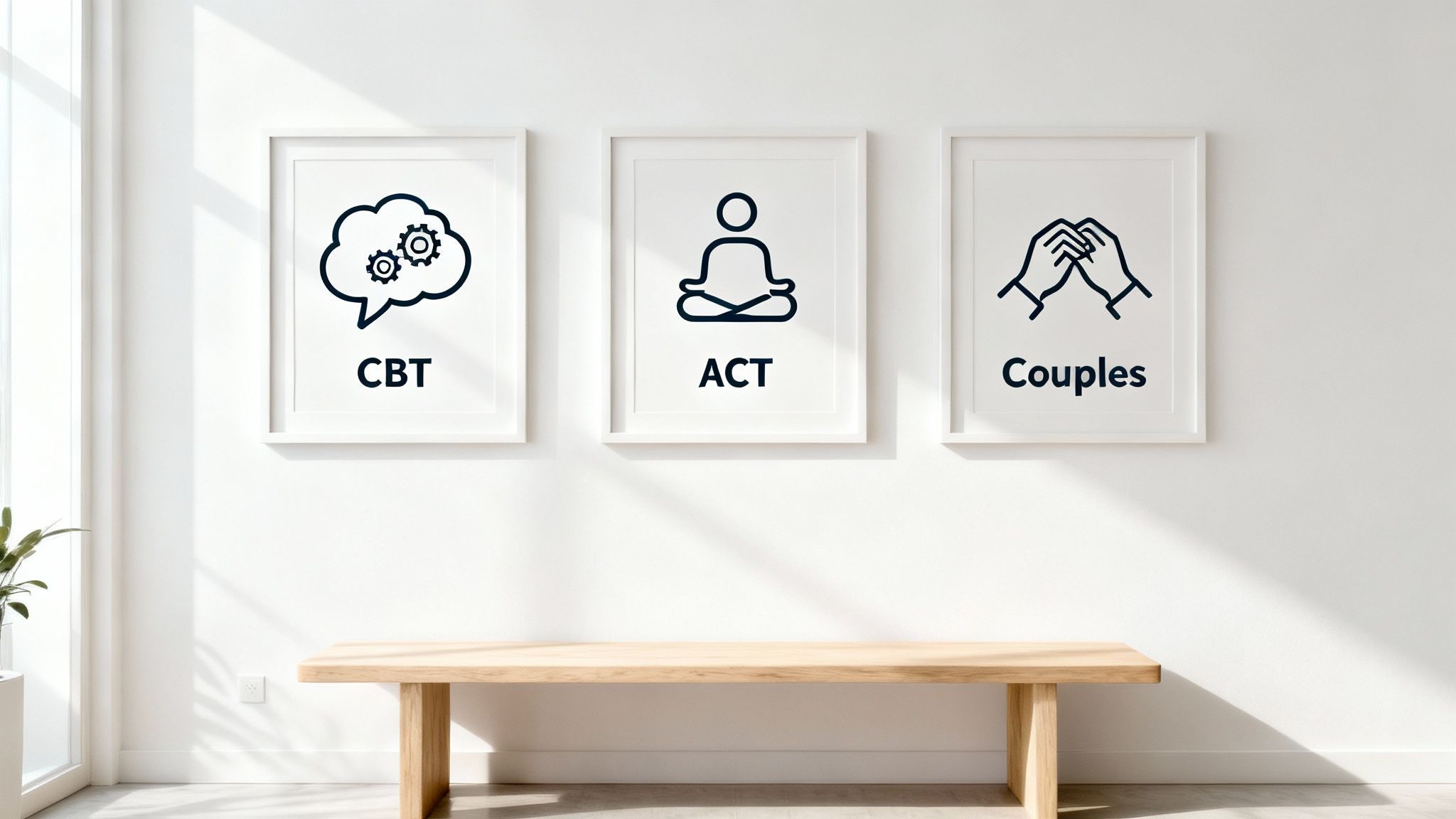
    Three framed pictures on a white wall above a wooden bench illustrating CBT, ACT, and couples therapy.

    Psychotherapy, also known as talk therapy or counselling, is a powerful form of non pharmacological treatment. It’s a dedicated, supportive space where you can explore your thoughts and feelings with a trained professional. It's a place to learn new, healthier ways to navigate life's challenges.

    Think of it less as a place to be "fixed" and more like a gym for your mind. You're there to build emotional muscle, resilience, and a deeper understanding of yourself. In a world where workplace stress can feel constant, therapy offers a confidential partnership to proactively work on your well-being.

    Cognitive Behavioural Therapy

    Cognitive Behavioural Therapy, or CBT, is a well-researched and widely used type of counselling. It’s a practical, goal-focused approach that highlights the link between your thoughts, feelings, and actions. The core idea is simple: it’s not just events that upset us, but how we interpret them.

    For example, if you make a small mistake at work, one thought might be, "I’m a complete failure." This can lead to feelings of anxiety and a desire to avoid similar tasks. CBT helps you notice that unhelpful thought, challenge it, and reframe it into something more realistic, like, "I made a mistake, which is human. I can learn from this."

    That small shift can have a huge impact on your emotional state. In sessions, your therapist acts as a coach, helping you become more aware of these automatic negative thoughts. For instance, Cognitive Therapies are a recognised non-pharmacological approach that empowers individuals to identify and actively change these unhelpful thinking patterns.

    Acceptance and Commitment Therapy

    Where CBT focuses on changing your thoughts, Acceptance and Commitment Therapy (ACT) offers a different perspective. ACT teaches you to accept your thoughts and feelings without judgment, rather than fighting them. It’s built on the idea that trying to get rid of difficult emotions can sometimes make them stronger.

    Imagine your thoughts are like clouds passing in the sky. ACT gives you the skills to observe these "thought clouds" from a distance, acknowledging them without letting them control you. A key tool here is mindfulness, which is the practice of being fully present in the moment.

    The "commitment" part of ACT is about clarifying what truly matters to you—your core values—and then taking action to live by them. Even when difficult feelings show up, you learn how to keep moving in a meaningful direction.

    In ACT, the goal isn't to eliminate difficult feelings, but to live a rich and meaningful life alongside them. It builds psychological flexibility, helping you adapt to challenges without losing sight of your personal values.

    Couples Counselling for Stronger Relationships

    Our relationships are a cornerstone of our well-being, but they can also be a source of stress. Couples counselling offers a safe, neutral space for partners to improve communication, resolve conflicts, and deepen their bond. It’s a valuable tool for any couple, whether you're facing a specific challenge or just want to strengthen your partnership.

    A therapist acts as a guide, helping both partners express themselves and listen to each other in a more constructive way. The focus is often on breaking negative cycles—like the blame-and-defend pattern—and replacing them with healthier habits. You’ll learn practical skills to handle disagreements with respect and work together as a team.

    This type of counselling can help with a range of issues, including:

    • Improving Communication: Learning to express needs clearly and listen with empathy.
    • Conflict Resolution: Finding better ways to navigate disagreements without causing damage.
    • Rebuilding Trust: Working through challenges to find a path forward.
    • Navigating Life Transitions: Adjusting to big changes like becoming parents or career shifts.

    Ultimately, couples counselling is about fostering mutual respect and understanding. It’s a collaborative effort to build a more resilient and fulfilling relationship, boosting the well-being of both people involved.

    The Power of Lifestyle and Mind-Body Practices

    Mental and physical health are completely intertwined, and a non-pharmacological treatment approach recognizes this deep connection. Small, consistent changes to your daily life can build a surprisingly strong foundation for mental well-being. These are not huge overhauls, but sustainable habits that lift your mood and build resilience.

    The beauty of these practices is that they put you in charge of your own well-being. By focusing on basics like movement, rest, and awareness, you create a positive feedback loop where healthy habits support a healthier mind. Think of it as creating a natural buffer against daily challenges like workplace stress and anxiety.

    Nurturing Your Well-being Through Movement

    Getting your body moving is one of the most powerful things you can do for your mind. Exercise releases endorphins (your body’s natural mood-lifters) and reduces stress hormones like cortisol. This simple chemical shift can help ease feelings of anxiety and depression, leaving you feeling calmer.

    You don't need to run a marathon to feel these benefits. Weaving short, consistent bursts of activity into your day makes a real difference. For busy professionals in India, this could be a brisk 15-minute walk during your lunch break or taking the stairs instead of the lift. The key is to make movement a normal part of your routine.

    Here are a few easy ideas to get started:

    • Morning Stretches: Kick off your day with 5-10 minutes of gentle stretching to wake up your body and mind.
    • Active Commutes: If possible, try walking or cycling for part of your journey.
    • Desk Breaks: Set a timer to remind yourself to stand up and move for a few minutes every hour to reset your focus.

    The Restorative Role of Sleep

    Sleep isn't a luxury—it's essential for keeping your emotions in check. When you're short on quality sleep, your ability to handle stress and concentrate can drop. A consistent sleep schedule acts like a nightly reset for your brain, helping it process the day's events.

    A calming bedtime routine can signal to your body that it's time to switch off. This could mean putting your phone away an hour before bed, reading a good book, or listening to quiet music. Good sleep hygiene is a cornerstone of mental wellness, helping you meet each day with a clearer head.

    "Sleep is the golden chain that ties health and our bodies together." – Thomas Dekker

    This old wisdom couldn't be more true. Making sleep a priority is a powerful act of self-care that directly shores up your mental resilience.

    Grounding Yourself with Mindfulness

    Mindfulness is simply the practice of paying attention to the here and now, without judgment. In a world full of distractions, it’s a skill that teaches you to gently guide your focus back to your breath and body. This simple act can interrupt the loop of worrying about the future or replaying the past.

    It can be as straightforward as a 5-minute guided meditation or just noticing the feeling of your feet on the floor. Practices like yoga and deep breathing are also fantastic ways to build your mindfulness muscle. These techniques help you cultivate calm and self-compassion, which are essential tools for navigating life's pressures.

    The power of these kinds of community-based, non-pharmacological approaches has been shown time and again. For instance, a major trial in rural India revealed that people in these programmes had a 3-fold greater chance of remission from depression and anxiety, a change driven mostly by supportive strategies, not medication. You can read more about these impactful non-pharmacological findings and what they mean for community health.

    Choosing the Right Support for Your Journey

    Deciding to seek support is a big, personal step. With so many options, it’s normal to wonder, "Which therapy is right for me?" or "What should I look for in a professional?" The truth is, finding the right non-pharmacological treatment is about discovering what clicks with your personality and your current needs.

    The journey starts the moment you acknowledge you deserve support. Whether you're dealing with workplace stress, persistent anxiety, or you simply want to build more resilience, the right professional offers a safe space and expert guidance. Think of it as a partnership where the connection you build is key.

    Finding the Right Fit: A Guide to Choosing a Therapist

    The single most important factor in successful therapy is the therapeutic alliance. This is the bond you build with your therapist—one based on trust, mutual respect, and a shared commitment to your goals. A good therapist is someone you feel comfortable being open with, who listens without judgment.

    That connection is the foundation for all the progress you'll make. When you're looking for a professional, keep these points in mind:

    • Credentials and Experience: Make sure they are qualified and have experience helping people with similar concerns, whether that's anxiety, depression, or relationship troubles.
    • Approach and Style: Every therapist is different. Some use structured methods like CBT, while others are more exploratory. Consider what style would make you feel most comfortable.
    • Personal Connection: An initial consultation is your chance to see if it's a good fit. Do you feel heard and respected? Trust your gut—it's often the most reliable guide.

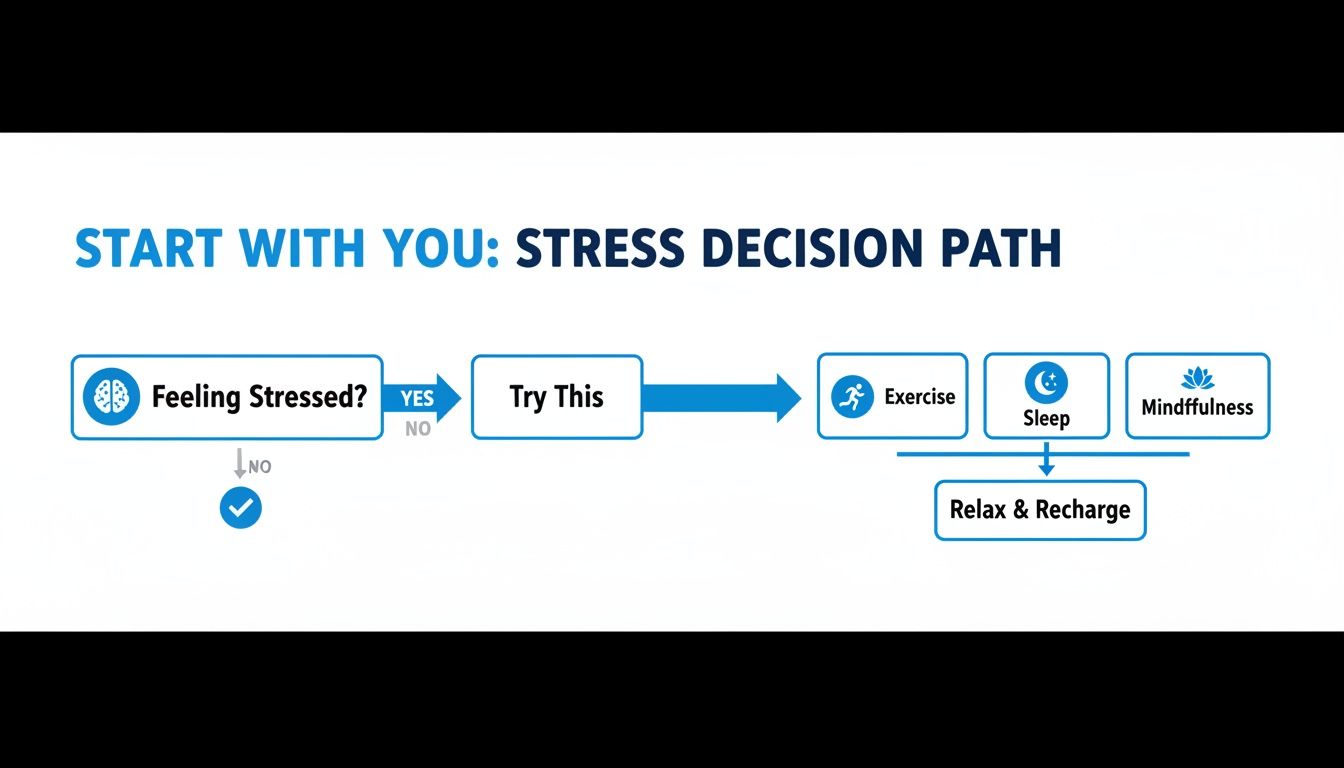
    Getting clear on different types of support can also help. For instance, understanding the difference between options like Massage Therapy vs Physiotherapy can help you decide what aligns best with your needs. The decision tree below offers a simple framework for tackling everyday stress.

    Flowchart illustrating a stress decision path, guiding users to try exercise, sleep, and mindfulness for relaxation.

    As this guide shows, when stress hits, simple actions can make a huge difference. Getting some exercise, prioritising sleep, or practising mindfulness are powerful first steps toward finding your balance again.

    Combining Therapy with Medication

    For many people, the most effective approach is a blend of non-pharmacological and pharmacological treatments. Therapy and medication aren't an either/or choice; they can work together powerfully, especially for conditions like moderate to severe depression or anxiety disorders.

    Think of it this way: medication can help calm overwhelming symptoms, which makes it easier for you to engage with therapy. The medication helps steady the boat, while counselling teaches you how to navigate the waters. Any such approach must be managed by qualified health professionals who can create a coordinated plan for you.

    It's essential to have an open conversation with your doctor or psychiatrist about how therapy can complement your treatment. This collaboration ensures a holistic approach to your health, addressing both biological and psychological factors.

    How DeTalks Can Help You Connect

    Finding a qualified and vetted therapist can feel like a daunting task, especially when you’re already feeling overwhelmed. At DeTalks, our mission is to simplify that process.

    Our platform connects you with trusted mental health professionals across India, helping you find the right fit with confidence. You can browse therapist profiles, learn about their specialities, and find someone whose approach feels right for your personal journey. We believe getting quality care should be straightforward and completely confidential.

    Using Assessments to Deepen Self-Understanding

    A tablet on a wooden desk displays 'Confidential' and 'Mental Health' with checkboxes, next to eyeglasses.

    Starting a journey towards better mental health can feel like standing at a crossroads without a map. A psychological assessment is a gentle, private way to start making sense of your inner world. These tools offer a clear snapshot of where you are right now, from your personality to your current stress levels.

    It is important to remember that these are informational tools, not diagnostic tests. Think of an assessment as a guided conversation with yourself. The insights you gather can point you toward what kind of support, like therapy or counselling, might be a good fit for you.

    A Private Way to Gain Clarity

    The thought of opening up to a professional can feel daunting, especially if you’re not sure what to talk about. Assessments help bridge that gap. They provide a confidential space to reflect by asking carefully crafted questions that get you thinking about your emotional and mental health.

    This process often highlights patterns you hadn’t noticed before. For example, an assessment might connect the dots between your anxiety and your restless nights, or show how burnout is linked to a lack of motivation. Gaining this clarity on your own terms can make reaching out for help feel like an empowered next step.

    An assessment is like a map of your inner landscape. It doesn't tell you where to go, but it gives you a clearer view of the terrain, helping you navigate your path to well-being with greater confidence.

    Exploring Different Facets of Well-being

    One of the best things about assessments is they don’t just focus on challenges; they also look at your strengths. While some tools screen for concerns like anxiety or depression, others are rooted in positive psychology, measuring things like your resilience, compassion, and happiness. This balanced perspective is key to understanding yourself.

    At DeTalks, our library of scientifically validated assessments covers a wide spectrum, including:

    • Challenges: Screening tools for common concerns like workplace stress, anxiety, and depression.
    • Strengths: Assessments that measure your emotional intelligence, resilience, and capacity for compassion.
    • Personality: Insights into your unique personality traits and how they shape your relationships and coping skills.

    By looking into these different areas, you build a richer picture of who you are. This self-knowledge is a powerful foundation for personal growth and for choosing the right non pharmacological treatment. It helps shift you from uncertainty to informed action, so you’re ready for a meaningful conversation with a therapist.

    Your Path Forward to Lasting Well-Being

    Taking the first step towards better mental health is a powerful act of self-care. We've explored the landscape of non-pharmacological treatments, from therapies that reshape thoughts to lifestyle changes that build resilience. Think of these as a toolkit to help you build strength, find joy, and handle life's ups and downs with greater skill.

    It's important to remember that asking for support is a sign of strength. Here in India, and all over the world, the old stigma is fading. More people see that talking to a professional is a smart, proactive way to handle everything from workplace stress to anxiety. It’s an investment in yourself that pays dividends for a lifetime.

    From Understanding to Action

    Knowing about these options is one thing, but taking that first step can feel like a huge leap. Real change often starts with a single, small decision. Whether you're curious about counselling or ready to explore your patterns more deeply, this is your path to walk. The goal isn't a quick fix, but a kinder, more supportive relationship with yourself.

    Lasting well-being isn't about a life free from challenges. It's about having the resilience, self-awareness, and support systems to move through those challenges with grace and strength.

    That first step could be anything. It might be reading another article, taking a confidential assessment, or committing to a five-minute mindfulness practice each morning. Every choice, no matter how small, moves you closer to a future where you feel more in control and optimistic.

    Supportive Takeaways for Your Journey

    As you think about what's next, hold onto these ideas. They are not promises of a trouble-free life, but gentle reminders of the power you have to shape your own well-being.

    • Progress Over Perfection: This is your journey. Remember to celebrate the small wins and be compassionate with yourself on tough days.
    • Knowledge is Empowering: The more you understand your thoughts and feelings, the more you can work with them to create positive change.
    • Connection is Key: We're not meant to do this alone. Whether with a therapist or trusted loved ones, human connection is essential for mental wellness.

    Here at DeTalks, we want to make that next step as straightforward and supportive as possible. We encourage you to connect with a qualified therapist, try a confidential assessment for personal insight, or simply learn more about building a resilient mind. You are not alone, and the path to lasting well-being is one you can start walking today.

    Frequently Asked Questions

    It's completely normal to have questions when you're looking for mental health support. Let's walk through some of the most common ones to give you a clearer picture.

    How Long Does Therapy Actually Take?

    This is a common question, and the honest answer is: it really depends on you. There's no one-size-fits-all timeline for therapy or counselling.

    If you have a very specific issue—like managing stress at a new job—you might find that 8-12 sessions are enough. For deeper work, like exploring old patterns in your relationships or building resilience, the journey might take longer. You and your therapist will check in regularly to make sure the sessions are helping you move towards your goals.

    Does Counselling Genuinely Work for Depression or Anxiety?

    Yes, absolutely. For many people experiencing depression and anxiety, evidence-based approaches like Cognitive Behavioural Therapy (CBT) are a first-line non-pharmacological treatment. Research shows these therapies can be as effective as medication for reducing symptoms and improving quality of life.

    Sometimes, the most powerful approach is combining therapy with medication. This is about creating a comprehensive support system that addresses the issue from every angle. A mental health professional can help you create a personalised plan that feels right for you.

    Remember, "effective" is about more than just making symptoms go away. Therapy helps you build self-compassion, teaches you practical coping skills, and gives you a deeper understanding of yourself—all crucial for lasting well-being.

    Can I Trust Online Assessments on Platforms Like DeTalks?

    When you use a reputable platform like DeTalks, you can be confident that the assessments are both scientifically validated and reliable. They are built by experts, and your confidentiality is always the top priority, giving you a secure space to reflect.

    It’s important to see these assessments for what they are: a fantastic starting point. They are an informational tool, not a formal diagnosis. They can give you personal insight and help point you in the right direction, whether that’s towards counselling, therapy, or another kind of support.

    How Do I Start a Conversation About Mental Health with My Family in India?

    Opening up about mental health can feel tough, especially when cultural stigma is a concern. A gentle, gradual approach is often key. Find a quiet, private moment to talk. Instead of using clinical language, you could frame it in terms of overall wellness, like wanting to get better at managing workplace stress or improving sleep.

    Sharing an article like this one can be a great way to start the conversation. It helps to frame counselling as a proactive step for building life skills—no different than going to a gym to take care of your physical health.


    Your journey to well-being is yours alone, and deciding to take that first step shows incredible strength. DeTalks is here to make that step a little less daunting. We can help you find a qualified therapist, take a confidential assessment, and learn more about building a life that feels resilient and meaningful.

    Explore your options and connect with the right support for you at https://detalks.com.