Tag: relationship advice

  • 7 Essential Compatibility Questions for Couples to Deepen Your Connection

    7 Essential Compatibility Questions for Couples to Deepen Your Connection

    Building a lasting relationship requires moving beyond initial attraction to understand each other on a deeper level. Asking the right compatibility questions for couples isn't about testing your partner, but about creating a shared map for your future, fostering resilience and well-being together. Meaningful connection is built on a foundation of mutual understanding, which requires open and honest dialogue about what truly matters.

    These conversations can sometimes feel daunting, touching on sensitive topics that might bring up feelings of anxiety or stress. However, approaching them with empathy can prevent future conflict and strengthen your bond. This guide offers a starting point for these discussions, helping you explore key life areas in a supportive way. Remember, these questions are informational tools to spark conversation, not diagnostic tests.

    1. What are your long-term life goals and dreams?

    Understanding your partner's vision for their future is one of the most critical aspects of building a life together. This foundational question goes beyond day-to-day matters, delving into the core aspirations that drive each of you. It's about discovering whether you are both rowing in the same direction or if your paths might diverge in ways that could create significant stress.

    This conversation explores career ambitions, family plans, and personal growth goals. Aligning on these big-picture items can foster a powerful sense of teamwork and mutual support, strengthening your resilience as a couple. This question is a cornerstone in couples therapy because it helps partners build a "shared meaning" system for their life together.

    Why This Compatibility Question Matters

    An honest discussion about long-term goals can prevent future misunderstanding. For instance, discovering a shared dream to live abroad can be an exciting goal to work towards together. Conversely, learning that one partner's deep desire for children isn't shared by the other brings a critical difference to light early, allowing you to address it directly.

    Key Insight: True alignment isn't about having identical goals, but about having goals that can coexist and support each other. The aim is to create a shared future that honours both individuals' dreams.

    How to Approach the Conversation

    When exploring this topic, be both structured and open-minded. Focus not just on what you want, but why you want it. Understanding the underlying values often reveals more room for connection.

    • Talk Timelines: Discuss your visions for the next five years, and then expand to a ten-year or lifetime vision. In India, conversations around timelines for marriage and family are common, so be gentle and clear.
    • Be Honest: This is the time to be clear about your non-negotiables. If starting a business or living near family is essential to your well-being, you owe it to your partner and yourself to say so.
    • Revisit Regularly: Goals and dreams are not static; they evolve. Make it a habit to check in annually to see how your visions have grown or changed.

    2. How do you handle money and financial decisions?

    Financial compatibility is a cornerstone of a stable relationship, as conflicts over money are a leading cause of stress and anxiety. This question delves into your individual and shared attitudes toward spending, saving, and debt. Understanding each other’s financial personalities is crucial for building a future free from resentment.

    The conversation covers everything from daily spending habits to long-term investment goals. Financial alignment is less about income levels and more about shared values and open communication. It’s about building a partnership that can navigate financial challenges and opportunities as a unified team.

    Why This Compatibility Question Matters

    A transparent dialogue about finances can prevent significant conflict and build a strong foundation of trust. For example, a partner who is a natural saver can find harmony with a spender by establishing a clear budget and shared goals. Discussing these topics early is essential for long-term well-being and is a common focus in pre-marital counselling.

    Key Insight: Financial harmony isn't about earning the same amount of money; it’s about agreeing on a shared approach to managing it. The goal is to create a system that feels fair and supportive to both partners.

    How to Approach the Conversation

    Talking about money can feel vulnerable, so approach it with empathy, honesty, and a focus on teamwork. To make this one of the most productive compatibility questions for couples, consider exploring dedicated money management strategies for couples to find a system that works for you.

    • Be Honest: Share your complete financial picture, including income, assets, debts, and spending habits. Hiding information can erode trust.
    • Discuss Financial Goals: Talk about short-term goals (like a vacation) and long-term ones (like buying a home or retirement). In many cultures, supporting ageing parents is also a key financial goal to discuss.
    • Establish Ground Rules: Decide on a spending limit for individual purchases that would require a joint discussion. This simple rule can prevent many arguments.

    3. How do you prefer to communicate during conflicts?

    Conflict is an inevitable part of any long-term relationship; how you navigate it determines the health and resilience of your bond. This question explores your individual conflict resolution styles and communication patterns under stress. It's about understanding whether one partner needs space to cool down while the other seeks immediate resolution.

    Discussing this helps you create a roadmap for disagreements that feels safe and productive for both of you. The goal is to work through the problem for the relationship, not against each other. This approach is central to the work of relationship experts who teach compassionate communication skills to improve well-being.

    Why This Compatibility Question Matters

    A mismatch in conflict styles can escalate minor issues, leading to resentment and emotional distance. By discussing preferences beforehand, couples can establish ground rules, like agreeing to take a 20-minute break when things get heated. These proactive conversations are foundational for building emotional safety and trust.

    Key Insight: Healthy conflict resolution isn't about avoiding arguments. It’s about having a shared strategy to handle disagreements constructively, ensuring both partners feel respected and heard.

    How to Approach the Conversation

    This conversation should happen during a time of calm, not in the middle of an argument. Use it as a collaborative session to strengthen your team dynamic and overall well-being.

    • Establish Fair-Fighting Rules: Agree on non-negotiables, such as no name-calling, no raising voices, and using "I" statements to express feelings instead of placing blame.
    • Discuss Your Triggers: Share what specific words or actions make you feel defensive or shut down. Understanding each other’s emotional triggers is a powerful act of empathy and compassion.
    • Plan for Pauses: If one or both of you need space, decide on a phrase to pause the conversation. Crucially, agree on a specific time to resume the discussion so the issue isn't left unresolved.

    4. What role do family and friends play in your life?

    Your relationship doesn't exist in a vacuum; it is part of a wider social network of family and friends. Understanding how your partner integrates these relationships is crucial for harmony. This conversation explores expectations around social commitments, family obligations, and the boundaries needed to protect your partnership.

    Aligning on this helps you present a united front, reducing potential stress and conflict caused by external influences. In collectivist cultures like in India, family often plays a significant role in a couple's life, making this conversation particularly important. This topic is a cornerstone of family systems therapy, which helps couples operate as a team when faced with external pressures.

    Why This Compatibility Question Matters

    A frank discussion about family and friends can pre-empt significant friction. For instance, one partner may see weekly family dinners as non-negotiable, while the other values quiet weekends. Discussing this early allows for a compromise that respects both needs. These are essential compatibility questions for couples wanting to build a resilient bond.

    Key Insight: A strong partnership is not about isolating yourselves, but about creating healthy boundaries that protect your relationship while you enjoy fulfilling connections with family and friends.

    How to Approach the Conversation

    Approach this topic with curiosity and a goal of mutual understanding, not judgment. The aim is to find a balance that works for your unique partnership.

    • Discuss Expectations: Talk about how often you expect to see family and friends. How much influence should they have on major relationship decisions?
    • Establish Boundaries: Have an open conversation about what feels comfortable regarding family involvement or unsolicited advice. Agree on how you will handle these situations together as a team.
    • Create Your Own Traditions: While honouring your families' traditions is important, make a conscious effort to create new rituals that are unique to your relationship.

    5. What are your expectations around intimacy and affection?

    Discussing intimacy is fundamental to a healthy partnership, yet it can be a difficult conversation to start. This question unpacks expectations around both physical and emotional closeness. It addresses everything from sexual frequency to daily acts of affection like holding hands, cuddling, or saying kind words.

    Understanding these needs prevents mismatched expectations that can lead to feelings of rejection or pressure. A shared understanding here fosters a secure and nurturing bond. This topic is central to the work of relationship experts who help couples identify their primary ways of expressing and interpreting affection.

    Why This Compatibility Question Matters

    A candid conversation about intimacy can prevent misunderstanding. For example, one partner might show love through acts of service, while the other craves physical touch and feels unloved without it. Realising this difference allows them to adapt their behaviours to meet each other's needs, strengthening their connection and compassion for one another.

    Key Insight: A fulfilling intimate life is not about having identical needs, but about understanding and honouring each other’s unique ways of connecting. The goal is to create a shared language of affection and desire.

    How to Approach the Conversation

    Creating a safe, judgement-free space is paramount when discussing such a personal topic. Approach the conversation with curiosity and a genuine desire to understand your partner's perspective.

    • Use "I" Statements: Frame your needs from your own perspective to avoid sounding accusatory. For instance, say "I feel most loved when we cuddle," instead of "You never cuddle me."
    • Schedule Intimacy Check-ins: Make it a regular, low-pressure habit to talk about your intimate life. This normalises the conversation and prevents issues from escalating.
    • Be Patient and Compassionate: Differences in desire and affectionate styles are normal. Focus on finding a middle ground that leaves both partners feeling valued and seen.

    6. How do you balance work and personal life?

    Discussing how you each manage the boundary between your professional and personal lives is essential for modern relationships. This question uncovers your attitudes toward ambition, downtime, and how you protect your relationship from workplace stress. It's about setting shared expectations for availability and mutual support during busy periods.

    This conversation is vital in preventing burnout and resentment from building when work-related anxiety spills over into home life. This topic is frequently addressed by career counsellors who emphasise creating a sustainable partnership where both professional and personal well-being can thrive. You can find helpful strategies for balancing work and family life to guide your discussion.

    Why This Compatibility Question Matters

    A transparent dialogue about work-life balance helps you function as a supportive unit. For instance, partners can successfully navigate one person's demanding work schedule by agreeing on dedicated quality time. Clarifying these perspectives early on is one of the most practical compatibility questions for couples to address to avoid chronic conflict and burnout.

    Key Insight: A healthy work-life balance in a relationship isn't about a perfect 50/50 split every day. It's about creating a flexible system that respects both partners' ambitions and prioritises the relationship's well-being.

    How to Approach the Conversation

    Frame this discussion around teamwork and mutual respect for each other's professional paths and personal needs. The goal is to build a supportive structure that works for both of you, especially during times of high stress.

    • Define Boundaries Together: Discuss what is acceptable. Should work calls be taken during dinner? Is it okay to check emails in bed? Setting these ground rules prevents future friction.
    • Discuss Future Ambitions: Talk about where you see your careers in five or ten years. Be honest about goals that will impact your shared life, like relocation for a job.
    • Plan for “Relationship Maintenance”: Proactively schedule technology-free date nights. This ensures your connection remains a priority, not an afterthought to demanding jobs.

    7. What are your core values and deal-breakers?

    While goals define where you are going, your core values represent the foundation of who you are. This fundamental question explores the non-negotiable principles that guide your life. It's about uncovering the moral compass each of you follows and identifying the lines that, if crossed, could damage the relationship.

    This conversation covers everything from honesty and loyalty to personal integrity. Often highlighted in relationship counselling, clarifying these values helps couples understand each other’s motivations on a much deeper level. This fosters a sense of profound respect and security.

    Why This Compatibility Question Matters

    A frank discussion about values and deal-breakers is a powerful preventative measure against future conflict. For instance, discovering a shared value for kindness can be incredibly bonding. Conversely, realising that one partner’s deal-breaker is dishonesty while the other values privacy to the point of secrecy can reveal a critical point of friction.

    Key Insight: A successful relationship doesn't require identical values, but it does demand respect for each other’s values and alignment on the most critical ones. Deal-breakers, by their nature, are non-negotiable and must be honoured.

    How to Approach the Conversation

    This conversation requires vulnerability and absolute honesty. It’s not about judging your partner’s values but about understanding them and seeing how they align with your own.

    • List Your Top Five: Each partner can write down their top five core values (e.g., honesty, adventure, security, compassion, growth). Share your lists and discuss why each value is so important to you.
    • Define Your Deal-Breakers: Be explicit about the behaviours or situations you cannot tolerate in a relationship. This could include infidelity, disrespect, or a lack of ambition.
    • Explore the ‘Why’: Don't just state a value; explore the life experiences that shaped it. Understanding the story behind a value builds empathy and deeper connection.

    7 Key Compatibility Questions for Couples Comparison

    Compatibility Question Implementation Complexity 🔄 Resource Requirements ⚡ Expected Outcomes 📊 Ideal Use Cases 💡 Key Advantages ⭐
    What are your long-term life goals and dreams? Medium 🔄 Low ⚡ Shared vision; prevents future conflicts 📊 Early-stage relationship alignment Creates shared purpose; clarity in decisions ⭐
    How do you handle money and financial decisions? Medium-High 🔄 Medium ⚡ Financial harmony; trust building 📊 Couples managing joint finances Prevents money conflicts; promotes transparency ⭐
    How do you prefer to communicate during conflicts? High 🔄 Medium ⚡ Healthier conflict resolution 📊 Relationships needing communication improvement Reduces misunderstandings; builds empathy ⭐
    What role do family and friends play in your life? Medium 🔄 Low-Medium ⚡ Balanced social/family expectations 📊 Couples integrating social/family dynamics Establishes boundaries; prevents social conflicts ⭐
    What are your expectations around intimacy and affection? Medium 🔄 Low ⚡ Deeper emotional and physical connection 📊 Long-term relationship satisfaction Ensures needs met; fosters vulnerability ⭐
    How do you balance work and personal life? Medium 🔄 Low-Medium ⚡ Realistic time management; mutual support 📊 Dual-career couples; managing stress Prevents resentment; supports career goals ⭐
    What are your core values and deal-breakers? Medium 🔄 Low ⚡ Fundamental compatibility; respect boundaries 📊 Early relationship vetting Prevents wasted time; establishes shared principles ⭐

    Your Path Forward: Supportive Takeaways

    Navigating a long-term relationship is a journey of continuous discovery, not a destination. These compatibility questions for couples are not a final exam you pass or fail. Instead, they are powerful tools to illuminate the path you are walking together, helping you recalibrate your shared compass from time to time.

    The true value of these conversations lies in the process of exploration itself. Discovering a difference is not a red flag; it is an invitation. It is an opportunity to practise empathy, listen to understand, and build the crucial skills of negotiation and compromise that form the bedrock of any resilient partnership.

    Key Takeaways for Your Relationship Journey

    To make these discussions truly transformative, keep these core principles in mind:

    • Embrace Ongoing Dialogue: Compatibility is not a one-time assessment. Make these conversations a regular, gentle ritual in your relationship.
    • Prioritise Safe Communication: The goal is connection, not conflict. Create a safe, judgement-free space where both partners feel secure enough to be vulnerable.
    • Focus on Growth, Not Perfection: The strength of your relationship is measured by how you approach differences. This is where true partnership and happiness are forged.

    When to Seek Professional Support

    Sometimes, these questions can unearth deeper issues related to anxiety, depression, or past experiences. If you find yourselves stuck in repetitive arguments, or if the topics feel too overwhelming to tackle alone, seeking professional guidance is a sign of strength and commitment to your well-being.

    A qualified therapist or counsellor provides a neutral, supportive environment to navigate these complexities. They can equip you with communication strategies, help you understand recurring conflicts, and guide you in building a more secure and resilient connection. This is an investment in the health of your relationship, helping you face life’s future challenges together.


    Ready to turn these conversations into lasting connection? The trained professionals at DeTalks specialise in helping couples navigate complex topics, improve communication, and build stronger bonds in a safe, confidential space. Explore relationship counselling and start your journey toward deeper understanding today at DeTalks.

  • How to Improve Communication: Building Stronger, More Meaningful Connections

    How to Improve Communication: Building Stronger, More Meaningful Connections

    Improving your communication is about more than just getting your point across. It’s about building genuine connections, listening with intention, and expressing yourself with clarity and kindness. These skills are essential for strong relationships and are a powerful way to support your own well-being.

    The Foundation of Meaningful Connection

    Communication is the thread connecting every part of our lives, from professional projects to personal relationships. When this thread weakens, misunderstandings can lead to workplace stress, anxiety, or feelings of isolation. Learning how to improve communication is a profound step toward better mental health.

    The first step is to see communication as a two-way street that requires deep listening, not just talking. In today’s fast-paced world, especially in contexts like India where daily pressures are high, it’s easy to slip into autopilot during conversations. We hear words but often miss the feelings behind them, leading to unresolved tension.

    Building a Stronger Communicative Core

    Getting better at this takes conscious effort. It’s about creating a safe space where people feel heard and respected, which is key to building resilience against life's challenges. For more strategies, this guide on effective communication in relationships is a great resource.

    Here are a few core principles to start with:

    • Empathy Before Ego: Try to understand the other person's perspective before forming your reply. This simple shift can lower defenses and build a bridge toward connection.
    • Clarity and Simplicity: Use straightforward language to get your message across. A clear, honest message is always more powerful than a complicated one.
    • Patience and Practice: No one gets this right every time. Be patient with yourself and others, and view every conversation as a chance to learn and grow.

    Remember, the goal isn't to win an argument. It’s to deepen your understanding and strengthen the connection you share.

    To get you started, here is a quick summary of foundational strategies you can begin using today.

    Quick Guide to Better Communication

    Strategy Why It Matters Simple Action to Start Today
    Active Listening Shows respect and ensures you fully understand the other person's point of view before responding. Put your phone away. Next time someone talks to you, just listen without planning what you'll say next.
    Notice Nonverbal Cues A huge part of communication is unspoken. Body language and tone can reveal more than words. Pay attention to someone's posture and facial expressions during your next conversation. Do they match their words?
    Give Clear Feedback Vague feedback causes confusion. Specific, constructive comments lead to real improvement. Instead of saying "good job," try "I really liked how you handled that client's question with such patience."

    Ultimately, working on your communication is an act of compassion for yourself and others. As you build these skills, you invest in your own emotional well-being, reducing anxiety and making stress more manageable.

    If you feel stuck, remember that professional support from therapy or counselling can offer a safe space to practice and untangle communication habits. These supports offer helpful tools, not a diagnosis, for building a happier, more resilient you—one conversation at a time.

    Mastering the Art of Active Listening

    Real connection isn't just about what you say; it’s about how well you listen. Active listening is a deliberate choice to listen to understand, not just to wait for your turn to talk. This shift in focus is one of the most powerful things you can do to build stronger relationships.

    When people feel genuinely heard, it builds trust and a sense of psychological safety. This foundation is crucial for everything from handling workplace stress to navigating a personal disagreement. It turns a simple conversation into an opportunity for true connection and happiness.

    Beyond Hearing Words to Understanding Meaning

    At its heart, active listening is about curiosity. It means setting your own judgments aside to fully explore the other person's perspective. This is especially important in emotional conversations, as it can de-escalate tension and prevent misunderstandings.

    Let’s break down a few practical techniques you can start using today:

    • Paraphrase and Summarise: After someone shares a thought, try saying it back in your own words. For example, "It sounds like the deadline is causing stress because you're waiting on key information. Is that right?" This shows you're engaged and gives them a chance to clarify.
    • Ask Open-Ended Questions: Avoid questions with a simple "yes" or "no" answer. Instead of "Are you upset?" you could ask, "How are you feeling about all of this?" This opens the door for a more honest and detailed response.
    • Acknowledge Their Feelings: You don't have to agree with someone to validate their emotions. A simple phrase like, "It sounds like that was a really frustrating experience," demonstrates empathy and compassion, which helps build emotional resilience.

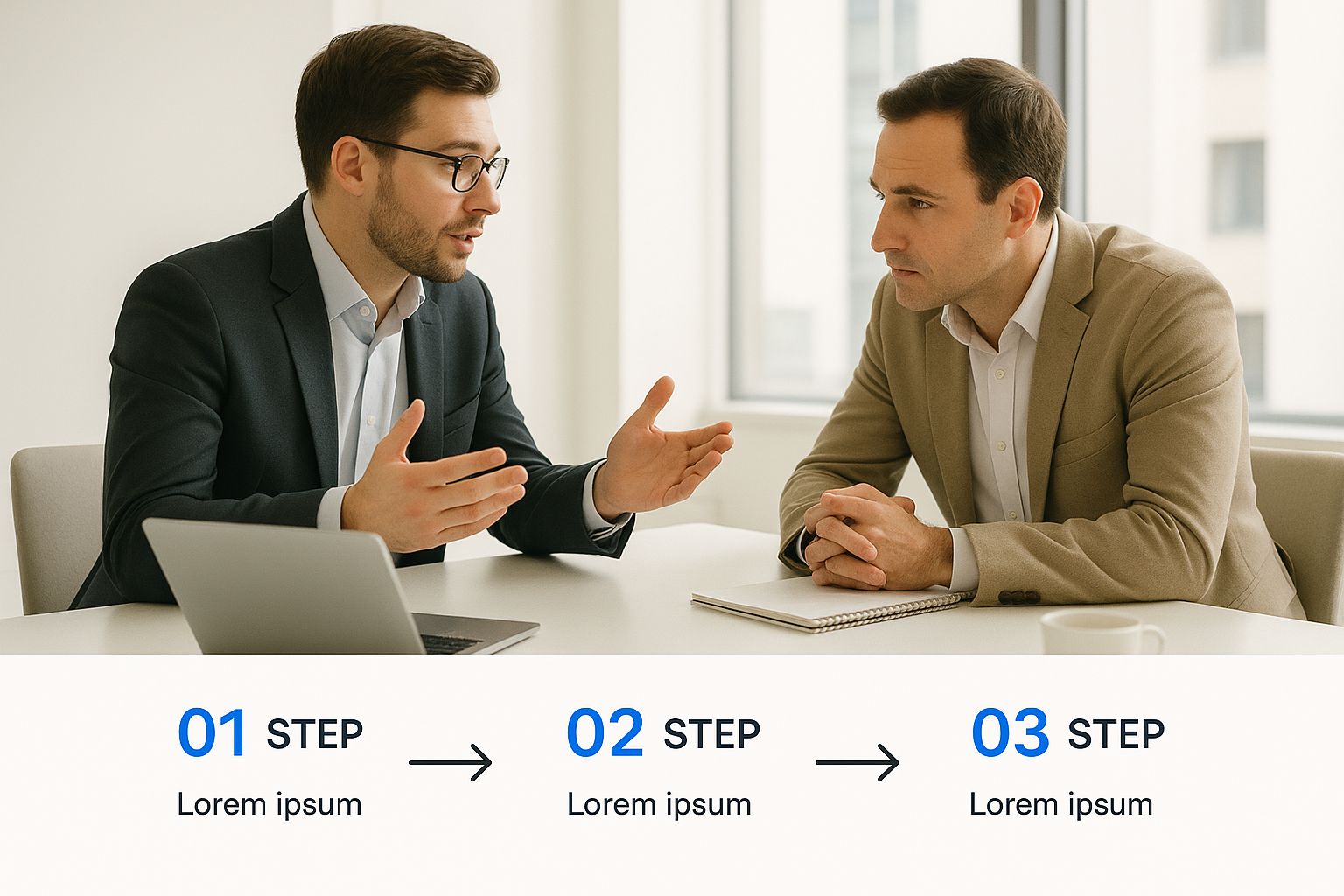
    This visual captures the flow of a genuinely engaged conversation, where listening is just as active as speaking.

    Image

    This image highlights that great communication is a dynamic exchange. Focused listening creates space for clearer expression and mutual understanding.

    Creating a Space for Honest Dialogue

    The first and most important step is to remove distractions. Putting your phone away sends a powerful non-verbal message: "I value you and what you have to say." This simple act can reduce any anxiety the other person might be feeling.

    Imagine a tense chat with a colleague over a missed deadline. Instead of defending yourself, try pausing and saying, "Talk me through what happened from your perspective." That small shift can turn a potential conflict into a problem-solving session, strengthening your working relationship and boosting team well-being.

    The goal of active listening isn’t to gather ammunition for your rebuttal; it’s to understand the other person’s world so completely that they feel seen and respected.

    This skill improves all interactions, from catching up with a partner to brainstorming with your team. To dive deeper, resources like What Is Active Listening are a fantastic place to start.

    If you find it hard to stay present in conversations due to stress or other concerns, it may be helpful to explore why. Sometimes, challenges like anxiety or depression can make it difficult to focus. Remember, assessments are informational, not diagnostic, but reaching out for therapy or counselling is a proactive step toward building stronger mental health.

    Decoding Unspoken Language and Nonverbal Cues

    So much of what we communicate has nothing to do with words. Our posture, tone of voice, and facial expressions reveal our true emotional state. Understanding this silent language is key to learning how to improve communication effectively.

    This skill is critical for your well-being. When your body language doesn't match your words, it can create mistrust and lead to stress or anxiety. Authentic connection comes from aligning what you say with what you show.

    Image

    Reading the Room to Build Rapport

    Have you ever heard someone say "yes" while their body language screamed "no"? This disconnect is where misunderstandings grow, fueling workplace stress and burnout. Paying attention to these signals is a form of empathy.

    It helps you notice hesitation or excitement that isn't being put into words. While cultural nuances exist, like the head wobble in India, a closed-off posture is an almost universal sign of resistance. This awareness allows for more compassionate and effective conversations.

    To start building stronger rapport, focus on these key areas:

    • Body Posture: An open stance with relaxed shoulders signals approachability. Slouching or turning away can suggest disinterest or insecurity.
    • Facial Expressions: A genuine smile involves the eyes, not just the mouth. Notice a furrowed brow or a tight jaw, as these can be signs of stress or concern.
    • Tone of Voice: The same words can have different meanings based on your tone. A calm, steady voice builds trust, while a rushed tone can signal anxiety.

    Aligning Your Own Nonverbal Signals

    Becoming a better communicator also means ensuring your own nonverbal cues send the intended message. When your body language aligns with your words, people see you as trustworthy and genuine. This alignment is foundational for building resilience in relationships.

    For example, when giving supportive feedback, leaning in slightly shows you are engaged. Maintaining comfortable eye contact conveys sincerity. These small actions create a safe atmosphere where others are more receptive to what you have to say.

    The best communicators don't just say the right things; they create an emotional environment where their words can actually be heard.

    Think about a difficult conversation where you kept glancing at your phone. Your actions likely undermined your words, sending a signal that the other person wasn't a priority. Becoming aware of these habits is a skill often developed through practices like therapy and counselling.

    Actionable Tips for Nonverbal Awareness

    Mastering nonverbal communication is an ongoing practice that requires mindfulness.

    • Observe Without Judging: Start by noticing the body language of people around you. The goal isn't to draw conclusions but to simply observe patterns.
    • Look for Mismatches: When you sense a disconnect between words and actions, you can gently ask a clarifying question. Try, "You said you're fine, but I'm sensing some hesitation. Is there anything to talk through?"
    • Practice Mindful Self-Correction: Notice your own physical habits, like fidgeting when nervous. Acknowledging these tendencies is the first step toward choosing more open gestures.

    If you find that nonverbal signals are consistently driven by anxiety or depression, it can be helpful to explore the root cause. While this guide offers practical tools, professional support can help with persistent challenges. Therapy provides a safe space to build stronger, more authentic communication habits for long-term well-being.

    Giving and Receiving Feedback with Grace

    Feedback is a powerful tool for growth, but it can often make us feel defensive or anxious. The key is to see it not as criticism, but as a compassionate act meant to help someone improve. When we shift our perspective, feedback becomes a gift.

    Feedback delivered with care strengthens relationships and boosts well-being. When we learn to receive it openly, it becomes a guide for growth rather than an attack. This approach helps build a culture of trust and support.

    Image

    A Framework for Delivering Supportive Feedback

    Giving good feedback is a learned skill. The goal is to be clear, kind, and specific, focusing on the behavior, not the person. This distinction prevents others from feeling personally attacked and helps them stay open to your message.

    Think of your feedback as an observation. Instead of a vague comment like, "Your presentation was weak," offer concrete details. Separating the action from the person's identity creates the psychological safety needed for a real conversation.

    Here's a simple, effective model you can use:

    • Be Specific and Objective: Start with a neutral fact. For example, "During this morning's client call, I noticed we went over our scheduled time by about 15 minutes." This is an observation, not a judgment.
    • Explain the Impact: Connect that observation to a consequence. "Because of that, we had to rush the last few agenda items, and I’m worried the client felt their questions weren’t fully addressed."
    • Suggest a Collaborative Next Step: Frame the solution as a team effort. "For the next call, maybe we could set a timer to keep us on track. What do you think?"

    Real-World Scripts for Graceful Feedback

    Let's put this into practice. Imagine you're a manager in a Mumbai office and need to address missed deadlines with a team member. A blunt approach could cause workplace stress and damage their confidence.

    Try this instead: "Hi Rohan, do you have a moment? I wanted to check in about the project timeline. I noticed the last two reports came in a day late, which impacted the design team. Can I help clear any roadblocks, or should we look at the workload together?"

    This script works because it's private, specific, and supportive. It explains the impact without blame and opens the door for a problem-solving discussion. This is how you build a resilient and trusting team.

    How to Receive Feedback with an Open Mind

    Receiving feedback well is just as important as giving it. It's normal to feel a jolt of anxiety or defensiveness. The key is to manage that initial reaction by taking a breath before you respond.

    Remind yourself that this information is an opportunity to learn. Before you say a word, focus on listening to understand, not to form a defense. This mindset shift is crucial for personal growth and happiness.

    Remember, feedback is data—not a verdict. It’s information you can use to build a better version of yourself.

    To get the most out of the experience, try these strategies:

    1. Listen Fully and Avoid Interrupting: Let the person finish their thought completely without jumping in with excuses.
    2. Ask Clarifying Questions: Once they're done, ask questions to ensure you understand. For example, "Could you give me a specific example of when you noticed that?"
    3. Show Appreciation: Thank them for their perspective. A simple, "Thank you for bringing this to my attention," shows maturity and keeps communication open.

    If receiving feedback consistently triggers overwhelming anxiety or feelings of depression, it may be helpful to explore why. Remember that assessments are informational and not a substitute for a diagnosis. Therapy or counselling can offer a supportive space to build the emotional resilience to turn feedback into a positive force.

    Navigating Difficult Conversations and Conflict

    No one enjoys conflict, but avoiding difficult conversations often creates bigger problems like resentment and burnout. Learning to handle these moments with grace can turn a tense situation into something productive. This skill helps you manage anxiety and build more resilient relationships.

    Staying Centred Under Pressure

    When you feel misunderstood, your body's stress response can take over, making it hard to think clearly. The most important first step is to manage that internal storm. Before you say a word, take a slow, deep breath.

    This simple pause can interrupt that knee-jerk reaction and help you shift from a defensive to a problem-solving mindset. This technique, often taught in therapy and counselling, puts you back in control of your emotions. It's a powerful tool for maintaining your well-being during a challenge.

    Using 'I' Statements to Express Yourself

    One of the most effective shifts you can make is starting sentences with "I" instead of "You." "You" statements can sound like accusations and put the other person on the defensive. In contrast, "I" statements allow you to share your experience without assigning blame.

    Here’s how it works in practice:

    • Instead of: "You're stressing me out with all these last-minute changes."
    • Try: "I feel overwhelmed when project details change unexpectedly at the last minute."
    • Instead of: "You never listen to what I have to say."
    • Try: "I feel unheard when I'm not able to finish my thought."

    This is not a trick; it's an invitation to a real dialogue. It creates a space where both people can be honest without feeling attacked, which is vital for long-term well-being in any relationship.

    Finding Common Ground in Disagreements

    Even in conflict, there is almost always a shared goal hidden beneath the surface. Finding this common ground can anchor the conversation, reminding both of you that you're a team solving a shared problem. For example, an argument over finances might really be about a shared desire for future security.

    Starting from that shared goal—"We both want to be financially secure, so how can we create a plan together?"—changes the entire dynamic. You begin collaborating instead of competing. This approach builds incredible resilience and proves you can navigate tough spots without damaging the relationship.

    Conflict is not the enemy; unresolved tension is. A difficult conversation handled with compassion is an investment in your relationship and your peace of mind.

    If you find that conflict consistently overwhelms you, leading to severe anxiety or feelings of depression, it may be time to seek support. While assessments can offer insight, they are never a substitute for a professional opinion. Therapy can provide a safe space to develop better coping strategies for managing workplace stress and personal disagreements.

    Putting It All into Practice

    Mastering communication is a lifelong journey of small, mindful changes. The strategies we've covered are a toolkit to help you build stronger, more authentic connections. Remember, this is about progress, not perfection.

    When an old habit resurfaces, show yourself compassion. Every interaction is a new chance to practice and learn. Celebrate the small wins along the way as you build healthier communication habits.

    Weaving These Skills into Your Daily Life

    Mindful communication blends active listening, reading nonverbal cues, and handling disagreements with grace. Together, these skills create a foundation of trust and respect. The best way to make these habits stick is to focus on one at a time.

    • For one week, make active listening your main focus. Put your phone away and truly listen to understand what someone is saying before you reply.
    • The next week, shift your attention to body language. Notice your own posture in meetings and try to keep your stance open and approachable.

    This journey toward better communication is a powerful act of self-care. Every step you take not only makes your relationships stronger but also builds your own resilience and inner calm.

    Knowing When You Might Need More Support

    This guide offers practical tools, but sometimes our communication struggles are linked to deeper challenges like anxiety, workplace stress, or depression. If you feel these hurdles are holding you back, reaching out for professional support is a sign of strength.

    Therapy or counselling provides a safe, confidential space to explore these patterns. A professional can offer personalized strategies to improve your self-awareness and overall well-being. Remember, any self-assessments are for informational purposes only and are not a diagnosis.

    Ultimately, committing to improving how you connect with others is one of the best investments you can make in your own happiness. Be patient with yourself, stay present in your conversations, and trust the process. The path to more mindful communication is incredibly rewarding.

    A Few Common Questions About Communication

    Starting the journey to better communication often brings up a few questions. It’s a big topic, after all. Let's tackle some of the most common ones that people ask as they get started.

    How Quickly Can I Actually See Improvements?

    You can use a technique like active listening in your next conversation and see an immediate positive effect. However, real, lasting improvement takes time and consistent practice.

    Think of it like building a muscle rather than flipping a switch. Focus on small, steady efforts every day. That consistent practice is what builds genuine skill and confidence in your communication.

    What If I Get Anxious During Conversations?

    That's incredibly common, as social anxiety can make simple chats feel challenging. A good starting point is to focus on your breathing before and during a conversation to help ground yourself.

    If anxiety is a constant barrier, talking to a therapist can be a powerful way to build confidence and understand those feelings better.

    It's important to remember that this guide offers supportive takeaways, not a diagnosis. Professional counselling gives you a safe space to work through these challenges with an expert.

    Do These Skills Work for Texts and Emails, Too?

    Absolutely. In digital communication, where you can't see body language or hear tone, the principles of clarity and empathy are even more crucial.

    A good habit is to reread messages before hitting send, specifically checking for tone. If a text exchange becomes tense, suggest a quick phone or video call to clear things up.

    How Does All This Relate to Stress at Work?

    There's a massive link between communication and well-being at work. Constant misunderstandings and unresolved conflicts are huge drivers of workplace stress and burnout.

    When a team communicates with clarity and compassion, it builds psychological safety. People feel heard and respected, which reduces friction and builds the kind of trusting relationships that lower stress for everyone.

    If you feel your communication struggles are tangled up with deeper challenges like depression, please know that support is available. Working with a professional to explore these connections is a brave and empowering step towards feeling better.


    Ready to take the next step toward better mental health and communication? DeTalks connects you with qualified therapists and provides science-backed assessments to guide your journey. Find the right support for you.