Tag: relationship therapy

  • Online Couples Counseling to Rebuild Your Connection

    Online Couples Counseling to Rebuild Your Connection

    Every relationship, like a garden, needs care and attention to flourish. Online couples counselling offers a warm, practical way for partners to nurture their connection, providing expert guidance from the comfort and privacy of your home. Taking this step is a positive move toward building a stronger, more resilient partnership.

    Why Modern Couples Are Turning to Online Therapy

    Life today is often busy and demanding. Juggling work, family, and personal time can create stress in a relationship, leading to communication gaps that leave partners feeling disconnected. Seeking support is a healthy, proactive way to keep your bond strong.

    Online therapy provides a convenient and private space for couples to work through challenges together. It removes common barriers like travel and scheduling conflicts, making it easier to prioritize your relationship. This allows you to connect with a qualified professional in a calm, focused headspace for important conversations.

    A Space to Grow and Understand Each Other

    At its heart, couples counselling helps foster deeper understanding and emotional closeness. A neutral professional guides you both to explore communication patterns, identify difficult areas, and find new ways to support one another. The goal is not just to fix problems, but to build lasting skills for a happier future, helping you solve communication breakdowns in a relationship.

    Digital support is becoming increasingly common, especially for busy couples in places like India and around the world. As we grow more comfortable with virtual interactions, online therapy is seen as both effective and practical. It fits naturally into our modern lives.

    Taking Proactive Steps for a Healthier Bond

    Deciding to start therapy is a powerful sign of your commitment to each other and your future. It's a true investment in your shared well-being, helping you navigate current challenges and face future ones as a stronger team.

    Think of online couples counselling as a dedicated workshop for your relationship. It is a space to build stronger foundations and learn new tools for growth, guided by an expert who supports your shared goals.

    By addressing issues like lingering anxiety or unresolved arguments, you can prevent them from becoming bigger problems. This supportive process helps partners develop greater empathy, strengthen their emotional connection, and rediscover joy. It's all about building a future where you both feel heard, valued, and understood.

    Understanding How Online Couples Counselling Works

    Taking the first step into couples counselling can feel uncertain. It helps to understand what happens in a session. Online couples counselling is professional relationship therapy delivered through a secure video call, offering expert support with greater flexibility.

    Your therapist acts as a skilled guide and neutral third party, not a judge. Their role is to help you both hear each other's perspectives in a safe and respectful environment. This allows for open and honest conversations.

    The main goals are to improve communication skills, find healthier ways to manage disagreements, and rekindle your emotional connection. It is a collaborative effort between you, your partner, and your therapist to strengthen your relationship's foundation.

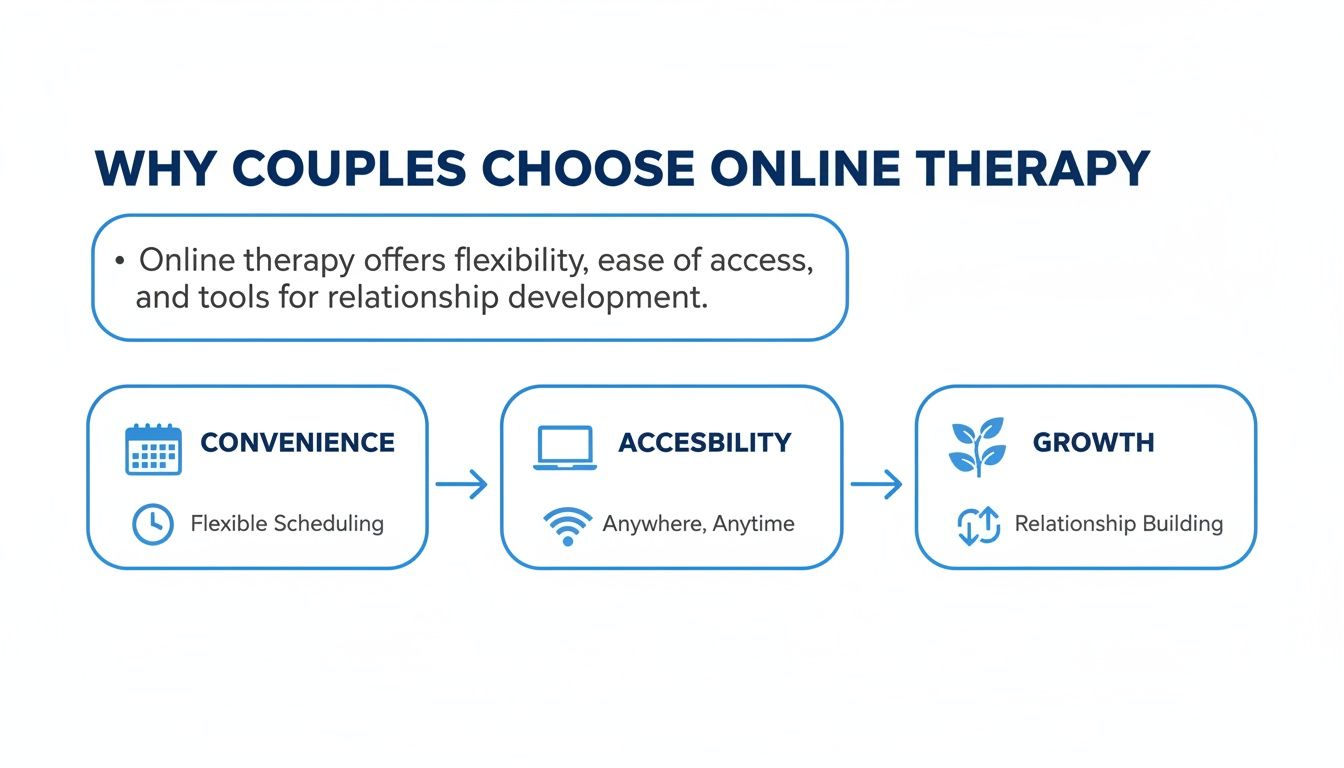
    This visual captures some of the core reasons why so many couples are finding this approach helpful.

    Diagram explaining why couples choose online therapy, detailing convenience, accessibility, and relationship growth benefits.

    This blend of convenience, accessibility, and a genuine focus on growth makes online therapy a practical choice for investing in your partnership.

    What Kinds of Issues Can Be Addressed?

    Couples seek therapy for many reasons, from daily friction to major life events. Online counselling provides a structured space to work through a wide range of issues that can create distance and stress in a relationship.

    Some common areas of focus include:

    • Communication Breakdowns: Feeling like you're talking past each other is a common challenge. Therapy teaches you how to listen actively and express yourselves clearly.
    • Conflict Resolution: If you're stuck in the same arguments, a counsellor can provide tools to break the cycle and find resolutions.
    • Trust and Infidelity: Rebuilding trust is a difficult emotional journey. A therapist can guide you through the necessary conversations to heal and move forward.
    • Life Transitions: Major changes like marriage, a new baby, or a job change can strain a relationship. Therapy helps you navigate these shifts as a team.

    How a Typical Session Is Structured

    While each therapist has their own style, most online sessions follow a similar flow. You and your partner will join a secure video call from a quiet, private space, either together or from different locations.

    Your counsellor will begin by creating a calm and safe atmosphere. The first few sessions focus on getting to know your relationship's history, understanding your perspectives, and clarifying your shared goals for counselling.

    "The goal of therapy is not to assign blame. Instead, it is about identifying unhelpful patterns and building new, healthier ways of relating to each other. It’s a journey toward greater resilience and well-being, both as individuals and as a couple."

    As you progress, your therapist will introduce practical exercises and communication strategies. These tools can help manage challenges like workplace stress and anxiety, building a deeper connection. The process is designed to be supportive, fostering empathy and guiding you toward a happier partnership.

    Is Online Relationship Support Right for You?

    Taking the first step toward relationship support is a positive and hopeful move. Counselling is not just a last resort; it's a valuable resource for any couple looking to deepen their bond and build a more satisfying life together. It’s about being proactive, not just reactive.

    Many couples find themselves in a routine that feels more like roommates than partners. Online therapy creates a dedicated time to unpack these feelings, understand the disconnect, and learn practical skills to bring back intimacy and affection.

    Scenarios Where Online Counselling Can Help

    Every relationship is unique, but many of the challenges couples face are common. Online counselling is particularly helpful when traditional in-person therapy is difficult to access. If any of these situations sound familiar, online support could be a great fit.

    Consider online support if you're:

    • Stuck in the Same Old Fights: A therapist can act as a neutral guide, helping you break negative patterns and learn healthier ways to communicate.
    • Recovering from a Betrayal: Guided therapy provides a safe, structured path to work through the hurt, explore forgiveness, and decide how to move forward together.
    • Making a Long-Distance Relationship Work: Online counselling bridges the physical gap, offering a dedicated space to strengthen your connection across any distance.
    • Wrangling Hectic Schedules: The flexibility of online sessions makes it possible to prioritize your relationship, even with demanding jobs or family commitments.

    A Proactive Approach to a Healthier Partnership

    You don’t have to wait for a crisis to seek support. Proactive counselling can help a good relationship become even stronger, like preventative care for your partnership. It helps you maintain your emotional and relational health.

    This approach is all about building resilience. You'll learn tools to handle life's challenges, from workplace stress to unexpected changes, as a unified team. This focus on positive psychology helps you create more joy, compassion, and happiness in your life together.

    How to Find the Right Online Couples Therapist

    Finding a therapist who makes you both feel safe and understood is the most important step. Think of them as a guide who can help you navigate difficult conversations with skill and compassion. Taking the time to find the right fit is an investment in your relationship's future.

    The goal is to find the right person for your unique partnership. The connection you build with your counsellor, known as the therapeutic alliance, is a strong predictor of a positive outcome. It is vital that you both feel comfortable with their approach.

    A couple sits at a table, looking at a tablet displaying a professional profile, with coffee mugs nearby.

    Understanding Credentials and Specialisations

    As you search, you will find therapists with various qualifications. Look for professionals with specific training in relationship dynamics. Specialised certifications in couples work are a significant advantage.

    Two highly respected, evidence-based approaches you might see are:

    • The Gottman Method: This practical approach is based on decades of research. It focuses on skills for managing conflict, deepening friendship, and creating shared meaning.
    • Emotionally Focused Therapy (EFT): This model helps couples understand and change negative cycles. It aims to create a more secure emotional bond by helping you express deeper needs and feelings.

    A therapist trained in these methods will have a clear framework to help you address challenges and grow together.

    Using Platforms Like DeTalks to Your Advantage

    Modern platforms like DeTalks make it much easier to find a qualified professional. You can filter your search based on specific needs and browse detailed profiles that outline their experience and therapeutic philosophy.

    Reading these profiles carefully is key. Does their approach resonate with you? Do they have experience with challenges like workplace stress, managing anxiety as a couple, or navigating feelings of depression? This helps you create a shortlist of potential therapists.

    Remember, the initial consultation is a two-way interview. It's your opportunity to assess the therapist, just as much as they are getting to know you. Feeling a sense of connection and trust from that very first conversation is a fantastic sign.

    Many platforms offer introductory calls, which are valuable for getting a feel for the therapist. This is your chance to ask questions and see how they interact with both of you. Pay attention to how you feel during and after the call.

    Key Questions to Ask in a Consultation

    An initial consultation is the perfect time to ensure the therapist's approach aligns with your goals. Having a few questions ready can help you make a confident decision. This is a conversation to see if your communication styles connect.

    Here’s a quick checklist to guide your discussion:

    1. What is your approach to couples counselling? This helps you understand their philosophy and the methods they use.
    2. What’s your experience with issues like ours? You want someone who has navigated similar territory before.
    3. How do you structure your sessions? This gives you a practical idea of what to expect.
    4. How do you ensure both of us feel equally heard? A skilled therapist is neutral and balances the conversation.
    5. How do you view setting goals for therapy? This clarifies how you'll work together to define a successful outcome.

    Choosing a therapist is a personal decision. The goal is to find a culturally sensitive professional who helps you both feel seen and hopeful. A thoughtful search sets the stage for a positive experience with online couples counselling and a stronger partnership.

    What to Expect in Your First Few Sessions

    It is completely normal to feel a mix of hope and nervousness before your first therapy session. Starting online couples counselling is a big step. The first few meetings are about building a foundation of trust and helping you get comfortable with the process and your therapist.

    Your therapist will likely begin by getting to know you and your relationship’s history. They will listen as you describe your challenges and, just as importantly, what you hope to achieve together. This helps the therapist gain a complete picture of your connection.

    Smiling couple attends an online counseling session on a laptop in their cozy living room.

    Setting the Stage for Open Conversation

    The goal of early meetings is not to determine who is right or wrong. It's a team effort to identify recurring patterns that may be creating distance between you. Your therapist acts as a guide, helping you see these cycles from a fresh, more compassionate perspective.

    To get the most out of your sessions, prepare your physical space beforehand. Find a quiet, private spot where you won't be interrupted. A stable internet connection and comfortable seating will help you focus on the conversation and each other.

    Understanding the Role of Assessments

    Sometimes, a therapist might use questionnaires to gather more information. These are not tests. They are simply tools to offer insights into things like communication styles, sources of workplace stress, or individual well-being.

    It’s important to remember that these assessments are not diagnostic. They are informational guides that provide a clearer starting point for your therapy journey, highlighting both strengths and areas for growth.

    This information helps your therapist tailor the counselling specifically to you, ensuring the process is relevant and effective.

    Establishing Collaborative Goals

    By the end of the first few sessions, you, your partner, and your therapist will work together to set clear, achievable goals. This is a critical step that ensures everyone is on the same page and working toward a shared vision. This process turns a vague hope for change into a concrete plan for building a stronger connection.

    These initial meetings are a guided exploration focused on building resilience and fostering compassion. The supportive takeaways should leave you feeling hopeful and better equipped for the journey ahead, focusing on your shared well-being rather than promises of a cure for challenges like anxiety or depression.

    Making the Most of Your Therapy Journey

    Starting online couples counselling shows you are both invested in building a stronger future together. Getting the most out of it requires patience, practice, and a commitment from both of you to apply what you learn in your daily lives.

    It's normal for challenges to arise during therapy; in fact, they are often opportunities for growth. For instance, one partner may feel hesitant at first. Approaching this with empathy and framing therapy as something you are doing for the relationship can help.

    Navigating Common Hurdles Together

    If your partner is unsure, focus the conversation on shared goals, like wanting more laughter or less tension. This shifts the dynamic from blame to collaboration, making therapy feel like a positive investment in your future happiness.

    Talking about sensitive subjects can also feel uncomfortable, but this discomfort is often a sign of progress. A good therapist creates a safe, non-judgmental space for these conversations. Remembering this can help you move through the difficult moments.

    Overcoming these small challenges together can become a powerful part of the therapeutic process itself. It’s in these moments—showing patience with a skeptical partner or offering support during a tough conversation—that you begin to build new patterns of compassion and resilience.

    Here are a few practical tips to help you navigate this:

    • Create a "We" Frame: Talk about therapy as something "we" are doing for "us" to reinforce that you are a team.
    • Practice Patience: Lasting change takes time. Celebrate small wins and acknowledge the effort you are both making.
    • Schedule Practice Time: Set aside 15-20 minutes a few times a week to practice the communication exercises your therapist provides.

    From Insights to Action

    A key challenge is applying what you learn in therapy to real life. It takes consistent practice to use new skills when you are feeling stressed or frustrated. This is where the real work of building a stronger relationship happens.

    This journey also helps rebuild your emotional bond and address feelings of isolation. To deepen your connection and learn more about overcoming distance, you may find it helpful to explore resources on how to deal with loneliness and build real connections.

    Ultimately, making the most of your online couples counseling comes down to showing up for your sessions, your partner, and yourself. It is an active process of turning moments of anxiety and friction into opportunities for a much deeper connection.

    Frequently Asked Questions

    It's completely normal to have a few questions before diving into online couples counselling. Let's walk through some of the most common ones to help you get a clearer picture of what to expect and feel confident about taking this step for your relationship.

    Is Online Couples Counselling as Effective as In-Person Therapy?

    Absolutely. For most couples, online therapy can be just as powerful as sitting in a therapist's office. A growing body of research, along with countless real-world success stories, shows that video sessions deliver fantastic results in improving communication, navigating conflict, and boosting overall relationship happiness.

    Ultimately, what makes therapy work isn't the room you're in—it's your commitment to the process and the connection you build with your therapist. The best format is simply the one that works for your life and allows you both to show up fully and engage.

    What If My Partner Is Hesitant to Try Counselling?

    This is a big one, and it's something many couples face. The key is to approach the conversation with empathy, not pressure. Try framing it as a project you can tackle together to make your team stronger, rather than something meant to "fix" your partner or place blame.

    Often, suggesting just one initial consultation can feel like a much smaller, less intimidating step. Many partners who are initially on the fence find that the privacy and comfort of being at home for online couples counselling takes a lot of the pressure off. Once they see it's a supportive space, that hesitation usually melts away.

    How Much Does Online Couples Counselling Typically Cost?

    Costs can range quite a bit, and they usually depend on the therapist's level of experience, their specific qualifications, and the platform you choose. The good news is that many online services offer access to professionals at various price points, so you can often find great support that aligns with your budget.

    It can be helpful to reframe the cost. Instead of viewing it as just another weekly bill, think of it as a meaningful investment in the long-term health, happiness, and resilience of your partnership.

    How Will We Know If the Therapy Is Working?

    Progress in therapy isn't always a dramatic, overnight change. More often, it reveals itself in small but significant shifts in your daily interactions. You might suddenly realise you're able to talk about a touchy subject without it blowing up, or you catch yourself truly listening to your partner's side of things instead of just waiting for your turn to talk.

    Here are a few signs you're on the right track:

    • You start feeling more like partners and less like roommates.
    • You notice disagreements de-escalate much faster than they used to.
    • You feel a renewed sense of hope and optimism about your future together.

    A good therapist will also make a point of checking in with you both regularly. They'll help you reflect on the goals you set at the beginning and see how you’re progressing, ensuring the counselling stays on track and genuinely helps you both.


    Ready to take that first step towards a stronger, happier relationship? The right support can make all the difference. On DeTalks, you can find experienced therapists who specialise in working with couples. Take a look and book a confidential session today. You can explore your options and find a therapist on DeTalks.

  • What is family therapy? Learn how it heals relationships

    What is family therapy? Learn how it heals relationships

    When a family faces a tough spot, it’s easy to feel like you're all pulling in different directions. Family therapy offers a unique way forward, bringing everyone together to find solutions as a team. It’s not about singling one person out; it looks at the family as a whole, interconnected unit.

    Understanding the Family as a System

    Think of your family like a mobile hanging from the ceiling. If you gently touch one piece, the whole structure sways. That's the core idea behind family therapy: a supportive space designed to help you see and adjust these interconnected dynamics.

    A wooden mobile of five interconnected human figures, suspended from a white ceiling, symbolizing family.

    The goal isn't to find a "problem person" or to assign blame. It's about uncovering patterns of communication and relating to each other that might be causing friction, so you can build healthier ways to connect.

    To put it simply, here’s a quick overview of what family therapy truly entails.

    Family Therapy At a Glance

    Core Aspect What It Means for Your Family
    Systemic View We look at the family as a whole. One person’s stress affects everyone, and healing happens together.
    No Blame Game The focus is on patterns and interactions, not on fault. It's about what is happening, not who is to blame.
    Guided Communication A therapist helps you talk and listen to each other in new, more constructive ways.
    Building Skills You learn practical tools for resolving conflicts, managing stress, and supporting one another better.

    This table shows how therapy moves beyond individual issues to strengthen the entire family foundation.

    A Safe Space to Reconnect and Heal

    A qualified therapist acts as a neutral guide, creating a safe and respectful environment where every voice can be heard. This helps untangle complex issues, from communication breakdowns to the challenge of adapting to a major life event. The process equips your family with tools to build a stronger, more resilient foundation for well-being.

    In India, family therapy is becoming an important resource for navigating conflicts that arise from our evolving social norms. Yet, stigma can stand in the way. Research highlights a significant treatment gap, where many with mental health concerns don't receive care due to social judgment or lack of awareness. You can explore more about these public health findings to understand why accessible support is so crucial.

    This type of counselling can help with a wide range of common challenges, including:

    • The ripple effect of workplace stress on home life.
    • When one member's anxiety or depression impacts the entire family dynamic.
    • Navigating major life transitions like a marriage, the arrival of a new baby, or grieving a loss.
    • Developing collective resilience to face unexpected hardships together.

    More Than Just Fixing Problems

    Family therapy isn't solely about crisis management; it’s a proactive step towards fostering positive growth. It champions concepts from positive psychology, like compassion and shared happiness, to strengthen family bonds. The sessions are always collaborative, and any assessments used are informational, not for diagnosis or labelling.

    By taking part, families discover their hidden strengths and learn healthier, more supportive ways of interacting. It’s a journey that can turn difficult challenges into opportunities for deeper connection and genuine improvement in everyone's well-being.

    What Are the Real Goals and Benefits of Family Counselling?

    Deciding to start family therapy is a positive step toward a healthier home. But it's normal to ask, "What are we actually trying to accomplish?" The point isn't just to put out immediate fires; it's about giving your family a new toolkit for the long haul.

    At its heart, a key goal is to improve communication. A therapist creates a safe space where everyone feels heard, from the quietest teen to the most outspoken parent. This means learning to listen differently and express your needs without starting a fight.

    Building a Stronger Family Foundation

    Another major goal is learning how to solve problems together. Many families get stuck in the same arguments because they lack better strategies. Therapy provides new ways to work through conflict that build you up, turning friction into an opportunity for teamwork.

    When you start doing this, the whole atmosphere at home begins to change. Sorting out unspoken tensions and making daily interactions smoother can significantly lower background anxiety and stress. The result is a home that feels more like a sanctuary and less like a battleground.

    "The aim of family therapy is to interrupt dysfunctional patterns and create new, healthier ways of relating. It’s about building a team that can face anything together, strengthening the emotional fabric that holds a family in place."

    By working through things in a guided setting, family members start to see each other's perspectives. This builds deeper empathy and connection, which is vital for getting through life's challenges. It helps you navigate everything from daily workplace stress to major family changes.

    Fostering Resilience and Well-being for Everyone

    One of the most powerful benefits of family therapy is that it builds collective resilience. Life is full of challenges, and resilient families have the skills to bounce back from tough times. They support each other and come out stronger on the other side.

    A good therapist helps your family see its own strengths, focusing not just on what's wrong but also on what's already working. This shift in perspective can be a massive help in tackling feelings of depression by making home a true source of support.

    When therapy is working well, you'll start to see real changes:

    • Reduced Conflict: Disagreements still happen, but they don't spiral into destructive fights anymore.
    • Deeper Empathy: Family members get much better at understanding and validating how others are feeling.
    • Clearer Roles and Boundaries: Everyone has a clearer sense of their role, which leads to less confusion and more respect.
    • Improved Overall Well-being: A healthier family dynamic boosts the mental health of every single person, creating a more secure and happy environment.

    If you're interested in practical ways to improve communication, you might find some useful ideas in marriage counseling exercises, as many of these techniques can be adapted for the whole family.

    Ultimately, family therapy is an investment in your shared future. It’s a process that helps you rewrite your family’s story with connection and understanding at the center.

    Exploring Different Approaches to Family Therapy

    Family therapy isn't a one-size-fits-all solution. It's a collection of thoughtful approaches, and a good therapist will select one that best suits your family’s unique needs and goals.

    This flexibility is one of the greatest strengths of family counselling. The aim is always to find the most effective path toward better communication, stronger bonds, and lasting resilience. Getting to know these different styles can make the process feel less mysterious.

    Structural Family Therapy

    Every family has an invisible structure that shapes how everyone interacts. Structural therapy works to examine and adjust this blueprint. The therapist helps the family see where the structure might be causing stress, like when boundaries are blurry or roles are rigid.

    For example, a therapist can help re-establish a healthier structure when parent-child roles become confused. The focus is practical, creating supportive and well-defined roles for everyone.

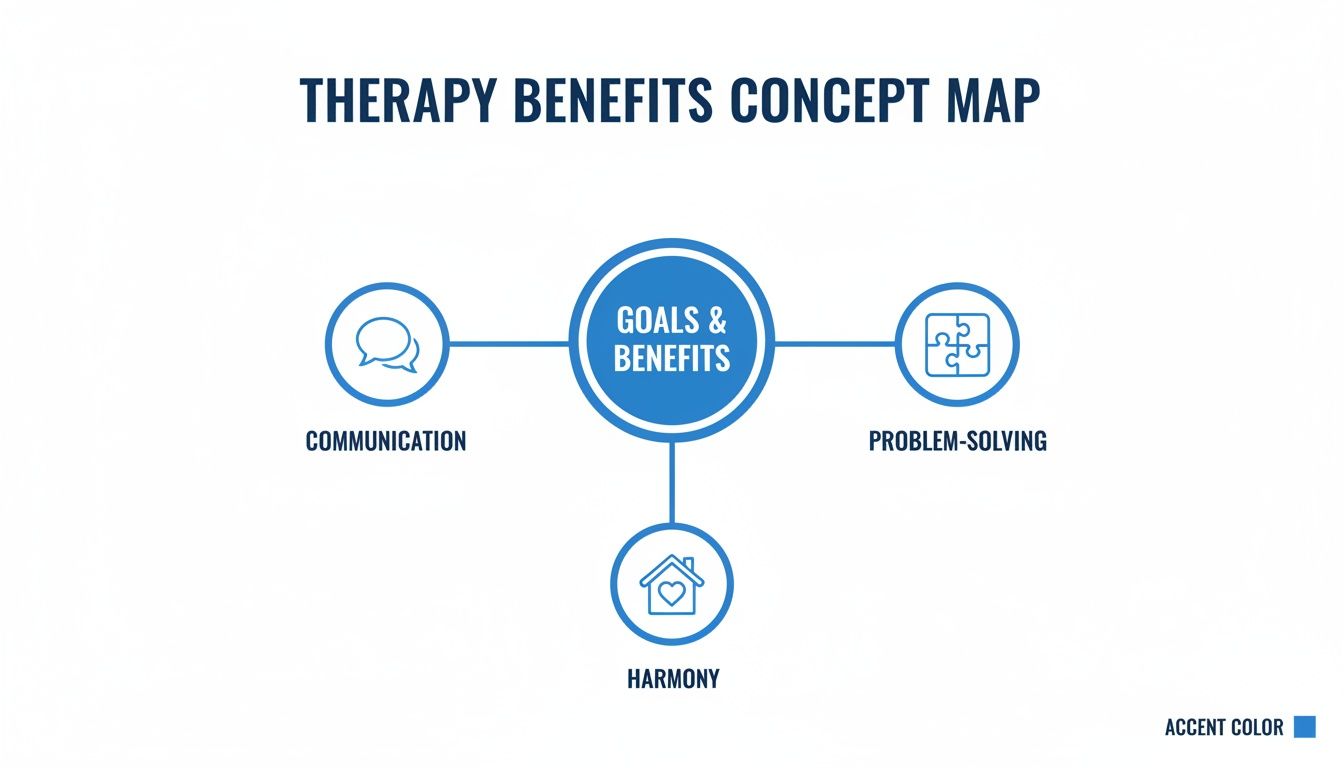
    A clear concept map illustrates the key benefits of therapy: communication, problem-solving, and harmony.

    As this shows, the goal across different models is to create a balanced family system where every member can thrive.

    Narrative Therapy

    Every family has a story it tells about itself. Sometimes, these stories become focused on problems, like past hurts or ongoing struggles with anxiety or depression.

    Narrative therapy helps families rewrite that story. Instead of seeing a person as the problem, this approach separates the person from the issue. The therapist guides your family to uncover strengths and past successes, co-authoring a new, more hopeful story for your future.

    Bowenian Family Therapy

    This approach looks at the family system across generations. It’s based on the idea that many of our relationship patterns are handed down through our family history.

    The main goal is to help each family member develop a stronger sense of self. This means learning to stay emotionally connected to the family while also being your own independent person.

    Bowenian therapy teaches us that understanding our family's emotional history can free us from repeating unhealthy patterns. It’s about achieving a balance between belonging and being an individual, which is key to reducing conflict and anxiety.

    A Bowenian therapist helps you see these inherited patterns. Then, you can consciously choose a healthier, more intentional response, breaking the cycle for yourself and for generations to come.

    Systemic Family Therapy

    The systemic model views the family as a deeply interconnected emotional unit. It focuses on the unspoken rules and communication loops that keep certain behaviours going. A therapist using this model carefully observes how everyone interacts to uncover the underlying dynamics.

    The focus isn't on who started the problem, but on how it’s being maintained now. Changing just one small part of the system can create positive ripple effects, improving everyone's well-being.

    Comparing Common Family Therapy Models

    Here is a simple breakdown of these different models to help you get a clearer picture.

    Therapy Model Main Focus Best Suited For
    Structural Therapy Family hierarchy, boundaries, and roles. Families dealing with conflict around roles and authority, such as parenting challenges.
    Narrative Therapy The stories a family tells about itself. Families who feel stuck in a negative cycle or defined by a particular problem.
    Bowenian Therapy Generational patterns and self-awareness. Families wanting to understand deep-rooted patterns and improve emotional maturity.
    Systemic Therapy Current communication and interaction loops. Families needing to address ongoing conflicts and the unspoken rules driving them.

    While each approach has a different lens, they all share a common goal: to help your family function in a healthier way.

    It’s important to remember that any assessments used during therapy are informational, not diagnostic. A therapist’s role is to understand your family's unique situation and apply the most suitable methods to help you move forward.

    What to Expect During a Family Therapy Session

    Walking into a therapist's office for the first time can feel like a big step. Knowing what to expect can calm your nerves. The therapist’s main job is to create a safe space where every family member feels heard and respected.

    A diverse family, two men and a young girl, engaged in a therapy session with a female counselor.

    Things usually begin with an initial consultation. The therapist will get to know your family, listen to your concerns, and understand your goals for counselling. This is also your chance to see if the therapist is the right fit.

    The First Few Sessions

    The first session or two is all about discovery. Your therapist will act as a neutral guide, listening to everyone’s perspective without taking sides. Their role is to help you talk to each other, not to play judge.

    You’ll likely be asked about your family’s history and the issues that brought you in. It's important to know that any assessments a therapist might use are informational. They are not diagnostic tools and are never used to label anyone.

    Who comes to each session can change. Sometimes the whole family will be there; other times, the therapist might suggest smaller groups. This flexible approach allows the therapist to focus on different relationships.

    What Happens During a Typical Session

    After the initial phase, sessions become more interactive. A therapist will guide the conversation to help you spot hidden patterns causing friction or stress. You might also do specific exercises to improve how you interact.

    These activities could include:

    • Role-playing: A safe way to practise new communication skills for when disagreements pop up.
    • Mapping your family system: Literally drawing out your family tree and relationships to get a clearer picture of connections and boundaries.
    • Setting shared goals: Working as a team to decide what a happier, healthier family life looks like for all of you.

    The point of a session isn’t to dig up old arguments and have another fight. It's about finding new ways forward, together. It’s a collaborative effort to build understanding, foster resilience, and learn practical skills.

    This process shifts the focus from individual blame to shared solutions. It creates a space where tough subjects, like workplace stress or feelings of anxiety and depression, can be discussed openly.

    The Role of Therapy in Broader Contexts

    Family therapy is also expanding to meet families where they are. In India, school-based family counselling is becoming a critical resource for helping students handle academic pressure. This approach gets families involved in solving problems like exam stress, bridging the gap between home and school. You can read more about these school-based initiatives and see their impact.

    Duration and Realistic Expectations

    One common question is, "How long will this take?" There's no set timeline. The duration depends on your family's unique situation and goals. Some families see improvement in a few months, while others with more complex issues may need longer-term support.

    Your therapist will discuss a potential plan with you, but it’s always flexible. The goal is to empower your family with the tools to navigate challenges on your own, long after therapy has ended.

    Signs Your Family Might Benefit from Therapy

    Every family has its rough patches. But what happens when those patches start to feel like a permanent, rocky road? Recognizing that you could use a guide is a sign of strength, not defeat.

    Thinking about counselling is a proactive step toward getting your family’s well-being back on track. It's often wise to address small issues before they grow into larger ones.

    Communication Breakdowns

    One of the first red flags is when communication stops working. Maybe every chat explodes into an argument, or an uncomfortable silence hangs in the air. When people feel they can't speak up or aren't being heard, resentment builds.

    This communication gap can show up in a few ways:

    • Constant Arguing: If every discussion feels like a battle and nothing gets resolved, you're stuck in a negative loop.
    • Avoiding Each Other: Family members might retreat to their rooms or make excuses to stay out of the house to avoid conflict.
    • Holding Grudges: When old wounds never heal, the lingering anger can poison the home atmosphere.

    Therapy creates a safe, neutral ground to learn how to talk and listen to one another again. A therapist acts as a coach, helping your family break old habits and start having real conversations.

    Overwhelming Life Transitions or Events

    Life has a way of throwing curveballs that can shake even the strongest families. Big events—like a new baby, a move, a job loss, or illness—can pile on stress. These moments bring up huge emotions that are hard to handle as a group.

    Family therapy provides a space to work through these changes together. It helps everyone find their footing and build resilience as a team.

    Persistent Behavioural or Emotional Issues

    When a child or teen is having a hard time, the ripple effects are felt by everyone. If you're dealing with ongoing behavioural problems, signs of anxiety or depression, or sudden mood swings, it's a source of worry. Often, these struggles are a symptom of a dynamic within the family.

    Seeking help is about understanding the root cause of the behaviour, not just managing the symptoms. It’s an opportunity to create a more supportive home environment where every member can thrive.

    Therapy can uncover underlying stressors and give your family practical tools to support the person who's struggling. When it comes to adolescents, a guide to therapy for teens can be a great resource.

    Takeaways for Your Family

    Seeing your family in these descriptions is the first, most important step. Remember, the goal of therapy isn’t about pointing fingers. It’s about giving your family the tools and understanding needed to face challenges together, reconnect, and build a stronger future.

    Finding the Right Family Therapist with DeTalks

    Deciding to start family therapy is a big step. But finding the right professional for your family is what truly sets the stage for meaningful change. The relationship you build with your therapist is key, so you need someone whose style resonates with your family.

    A good fit is when everyone feels safe, genuinely heard, and understood.

    A smiling family engaging in a virtual video call with a professional on a laptop.

    Look for a qualified professional with experience in the kinds of issues your family is facing. Ask if they have a background in areas like managing workplace stress, parenting hurdles, or dealing with anxiety.

    Your Path to Finding Support

    The thought of searching for a therapist can feel overwhelming, which is why platforms like DeTalks exist. We offer a clear way to connect with vetted therapists across India, bringing professional counselling within reach. Whether you're looking for face-to-face or online therapy, the right support is out there.

    Online therapy has become a game-changer in India, helping to bridge a huge gap in mental health access. For families in remote areas or those still navigating post-pandemic life, digital platforms are a necessity. This shift is helping countless people find support, a trend highlighted in this report on mental health awareness trends.

    Taking that first step is an act of courage and a commitment to your family's well-being. Finding a therapist you can all trust builds the foundation for healing and allows your family to grow.

    How DeTalks Can Help You Begin

    At DeTalks, we believe you should feel empowered with information from the start. Our platform offers confidential, science-backed assessments that can provide a valuable glimpse into your family's dynamics. It’s crucial to remember that these assessments are informational tools, not diagnostic ones.

    Here's how easy it is to get started with us:

    • Explore Profiles: Take your time browsing our directory of experienced therapists to find a good match for your family.
    • Book with Ease: Once you've found a potential fit, schedule an appointment directly on the platform at a time that works for everyone.
    • Gain Insights: Consider taking one of our informational assessments to get a better handle on your family’s strengths.

    Starting this journey is a sign of hope. It’s an investment in building lasting resilience and nurturing deeper connections. With the right support, the path forward is just a click away.

    Got Questions About Family Therapy? We've Got Answers.

    It's completely normal to have questions when you're thinking about starting family therapy. It means you're taking this step seriously. Let's walk through some common concerns to help you feel more comfortable.

    Will the Therapist Pick a Side?

    This is a fair question. A professional family therapist acts as a neutral facilitator, not a referee. Their job isn't to figure out who's "right" or "wrong" or to place blame.

    Instead, they look at the family as a whole system. The focus is on untangling communication patterns and creating a safe space where everyone feels understood. It's about shifting from "you vs. me" to an "us vs. the problem" approach.

    What if Someone in the Family Won't Go?

    This happens all the time, so don't worry. It’s not uncommon for one person to be hesitant about counselling. The good news is that family therapy can still be very effective even if not everyone is in the room.

    Think of it like a ripple effect. When even one or two family members learn new ways of communicating, those positive changes spread. A therapist can also give you tools to gently encourage others to join.

    "Therapy's purpose is not to prove who was right, but to create a shared understanding that allows the family to move forward together. It fosters compassion and builds the resilience needed to face life's challenges as a unified team."

    Is This Only for Big, Dramatic Problems?

    Absolutely not. While therapy is crucial during a crisis, it’s just as valuable for everyday tune-ups. Many families use therapy proactively to strengthen their bonds and get ahead of small issues before they grow.

    Think of it as preventative care for your family's emotional health. It’s a great way to handle life transitions, manage ongoing workplace stress, or simply learn to connect on a deeper level.

    How Long Will We Need to Be in Therapy?

    There's no magic number here. The length of therapy depends on your family's unique situation and goals. For some, a specific issue might be resolved in a handful of sessions.

    For others, untangling more complex patterns might take longer. Your therapist will be open about this and discuss a likely timeline with you. The goal is to give you the skills to thrive on your own long after therapy ends.


    At DeTalks, we know that reaching out is an act of hope and strength. We make it simple to find experienced, compassionate professionals ready to support your family's journey. You can browse therapist profiles and book a session to start building a more connected and resilient future. Find the right guide for your family at https://detalks.com.