Some mornings, you wake up tired even after a full night’s sleep. You answer messages, join meetings, finish assignments, smile at home, and still feel oddly disconnected from your own life. You might be functioning well on the outside while internally wondering, “How did I get here, and what do I truly want?”
That question is more common than many people admit. In India, 78% of professionals report burnout and career dissatisfaction, while 65% of urban youth experience identity confusion tied to parental career mandates according to this overview on self-understanding and personal growth. Those pressures may look local, but the emotional experience is widely relatable. Many people everywhere feel pulled between duty, success, belonging, and inner peace.
If you’re trying to learn how to discover yourself, you don’t need a dramatic life reset. You need a steadier relationship with your own thoughts, values, needs, and patterns. That process can support well-being, strengthen resilience, reduce workplace stress, and help you respond to anxiety or depression with more clarity and compassion.
The Journey Begins Within An Introduction to Self-Discovery
A young professional I might meet in therapy often sounds like this: “My job is fine. My family is proud of me. I should be grateful. So why do I feel lost?” A student may say something similar in different words: “Everyone keeps asking what’s next, but I don’t even know what feels right to me.”
That inner fog doesn’t mean something is wrong with you. It usually means you’ve been living under pressure for a long time without enough room to listen to yourself.

What self-discovery really means
Many people think self-discovery means finding one perfect identity. It doesn’t. You are not a fixed answer waiting to be uncovered.
Self-discovery is the practice of noticing who you are in real life. It helps you see what energises you, what drains you, what matters to you, and where you may be living out someone else’s expectations.
That’s why this work matters for more than personal insight. It affects your relationships, your career decisions, your stress levels, and your sense of meaning.
Why confusion deserves respect
Confusion often gets treated like a weakness. In therapy and counselling, I see it differently. Confusion is often a signal that your old way of living no longer fits.
You may be carrying workplace stress, family expectations, anxiety about the future, or the quiet heaviness that can come with depression. When those layers build up, many people stop asking themselves honest questions because survival takes over.
Self-discovery starts when you stop treating your inner life like a problem to hide and start treating it like information to understand.
A kinder goal
You don’t need to “become someone else.” You need to become more familiar with yourself.
That includes the admirable parts, the tired parts, the uncertain parts, and the hopeful parts. It also means learning that resilience is not pretending everything is fine. Resilience is staying connected to yourself while life remains imperfect.
A practical guide should help you do that gently. Not by forcing quick answers, but by helping you build clarity one small step at a time.
Preparing Your Mindset for Self-Exploration
People often begin self-reflection with the wrong goal. They want immediate certainty. They want one journal entry, one assessment, or one breakthrough conversation to settle everything.
That pressure usually backfires. Real self-discovery works better when you bring curiosity instead of urgency.
Curiosity works better than judgement
When you judge every feeling, you stop learning from it. If you write, “I shouldn’t feel jealous,” or “I’m weak for being overwhelmed,” you shut the door on useful information.
Curiosity asks different questions. “What does this feeling show me?” “What need is underneath this?” “What happens in me when I try to please everyone?”
This mindset supports mental well-being because it lowers defensiveness. It helps you observe rather than attack yourself.
A strong reason to take this seriously is that a 2023 APA-India study found self-awareness training lowered anxiety symptoms by 27% among 50,000 participants, linking prepared self-exploration with better mental well-being, as cited in this discussion of learning and self-development.
Self-compassion is not self-indulgence
Many people in India, especially high achievers, were taught that being hard on yourself is how you grow. Sometimes that harshness looks like discipline, but often it becomes burnout.
Self-compassion doesn’t mean avoiding accountability. It means telling the truth without cruelty.
Try replacing these thoughts:
- Instead of “I’m a mess,” say “I’m under strain and I need to understand what’s happening.”
- Instead of “Why can’t I handle life properly?” say “What part of this is heavier than I’ve admitted?”
- Instead of “Everyone else knows what they’re doing,” say “I may be comparing my inside to other people’s outside.”
Emotional readiness matters
Some people rush into deep reflection during heartbreak, job loss, or intense family conflict, then feel worse because they expected insight when they needed stabilisation. Before doing deeper exercises, it can help to pause and think about assessing your emotional readiness for vulnerable self-exploration.
That kind of pause isn’t avoidance. It’s good emotional pacing.
Practical rule: Don’t force major life conclusions on your hardest days. Use those days for observation and care, not final decisions.
A safer mental space
You don’t need a perfect routine. You need a container that helps honesty feel possible.
A simple starting structure can help:
| Practice | What it looks like |
|---|---|
| Time boundary | Set aside a short, regular window for reflection rather than waiting for a crisis |
| Private space | Use a notebook, notes app, or voice note where you can be candid |
| Gentle opening | Begin with one grounding breath or a simple check-in such as “What am I feeling right now?” |
| No instant fixing | Let reflection gather information before trying to solve everything |
Expect movement, not perfection
You may not feel clearer every day. Some days you’ll feel more confused after reflection because you’re noticing contradictions that were always there.
That isn’t failure. It’s progress.
If you want to know how to discover yourself in a grounded way, start here. Be honest, but don’t be brutal. Be curious, but don’t interrogate yourself. Give insight enough patience to arrive.
Structured Exercises for Inner Clarity
Insight gets stronger when it has structure. If you only reflect when you’re upset, your self-understanding becomes distorted by the mood of the moment.
A steadier approach works better. Research summarised from Tasha Eurich’s work, adapted for India, suggests that focusing on “what” journaling and seeking external feedback from trusted peers can boost self-awareness from a baseline of 10 to 15% to 40 to 50%, as described in this guide to knowing yourself.
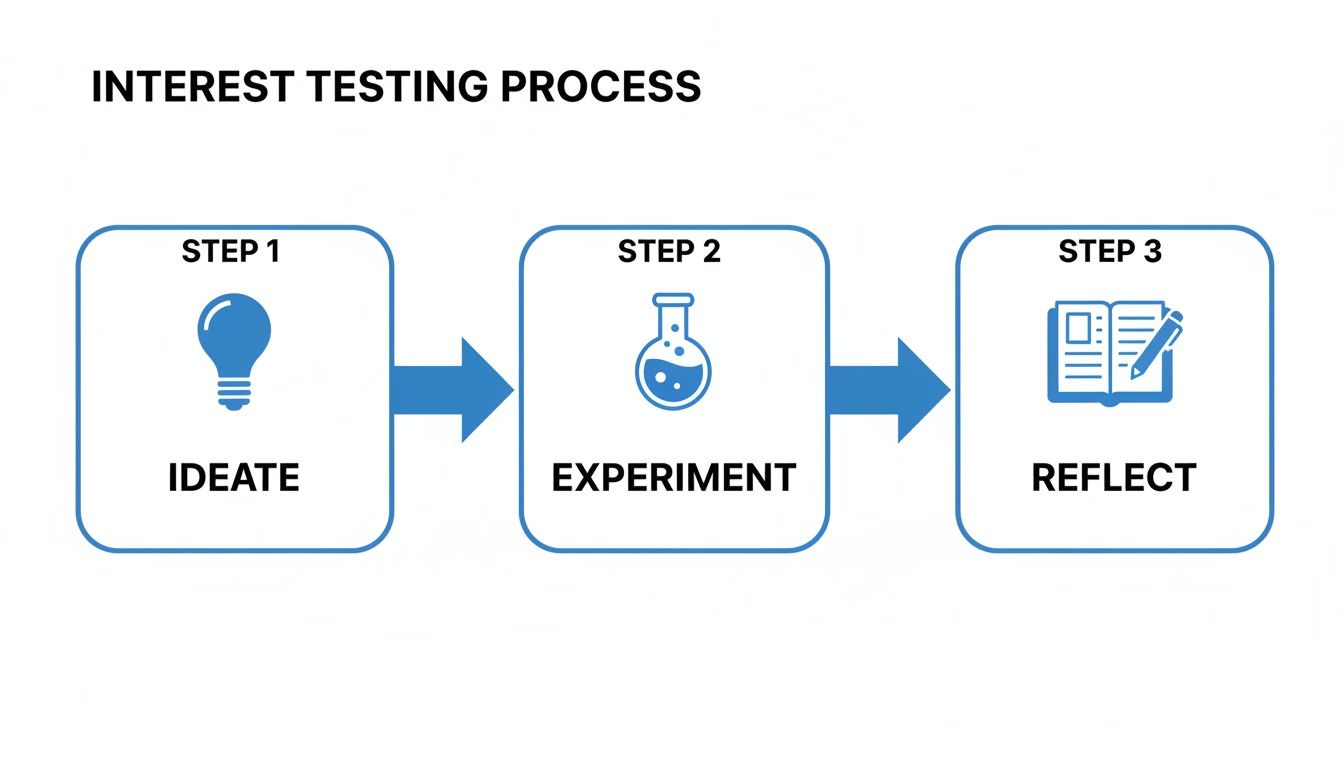
Here is a visual summary before you begin.

Use what questions, not why questions
“Why am I like this?” sounds deep, but it often leads to rumination. You can end up circling the same painful story without learning anything new.
“What” questions are more useful because they point to patterns you can observe.
Try prompts like these:
- What situations leave me feeling peaceful?
- What kinds of tasks drain me, even when I do them well?
- What do I say yes to when I want to say no?
- What kind of appreciation affects me most?
- What happens in my body when I feel pressured by family or work?
Spend ten to fifteen minutes writing without editing. Don’t try to sound wise. Honest and plain is better.
A useful example from Indian working life is this: a person may think, “Why do I hate my job when it’s stable?” A more helpful prompt is, “What parts of my job fit me, and what parts leave me depleted?” That question can reveal whether the issue is the field itself, the work culture, lack of autonomy, or unresolved anxiety.
Run a simple values exploration
Many people feel lost because they’ve built a life around achievement rather than alignment. Values are the principles that help you decide what matters, even when life gets noisy.
You can find your values by looking at moments that affected you strongly.
Ask yourself these three things
When did I feel proud of myself recently?
Pride often points to values like integrity, courage, learning, kindness, or perseverance.What upsets me quickly?
Strong irritation can reveal violated values. If disrespect consistently affects you, respect may be a core value. If unfairness angers you, justice may matter greatly.When do I feel most like myself?
This question helps identify values that make you feel internally settled.
You don’t need a polished list of ten values. Choose three to five that feel alive in your daily decisions.
If your current lifestyle repeatedly clashes with your values, stress usually rises even when everything looks “successful” on paper.
Map your strengths with real examples
Self-discovery is not only about wounds and confusion. It also involves positive psychology. You need to know what supports your resilience, compassion, confidence, and sense of contribution.
Write two short lists.
List one is strengths you already trust.
These might include patience, humour, persistence, empathy, organisation, creativity, or calm under pressure.
List two is strengths other people often notice in you.
Sometimes others see capacities you dismiss because they come naturally to you.
If you like structured tools, character strengths surveys can be useful mirrors. Use them as prompts for reflection, not as verdicts on your identity.
Do a life audit
A life audit helps you stop speaking about your life as one big blur. Instead, you look at distinct areas and notice where tension really lives.
Use this table in your journal:
| Life area | Current feeling | What’s working | What needs attention |
|---|---|---|---|
| Work or study | Energised, bored, pressured, unclear | Specific tasks, people, routines | Boundaries, meaning, workload, direction |
| Relationships | Connected, lonely, conflicted, mixed | Support, warmth, honesty | Communication, space, repair |
| Health | Rested, tired, neglected, stable | Sleep, movement, meals | Stress care, check-ups, routine |
| Inner life | Peaceful, numb, anxious, self-critical | Prayer, reflection, therapy, rest | More honesty, grief work, support |
| Growth | Curious, stagnant, hopeful, hesitant | Learning, hobbies, reading | Experimentation, courage, structure |
Keep your responses simple. One sentence per box is enough.
This exercise often brings relief because it shows that not everything is broken. You may realise your relationships are nourishing, but workplace stress is dominating your mood. Or your career may be steady, but your inner life has had no care for months.
Add mindful reflection
Some people write well but still miss their emotional truth because they stay only in thought. Mindful reflection brings attention back to the body and present moment.
Try this brief practice:
- Sit still for two minutes
- Notice your breathing without changing it
- Ask, “What am I feeling right now?”
- Name the feeling clearly
- Ask, “What might this feeling need?”
That final question matters. Feelings often soften when they’re understood rather than suppressed.
A person dealing with anxiety may notice restlessness and discover a need for reassurance or rest. Someone facing depression may notice numbness and realise they need connection, structure, or professional support rather than more self-criticism.
A short guided perspective can also help some readers slow down and reflect with less pressure:
Use outside feedback carefully
Self-discovery is personal, but it isn’t always solitary. Trusted feedback can reveal blind spots.
Ask a small number of people who know you in different contexts. You might ask:
- When do I seem most alive or confident?
- What patterns do you notice in how I handle stress?
- What strengths do I underestimate?
- What do you think I avoid when life gets difficult?
Choose people who are thoughtful, not controlling. Feedback should widen your understanding, not replace your own judgement.
This is especially important in cultures where family voices carry a lot of weight. Loved ones can offer valuable insight, but they may also speak from fear, tradition, or their own unmet hopes.
Try validated assessments, but keep their role clear
Many people find that assessments give language to experiences they couldn’t describe on their own. A personality or well-being assessment can help you notice patterns in motivation, emotional style, coping, or resilience.
That said, assessments are informational, not diagnostic. They can point you toward reflection or support, but they do not define you and they do not replace therapy, counselling, or a proper clinical evaluation.
Use them well by asking:
- Does this result feel recognisable in my daily life?
- What part feels accurate?
- What part feels incomplete?
- What experiment could I try based on this insight?
A good result from an assessment is not “This is who I am forever.” A better result is “This gives me one more lens through which to understand myself.”
Keep the practice small enough to continue
The most effective self-discovery routine is not the most impressive one. It’s the one you’ll keep.
A workable weekly rhythm might look like this:
| Day | Practice |
|---|---|
| Monday | Ten minutes of what journaling |
| Wednesday | One values check-in after a stressful moment |
| Friday | Short life audit review |
| Weekend | Quiet reflection, outside feedback, or an assessment review |
If you miss a few days, return without drama. Self-understanding grows through repetition, not intensity.
Making Sense of Your Discoveries
Reflection produces fragments. One page says you want stability. Another says you want freedom. An assessment suggests you need structure. Your journal says you feel trapped by too much structure.
At this stage, many people become discouraged. They assume contradiction means they’ve done the process wrong. Usually, it means they’re finally seeing themselves with greater clarity.

Look for patterns, not perfect answers
Instead of reading your notes one by one, step back and scan for themes.
You may notice that several entries mention exhaustion after social performance, guilt after setting boundaries, or relief whenever you do creative work. That repeated signal matters more than one dramatic entry written on a bad day.
A simple way to organise your discoveries is to group them into three buckets:
- What steadies me
- What strains me
- What I keep ignoring
That last category is often the most important.
Hold contradictions gently
You can want approval and independence at the same time. You can love your family and still need more space. You can feel grateful for your job and still know it isn’t sustainable for your well-being.
Maturity in self-discovery is not choosing the “good” side of every contradiction. It is learning to carry complexity without panic.
Your inner conflict may not be a sign that you’re confused. It may be a sign that two real needs are asking to be heard.
Family roles need special attention
For many people, especially in India, identity is strongly shaped by family role. You may be the responsible child, the peacemaker, the achiever, the caregiver, or the one who never causes trouble.
Those roles can offer belonging, but they can also hide your needs. That matters in adult life. In India, 62% of couples face marital discord from identity loss post-marriage, and 55% of parents report low self-esteem from child-centric sacrifices, according to this discussion of identity and relationships.
If your discoveries create tension with family expectations, try not to jump straight to rebellion or surrender. There is often a middle path.
Translate insight into small experiments
You do not need to redesign your entire life because one journal pattern became clear. Test your insight in manageable ways.
If you’ve learned that solitude restores you, experiment with protecting one quiet hour each week. If you’ve realised workplace stress rises when you overcommit, practise one respectful boundary. If you’ve discovered you miss creativity, restart a small hobby before making major decisions about your career.
A few grounded experiments:
| Insight | Small experiment |
|---|---|
| I need more autonomy | Take ownership of one task or project instead of waiting for permission everywhere |
| I suppress my opinions at home | Share one honest but calm preference in a family conversation |
| I feel flat and disconnected | Reintroduce one activity that used to bring meaning or joy |
| I’m always available to everyone | Delay non-urgent replies and notice the discomfort without rushing to fix it |
Build a personal summary
At the end of a few weeks, write a short summary in plain language.
You might write something like this: “I function well under pressure, but I neglect my feelings until I burn out. I value stability and kindness, but I also need room to think independently. I feel healthiest when I have structure, sleep, quiet, and honest relationships.”
That summary is not your final identity. It is your current map.
A good map helps you make wiser choices. It can improve relationships, support resilience, and make therapy or counselling more focused if you decide to seek help.
Navigating Common Roadblocks on Your Path
Many people assume self-discovery should feel inspiring. Often, it feels awkward, slow, and inconvenient. That doesn’t mean it isn’t working.
The process gets tangled for predictable reasons. When you know the common roadblocks, you’re less likely to mistake them for failure.
When reflection turns into overthinking
Some people become very skilled at insight and very hesitant about action. They fill pages, identify patterns, and still stay stuck in the same loop.
If that’s happening, reduce the size of the next step. Don’t ask, “What should I do with my life?” Ask, “What is one honest change I can try this week?”
A useful rule is simple:
- If you’ve written about the same issue three times, take one small action
- If you can’t act yet, ask what is making action feel unsafe
- If everything feels equally urgent, choose the area causing the most daily strain
When uncomfortable emotions surface
Self-discovery can stir grief, anger, shame, or loneliness. Old disappointments may come back into view. You may realise how long you’ve ignored your own needs.
That can be painful, especially if you’ve coped by staying busy.
Some discomfort is part of growth. Overwhelm is a sign to slow down and seek support.
Try these grounding responses:
- Pause the deep analysis and return to routine tasks for a day or two
- Name the feeling plainly instead of creating a story around it
- Talk to one safe person who can listen without taking over
- Rest your body because emotional work is still work
When fear says “If I know myself, I’ll have to change everything”
This fear is common and understandable. Many people avoid honest reflection because they worry it will force extreme decisions.
Usually, it doesn’t. Self-discovery often leads to gradual changes in boundaries, habits, communication, and priorities before it leads to major life changes.
Sometimes the deeper block is self-doubt. If you notice a constant feeling of “Who am I to trust my own thoughts?” it may help to read about impostor syndrome, especially if your inner critic tends to dismiss your growth.
When impatience takes over
You may want a quick answer because uncertainty is tiring. But rushing often creates borrowed clarity. You end up adopting someone else’s advice because your own truth hasn’t had time to settle.
Try asking, “What is becoming clearer, even if the full answer isn’t here yet?” That question respects progress without demanding instant certainty.
If your path feels messy, you’re not behind. You’re in process.
When and How to Seek Professional Support
Self-reflection can take you far. It can improve self-awareness, strengthen resilience, and help you make sense of stress, anxiety, workplace strain, or relationship patterns.
Still, there are times when private reflection isn’t enough. You may understand your patterns and still feel unable to shift them. Or your distress may be deeper than a journal can hold safely.

Signs it may be time to talk to a therapist or counsellor
Consider professional support if you notice any of these patterns:
- Your anxiety or low mood keeps returning and is affecting work, study, sleep, or relationships
- You feel persistently flat, hopeless, or emotionally flooded
- Past experiences keep intruding and make self-reflection feel unsafe
- You understand your patterns intellectually but can’t change them in daily life
- Your coping is becoming unhealthy, such as shutting down, isolating, or reacting harshly to yourself or others
This isn’t a sign that you’ve failed at self-help. It’s a sign that your mind may need a trained, steady companion.
What therapy can add
A therapist or counsellor does more than listen. They help you organise your inner world, notice blind spots, slow down harsh self-judgement, and connect present struggles with deeper patterns.
Therapy can also help when your discoveries touch on anxiety, depression, trauma, burnout, family conflict, or long-standing shame. In those moments, structure and safety matter.
Some people hesitate because they think their problems aren’t “serious enough.” Yet a 2023 national survey in India found that 83% of the 148 million adults with mental disorders receive no treatment, highlighting a major care gap, as noted in this reference to access barriers and mental health support.
How assessments can support therapy
Validated assessments can be useful at the start of therapy because they give both you and your clinician a shared starting point. They may help describe emotional tendencies, stress patterns, or resilience factors that are hard to explain on your own.
It’s important to keep the boundary clear. Assessments are informational, not diagnostic. They can support therapy or counselling, but they do not replace a professional evaluation.
If you choose to use them, bring your results into the session with curiosity. A good therapist won’t treat the score as your identity. They’ll use it to open a richer conversation.
Choosing help that fits
Look for a professional who feels respectful, clear, and emotionally safe. Fit matters.
You don’t need someone who has all the answers immediately. You need someone who can help you ask better questions, understand your patterns, and move toward well-being in a way that suits your life.
Conclusion Embracing Your Evolving Self
Learning how to discover yourself isn’t about producing one final answer. It’s about building a more honest, compassionate relationship with the person you already are.
That relationship grows through steady habits. Curiosity instead of judgement. Reflection instead of avoidance. Small experiments instead of dramatic pressure. Support when the work becomes too heavy to carry alone.
You may discover that some of your stress comes from misalignment. You may notice that workplace stress, family expectations, anxiety, or old emotional patterns have been shaping your choices more than you realised. You may also uncover strengths you’ve overlooked for years, such as resilience, humour, tenderness, discipline, or courage.
That’s why self-discovery matters for more than insight. It supports well-being. It can deepen relationships, improve boundaries, strengthen emotional intelligence, and create more room for happiness and self-respect.
Keep the process simple enough to continue. Write truthfully. Notice patterns. Treat assessments as tools for insight, not labels. Let contradictions teach you rather than frighten you. If depression, anxiety, burnout, or painful history make the path feel too heavy, therapy or counselling can help you move with more safety and clarity.
You are allowed to change. You are allowed to outgrow roles that once protected you. You are allowed to become more fully yourself without becoming less caring, less grounded, or less connected to others.
A meaningful life rarely comes from forcing certainty. It grows from staying awake to your own inner truth, one honest step at a time.
If you want support while exploring your inner world, DeTalks offers access to therapists, counsellors, and validated psychological assessments that can help you understand patterns related to stress, anxiety, depression, resilience, relationships, and overall well-being. If you’re unsure where to begin, it can be a practical first step toward clearer self-understanding and more supported therapy.