Tag: stress management

  • 4 Types of Stress: Causes, Symptoms and Coping

    4 Types of Stress: Causes, Symptoms and Coping

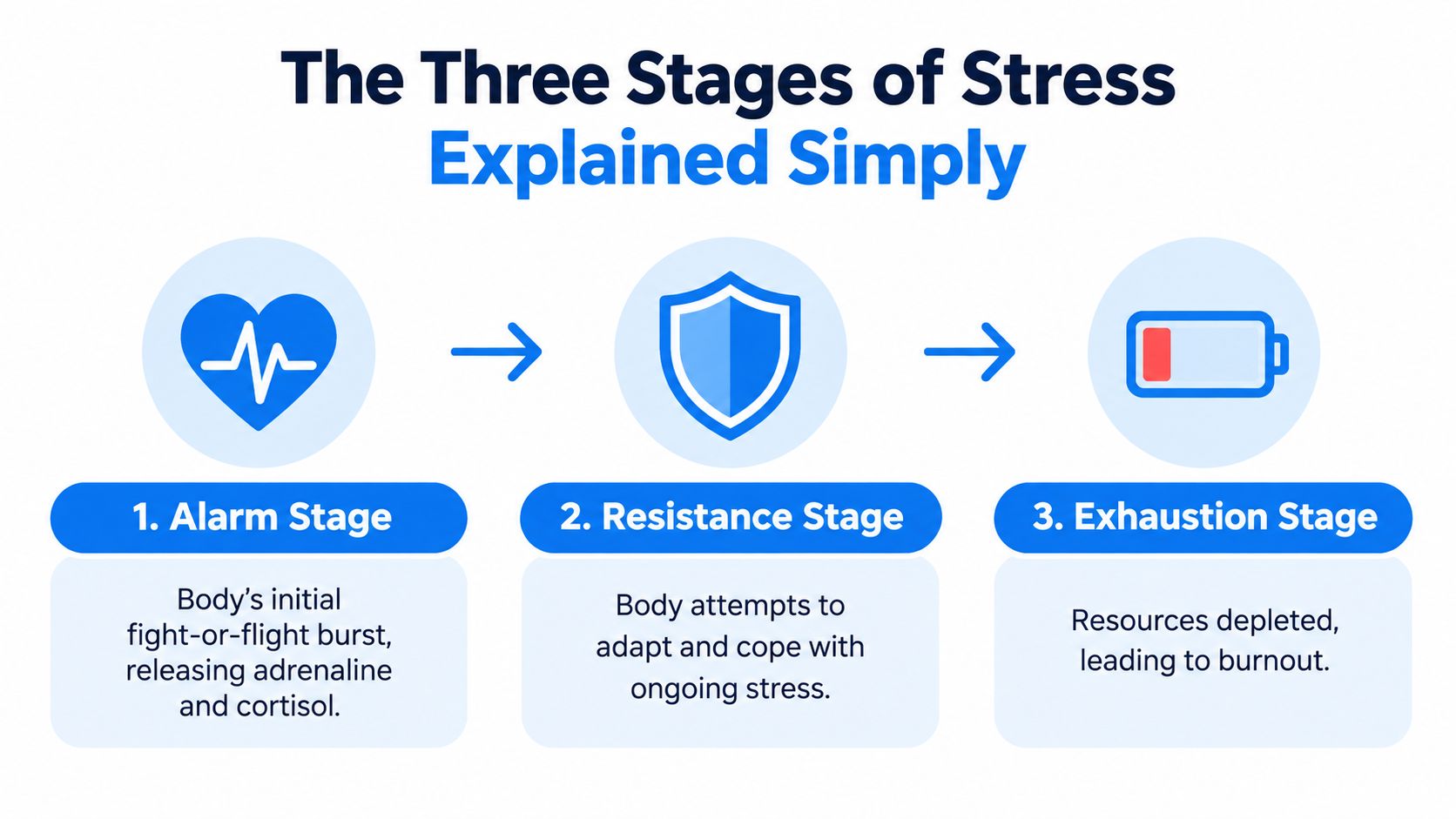
    28% of employees in India experienced stress “a lot” on the previous day in Gallup's 2026 country profile, but the four useful patterns covered here are acute, chronic, workplace, and emotional stress. These categories help you understand duration, context, and emotional impact, but stress can overlap, and no category by itself is a diagnosis.

    You may be reading this after a night spent revising for an exam, answering late work messages, caring for family, or worrying about money. A demanding deadline can create acute stress, while months of pressure can become chronic. Workplace stress may sit alongside family conflict, anxiety, burnout, loneliness, or grief.

    That distinction matters because the right next step depends on the pattern. A short grounding exercise may help during an immediate crisis, while ongoing strain may call for boundaries, practical support, therapy, or counselling. DeTalks assessments and screening tools can offer information for self-understanding, but they're informational, not diagnostic, and they don't replace professional evaluation.

    For additional practical ideas, you can also read this stress relief guide from VitzAi.

    1. Acute Stress

    Acute stress arrives quickly. It's the body and mind responding to a specific challenge that feels urgent, such as an exam, a difficult conversation, an accident, or an important presentation.

    A student revising for JEE, NEET, or UPSC the night before an exam may notice a racing heart, tense muscles, restless thoughts, or difficulty concentrating. A software engineer in Bengaluru rushing to finish a critical project before a client presentation may experience the same pattern, even though the trigger is professional rather than academic.

    Acute stress can also follow an unexpected school call about a child's accident, a sudden GST audit notice for a small business owner, or a first salary negotiation. A homemaker coordinating care during an elderly relative's health emergency may feel alert, frightened, and mentally overloaded within minutes.

    Recognising a short-lived response

    The key question is whether the pressure has a clear beginning and a likely end. Once the exam, presentation, call, meeting, or emergency resolves, the body may gradually settle.

    Try naming the experience without judging yourself. Saying, “This is acute stress, and this moment will pass,” can create a little distance from the fear. The statement isn't a promise that everything will be easy. It's a reminder to focus on the immediate situation rather than every possible outcome.

    When you feel overwhelmed, use the 5-4-3-2-1 grounding technique:

    • Five things you see: Look around and name them slowly.
    • Four things you feel: Notice your feet on the floor or your hands touching a surface.
    • Three things you hear: Include quiet or ordinary sounds.
    • Two things you smell: Identify them, or notice the absence of a strong smell.
    • One thing you taste: Sip water or notice the taste in your mouth.

    Helping your system recover

    Practise your preferred coping method before a crisis. Slow breathing, grounding, calling someone you trust, or using a brief positive affirmation is easier when the technique already feels familiar.

    Set a timer for a short period and work only through the next step. Afterward, reflect on what helped and acknowledge how you handled the situation. Avoid relying on excess alcohol, binge eating, or other harmful coping methods, since temporary relief can make recovery harder.

    If these episodes are becoming more frequent, affecting sleep or relationships, or making daily responsibilities difficult, consider a check-in with a counsellor. Support can help you understand whether repeated “acute” episodes are part of a longer pattern.

    2. Chronic Stress

    Chronic stress is pressure that continues without a clear endpoint. Instead of rising around one event and then easing, it can keep a person mentally prepared for the next problem, leaving less energy for rest, relationships, and ordinary enjoyment.

    Consider a woman working full-time while managing household responsibilities and caring for ageing parents in a joint family. A factory worker in Mumbai may face job insecurity, long hours, and inadequate wages, while a student preparing for several competitive exams may also carry family financial pressure.

    Other examples include a shop owner dealing with uncertain daily income, rising rent, and tax concerns; a new mother adjusting after childbirth with limited support; or a corporate employee facing constant performance pressure, unrealistic deadlines, and workplace politics. A person living in a flood-prone area may face repeated monsoon displacement, while a migrant worker may experience low pay, difficult conditions, separation from family, and social isolation.

    Find the pattern before solving everything

    A simple stress journal can show when pressure is strongest and what gives you even slight relief. Write down the situation, your physical and emotional response, what you did next, and whether that response helped in the short term or the longer term.

    You don't have to solve every problem at once. Separate what you can influence, such as asking for help, reviewing expenses, setting a boundary, or seeking advice, from what you can't control. Put your energy into the first group and make room to grieve or accept the second.

    Practical rule: A small action that restores control is useful, even when it doesn't remove the larger problem.

    Break a difficult situation into manageable parts. One conversation, one appointment, one application, or one planned rest period can be a meaningful step. Recovery is usually gradual, so notice small wins such as better sleep, a supportive conversation, or one lower-stress day.

    Support is part of resilience

    Support groups, whether in person or online, can reduce isolation. Review your support network and consider adding a trusted friend, family member, therapist, counsellor, doctor, or professional who understands your circumstances.

    Therapy can be appropriate even when you feel your situation “isn't bad enough.” Prevention, self-understanding, and personal growth are valid reasons to seek help. A therapist may also help you think through changes involving a job, relationship, or living situation.

    If chronic stress involves discrimination, violence, coercion, or another unsafe situation, prioritise safety and connect with appropriate advocacy or local support resources. You don't have to manage an unsafe environment through resilience alone.

    For people who struggle with planning, a simple routine may help. This guide to planning your day with ADHD offers ideas that can also support clearer task breakdown and realistic expectations.

    A comparison chart outlining the key differences between acute stress and chronic stress with descriptive bullet points.

    3. Workplace Stress

    Workplace stress comes from job demands, work relationships, the work environment, career uncertainty, or the way responsibility and control are distributed. It can follow an obvious event, such as a deadline, or build through constant availability, unclear expectations, low trust, and repeated pressure.

    An IT professional in Hyderabad may manage changing projects, tight deadlines, and constant pressure to upskill. A bank employee may worry about sales targets and performance reviews, while a teacher may juggle large classes, limited resources, administrative duties, and students' emotional needs.

    A nurse working in an understaffed hospital can face long shifts and the emotional demands of patient care. A startup founder in Delhi may carry investor pressure, uncertain income, and an identity closely tied to the company. A woman in corporate India may also encounter subtle gender discrimination, unequal responsibilities, or pressure related to motherhood.

    Name the workplace stressor precisely

    “Work is stressful” is difficult to act on. “I'm anxious about Thursday's presentation,” “my manager changes priorities without notice,” or “I'm expected to answer messages late at night” gives you a clearer starting point.

    India-focused workplace reporting found that 42% of respondents identified constant availability demands as their biggest workplace stressor, ahead of unrealistic deadlines at 21%. The same report found 52% said feeling trusted and empowered improved well-being most, while 36% identified fair workload distribution as the key marker of a healthy workplace culture. These findings are reported by The Economic Times workplace coverage.

    That context matters. Stress type alone doesn't explain the experience. Workload, control, trust, and fairness may matter just as much.

    Build a practical response

    Track when stress peaks, whether it's linked to a certain project, person, meeting, or time of day. Then separate controllable actions, such as clarifying priorities, communicating capacity, and setting boundaries, from factors such as organisational politics that may be outside your influence.

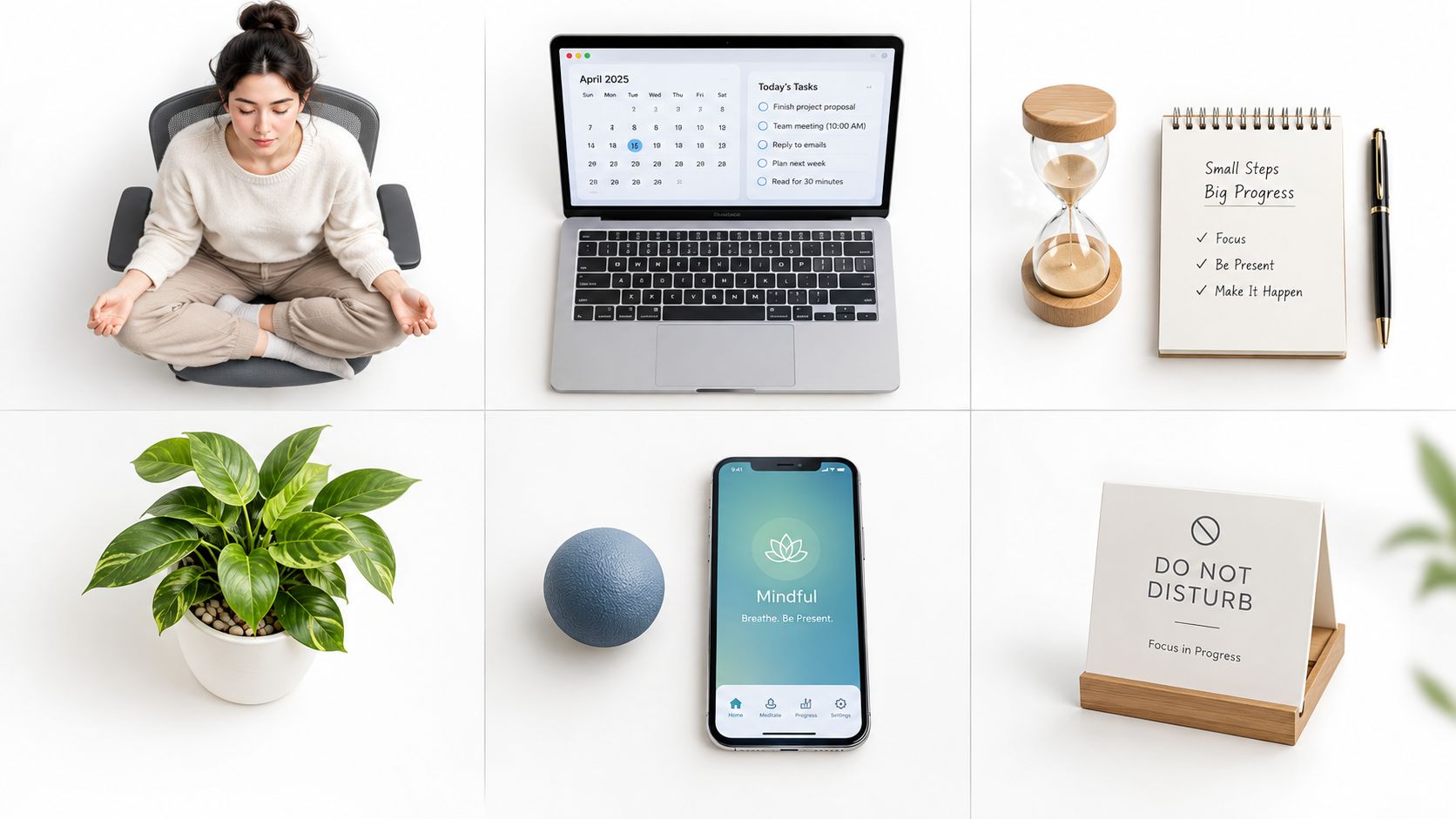
    A small workplace stress first-aid kit might include a breathing exercise, a supportive colleague's contact, a short grounding method, and a realistic affirmation. If your organisation offers an Employee Assistance Program, ask how confidentiality works and what services are available.

    You can practise saying no to non-essential requests, request a career counselling session, and review workplace rights and internal policies. If your role remains incompatible with your well-being, explore alternatives thoughtfully rather than making an impulsive decision during a crisis.

    A quiet pause can help you reset before a difficult task.

    A quiet office desk featuring a closed laptop, a steaming mug, and a note labeled Deadline at night.

    A supportive ally outside the reporting chain can also help you think clearly. Workplace support may involve a manager, HR team, trusted colleague, union, professional association, therapist, or counsellor.

    4. Emotional Stress

    Emotional stress grows from experiences that affect your sense of belonging, safety, identity, or connection. Loss, rejection, shame, grief, family expectations, relationship conflict, and social pressure can all contribute.

    A young person may face family rejection after sharing a sexual orientation or career choice that differs from expectations. A daughter may feel guilt while balancing elder care and career ambitions. A divorced woman may deal with stigma, loneliness, and co-parenting pressure in a conservative community.

    A father working long hours may feel guilty about emotional distance from his children. Someone in an unhappy arranged marriage may feel trapped and unsupported, while an adult child may grieve an emotionally unavailable or abusive parent while facing pressure to forgive. Mental-health stigma can add another layer of shame, especially when a person worries that seeking therapy will be judged.

    Make room for the feeling

    Emotional stress doesn't require you to justify every feeling before you acknowledge it. You can write, draw, make music, pray, speak with someone safe, or sit with what has happened. These activities don't erase pain, but they can give the experience a shape that feels easier to understand.

    During grief or conflict, protect basic routines. Eat when you can, maintain sleep habits, attend to hygiene, and keep essential appointments. Reaching out may feel difficult when you want to withdraw, so send a simple message to one trusted person instead of waiting until you feel ready to explain everything.

    “You can care about your family and still need boundaries.”

    Small rituals can support transitions. You might write a private letter, keep a memory box, mark a meaningful date, or create a quiet routine after a major change. Compassion toward yourself is not weakness. It can support resilience while you make decisions about relationships, family expectations, and your future.

    Know when stress needs more support

    Emotional stress may overlap with anxiety, depression, burnout, or loneliness. Gallup's 2026 India country profile reports 36% of employees reported sadness and 28% reported loneliness, alongside the stress measure, which shows why emotional experiences shouldn't be treated as one identical condition. You can review the India country profile from Gallup for that country-level context.

    Seek therapy or counselling if distress persists, functioning changes, relationships deteriorate, or you feel unable to stay safe. DeTalks assessments can help you reflect on symptoms and possible support needs, but they're informational, not diagnostic.

    A gentle routine can include rest, connection, and activities that give you meaning. This resource on stress and sleep habits for focus may help you consider how sleep and daily rhythm fit into your well-being plan.

    5. Truncated Content Note

    Stress doesn't always stay inside one category. A sudden deadline can become repeated workplace stress, workplace stress can contribute to chronic exhaustion, and a family conflict can create emotional stress that affects concentration at work.

    That overlap is why duration, context, and impact matter more than finding a perfect label. Acute stress usually has a specific trigger, chronic stress continues over time, workplace stress is linked to job conditions, and emotional stress is tied to feelings, relationships, loss, identity, or social pressure.

    India's workplace data shows why a broad view is important. A 2022 urban white-collar sample of 1,764 employees found 78% showed moderate-to-high stress, while a Deloitte India survey of 3,995 respondents across 12 industries found workplace stressors were the top source of distress at 47%, ahead of financial stress at 46% and family relationships at 39%. These findings are summarised in an Indian workplace mental-health review on PubMed Central.

    The practical lesson is to screen for the source rather than assume every problem is workplace stress. A triage conversation can ask whether pressure comes mainly from work, finances, relationships, health, grief, or several areas at once.

    Young adults and women may also experience stress differently. A 2024 Indian employee survey reported high stress among 72.2% of women respondents and 53.64% of men, and identified workers aged 21 to 30 as the most stressed group. The same report said three out of five employees in major sectors experienced high or extreme stress, according to The New Indian Express.

    These figures don't diagnose anyone. They show why compassionate, context-sensitive support matters.

    5-Point Stress Types Comparison

    Stress Type Implementation complexity 🔄 Resource requirements ⚡ Expected outcomes 📊 Ideal use cases 💡 Key advantages ⭐
    Acute Stress Low, short-term, situation-specific interventions Low–Moderate, breathing, brief self-care, short therapy Rapid recovery likely if managed; reversible; can boost performance Time-limited events (exams, interviews, emergencies, deadlines) Sharpens focus, motivates action, builds quick coping skills
    Chronic Stress High, multifactorial, long-term management needed High, ongoing therapy, lifestyle changes, social/systemic support Slow, gradual improvement with sustained effort; reduces long-term health risks Persistent circumstances (caregiving, debt, job insecurity, chronic illness) Prompts meaningful life changes and deep resilience when addressed
    Workplace Stress Moderate, mix of acute and chronic; may need organizational change Moderate, individual therapy + HR/organizational interventions (EAP, policy) Better job performance and reduced burnout when addressed; may lead to role change Job demands, role ambiguity, conflict, harassment, workload issues Improves productivity, work-life balance, and career clarity
    Emotional Stress Moderate, requires emotional processing and relational work Moderate, individual therapy, social support, creative/self-care practices Gradual emotional regulation, relational repair, improved well‑being Grief, breakups, family conflict, shame, rejection Facilitates healing, self‑compassion, and stronger relationships
    Truncated Content Note Unknown, incomplete source content Unknown, insufficient information available Not applicable, cannot determine outcomes from fragment Use when requesting reconstruction or additional sources Indicates missing data; prompts completion or clarification

    Choose Support That Matches Your Stress Pattern

    Start with four questions. When did it begin? What triggers it? Where does it show up? How is it affecting your emotions, body, relationships, work, or studies?

    A short reaction to an exam or emergency may call for grounding, clear next steps, and connection. Pressure that continues for months may require practical changes, stronger boundaries, social support, and therapy. Workplace stress may need a conversation about workload, autonomy, policies, or career direction. Emotional stress may need space for grief, identity, relationship repair, compassion, and safe expression.

    Don't use a screening result as a diagnosis. India's National Mental Health Survey of 2015–16 reported a weighted prevalence of depressive disorders of 2.7% for current experience and 5.3% for lifetime experience, while phobic anxiety disorder was 1.9% for current experience. The National Mental Health Survey report helps show why professional interpretation matters.

    A broader India context comes from ICMR's GBD India mental-disorders paper. It estimated that 197.3 million Indians, or 14.3% of the population, were living with various mental disorders in 2017, including 45.7 million people with depression and 44.9 million with anxiety disorders. Those figures, reported in the ICMR paper, aren't a way to label your experience. They reinforce the value of timely, respectful care.

    Take one small step today:

    • Name the stressor: Write one sentence describing what is happening.
    • Choose a coping action: Try grounding, a walk, a conversation, or a protected rest period.
    • Protect connection: Tell one trusted person what support would help.
    • Consider professional care: Explore therapy or counselling when distress persists or functioning changes.
    • Respond with compassion: Treat yourself as a person facing pressure, not as a problem to fix.

    Burnout, anxiety, depression, and chronic stress can overlap, so don't wait for a perfect label before seeking help. If safety becomes a concern, contact local emergency services or an appropriate crisis-support resource immediately.

    DeTalks offers access to psychologists, therapists, counsellors, online therapy, and informational assessments for concerns including stress, anxiety, depression, burnout, workplace pressure, relationships, and personal well-being. The platform also includes support focused on resilience, compassion, mindfulness, self-esteem, gratitude, and meaningful growth.


    Visit DeTalks to explore qualified mental-health professionals and confidential informational assessments that can help you understand your stress pattern. Choose a small, practical next step toward therapy, counselling, resilience, or stronger everyday well-being.

  • The 7 Best Times to Meditate for Well-Being

    The 7 Best Times to Meditate for Well-Being

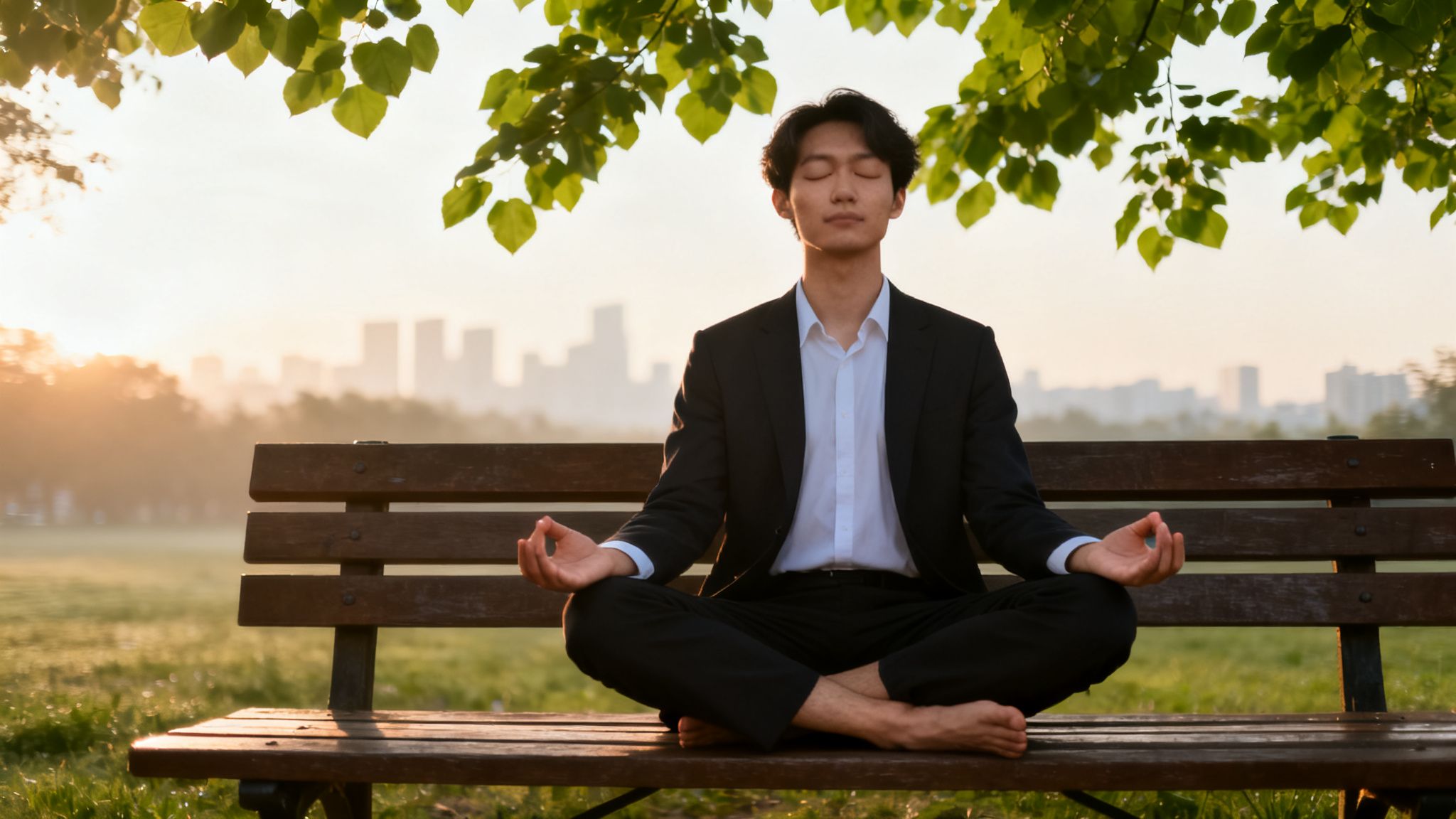
    You've probably had this experience already. The alarm goes off, your phone is full of messages, the day starts moving, and meditation slips to the bottom of the list before you've even had tea. That's why the key question isn't whether meditation helps well-being, it's how to choose a time that fits your life, your stress, and your energy.

    The best times to meditate are often the times you can protect with the least friction. Research on meditation-app users found that morning practice was the strongest predictor of sustained engagement, with the probability of meditating falling by 63.4% for morning sessions over the first 180 days, compared with larger drops of 67.8% to 74.5% at other times of day, and a greater share of morning practice linked to better short-term and long-term use (PMC study). Another large analysis found that among 10,409 users in 103 countries, morning meditators were 2.1 times as likely to reach their 150th session as evening meditators, and in 14,958 Calm users with 899,071 sessions, each extra 10% of practice moved into the morning was linked with about 5.5 extra days before a user's final session (best-time analysis). For many people, the best time is the one that turns intention into habit.

    1. Early Morning 5 to 6 AM

    Early morning is the quietest slot for a lot of people in India, especially before family demands, commute stress, and work notifications take over. In wellness traditions, this window is often treated as a calm, fresh start, and that fits what many practitioners feel in real life. The mind is usually less crowded, and that makes it easier to settle into meditation without fighting the day.

    A practical reason this time works so well is that it reduces decision fatigue. You haven't already spent your attention on emails, school runs, or office calls, so even a short practice can feel steady and clean. If mornings are your strongest hour, this is often the easiest way to support resilience and well-being before workplace stress begins.

    Practical rule: start smaller than you think you need. Five minutes done most days is more useful than a long session you keep skipping.

    A simple early-morning routine can look like this:

    • Begin with five minutes: If waking early feels harsh, keep the first step tiny so your nervous system doesn't resist the practice.
    • Choose a quiet corner: A comfortable chair, a cushion, or even the edge of the bed can work if the room is calm.
    • Use natural light when possible: Light helps you wake up gradually instead of feeling jolted.
    • Pair it with warm water or tea: A gentle cue can help your body move from sleep into awareness.
    • Write three intentions: A short note on kindness, patience, or focus can strengthen emotional balance for the day.

    Working professionals often use this slot before the commute, students use it before exam revision, and parents use it before the house gets busy. I've seen it help people who want a calmer start without adding another task to a packed day. It's also a good time for people exploring therapy or counselling alongside meditation, because the mind is usually clearer before the day starts asking for everything at once.

    artnaturals wellness rituals

    2. Mid-Morning 9 to 10 AM

    If sunrise meditation does not fit your routine, mid-morning offers a realistic alternative. By this point, you've usually handled the first rush of the day, but the heavier demands have not fully taken over yet. That makes this slot useful for people whose mornings are shaped by commuting, children, a sudden work message, or a calendar that fills too quickly.

    For many professionals in India, this is the first pause that feels even slightly protected. It can work well before meetings begin to stack up, and it can also help when anxiety starts to build from unfinished tasks or constant notifications. A short practice here can steady attention, soften reactivity, and give you a little more space to respond thoughtfully instead of reacting on autopilot.

    The practice itself can stay simple. If your office is noisy or shared, a guided session through tools like Headspace or Calm may help you settle faster, but the value comes from stopping long enough to notice your breath, your posture, and the pace of your thoughts. For people in therapy or counselling, this time can also support the habit of noticing stress earlier, before it becomes harder to manage.

    If you want to explore a structured start to your day, you might find inspiration in a Tulum morning routine ideas guide, which emphasizes intentional first-hour habits.

    The goal here isn't perfect calm. The goal is to stop running on autopilot.

    You can make this slot more reliable with a few small boundaries:

    • Put it on your calendar: Treat meditation like a real appointment, not a spare moment you hope appears.
    • Step away from your desk: A quiet corner, stairwell, or empty room can lower the feeling of being constantly available.
    • Use grounding quickly: A 5-4-3-2-1 sensory check can pull your attention back into the present.
    • Follow with one mindful action: Sip tea slowly, stretch, or answer one email with full attention.

    This can be a good fit for professionals who find early mornings too rushed but still want a habit that holds up on busy days. It also suits students once the first study block is underway and the mind is alert enough to settle without too much effort. For people dealing with workplace stress, parenting pressure, or low-grade anxiety, mid-morning often feels realistic, and realism is what keeps a practice going.

    3. Lunch Break 12 to 1 PM

    Lunch break meditation changes the shape of the day. Instead of using that pause to scroll, answer messages, or keep pushing through, you give your nervous system a real break. That can be especially helpful if the morning has already brought workplace stress, family tension, or a difficult conversation.

    For Indian office workers, this is often the first time the day offers even a small pocket of privacy. Some people use a quiet meeting room, some sit in their car, and some just turn toward a window for a few minutes. The setting matters less than the willingness to stop and digest what the morning has brought, both physically and emotionally.

    If you've been carrying sadness, irritability, or a rising anxiety loop, this is a useful time to notice it without fighting it. Short meditation here can support emotional processing, which is different from suppression. It lets you return to work with a little more clarity and a little less reactivity.

    You don't need a long practice to get a meaningful reset. Box breathing can be especially helpful here because it's simple and discreet. A few rounds can soften tension enough to make the rest of the afternoon feel more manageable.

    A few practical ways to use this slot:

    • Wear headphones if needed: A guided session can create privacy in a busy office.
    • Meditate before lunch when possible: Many people feel more settled after a short pause and then eat more mindfully.
    • Use a fixed anchor: Facing a window, a blank wall, or a favorite corner helps your brain associate that place with calm.
    • Let emotions be present: If the morning felt heavy, name it instead of pushing it away.

    This slot works well for working parents too. A few minutes of stillness can make the second half of the day feel less frantic, especially when the afternoon still holds meetings, pickups, or family duties. The aim is not to escape life, it's to re-enter it with more balance.

    4. Late Afternoon 4 to 5 PM

    Late afternoon is where many people hit the wall. Energy drops, attention frays, and accumulated pressure from work, family, study, or caregiving starts showing up in the body. A meditation break here can act like a bridge between the workday and the rest of your life.

    This timing is especially useful when burnout, low motivation, or emotional heaviness are building. It gives you a chance to notice what the day has done to you before you carry it into dinner, parenting, or relationship conversations. For people living with depression or ongoing exhaustion, that pause can be grounding, not because it fixes everything, but because it reduces the sense of being swept along.

    This is also a good time for body-based practice. A body scan can help you notice tight shoulders, clenched jaws, or shallow breathing, which often show up after long hours of sitting or problem-solving. When stress stays in the body, the late afternoon is a good moment to release some of that load.

    Helpful mindset: this is self-care that protects your next interaction, not a luxury after everything else is done.

    Some people use this slot to reset before parenting duties. Others use it before the commute so office tension doesn't spill straight into home life. If you're moving through counselling or therapy, this can also be a practical checkpoint for noticing which emotions need care and which can wait.

    Try this structure:

    • Keep it to 10 to 15 minutes: Long enough to settle, short enough to repeat.
    • Use a body scan: Move attention from head to toe and soften where you can.
    • Walk for a few minutes after: A gentle transition helps you carry calm forward.
    • Name one feeling without judging it: That small step builds emotional intelligence.

    This slot is especially kind to people who feel depleted by the end of the workday. It doesn't ask you to become a different person, it just gives you enough space to meet the evening with less strain.

    5. Evening 6 to 7 PM

    Evening meditation is one of the best times to create a clean transition from work mode to personal life. In India, this can be a particularly important boundary because many people are moving straight from professional pressure into family time, errands, or caregiving. Without a pause, the day's tension follows you everywhere.

    This slot is especially helpful for people dealing with relationship difficulties, parenting stress, or the emotional drag that comes from holding many roles at once. A short practice can soften the sharp edges of the day and make room for more compassion at home. That matters for well-being, but it also matters for the quality of your relationships.

    Many people find loving-kindness meditation useful here because it shifts attention from complaint to warmth. Others prefer gratitude reflection because it helps them notice what went right instead of replaying what went wrong. If you've had a hard day, this is not the time to force optimism. It's the time to release what you can't keep carrying.

    A simple transition ritual can make this practice easier to sustain:

    • Change clothes first: A physical change tells your brain the workday is over.
    • Keep your phone away: Don't let personal messages steal the calm before you've had it.
    • Sit for ten minutes before dinner or chores: A small protected space goes a long way.
    • Use compassion-based practice: This is a good time to include yourself, not just others.

    Working parents across Indian cities often find this slot helps them show up more patiently for dinner and evening routines. Couples can use it separately or together if they want a calmer tone at home. If family members ask why you need the time, it's fine to say it plainly, mental health care includes boundaries.

    The result isn't magic, and it doesn't need to be. It's a more humane handoff from public demands to private life.

    6. Night 8 to 9 PM

    Night meditation works best after dinner, but before you're fully ready for sleep. This is the reflective window, the one where the day can finally be processed instead of postponed. For people living with racing thoughts, anxiety, or lingering emotional strain, it can be one of the most comforting times to sit.

    This slot is especially useful if you tend to replay conversations, worry about tomorrow, or carry unresolved feelings into bed. A gentle practice can help the nervous system settle and create a softer landing for sleep. It's also a thoughtful option for people in counselling who are learning how to sit with emotions without getting pulled under by them.

    Choose simple, body-centered methods here. Yoga nidra, body scan, or breath awareness are usually better than intense self-inquiry at night. The point is release, not deep excavation.

    A few things tend to work well at this hour:

    • Keep it gentle: Avoid practices that stir up more emotion than you can comfortably hold.
    • Set a timer: Fifteen to twenty minutes is often enough.
    • Write briefly if needed: A few lines can help move thoughts out of your head and onto paper.
    • Return to sensations: If your mind starts racing, feel your feet, hands, or the chair beneath you.

    A study summarized for brain science found that a 15-minute focused-attention meditation improved working memory in novice meditators, and a study of 30 medical students reported a significant decrease in cortisol levels after a mindfulness session (brain-science summary). Those findings don't make night meditation a cure, but they do support the idea that short, calm sessions can influence both stress and attention.

    Keep night practice simple. If you make it too intense, you may leave the session more awake than settled.

    For people with insomnia, this can become a dependable wind-down ritual. The key is consistency and softness, not pushing for a dramatic breakthrough. Night is for closing the day with care.

    7. Weekend or Flex-Time 90 to 120 Minutes

    Weekend or flex-time sessions suit the moments when life in India finally loosens its grip a little. If the workweek has been full of deadlines, family duties, commute fatigue, or constant phone checks, a longer sitting can give the mind enough room to settle instead of merely cool down.

    This format works well for burnout, relationship strain, and the questions that rarely get attention during a rushed weekday. It also helps when shorter daily practice has made a difference, but you still feel there is more to work through. A longer session can bring up the patterns behind reactivity, avoidance, and tension in the body, and it can also make space for gratitude, compassion, and a steadier sense of purpose.

    The evidence supports regular practice over time, not just occasional effort. A randomized trial found that a smartphone-based meditation app used once per day for 20 minutes produced improvements similar to meditating twice per day for 10 minutes each, including reductions in psychological distress (daily-practice trial). Longer weekend sessions are not the right fit for everyone, but they can complement shorter weekday practice, especially for people using meditation alongside therapy or counselling. If you're looking to build a sustainable practice, resources on how to schedule habits that actually stick can help you commit to longer weekend sessions without burning out.

    A gradual approach usually works better than forcing a long sit too soon.

    • Start with 30 minutes: Build tolerance before moving toward an hour or more.
    • Choose a low-demand day: Weekend mornings usually feel easier than late nights, especially if you already carry stress from work or caregiving.
    • Use a guided series if needed: Structure can help when the session is long or when anxiety makes silence feel too open.
    • Sit with support: Cushions or a chair can protect your back and make it easier to stay present.
    • Journal afterward: A few lines can help you keep the insight, instead of letting it disappear into the next errand or family task.

    People in India often use this time in ways that match their real life. Some choose a home retreat on a quiet morning, some sit while the house is empty, and some use a calm afternoon after errands. Students may use exam breaks to rebuild emotional reserves, while couples may use guided partner meditation to reconnect after a hectic week. Parents with little weekday privacy often find that a flex-time session gives them the first real pause they have had in days.

    The main benefit is spaciousness. Deeper practice often needs more than the spare minutes of a busy weekday, and that extra room can make it easier to notice what is happening without rushing to fix it.

    7-Point Comparison: Best Times to Meditate

    Time Slot / Practice 🔄 Implementation complexity ⚡ Resource requirements ⭐ Expected outcomes 📊 Ideal use cases 💡 Key advantages & tips
    Early Morning (5–6 AM) – The Golden Hour for Mental Clarity Moderate, requires habit shift/early wake Low, 10–15 min, quiet spot, minimal gear ⭐⭐⭐⭐, strong for focus, resilience, anxiety prevention Professionals, students, those seeking consistent habit formation Builds emotional regulation and decision clarity; tip: start 5 min, use natural light
    Mid-Morning (9–10 AM) – The Practical Option for Professionals Low, fits after morning tasks Low, 5–10 min, brief privacy or guided app ⭐⭐⭐, effective as a stress-reset before midday Busy office workers, tech teams, rigid schedules Interrupts anxiety cycle; tip: calendar reminder and guided meditations
    Lunch Break (12–1 PM) – The Reset for Midday Overwhelm Low–Medium, cultural/space constraints possible Low, 5–20 min, headphones/quiet corner helpful ⭐⭐⭐, reduces midday fatigue, aids digestion Office workers, parents, teams with lunch breaks Creates boundary and digestive benefits; tip: meditate before eating, try box breathing
    Late Afternoon (4–5 PM) – The Energy Transition for Exhaustion Medium, must step away during peak work Low, 10–15 min, small quiet space ⭐⭐⭐⭐, combats burnout, prevents spillover to home Teachers, parents, people with afternoon energy dips Restores motivation and emotional availability; tip: body-scan and brief mindful walk
    Evening (6–7 PM) – The Grounding Transition Before Personal Time Medium, family interruptions likely Low, 10–20 min, transition ritual helpful ⭐⭐⭐⭐, improves presence and relationship interactions Working parents, couples, caretakers Establishes boundary between work and home; tip: loving-kindness or gratitude practice before devices
    Night (8–9 PM) – The Reflective Practice for Emotional Processing Medium, needs gentle technique to avoid activation Low, 15–20 min, timer, calming guidance ⭐⭐⭐⭐, improves sleep, supports emotional processing Insomnia sufferers, trauma/anxiety management, reflective practitioners Best for winding down and self-compassion; tip: choose yoga nidra/body scan and avoid stimulating content
    Weekend / Flex-Time (90–120 Minutes) – The Deep Dive for Renewal and Insight High, significant time commitment and emotional readiness High, 60–120+ min, quiet/safe space, possible guidance/retreat ⭐⭐⭐⭐⭐, deep nervous-system reset, lasting insight, burnout recovery Retreat attendees, therapy clients, those seeking deep change Enables neuroplastic shifts and profound insight; tip: build gradually (start 30 min), journal after practice

    Your Path to Consistent Practice and Well-Being

    The best time to meditate is the time you can return to with less resistance and more kindness toward yourself. Morning often supports the strongest habit formation, but that doesn't mean early practice is morally better or more healing than an evening session. It means your life, energy, and emotional load matter, and the right slot is the one that helps you keep showing up.

    If you live with workplace stress, anxiety, low mood, or burnout, start with the easiest opening in your day, not the most impressive one. If mornings are crowded, try mid-morning or lunch. If the evening is when your thoughts finally slow down, let that be your practice window instead of fighting it.

    Meditation also works best when it matches your emotional need. Early sessions can support intention and resilience. Later sessions can support reflection, compassion, and release. That flexibility matters because real people don't live inside a perfect schedule, they live inside school runs, shifts, meetings, caregiving, illness, and uncertainty.

    It also helps to keep expectations grounded. These practices are informational tools for self-understanding and well-being, not diagnostic tests, and they don't replace care when deeper issues are present. If depression, persistent anxiety, relationship distress, or trauma is affecting your daily life, professional therapy or counselling can offer a safer, more suitable path forward.

    Small practice, repeated often, is usually enough to make a difference in how you meet the day. Some mornings will feel calm, some won't, and that's okay. What matters is building a relationship with your mind that's steady, compassionate, and workable.

    For ongoing support that fits real life, explore DeTalks, where you can find therapy, counselling, assessments, and practical guidance for your well-being. If meditation is helping you notice what you need, DeTalks can help you take the next step with clarity, care, and the right professional support.

  • The Power of Visualization: A Guide to Mental Well-being

    The Power of Visualization: A Guide to Mental Well-being

    Somewhere in India right now, a professional is staring at an unread email, a student is reopening the same chapter for the fourth time, and a parent is trying to stay patient after a long day. The body feels tight, the mind races ahead, and even simple decisions start to feel heavy.

    In moments like this, people often hear advice such as “think positive” or “manifest what you want.” That can sound comforting, but it can also feel vague, frustrating, or even unfair when you're already dealing with anxiety, low mood, or workplace stress.

    There is, however, a more grounded way to understand the power of visualization. Used carefully, visualization can become a practical mental skill that supports well-being, strengthens resilience, and sometimes works alongside therapy and counselling. It isn't magic, and it isn't a substitute for professional help. But for many people, it's a gentle way to create a little more calm, clarity, and self-compassion.

    Reclaiming Your Calm in a World of Stress

    Riya works in a private company in Bengaluru. Her day begins with commute traffic, continues with back-to-back calls, and ends with a tired mind that still won't switch off. At night, she replays mistakes, worries about tomorrow's targets, and tells herself she should be coping better.

    That experience isn't unusual. A 2023 ASSOCHAM study revealed that nearly 42.5% of employees in private sector organisations in India report experiencing stress-related issues, which points to a serious gap in workplace stress support and prevention, as noted in this discussion of stress among Indian employees.

    For some people, stress shows up as irritability. For others, it becomes headaches, poor sleep, self-doubt, or a sense of emotional numbness. Over time, that strain can affect resilience, relationships, concentration, and joy.

    What calm can look like

    Visualization starts with a simple idea. Your mind can practise safety, steadiness, and focused action before your day asks you to deliver them.

    It may be as basic as sitting for a few minutes and picturing a calmer version of the next hour. You imagine your breathing slowing, your shoulders softening, and yourself responding to a difficult message with clarity instead of panic.

    Practical rule: Visualization works best when you treat it as a skill, not a test. You're not trying to “do it perfectly”. You're giving your mind a more helpful path to follow.

    Many people pair mental practices with physical support. If stress leaves you feeling wired and depleted, you may also want to support calm with diet so your routines, meals, and rest work together rather than against each other.

    Why this matters in everyday life

    When life feels noisy, the nervous system often stops distinguishing between a real emergency and an ordinary challenge. A meeting, an exam, or a family conversation can begin to feel threatening.

    Visualization gives you a pause between trigger and reaction. In that pause, you may find a little more patience, a little more emotional balance, and a little more room for hope. That's not a cure for depression or severe anxiety, but it can be one meaningful part of self-help and emotional care.

    What Visualization Is and What It Is Not

    Some people hear the word visualization and think of wish-making. Others think it means staring at a vision board and waiting for life to change. That misunderstanding is common.

    Visualization is intentional mental rehearsal. You create a clear inner picture of an experience, action, or emotional state, and you engage with it on purpose. You aren't escaping reality. You're preparing your mind and body to meet reality differently.

    A diagram comparing visualization as intentional mental rehearsal versus passive daydreaming or magical wishful thinking.

    The architect blueprint way to understand it

    Think of an architect before construction begins. The building isn't there yet, but the plan is detailed, organised, and tied to action. The blueprint doesn't magically create the building. It guides the work.

    Visualization works in a similar way. You mentally rehearse what you want to do, how you want to feel, and what steady behaviour looks like under pressure.

    Here is the key difference:

    Approach What happens What it usually leads to
    Visualization You rehearse a specific situation with intention More focus, emotional preparation, clearer next steps
    Daydreaming Thoughts drift without direction Temporary escape, but not much structure
    Magical wishful thinking You hope the image alone will change reality Disappointment if action and support are missing

    What it includes

    Good visualization usually has a few ingredients.

    • A clear scene: You picture one situation, such as entering an interview room or settling yourself before sleep.
    • Sensory detail: You notice what you see, hear, and feel. The chair beneath you, the tone of your voice, the pace of your breathing.
    • Emotional direction: You don't only imagine success. You imagine steadiness, compassion, and recovery if something goes wrong.
    • Real action: You connect the inner rehearsal to an outer step, such as studying, attending counselling, or preparing your notes.

    This is why the popular “law of attraction” version only tells part of the story. Focusing on an outcome may feel motivating, but evidence-based visualization is more practical. It isn't “I picture it, so it must happen.” It's “I rehearse it, so I can respond with greater skill.”

    Why visuals help people understand hard things

    Visual thinking helps people make sense of complexity. In India, the Viz Chitra conference, the first national data visualization gathering, highlighted the commitment to using visual tools to retrieve key values from massive datasets and derive actionable insights for decision-making, as discussed in this Viz Chitra talk.

    That same human strength applies inwardly. When thoughts are messy or feelings are hard to name, an inner image can make the experience easier to understand. A calm room, a rooted tree, or a confident version of yourself can become a mental map when words feel too far away.

    Visualization isn't about pretending you have no fear. It's about giving fear less control over what you do next.

    The Science of Seeing With Your Mind

    The scientific appeal of visualization comes from a simple idea. The brain often responds to vivid mental rehearsal in ways that overlap with real experience.

    Researchers describe this with the term functional equivalence. In plain language, that means imagining an action can activate some of the same brain systems involved in doing that action. According to Dr. Srini Pillay's discussion of visualization and brain function, mental imagery stimulates motor cortex regions and prefrontal decision-making areas, and practice with high clarity, emotional intensity, and repetition over 10 weeks was linked with 17–22% improvement in real-world task performance.

    A man visualizing his goals represented by a glowing brain and a holographic version of himself.

    Why the brain responds so quickly to images

    Human beings are strongly visual. The brain can often take in an image faster than a paragraph of explanation, which helps explain why mental pictures can shape emotion so quickly.

    One source summarising the neuroscience of visual processing notes that 90% of all information transmitted to the brain is visual, that the brain can process an entire image in 13 milliseconds, and that this is nearly 60 times faster than reading text. The same source also reports that data visualization can cut meeting time by up to 24%, showing how visual clarity can speed understanding and decision-making in practical settings, according to this article on the power of data visualization.

    This doesn't mean every image in your mind is useful. Distressing images can intensify fear. But guided, intentional imagery can help the brain rehearse safety, confidence, and self-regulation.

    What this looks like in mental health care

    The most encouraging part is that visualization isn't limited to sports or productivity. It has begun to show clear relevance in clinical settings too.

    A pilot study by India's National Institute of Mental Health and Neurosciences in 2024 demonstrated that guided visualization therapy reduced anxiety scores by 34% in 120 patients with trauma disorders using 15-minute daily sessions. That matters because it places visualization in a real Indian mental health context, not just in pop psychology language.

    For readers who learn better through visual explainers, short educational content can also help make these ideas less intimidating. Some creators now create AI psychology videos easily to explain concepts like mental rehearsal, coping skills, and emotional regulation in a more accessible format.

    What people often get wrong

    A common misunderstanding is that visualization “tricks” the brain. A better way to say it is that rehearsal shapes familiarity.

    When the mind has already practised a hard moment, the body may react with slightly less alarm when that moment arrives. You're not eliminating stress. You're reducing surprise and building a steadier response.

    Here are three realistic effects people may notice:

    • Less anticipatory panic: A meeting or exam still matters, but it may feel less overwhelming.
    • More emotional organisation: Feelings become easier to notice without instantly acting on them.
    • Greater follow-through: Rehearsing a behaviour can make it easier to begin that behaviour in real life.

    If a visualisation leaves you feeling more distressed, stop and return to the present. A grounding exercise, a conversation with a trusted person, or professional support may be more helpful at that moment.

    Your Guide to Practical Visualization Exercises

    The most helpful visualizations are simple enough to repeat. You don't need incense, perfect silence, or a “special talent” for mental imagery. You need a few minutes, a bit of patience, and permission to keep it imperfect.

    Start by sitting or lying down in a position that doesn't strain your body. Let your breathing slow naturally. If images don't come easily, use words, sensations, or memories instead. That still counts.

    A six-step guide infographic titled Practical Visualization Exercises outlining techniques for mental focus and relaxation.

    Exercise one for a safe place

    Use this when anxiety feels high, your chest feels tight, or your thoughts won't slow down.

    1. Settle first. Place one hand on your chest or lap. Notice the support under your body.
    2. Choose a place. It may be a beach in Goa, a quiet room from childhood, a hillside, a temple courtyard, or a place you've never visited but can imagine.
    3. Add sensory detail. What colour is the sky. What sounds are nearby. Is the air warm, cool, dry, or humid.
    4. Add protection. Notice what makes this place safe. A locked door, soft light, trusted people nearby, or complete privacy.
    5. Create a cue. Pick one word for this place, such as “steady” or “home”.
    6. Return slowly. Open your eyes and look around the room. Bring the cue word with you.

    If you're someone who says, “I can't visualise clearly,” don't get stuck there. Focus on what the safe place feels like in your body. Relief, softness, warmth, space. Those signals matter.

    Exercise two for success rehearsal

    This one helps before a presentation, interview, exam, difficult conversation, or medical appointment. It supports confidence, but not by pretending nothing can go wrong.

    See yourself moving through the event one step at a time. You arrive. You sit down. You breathe once before speaking. If your mind goes blank, you pause, look at your notes, and continue.

    That middle part is important. Effective visualization doesn't only show the perfect ending. It also rehearses recovery.

    • Before an interview: Picture yourself greeting the panel, listening fully, and answering at a steady pace.
    • Before an exam: See yourself reading each question carefully, starting with what you know, and returning to harder questions without spiralling.
    • Before a meeting: Picture one calm sentence you want to say clearly.

    A useful check: End every success rehearsal with one real-world action. Revise the chapter. Print the document. Practise the opening line aloud.

    A short video can also help if you'd like a guided pace while learning the rhythm of this practice.

    Exercise three for self-compassion

    Many people can imagine achievement more easily than kindness. Yet compassion is often the missing piece when someone is dealing with burnout, self-criticism, or low mood.

    Bring to mind a version of yourself who is struggling. Perhaps it's you after a hard workday, after conflict at home, or during a period of depression symptoms. Now picture a compassionate presence beside that version of you. It could be an older wiser self, a mentor, a caring friend, or a gentle light.

    Then add a few phrases in your own words.

    • You are having a hard moment.
    • You don't have to carry it alone right now.
    • You can take one small step.
    • You still deserve care.

    This exercise can feel emotional. If tears come, that doesn't mean you're doing it wrong. It may mean your mind is finally meeting you with gentleness.

    Small habits that make the practice stick

    Visualization becomes more useful when it is woven into ordinary routines.

    When to practise A simple use
    Morning Rehearse one grounded behaviour for the day
    Before work or study Visualise starting with focus rather than avoidance
    After a stressful event Imagine your body releasing tension and returning to safety
    Before sleep Use the safe place exercise instead of replaying worries

    People often ask how long to practise. Keep it short enough that you will do it. Consistency matters more than intensity.

    Visualization in Action Across Life and Therapy

    Arjun is a university student in Pune. During exams, he knows the material, but his body doesn't cooperate. His hands get cold, his thoughts become scattered, and one difficult question can ruin the next half hour.

    He begins using visualization the night before each paper. He sees himself entering the hall, feeling nervous but steady enough to begin. He imagines reading the first page slowly and letting one hard question stay hard without turning it into a verdict on his future. The exam doesn't become easy, but he becomes less chaotic inside it.

    In the workplace

    Meera leads a team and dreads high-stakes presentations. Her fear isn't only about public speaking. It's also about being judged, forgetting a number, or seeing someone look unimpressed.

    Her counsellor encourages a more realistic rehearsal. Meera doesn't imagine a flawless talk. She imagines a pause, a sip of water, a quick glance at notes, and a return to her main point. That shift matters because confidence often grows from recovery, not perfection.

    In therapy rooms

    In therapy and counselling, visualization can support emotional processing when words feel too blunt or too fast. A therapist may guide someone to imagine a container for distressing thoughts, a safe place to return to, or a calmer future conversation with a family member.

    Used well, this can help people approach difficult feelings in smaller, safer steps. It can also strengthen compassion, grief processing, and the ability to notice internal states without immediate panic.

    Some people don't need a more detailed memory. They need a safer distance, more choice, and a way back to the present.

    In advanced clinical care

    At the more specialised end of mental health treatment, visualization is also connected to emerging neurotechnology. Advanced image reconstruction from brain signals, a neurotechnology enabling clinicians to visually decode traumatic memories, has shown 31% higher efficacy in treatment personalization for PTSD in Indian psychiatric trials compared to standard cognitive-behavioural therapy, according to this review of brain-signal image reconstruction and related clinical applications.

    For everyday readers, this doesn't mean a new device is the answer to every mental health struggle. It means visual processes are being taken seriously in clinical science. The gap between “self-help imagery” and professional mental health work is smaller than many people assume.

    Across everyday life

    Visualization can also support positive psychology, not just symptom relief. People use it to rehearse patience before a family discussion, gratitude before bed, or courage before asking for help.

    That matters because well-being isn't only the absence of distress. It also includes connection, meaning, compassion, and the ability to return to yourself after hard moments.

    Integrating Visualization Safely Into Your Well-being Routine

    The strongest approach is also the kindest one. Use visualization as a support, not as pressure.

    If a practice leaves you calmer, more focused, or more compassionate, keep it simple and repeatable. If it makes you feel trapped, flooded, detached, or more distressed, stop. A grounding exercise or professional conversation may be the better next step.

    An infographic titled Visualization: Benefits & Boundaries, comparing pros like mental rehearsal and cons like not therapy.

    When self-guided practice may help

    Visualization often fits well into a broader self-care routine when you're dealing with manageable stress, confidence dips, or emotional overload from everyday life.

    • For workplace stress: Rehearse a difficult call, presentation, or boundary-setting conversation.
    • For emotional balance: Use a safe-place exercise after conflict or overstimulation.
    • For resilience and happiness: Practise compassionate imagery, gratitude scenes, or a steady future self.

    Some people also like to shape their environment so it supports calm. Something as small as changing your screen background can become a visual cue for rest, and resources like the cozy aesthetic for your desktop can help create a gentler digital space.

    When you shouldn't rely on it alone

    Visualization is not therapy on its own. It shouldn't carry the full weight of severe anxiety, trauma reactions, persistent depression, panic, or overwhelming intrusive imagery.

    Be especially careful if:

    • Images become more disturbing: Some people find that closing their eyes increases distress rather than easing it.
    • You feel detached from reality or your body: In that case, grounding may be safer than imagery.
    • You're using it to avoid action: Rehearsal helps most when it leads to support, boundaries, rest, treatment, or problem-solving.
    • You have trauma symptoms: Guided imagery may need the structure of a trained therapist.

    A useful principle is this. If the practice helps you engage with life, it may be supportive. If it pulls you away from life, it may need adjustment.

    Why professional support still matters

    India has a large mental health need. The National Mental Health Survey 2016 found a weighted lifetime prevalence of any mental illness of 13.7% and a current prevalence of 10.6% across 12 states, as summarised in this report on mental stress and mental illness prevalence in India.

    At the same time, visualization hasn't yet been fully integrated into routine care. A 2025 national survey by the Indian Psychiatric Society found that only 12% of mental health professionals in India routinely incorporate visualization into treatment plans, highlighting a gap between self-help interest and clinical use, according to this discussion of visualization and clinical care gaps.

    That gap doesn't make the practice weak. It means people should approach it wisely. If you use self-assessments to reflect on stress, burnout, or mood, remember that assessments are informational, not diagnostic. They can point you towards support, but they can't replace a qualified mental health professional.

    Start small. Stay gentle. If you need more than a self-help tool can offer, reaching for therapy or counselling is a strength, not a failure.

    The power of visualization is real, but it's most helpful when it stays grounded. Use it to build steadiness, not to blame yourself for struggling. Use it to support action, not to escape reality. Use it as one caring part of a larger routine that may also include sleep, movement, relationships, reflection, and professional help.


    If you're looking for trusted support in India, DeTalks can help you find therapists, psychologists, and mental health professionals, explore science-backed assessments for insight, and take a thoughtful next step towards better well-being, resilience, counselling support, and emotional clarity.

  • Coping with Anxiety and Stress: A Practical Guide

    Coping with Anxiety and Stress: A Practical Guide

    Some days the pressure builds so subtly that you don’t notice it until your body starts protesting. You snap at someone you care about, reread the same email five times, or lie awake with your mind running through tomorrow’s worries as if rest were something you have to earn.

    For many people, this is everyday life. Work deadlines, family expectations, money concerns, exam pressure, caregiving, loneliness, and the constant push to stay “on” can all pile up. A national survey by the Live Love Laugh Foundation found that 41% of Indians reported moderate to high stress levels that interfered with daily life, and 48% in metros cited work and financial pressures as major causes.

    Stress and anxiety are not personal failures. They’re human responses to strain. But when they start shaping your sleep, mood, relationships, confidence, or physical health, coping with anxiety and stress needs more than willpower. It needs practical tools, honest self-awareness, and sometimes therapy or counselling.

    This guide is written in that spirit. Warm, clear, and grounded. Some strategies help in the next five minutes. Others build resilience, well-being, and a steadier inner life over time. None of them ask you to become a different person. They ask you to work with your mind and body more skilfully, with patience and self-compassion.

    Your Guide to Navigating Stress and Anxiety

    A common pattern looks like this. You wake up already tense. Before breakfast, there are messages from work, a family issue to sort out, and a lingering sense that you’re behind. By afternoon, your shoulders are tight, your breathing is shallow, and even small tasks feel heavier than they should.

    That state can look different from person to person. A student may call it exam stress. A manager may call it burnout. A parent may say they feel irritable, exhausted, and guilty all at once. A partner may not even use the word anxiety. They might say, “I can’t switch off.”

    What matters is not whether your struggle looks dramatic from the outside. What matters is whether it’s shrinking your life on the inside. If you’re avoiding calls, overthinking every decision, struggling to enjoy ordinary moments, or moving through the day on sheer force, your system is asking for care.

    Practical rule: If your coping methods leave you more drained, numb, or dependent, they’re not really helping. They’re only postponing the cost.

    Healthy coping is not about feeling calm all the time. It’s about recovering faster, understanding your triggers, and responding with more choice. That includes immediate relief when anxiety spikes, and longer-term habits that support resilience, happiness, and emotional balance.

    This is also where people often get stuck between self-help and support. They’re not sure whether they need “serious help” or whether they should just handle it themselves. That all-or-nothing thinking keeps many people suffering in silence.

    A better approach is simpler. Learn to recognise what you’re feeling. Use tools that work in real life. Notice what doesn’t work. And if the struggle keeps disrupting your daily functioning, relationships, or well-being, consider counselling or therapy as a practical next step, not a last resort.

    Understanding What You Are Feeling

    Sometimes stress feels obvious. Sometimes it hides behind headaches, procrastination, irritation, or the strange feeling that you’re always bracing for something. Naming the experience matters because vague distress is harder to manage than a pattern you can recognise.

    In a large-scale South India Mental Health Survey, anxiety disorders affected approximately 45.9% of the screened population, and generalised anxiety disorder affected 5.8% of adults. You don’t need to label yourself to make use of that information. The point is simple. You’re not unusual for struggling.

    A young man sitting by a flowing river with a surreal white cloud floating above his head.

    Stress and anxiety don’t always feel the same

    Stress often shows up as pressure linked to something specific. A deadline, a conflict, travel, caregiving, or a financial problem. It usually says, “There is too much to do.”

    Anxiety often carries more fear, dread, or anticipation. Even when nothing is happening in the moment, your mind may keep scanning for what could go wrong. It often says, “I’m not safe,” or “I won’t be able to handle it.”

    They can overlap. A stressful season can trigger anxiety. Ongoing anxiety can make normal stress feel unbearable.

    What your body may be telling you

    Your body often notices strain before your mind makes sense of it.

    • Breathing changes can become shallow, fast, or tight.
    • Muscles tense up in the jaw, neck, shoulders, or stomach.
    • Sleep gets disrupted, either because you can’t fall asleep or because you wake feeling unrefreshed.
    • Digestion shifts and appetite may increase, decrease, or feel unpredictable.
    • Energy becomes uneven, with wired periods followed by crashes.

    People often dismiss these signs because they seem physical rather than emotional. But the body and mind rarely separate as neatly as we’d like.

    Common emotional and behavioural signs

    You may also notice patterns in how you think and act.

    Area What it can look like
    Thoughts Overthinking, worst-case scenarios, self-criticism, difficulty deciding
    Emotions Irritability, dread, guilt, numbness, feeling easily overwhelmed
    Behaviour Avoiding tasks, withdrawing from people, doom-scrolling, checking repeatedly
    Focus Trouble concentrating, forgetting small things, jumping between tasks

    This is especially common when life carries layered pressure. In India, that may include family responsibility, academic competition, caregiving expectations, marriage pressure, workplace stress, or the feeling that rest has to be justified.

    A useful question is not “What’s wrong with me?” but “What is my mind and body trying to handle right now?”

    A short self-check for reflection

    This is informational, not diagnostic. It can help you slow down and notice patterns.

    Ask yourself:

    1. What happens in my body when I feel under pressure?
    2. What thoughts repeat when I’m stressed or anxious?
    3. What do I start avoiding when things feel too much?
    4. What do I do to cope, and does it leave me feeling better or worse later?
    5. Have I stopped enjoying things that usually help me feel grounded?
    6. Is this affecting my work, studies, relationships, sleep, or confidence?

    If you answer these questions truthfully, you’ll often see the outline of the problem more clearly. Not perfectly, but clearly enough to respond with care instead of shame.

    What helps at this stage

    The first helpful move is usually not to fix everything. It’s to reduce confusion.

    Try this simple three-part note on your phone:

    • Trigger. What happened just before the shift?
    • Reaction. What did you feel in your body and thoughts?
    • Need. What might have helped in that moment?

    That note won’t solve anxiety by itself. But it often turns a foggy, overwhelming experience into something you can work with. And that’s where coping with anxiety and stress begins. Not with control, but with awareness.

    Techniques for Immediate Relief

    When anxiety surges, logic alone often doesn’t land. Your body has moved into alarm mode, and before you can think clearly, you need a small drop in activation. Immediate techniques work best when they are simple, repeatable, and easy to use in ordinary places like a desk, a bathroom break, a cab ride, or just before an exam or presentation.

    Start with this visual guide if your mind feels too crowded for long instructions.

    A three-step infographic on immediate relief techniques for calming anxiety through breathing, grounding, and sensory focus.

    Slow the body first

    If your chest feels tight or your thoughts are racing, begin with breathing. Not because it’s magical, but because anxious breathing is often fast and shallow. Slowing it gives your body a clearer signal that the immediate threat has passed.

    Try box breathing:

    1. Breathe in for a count of four.
    2. Hold for four.
    3. Breathe out for four.
    4. Hold for four.
    5. Repeat for a few rounds.

    If counting makes you more tense, skip the numbers. Just focus on making the exhale a little longer than the inhale.

    A second option is a physiological sigh. Take one inhale, then a small second inhale on top of it, then a long slow exhale. Do it a few times. This can be especially useful when you feel crowded by urgency.

    Ground yourself in the present

    Anxiety pulls attention into the future. Grounding pulls it back into the room.

    Use the 5-4-3-2-1 method:

    • 5 things you can see
    • 4 things you can touch
    • 3 things you can hear
    • 2 things you can smell
    • 1 thing you can taste

    This works well in places where you can’t stop everything. In traffic, before a meeting, while waiting outside an interview room, or after a difficult phone call. The point is not to feel instantly peaceful. The point is to interrupt the spiral.

    Here’s a guided explanation you can return to when you need a calm voice and a clear reminder of the basics.

    Release tension you didn’t realise you were holding

    Many people think they’re only “mentally” stressed when their body is carrying the load all day. That’s where a quick version of progressive muscle relaxation helps.

    You can do this in under two minutes:

    • Hands. Clench gently, hold, release.
    • Shoulders. Lift toward your ears, hold, release.
    • Jaw. Notice if it’s tight, then soften it.
    • Feet. Press into the floor, then let go.

    The release matters more than the squeeze. You’re teaching your body the difference between tension and ease.

    If a technique feels irritating in the moment, that doesn’t mean you’re failing. It usually means your system needs a different entry point.

    Use one-sense focus when your mind is scattered

    When your thoughts are jumping everywhere, broad mindfulness can feel too difficult. Narrowing to one sense is often easier.

    Choose one:

    • Hold something cool, warm, or textured and describe it.
    • Listen to one steady sound, like a fan, rain, or music without vocals.
    • Sip water slowly and focus on temperature and sensation.
    • Look at a fixed point and describe its colour, shape, and edges.

    This is especially useful for workplace stress when you need to stay functional rather than disappear into a longer reset.

    Don’t aim for zero anxiety

    A common mistake is using coping tools as a test. “If I still feel anxious, it didn’t work.” That standard is too harsh and usually backfires.

    A better measure is this short comparison:

    Before the technique After the technique
    Thoughts feel fast and tangled Thoughts feel slightly slower
    Body feels braced One part of the body softens
    You want to escape immediately You can stay for the next few minutes
    Everything feels urgent One task becomes possible

    That small shift matters. Relief often comes in degrees.

    What usually doesn’t help in the moment

    A few habits can make acute stress worse even when they feel comforting for a minute.

    • Arguing with every anxious thought can pull you deeper into it.
    • Checking repeatedly for reassurance often feeds the cycle.
    • Scrolling without awareness keeps your brain overstimulated.
    • Pushing through without any pause may work for an hour, then cost you later.

    If concentration is part of the problem, practical structure helps. Some people find external focus supports useful, especially when stress and distraction overlap. This guide on Pretty Progress for ADHD focus offers simple ideas for reducing friction and getting started when attention feels scattered.

    A simple emergency reset

    If you only remember one thing, remember this sequence:

    1. Exhale slowly
    2. Put both feet on the ground
    3. Name what is happening
    4. Choose one next action

    For example: “I’m anxious before this meeting. My body is activated. I’m going to drink water and review the first point only.”

    That is coping. Not dramatic. Not perfect. Just effective enough to help you stay with yourself.

    Building Long-Term Resilience and Well-being

    Immediate relief is useful. Long-term resilience is what changes your daily life. It helps you recover from pressure without being flattened by it. It also gives you more room for joy, compassion, steadiness, and a stronger sense of self when life is messy.

    Resilience is not toughness in the harsh sense. It isn’t emotional numbness, endless productivity, or pretending you’re fine. It’s the ability to bend without breaking, and to come back to yourself after stress, disappointment, conflict, or fear.

    A young man standing peacefully on a sunlit dirt path beneath a large tree in a meadow.

    Build a life that supports your nervous system

    People often ask for one technique that will fix anxiety. Usually, there isn’t one. What helps most is a set of ordinary habits that make your system less vulnerable to overload.

    Think of it this way. You are easier to overwhelm when you are underslept, overcommitted, isolated, self-critical, and constantly interrupted. You are better able to cope when your days include some structure, movement, rest, connection, and margin.

    Here are the areas worth protecting:

    • Sleep rhythm matters more than chasing the perfect night.
    • Movement helps discharge built-up tension. Walking, stretching, yoga, or any regular activity can help.
    • Meals and hydration shape mood and energy more than people realise.
    • Connection with safe people reduces the sense that you must carry everything alone.
    • Breaks prevent stress from becoming your normal background state.

    Mindfulness works better when it’s smaller

    Many people give up on mindfulness because they think it requires long meditations and a perfectly quiet mind. It doesn’t. A brief daily practice is often more realistic and more sustainable.

    Try one of these:

    • Sit for two minutes and follow your breath without trying to change it.
    • Wash your hands slowly and notice temperature, pressure, and movement.
    • During tea or coffee, take the first three sips without your phone.
    • Walk for a few minutes and feel your feet making contact with the ground.

    This kind of practice builds attention gently. Over time, you notice your stress earlier. That gives you more choice.

    Resilience often grows through repetition, not intensity. A small practice done regularly usually helps more than a big effort done once.

    Gratitude is not denial

    Positive psychology is sometimes misunderstood as forced optimism. Healthy gratitude does not ask you to ignore pain. It asks you to notice that pain is not the whole picture.

    A Journal of Clinical Psychology page notes research showing that for Indian youth struggling with stress, gratitude journaling reduced anxiety symptoms by 35% more than CBT alone in that study. You don’t need a perfect journal routine to use that idea well.

    A practical gratitude entry can be simple:

    If this feels fake Try this instead
    “I’m grateful for everything” “One thing that made today lighter was…”
    “I should be more positive” “One thing I handled better than usual was…”
    “Others have it worse” “One person or place that helped me feel safer today was…”

    That approach supports well-being without dismissing stress, anxiety, or depression.

    Self-compassion lowers burnout

    People under pressure often become harsher with themselves. They think criticism will make them more disciplined. In practice, it usually creates more shame, avoidance, and exhaustion.

    Self-compassion sounds like this:

    • “This is hard right now.”
    • “I don’t have to solve everything tonight.”
    • “Struggling doesn’t make me weak.”
    • “I can take one helpful step.”

    That voice isn’t indulgent. It’s stabilising. It helps you return to action without using fear as your fuel.

    Boundaries protect energy

    A lot of workplace stress is not just about workload. It’s about blurred limits. No clear stop time. Too many emotional demands. The expectation that you should always be reachable, agreeable, and composed.

    Useful boundaries might include:

    1. Ending one task before opening another, instead of stacking unfinished work.
    2. Not replying instantly to every message unless it is truly urgent.
    3. Taking a real pause between work and home roles, even if it’s only ten minutes.
    4. Naming your true capacity rather than agreeing first and resenting it later.

    If you’re already burnt out, boundaries may feel uncomfortable at first. That’s normal. New limits often feel rude to people who are used to your overfunctioning.

    Create a personal resilience menu

    Don’t rely on one coping strategy. Build a short menu you can return to.

    For energy

    • Morning light
    • A short walk
    • Music that shifts your state

    For calm

    • Breathing practice
    • Stretching
    • Fewer inputs for an hour

    For emotional support

    • One trusted person
    • Journalling
    • Therapy or counselling

    For meaning

    • Prayer or reflection
    • Gratitude notes
    • Time spent on something you value beyond achievement

    The strongest well-being routines are usually simple enough to keep using during difficult weeks. That’s the true test.

    Tailored Coping Strategies for Your Life

    Stress is personal. The same advice doesn’t fit a student waiting for results, a professional dealing with workplace stress, or a parent carrying everyone else’s needs. Coping with anxiety and stress works better when it matches the shape of your day.

    A young boy studying at a table while parents relax and stretch in a quiet room

    If you’re a student facing exam pressure

    Many students don’t just fear failure. They fear disappointing family, losing momentum, or being judged by one result. That makes concentration harder because every study session feels loaded.

    A more useful approach is to reduce the emotional weight of each sitting. Study in shorter blocks. Decide the goal before you begin. Keep one scrap page for “worry thoughts” so they don’t keep interrupting. Review what you completed, not only what remains.

    If your mind keeps jumping to “I’m going to fail,” structured thought work can help. Indian clinical trials show a 65 to 75% reduction in anxiety scores after eight sessions of cognitive restructuring, a CBT method that challenges catastrophic thinking related to work or exams. In daily life, that can sound like replacing “If I don’t do perfectly, everything is ruined” with “This matters, but one test does not define my whole future.”

    If you’re a working professional near burnout

    Professionals often try to solve anxiety by becoming more efficient. Sometimes that helps. Often the underlying problem is that you’re operating in permanent threat mode.

    One client pattern I see often is this. The person has meetings all day, eats quickly, never really stops, then wonders why evenings feel flat or explosive. The fix is not always bigger productivity systems. It may be smaller transitions.

    Try this workday reset:

    Moment What to do
    Before work Decide the top one to three outcomes for the day
    Midday Step away from the screen for a brief body reset
    After one stressful interaction Write down facts, fears, and your next action separately
    End of day Make a short closure note so your brain doesn’t keep rehearsing tasks at night

    This is also where therapy can help with patterns like perfectionism, people-pleasing, and fear-driven overwork.

    If you’re a parent holding too much

    Parents often feel guilty for needing space. They tell themselves everyone else comes first, then end up depleted, reactive, and resentful. That isn’t selfishness. It’s overload.

    Your coping plan may need to be shorter and kinder than the plans you imagine. Five quiet minutes after school drop-off. A regular handover with a partner or family member. Lowering non-essential standards during a stressful week. Asking, “What needs doing today?” instead of “How do I do everything?”

    The goal is not to become endlessly available. The goal is to stay emotionally present without running yourself empty.

    If you’re supporting a partner through stress or anxiety

    Couples often get stuck in one of two roles. One person becomes the fixer. The other becomes the one who feels watched, corrected, or misunderstood. Neither role creates closeness.

    Try a simple communication shift:

    • Ask, “Do you want comfort, practical help, or just company?”
    • Reflect back what you heard before offering advice.
    • Agree on one calming routine you can do together, such as a short walk or quiet tea break.
    • Don’t force disclosure in the middle of high distress.

    If conflict keeps circling the same issues, couples counselling can help create safer ways to talk without blame.

    If focus problems add to your anxiety

    Sometimes the distress is not only emotional. It’s also practical. The pile of unfinished tasks keeps growing, and that itself becomes a trigger. In those cases, external supports matter.

    Use visible task lists, timers, body-based breaks, and one clear starting action. If things still feel tangled, a mental health assessment can offer useful insight into what patterns may be contributing. It’s important to remember that assessments are informational, not diagnostic. They can guide you toward the right kind of support rather than replace professional evaluation.

    For people who want a structured way to explore support options, DeTalks offers therapist discovery and science-backed assessments that can help individuals understand stress, anxiety, resilience, and related concerns in a more organised way.

    When to Seek Professional Help

    Many people wait too long to seek help because they think therapy is only for a crisis. It isn’t. Counselling is often most useful when you can still function somewhat, but doing so is taking too much effort.

    A clear sign is disruption. If anxiety, stress, burnout, or low mood keeps interfering with sleep, work, studies, relationships, appetite, concentration, or your sense of self, support is worth considering. If you’ve tried self-help repeatedly and you keep ending up in the same place, that matters too.

    There’s also a wider treatment gap. Data from the South India Mental Health Survey indicates that only 9.5% of individuals with common mental disorders sought any form of care. That means many people are carrying anxiety and depression alone for far longer than they need to.

    What therapy and counselling can actually help with

    Therapy is not just talking about feelings in the abstract. Good therapy helps you notice patterns, understand triggers, build healthier responses, and make practical changes.

    It can help with:

    • Persistent anxiety that keeps circling the same fears
    • Workplace stress and burnout that doesn’t improve with rest alone
    • Relationship conflict where stress is affecting how you speak and connect
    • Low mood or depression that leaves you flat, hopeless, or withdrawn
    • Family pressure, grief, shame, or identity struggles that feel difficult to carry by yourself

    If you’re unsure whether you need a therapist, counsellor, or psychiatrist, reading broad perspectives can help. These holistic mental health insights offer a useful overview of when different kinds of support may fit.

    What often stops people

    In India and elsewhere, people commonly worry about privacy, cost, stigma, and whether family members will understand. They may also fear being judged or told they are overreacting.

    Those worries are real. But they don’t have to make the decision for you.

    A few grounding truths help:

    Concern A more balanced view
    “I should handle this myself.” Support is a skill, not a weakness.
    “Therapy means something is seriously wrong.” Therapy can be preventive and growth-oriented too.
    “What if I can’t explain myself well?” A trained professional helps you make sense of it gradually.
    “I’m not bad enough yet.” You don’t need to be at breaking point to deserve care.

    Seeking help is not giving up. It’s choosing not to keep carrying avoidable pain alone.

    A good first session doesn’t require perfect words. It only requires honesty. You can say, “I’ve been feeling on edge for weeks,” or “I’m coping on the outside, but it’s getting harder,” or “I don’t know what’s wrong, but I know I’m not okay.” That is enough to begin.

    Your Path Forward Is a Journey of Small Steps

    Coping with anxiety and stress rarely happens through one breakthrough moment. It usually happens through small, steady choices. A slower breath. A kinder thought. A clearer boundary. A conversation you stop postponing.

    You don’t need to master everything at once. Start with what feels possible today. Use the tools that truly help, let go of the ones that don’t, and remember that support is part of well-being, not separate from it. Resilience grows this way. Subtly, consistently, and with compassion.


    If you’d like a structured next step, DeTalks offers access to mental health professionals along with informational assessments that can help you better understand what you’re experiencing. These tools aren’t diagnostic, but they can be a useful starting point for exploring therapy, counselling, and other forms of support with more clarity.

  • How to Stop Thinking: A Gentle Guide for a Quieter Mind in 2026

    How to Stop Thinking: A Gentle Guide for a Quieter Mind in 2026

    Learning how to stop thinking often starts with a frustrating moment. You realize there is no simple "off" switch for your brain. The harder you try to push a thought away, the more it seems to stick around.

    This isn't a battle you can win with force. Lasting change comes from learning to guide your thoughts with compassion, not from trying to silence them completely. This guide will help you understand your thoughts and build a stronger sense of well-being.

    Why You Can’t Just Stop Thinking

    A woman with closed eyes meditates, her swirling thoughts and ideas visualized as smoke and writing.

    If you feel like your mind is a runaway train, you are not alone. That constant internal chatter is a deeply human experience, often turned up to full volume by the pressures of modern life. It is not a sign of weakness but a signal that your mind is working hard to process something.

    This mental noise can be a response to anything from daily workplace stress to deeper feelings of anxiety. In India, this is a significant concern, with studies showing many people grapple with stress and anxiety. This shared experience can make the idea of simply "not thinking" feel impossible. For a closer look at these challenges, see this overview from the Care India Welfare Trust.

    Distinguishing Between Helpful and Harmful Thoughts

    Not all thinking is the problem. The real skill is learning to tell the difference between productive reflection and the exhausting cycle of rumination. One helps you move forward, while the other keeps you stuck in place.

    • Reflection is like a helpful review. You look back at a situation to see what you can learn and how you can grow from it. It feels purposeful and leads to clarity.
    • Rumination is like replaying a mistake on a loop. You get caught in the same negative thought patterns, reliving painful emotions without finding a way forward.

    Learning to observe your thoughts with gentle curiosity is the first step toward a calmer mind. It's about changing your relationship with your mind from a battle to a peaceful conversation.

    This distinction is crucial because it reframes your goal. Instead of trying to achieve an empty mind, you can focus on gently interrupting unhelpful thought patterns. These are skills you can build over time, guiding your mind toward healthier and more compassionate ways of thinking.

    Reflection vs. Rumination: Are Your Thoughts Helping or Hurting?

    When you find yourself lost in thought, it can be hard to tell if you are solving a problem or just spinning your wheels. Use this simple guide to understand if your thinking is productive or causing more pain.

    Recognizing the pattern is the first step toward changing it. It's a key part of building your mental resilience.

    Thinking Style What It Looks Like How It Feels
    Reflection Asking, "What can I learn from this?" It focuses on solutions, insights, and future actions. It feels specific and has an end point. Empowering and constructive. It usually leads to a sense of clarity, resolution, or a plan. It feels like you're moving forward.
    Rumination Asking, "Why does this always happen to me?" It involves replaying problems, harsh self-criticism, and dwelling on past hurts. It feels vague and endless. Draining, heavy, and paralyzing. It often feeds feelings of depression, anxiety, and helplessness, leaving you feeling stuck.

    Taking a moment to understand this difference can be a powerful anchor for your mental well-being. When you catch your mind racing, pause and gently ask yourself: is this reflection, or is this rumination? That simple question can be enough to pull you out of a negative spiral.

    Building this self-awareness is a cornerstone of resilience. If you find it difficult to do on your own, remember that professional counselling or therapy can offer expert guidance to help you master this important skill.

    Ground Yourself in the Present Moment

    When you’re stuck in a loop of overthinking, your first instinct might be to think your way out of it. However, this often just digs the hole deeper. The solution isn't to wrestle with your thoughts but to gently guide your attention back to the world around you.

    This is a critical skill for navigating modern life. For many young adults in India, the pressure to manage intrusive thoughts is a constant challenge. A recent Global Mind Health report highlighted this, showing a significant struggle with mental well-being that often appears as an inability to stop thinking, fueled by high levels of anxiety and stress. You can read more about the study's impact on India's youth in this NDTV report.

    Grounding techniques are like mental first aid. They are simple, sensory-based exercises that can interrupt a thought spiral and give you immediate breathing room, no matter where you are.

    Connect with Your Senses: The 5-4-3-2-1 Method

    One of the quickest ways to pull your mind out of a spiral is to reconnect with your senses. The 5-4-3-2-1 method is a wonderful, structured way to do this. It gives your brain a simple task, helping it to pause worries and notice your immediate surroundings.

    Here’s how to do it, wherever you are:

    • 5 Look: Find five things you can see. Notice them with curiosity, like the way light hits a cup or the texture of a table.
    • 4 Touch: Acknowledge four things you can feel. This could be the texture of your clothes or your feet firm on the ground.
    • 3 Listen: Tune into three sounds you can hear, like the hum of a fan or your own quiet breathing.
    • 2 Smell: Identify two distinct smells, such as the scent of chai brewing or fresh air from an open window.
    • 1 Taste: Focus on one thing you can taste. This might just be the neutral taste in your mouth or a sip of water.

    This exercise works with beautiful simplicity. Instead of feeding the cycle of rumination or anxiety, you give your brain a concrete, neutral job to do, promoting a sense of calm.

    "Grounding is not about making the thoughts disappear. It’s about realizing that you are more than your thoughts and that you can choose where to place your attention."

    This is all about learning how to be present in the moment. It’s a practical skill that, with practice, builds immense resilience, keeping you anchored in reality instead of lost in the what-ifs.

    Use a Breathing Anchor

    Your breath is always with you—a portable, powerful tool for finding calm. When thoughts about workplace stress or personal worries begin to take over, your breath can be the anchor that brings you back to your center. This is a foundational practice for mental well-being.

    A simple 'Breathing Anchor' practice is about putting your full attention on the physical feeling of your breath. Feel the air as it enters your nose, the expansion of your chest, and the gentle rise and fall of your belly. Your mind will wander, and that is perfectly okay.

    When your mind does wander, gently notice where it went without any judgment. Then, guide your focus back to the sensation of breathing. Each time you bring your attention back, you are strengthening your ability to choose where your focus goes, building a calmer mind.

    Structure Your Thoughts to Reduce Their Power

    When you're overthinking, it can feel like being caught in a mental whirlwind. The thoughts are chaotic, fast, and completely overwhelming. Trying to fight them head-on is often exhausting.

    A few simple structuring techniques can be a game-changer. The goal isn't to stop the thoughts but to step back and observe them with curiosity. This helps you build mental resilience and is helpful for people dealing with everything from workplace stress to persistent anxiety.

    These strategies, inspired by approaches like Cognitive Behavioural Therapy (CBT), help you catch, question, and dial down the intensity of your thought patterns. It is important to remember that these are informational tools, not a replacement for a professional diagnosis or treatment.

    The Thought Record: A Tool for Clarity

    One very practical tool is the Thought Record. It’s a simple journaling method that helps you untangle a difficult thought by getting it out of your head and onto paper. The simple act of writing can turn an abstract fear into something concrete and manageable.

    When you feel yourself spiraling, take a moment to write down your answers to a few key questions:

    • The Situation: What was happening right before the thought appeared? (e.g., “I was about to join a team video call.”)
    • The Thought: What is the exact thought, word for word? (e.g., “I’m going to freeze up and everyone will think I don't belong here.”)
    • The Feeling: What emotion did that thought bring up? Be specific and gentle with yourself. (e.g., “Intense anxiety and a feeling of shame.”)

    Once it is written down, you can look at it with curiosity. Ask yourself if there is another, more balanced way to see the situation. This process helps you realize that a thought is just a thought—it’s not always a fact.

    Introducing Worry Time

    Another powerful technique is to schedule 'Worry Time'. It may sound unusual, but it can be very effective. Instead of letting worries interrupt you all day, you set aside a specific, limited time—perhaps 15 minutes each evening—to think about your concerns.

    During your scheduled Worry Time, you give yourself full permission to think about your worries. If a worry appears at another time of day, you can gently acknowledge it and tell yourself, “Thank you for the reminder. I will think about that during my Worry Time.”

    The image below shows a different but related technique—the 5-4-3-2-1 grounding method. It uses your senses to pull you out of a thought-storm and back into the present moment.

    A five-step grounding exercise using senses: taste, smell, hear, touch, and sight.

    Both Worry Time and grounding exercises are effective because they create healthy boundaries. They help you stop your worries from taking over your entire day, protecting your mental well-being. This interrupts the draining cycle of anxiety and even feelings of depression that can come from feeling powerless over your own mind.

    By structuring your worries, you teach your mind that there is a time and a place for concern, but it is not all the time and everywhere. This builds a foundation for greater peace and happiness.

    If you find that your Worry Time is consistently overwhelming or the thoughts feel too big to handle alone, that is a clear signal that it might be time to seek professional counselling. A therapist can offer specialized support in a safe, structured way. Remember, any assessments are for your information, not a diagnosis, and seeking therapy is a courageous sign of strength.

    Break the Cycle with Purposeful Action

    A person's legs and feet walk away on a sunny, tree-lined road, wearing gray sneakers.

    When you are caught in a spiral of overthinking, the answer isn’t always to think your way out. Sometimes, the most helpful thing you can do is to gently shift from thinking to doing. Moving your focus from the chaos inside your head to a simple, tangible action can be incredibly grounding.

    In therapy, this is sometimes called Behavioural Activation. Instead of waiting until you feel motivated to do something, you take a small action to help create motivation and feel better. This can work wonders against the heavy feelings of anxiety or depression, which can sap your energy.

    By taking even one small, intentional step, you begin to break the hold of rumination. You prove to yourself that you have a say in your own well-being and can build positive momentum toward feeling better.

    Choose Your Action, Find Your Purpose

    The key to making Behavioural Activation work for you is to start small. Think of activities that feel manageable and offer a tiny spark of accomplishment or pleasure. This isn’t about adding another chore to your list; it’s about finding a moment of purpose.

    To make these new behaviors stick, it can be helpful to understand how habits are formed. If you’re curious about the science behind creating better routines, this guide on Mastering Habit Formation Psychology offers some excellent insights.

    Not sure where to start? Try picking one small thing from the lists below based on what you need right now.

    • For a Sense of Accomplishment:

      • Tidy one small area, like a single drawer.
      • Answer one email you’ve been avoiding.
      • Water your plants.
    • For a Dose of Pleasure:

      • Listen to a favorite song without multitasking.
      • Step outside for five minutes and feel the sun on your skin.
      • Savor a warm cup of chai, noticing its warmth and flavor.
    • For a Feeling of Connection:

      • Send a quick text to a friend to say hello.
      • Spend a few minutes petting an animal.
      • Make a quick, no-pressure phone call to a family member.

    Even a five-minute activity is enough to gently interrupt a rumination spiral. The goal is to show yourself that you can influence your mood through your actions. Over time, this knowledge builds powerful resilience and a greater sense of happiness.

    The Power of Physical Movement

    It is hard to stay stuck in a negative thought loop while you are moving your body. Physical movement is one of the fastest ways to change your brain chemistry and quiet overthinking by redirecting nervous energy. This doesn't mean you need to run a marathon; short bursts of movement are often enough.

    When your mind is racing, move your body. A change in your physical state can create a powerful and immediate shift in your mental state.

    Consider weaving these simple movement breaks into your day:

    • The Mindful Walk: Take a short walk and focus on the feeling of your feet on the ground and the rhythm of your steps.
    • The Desk Stretch: If you're dealing with workplace stress, stand up, reach for the ceiling, and gently twist to release tension.
    • The Five-Minute Dance Party: Put on an upbeat song and just move. It's a wonderful way to interrupt a mind stuck on repeat.

    These actions work because they bring you back into your body, anchoring you in the present moment. They are a practical, in-the-moment answer to the question of how to stop thinking. By making small movements a regular part of your routine, you build tools for managing your mental energy and cultivating well-being.

    Playing the Long Game: How to Build Real Mental Resilience

    While it's essential to have tools for managing difficult moments, long-term peace of mind comes from building a solid foundation of supportive habits. This is the shift from simply surviving to truly thriving. It is about cultivating genuine mental resilience.

    Think of it like tending a garden. Grounding techniques are like pulling weeds—necessary for clearing things out. But for anything to grow, you need to consistently provide good soil, water, and sunlight. The same is true for your mind.

    Building long-term mental well-being means looking after the fundamental pillars of your life. This includes your sleep, how you talk to yourself, and your relationship with technology. These are not quick fixes, but with patience, they can profoundly change your relationship with your thoughts.

    Make Restorative Sleep a Non-Negotiable

    Sleep is the very bedrock of your mental health. When you're sleep-deprived, the emotional control center of your brain can become overactive, making you more vulnerable to anxiety, irritability, and overthinking. A tired mind is often a noisy mind.

    Improving your sleep hygiene means creating a consistent, calming routine that signals to your brain that it’s time to rest. This is more than just a bedtime; it’s a ritual that invites deep, restorative sleep. In a country like India, where late nights can feel normal, even small, consistent adjustments can make a world of difference.

    A great place to start is by trying to go to bed and wake up at roughly the same time each day, even on weekends. This simple step helps regulate your body's internal clock and is a powerful act of self-care for your mental well-being.

    Create Your Sleep Sanctuary

    Your bedroom should be a haven for rest, not a center for work, entertainment, or worry. Creating an environment that is just for sleep is a powerful step.

    Here are a few practical adjustments you can make:

    • Go Cool, Dark, and Quiet: Use blackout curtains, an eye mask, or a white noise app to create a peaceful space.
    • Declare a Digital Sunset: Aim to put away all screens—phones, tablets, and laptops—at least an hour before you plan to sleep. The blue light can interfere with your body's natural sleep signals.
    • Find Your Wind-Down Ritual: Swap scrolling for something calming, like reading a physical book, listening to soothing music, or drinking a warm, non-caffeinated beverage like chamomile tea or turmeric milk.

    Your relationship with sleep is a direct reflection of your relationship with your mind. Making rest a priority is a profound act of self-care with an enormous payoff for your mental clarity and happiness.

    Learn to Practise Self-Compassion

    Overthinking is often fueled by a harsh inner critic. We replay mistakes, judge ourselves for not being perfect, and hold ourselves to impossible standards. The most powerful antidote to this internal bully is self-compassion.

    Self-compassion is not about making excuses; it's about treating yourself with the same kindness you would offer a dear friend. It is a skill you can consciously develop to transform your inner dialogue and build resilience. It is built on three core ideas.

    1. Mindfulness: Noticing your own pain without judgment. It is the difference between thinking, "This is a moment of difficulty," and "My whole life is a disaster."
    2. Common Humanity: Gently reminding yourself that to be human is to be imperfect. Everyone struggles, and you are not alone in your feelings.
    3. Self-Kindness: Actively choosing to soothe and comfort yourself. It’s pausing to ask, "What do I truly need right now?"

    If you're used to being hard on yourself, this may feel unfamiliar at first. A simple place to start is to place a hand over your heart during a difficult moment and just breathe. This small physical act can be the first step in shifting your response from criticism to care.

    Knowing When to Seek Professional Support

    The strategies in this guide can help build resilience, but sometimes they may not feel like enough. Trying to learn how to stop thinking on your own can be difficult, especially when thoughts are tied to deep-seated feelings of anxiety or depression.

    Recognizing that you might need more support is not a sign of failure. It is a sign of incredible strength and self-awareness. If your thoughts are causing you significant distress, hurting your relationships, or stealing your joy, it may be time to talk to someone.

    Understanding the Role of Professional Guidance

    Think of professional counselling or therapy as a safe, confidential space for your mind. A good therapist helps you uncover the why behind your overthinking, offering strategies tailored to you. They are trained to guide you through difficult feelings and help you build lasting mental well-being.
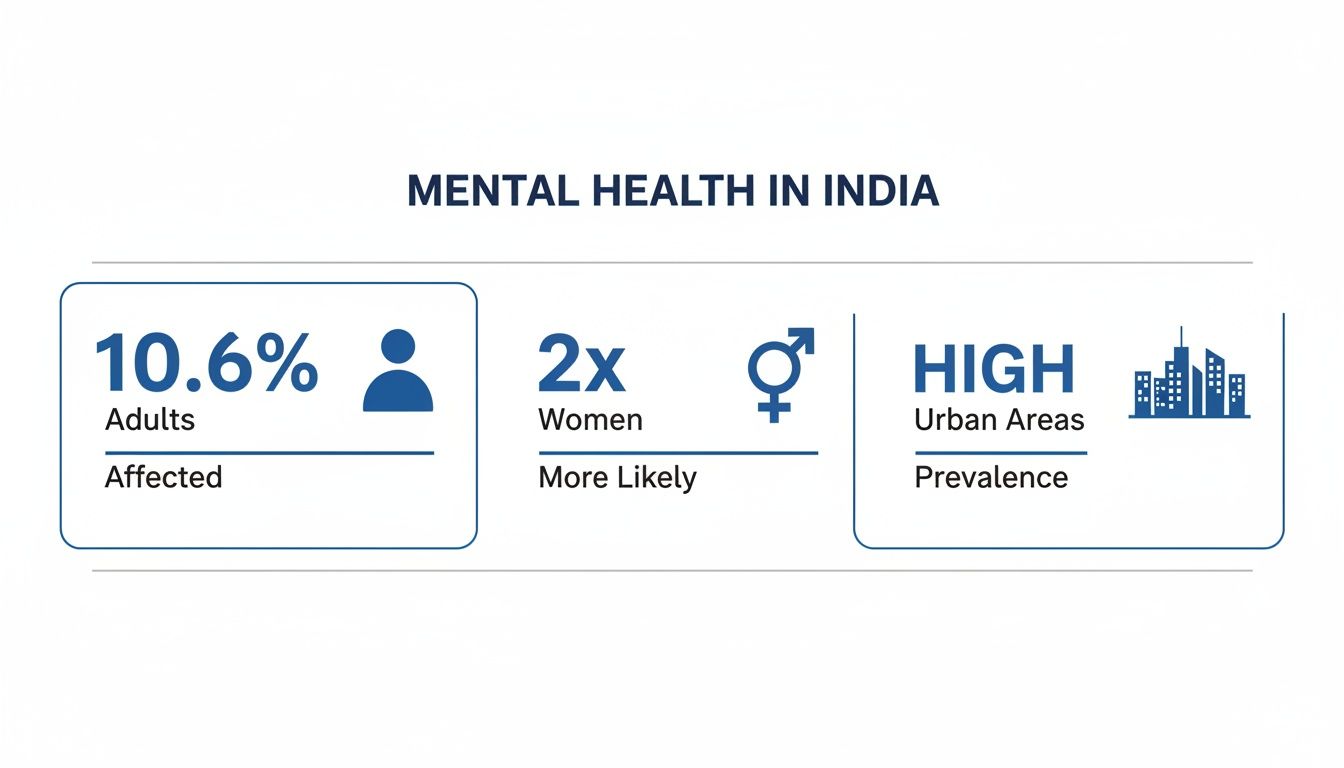
    It's worth remembering that online assessments can give you some great initial insights. Think of them as informational tools to better understand yourself and decide what your next step should be, not as a final diagnosis.

    This is especially important in India, where there can be a large gap between needing and receiving mental health care. The National Mental Health Survey of 2015-16 highlighted that many people with mental health concerns do not get the support they need, often due to stigma or lack of access. You can read more about these national mental health findings on pib.gov.in.

    When Is It Time to Reach Out?

    It can be hard to know when to make the call. Here are a few clear signs that professional therapy could be a helpful step:

    • Your thoughts are causing you significant distress and making it difficult to get through the day.
    • You feel overwhelmed by intense emotions tied to workplace stress, relationships, or other challenges.
    • You have tried self-help strategies, but it feels like you are only scratching the surface of a deeper issue.

    Reaching out for help is a brave, proactive step toward reclaiming your peace of mind. It is an investment in your long-term happiness and a powerful move toward a healthier, more balanced life.

    Your Questions, Answered

    As you begin this journey to a quieter mind, it's normal to have questions. This section addresses some of the most common things people wonder about when learning how to stop thinking so much.

    Is the Goal to Have an Empty Mind?

    No, the goal is not to have a completely empty mind. Trying to stop your thoughts entirely is like trying to stop the ocean's waves—it's impossible and leads to frustration. A thinking mind is a working mind.

    The real goal is to learn how to not get swept away by every unhelpful or repetitive thought. It's about noticing a thought, acknowledging it without getting tangled up, and then consciously choosing where to place your attention. This is the heart of building mental well-being.

    How Quickly Will I See a Difference?

    This is different for everyone. A grounding technique can bring a moment of peace during a period of high anxiety, which is a wonderful success. However, rewiring a long-term habit of overthinking takes time and consistent, gentle practice.

    Think of it like learning a new skill. You won't master it on day one, but with steady effort, you will grow. Be kind to yourself throughout the process—every small step forward is a victory in building resilience.

    Remember, this is a practice of self-kindness, not a race. Every time you gently redirect your thoughts, you're strengthening your ability to find calm and happiness.

    What if I’m Worrying About a Real Problem?

    This is a very important question. These strategies are meant to help manage unproductive mental loops, not to encourage you to ignore real issues. There is a big difference between ruminating and problem-solving.

    Techniques like scheduling 'Worry Time' can help you contain the problem-solving process. You can set aside a specific time to actively think through solutions, which stops the worry from taking over your day. If you feel overwhelmed by a real-life issue, talking it through in therapy can provide a fresh perspective and supportive guidance.

    Can I Do This Alone, or Should I See a Therapist?

    Many people find that these self-help strategies, when applied consistently, make a significant difference. You can absolutely make progress on your own.

    However, if your thoughts feel all-consuming, contribute to feelings of depression, or make it hard to function, professional counselling is an incredible source of support. Starting with these techniques is a fantastic first step. Reaching out for professional help is a sign of profound strength and commitment to your well-being.


    At DeTalks, our mission is to make it simpler to find qualified professionals who understand. If you’re ready to take the next step towards a more peaceful mind, explore our directory of therapists and start your journey today.

  • Finding a Therapist for Stress: A Guide to Building Resilience and Well-being

    Finding a Therapist for Stress: A Guide to Building Resilience and Well-being

    Feeling overwhelmed, like you're constantly running on empty, is more than just a side effect of a busy life. It's a clear signal that your inner resources are stretched thin. Deciding to see a therapist for stress is a powerful, proactive step towards regaining your balance and investing in your long-term well-being.

    Why Talking to a Therapist for Stress Can Help

    A woman therapist consults with a male client in a bright, modern office with a model airplane.

    Navigating life’s pressures alone can feel challenging and isolating. A therapist acts as a skilled guide, helping you understand your emotional landscape and find a clearer path forward. This supportive partnership is what makes counselling for stress so effective.

    In places like India, where professional and personal pressures can be high, we often feel the need to appear strong all the time. Therapy offers a confidential space to lower that guard without judgment. It’s a place to explore the roots of your stress, whether it's workplace stress, family expectations, or personal anxieties.

    Building Your Mental Toolkit for Well-being

    A therapist does more than listen; they equip you with practical tools to enhance your mental well-being. This process helps you move from reacting to stress to responding with intention. It's about building lasting resilience and self-compassion.

    With their guidance, you can learn to:

    • Identify the specific thoughts and situations that trigger your stress.
    • Gently challenge and reframe unhelpful thought patterns that contribute to anxiety.
    • Develop practical coping skills for immediate relief when you feel overwhelmed.
    • Cultivate inner strengths like compassion and happiness to navigate future challenges.

    Therapy isn't about eliminating stress, but about changing your relationship with it. It’s learning to navigate life's challenges with greater confidence and calm, fostering a more positive and resilient mindset.

    This journey unfolds at your own pace, with a professional guide supporting you. Working with a therapist for stress helps you move from just surviving to truly thriving, creating a path to a more balanced and fulfilling life.

    Recognising the Signs You Might Need Support

    A distressed man sits on a bed, hiding his face in his hands, with a steaming mug nearby.

    It can be difficult to notice when everyday stress turns into something more serious. We all face pressure, but when it starts to feel like a constant weight on your shoulders, it's a sign to pay attention. These changes can be subtle, slowly becoming a new, exhausting normal.

    Recognising these shifts is an act of self-awareness and strength. If stress is consistently impacting your happiness, work, or relationships, considering professional counselling can be a helpful step. Finding a therapist for stress is a proactive choice for your overall well-being.

    When to Seek Help: Common Signs to Look For

    How do you know when it's time to reach out? Stress affects your mood, body, and behaviour. If you recognise several of the signs below in your own life, it may indicate that the load has become too heavy to carry alone.

    This is not a diagnostic checklist but an informational guide to help you reflect on your experiences.

    Signs It Might Be Time to Talk to a Therapist

    Area of Life Common Signs of Chronic Stress
    Emotional Well-being You feel constantly irritable, anxious, or overwhelmed. Things you used to enjoy no longer bring you pleasure. You might feel a persistent sense of dread or sadness that you can't shake off.
    Mental Clarity Concentration feels impossible. You struggle to make decisions, your memory feels foggy, or you have racing thoughts that keep you up at night. Minor tasks feel like huge hurdles.
    Physical Health Unexplained headaches, stomach problems, or frequent colds have become common. You feel exhausted all the time, even after a full night's sleep. Muscle tension and aches are your new norm.
    Work or School Procrastination has taken over, and your performance is slipping. You feel disengaged or cynical about your work, and the pressure feels unbearable.
    Relationships You find yourself snapping at loved ones or withdrawing from social activities. You feel isolated and disconnected, even when you're around people you care about.
    Behavioural Habits You're relying more on unhealthy coping mechanisms, like overeating, excessive drinking, or zoning out online. You've stopped taking care of yourself—skipping meals, exercise, or hygiene.

    If this list resonates with you, please know you are not alone. In India, workplace stress is a significant concern, with research indicating that a large portion of adults experience moderate stress from professional demands. You can read the full research about mental health trends in India for more context.

    These signs are not a sign of failure. They are your mind and body’s way of signalling that you are carrying too heavy a load and may benefit from support.

    Paying attention to these signals is an act of self-compassion. It's the first step toward building the resilience needed to navigate life’s challenges with greater ease and seeking help is a sign of strength.

    Therapeutic Approaches for Stress and Well-being

    Two individuals sit at a table during a counseling session with a notebook showing a 'Thought' diagram.

    When you begin working with a therapist for stress, you gain access to proven methods tailored to your needs. Therapy is a collaborative process where a skilled professional guides you using evidence-based techniques. The goal is to build practical, lifelong skills for managing your thoughts and feelings.

    Learning about these approaches can help demystify the process of counselling. Let's explore some of the most effective therapies used for stress, anxiety, and burnout, as well as for cultivating positive states like resilience and happiness.

    Cognitive Behavioural Therapy (CBT)

    Cognitive Behavioural Therapy (CBT) is a widely researched and effective approach for managing stress and anxiety. It is based on the idea that our thoughts, feelings, and actions are interconnected. Unhelpful thought patterns can trigger difficult emotions, which in turn lead to unhelpful behaviours.

    A CBT therapist helps you identify and understand these automatic thought patterns. You then learn to gently question them and shift towards more balanced perspectives. It's a practical, hands-on approach that gives you concrete tools to manage everything from workplace stress to personal worries.

    Acceptance and Commitment Therapy (ACT)

    Acceptance and Commitment Therapy (ACT) offers a different perspective: learning to change your relationship with your thoughts and feelings. It teaches that difficult emotions are a natural part of life, and fighting them can be exhausting. ACT helps you accept their presence without letting them control you.

    With an ACT therapist, you will focus on a few key areas. You'll learn to notice your feelings without being overwhelmed, clarify what truly matters to you (your values), and take meaningful action toward a life aligned with those values, even when stress is present. This fosters psychological flexibility and resilience.

    Mindfulness-Based Approaches

    When we are stressed, our minds often race between past regrets and future worries. Mindfulness-based approaches, like Mindfulness-Based Stress Reduction (MBSR), gently guide your attention back to the present moment. Through practices like guided meditation, you learn to observe your thoughts without judgment.

    Mindfulness is not about emptying your mind, but about observing your thoughts and feelings as they come and go, without getting carried away by them.

    This practice creates a vital pause between a stressful event and your reaction. In that space, you find the freedom to choose a more thoughtful response. Exploring related practices like therapeutic yoga can also be a wonderful way to connect mind and body, building a stronger foundation for well-being.

    How to Find a Therapist You Truly Connect With

    Finding the right therapist is a personal journey, and the connection you feel is key. This relationship, known as the therapeutic alliance, is one of the most important factors for successful therapy. You need to feel safe, seen, and understood to do the meaningful work of healing and growth.

    Taking the first step to find a professional is a hopeful act of self-care. It's worth taking the time to find someone who feels like a true partner in your corner. This person will help you navigate stress, build resilience, and learn to manage anxiety for the long term.

    Starting with the Essentials

    A few practical checks can help you create a shortlist of qualified and ethical professionals. In India, look for psychologists registered with a recognized body like the Rehabilitation Council of India (RCI). This registration ensures they have met specific training and ethical standards.

    Also, consider their area of focus. If you're dealing with challenges like workplace stress, anxiety, or depression, look for a therapist for stress who lists these as core areas of their practice. This ensures they have the right experience to support you.

    The Importance of the Right Fit

    The most qualified therapist may not be the right one for you if you don't feel a comfortable connection. That "fit" is the gut feeling of trust that allows you to be open and honest. It’s the difference between speaking with a clinical expert and a warm, empathetic human who truly understands.

    A good therapeutic fit means you feel respected, heard without judgment, and confident in your therapist's ability to guide you. This foundation of trust is where real growth and healing happen.

    This connection is built on empathy and a shared understanding of your goals. Trust your instincts; if an initial conversation doesn't feel right, it’s perfectly okay to continue your search.

    Questions to Ask a Potential Therapist

    Most therapists offer a brief initial consultation, often free of charge. This is your opportunity to ask questions and see if their style aligns with your needs. Having a few questions prepared can help you feel more confident in your choice.

    Here are a few helpful questions to consider:

    • What's your approach to helping people with stress and anxiety? This helps you understand their therapeutic style.
    • How do you help your clients build practical coping skills? This shows their focus on equipping you with real-world tools.
    • Can you describe what a typical session with you is like? This gives you a sense of their process and manages expectations.
    • How do you work with clients to track progress? This shows they are invested in your journey toward well-being.

    Finding the right therapist is a deeply personal process. By combining practical checks with a focus on human connection, you can find a professional who will be a powerful ally on your path to feeling better.

    Choosing Between Online and In-Person Therapy

    Today, finding the right therapist for stress means you have more options than ever. A key decision is whether to meet in a physical office or connect online. There is no single "best" choice—it all depends on what suits your life and makes you feel most comfortable.

    For some, traditional in-person therapy provides a dedicated, quiet space away from daily distractions. Going to an office can create a helpful mental separation, allowing you to focus entirely on yourself. This setting can make it easier to build rapport without technical interruptions.

    The Rise of Online Counselling

    Online counselling has made mental health support more accessible, especially in a country like India. It removes the stress of travel and makes it easier to fit a session into a busy schedule. This is a great benefit for people in smaller towns or anyone with mobility challenges.

    Many people also find it less intimidating to open up from the comfort of their own home. It can lower the initial barrier to starting therapy, helping you feel at ease from the very first call. This flowchart outlines the essential steps for finding a therapist, regardless of the format.

    A flowchart on finding a therapist, detailing steps like credentials, consultation, and rapport.

    The core steps—checking credentials and ensuring a good connection—remain the same for both options. To help you decide, here is a simple comparison.

    Comparing In-Person and Online Therapy

    Feature In-Person Therapy Online Therapy
    Environment A dedicated, neutral, professional office setting. Your own familiar, private space (home, office, etc.).
    Convenience Requires travel and scheduling around commute times. No travel needed; highly flexible and easy to fit in.
    Accessibility Limited to professionals in your local area. Access to a wide pool of therapists across the country.
    Connection Direct, face-to-face interaction without technology. Relies on a stable internet connection for video/audio.
    Comfort Level Can feel more structured and formal. May feel less intimidating and more relaxed for some.
    Anonymity Less anonymity due to visiting a physical location. Offers a greater sense of privacy and discretion.

    Ultimately, both paths can lead to the support you need for your well-being.

    What Is Right for You?

    The best choice is the one you will stick with. Whether you are dealing with anxiety, workplace stress, or want to build more resilience, a good therapist can support you in either setting.

    The goal is to find a supportive, professional partnership. Whether that happens in a physical room or through a video call, the quality of the connection is what matters most for your growth.

    Consider your lifestyle, comfort with technology, and the environment where you feel safest to open up. With trusted platforms offering secure sessions, you can build an effective, healing relationship no matter the distance.

    Taking Your First Step Toward a Calmer Life

    Deciding to find a therapist for stress is a sign of strength and a commitment to your own well-being. It’s a proactive choice to build a more fulfilling and balanced life. While the process might seem new, getting the right support is often more straightforward than you might imagine.

    Platforms like DeTalks are designed to simplify your search. You can browse profiles of qualified professionals who specialize in stress, anxiety, and burnout. This helps you find someone whose approach to counselling and expertise aligns with your needs.

    Using Self-Assessments for a Clearer Picture

    As you begin, you may come across self-assessment tools. These can be a helpful way to organize your thoughts and feelings, giving you a clearer starting point for your first conversation with a therapist. They are purely for your personal reflection and information.

    It is important to remember that these tools are informational and not a substitute for a professional diagnosis. They simply offer a private, structured way to map out what you have been experiencing.

    "Beginning therapy is not about admitting defeat; it is an act of profound self-love. It's giving yourself the space to heal, grow, and build the resilience needed to navigate life with greater peace and purpose."

    This journey is about more than just overcoming a difficult time; it’s about creating lasting positive change. The skills you learn in therapy—from managing workplace stress to practicing self-compassion—become a permanent part of your toolkit. You’ll be better equipped to handle life's challenges and build a life defined by calm and purpose.

    Your Questions About Stress Therapy, Answered

    Taking the first step into therapy is significant, and it's natural to have questions. Let's clarify some common queries people have when considering a therapist for stress. Our goal is to make the process feel clear and approachable.

    How Long Will I Need to Be in Therapy for Stress?

    There's no single answer, as the timeline is unique to you and your goals. For some, a few months is enough to build effective coping strategies. For others, particularly if stress is linked to deeper issues like trauma or ongoing anxiety, longer-term support may be more beneficial.

    Your therapist will work with you to set goals and will regularly check in to ensure you are moving in a helpful direction together. It is a collaborative process focused on your well-being.

    Is What I Say in Therapy Actually Private?

    Yes, confidentiality is a cornerstone of therapy. It is a strict ethical requirement for all professionals. This creates a safe space where you can speak openly without fear of your information being shared.

    The only exceptions are rare situations involving immediate risk of harm to yourself or others. Your therapist will explain these limits clearly at the beginning, so you feel fully informed.

    Think of the therapeutic relationship as a secure vault for your thoughts and feelings. This trust allows for genuine exploration and healing, freeing you from carrying your worries alone.

    What if I Don’t Click with the First Therapist I See?

    That is perfectly okay and quite common. Finding the right fit is crucial for a successful therapeutic experience. The connection you have with your therapist—the 'therapeutic alliance'—is one of the strongest predictors of positive outcomes in therapy.

    If the first person you meet doesn't feel right, don't be discouraged. View it as a step in the process of finding the right partner for your journey. Platforms are designed to help you find a professional who truly understands you.


    Seeking support is a courageous step towards managing stress and building your resilience. Exploring your options is the beginning of a path to a calmer, more balanced life. Book your first session today.

  • How to Live in the Present and Reclaim Your Peace

    How to Live in the Present and Reclaim Your Peace

    Life can feel like a constant pull between past regrets and future worries. Choosing to live in the present means anchoring yourself in the here and now, which is the only moment you truly have. It's a gentle shift from "what if" to "what is."

    Why Is It So Hard to Live in the Present?

    Does your mind ever replay a past mistake while you’re trying to enjoy the moment? Or perhaps you're with loved ones, but your thoughts are lost in anxiety about a future deadline. This mental time travel is very common and can leave us feeling scattered and drained.

    Young man meditating with closed eyes, surrounded by a clock and an old photograph.

    Our brains are naturally built to wander, learning from the past and planning for the future. The challenge begins when this internal chatter becomes overwhelming, pulling us away from our actual lives and contributing to stress.

    The Impact of a Wandering Mind

    When our minds are constantly elsewhere, our well-being can be affected. Dwelling on past events can lead to feelings of sadness, while fixating on future unknowns can fuel anxiety and burnout.

    • Heightened Stress: Worrying about the future can trigger your body's stress response, keeping you in a state of high alert. This constant tension can contribute to both physical and emotional exhaustion.
    • Burnout: Mental distraction makes it difficult to engage fully with work and personal life, leading to emotional exhaustion and a sense of disconnect.
    • Missed Connections: You can't truly connect with the people around you if your mind is far away, causing you to miss out on meaningful moments.

    Learning to live in the present isn’t about ignoring the past or future. It's about learning to guide your attention back to where you are, fostering compassion for yourself along the way.

    By developing practical skills to ground yourself, you can build genuine resilience and improve your mental well-being, moving from a state of constant reaction to one of intentional calm.

    This guide offers simple techniques to help you feel more connected to your life. Remember, support like therapy and counselling is also available to help you on your journey toward greater happiness.

    Understanding What Pulls You from the Present

    To learn how to live in the present, it helps to first understand what pulls us away. Often, our minds drift into two common patterns: replaying the past (rumination) or anxiously rehearsing the future (worry). Both can take us out of the current moment.

    Consider a young professional in Bengaluru, worried about an upcoming performance review. Instead of focusing on today's tasks, she replays a small mistake from last month, a pattern known as rumination. This keeps the past alive and can magnify feelings of regret.

    Now, picture a student in Delhi who just finished exams and is consumed by "what if" scenarios about his results. This is worry—a cycle of anxious thoughts about a future that hasn't happened. This habit can increase feelings of anxiety and stress.

    Rumination vs. Worry: Two Common Thought Patterns

    These mental habits can feel like problem-solving, but they often do the opposite. Rumination can intensify sadness, while worry is a direct path to anxiety. Both are draining and prevent us from experiencing the life right in front of us.

    When your mind wanders, you are never truly where you are. This can cause you to miss the small joys and meaningful connections that come with being fully present.

    Simply noticing these patterns is the first step toward change. It’s not about judging your thoughts, but gently acknowledging them. This self-awareness is a foundation for strong mental well-being and resilience, helping to counter workplace stress and unhappiness.

    Before moving on, it’s useful to see the differences between these thought patterns. Knowing whether your mind is in the past or future is key to guiding it back to now.

    Rumination vs Worry: Understanding Your Thought Patterns

    Characteristic Rumination (Past-Focused) Worry (Future-Focused)
    Time Focus Fixated on past events, conversations, or mistakes. Focused on potential future events and "what if" scenarios.
    Emotional Tone Often linked to sadness, regret, guilt, or anger. Primarily driven by anxiety, fear, and uncertainty.
    Key Question "Why did that happen?" or "If only I had…" "What if this happens?" or "How will I handle…?"
    Perceived Goal Trying to understand or "solve" a past event. Trying to prevent a negative outcome or prepare for danger.
    Common Outcome Can lead to feelings of helplessness and depression. Often results in heightened anxiety and physical tension.

    Seeing your thoughts laid out this way can be helpful. When you can name what’s happening—"That’s worry," or "I'm ruminating again"—you regain a sense of control.

    The Real Impact on Our Well-being

    Living outside the present moment can take a toll on our mental health. This constant mental time travel is closely linked to experiences of anxiety and depression, creating a persistent sense of unease.

    In India, this is a significant concern, with a reported 10.6% of adults experiencing mental health conditions, and rates are higher in urban areas. You can learn more from the National Mental Health Survey findings on pib.gov.in. Anchoring ourselves in the now is a powerful way to support our overall well-being.

    Recognising these thought patterns is an act of self-compassion. By identifying if you're lost in the past or future, you can gently guide your attention back to the present moment, reclaiming your peace.

    Practical Mindfulness Exercises to Anchor You in the Now

    Knowing your mind wanders is the first step; gently guiding it back is the next. The goal isn't to force your thoughts away, but to build a toolkit of simple ways to ground yourself. These are practical skills you can use anywhere to find your centre.

    These practices can be anchors during challenging times. Whether you're feeling workplace stress before a meeting or the familiar hum of anxiety, these exercises offer a lifeline back to a moment of calm. They are an invitation to reconnect with yourself.

    The need for accessible tools is clearer than ever when we look at the mental health landscape in India.

    Infographic showing mental health statistics in India: 10.6% adults affected, women 2x more likely, high prevalence in urban areas.

    This data tells a story about our communities. Mental health challenges are common, especially for women and those in busy urban centres, making practical well-being strategies vital.

    The Three-Minute Breathing Space

    Think of this as your mental reset button. It’s a simple way to pull yourself out of autopilot when you feel overwhelmed and plant your feet firmly in the present. It has three stages.

    • First Minute (Acknowledge): Tune in and notice what’s going on inside. What thoughts and emotions are present? Simply acknowledge them without judgment.
    • Second Minute (Gather): Gently bring your full attention to the physical sensation of your breath. Feel the air moving in and out, letting its steady rhythm be your anchor.
    • Third Minute (Expand): Finally, expand your awareness from your breath to your whole body. Notice your posture, the space you're in, and any physical sensations.

    This brief exercise can shift your state of mind and break the cycle of stressful thoughts. It's a small investment of time that builds tremendous resilience.

    The Body Scan Meditation

    Much of our daily stress is stored in our bodies, often without our realising it. The body scan is a practice for reconnecting with your physical self, one part at a time. This encourages relaxation and deepens self-awareness.

    You can do this lying down or sitting comfortably. Start by bringing your attention to your feet, noticing any sensations without trying to change them. Slowly, guide your awareness up through your body, to your torso, arms, and head.

    This isn't about fixing what you find; it's about listening. By offering your body this kind, curious attention, you create space for stored tension to release on its own.

    If your mind wanders, that's completely normal. Just notice where it went and gently guide it back. This practice is especially helpful for soothing the physical symptoms of anxiety and improving your overall sense of well-being.

    The 5-4-3-2-1 Grounding Technique

    When your thoughts are racing, this technique uses your five senses to pull you back into the present moment. It helps interrupt patterns of worry by focusing your brain on the tangible world around you.

    Take a slow, deep breath, and then begin to identify:

    • 5 things you can see: Look for small details, like the texture of a wall or the colour of a pen.
    • 4 things you can feel: Notice physical sensations, like the fabric of your clothes or the chair beneath you.
    • 3 things you can hear: Listen for sounds both near and far, such as a fan humming or birds outside.
    • 2 things you can smell: Notice scents in the air, like coffee or the smell of rain.
    • 1 thing you can taste: Take a sip of water or simply notice the current taste in your mouth.

    Each exercise is a practical step toward building a stronger relationship with the present moment. They are real tools for managing daily stress and feelings linked with depression. For those wanting to dive deeper, exploring options like yoga retreats can offer a supportive environment.

    Weaving Mindful Moments into Your Daily Routine

    Mindfulness exercises are helpful, but the real impact comes when you make them a consistent part of your day. Learning to live in present moments is not about adding another task to your list. It's about weaving small, intentional habits into your existing routine.

    This approach makes mindfulness feel like a quiet act of kindness to yourself. It’s about creating pockets of peace amid the daily rush, whether you're navigating a chaotic commute in Mumbai or managing tasks at home. These tiny pauses build resilience against workplace stress and emotional burnout.

    Young man walking on a sunny, tree-lined street, holding a phone in his hand.

    Transform Everyday Actions into Mindful Pauses

    You don’t need a special cushion or a silent room to be present. Your day is already full of opportunities to ground yourself. The key is to bring gentle, curious awareness to one thing at a time.

    Here are a few simple ways to start:

    • Mindful Eating: During your next meal, put your phone down and pay attention to your food. Notice the colours, smells, textures, and flavours. This simple shift can reduce stress and improve digestion.
    • The Digital Detox Walk: Take a five-minute walk and leave your phone behind. Feel the ground under your feet, the air on your skin, and observe the world around you without a screen.
    • Conscious Commuting: Instead of scrolling or letting your thoughts race, use your commute to tune in. What can you hear and see? You could even focus on the rhythm of your own breathing.

    These small changes don't take extra time but require a shift in focus. They are surprisingly powerful ways to pause anxiety and reconnect with the here and now.

    Cultivating Gratitude to Stay Grounded

    Focusing on what is good in this moment is a powerful way to shift your mind away from worry. A simple gratitude practice can change your perspective and boost your overall well-being. It also fosters happiness and compassion.

    A gratitude practice is not about ignoring life's challenges. It's about intentionally choosing to also see the good, which trains your brain to notice positive experiences and builds emotional strength.

    It doesn’t have to be complicated. At the end of the day, jot down three specific things you were grateful for. Instead of a general "my family," try "the kind words my colleague shared" or "the ten quiet minutes I had for my morning chai." Specificity makes the feeling more real.

    This simple habit counters our brain’s tendency to focus on what’s wrong, which can be linked to feelings of depression. By consistently noticing the good, you reinforce a more balanced, present-focused mindset. It’s a small daily investment with huge returns for your mental health.

    Knowing When to Seek Professional Support

    While self-help techniques are effective, sometimes the pull away from the present is too strong to manage alone. If deep-seated anxiety or a persistent low mood makes it feel impossible to stay grounded, reaching out is a sign of strength. It is a proactive step toward improving your well-being.

    Deciding when to seek professional help can feel challenging, but certain signs can make it clearer. If worry is consistently interfering with your work, relationships, or ability to enjoy life, that's more than everyday stress. Professional guidance can offer a path forward.

    Recognising the Signs It’s Time for Support

    Often, it’s not one major event but a gradual build-up of smaller struggles that signals the need for help. Noticing these signs is the first step and an act of self-compassion.

    Ask yourself if any of these feel familiar:

    • Overwhelming Emotions: You feel a constant current of sadness, anger, or anxiety that is difficult to manage day-to-day.
    • Disrupted Daily Life: Your sleep, appetite, or ability to focus have significantly changed, making simple tasks feel overwhelming.
    • Unhealthy Coping Habits: You find yourself relying on coping mechanisms that you know are not helpful in the long run.
    • Feeling Stuck: You've tried self-help strategies but still feel caught in the same loop of negative thoughts or behaviours.

    If you recognise these signs, know that you are not alone. Platforms like DeTalks can connect you with qualified therapists who provide a safe space to explore these challenges. Professional counselling and therapy are about building lasting resilience with personalised strategies.

    A Guided Path to Understanding Yourself

    In India, the need for accessible mental health support is more urgent than ever. Learning to live in present moments can be a powerful buffer against distress. Tragically, between 2018 and 2022, mental health-related suicides increased, with a high number among young adults aged 18-45. You can explore the full report on mental health trends at IndiaSpend.

    Seeking help is not about admitting defeat; it is about choosing a different future. It is an investment in your own happiness and long-term well-being.

    DeTalks also offers scientifically validated psychological assessments. It is important to remember that these are informational tools, not diagnostic ones. They will not give you a label, but they can offer valuable insights into your emotional patterns and personal strengths. Think of them as a compass to help you and your therapist understand your starting point.

    Your Path Forward to a More Present Life

    The journey to live in present moments is a gentle, ongoing practice, not a destination. Your mind will wander—that's what minds do. The real skill is kindly and repeatedly guiding it back home, without judgment.

    Each time you notice your thoughts have drifted and you bring them back, you are strengthening your resilience muscle. It grows stronger with each return.

    Embracing Progress Over Perfection

    This process is built on self-compassion, so it's important to celebrate small victories. The one mindful breath you took during a chaotic meeting is a win. The five minutes you spent noticing the trees on your walk is a huge accomplishment.

    These moments are the building blocks of a more present life. They are powerful antidotes to the burnout and anxiety that can feel overwhelming.

    Your well-being is a relationship to be nurtured, not a problem to be solved. Be patient with yourself, especially on days when your focus feels distant. Remember, the goal is not to silence your mind, but to change your relationship with it, fostering inner calm.

    This path is about adding small, intentional pauses to your day, creating pockets of peace that build lasting emotional strength and support your happiness.

    Creating an environment that supports your practice can also make a difference. Consider how you can physically carve out a space for peace and well-being in your daily life.

    If past regrets or future worries still feel too heavy, remember that professional support is an incredible resource. Reaching out for therapy or counselling is a courageous step toward building a life with greater ease and connection.

    Your Questions, Answered

    As you explore how to live more in the present, some practical questions may arise. Here are a few common ones.

    Is It Really Possible to Stop My Mind from Wandering?

    The goal is not to stop your mind from wandering, as that is a natural brain function. The practice is about gently noticing when your mind has drifted and kindly guiding it back to the present moment. Each time you do this, you strengthen your ability to be present.

    How Long Until I Actually Feel a Difference?

    Many people report a flicker of calm almost immediately after a brief exercise like the Three-Minute Breathing Space. However, the deeper, more lasting benefits—such as lower anxiety and greater resilience—come from consistent practice over weeks and months. The key is gentle consistency.

    Can This Genuinely Help with Serious Anxiety or Depression?

    Yes, mindfulness is a well-researched tool that can make a real difference in managing symptoms of anxiety and depression. It is a core component of many modern therapeutic approaches.

    For diagnosed conditions, these practices are most effective as part of a comprehensive treatment plan guided by a professional. If you are dealing with persistent low mood or worry, these exercises can be a wonderful support, but they are not a replacement for professional care.

    This journey is about changing your relationship with your thoughts, not eliminating them. By weaving these small, mindful moments into your life, you lay the groundwork for more emotional balance and a more peaceful existence. Your path forward is yours to shape, one present moment at a time.


    Ready to take the next step towards better mental well-being? At DeTalks, we can connect you with qualified therapists and provide scientifically validated assessments to help you understand your needs more clearly. Find the right support for your journey today at DeTalks.

  • Living in the Moment: Practical Mindfulness Tips for a Calmer Mind

    Living in the Moment: Practical Mindfulness Tips for a Calmer Mind

    We've all heard the phrase "live in the moment," but what does it really mean? It’s about paying attention to the here and now, on purpose. It means truly feeling the sun on your skin or tasting your morning tea, instead of being lost in past regrets or future worries.

    Living in the moment is a gentle, non-judgemental awareness of what's happening right now, both inside you and around you.

    Understanding the Power of Presence

    A young person sits on a park bench, eyes closed, smiling peacefully in warm sunlight.

    Our modern lives are filled with notifications, deadlines, and social pressures. It's no wonder our minds are often everywhere but in the present. We might replay a difficult conversation or get tangled in worries about a future meeting, while life quietly unfolds unnoticed.

    This constant mental time-travel is a common source of workplace stress and personal anxiety.

    Living in the moment isn't about ignoring your problems. Instead, it’s about grounding yourself in the present to face challenges with a clearer head and calmer spirit. This sense of presence helps you respond to life thoughtfully rather than reactively.

    Building Resilience One Moment at a Time

    Practising mindful awareness is a powerful way to support your mental well-being. When you gently bring your focus back to the now, you can interrupt the loops of thought that fuel anxiety and depression. This simple shift helps build emotional resilience, making you better equipped to handle life's ups and downs.

    Here’s a closer look at the benefits:

    • It Cuts Down on Overwhelm: By focusing on just this one moment, life can feel much more manageable.
    • It Encourages Self-Compassion: You learn to notice your thoughts without immediate self-criticism, helping you build a kinder inner voice and greater happiness.
    • It Sharpens Your Focus: Training your attention to stay present is like a workout for your brain, boosting concentration in all areas of life.

    The table below highlights the mental shift that occurs when you move from distraction to presence.

    Living in the Moment vs Dwelling on Past or Future

    Focus Area Living in the Moment (Present and Aware) Dwelling on Past or Future (Distracted and Anxious)
    Attention Focused on the current task, conversation, or sensation. Scattered, replaying past events or worrying about what's next.
    Emotions Experiencing feelings as they arise, without judgement. Stuck in regret, guilt, fear, or anticipatory anxiety.
    Thoughts Observing thoughts as they pass, like clouds in the sky. Caught in a cycle of rumination or "what if" scenarios.
    Response Calm, intentional, and thoughtful actions. Reactive, impulsive, or avoidant behaviour.

    Shifting your focus to the present empowers you to engage with your life directly.

    Cultivating presence is a foundational step toward lasting happiness and mental balance. It’s an invitation to engage with your life directly, fostering a sense of peace that doesn't depend on external circumstances.

    If you find yourself constantly overwhelmed, professional help is available. Talking with a therapist through counselling or therapy can offer personalised tools to manage stress and build a more present, fulfilling life.

    Why Staying Present Feels So Hard

    If you find it difficult to live in the moment, you are not alone. It’s a deeply human experience for the mind to wander. Our brains are wired to scan the future for potential threats and review the past for lessons, which was a helpful survival instinct.

    In today's world, this instinct often goes into overdrive, fuelled by constant notifications and the fast pace of modern life. This can create a state of near-constant mental chatter, making it feel almost impossible to stay present.

    The Brain's Default Mode

    Trying to focus on the present can feel like listening to calm music while someone next to you blasts a chaotic playlist. Your mind's "default mode" is often a mix of planning, remembering, and worrying that runs on a loop.

    This internal noise is a major contributor to workplace stress, anxiety, and burnout. Figuring out how to calm an overactive mind is a crucial step toward being present, but it's important to remember this isn't a personal failing; it's just how our minds work.

    Understanding that a wandering mind is natural is the first step toward self-compassion. The goal isn’t to silence your thoughts but to gently guide your attention back to the present, again and again, with kindness.

    Common Barriers to Staying Present

    On top of our brain's natural tendencies, several modern challenges make it harder to stay in the now. These pressures constantly pull our attention in different directions.

    • Information Overload: We encounter more information in a single day than our ancestors might have in a lifetime, making it hard for our brains to focus.
    • The Pressure to Multitask: In many Indian workplaces and homes, juggling multiple tasks is seen as a strength. However, research shows it often increases stress and prevents deep engagement.
    • Emotional Avoidance: Sometimes the present moment holds difficult feelings like sadness or anxiety. It can feel easier to dwell on the past or worry about the future than to sit with that discomfort.

    These barriers can contribute to cycles of anxiety and even depression. Professional support like therapy or counselling can be invaluable in helping you identify your triggers and build the resilience to navigate them.

    The Science-Backed Benefits for Your Well-Being

    Shifting your focus to the present moment does more than just help you feel calmer; it can create real, measurable changes in your mind and body. The practice of living in the moment is strongly linked to better mental and physical health, boosting your overall quality of life.

    This practice gives your nervous system a chance to switch off the constant "fight or flight" mode that fuels much of our daily stress.

    When you ground yourself in the present, your body can slow its production of the stress hormone cortisol. By consciously bringing your attention to the here and now, you actively help regulate your body’s stress response. This is a fundamental step in building genuine resilience and protecting your long-term health.

    Strengthening Your Emotional Core

    One of the most significant benefits of this practice is improved emotional regulation. Instead of getting swept away by an intense feeling, you learn to observe it with calm detachment. This skill is incredibly helpful for managing experiences related to anxiety and depression, creating space between a trigger and your reaction.

    This practice also encourages a kinder, more compassionate relationship with yourself. You start to notice your internal patterns without harsh self-judgement, which is a key part of emotional healing and contributes to greater happiness.

    By observing your thoughts and feelings as they are, rather than what you fear they might become, you reclaim your power over them. This is the heart of building emotional resilience and finding inner peace.

    Enhancing Focus and Building Resilience

    In a world full of distractions, the ability to focus is a valuable skill. Living in the moment is how you can train that mental muscle.

    Every time you notice your mind wandering and gently guide it back, you strengthen your attention span. This improved focus not only helps with productivity but also deepens your connections with others and allows you to be fully present in your own life. This consistent practice builds mental fortitude, helping you navigate challenges with greater stability and resilience.

    Understanding your unique mental health needs is an important part of your well-being journey. Informational assessments can offer valuable insights into your patterns of stress or resilience. Please remember, these are tools for self-discovery and are not diagnostic, but they can be a helpful first step before considering professional therapy or counselling.

    Simple Mindfulness Exercises You Can Start Today

    A moment of calm with an hourglass, steaming tea, and a smartphone on a sunlit wooden table.

    Knowing the benefits of living in the moment is one thing, but practising it is another. The good news is that you don’t need a lot of time to get started. The most powerful mindfulness exercises are often the simplest ones, designed to fit into a busy day.

    Think of these practices as small experiments in awareness. They are practical tools that can break the cycle of workplace stress and anxiety, offering a quick way to find calm whenever you need it.

    The Mindful Minute

    This is a powerful, 60-second exercise you can do at your desk, while waiting in line, or anytime you feel your mind racing. It acts as a reset button for your nervous system.

    1. Settle In: Find a comfortable posture. You can close your eyes or simply lower your gaze.
    2. Focus on Your Breath: Turn your attention to the physical sensation of breathing. Notice the air coming in, the rise and fall of your chest, and the release as you exhale.
    3. Count the Breaths: Silently count each out-breath up to ten. When your mind wanders, gently and without judgement, bring it back to your breath and start again from one.

    This simple exercise anchors you in the present, showing that even a minute of focused attention can support your mental well-being. Exploring different forms of Meditation Guided Breathing can also offer helpful techniques for finding calm.

    The 5-4-3-2-1 Grounding Technique

    When feelings of anxiety begin to build, this technique can be a great help. It uses your senses to pull you out of spiralling thoughts and back into the present moment by connecting you to the world around you.

    • 5 Things You Can See: Look around and name five objects. Notice their color, shape, and texture.
    • 4 Things You Can Feel: Shift your awareness to four things you can physically feel, like the texture of your clothes or the chair beneath you.
    • 3 Things You Can Hear: Listen closely and identify three distinct sounds, such as the hum of a fan or traffic outside.
    • 2 Things You Can Smell: Notice two scents in the air, perhaps the smell of coffee or fresh air from a window.
    • 1 Thing You Can Taste: Finally, focus on one thing you can taste, like the lingering flavor of your last meal or a sip of water.

    Mindful Listening

    This practice turns a normal activity into an opportunity to be present. Instead of just hearing sounds, you actively listen. This can be a deeply calming experience that sharpens your focus and builds resilience.

    “Step by step in the dark, I have found the next stone.” This piece of Zen wisdom is a perfect reminder that progress in mindfulness isn't about giant leaps; it's about taking one small, present step at a time.

    You can practise mindful listening with music or the sounds of nature. Give the sounds your complete attention, noticing the different tones and rhythms without letting your mind create stories about them. This creates a powerful bridge back to the here and now.

    In India, often called the birthplace of meditation, these practices are deeply rooted in culture. It’s no surprise that nearly 48% of Indian adults meditate at least once a week, highlighting how vital present-moment awareness is for mental well-being.

    When It’s Time to Seek Professional Support

    Practising mindfulness is a wonderful act of self-care that can build resilience and boost your well-being. However, it's important to remember that it's a tool, not a cure-all. Sometimes, we face challenges that require more specialised support, and recognising this is a sign of strength.

    If you find that your attempts to stay present consistently leave you feeling more distressed, it might be time to consider professional help. While mindfulness is helpful for managing feelings related to anxiety and depression, it may not address the deeper roots of these experiences.

    Knowing When Self-Help Isn't Quite Enough

    It can be difficult to know when to reach out, especially when you're already struggling. Noticing when your self-help practices alone aren't bringing relief is a courageous first step.

    Consider seeking professional guidance if any of the following feel familiar:

    • Persistent Overwhelm: Feelings of anxiety, sadness, or workplace stress are constant and interfere with your daily life, work, or relationships.
    • Worsening Symptoms: Trying to sit with your thoughts during mindfulness practice consistently makes your feelings of distress feel worse.
    • Unresolved Trauma: You are dealing with past events that continue to cause significant emotional pain and impact your present life.
    • Burnout That Won’t Budge: Despite trying to rest, you feel emotionally and physically exhausted with no sense of relief.

    Seeing these signs doesn’t mean you've failed at living in the moment. It may simply suggest that there are underlying issues that could benefit from the focused support that professional therapy or counselling provides.

    Acknowledging that you need support is the first and most powerful step towards feeling better. It's about adding a skilled, compassionate guide to your team as you navigate your well-being journey.

    How Therapy and Mindfulness Work Together

    Therapy offers a safe, confidential space to explore the roots of your struggles. A trained professional can provide strategies tailored to you, which can work alongside your mindfulness practice to help you build lasting resilience.

    A therapist can help you understand the complex thoughts and emotions that mindfulness brings to the surface, offering context and new coping skills. This partnership ensures you're using tools like mindfulness effectively to manage mental health challenges related to anxiety and depression.

    If you're unsure where to begin, our informational assessments can offer initial insights into your emotional well-being. Please remember, these are for guidance and self-discovery, not a diagnosis, but they can be a helpful first step in understanding what you need.

    Embracing Your Journey Toward Presence

    A lone figure walks into bright light on a forest path, surrounded by tall trees and mist.

    Learning to live in the moment is a gentle practice, not a destination you need to reach. Think of it as a path you walk, where the journey itself is the point. It's about nurturing a kinder relationship with your own mind through small, consistent steps.

    When your mind drifts—and it will—the goal isn't to force it back. The real practice is to simply notice where it went and then, with compassion, gently guide it back to the here and now. This small act, repeated over time, is where meaningful change begins.

    This path is your own, but you don't have to walk it alone. Building resilience against workplace stress, anxiety, or depression takes time and patience, so be kind to yourself along the way.

    Your Supportive Takeaways

    As you move forward, keep these gentle reminders with you. They are not strict rules but helpful anchors to bring you back to the present moment.

    • Progress Over Perfection: Every time you intentionally bring your focus back to the present is a victory. It’s important to acknowledge and celebrate these small wins.
    • Self-Compassion is Key: Talk to yourself with the same kindness you would offer a good friend. There is no place for harsh self-judgement on this path.
    • Start Small and Simple: You don't need to set aside hours for meditation. A single mindful breath or a moment spent noticing the world around you is a powerful start.

    Your mind isn't the enemy. The goal is to shift your relationship with your thoughts—to observe them with curiosity rather than letting them pull you into their drama. This shift is the heart of finding a more lasting sense of peace and well-being.

    If you ever feel that what you're facing is too heavy to carry alone, remember that professional counselling and therapy offer a safe, supportive space. Embracing this journey is about honouring your needs, one present moment at a time.

    Got Questions About Living in the Moment?

    It's completely normal to have questions as you explore what it means to be more present. Let’s look at some common ones to help you move forward with more clarity and kindness toward yourself.

    Does Living in the Moment Mean I Should Just Ignore My Problems?

    That’s a great question, and the answer is no. Being present actually helps you see your challenges for what they are, right here and now, without the added weight of past regrets or future fears.

    It equips you to deal with problems more effectively by allowing you to respond with a clear mind, rather than reacting out of stress.

    How Quickly Will I Feel a Difference?

    Many people feel a sense of calm after their first mindfulness practice. However, lasting changes—like building resilience to stress or feeling less overwhelmed by anxiety—come from regular practice over time.

    Think of it like building a new muscle. It takes consistency, but the strength you gain in your well-being is well worth the effort.

    I Tried Mindfulness, and It Seemed to Make My Anxiety Worse. Is That Normal?

    For some people, tuning into their inner world can feel intense at first. If this happens, it doesn't mean you've done something wrong.

    Try starting with shorter, guided exercises. If the feeling of distress continues, it could be a sign that professional support from counselling would be a helpful and safe way to navigate those emotions.

    Remember, the point of mindfulness isn't to force your mind to go blank. It's about changing your relationship with what's going on inside it—learning to observe your thoughts with curiosity instead of getting swept away by them.

    This journey is about progress, not perfection. Every time you gently guide your attention back to the here and now, you are taking a positive step for your well-being.


    If you feel overwhelmed by challenges like workplace stress, anxiety, or depression, you don’t have to go it alone. DeTalks is here to support you. Explore our confidential, science-backed assessments or connect with one of our qualified therapists to find your path to a more present, fulfilling life.

  • How Do You Find Peace in a Demanding World?

    How Do You Find Peace in a Demanding World?

    Finding peace isn't about chasing a mythical, stress-free life. Instead, it's about learning how to stay calm and centred even when things get tough. It's about building genuine resilience and emotional balance through small, consistent actions that start with understanding yourself.

    Your Search for Inner Peace Begins Now

    In a world that feels like it’s constantly on fast-forward, finding a moment of quiet can feel impossible. If you’re wrestling with relentless workplace stress, difficult relationships, or just feeling overwhelmed, please know you are not alone. So many of us are navigating similar challenges, whether in the busy cities of India or anywhere else in the world.

    Young man with closed eyes enjoys a peaceful sunset on a bench with a city skyline.

    This guide offers practical, real-world strategies grounded in positive psychology. The goal is to help you build a lasting sense of calm and resilience, whether you're dealing with mild anxiety, burnout, or simply want to improve your overall well-being.

    Redefining What Peace Means

    First, let's adjust our perspective on what peace truly is. Inner peace is not the complete absence of challenges or difficult emotions; that's simply not how life works.

    Think of peace not as a destination free of storms, but as the skill of navigating those storms with a steady mind and a compassionate heart.

    This simple shift is powerful because it puts you back in control. You stop waiting for the world to change and start building the internal skills needed to stay grounded, no matter what happens.

    Your Journey Is Supported

    Starting this path can feel a bit intimidating, but you don’t have to do it by yourself. Excellent resources are available to make the journey feel less lonely and more manageable.

    Platforms like DeTalks can offer guidance by connecting you with professional therapy and counselling services. Whether you need support for depression or want to build a more mindful life, help is within reach. Acknowledging you might need support is a sign of great strength.

    Understanding What's Robbing You of Your Peace

    Before building new habits, let’s gently look at what's getting in the way of your peace. The journey to a calmer mind often begins with compassionate awareness of your inner world, not with blame or judgment.

    Many of us are just trying to keep up with a constant current of demands. This could be the exhaustion from workplace stress, academic pressure, or family expectations. These feelings are universal, whether you live in a bustling Indian city like Delhi or a much quieter town.

    An older man sleeps on a desk with a laptop, phone, and envelopes by a city window.

    Noticing the Early Warning Signs of Burnout and Anxiety

    Sometimes, peace erodes so gradually we don't even notice. It might start with feeling constantly tired, finding it harder to focus, or feeling that familiar knot of anxiety on Sunday evenings. These are often the first quiet whispers of burnout.

    Learning to pinpoint your personal triggers is a game-changer. Simply acknowledging them without self-criticism is the first step toward managing them more effectively and building resilience.

    The Push and Pull of Internal and External Pressures

    The things that disrupt our well-being often come from both the outside world and within our own minds. External pressures are tangible demands like your job or finances, while internal pressures are the stories we tell ourselves, like perfectionism or fear of failure.

    It’s helpful to know the difference:

    • External Stressors: Things in your environment, like a tough project at work or a chaotic commute.
    • Internal Stressors: Your mindset, including negative self-talk or worrying about things you can't control.

    Understanding this distinction helps you strategise. While you might not change an external problem overnight, you can always work on how you respond to it, often with the help of therapy.

    Seeing Your Struggle in a Broader Context

    It’s also crucial to remember these feelings are part of a larger picture. In India, for example, mental health is a significant national conversation, with many people seeking ways to manage challenges like anxiety and depression. You can read about the alarming mental health statistics in India.

    Realising that your struggles are part of a shared human experience can lift a tremendous weight. It removes shame and reminds you that seeking support is a sign of strength.

    Platforms like DeTalks connect people with qualified therapists who can help. And if you encounter a psychological assessment, remember it's an informational tool to provide insight, not a diagnosis. It's there to help you understand your inner world so you can build the resilience and happiness you deserve.

    Practical Ways to Cultivate Calm and Resilience

    Now, let's move from understanding the why to the how. Finding peace is like building a muscle—it happens through small, consistent habits woven into your daily life.

    These simple, proven techniques can offer relief from things like workplace stress and help you make sense of difficult emotions. Many are foundational practices used in professional counselling and therapy to boost overall well-being.

    A person meditating on a cushion in a sunlit room, with tea and a notebook nearby.

    Grounding Yourself With Mindful Breathing

    When anxiety hits, your breath is the fastest tool to regain control. Mindful breathing is an anchor that pulls you out of racing thoughts and into the present moment, calming your nervous system.

    A simple technique is Box Breathing, which you can do anywhere without anyone noticing.

    • Inhale through your nose for a slow count of four.
    • Hold that breath for a count of four.
    • Exhale slowly through your mouth for a count of four.
    • Hold again at the end for a final count of four.
      Just a few cycles can lower your heart rate and bring a wave of calm.

    Processing Your Thoughts Through Journaling

    Our minds can feel cluttered with worries and to-do lists. Journaling is a private, no-judgment zone where you can untangle your thoughts and find clarity.

    A few minutes a day is all it takes. If you're stuck, try a simple gratitude prompt.

    Journaling Prompt: "What is one small thing that brought me a moment of comfort or joy today?"

    This question trains your brain to notice what's going right, a core practice for building resilience and pushing back against feelings of depression.

    Challenging Your Negative Thought Patterns

    The stories we tell ourselves shape how we feel. A therapy technique called Cognitive Reframing helps challenge unhelpful thoughts, not by ignoring them, but by finding a more balanced view.

    When you catch yourself in a negative spiral, gently ask yourself:

    • What's the actual evidence for this thought?
    • Is there a more realistic or positive way to look at this?
    • What would I tell a friend who had this same thought?

    This small shift takes the emotional sting out of setbacks and gives you a path forward. For those who find comfort in creating a tranquil physical environment, you might explore this guide to crystals for peace and serenity.

    Simple Practices to Begin Your Journey to Peace

    Practice How It Helps Immediately Long-Term Goal
    Mindful Breathing Lowers heart rate and calms the nervous system in moments of stress. Develops the ability to stay present and manage emotional reactions.
    Daily Journaling Provides clarity by untangling thoughts and reducing mental clutter. Builds self-awareness and rewires the brain to focus on positivity.
    Cognitive Reframing Stops negative thought spirals and reduces the emotional impact of setbacks. Fosters a more resilient, balanced, and compassionate inner voice.

    Remember, building inner peace is a practice. Every time you choose one of these small actions, it's a win for your well-being.

    Designing a Life That Supports Your Well-Being

    Lasting peace isn’t just about what you think; it’s about the life you build. Mindfulness practices can feel like an uphill battle if your daily routine constantly drains you. The key is to design a lifestyle that actively protects your mental and emotional energy.

    This means being intentional about where your time and attention go. It’s about building a life where peace has a chance to flourish.

    Setting Boundaries That Protect Your Energy

    Setting healthy boundaries is one of the most powerful things you can do for your well-being. Think of them as fences to protect your energy so you can be present for what truly matters. This is critical for managing workplace stress and avoiding burnout.

    Learning to politely say no to extra work when you're at capacity isn't a failure—it's an act of self-preservation. The same goes for your personal life; it's okay to decline a social event if you need a quiet night in to recharge.

    The Foundational Role of Sleep and Nutrition

    Your physical and mental health are completely intertwined. Poor sleep harms your ability to regulate emotions, leaving you more vulnerable to stress and low moods. Treating sleep as non-negotiable is one of the best forms of mental self-care.

    Small tweaks can have a huge impact:

    • Keep a Consistent Schedule: Try to go to bed and wake up around the same time daily.
    • Optimise Your Bedroom: Keep it dark, quiet, and cool.
    • Power Down Before Bed: Avoid screens for at least an hour before sleep.

    Likewise, a balanced diet supports stable moods and clear thinking, while processed foods can amplify feelings of anxiety and lethargy.

    Cultivating Movement and Supportive Connections

    Movement is another fantastic tool for finding your centre. When you're physically active, your body releases endorphins—natural mood-lifters—and helps process the stress hormone cortisol. A brisk 20-minute walk can work wonders.

    Finally, never underestimate the power of your social circle. We are wired for connection, and having supportive people in your corner provides a vital buffer against life’s storms.

    Your environment—from your daily routines to the people you surround yourself with—can either be a source of chronic stress or a foundation for deep, lasting peace. Choose to build a life that nurtures you.

    Investing in something like a day to focus on wellbeing can provide dedicated space to kickstart this journey. Designing a life that allows for more happiness is a powerful act of self-compassion.

    When to Seek Professional Support for Your Mental Health

    While self-help strategies are powerful, the journey to find peace sometimes calls for a guide. Realising you might benefit from professional support is a profound act of strength and a smart step toward lasting resilience.

    There are times when our own efforts aren’t enough. Seeking help is a compassionate choice, especially if you feel trapped, overwhelmed by anxiety or depression, or if challenges are affecting your daily life.

    Recognising the Signs It’s Time to Talk

    How do you know when it’s time? Be honest with yourself. If low moods, constant worries, or burnout have lasted for weeks, it might be time to reach out. Another clue is when your usual coping skills aren't working anymore.

    Here are a few common indicators that professional help could make a real difference:

    • Overwhelming Emotions: Persistent sadness, hopelessness, or worry you can’t shake.
    • Difficulty Functioning: Your mental state makes it hard to concentrate, manage responsibilities, or maintain relationships.
    • Loss of Interest: You’ve lost your spark for hobbies that once brought you joy.
    • Feeling Isolated: You feel completely alone in your struggles.

    This diagram shows the core pillars that support your well-being. When these start to wobble, it’s a clear signal that you may need additional support.

    When your boundaries, sleep, and social connections falter, it's often a sign that your internal resources are running low.

    Navigating Your Options for Support

    You’ll see terms like therapy and counselling. Counselling often focuses on specific issues like workplace stress, while therapy may go deeper to explore long-standing patterns of thought and behaviour.

    You don’t have to figure it out alone. Platforms like DeTalks simplify this process, connecting you with qualified professionals who can offer the right support for your unique situation.

    "Seeking therapy is not about admitting defeat. It's about choosing to arm yourself with new tools, insights, and strategies to live a more peaceful and fulfilling life."

    This shift in perspective reframes seeking help as an act of empowerment.

    Using Assessments as a Guide, Not a Label

    You may come across psychological assessments. It’s crucial to see these as informational tools, not diagnostic labels. They provide valuable insights into your emotional state to help guide your journey.

    Think of an assessment as a map that helps you and your therapist understand the terrain of your inner world. It offers a starting point for meaningful conversations and helps tailor your path toward greater well-being.

    The need for accessible support has never been greater, especially in places like India where the treatment gap remains wide. As a recent report shows, telehealth is reshaping India's mental health market, making support more accessible than ever. Taking that first step to seek guidance is a courageous move.

    Your Path Forward: Supportive Takeaways

    Finding inner peace is a continuous practice, not a final destination. It's about returning to yourself with grace and self-awareness, day after day. You now have a set of tools to help you navigate life's challenges with more calm.

    Some days you will feel grounded, and other days, the weight of workplace stress or anxiety may return. That is perfectly normal. The goal is steady progress and a kinder relationship with yourself.

    Walk the Path With Self-Compassion

    If there is one thing to take with you on this journey, let it be self-compassion. It’s the gentle voice that reminds you that a tough day isn't a failure. Building resilience takes practice, and every small effort is a win for your well-being.

    Remember these practical steps:

    • Mindful Moments: When thoughts spiral, return to your breath as an anchor.
    • Conscious Choices: Intentionally design your days by setting boundaries, getting sleep, and connecting with supportive people.
    • Gentle Observation: Notice your thoughts without judgment and learn to reframe your inner critic.

    These small, consistent actions build a foundation for lasting peace. You are teaching yourself a new way to respond to life with greater choice and less reaction.

    Hope, Empowerment, and Where to Find Support

    The biggest takeaway is hope. You are not powerless against feelings of burnout or depression. You have the ability to cultivate calm from within, and now you have strategies to guide you.

    Peace isn't the absence of storms. It's the inner strength to sail through them with your calm intact. This is a skill you can build, a muscle you can strengthen, and a state you can always return to.

    This journey is personal, but you don't have to walk it alone. Knowing when to ask for help is a sign of strength. Whether you're just starting or feel ready for professional guidance, support is available.

    Professional therapy or counselling offers a safe space to develop strategies tailored just for you. Please remember, seeking help is a courageous, proactive step toward a healthier, more peaceful you.


    At DeTalks, we're committed to making sure everyone can find the right mental health support. Our platform connects you with qualified therapists and provides science-backed assessments to help you understand what you need to build a more resilient, fulfilling life. You can start exploring your path to well-being with us today. Find your therapist on DeTalks.

  • How to Deal With Exam Stress and Stay Confident

    How to Deal With Exam Stress and Stay Confident

    Dealing with exam stress is about learning how to handle the pressure, not getting rid of it entirely. It’s a mix of smart study habits, looking after yourself, and building resilience. The goal is to walk into your exams feeling capable and clear-headed, not burnt out.

    Understanding Why Exams Feel So Overwhelming

    A young Asian student looks stressed while sitting at a desk, contemplating future, family, and education.

    Exams can feel like a make-or-break moment that decides your entire future. This is especially true in India, where academic competition is high and the pressure comes from family, society, and the high standards we set for ourselves.

    If you feel this way, you're not alone. The 2025 Student Well-being Pulse Report highlighted the mental health challenges Indian students face, pointing to anxiety tied to exams and careers. It found that by Grade 12, three-quarters of students were getting less than seven hours of sleep.

    The report revealed that one in five were sleeping less than five hours a night. You can explore the full research about these student well-being findings to see the scale of the challenge.

    The Brain's Natural Response to Pressure

    When you face a big exam, your brain’s “fight or flight” mode activates, releasing stress hormones. This is a natural survival instinct, but it’s not helpful when you’re trying to study for hours.

    When this response stays on for weeks, it can lead to anxiety, brain fog, and exhaustion. Learning how to manage this is a key part of building your well-being.

    Feeling stressed during exams is a completely normal biological and psychological response. The goal isn’t to erase stress entirely, but to learn how to manage it effectively, turning that nervous energy into focused motivation.

    Think of it as training for life’s challenges, whether it's a tough deadline at work or a personal obstacle. You're building skills for resilience and lasting happiness.

    Common Sources of Exam Stress

    To tackle stress, it helps to know where it’s coming from. Most exam anxiety is rooted in a few common areas:

    • Fear of Failure: The worry about not meeting expectations—yours, your parents', or your teachers'—can be overwhelming.
    • Lack of Preparation: Feeling disorganised or behind in your studies can make revision feel like an impossible task.
    • Intense Competition: Comparing your progress to friends can increase feelings of pressure and inadequacy.
    • High Expectations: The weight of family hopes can turn exams into a high-stakes situation, leading to workplace stress later in life.

    Identifying these feelings is a huge first step toward building a healthier mindset and a better exam experience.

    Practical Techniques to Calm Your Mind Right Now

    Young student with closed eyes meditating in a classroom, visualizing a transparent cube.

    When your heart pounds and your thoughts spiral, you need something that works fast. Grounding techniques can pull you out of a panic cycle and bring you back to the present moment.

    These methods help calm your nervous system by shifting your focus to your breath or your surroundings. This signals to your brain that you are safe, helping to reduce the "fight or flight" response and clear mental fog.

    Your Go-To Calming Exercises

    Here are two simple, discreet techniques you can use anywhere—at your desk, on the bus, or just before an exam starts. No one has to know you're doing them.

    Box Breathing for Instant Focus

    This simple breathing pattern is used by athletes and emergency responders to stay centred under pressure. It's a wonderful way to regulate your breath and reduce stress.

    • Breathe in slowly through your nose for a count of four.
    • Hold that breath for a count of four.
    • Gently exhale through your mouth for another count of four.
    • Hold your breath again for a final count of four.

    Repeat this cycle three to five times, focusing on the rhythm of your breath. This practice promotes compassion for yourself in a stressful moment.

    The 5-4-3-2-1 Grounding Method

    When your mind is racing with "what ifs," this technique brings you back to reality. It engages your senses, anchoring you in the here and now.

    Pause what you're doing. Look around you and silently name:
    Five things you can see (your pen, a poster on the wall, a leaf on a tree outside).
    Four things you can feel (the cool surface of the desk, your feet flat on the floor, the texture of your jeans).
    Three things you can hear (the quiet hum of a computer, birds chirping, your own breathing).
    Two things you can smell (the scent of old books, a faint trace of coffee).
    One thing you can taste (the lingering taste of your morning tea, or just the neutral taste in your mouth).

    Here's a quick reference to help you remember these simple but effective tools.

    Quick Calming Techniques at a Glance

    Technique How It Helps When to Use
    Box Breathing Regulates your nervous system and slows a racing heart by controlling your breath. When you feel panic rising, just before an exam, or during a tough revision session.
    5-4-3-2-1 Grounding Interrupts anxious thought loops by shifting focus to your physical senses. When your mind is spiralling with worry or you feel disconnected from your surroundings.

    These techniques are great for managing sudden waves of stress. Remember, these are informational tools, not diagnostic assessments.

    Building Resilience One Breath at a Time

    Practising these techniques regularly, even when you feel calm, helps build mental muscle. Think of them as essential items in your mental well-being toolkit, just as important as your textbooks.

    These methods are helpful for managing immediate stress. For more persistent feelings, you might explore proven tips to overcome test anxiety for more targeted support.

    Building a Strong Foundation for Your Well-Being

    A sleep mask on a blanket, a bowl of healthy berries and nuts, and running shoes on a wooden table.

    While calming techniques are useful, true resilience is built day by day with healthy habits. Your well-being depends on the simple trio of sleep, nutrition, and movement.

    These habits are essential for performing at your best. They provide the fuel and rest your brain and body need to handle pressure and avoid burnout.

    Prioritise Rest to Boost Your Memory

    The temptation to pull an all-nighter is strong, but sleep deprivation hurts your memory. Your brain needs downtime to process what you’ve learned. A good night's sleep is one of your most effective revision tools.

    Aim for a solid 7-9 hours of sleep a night. To help your brain power down, create a relaxing routine.

    • Go screen-free: Put phones and laptops away at least an hour before bed, as blue light can disrupt your sleep cycle.
    • Wind down properly: Read a non-textbook, listen to calming music, or do gentle stretches to relax.
    • Craft a calm space: A cool, dark, and quiet room supports deep, restorative sleep that improves memory.

    Remember, sacrificing sleep for a few extra hours of revision is a trade-off that rarely pays off. Well-rested students not only retain information better but also experience lower levels of anxiety and feel more emotionally balanced.

    Fuel Your Brain with Smart Food Choices

    What you eat directly affects your energy, focus, and mood. While sugary snacks offer a quick jolt, they lead to a crash that leaves you feeling foggy and stressed. Opt for foods that provide sustained energy.

    Small, smart choices can make a big difference. You don’t need to cook elaborate meals to support your well-being.

    Easy Brain-Boosting Snack Ideas

    • A handful of nuts and seeds: Almonds, walnuts, and pumpkin seeds are great for brain function.
    • Fresh fruit: Berries, bananas, and oranges provide natural energy without a sugar crash.
    • Yogurt or dahi: A good source of protein to keep you feeling full and focused.
    • Hard-boiled eggs: A quick snack packed with choline, which is great for memory.

    Also, stay hydrated. Keep a water bottle on your desk, as even mild dehydration can cause brain fog.

    Move Your Body to Clear Your Mind

    When you’re buried in books, exercise might feel like a luxury, but it's one of the most effective stress busters. Physical activity releases endorphins, your brain's natural feel-good chemicals, which is helpful for both academic and workplace stress.

    You don’t need an hour at the gym. Just break up long periods of sitting and get your blood moving.

    • Go for a brisk 15-minute walk between study sessions.
    • Do a few simple stretches at your desk to release tension.
    • Put on your favourite song and have a two-minute dance party.

    Even small bursts of movement can improve your mood, help with feelings of depression, and sharpen your focus.

    How to Study Smarter and Reduce Anxiety

    A focused student writing notes in a spiral notebook at a bright desk near a window.

    A lot of exam anxiety comes from feeling overwhelmed by the amount of material. The solution isn't just more hours of studying; it's about making your study time more effective.

    Structured study sessions help you feel in control and build confidence. You can learn better and avoid burnout by using science-backed methods for efficient exam study that focus on understanding, not cramming.

    Embrace Structured Focus with the Pomodoro Technique

    If your mind wanders during long study sessions, the Pomodoro Technique can help. It uses short, focused sprints to fight mental fatigue and keep you motivated.

    Here’s how it works:

    • Pick one task or topic.
    • Set a timer for 25 minutes and give it your full attention.
    • When the timer rings, take a 5-minute break.
    • After four cycles, take a longer break of 15–30 minutes.

    This method makes it easier to start studying. Each 25-minute block is a small win, which helps reduce that feeling of being overwhelmed.

    The real magic of structured study isn't just about time management. It’s about reframing a massive task like "revise for physics" into a series of small, achievable steps. This mental shift is absolutely crucial for building resilience and keeping anxiety at bay.

    Create a Realistic and Flexible Study Schedule

    A good study schedule is your roadmap, but it needs to be realistic. An overly packed plan can lead to guilt and more stress if you fall behind.

    Start by listing your subjects and breaking them into smaller topics. Then, map out your available time on a weekly calendar, being honest about your energy levels.

    Tips for a Schedule That Actually Works:

    • Prioritise Wisely: Use your peak energy hours to tackle the topics you find most challenging.
    • Mix It Up: Switch between different subjects, like from maths to history, to keep your brain engaged.
    • Schedule Your Life, Not Just Your Studies: Block out time for meals, exercise, and hobbies. This is essential for your well-being and can help prevent burnout and feelings of depression.

    Remember to be kind to yourself. If you have an off day, just adjust the plan for tomorrow with self-compassion.

    Fine-Tuning Your Mindset for Exam Success

    The stories you tell yourself about exams have a huge impact on how you feel. Negative thoughts can spiral, but you can learn to challenge them and build a more resilient mindset.

    The pressure is real, especially for students facing competitive exams in India. Research shows how common these challenges are: 39.04% of aspirants experience anxiety and 36.46% deal with symptoms of depression. You can read more about the psychological distress students face in this study on ijcmph.com.

    Rewriting Your Internal Script

    When under pressure, our minds can jump to worst-case scenarios. A thought like, "I'm going to fail," can feel like a fact, but it's just a thought. You can learn to catch these thoughts and gently reframe them.

    This skill helps you shift your perspective from fear to calm control. It's a tool for your mental well-being that will last long after exams are over.

    Here’s What Reframing Looks Like in Practice:

    • Instead of thinking: "I'll never be able to learn all of this."

    • Try this instead: "I'm going to focus on one topic at a time. Every small step is progress."

    • Instead of thinking: "Everyone else is so much smarter than me."

    • Try this instead: "I'm on my own path. I'll focus on my own preparation and what I can control."

    • Instead of thinking: "If I fail, my life is over."

    • Try this instead: "I’ve prepared well and I'm going to do my best. This exam is just one part of my journey, not the whole story."

    Reframing isn’t about toxic positivity. It’s about finding a more balanced and compassionate viewpoint. Think of it as giving yourself the same kindness and encouragement you'd offer a friend.

    Taming Your Worries by Scheduling Them

    Constant worrying is exhausting. A surprisingly effective way to regain control is worry scheduling, where you set aside a specific, limited time each day to think about your fears.

    For example, schedule a 15-minute "worry time" at 5 p.m. During those 15 minutes, allow yourself to think about your anxieties. When the timer goes off, consciously shift your focus back to studying or something else.

    This practice helps build resilience and stops anxiety from taking over your day. Please remember, these are self-help techniques, not a substitute for professional diagnosis.

    When to Reach Out for Professional Support

    Self-help strategies are great, but it’s just as important to know when to ask for professional help. Acknowledging you need support is a sign of strength and self-awareness.

    Thinking about therapy is a proactive step. The goal isn’t just to get through exams but to build genuine resilience that will serve you well in university and beyond, especially when navigating future workplace stress.

    Recognising the Signs You May Need Help

    The line between normal stress and something more serious can be blurry. Look for patterns that stick around and get in the way of your life.

    It might be time to reach out if you’re consistently noticing:

    • A persistent low mood: Feeling sad or hopeless most of the time, not just after a tough study session.
    • Loss of interest: No longer enjoying activities you used to love, like hobbies or seeing friends.
    • Major changes in sleep: Difficulty sleeping, waking up often, or sleeping much more than usual.
    • Overwhelming anxiety: Constant, uncontrollable worry that makes it hard to concentrate or get through the day.

    These are not medical diagnoses, but they are signs that your mental health needs attention. Any assessments are informational, not diagnostic.

    Taking that step to seek support is a brave move toward getting your peace of mind back. A therapist offers a safe, confidential space to unpack what you're feeling without any judgement and helps you build strategies that actually work for you.

    How Professional Counselling Can Make a Difference

    Professional support, like therapy or counselling, provides a structured way to work through your challenges. A therapist can help you understand the roots of your stress, challenge negative thoughts, and create a plan to manage anxiety and avoid burnout.

    This is a significant issue in India. One study found that while 81.6% of students felt exam anxiety, about 32.6% showed symptoms of more significant psychiatric concerns. You can read more about these mental health findings in students.

    Platforms like DeTalks make it easier to connect with qualified professionals who understand student pressures. You can book sessions online, overcoming barriers like travel or stigma.

    Remember, you don’t have to go through this alone. Professional help is a powerful resource for taking care of yourself.

    Got Questions About Exam Stress? We've Got Answers

    It’s natural for questions and worries to pop up during exam season. Let’s address some common concerns from students and their families.

    How Can I Support a Friend Who’s Really Struggling With Exam Stress?

    Watching a friend struggle is hard. The best thing you can do is listen without judgement. Let them share how they feel, and show them you understand.

    Instead of saying "don't worry," try "That sounds incredibly stressful, I'm here for you." You could also suggest they talk to a school counsellor or a trusted adult. Practical support, like being a study buddy or suggesting a walk, can also make a huge difference to their well-being.

    Is It Normal to Completely Lose My Appetite Before Exams?

    Yes, a loss of appetite is a classic physical sign of stress and anxiety. Your body's "fight or flight" response can put digestion on the back burner.

    Even so, your brain still needs fuel. Try grazing on small, nutritious snacks like fruit, nuts, or yoghurt. If your appetite doesn't return or you're concerned, it's a good idea to speak with a doctor.

    What’s the Difference Between Normal Nerves and a Real Anxiety Problem?

    A little pre-exam jitteriness is normal and can even help you focus. The issue arises when those nerves become a constant feeling of dread that interferes with your life.

    When stress is so intense that it stops you from studying, sleeping properly, or just getting through your day, it’s probably more than just nerves. Think of it as a signal that it’s time to get some backup. Reaching out for professional counselling or therapy isn't a sign of weakness; it's a smart and strong move.


    Feeling overwhelmed is a cue to seek support, not a reason to be hard on yourself. At DeTalks, we connect you with qualified therapists who understand what you're going through. Let's find the right person to help you build resilience and walk into your exams with confidence. See how we can help at https://detalks.com.