Tag: student mental health

  • How to Deal With Exam Stress and Stay Confident

    How to Deal With Exam Stress and Stay Confident

    Dealing with exam stress is about learning how to handle the pressure, not getting rid of it entirely. It’s a mix of smart study habits, looking after yourself, and building resilience. The goal is to walk into your exams feeling capable and clear-headed, not burnt out.

    Understanding Why Exams Feel So Overwhelming

    A young Asian student looks stressed while sitting at a desk, contemplating future, family, and education.

    Exams can feel like a make-or-break moment that decides your entire future. This is especially true in India, where academic competition is high and the pressure comes from family, society, and the high standards we set for ourselves.

    If you feel this way, you're not alone. The 2025 Student Well-being Pulse Report highlighted the mental health challenges Indian students face, pointing to anxiety tied to exams and careers. It found that by Grade 12, three-quarters of students were getting less than seven hours of sleep.

    The report revealed that one in five were sleeping less than five hours a night. You can explore the full research about these student well-being findings to see the scale of the challenge.

    The Brain's Natural Response to Pressure

    When you face a big exam, your brain’s “fight or flight” mode activates, releasing stress hormones. This is a natural survival instinct, but it’s not helpful when you’re trying to study for hours.

    When this response stays on for weeks, it can lead to anxiety, brain fog, and exhaustion. Learning how to manage this is a key part of building your well-being.

    Feeling stressed during exams is a completely normal biological and psychological response. The goal isn’t to erase stress entirely, but to learn how to manage it effectively, turning that nervous energy into focused motivation.

    Think of it as training for life’s challenges, whether it's a tough deadline at work or a personal obstacle. You're building skills for resilience and lasting happiness.

    Common Sources of Exam Stress

    To tackle stress, it helps to know where it’s coming from. Most exam anxiety is rooted in a few common areas:

    • Fear of Failure: The worry about not meeting expectations—yours, your parents', or your teachers'—can be overwhelming.
    • Lack of Preparation: Feeling disorganised or behind in your studies can make revision feel like an impossible task.
    • Intense Competition: Comparing your progress to friends can increase feelings of pressure and inadequacy.
    • High Expectations: The weight of family hopes can turn exams into a high-stakes situation, leading to workplace stress later in life.

    Identifying these feelings is a huge first step toward building a healthier mindset and a better exam experience.

    Practical Techniques to Calm Your Mind Right Now

    Young student with closed eyes meditating in a classroom, visualizing a transparent cube.

    When your heart pounds and your thoughts spiral, you need something that works fast. Grounding techniques can pull you out of a panic cycle and bring you back to the present moment.

    These methods help calm your nervous system by shifting your focus to your breath or your surroundings. This signals to your brain that you are safe, helping to reduce the "fight or flight" response and clear mental fog.

    Your Go-To Calming Exercises

    Here are two simple, discreet techniques you can use anywhere—at your desk, on the bus, or just before an exam starts. No one has to know you're doing them.

    Box Breathing for Instant Focus

    This simple breathing pattern is used by athletes and emergency responders to stay centred under pressure. It's a wonderful way to regulate your breath and reduce stress.

    • Breathe in slowly through your nose for a count of four.
    • Hold that breath for a count of four.
    • Gently exhale through your mouth for another count of four.
    • Hold your breath again for a final count of four.

    Repeat this cycle three to five times, focusing on the rhythm of your breath. This practice promotes compassion for yourself in a stressful moment.

    The 5-4-3-2-1 Grounding Method

    When your mind is racing with "what ifs," this technique brings you back to reality. It engages your senses, anchoring you in the here and now.

    Pause what you're doing. Look around you and silently name:
    Five things you can see (your pen, a poster on the wall, a leaf on a tree outside).
    Four things you can feel (the cool surface of the desk, your feet flat on the floor, the texture of your jeans).
    Three things you can hear (the quiet hum of a computer, birds chirping, your own breathing).
    Two things you can smell (the scent of old books, a faint trace of coffee).
    One thing you can taste (the lingering taste of your morning tea, or just the neutral taste in your mouth).

    Here's a quick reference to help you remember these simple but effective tools.

    Quick Calming Techniques at a Glance

    Technique How It Helps When to Use
    Box Breathing Regulates your nervous system and slows a racing heart by controlling your breath. When you feel panic rising, just before an exam, or during a tough revision session.
    5-4-3-2-1 Grounding Interrupts anxious thought loops by shifting focus to your physical senses. When your mind is spiralling with worry or you feel disconnected from your surroundings.

    These techniques are great for managing sudden waves of stress. Remember, these are informational tools, not diagnostic assessments.

    Building Resilience One Breath at a Time

    Practising these techniques regularly, even when you feel calm, helps build mental muscle. Think of them as essential items in your mental well-being toolkit, just as important as your textbooks.

    These methods are helpful for managing immediate stress. For more persistent feelings, you might explore proven tips to overcome test anxiety for more targeted support.

    Building a Strong Foundation for Your Well-Being

    A sleep mask on a blanket, a bowl of healthy berries and nuts, and running shoes on a wooden table.

    While calming techniques are useful, true resilience is built day by day with healthy habits. Your well-being depends on the simple trio of sleep, nutrition, and movement.

    These habits are essential for performing at your best. They provide the fuel and rest your brain and body need to handle pressure and avoid burnout.

    Prioritise Rest to Boost Your Memory

    The temptation to pull an all-nighter is strong, but sleep deprivation hurts your memory. Your brain needs downtime to process what you’ve learned. A good night's sleep is one of your most effective revision tools.

    Aim for a solid 7-9 hours of sleep a night. To help your brain power down, create a relaxing routine.

    • Go screen-free: Put phones and laptops away at least an hour before bed, as blue light can disrupt your sleep cycle.
    • Wind down properly: Read a non-textbook, listen to calming music, or do gentle stretches to relax.
    • Craft a calm space: A cool, dark, and quiet room supports deep, restorative sleep that improves memory.

    Remember, sacrificing sleep for a few extra hours of revision is a trade-off that rarely pays off. Well-rested students not only retain information better but also experience lower levels of anxiety and feel more emotionally balanced.

    Fuel Your Brain with Smart Food Choices

    What you eat directly affects your energy, focus, and mood. While sugary snacks offer a quick jolt, they lead to a crash that leaves you feeling foggy and stressed. Opt for foods that provide sustained energy.

    Small, smart choices can make a big difference. You don’t need to cook elaborate meals to support your well-being.

    Easy Brain-Boosting Snack Ideas

    • A handful of nuts and seeds: Almonds, walnuts, and pumpkin seeds are great for brain function.
    • Fresh fruit: Berries, bananas, and oranges provide natural energy without a sugar crash.
    • Yogurt or dahi: A good source of protein to keep you feeling full and focused.
    • Hard-boiled eggs: A quick snack packed with choline, which is great for memory.

    Also, stay hydrated. Keep a water bottle on your desk, as even mild dehydration can cause brain fog.

    Move Your Body to Clear Your Mind

    When you’re buried in books, exercise might feel like a luxury, but it's one of the most effective stress busters. Physical activity releases endorphins, your brain's natural feel-good chemicals, which is helpful for both academic and workplace stress.

    You don’t need an hour at the gym. Just break up long periods of sitting and get your blood moving.

    • Go for a brisk 15-minute walk between study sessions.
    • Do a few simple stretches at your desk to release tension.
    • Put on your favourite song and have a two-minute dance party.

    Even small bursts of movement can improve your mood, help with feelings of depression, and sharpen your focus.

    How to Study Smarter and Reduce Anxiety

    A focused student writing notes in a spiral notebook at a bright desk near a window.

    A lot of exam anxiety comes from feeling overwhelmed by the amount of material. The solution isn't just more hours of studying; it's about making your study time more effective.

    Structured study sessions help you feel in control and build confidence. You can learn better and avoid burnout by using science-backed methods for efficient exam study that focus on understanding, not cramming.

    Embrace Structured Focus with the Pomodoro Technique

    If your mind wanders during long study sessions, the Pomodoro Technique can help. It uses short, focused sprints to fight mental fatigue and keep you motivated.

    Here’s how it works:

    • Pick one task or topic.
    • Set a timer for 25 minutes and give it your full attention.
    • When the timer rings, take a 5-minute break.
    • After four cycles, take a longer break of 15–30 minutes.

    This method makes it easier to start studying. Each 25-minute block is a small win, which helps reduce that feeling of being overwhelmed.

    The real magic of structured study isn't just about time management. It’s about reframing a massive task like "revise for physics" into a series of small, achievable steps. This mental shift is absolutely crucial for building resilience and keeping anxiety at bay.

    Create a Realistic and Flexible Study Schedule

    A good study schedule is your roadmap, but it needs to be realistic. An overly packed plan can lead to guilt and more stress if you fall behind.

    Start by listing your subjects and breaking them into smaller topics. Then, map out your available time on a weekly calendar, being honest about your energy levels.

    Tips for a Schedule That Actually Works:

    • Prioritise Wisely: Use your peak energy hours to tackle the topics you find most challenging.
    • Mix It Up: Switch between different subjects, like from maths to history, to keep your brain engaged.
    • Schedule Your Life, Not Just Your Studies: Block out time for meals, exercise, and hobbies. This is essential for your well-being and can help prevent burnout and feelings of depression.

    Remember to be kind to yourself. If you have an off day, just adjust the plan for tomorrow with self-compassion.

    Fine-Tuning Your Mindset for Exam Success

    The stories you tell yourself about exams have a huge impact on how you feel. Negative thoughts can spiral, but you can learn to challenge them and build a more resilient mindset.

    The pressure is real, especially for students facing competitive exams in India. Research shows how common these challenges are: 39.04% of aspirants experience anxiety and 36.46% deal with symptoms of depression. You can read more about the psychological distress students face in this study on ijcmph.com.

    Rewriting Your Internal Script

    When under pressure, our minds can jump to worst-case scenarios. A thought like, "I'm going to fail," can feel like a fact, but it's just a thought. You can learn to catch these thoughts and gently reframe them.

    This skill helps you shift your perspective from fear to calm control. It's a tool for your mental well-being that will last long after exams are over.

    Here’s What Reframing Looks Like in Practice:

    • Instead of thinking: "I'll never be able to learn all of this."

    • Try this instead: "I'm going to focus on one topic at a time. Every small step is progress."

    • Instead of thinking: "Everyone else is so much smarter than me."

    • Try this instead: "I'm on my own path. I'll focus on my own preparation and what I can control."

    • Instead of thinking: "If I fail, my life is over."

    • Try this instead: "I’ve prepared well and I'm going to do my best. This exam is just one part of my journey, not the whole story."

    Reframing isn’t about toxic positivity. It’s about finding a more balanced and compassionate viewpoint. Think of it as giving yourself the same kindness and encouragement you'd offer a friend.

    Taming Your Worries by Scheduling Them

    Constant worrying is exhausting. A surprisingly effective way to regain control is worry scheduling, where you set aside a specific, limited time each day to think about your fears.

    For example, schedule a 15-minute "worry time" at 5 p.m. During those 15 minutes, allow yourself to think about your anxieties. When the timer goes off, consciously shift your focus back to studying or something else.

    This practice helps build resilience and stops anxiety from taking over your day. Please remember, these are self-help techniques, not a substitute for professional diagnosis.

    When to Reach Out for Professional Support

    Self-help strategies are great, but it’s just as important to know when to ask for professional help. Acknowledging you need support is a sign of strength and self-awareness.

    Thinking about therapy is a proactive step. The goal isn’t just to get through exams but to build genuine resilience that will serve you well in university and beyond, especially when navigating future workplace stress.

    Recognising the Signs You May Need Help

    The line between normal stress and something more serious can be blurry. Look for patterns that stick around and get in the way of your life.

    It might be time to reach out if you’re consistently noticing:

    • A persistent low mood: Feeling sad or hopeless most of the time, not just after a tough study session.
    • Loss of interest: No longer enjoying activities you used to love, like hobbies or seeing friends.
    • Major changes in sleep: Difficulty sleeping, waking up often, or sleeping much more than usual.
    • Overwhelming anxiety: Constant, uncontrollable worry that makes it hard to concentrate or get through the day.

    These are not medical diagnoses, but they are signs that your mental health needs attention. Any assessments are informational, not diagnostic.

    Taking that step to seek support is a brave move toward getting your peace of mind back. A therapist offers a safe, confidential space to unpack what you're feeling without any judgement and helps you build strategies that actually work for you.

    How Professional Counselling Can Make a Difference

    Professional support, like therapy or counselling, provides a structured way to work through your challenges. A therapist can help you understand the roots of your stress, challenge negative thoughts, and create a plan to manage anxiety and avoid burnout.

    This is a significant issue in India. One study found that while 81.6% of students felt exam anxiety, about 32.6% showed symptoms of more significant psychiatric concerns. You can read more about these mental health findings in students.

    Platforms like DeTalks make it easier to connect with qualified professionals who understand student pressures. You can book sessions online, overcoming barriers like travel or stigma.

    Remember, you don’t have to go through this alone. Professional help is a powerful resource for taking care of yourself.

    Got Questions About Exam Stress? We've Got Answers

    It’s natural for questions and worries to pop up during exam season. Let’s address some common concerns from students and their families.

    How Can I Support a Friend Who’s Really Struggling With Exam Stress?

    Watching a friend struggle is hard. The best thing you can do is listen without judgement. Let them share how they feel, and show them you understand.

    Instead of saying "don't worry," try "That sounds incredibly stressful, I'm here for you." You could also suggest they talk to a school counsellor or a trusted adult. Practical support, like being a study buddy or suggesting a walk, can also make a huge difference to their well-being.

    Is It Normal to Completely Lose My Appetite Before Exams?

    Yes, a loss of appetite is a classic physical sign of stress and anxiety. Your body's "fight or flight" response can put digestion on the back burner.

    Even so, your brain still needs fuel. Try grazing on small, nutritious snacks like fruit, nuts, or yoghurt. If your appetite doesn't return or you're concerned, it's a good idea to speak with a doctor.

    What’s the Difference Between Normal Nerves and a Real Anxiety Problem?

    A little pre-exam jitteriness is normal and can even help you focus. The issue arises when those nerves become a constant feeling of dread that interferes with your life.

    When stress is so intense that it stops you from studying, sleeping properly, or just getting through your day, it’s probably more than just nerves. Think of it as a signal that it’s time to get some backup. Reaching out for professional counselling or therapy isn't a sign of weakness; it's a smart and strong move.


    Feeling overwhelmed is a cue to seek support, not a reason to be hard on yourself. At DeTalks, we connect you with qualified therapists who understand what you're going through. Let's find the right person to help you build resilience and walk into your exams with confidence. See how we can help at https://detalks.com.


  • Online Counselling for Students: Your Guide to Accessible Mental Health Support

    Online Counselling for Students: Your Guide to Accessible Mental Health Support

    Online counselling for students is mental health support that happens over the internet. It's like having a confidential chat with a professional via video call or messaging, designed to fit your busy university schedule. This approach to therapy gives you guidance on your own terms, from anywhere you feel comfortable.

    Why Online Counselling Is a Lifeline for Students

    Student life is an exciting time of growth, but it can also be filled with academic pressure and social challenges. Many students quietly navigate stress and burnout, trying to balance their studies with their personal lives. It's common to feel overwhelmed by it all.

    A smiling young man studies on his laptop while sitting cross-legged on a bunk bed in a dorm.

    This is where online counselling can be incredibly helpful. It provides a practical, private space to talk about feelings of stress, anxiety, or whatever is on your mind. You can connect from your phone or laptop without worrying about judgment.

    A Modern Solution for Today’s Challenges

    Imagine a student in a city like Pune, feeling panicked about upcoming exams. They know talking to someone could help but feel hesitant to reach out. This is a very common experience in India and around the world.

    Online therapy removes these barriers by offering a discreet first step toward support. It allows you to prioritise your mental health from the comfort of your own space.

    Seeking support is a sign of strength and self-awareness. It’s about giving yourself the tools to not just get through your academic years, but to truly thrive.

    More Than Just Managing Problems

    While online counselling is excellent for navigating challenges like anxiety and depression, its benefits don't stop there. It's also a space for proactive growth, helping you build skills that will last a lifetime.

    Think of it as building a personal toolkit for your well-being. You can work on:

    • Building Resilience: Learning to bounce back from academic or personal setbacks.
    • Developing Self-Compassion: Treating yourself with the same kindness you would offer a friend.
    • Enhancing Happiness: Discovering what brings you a genuine sense of joy and purpose.

    Counselling is an investment in your overall well-being. For those needing urgent help, other services are available, and some even provide Lifeline student discounts to make care more affordable.

    How Online Counselling Actually Works

    So, what does online counselling for students really look like? It's a private, supportive conversation with a trained professional without the need to travel to an office. You can connect from your dorm, the library, or anywhere you feel comfortable.

    These are structured, confidential sessions designed to help you understand what's going on in your life. You can use secure video calls, phone calls, or messaging, depending on what works best for you. The goal is to create a safe space where you can be yourself.

    A Partnership for Your Growth

    It's helpful to see therapy as a collaborative journey. A counsellor is there to guide you and ask thoughtful questions, helping you find your own answers. It's a partnership focused on your growth.

    Together, you can identify patterns, build healthier coping skills, and find practical ways to manage everything from deadlines to relationships. Whether you're dealing with anxiety or the early signs of burnout, counselling empowers you to build your own resilience.

    This approach helps with common student experiences like:

    • Managing Academic Pressure: Developing healthy ways to handle exam stress.
    • Improving Relationships: Learning to communicate more effectively with others.
    • Building Self-Confidence: Quieting your inner critic and learning to trust your abilities.
    • Navigating Life Transitions: Adjusting to new environments and figuring out what’s next.

    It’s Not Just About Solving Problems

    Online counselling isn't only for tough times, like dealing with workplace stress (or its academic equivalent) and depression. A big part of it is about building on your strengths through positive psychology. Sessions can be a space to become more resilient, learn self-compassion, and actively create a more fulfilling life.

    The goal isn’t just to feel less overwhelmed—it’s to genuinely feel better. It’s a proactive step toward creating a life that feels balanced and authentic.

    If you complete any initial assessments, remember they are simply informational tools. They are not a formal diagnosis but a starting point to help guide your conversation. The focus is always on supportive takeaways and building skills for the future.

    2. The Real Benefits of Choosing Online Therapy

    As a student, much of your life is already online, so it makes sense for mental health support to be there too. The biggest advantage of online counselling is convenience. You can have a session between classes or from your room without any travel time.

    This flexibility is a game-changer, meaning you don’t have to choose between your studies and your well-being. For students in areas with fewer mental health professionals, online platforms make expert help accessible.

    You also have choices in how you connect with your counsellor. Most services offer secure and comfortable options.

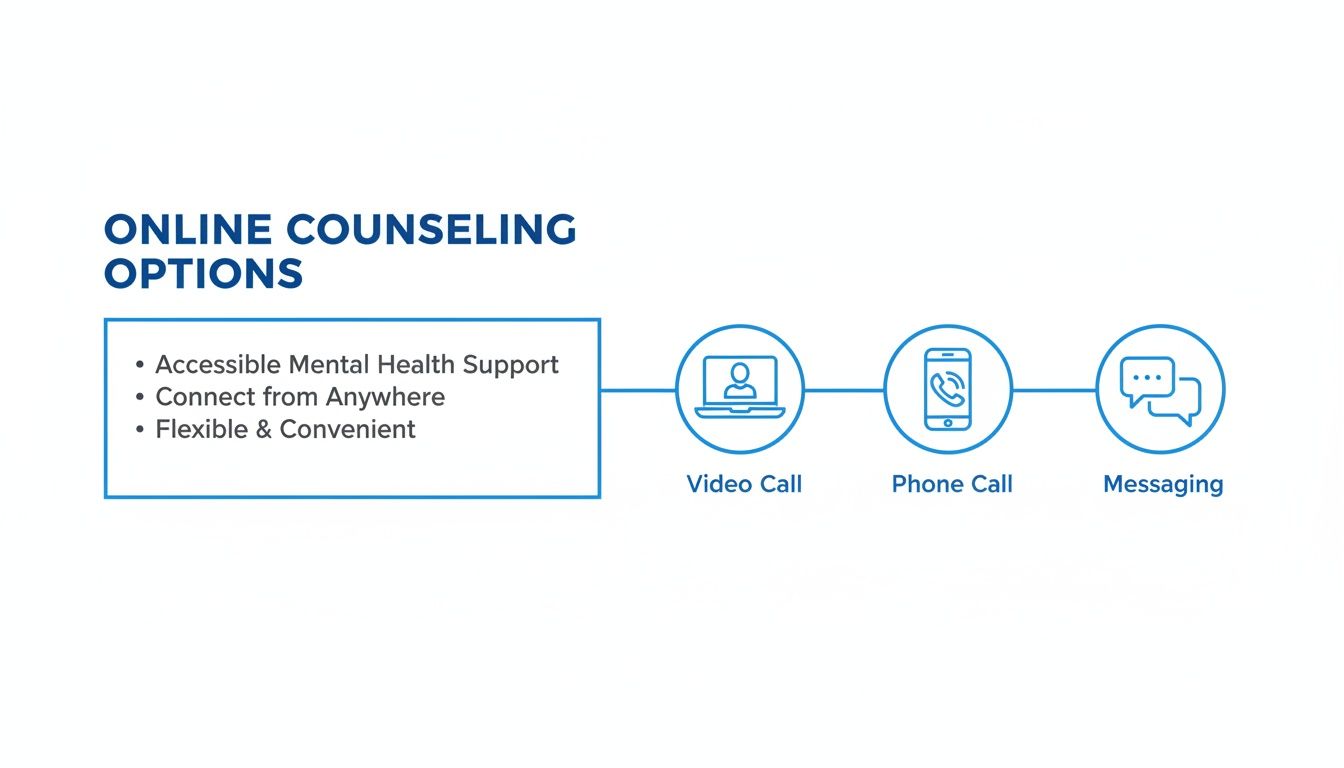
    Online counseling options offering accessible, flexible mental health support via video call, phone call, or messaging.

    Whether you prefer a video call, a phone conversation, or messaging, you can find a format that feels right for you.

    Privacy and Affordability: A Student’s Best Friend

    Many students hesitate to seek help because of privacy concerns. Online counselling removes this barrier, allowing you to have a confidential conversation from your own room. This makes taking that first step much easier.

    Cost is another important factor. In India's competitive academic environment, accessible support is crucial. A 2024 study found that 40% of teenagers named anxiety as a major issue, highlighting a widespread need. Online platforms often have sessions priced between ₹500 and ₹1,500, making consistent help more affordable. You can learn more about these student mental health findings to understand the context.

    Building Skills That Last a Lifetime

    Getting support for immediate concerns like anxiety or depression is important, but therapy also helps you build a foundation for your future. It's like a gym for your mind, where you develop skills that will serve you long after graduation.

    The real power of online therapy is in building the resilience and self-awareness needed to navigate future challenges, from workplace stress to personal relationships.

    Through your sessions, you’ll develop a practical toolkit for life. This includes skills like:

    • Greater Resilience: Learning how to bounce back from setbacks without letting them derail you.
    • Self-Compassion: Learning to be kinder to yourself, especially during stressful times.
    • Emotional Regulation: Understanding and managing your feelings in a constructive way.

    This kind of support empowers you to do more than just cope—it helps you thrive. Ultimately, online counselling for students is an investment in your long-term happiness.

    How to Find the Right Online Counsellor for You

    Finding a counsellor you connect with is one of the most important parts of the journey. The relationship you build is what creates a safe space for growth. It’s about finding someone who understands you.

    Think of it like finding a great mentor. You need to feel comfortable and heard. Taking the time to choose the right person is an important act of self-care.

    What to Look for in a Counsellor’s Profile

    When browsing profiles, it helps to know what to look for to find someone who supports student well-being. A good profile will give you a sense of the person and their approach.

    First, check their qualifications and specialisations. Are they experienced in helping with academic stress, anxiety, or feelings of depression? Most counsellors list their areas of expertise, making it easier to find a match.

    Next, look at their therapeutic approach. Some use cognitive-behavioural techniques, while others may take a different path. There is no "best" method—it’s about finding a style that resonates with you and your goals for counselling.

    Using Platforms to Find Your Match

    Modern platforms make it easier to find the right professional for you. You can use filters to narrow your search, making the process of finding online counselling for students less daunting.

    Try using filters to specify what's important to you:

    • Specialisation: Look for experts in student issues, exam stress, or building resilience.
    • Language and Gender: Choose someone you feel you can communicate with openly.
    • Availability: Find a counsellor whose schedule aligns with your academic timetable.

    Some students may need broader services, and platforms can help you find online clinics, including those specializing in ADHD. The goal is to use these tools to create a shortlist of potential counsellors.

    Remember, you are in control of this process. It’s okay to take your time to find someone who feels like a genuine partner in your journey toward better well-being.

    Don't hesitate to ask questions during an introductory chat. A brief call can tell you a lot about a counsellor's style. Prepare a few simple questions to see if you connect with them.

    For example, you could ask:

    • "How do you usually work with students feeling burnt out?"
    • "What is your approach to helping someone build confidence?"
    • "Can you tell me what a first session with you is like?"

    Their answers will give you a feel for their warmth and expertise. This helps you make a confident choice about who to trust with your thoughts and feelings.

    How to Prepare for Your First Online Session

    It’s completely normal to feel a little nervous before your first therapy session. A little preparation can help calm those nerves and ensure you get the most out of the conversation. The goal is simply to set yourself up for an open and productive chat.

    A laptop showing a video call with a woman, a smartphone with a checklist, and headphones on a desk.

    A few simple steps can make a big difference in your first experience with online counselling for students. Preparing your space and your thoughts helps you begin this journey with more confidence.

    Creating Your Safe Space

    Your physical environment can impact how comfortable you feel mentally. Before your session, find a quiet, private spot where you won't be interrupted. This could be your dorm room, a quiet corner at home, or anywhere you can speak freely.

    Using headphones can enhance privacy and help you focus on the conversation. Confidentiality is key to good therapy, and securing your physical space is the first step in building that trust.

    Next, do a quick technology check a few minutes before you begin:

    • Check Your Connection: Ensure your Wi-Fi is stable to avoid interruptions.
    • Test Your Tech: Check your camera and microphone to make sure they're working properly.
    • Minimise Distractions: Close unnecessary tabs and silence your phone.

    Thinking About What to Discuss

    It can be helpful to think about what brought you to counselling. You don't need a prepared speech, but having a few notes can provide a starting point. Consider any stress, anxiety, or feelings about your well-being you've recently noticed.

    It's okay if you don't know where to start. Your counsellor is trained to guide the conversation in a gentle and supportive way.

    Your first session is about getting to know each other and seeing if it’s a good fit. There’s no pressure to share anything you’re not ready to discuss. The goal is to start a conversation that can lead to greater resilience and clarity.

    Building Your Toolkit for Resilience and Well-Being

    Think of online counselling as a workshop for your mind, not just a quick fix. It’s a space where you actively build a personal toolkit for life. The focus is on creating lasting, positive change.

    The goal is to equip you with essential skills for your future, like resilience—the inner strength to bounce back from setbacks. It also involves fostering self-compassion, which means treating yourself with the kindness you'd show a friend.

    From Coping to Thriving

    It’s easy to fall into unhelpful coping habits, especially under student pressure. A student in Mumbai might stay up all night gaming to avoid thinking about exams. Research shows that over 40% of Indian students cope by isolating themselves, while less than 15% choose healthier outlets like counselling or exercise. You can read the full report on student stress management to learn more.

    Online counselling for students offers a constructive alternative, helping you replace avoidance with proactive strategies. You learn to see challenges as opportunities to grow and apply new skills. It's about building a purposeful life with stronger relationships and a greater sense of well-being.

    Remember, progress is a journey. Each session is a step toward building a stronger, more balanced you, and seeking support is a powerful investment in your future.

    The tools you gain in counselling will prepare you for future pressures and help you create a more fulfilling life. It is one of the most meaningful investments you can make in your long-term emotional health.

    A Few Common Questions We Hear

    It's natural to have questions before starting therapy. Asking them is a great sign that you're taking this step seriously. Let's address some common queries students have about online counselling.

    Many students wonder if online therapy is as effective as meeting in person. For common student challenges like stress, anxiety, and mild depression, the answer is yes. Research shows online therapy can be just as impactful, as the connection with your counsellor is what matters most.

    Is Online Counselling as Effective as In-Person Therapy?

    Yes, for many student challenges, online counselling is a highly effective option. It delivers professional support in a way that fits a busy schedule. Feeling heard and understood by your therapist is the most important part of the process.

    For more complex mental health conditions, a therapist might suggest a blend of online and in-person care. But for managing exam pressure or feeling overwhelmed, online counselling is a proven way to build resilience.

    How Is My Privacy Protected During Online Sessions?

    Your privacy is a top priority. Reputable online counselling platforms in India follow strict confidentiality laws. They use secure, encrypted technology for all communications to ensure your conversations remain private.

    You can also take steps to protect your privacy. Check the platform's privacy policy before signing up. During your session, find a quiet space and use a secure internet connection.

    “That is perfectly fine and very common. You don't need to have everything figured out before you start. Your counsellor is trained to guide the conversation.”

    Many students worry about what to talk about in their first session. You don't need to have a script prepared. Your counsellor is skilled at guiding the conversation and will help you open up in a comfortable way. The first meeting is simply a chance to get to know each other.


    Ready to find a professional who gets it? DeTalks helps you connect with qualified counsellors and therapists who specialise in the pressures and challenges of student life. Take a look at our directory and start your journey towards feeling more balanced and in control at https://detalks.com.

  • How to Deal with Exam Anxiety

    How to Deal with Exam Anxiety

    Tackling exam anxiety isn't about finding a single magic solution. It's about combining smart preparation, a healthier mindset, and some practical, in-the-moment calming tricks. The best way to get ahead of it is to start building your resilience long before you see the exam paper.

    This guide will help you create a plan that works for you. You'll learn to challenge nagging negative thoughts and make your well-being a top priority.

    Why Exam Nerves Can Feel So Overwhelming

    Feeling nervous before a big exam is completely normal. In fact, a little bit of that stress can sharpen your focus and push you to prepare properly. But sometimes, that gentle flutter of nerves can grow into something much bigger and more disruptive.

    When pre-test jitters escalate into persistent worry, physical unease, and a loop of negative thoughts, you might be dealing with exam anxiety. This is a specific type of performance anxiety where the pressure feels immense. In today's competitive world, it's a very common experience for students everywhere.

    Recognising the Signs of Exam Anxiety

    The first step to managing exam anxiety is learning to recognise what it looks and feels like. The signs can show up differently for everyone. Usually, it's a mix of physical sensations, racing thoughts, and even changes in how you act.

    These are your body's natural reactions to what it sees as a major threat. Being able to spot these signs without judgment is key for building resilience and finding what helps you stay grounded.

    Symptom Category Common Examples
    Physical Racing heart, sweaty palms, headaches, upset stomach, shallow breathing, muscle tension.
    Cognitive Mind going blank, trouble concentrating, negative self-talk ("I'm going to fail"), racing thoughts.
    Emotional Feeling irritable or on edge, a looming sense of dread, overwhelming frustration, a sudden drop in confidence.
    Behavioural Procrastinating or avoiding studying, trouble sleeping, fidgeting, changes in eating habits.

    Please remember, this table is for informational purposes only and is not a diagnostic tool. Seeing these symptoms can simply help you realise that you're having a legitimate response to stress.

    The Indian Context: A Shared Challenge

    In India, the pressure to perform well in exams is woven into our academic culture. Fierce competition for university spots and top careers creates an environment where the stakes feel sky-high. This naturally increases feelings of stress and anxiety, making it a shared societal challenge.

    This pressure has a real impact on student well-being, with data showing a significant emotional toll. You can discover more insights about these student mental health statistics for a deeper understanding of this complex issue.

    Acknowledging this context helps us remember that these feelings are not a personal failing. They are a valid response to a demanding system, which is the first step toward self-compassion.

    Realising you aren’t alone can be a powerful antidote to the isolation that anxiety often brings. It opens the door to asking for support, whether that means seeking professional counselling or talking with friends. This helps reframe anxiety as a signal that you need more tools and support to protect your well-being.

    Building Your Pre-Exam Resilience Plan

    Organized desk with open planner, laptop, water glass, and fruit bowl in sunlight

    The best way to handle exam anxiety starts long before the test day. It begins by building a strong foundation of resilience that prepares your mind and body for the pressure.

    Think of it like training for a marathon; you wouldn't just show up and hope for the best. Building a solid pre-exam routine creates sustainable habits that boost your confidence and your general well-being.

    Craft a Study Schedule That Works for You

    One of the biggest triggers for exam anxiety is feeling overwhelmed by a mountain of material. A good study plan breaks that mountain into manageable chunks. The secret is to build a schedule that’s realistic for you.

    Schedule your most challenging subjects for when you're sharpest. A great plan isn't just about what you study; it’s about making the process feel achievable.

    Here are a few tips to make your schedule effective:

    • Break it down: Instead of "Study Physics," try "Revise Chapter 3 and solve 10 practice problems." This turns a huge task into a clear goal.
    • Schedule your breaks: Your brain needs downtime. Pencil in short breaks every hour and longer ones for meals to avoid burnout.
    • Be flexible: Life happens. Build some buffer time into your week so an unexpected event won’t derail your entire plan.

    The Power of Lifestyle Habits

    You can’t pour from an empty cup. Simple things like what you eat, how much you sleep, and how often you move have a huge impact on your ability to manage stress. When your body is cared for, your mind is better equipped to handle pressure.

    Consistent sleep is non-negotiable, as it helps with memory and mood, making you less vulnerable to anxiety and even depression. Likewise, a balanced diet provides the steady fuel your brain needs for concentration.

    These aren't just extras; they are the pillars of your resilience plan. Prioritising sleep and nutrition is a powerful act of self-compassion during a stressful time.

    Challenging the Negative Inner Voice

    A huge part of exam anxiety is the stories we tell ourselves, like "You're going to fail." That inner critic can feel incredibly convincing. Learning to challenge these automatic negative thoughts is a game-changing skill for life, especially for managing future workplace stress.

    Start by noticing these thoughts without judgment. When one pops up, ask yourself: Is this thought 100% true? You could reframe "I'm going to fail" to "I've prepared for this, and I'll do my best."

    This technique, called cognitive reframing, is a cornerstone of professional therapy and counselling for anxiety. It puts you back in the driver's seat of your mind, helping you build calm, confidence, and personal happiness.

    Calm Your Mind with In-the-Moment Techniques

    Asian student in school uniform sitting on park bench practicing meditation and breathing exercises

    When your heart races just before an exam, you need practical, fast-acting tools. These techniques are like a mental first-aid kit. The goal isn't to erase anxiety but to get the physical symptoms under control so you can think clearly again.

    Learning to ground yourself pulls you out of a panic spiral. It lets the prepared, rational part of your brain take over.

    The Power of Your Breath

    One of the quickest ways to dial down a spike in anxiety is to focus on your breathing. When we get stressed, our breathing becomes shallow and rapid. By intentionally slowing it down, you send a powerful message of safety to your body.

    A simple and discreet technique is box breathing. You can do it anywhere without anyone noticing.

    Here’s how you do it:

    • Breathe in slowly for a count of four.
    • Gently hold your breath for a count of four.
    • Breathe out slowly for a count of four.
    • Hold again for a count of four.

    Repeat this cycle a few times. This tiny action can make a huge difference in slowing a racing heart and is a core skill for building real-time resilience.

    Ground Yourself with the 5-4-3-2-1 Method

    When anxiety makes your thoughts chaotic, grounding techniques are your anchor. They pull your focus into the physical world. The 5-4-3-2-1 method engages your senses, forcing your brain to concentrate on the here-and-now.

    Pause and silently identify:

    • Five things you can see (a poster, your pen, a crack on the floor).
    • Four things you can feel (your chair, the texture of your clothes).
    • Three things you can hear (distant footsteps, your own breathing).
    • Two things you can smell (the scent of a book, your cup of tea).
    • One thing you can taste (a mint, or just the taste of your own mouth).

    This exercise instantly interrupts the panic cycle. It’s an incredibly practical way to manage that overwhelming feeling.

    Small Comforts for Big Moments

    Sometimes, the simplest sensory comforts can make a real difference. A small, comforting routine can signal to your brain that it’s time to calm down. For example, sipping on a warm, non-caffeinated drink can be incredibly soothing.

    If you're looking for ideas, you could explore various teas that relax body and mind. These little acts of self-care are crucial parts of your well-being toolkit.

    Staying Focused Inside the Exam Room

    Asian student concentrating on exam paper while writing answers in bright classroom setting

    You can prepare for weeks, but panic can still hit you in the exam hall. The ticking clock and rustling papers can be peak moments for exam anxiety. What you do in these critical hours is just as important as your revision.

    The goal is to shift your brain from fear to focus. With a few smart tactics, you can keep your cool and show what you know.

    Your First Five Minutes Matter

    How you start the exam sets the tone. Don't dive into the first question immediately. Take a moment to ground yourself as a strategic move for your well-being and final mark.

    Before you write your name, take three slow, deep breaths to calm your nervous system. Next, quickly scan the whole paper to get a feel for the layout and identify the questions you feel good about.

    Build Momentum Strategically

    We've all experienced "going blank" on the first question, which can trigger a spiral of self-doubt. You can sidestep this trap with a smarter approach.

    Instead of tackling questions in order, find the ones you know you can answer easily. This builds a powerful sense of confidence and quiets that anxious voice. This makes it much easier to face tougher questions with a clear head.

    Think of each easy question as a small victory. This approach transforms the exam from a single obstacle into a series of manageable steps.

    Regain Control with Discreet Grounding

    If panic bubbles up halfway through, you need a quiet way to get back in control. A simple grounding exercise is perfect for this.

    Here’s a quick technique you can do at your desk:

    • Press your feet firmly into the floor and feel the solid ground.
    • Grip your pen tightly for a few seconds, then relax your hand.
    • Focus on your breathing for a moment, just observing the air move in and out.

    These tiny physical acts pull your attention back to the present, short-circuiting the panic cycle. Learning this now will also help you handle future workplace stress with more resilience.

    The Power of Positive Self-Talk

    The conversation in your head during an exam can make or break your performance. Negative thoughts like "I can't do this" fuel anxiety and feelings of depression.

    If you hit a wall, don't panic. Tell yourself, "Okay, I'll circle back to this one," and remind yourself of the work you put in: "I am prepared." This is about giving yourself the same encouragement you'd give a friend.

    To sharpen your performance, you can explore strategies to improve focus while studying. Building a distraction-proof environment is a huge part of dealing with exam anxiety.

    Handling the Aftermath: Post-Exam Stress and Self-Criticism

    The exam might be over, but the anxiety often isn't. The time spent waiting for results can be just as nerve-wracking. It’s easy to get caught in a loop of replaying every answer and second-guessing every choice.

    Learning to manage this post-exam period is a huge part of building lasting resilience. This skill will serve you well beyond academia, especially when dealing with workplace stress.

    Sidestep the "Exam Post-Mortem"

    You know the scene after an exam when everyone dissects every question. While it feels necessary to join in, these conversations often do more harm than good. Hearing someone took a different approach can send you into a spiral of self-doubt over something you can no longer control.

    Politely walk away from these discussions. Your energy is better spent relaxing and recharging. Acknowledge that you did your best in that moment and let it be.

    You cannot control the outcome now, but you can control how you treat yourself while you wait. Choose kindness over criticism as a powerful act of self-care.

    Give Yourself a Bit of Grace

    Our default response to a potential mistake is often to beat ourselves up. But would you ever talk to a friend that way? Treating yourself with the same kindness is a much healthier way to process the experience.

    Self-compassion isn't about making excuses; it's about acknowledging that you tried your best and that exams are difficult. This simple shift can stop anxiety from spiralling into something more serious, like depression.

    Here are a few ways to show yourself compassion:

    • Name the feeling: Simply telling yourself, "It's normal to feel anxious waiting for results," can take away much of its power.
    • Focus on effort, not outcome: Give yourself credit for the hours you put in, regardless of the final mark.
    • Plan a reward: Give yourself something to look forward to, like a movie night or a day out with friends. This shifts your focus from worry to positive anticipation.

    Reframe the Exam: It's a Tool, Not a Verdict

    It’s easy to see an exam as the final word on your intelligence. A more powerful perspective is to view it as a snapshot of your understanding at one point in time. It's just data that provides feedback on your strengths and areas for improvement.

    This mindset is key to building academic and professional resilience. Even a disappointing result becomes a learning opportunity, not a failure. If the stress ever feels like too much, remember that talking to a professional through counselling or therapy is a sign of strength.

    Knowing When to Reach Out for Support

    While self-help strategies are powerful, sometimes they aren't enough. Deciding to reach out for professional support is not a sign of weakness. It's a brave, proactive step toward protecting your mental well-being.

    The real skill is recognising when anxiety has tipped over from manageable jitters into something more persistent. You don't have to carry that burden alone.

    Signs It Might Be Time to Talk to Someone

    It can be tough to draw a line between normal stress and something needing more support. A good rule of thumb is this: if exam anxiety is negatively affecting your life outside of studying, it might be time to chat with a professional.

    Think of these signs as gentle prompts to check in with how you're really feeling.

    Consider reaching out if you notice:

    • A persistent low mood: You've felt down, hopeless, or irritable most of the time, and the feeling doesn't lift after the exam.
    • Significant changes in your habits: Your sleep patterns or appetite have dramatically shifted.
    • Social withdrawal: You find yourself pulling away from friends, family, and activities you used to enjoy.
    • Physical symptoms that won't quit: You're dealing with constant headaches or stomach problems not tied to a physical illness.

    These signals can indicate that stress is deepening into something more serious, perhaps touching on depression or a more generalised anxiety.

    Please note: The assessments and tools you may find online are great for self-reflection and gaining insight. However, they are informational and are not a substitute for a professional diagnosis from a qualified expert.

    Demystifying Therapy and Counselling

    The thought of starting therapy or counselling can feel daunting. Modern therapy is usually a warm, collaborative conversation in a safe, confidential space. You can unpack what’s on your mind with someone trained to listen and guide you.

    A therapist can help you uncover the root causes of your fears and negative thought patterns. They can also help you create personalised coping strategies and build lasting resilience to handle future academic and workplace stress.

    Academic pressure in India is immense, with studies showing that many students report high levels of test anxiety. For example, some research indicates high rates of depression, anxiety, and stress among students preparing for competitive exams. You can discover more insights about these exam anxiety statistics.

    This data shows how common these feelings are. Seeking help is a logical, healthy response and a powerful investment in your long-term happiness and success.

    Final Takeaways

    When you're in the thick of exam season, it's natural for questions and worries to pop up. Here are some supportive takeaways to keep in mind.

    Is It Normal to Feel Anxious Before an Exam?

    Yes, it’s completely normal to feel pressure before an exam. A little stress can sharpen your focus. The challenge arises when normal jitters become overwhelming anxiety that interferes with your preparation or performance.

    The goal isn't to eliminate stress but to learn to manage it. This is how you build resilience, working with your body's alert system instead of letting it take over.

    Can My Diet and Sleep Really Affect My Exam Anxiety?

    Absolutely. Your physical and mental health are directly linked. Skimping on sleep can make anxiety feel worse, while a diet high in sugar and caffeine can amplify nervousness.

    Aiming for 7-9 hours of quality sleep and eating balanced meals gives your mind and body a stable foundation to handle stress. These are fundamental pillars for good mental well-being.

    Remember, these daily choices are powerful acts of self-compassion. Caring for your body is one of the most practical ways to prepare your mind for academic challenges.

    What if These Techniques Don’t Work for Me?

    It’s completely okay if some strategies don’t click for you. Managing anxiety is a personal process with no one-size-fits-all solution. The goal is to experiment and discover the tools that fit your unique needs.

    If you’ve tried these techniques and still feel overwhelmed, reaching out for support through therapy or counselling is a sign of strength. It’s a proactive step toward taking control of your well-being, not a failure.


    Ready to take the next step in understanding and managing your mental well-being? DeTalks offers confidential, science-backed assessments and can connect you with qualified therapists who are ready to help. Explore your options and find the right support for you.