Tag: student well-being

  • Online Counselling for Students: Your Guide to Accessible Mental Health Support

    Online Counselling for Students: Your Guide to Accessible Mental Health Support

    Online counselling for students is mental health support that happens over the internet. It's like having a confidential chat with a professional via video call or messaging, designed to fit your busy university schedule. This approach to therapy gives you guidance on your own terms, from anywhere you feel comfortable.

    Why Online Counselling Is a Lifeline for Students

    Student life is an exciting time of growth, but it can also be filled with academic pressure and social challenges. Many students quietly navigate stress and burnout, trying to balance their studies with their personal lives. It's common to feel overwhelmed by it all.

    A smiling young man studies on his laptop while sitting cross-legged on a bunk bed in a dorm.

    This is where online counselling can be incredibly helpful. It provides a practical, private space to talk about feelings of stress, anxiety, or whatever is on your mind. You can connect from your phone or laptop without worrying about judgment.

    A Modern Solution for Today’s Challenges

    Imagine a student in a city like Pune, feeling panicked about upcoming exams. They know talking to someone could help but feel hesitant to reach out. This is a very common experience in India and around the world.

    Online therapy removes these barriers by offering a discreet first step toward support. It allows you to prioritise your mental health from the comfort of your own space.

    Seeking support is a sign of strength and self-awareness. It’s about giving yourself the tools to not just get through your academic years, but to truly thrive.

    More Than Just Managing Problems

    While online counselling is excellent for navigating challenges like anxiety and depression, its benefits don't stop there. It's also a space for proactive growth, helping you build skills that will last a lifetime.

    Think of it as building a personal toolkit for your well-being. You can work on:

    • Building Resilience: Learning to bounce back from academic or personal setbacks.
    • Developing Self-Compassion: Treating yourself with the same kindness you would offer a friend.
    • Enhancing Happiness: Discovering what brings you a genuine sense of joy and purpose.

    Counselling is an investment in your overall well-being. For those needing urgent help, other services are available, and some even provide Lifeline student discounts to make care more affordable.

    How Online Counselling Actually Works

    So, what does online counselling for students really look like? It's a private, supportive conversation with a trained professional without the need to travel to an office. You can connect from your dorm, the library, or anywhere you feel comfortable.

    These are structured, confidential sessions designed to help you understand what's going on in your life. You can use secure video calls, phone calls, or messaging, depending on what works best for you. The goal is to create a safe space where you can be yourself.

    A Partnership for Your Growth

    It's helpful to see therapy as a collaborative journey. A counsellor is there to guide you and ask thoughtful questions, helping you find your own answers. It's a partnership focused on your growth.

    Together, you can identify patterns, build healthier coping skills, and find practical ways to manage everything from deadlines to relationships. Whether you're dealing with anxiety or the early signs of burnout, counselling empowers you to build your own resilience.

    This approach helps with common student experiences like:

    • Managing Academic Pressure: Developing healthy ways to handle exam stress.
    • Improving Relationships: Learning to communicate more effectively with others.
    • Building Self-Confidence: Quieting your inner critic and learning to trust your abilities.
    • Navigating Life Transitions: Adjusting to new environments and figuring out what’s next.

    It’s Not Just About Solving Problems

    Online counselling isn't only for tough times, like dealing with workplace stress (or its academic equivalent) and depression. A big part of it is about building on your strengths through positive psychology. Sessions can be a space to become more resilient, learn self-compassion, and actively create a more fulfilling life.

    The goal isn’t just to feel less overwhelmed—it’s to genuinely feel better. It’s a proactive step toward creating a life that feels balanced and authentic.

    If you complete any initial assessments, remember they are simply informational tools. They are not a formal diagnosis but a starting point to help guide your conversation. The focus is always on supportive takeaways and building skills for the future.

    2. The Real Benefits of Choosing Online Therapy

    As a student, much of your life is already online, so it makes sense for mental health support to be there too. The biggest advantage of online counselling is convenience. You can have a session between classes or from your room without any travel time.

    This flexibility is a game-changer, meaning you don’t have to choose between your studies and your well-being. For students in areas with fewer mental health professionals, online platforms make expert help accessible.

    You also have choices in how you connect with your counsellor. Most services offer secure and comfortable options.
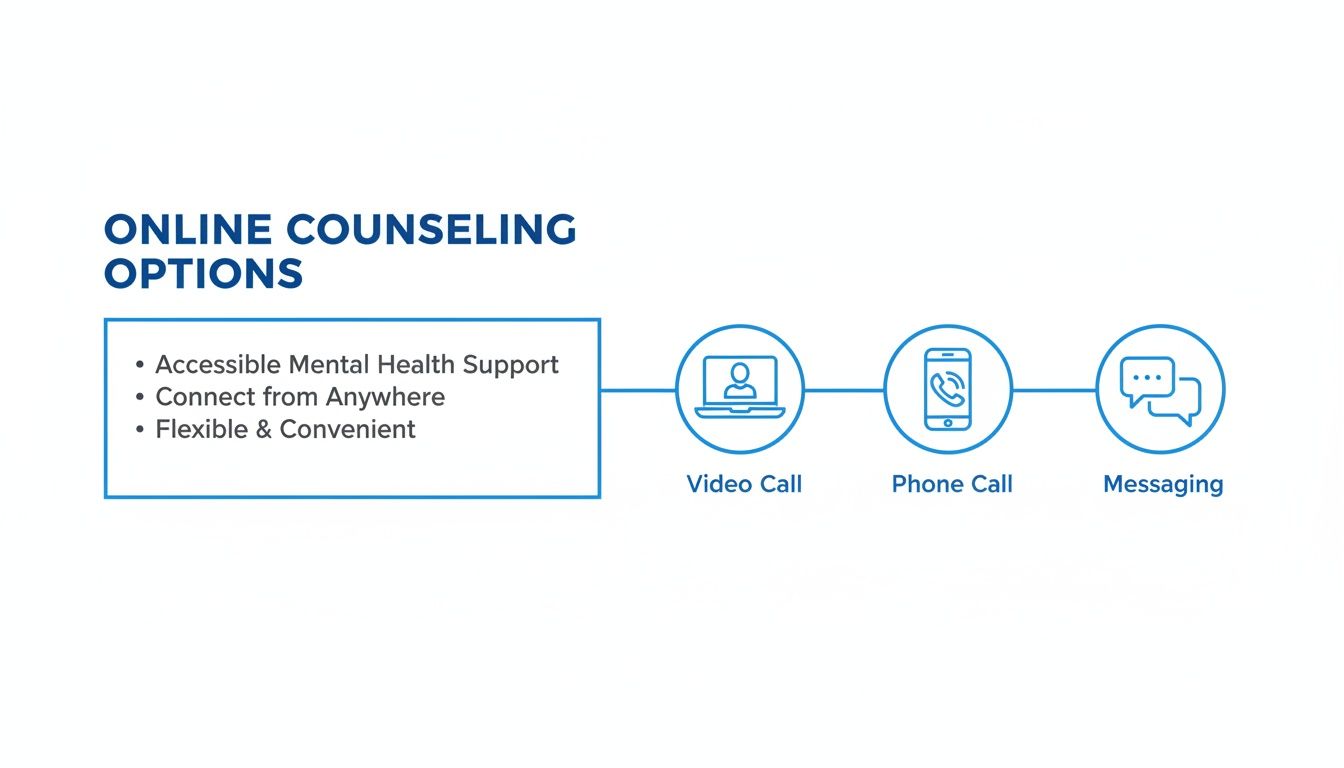
    Online counseling options offering accessible, flexible mental health support via video call, phone call, or messaging.

    Whether you prefer a video call, a phone conversation, or messaging, you can find a format that feels right for you.

    Privacy and Affordability: A Student’s Best Friend

    Many students hesitate to seek help because of privacy concerns. Online counselling removes this barrier, allowing you to have a confidential conversation from your own room. This makes taking that first step much easier.

    Cost is another important factor. In India's competitive academic environment, accessible support is crucial. A 2024 study found that 40% of teenagers named anxiety as a major issue, highlighting a widespread need. Online platforms often have sessions priced between ₹500 and ₹1,500, making consistent help more affordable. You can learn more about these student mental health findings to understand the context.

    Building Skills That Last a Lifetime

    Getting support for immediate concerns like anxiety or depression is important, but therapy also helps you build a foundation for your future. It's like a gym for your mind, where you develop skills that will serve you long after graduation.

    The real power of online therapy is in building the resilience and self-awareness needed to navigate future challenges, from workplace stress to personal relationships.

    Through your sessions, you’ll develop a practical toolkit for life. This includes skills like:

    • Greater Resilience: Learning how to bounce back from setbacks without letting them derail you.
    • Self-Compassion: Learning to be kinder to yourself, especially during stressful times.
    • Emotional Regulation: Understanding and managing your feelings in a constructive way.

    This kind of support empowers you to do more than just cope—it helps you thrive. Ultimately, online counselling for students is an investment in your long-term happiness.

    How to Find the Right Online Counsellor for You

    Finding a counsellor you connect with is one of the most important parts of the journey. The relationship you build is what creates a safe space for growth. It’s about finding someone who understands you.

    Think of it like finding a great mentor. You need to feel comfortable and heard. Taking the time to choose the right person is an important act of self-care.

    What to Look for in a Counsellor’s Profile

    When browsing profiles, it helps to know what to look for to find someone who supports student well-being. A good profile will give you a sense of the person and their approach.

    First, check their qualifications and specialisations. Are they experienced in helping with academic stress, anxiety, or feelings of depression? Most counsellors list their areas of expertise, making it easier to find a match.

    Next, look at their therapeutic approach. Some use cognitive-behavioural techniques, while others may take a different path. There is no "best" method—it’s about finding a style that resonates with you and your goals for counselling.

    Using Platforms to Find Your Match

    Modern platforms make it easier to find the right professional for you. You can use filters to narrow your search, making the process of finding online counselling for students less daunting.

    Try using filters to specify what's important to you:

    • Specialisation: Look for experts in student issues, exam stress, or building resilience.
    • Language and Gender: Choose someone you feel you can communicate with openly.
    • Availability: Find a counsellor whose schedule aligns with your academic timetable.

    Some students may need broader services, and platforms can help you find online clinics, including those specializing in ADHD. The goal is to use these tools to create a shortlist of potential counsellors.

    Remember, you are in control of this process. It’s okay to take your time to find someone who feels like a genuine partner in your journey toward better well-being.

    Don't hesitate to ask questions during an introductory chat. A brief call can tell you a lot about a counsellor's style. Prepare a few simple questions to see if you connect with them.

    For example, you could ask:

    • "How do you usually work with students feeling burnt out?"
    • "What is your approach to helping someone build confidence?"
    • "Can you tell me what a first session with you is like?"

    Their answers will give you a feel for their warmth and expertise. This helps you make a confident choice about who to trust with your thoughts and feelings.

    How to Prepare for Your First Online Session

    It’s completely normal to feel a little nervous before your first therapy session. A little preparation can help calm those nerves and ensure you get the most out of the conversation. The goal is simply to set yourself up for an open and productive chat.

    A laptop showing a video call with a woman, a smartphone with a checklist, and headphones on a desk.

    A few simple steps can make a big difference in your first experience with online counselling for students. Preparing your space and your thoughts helps you begin this journey with more confidence.

    Creating Your Safe Space

    Your physical environment can impact how comfortable you feel mentally. Before your session, find a quiet, private spot where you won't be interrupted. This could be your dorm room, a quiet corner at home, or anywhere you can speak freely.

    Using headphones can enhance privacy and help you focus on the conversation. Confidentiality is key to good therapy, and securing your physical space is the first step in building that trust.

    Next, do a quick technology check a few minutes before you begin:

    • Check Your Connection: Ensure your Wi-Fi is stable to avoid interruptions.
    • Test Your Tech: Check your camera and microphone to make sure they're working properly.
    • Minimise Distractions: Close unnecessary tabs and silence your phone.

    Thinking About What to Discuss

    It can be helpful to think about what brought you to counselling. You don't need a prepared speech, but having a few notes can provide a starting point. Consider any stress, anxiety, or feelings about your well-being you've recently noticed.

    It's okay if you don't know where to start. Your counsellor is trained to guide the conversation in a gentle and supportive way.

    Your first session is about getting to know each other and seeing if it’s a good fit. There’s no pressure to share anything you’re not ready to discuss. The goal is to start a conversation that can lead to greater resilience and clarity.

    Building Your Toolkit for Resilience and Well-Being

    Think of online counselling as a workshop for your mind, not just a quick fix. It’s a space where you actively build a personal toolkit for life. The focus is on creating lasting, positive change.

    The goal is to equip you with essential skills for your future, like resilience—the inner strength to bounce back from setbacks. It also involves fostering self-compassion, which means treating yourself with the kindness you'd show a friend.

    From Coping to Thriving

    It’s easy to fall into unhelpful coping habits, especially under student pressure. A student in Mumbai might stay up all night gaming to avoid thinking about exams. Research shows that over 40% of Indian students cope by isolating themselves, while less than 15% choose healthier outlets like counselling or exercise. You can read the full report on student stress management to learn more.

    Online counselling for students offers a constructive alternative, helping you replace avoidance with proactive strategies. You learn to see challenges as opportunities to grow and apply new skills. It's about building a purposeful life with stronger relationships and a greater sense of well-being.

    Remember, progress is a journey. Each session is a step toward building a stronger, more balanced you, and seeking support is a powerful investment in your future.

    The tools you gain in counselling will prepare you for future pressures and help you create a more fulfilling life. It is one of the most meaningful investments you can make in your long-term emotional health.

    A Few Common Questions We Hear

    It's natural to have questions before starting therapy. Asking them is a great sign that you're taking this step seriously. Let's address some common queries students have about online counselling.

    Many students wonder if online therapy is as effective as meeting in person. For common student challenges like stress, anxiety, and mild depression, the answer is yes. Research shows online therapy can be just as impactful, as the connection with your counsellor is what matters most.

    Is Online Counselling as Effective as In-Person Therapy?

    Yes, for many student challenges, online counselling is a highly effective option. It delivers professional support in a way that fits a busy schedule. Feeling heard and understood by your therapist is the most important part of the process.

    For more complex mental health conditions, a therapist might suggest a blend of online and in-person care. But for managing exam pressure or feeling overwhelmed, online counselling is a proven way to build resilience.

    How Is My Privacy Protected During Online Sessions?

    Your privacy is a top priority. Reputable online counselling platforms in India follow strict confidentiality laws. They use secure, encrypted technology for all communications to ensure your conversations remain private.

    You can also take steps to protect your privacy. Check the platform's privacy policy before signing up. During your session, find a quiet space and use a secure internet connection.

    “That is perfectly fine and very common. You don't need to have everything figured out before you start. Your counsellor is trained to guide the conversation.”

    Many students worry about what to talk about in their first session. You don't need to have a script prepared. Your counsellor is skilled at guiding the conversation and will help you open up in a comfortable way. The first meeting is simply a chance to get to know each other.


    Ready to find a professional who gets it? DeTalks helps you connect with qualified counsellors and therapists who specialise in the pressures and challenges of student life. Take a look at our directory and start your journey towards feeling more balanced and in control at https://detalks.com.


  • How to Deal with Homesickness and Find Your Footing Again

    How to Deal with Homesickness and Find Your Footing Again

    Dealing with homesickness is about finding a delicate balance. It means honouring the home you miss while actively building a life you love right where you are.

    It’s a process of staying connected to your roots without letting nostalgia stop you from planting new ones. This journey requires patience, self-compassion, and practical strategies to manage your well-being.

    Why Homesickness Feels So Overwhelming

    That deep ache for the familiar isn’t a sign of weakness. It’s proof of the meaningful connections you’ve built back home.

    Homesickness is a natural response to being away from the people, places, and routines that make you feel safe. It feels so intense because it’s a mix of loss, anxiety, and sadness all at once.

    A thoughtful young man sits on a window sill at twilight, gazing outside, next to a vintage photo and letter.

    When you move, you leave more than a location behind; you leave your support system and daily comforts. This sudden shift can increase feelings of stress and make it tough to feel grounded.

    The Emotional and Physical Toll

    Homesickness can affect both your mind and body. It's more than just missing your family's cooking; it's a genuine emotional strain that can show up in physical ways.

    You might find yourself struggling with challenges such as:

    • Persistent Sadness or Loneliness: A constant feeling of being alone, even in a crowd.
    • Anxiety and Worry: Feeling on edge about loved ones back home or your ability to cope.
    • Difficulty Concentrating: Your mind keeps drifting back home, making it hard to focus on work or studies.
    • Physical Discomfort: Emotional distress can lead to headaches, stomach aches, or changes in sleep and appetite.

    This experience is very common, especially for those who move for work or education in a country like India. A study on internal migration and student mental health highlights how this transition creates unique psychological challenges affecting well-being.

    Feeling homesick doesn’t mean you made a mistake. It just means you have a home and people worth missing—and that’s a beautiful thing.

    Understanding the Psychology Behind It

    At its core, homesickness is linked to our human need for connection and belonging. When those attachments are gone, it's natural to feel adrift.

    Adding academic or workplace stress can escalate this feeling into burnout if it’s not addressed. Building resilience and self-compassion are key to navigating this transition.

    Recognising this as a normal part of any major life change is a powerful first step. From there, you can begin finding your footing and creating a new sense of happiness. Professional therapy or counselling can provide essential tools for this journey.

    Practical Ways to Find Immediate Relief

    When a wave of homesickness hits, it can feel sudden and intense. In these moments, you need simple strategies to find your footing again.

    The goal isn't to ignore your sadness, but to manage its intensity so it doesn't take over. Grounding exercises can help by anchoring you in the present moment.

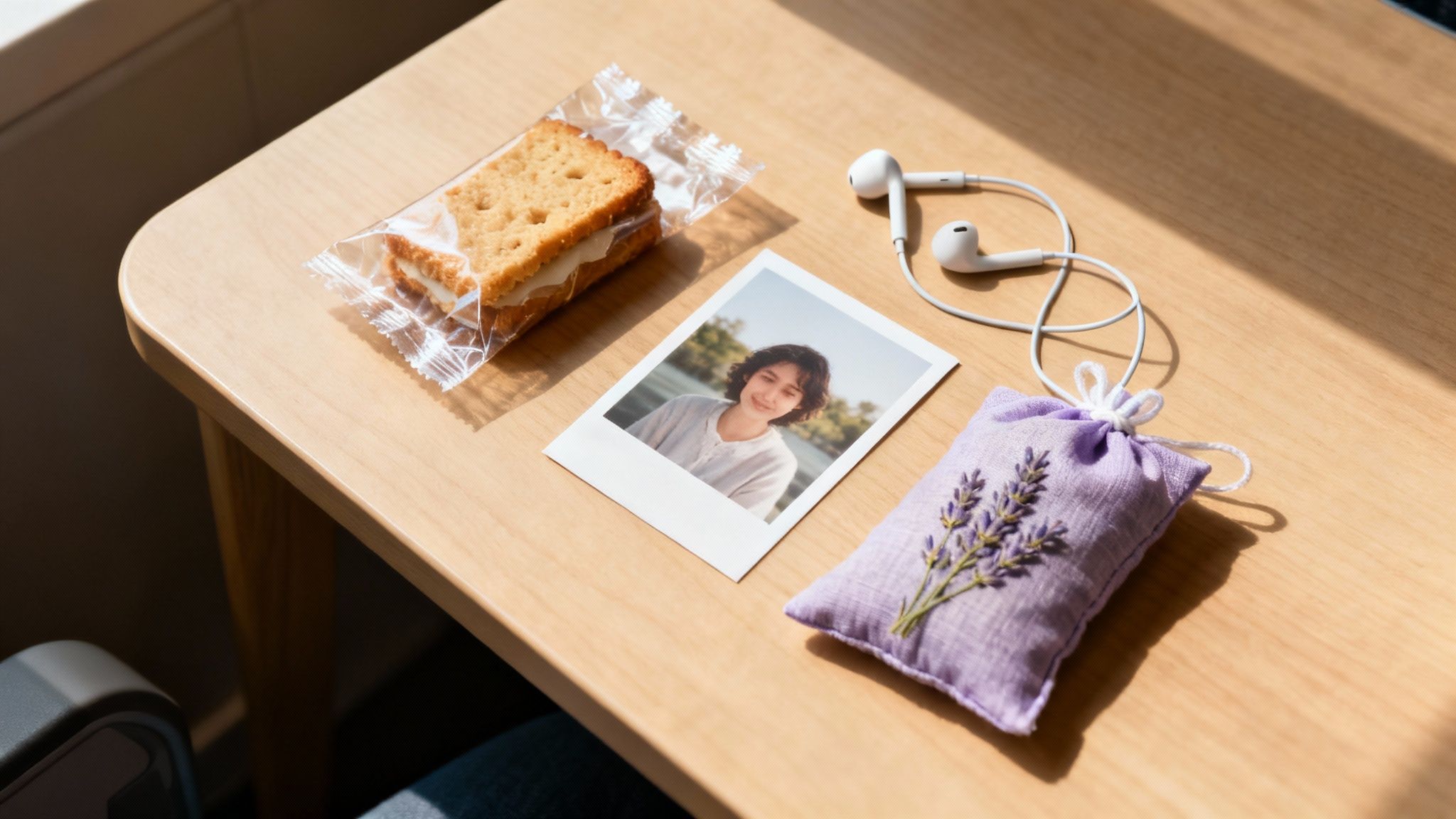
    Items for comfort: a snack, photo, headphones, and lavender sachet on a light wood table.

    Use Your Senses to Stay Present

    One of the most effective grounding techniques is the 5-4-3-2-1 method. It's simple, discreet, and you can do it anywhere.

    Just take a slow, deep breath and start to notice your surroundings:

    • 5 things you can see: Look around and name five things, like a pen on your desk or a leaf outside.
    • 4 things you can feel: Notice four physical sensations, like the texture of your shirt or your feet on the floor.
    • 3 things you can hear: Listen closely for three distinct sounds, like distant traffic or a clock ticking.
    • 2 things you can smell: Identify two scents, such as coffee brewing or soap on your hands.
    • 1 thing you can taste: Focus on one thing you can taste, like a sip of water or a piece of fruit.

    This exercise gently pulls your brain's focus to the here and now, which can dial down anxiety.

    Create a Personal Comfort Kit

    A 'comfort kit' can be a great tool for self-soothing. Think of it as an emotional first-aid kit filled with small items that connect you to home in a positive way.

    Your kit could include things like:

    • A few favourite photos of your family or friends.
    • A comforting snack from home that you love.
    • A familiar scent, like a small perfume sample or a sachet.
    • A special playlist of songs that lift your spirits.

    Having these items ready provides a tangible source of comfort when you need it most.

    Remember, the goal of these immediate strategies is to manage overwhelming peaks of emotion. Acknowledging your feelings while using these tools builds resilience.

    Connect Mindfully with Loved Ones

    Connecting with people back home is crucial, but how you do it matters. A frantic call when you're at your lowest can sometimes make things feel worse.

    Instead, try to be more mindful. Before you call, take a few deep breaths and think of one small, positive thing to share from your day. This can turn the conversation into a more balanced exchange, helping you feel connected without deepening the ache.

    When you're hit with a sudden wave of homesickness, having go-to techniques can make all the difference. The table below summarises some quick strategies.

    Quick Coping Techniques for Homesickness

    Technique How It Helps When to Use It
    The 5-4-3-2-1 Method Anchors you in the present moment, reducing anxiety. When you feel overwhelmed or lost in sad thoughts.
    Deep Breathing Calms your nervous system and slows a racing heart. Anytime you feel a surge of anxiety or sadness.
    Engage with a Comfort Item Provides an immediate link to feelings of safety and belonging. When you feel particularly lonely or disconnected.
    Mindful Connection Shifts the focus of calls home to a more positive exchange. Before calling a loved one, especially when you feel emotional.
    A Short Walk A change of scenery can interrupt negative thought loops. When you're feeling stuck and ruminating on what you miss.

    These are practical tools to have in your pocket. Using them consistently helps you build confidence that you can manage these feelings.

    Building Routines That Create a Sense of Home

    To truly settle in, you need to create a new life that feels like your own. Routines bring back a sense of predictability and comfort when everything feels uncertain.

    Think of it as creating anchor points in your day. This practice grounds you and can quieten the background hum of anxiety.

    Person pouring hot coffee into a mug on a sunny kitchen counter with a small plant and notebook.

    Weave the Old with the New

    Start small by identifying one or two simple habits from your old life that brought you comfort. Make a point of carving out time for those in your new schedule.

    At the same time, look for opportunities to start new traditions. This could be finding a favourite local bakery or discovering a nearby park for a walk. These new spots gradually become yours, building a fresh layer of familiarity.

    Create Your New Local Spots

    Having "your" places is a game-changer for feeling at home. It creates a sense of belonging and predictability.

    • Your Café: A spot where you can relax with a book or watch the world go by.
    • Your Green Space: A park or quiet street for walks to clear your head.
    • Your Grocery Shop: Getting to know a local market can make a chore feel more like a comforting routine.
    • Your Quiet Corner: A library or bookshop where you can find some peace.

    The power of these places is in their consistency. Slowly, they turn an unfamiliar map into your personal landscape.

    Low-Pressure Ways to Build Connections

    Loneliness is a huge part of homesickness, and making new friends can feel overwhelming. Instead, focus on creating chances for regular, light-hearted social contact.

    Joining a club based on a hobby is a great way to do this, as conversations can happen naturally. Volunteering is another fantastic option, connecting you with like-minded people.

    Building a new support network is about expanding your community and creating new layers of connection that support your well-being.

    Immersing yourself in the local culture is another powerful way to feel more grounded. For example, learning the language can open countless doors. Exploring Dutch language courses to help you integrate and feel at home is a proactive step that builds confidence.

    If sadness or stress feels too heavy, remember that therapy and counselling are valuable tools for learning new coping skills and building emotional resilience.

    Tailoring Your Approach: Tips for Students, Expats, and Remote Workers

    Everyone’s journey with homesickness is different. Whether you’re a student, an expat, or a remote worker, the triggers are unique to your situation.

    Let's break down some specific advice that can help you navigate these distinct challenges.

    A laptop on a table displays a video call with two men, alongside an open notebook and a passport, overlooking a city skyline.

    By understanding what you’re up against, you can start building strategies that actually work for you. This helps create a life that feels fulfilling, no matter how far you are from home.

    For Students Adjusting to a New Chapter

    Moving away for studies is a massive step that comes with new pressures. You're juggling academics, trying to make friends, and making a new place feel like home.

    This is a shared experience. Research on student adjustment findings shows that a large number of students feel homesick, with missing family being a top reason.

    Here are a few things that can make a real difference:

    • Make Your Space Your Own: Your room is your haven, so claim it. Put up photos, bring a favourite blanket, or get a small plant to make it feel cosy.
    • Be Proactive with Friendships: Suggest a study group, join a college club, or ask a classmate to grab a coffee. Small, consistent efforts build community.
    • Don't Let Studies Consume You: Academic pressure is intense, but burnout is real. Schedule breaks for things you enjoy to protect your mental health.

    For Expats Balancing Work and a New Culture

    Life as an expat involves learning a new culture and navigating language barriers. This constant adaptation can lead to serious workplace stress and anxiety.

    Understanding new social cues at work can be draining. What's considered polite back home might be different in your new office, making it tough to connect with colleagues.

    Give yourself permission to be a beginner again. Cultural misunderstandings are part of the learning process, not failures.

    To manage this unique stress, try to focus on integration:

    • Find a "Cultural Guide": Connect with a local colleague or another expat who’s been there longer. They can help you decipher unwritten rules and build your confidence.
    • Set Clear Communication Boundaries: Your family back home might not understand your new demands. Set up regular call times to manage expectations and reduce guilt.
    • Create a Life Outside of Work: Make a real effort to separate your job and personal life. Explore your new city and protect your downtime.

    For Remote Workers Facing Digital Isolation

    Remote work offers freedom, but it can also lead to a deep sense of isolation. You miss the small, human interactions of an office, which can make homesickness hit hard.

    When your home is your office, lines can blur, leading to a strange kind of burnout. This is where professional counselling can be a great tool for developing coping mechanisms.

    Here's how to build connection and find your footing:

    • Be Intentional About Socialising: Schedule virtual coffee chats with colleagues where work talk is off-limits. These chats are vital for building personal relationships.
    • Find a "Third Place": Don't stay home all day. Work from a co-working space, a café, or a library a few times a week to be around other people.
    • Plug Into Your Local Community: Make an effort to build a social life where you live. Join a local group or volunteer for a cause you care about.

    Keeping in touch with loved ones is a lifeline for anyone struggling with distance. For some helpful ideas, check out these 7 Cheap Ways to Make International Calls.

    Knowing When to Seek Professional Support

    While self-help strategies are fantastic, sometimes homesickness can become more persistent. It is perfectly okay to need extra support.

    Reaching out for professional help isn’t a sign of failure. It’s a proactive and courageous step towards protecting your well-being.

    If feelings of sadness or anxiety continue for weeks without relief, it might be time to speak with a professional. This is especially true if homesickness starts getting in the way of your daily life.

    Recognising the Signs for Deeper Support

    Pay attention to how you're feeling over time. A little sadness is normal, but certain patterns can signal that homesickness is developing into something more serious, like depression or persistent anxiety.

    Consider looking into counselling if you notice any of these signs:

    • Prolonged Low Mood: A feeling of sadness that just won't lift, lasting for two weeks or more.
    • Loss of Interest: You've stopped finding joy in hobbies or activities you used to love.
    • Significant Changes in Sleep or Appetite: You're sleeping and eating much more or less than usual.
    • Social Withdrawal: You constantly avoid people and isolate yourself from others.
    • Feelings of Hopelessness: A nagging belief that things will never get better.

    These are clues that the emotional weight might be too heavy to carry alone. Professional therapy offers a safe space to unpack these feelings and build coping strategies.

    What to Expect from Therapy

    The thought of therapy can feel daunting, but it's just a conversation with a trained professional who listens without judgement.

    A good therapist will help you explore your feelings, pinpoint what triggers your sadness, and work with you to build up your resilience.

    In India, the link between homesickness and academic pressure is strong. Research on student homesickness and its academic impact showed that a high percentage of first-year medical students experienced it, which affected their performance. This highlights how common these struggles are and why support is so crucial.

    It is important to clarify that any self-assessments you find online are for informational purposes only. They are not a substitute for a professional diagnosis from a qualified healthcare provider.

    How Counselling Builds Resilience

    Therapy is more than just talking about problems; it’s about building practical life skills. A counsellor can help you learn to reframe negative thoughts, manage workplace stress, and treat yourself with more compassion.

    This process empowers you to face challenges with greater confidence. It's like adding new tools to your emotional toolkit.

    Seeking support is a powerful investment in your long-term happiness and well-being.

    Wrapping Up: Your Path Forward

    Think of homesickness not as something to be 'cured', but as a process of adjustment. It's a journey that requires patience and self-compassion.

    Along the way, celebrate the small wins, like trying a local café or having a friendly chat with a neighbour. These moments are the building blocks of a new home.

    Embracing Your New Chapter

    Keep nurturing your connections, both old and new. Your relationships back home are your anchor, but it's just as important to leave space for new friendships to grow.

    Finding that balance will help you feel truly grounded and improve your overall well-being.

    Remember, this is about growth, not perfection. Be kind to yourself on tough days and acknowledge the strength it takes to build a life somewhere new.

    If feelings of anxiety or depression become too much, professional counselling can make a world of difference. A therapist can give you personalised tools to manage workplace stress and build the resilience you need.

    Got Questions About Homesickness? We've Got Answers

    When you're far from home, a lot of questions can come up. It's completely normal to wonder if what you're feeling is okay. Let's walk through some common concerns.

    How Long Is This Feeling Going to Last?

    There's no magic number for how long homesickness lasts. For some, the most intense ache fades after a few weeks, while for others, it can take a couple of months to settle.

    Try to give yourself grace. The timeline is personal and depends on many factors. Focusing on building your resilience and looking after your well-being is what truly helps.

    Is It Weird That My Homesickness Comes in Waves?

    Not at all; in fact, it's incredibly common. You might feel great for a while, and then a familiar song or sight triggers a sudden wave of longing.

    This isn't a setback. It just means you’re human. The trick is to acknowledge the feeling, let it be there, and then gently guide your focus back to the present.

    Homesickness isn't a straight line from sad to settled. These feelings are a sign of meaningful connections, not a sign that you're failing to adapt.

    How Can I Help a Friend Who's Really Struggling?

    Watching a friend feel homesick can be tough. The best thing you can do is listen with empathy and let them know their feelings are valid.

    Simple, low-pressure invitations can make a world of difference. Ask them to grab a coffee or just hang out. Sometimes, the most powerful support is just being present and reminding them they aren't alone.

    When Should I Worry That It's More Than Homesickness?

    Homesickness involves waves of sadness, but it's important to know when it might be tipping into something more serious, like clinical anxiety or depression.

    Pay attention if sadness becomes constant or if you lose interest in things you used to enjoy. If these feelings last for more than a few weeks, it's a good time to reach out for professional support.

    Please remember that online quizzes are informational tools, not diagnostic ones. A qualified therapist is the only person who can provide a proper evaluation for your mental well-being.


    If homesickness is hitting you hard and making it difficult to enjoy your new life, you don't have to go through it alone. DeTalks connects you with experienced therapists who get it. They can give you the tools and support you need to build resilience and start feeling at home again. Explore therapy options and book a session today.

  • 10 Effective Stress Management Techniques for Students

    10 Effective Stress Management Techniques for Students

    Student life, whether in India or anywhere globally, is a dynamic mix of academic goals, new friendships, and personal growth. However, the pressure to succeed can often lead to significant stress, anxiety, and even burnout, impacting not just your grades but your overall well-being. This journey requires you to manage your mental health with the same care you give to your deadlines.

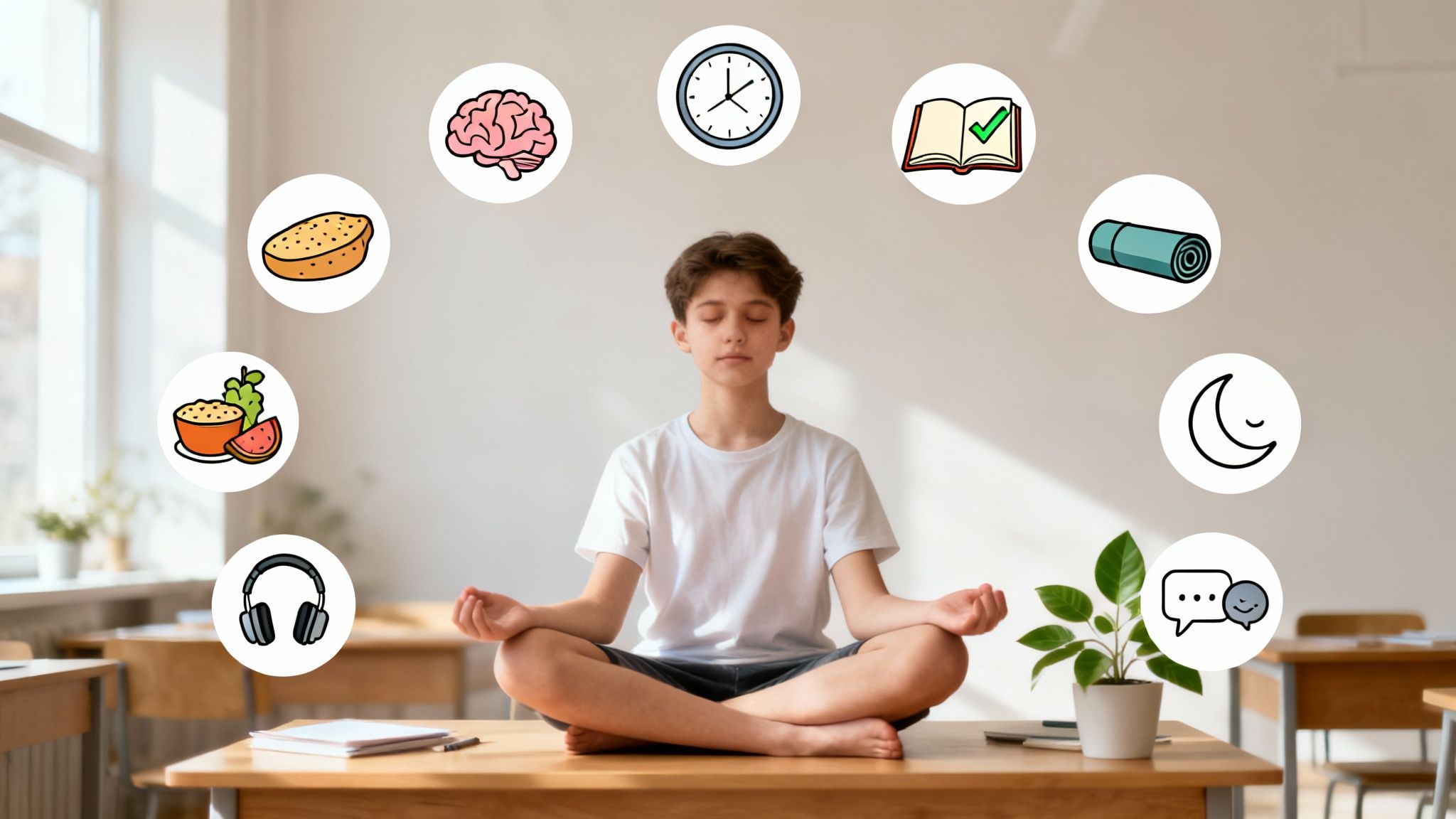
    This guide offers practical, evidence-based stress management techniques for students to help you build resilience and find a healthier balance. We will explore actionable strategies you can weave into your daily routine, from the calming power of deep breathing to the focus that comes from good time management. Each technique is a tool for your well-being toolkit.

    Think of this article as a supportive resource for navigating academic life. We will cover ten powerful methods, including mindfulness, physical exercise, and cognitive skills to reframe unhelpful thoughts. The goal is to equip you to not just get through your studies but to truly thrive, building a foundation for lifelong happiness and resilience. These informational assessments are for self-help and are not a substitute for professional therapy or counselling if you are struggling with severe anxiety or depression.

    1. Mindfulness Meditation

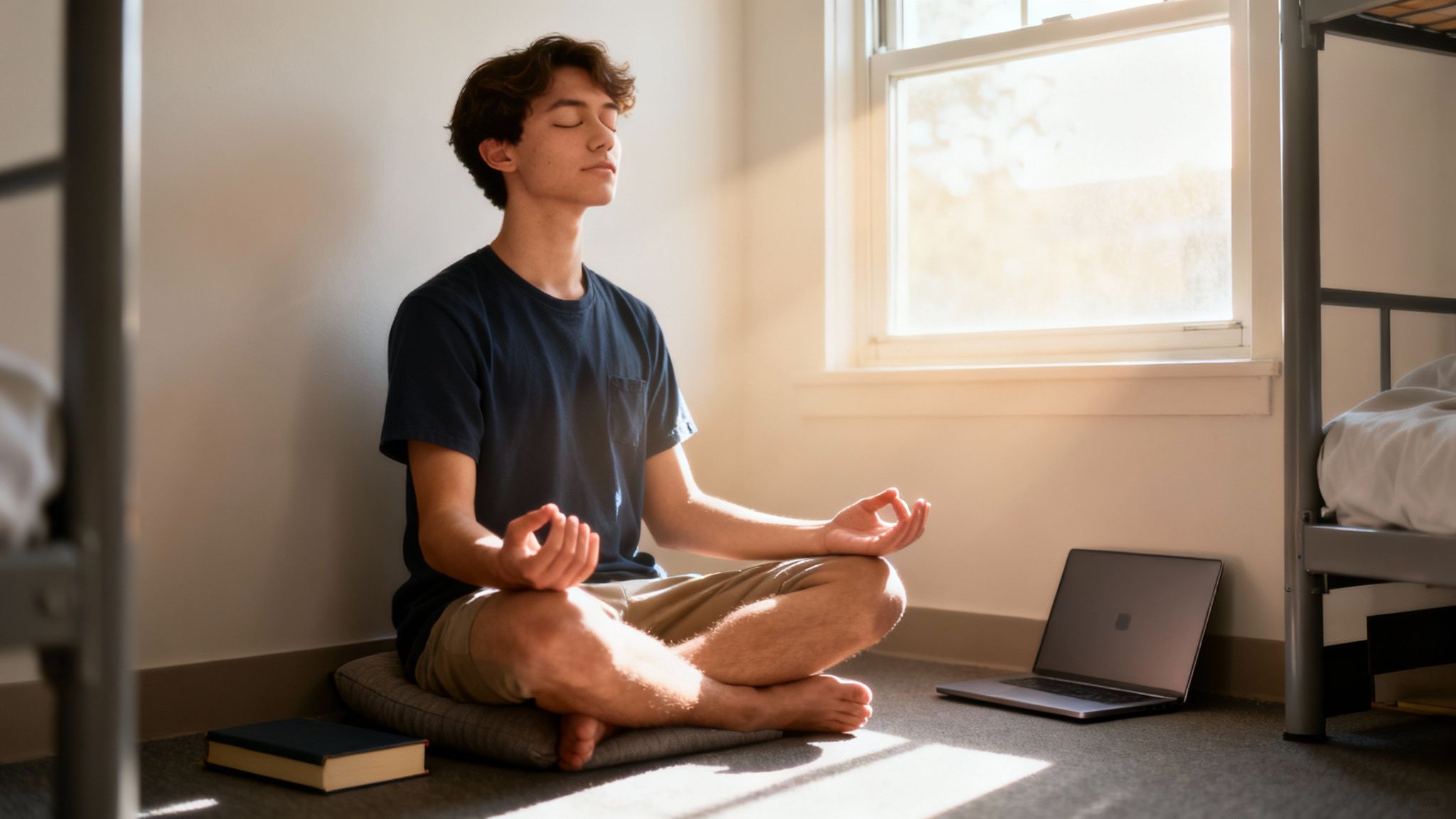
    Mindfulness meditation is a powerful practice that teaches you to focus on the present moment. Instead of getting caught in worries about exams or past mistakes, this technique helps you observe thoughts and feelings without judgment. This is one of the most effective stress management techniques for students because it helps quiet the mental noise that often fuels anxiety and burnout.

    Mindfulness Meditation

    Mindfulness has ancient roots in India and is now globally recognized for its benefits in promoting mental well-being and resilience. Many universities encourage mindfulness, and students worldwide use apps to manage stress. This practice helps build self-compassion and a calmer approach to daily challenges.

    How to Get Started with Mindfulness

    You don’t need special equipment to start, just a quiet space and a few minutes. Consistency is more important than duration.

    • Start Small: Begin with just 5 minutes a day. You can use guided meditation apps like Calm or Headspace, which are popular among students in India and globally.
    • Create a Routine: Try practicing at the same time each day, like in the morning before class, to build a consistent habit.
    • Find a Quiet Spot: Sit comfortably in a place free from distractions, like your room or a quiet corner of the library.
    • Be Patient: Your mind will wander; this is completely normal. The goal is not to stop your thoughts but to gently guide your focus back to your breath with compassion.

    2. Physical Exercise and Fitness

    Regular physical activity is one of the most effective stress management techniques for students. Exercise releases endorphins, your body's natural mood elevators, and reduces stress hormones like cortisol. This powerful combination improves your mood, enhances sleep quality, and helps you manage academic pressures and avoid burnout.

    The benefits of movement for mental well-being are widely recognized. The World Health Organization (WHO) advocates for regular activity to combat stress, anxiety, and feelings of depression. Staying active is a key part of building resilience and overall happiness.

    How to Get Started with Physical Exercise

    Integrating exercise into a busy student schedule is achievable with a little planning. The aim is to find a routine you enjoy.

    • Schedule It: Treat your workout like a class by blocking out 30-minute slots in your calendar 3-4 times a week.
    • Find Your Fun: You're more likely to stick with an activity you genuinely enjoy, like dancing, joining a campus sports team, or walking with a friend.
    • Use Campus Resources: Many universities in India and abroad offer gyms, pools, or yoga classes. Using these facilities can make staying active easier.
    • Join a Group: Group classes or teams provide social connection and accountability, making exercise a fun part of your routine and supporting your well-being.

    3. Deep Breathing Exercises

    Deep breathing is a simple yet profound stress management technique that offers immediate relief. Controlled breathing activates your body’s relaxation response, helping to calm the "fight-or-flight" feeling. This conscious control over your breath can lower your heart rate, reduce physical tension, and quiet a racing mind before an exam.

    Deep Breathing Exercises

    Rooted in practices like Pranayama from India, deep breathing techniques are now used globally to manage stress and anxiety. Universities often include breathing exercises in their well-being workshops. These methods are proven to help build resilience against academic and workplace stress.

    How to Get Started with Deep Breathing

    These exercises can be practiced anywhere, anytime, without any equipment. A few minutes between classes can make a big difference.

    • Try Box Breathing: Inhale for a count of 4, hold for 4, exhale for 4, and hold again for 4. Repeat this cycle 3-5 times.
    • Practise 4-7-8 Breathing: Inhale quietly through your nose for 4 seconds, hold your breath for 7 seconds, then exhale slowly through your mouth for 8 seconds.
    • Focus on Belly Breathing: Place one hand on your chest and the other on your stomach. As you inhale, feel your stomach rise rather than your chest.
    • Build a Daily Habit: Don't wait until you feel overwhelmed. Practicing for a few minutes daily helps your body respond more calmly during moments of high stress.

    4. Time Management and Organisational Skills

    Effective time management is a strategic way to plan your tasks and reduce feelings of overwhelm and anxiety. By organizing your workload, you can avoid the last-minute panic that fuels academic stress and burnout. This is one of the most practical stress management techniques for students because it gives you a clear framework to manage a demanding schedule.

    Methods like the Pomodoro Technique help enhance focus and productivity by breaking work into manageable chunks. The core idea is to regain control over your time, which directly lowers stress associated with deadlines. Developing these skills not only helps with academics but also prepares you for future workplace stress.

    How to Improve Your Time Management

    Getting organized doesn’t require a complete life overhaul. Small, consistent changes can make a big difference.

    • Use the Pomodoro Technique: Work in focused 25-minute intervals, followed by a 5-minute break. This method, popular among students in India, helps maintain concentration.
    • Break It Down: Divide large projects into smaller, manageable tasks with their own deadlines to make them feel less daunting.
    • Prioritise Smartly: Use a simple to-do list to categorize tasks by urgency and importance, ensuring you focus on what matters most.
    • Stop Procrastinating: Procrastination is a major source of academic stress; discover effective strategies to stop procrastinating to stay on track.
    • Plan and Review: Dedicate time each week to plan your tasks and review your progress using tools like Notion, Todoist, or Google Calendar.

    5. Social Support and Peer Connection

    Connecting with others is a fundamental human need and a vital tool for managing stress. Social support involves building meaningful relationships with friends, family, and classmates who can offer emotional backing and a sense of belonging. This is a powerful buffer against the feelings of isolation and anxiety that can accompany academic pressures.

    Research consistently shows that strong social ties are critical for long-term happiness and resilience. In a university setting, peer mentoring programs and group activities significantly reduce student stress. Sharing your experiences with trusted peers builds deep connections that are crucial for mental well-being.

    How to Build Your Support Network

    Creating a strong social circle takes effort but provides immense rewards in well-being and happiness.

    • Join Student Groups: Find a club that aligns with your hobbies, whether it's a debating club, a film society, or a sports team.
    • Form Study Groups: Collaborating with classmates not only improves academic performance but also builds camaraderie and a shared sense of support.
    • Attend Campus Events: Make a point to go to social mixers, workshops, or cultural festivals organized by your university to meet new people.
    • Leverage Peer Support: Many Indian universities have peer support programs or counselling groups for specific challenges like exam anxiety.
    • Stay Connected: A simple message to a friend or a call to family can make a big difference when you feel stressed. Reaching out with compassion is a strength.

    6. Progressive Muscle Relaxation (PMR)

    Progressive Muscle Relaxation (PMR) is a deep relaxation technique where you tense and then relax different muscle groups. This process helps you become more aware of physical tension and learn to release it, promoting both physical and mental calm. It’s an effective way to interrupt the body's stress response, making it especially helpful for anxiety and physical discomfort.

    Developed in the 1920s, PMR is now a core part of many therapeutic approaches, including counselling and therapy. Many university well-being centers offer PMR workshops. Students can also access guided sessions on apps to manage stress and improve sleep.

    How to Get Started with PMR

    PMR is easy to learn and can be practiced anywhere you can sit or lie down comfortably. The key is to notice the difference between tension and relaxation.

    • Systematic Approach: Begin at your feet, tensing the muscles for about 5 seconds, then fully relaxing them for 10-15 seconds before moving to the next muscle group.
    • Focus on the Contrast: Pay close attention to the feeling of release as the tension melts away. This helps your body learn to let go of stress.
    • Use Guided Audio: When starting out, use guided PMR scripts from YouTube or apps to stay focused and cover all major muscle groups.
    • Pair with Breathing: Enhance the effect by inhaling as you tense a muscle group and exhaling slowly as you release it.

    7. Journaling and Expressive Writing

    Journaling is the practice of writing down your thoughts and feelings to understand them more clearly. This powerful technique helps you organize chaotic thoughts, process difficult emotions, and gain perspective on stressful situations. For students dealing with anxiety, it serves as a private, judgment-free space to explore their inner world.

    Journaling and Expressive Writing

    Research has shown that expressive writing can improve mental well-being and emotional resilience. Modern methods like bullet journaling have made this practice popular among students in India for both organization and stress relief. It’s a simple yet profound tool for building self-compassion and happiness.

    How to Get Started with Journaling

    Getting started just requires a pen and paper or a digital document. The goal is honest self-expression.

    • Set a Timer: Begin with just 15-20 minutes of uninterrupted writing. Don't worry about grammar or structure; just let your thoughts flow.
    • Establish a Routine: Try to write at a consistent time, such as before bed, to reflect on your day and clear your mind.
    • Use Prompts: If you feel stuck, use prompts like, "What am I most worried about right now?" or "What went well today?"
    • Try Gratitude Journaling: A simple variation is to list three things you are grateful for each day. This shifts your focus toward positivity and improves your overall well-being.

    8. Cognitive Behavioural Techniques (CBT)

    Cognitive Behavioural Techniques (CBT) are psychological tools that help you identify and challenge unhelpful thought patterns fueling stress and anxiety. Instead of accepting anxious thoughts at face value, CBT teaches you to question them and find more balanced perspectives. This approach provides a structured way to break the cycle of negative thinking that can lead to depression.

    CBT principles are widely used in university counselling centers and mental health apps to help students manage academic anxiety and build resilience. These informational tools are designed for self-help and awareness. They are not a substitute for professional therapy for diagnosing or treating mental health conditions.

    How to Get Started with CBT

    You can begin applying basic CBT principles yourself to better manage your reactions to stressful situations. The key is to become a compassionate observer of your own thoughts.

    • Keep a Thought Record: When you feel stressed, note the situation, your automatic thought, and the emotions it triggered. This simple act builds self-awareness.
    • Identify Distortions: Learn to spot common cognitive distortions like catastrophizing (assuming the worst) or all-or-nothing thinking (seeing things as only good or bad).
    • Challenge Your Thoughts: Ask yourself, "What is the evidence for this thought?" or "What would I tell a friend in this situation?" For those interested in practical application, exploring CBT workbook resources can provide structured exercises to help manage thoughts and behaviours.
    • Conduct Behavioural Experiments: Gently test your negative predictions. If you fear a presentation, prepare well and observe what actually happens. This helps challenge beliefs with real-world evidence.

    9. Nature and Outdoor Activities

    Engaging with the natural world is a deeply restorative practice that helps counteract the pressures of student life. Spending time in green spaces—whether walking, gardening, or simply sitting in a park—is one of the most accessible stress management techniques for students. It works by reducing stress hormones, improving your mood, and offering a vital sense of perspective.

    This concept, sometimes called "forest bathing" (Shinrin-yoku), is supported by global research showing that just 20 minutes in nature significantly lowers stress. Many universities, including those in India, now feature campus nature trails and gardens to promote student well-being, resilience, and happiness.

    How to Get Started with Nature Activities

    Integrating nature into your routine doesn’t require elaborate planning. Small, consistent efforts can make a big difference in managing anxiety.

    • Take Short Breaks: Step outside for 15-20 minutes between study sessions. Walk to a campus green space or find a tree to sit under.
    • Practise Forest Bathing: Mindfully engage your senses in nature. Pay attention to the sound of leaves, the smell of the earth, and the feeling of the breeze.
    • Join a Group: Many Indian universities have hiking or nature clubs, which are a great way to socialize while de-stressing.
    • Bring Nature Indoors: If you can't get outside, studies show that having a small plant on your desk or looking at pictures of nature can have calming effects.

    10. Sleep Optimisation and Sleep Hygiene

    Sleep optimisation involves creating habits that promote consistent, high-quality sleep. For students, this is a non-negotiable part of well-being, as poor sleep amplifies stress, impairs thinking, and worsens anxiety. Focusing on sleep hygiene—your pre-sleep routine and environment—can significantly improve your ability to handle academic pressures and build resilience.

    The science is clear: good sleep is one of the most effective stress management techniques for students. Research shows that a full night of sleep can improve academic performance and mental well-being. Many university health services in India and abroad now offer workshops to help students combat burnout and improve sleep.

    How to Get Started with Sleep Hygiene

    Improving your sleep doesn't require drastic changes, just small, consistent adjustments to your daily routine.

    • Create a Consistent Schedule: Go to bed and wake up at the same time every day, even on weekends, to regulate your body's internal clock.
    • Optimise Your Environment: Keep your bedroom cool, dark, and quiet. Use blackout curtains or an eye mask if needed.
    • Establish a Wind-Down Routine: Dedicate the 30-60 minutes before bed to relaxing activities like reading, journaling, or listening to calm music. Avoid screens, as the blue light can disrupt sleep.
    • Be Mindful of What You Consume: Avoid caffeine in the afternoon and limit heavy meals or alcohol close to bedtime, as they can disrupt your sleep cycle.

    Comparison of 10 Student Stress-Management Techniques

    Technique 🔄 Implementation complexity ⚡ Resources & time 📊 Expected outcomes Ideal use cases ⭐ Key advantages
    Mindfulness Meditation Low–Moderate 🔄 (learning curve for beginners) Minimal resources; 5–30 min/day ⚡ Reduced rumination, lower stress, improved focus 📊 Daily stress prevention, study focus, emotion regulation Accessible, evidence-backed, low cost ⭐⭐
    Physical Exercise and Fitness Moderate 🔄 (planning, consistency) Requires time & possibly equipment; 30+ min sessions ⚡ Improved mood, sleep, energy, reduced cortisol 📊 Ongoing stress relief, energy management, social engagement High-impact on mood & health; scalable options ⭐⭐⭐
    Deep Breathing Exercises Low 🔄 (easy to learn) No equipment; 2–5 min for immediate effect ⚡ Rapid physiological calming; lower heart rate and BP 📊 Acute stress moments: exams, presentations, breaks Immediate, discreet, universally accessible ⭐⭐
    Time Management & Organizational Skills Moderate–High 🔄 (habit formation) Tools/apps + initial time investment; ongoing planning ⚡ Reduced overwhelm, better grades, less procrastination 📊 Project deadlines, study planning, chronic overload Prevents last‑minute panic; improves productivity ⭐⭐
    Social Support & Peer Connection Low–Moderate 🔄 (effort to build/maintain) Time commitment; in-person or online interactions ⚡ Less loneliness, greater motivation, better mental health 📊 Emotional crises, ongoing accountability, first‑year transition Strong protective effect on well‑being and belonging ⭐⭐⭐
    Progressive Muscle Relaxation (PMR) Moderate 🔄 (guided practice needed) Minimal equipment; 15–20 min sessions ⚡ Reduced muscle tension, improved sleep, body awareness 📊 Pre‑sleep routine, physical tension after study Tangible relaxation, measurable sleep benefits ⭐⭐
    Journaling & Expressive Writing Low–Moderate 🔄 (consistency improves benefit) Pen/paper or app; 5–30 min sessions ⚡ Better emotional processing, clarity, memory gains 📊 Processing emotions, preparing for exams, gratitude practice Low cost, private, supports reflection and learning ⭐⭐
    Cognitive Behavioral Techniques (CBT) High 🔄 (skill acquisition; may need guidance) Worksheets/apps/therapy; time for practice ⚡ Long‑lasting anxiety reduction; improved coping skills 📊 Persistent anxiety, entrenched negative thoughts, clinical cases Evidence‑based, structured, durable outcomes ⭐⭐⭐
    Nature & Outdoor Activities Low 🔄 (easy to access where available) Minimal cost; ~20+ min beneficial; weather-dependent ⚡ Lower cortisol, improved mood, creativity, sleep 📊 Short study breaks, creative blocks, mood boosts Rapid stress reduction; combines movement and outdoors ⭐⭐
    Sleep Optimization & Sleep Hygiene Moderate 🔄 (behavioral changes + environment) Minimal cost; nightly time commitment ⚡ Greater stress resilience, cognitive performance, better health 📊 Chronic stress, poor academic performance, sleep issues Large impact on cognition and resilience; well‑supported ⭐⭐⭐

    Your Path Forward: Building Resilience One Step at a Time

    Navigating academic life can feel overwhelming, with deadlines, exams, and personal commitments often leading to stress and anxiety. However, you have the power to face these challenges. Effective stress management is about building a personal toolkit of strategies that foster resilience and support your overall well-being.

    The techniques in this article offer a holistic approach, from mindfulness and deep breathing to time management and social connection. Prioritizing physical exercise, sleep, and time in nature are foundational pillars of a healthy student life. These are not just coping mechanisms; they are proactive skills for a more balanced and fulfilling life that can help you manage future workplace stress.

    Supportive Takeaways for Your Well-being Journey

    Mastering these stress management techniques for students is an investment in yourself. The goal isn't to eliminate stress but to change your relationship with it, facing hurdles with greater confidence and calm.

    This list is a menu of options, not a rigid prescription.

    • Start Small: Choose one or two techniques that resonate with you. It could be a 10-minute walk or five minutes of deep breathing before an exam.
    • Be Patient and Compassionate: Building new habits takes time. Treat yourself with the same kindness you would offer a friend on days you feel unmotivated.
    • Acknowledge Your Progress: Every small step is a victory. Recognizing your efforts helps build momentum toward lasting change and greater resilience.

    Taking control of your stress is an act of self-empowerment that lays the groundwork for a future where you can manage life's complexities with a strong, centered mind. If stress, anxiety, or feelings of depression become too difficult to manage, reaching out for professional counselling or therapy is a courageous step. Your mental well-being is the foundation of your success.


    Ready to take the next step in your mental well-being journey? DeTalks offers a safe, confidential space with qualified therapists who specialise in helping students navigate stress, anxiety, and the pressures of academic life. Explore our resources and connect with a professional who can provide the personalised support you deserve at DeTalks.