Tag: therapy for anxiety

  • Conversion Disorder Icd 10

    Conversion Disorder Icd 10

    You may be reading this after a confusing appointment, a stack of test reports, or a moment that frightened your family. Perhaps your arm felt weak, your voice changed, or you had seizure-like episodes, and the scans or blood tests didn't fully explain what was happening.

    That kind of uncertainty can feel exhausting. It can also stir up anxiety, low mood, workplace stress, and a painful fear that others won't believe you.

    If you've seen the phrase conversion disorder ICD-10 on a report, this article is here to make it clearer. The code matters, but the human experience behind it matters more. Your symptoms are real, your distress is real, and there are practical next steps that can support your well-being, resilience, and recovery.

    When Your Body Speaks Your Stress

    A person may wake up and find their leg feels heavy and unreliable. Another may collapse during a stressful period and later hear that the episode looked like a seizure, yet the usual neurological explanation wasn't found. These situations are extremely unsettling, especially when friends or relatives start asking whether it is “just stress”.

    A man in a doctor's office holding his wrist, showing symptoms of discomfort or pain.

    Conversion disorder, often also discussed as Functional Neurological Disorder, describes a condition in which a person has genuine physical symptoms that affect movement, sensation, or episodes that resemble neurological events. The symptoms are not pretend, and they are not a sign of weak character.

    Why this feels so confusing

    Most of us are taught to separate the body from the mind. If a symptom is physical, we expect a scan, a blood test, or a visible injury to explain it. When that explanation doesn't appear, people can feel dismissed, ashamed, or afraid.

    Stress can influence the body in many ways, even outside this diagnosis. If you want a simple example of how emotional strain can affect physical health, this article on anxiety and blood pressure shows how closely body systems and emotional states can interact.

    Your body can carry distress in visible, physical ways. That does not make the symptom less real.

    A more compassionate way to understand it

    Think of this as a problem in function, not a judgement about whether the problem exists. A person may be dealing with pressure, trauma, burnout, depression, or intense anxiety, and the nervous system can begin expressing that overload through the body.

    That doesn't mean every person with this diagnosis has one obvious cause. Some people can identify a trigger. Others can't. What matters first is validation, safety, and finding the right support through medical care, therapy, counselling, and practical rehabilitation.

    Understanding the F44 Codes in ICD-10

    Medical codes can look cold on paper. In practice, they're a shared language that helps doctors, therapists, hospitals, and insurers describe a condition in a standard way.

    In ICD-10, conversion disorder sits in the F44 group for dissociative and conversion disorders, with different subcodes based on the main symptom pattern, including F44.4, F44.5, F44.6, and F44.7. The coding system also includes F44.9 for unspecified presentations, which shows that this isn't treated as one vague label but as a structured category based on symptom type, as outlined in the ICD-10 F44 coding listing.

    Think of F44 like labelled folders

    A simple way to picture it is a records shelf. The F44 shelf holds related conditions. Inside it, each folder reflects the kind of symptom a clinician is documenting.

    That matters because weakness, seizure-like events, and sensory changes may all affect daily life in different ways. A more specific code helps describe what the person is experiencing.

    Common ICD-10 codes for conversion disorder F44

    Code Symptom Type Simple Explanation
    F44.4 Motor symptom or deficit Used when the main problem involves movement, such as weakness or trouble using part of the body
    F44.5 Seizures or convulsions Used when the main episodes look like seizures or convulsions
    F44.6 Sensory symptom or deficit Used when the main difficulty involves sensation, such as numbness or altered sensory experience
    F44.7 Mixed symptom presentation Used when more than one type of symptom is present
    F44.9 Unspecified Used when the record does not yet clearly specify the presentation

    Why diagnostic coding became more detailed

    The move to ICD-10-CM brought far more specificity into healthcare coding. One health-policy analysis noted that ICD-10-CM includes more than 70,000 unique codes compared with about 14,000 in ICD-9-CM, and that coding detail for some conditions expanded sharply, such as hip and pelvic fractures moving from 39 codes to 423 codes in ICD-10-CM, according to this analysis of the ICD-9 to ICD-10-CM transition.

    That detail can feel bureaucratic, but it has a practical purpose. It gives clinicians a way to describe symptoms more precisely, which can support clearer records and better coordination across care settings.

    Practical rule: The code describes the symptom pattern. It doesn't tell the whole story of your life, your stress, or your potential for healing.

    The Diagnostic Journey What to Expect

    People often fear that this diagnosis means, “We found nothing, so it must be psychological.” That isn't the right way to think about it.

    A careful diagnosis looks for positive clinical signs that the symptom pattern doesn't fit recognised neurological disease in the usual way. In DSM-5-aligned guidance, clinicians look for one or more altered voluntary motor or sensory symptoms, signs that are incompatible with recognised neurological disease, and distress or functional impairment, while also excluding malingering and other better explanations, as described in this DSM-5-aligned overview of conversion disorder criteria-dsm–5-300.11-(icd–10–cm-multiple-codes)).

    A diagram outlining the five-step diagnostic journey for identifying conversion disorder in a patient.

    What usually happens in assessment

    A person may first see a general physician, neurologist, or emergency doctor. The team may review symptoms, examine movement or sensation, and order tests when needed to check for other medical conditions.

    After that, the picture often becomes broader. A clinician may ask about recent stress, trauma, burnout, depression, panic, family pressures, sleep, and how symptoms affect work or home life.

    Questions you may be asked

    The questions can feel personal, but they help build a fuller picture.

    • About symptoms: When did they start, what do they look like, and what makes them better or worse?
    • About daily life: Are you able to work, study, travel, cook, or manage social situations as before?
    • About emotional strain: Have there been recent changes, losses, conflict, workplace stress, or periods of intense anxiety or depression?
    • About past care: What tests, scans, or specialist visits have already happened?

    If you want to prepare thoughtfully for appointments, resources on designing effective digital medical forms can be useful because they show the kind of organised health history that helps clinicians understand symptoms more clearly.

    A good assessment should leave you feeling heard, not blamed.

    What diagnosis is not

    It is not a shortcut. It is not an accusation. And it should never be delivered as if the symptoms are imaginary.

    The most helpful clinicians explain the pattern clearly, answer questions, and give a path forward. That path may involve neurology, psychiatry, psychology, physiotherapy, or a combination, depending on the person's needs.

    Your Mind and Body in Conversation

    A useful analogy is software and hardware. In some conditions, the hardware is damaged. In this condition, the brain and nervous system may be functioning in a disrupted way even when there isn't visible structural damage explaining the symptom.

    That can still produce very real weakness, shaking, numbness, speech changes, or seizure-like episodes. The experience isn't fake. The system is struggling to send, organise, or regulate signals in the usual way.

    Stress doesn't stay neatly in the mind

    When people live with chronic worry, trauma, relationship strain, grief, burnout, or workplace stress, the nervous system can remain on high alert. Over time, that can affect concentration, sleep, pain, digestion, breathing, and bodily awareness.

    For some people, the body becomes the loudest place distress shows up. The symptom may begin during an emotionally intense period, but not always. Some people only realise later that they had been carrying tension for months.

    Why shame gets in the way

    Many patients hear words like “psychological” and feel accused. Families may also misunderstand, especially if they expected a purely neurological explanation.

    A kinder frame is this: the brain, emotions, and body are constantly in conversation. Therapy or counselling can help a person notice that conversation without self-blame. It can also help them develop steadier ways to respond to anxiety, depression, fear, and physical symptoms.

    • Emotional awareness: Learning to spot stress signals earlier can reduce the sense of helplessness.
    • Resilience skills: Grounding, pacing, and self-compassion can help the nervous system feel safer.
    • Support for mood: If depression or anxiety is also present, addressing it can improve overall well-being.
    • Family understanding: When relatives understand that symptoms are genuine, recovery often feels less lonely.

    Healing often begins when a person stops fighting to prove the symptom is real and starts getting support for the whole picture.

    Positive psychology also has a place here. Building resilience isn't about pretending everything is fine. It means strengthening the inner and outer supports that help you cope, adapt, and keep moving toward a meaningful life.

    Building Resilience and Finding Relief

    Improvement usually comes from a team approach, not a single magic fix. The aim is often to reduce distress, improve functioning, and help the person feel safer in their own body.

    A diagram illustrating a holistic treatment plan for managing conversion disorder, including psychotherapy, physical therapies, and support systems.

    What helpful care can include

    Some people benefit most from therapy that explains the condition in plain language and teaches ways to respond to symptoms without panic. Others also need support for trauma, depression, or persistent anxiety that has been weighing down their nervous system.

    Physical rehabilitation can matter just as much. If movement, walking, speech, or daily activities have been affected, physiotherapy or occupational support may help retrain function and rebuild confidence.

    A balanced plan often looks like this

    • Psychological support: Counselling or structured therapy can help with symptom understanding, stress regulation, trauma, and mood.
    • Body-based rehabilitation: Physiotherapy may focus on movement patterns, strength, confidence, and gradual return to activity.
    • Stress management: Relaxation practice, breath work, mindfulness, and routine-building can reduce overload.
    • Family education: When loved ones learn how to respond calmly and supportively, home becomes less tense.
    • Workplace adjustments: For people facing workplace stress or burnout, a gradual return or reduced pressure can be part of healing.

    Progress rarely moves in a straight line

    Some weeks feel encouraging. Other weeks feel messy, and symptoms may flare during stress, conflict, poor sleep, or major life changes. That doesn't mean treatment has failed.

    A more realistic goal is functional improvement. Can you manage more of your day, feel less frightened by symptoms, and recover more quickly after setbacks? Those changes matter.

    Recovery is often about regaining trust in your body, one small step at a time.

    Compassion matters here. People often push themselves harshly or feel guilty for not “snapping out of it”. A steadier approach combines practical skills, patience, and support. That is where resilience grows.

    Your Practical Guide to Getting Help

    In India, many people first seek care in non-psychiatric settings when symptoms affect movement, sensation, or seizure-like episodes. That makes sense. The symptoms feel neurological, and they deserve proper medical attention.

    Modern guidance also stresses that symptoms should be validated rather than framed as purely psychological, which is especially important in India, where stigma can make mental-health help-seeking harder and where patients often begin outside psychiatric care, as noted in this overview of F44 and the need for validating care.

    A woman holds a smartphone displaying the MindSupport app inside a community health and wellness center.

    A sensible next-step checklist

    If you or someone you love has received this diagnosis, try to keep the next steps simple.

    1. Ask for a clear explanation. Request that the clinician explain why this diagnosis fits and what findings support it.
    2. Follow through with medical review. If neurology follow-up is advised, attend it.
    3. Add psychological care. Therapy or counselling can help with stress, trauma, anxiety, depression, and coping.
    4. Consider rehabilitation. If function has changed, ask whether physiotherapy or occupational support would help.
    5. Bring family into the conversation. A short, calm explanation often reduces blame and confusion.

    A note on practical barriers

    Some families worry about cost, paperwork, or claim rejections. If that becomes part of the stress, a resource like this guide to resolving behavioral health denials can help people understand common billing problems in behavioural health systems.

    If you're exploring online mental health platforms or screening tools, remember this point clearly: assessments are informational, not diagnostic. They can help you organise your concerns and decide what kind of support to seek, but they don't replace a qualified clinician.

    You don't need to choose between “it's physical” and “it's mental”. The most helpful care usually respects both. A person can need neurological review and mental health support at the same time.


    If you're looking for a gentle first step, DeTalks can help you explore therapists, counsellors, and informational mental health assessments in one place. Whether you're dealing with anxiety, depression, burnout, trauma, workplace stress, or the confusion that can follow a conversion disorder diagnosis, it's a practical way to find support that fits your needs and strengthens long-term well-being and resilience.

  • Coping with Anxiety and Stress: A Practical Guide

    Coping with Anxiety and Stress: A Practical Guide

    Some days the pressure builds so subtly that you don’t notice it until your body starts protesting. You snap at someone you care about, reread the same email five times, or lie awake with your mind running through tomorrow’s worries as if rest were something you have to earn.

    For many people, this is everyday life. Work deadlines, family expectations, money concerns, exam pressure, caregiving, loneliness, and the constant push to stay “on” can all pile up. A national survey by the Live Love Laugh Foundation found that 41% of Indians reported moderate to high stress levels that interfered with daily life, and 48% in metros cited work and financial pressures as major causes.

    Stress and anxiety are not personal failures. They’re human responses to strain. But when they start shaping your sleep, mood, relationships, confidence, or physical health, coping with anxiety and stress needs more than willpower. It needs practical tools, honest self-awareness, and sometimes therapy or counselling.

    This guide is written in that spirit. Warm, clear, and grounded. Some strategies help in the next five minutes. Others build resilience, well-being, and a steadier inner life over time. None of them ask you to become a different person. They ask you to work with your mind and body more skilfully, with patience and self-compassion.

    Your Guide to Navigating Stress and Anxiety

    A common pattern looks like this. You wake up already tense. Before breakfast, there are messages from work, a family issue to sort out, and a lingering sense that you’re behind. By afternoon, your shoulders are tight, your breathing is shallow, and even small tasks feel heavier than they should.

    That state can look different from person to person. A student may call it exam stress. A manager may call it burnout. A parent may say they feel irritable, exhausted, and guilty all at once. A partner may not even use the word anxiety. They might say, “I can’t switch off.”

    What matters is not whether your struggle looks dramatic from the outside. What matters is whether it’s shrinking your life on the inside. If you’re avoiding calls, overthinking every decision, struggling to enjoy ordinary moments, or moving through the day on sheer force, your system is asking for care.

    Practical rule: If your coping methods leave you more drained, numb, or dependent, they’re not really helping. They’re only postponing the cost.

    Healthy coping is not about feeling calm all the time. It’s about recovering faster, understanding your triggers, and responding with more choice. That includes immediate relief when anxiety spikes, and longer-term habits that support resilience, happiness, and emotional balance.

    This is also where people often get stuck between self-help and support. They’re not sure whether they need “serious help” or whether they should just handle it themselves. That all-or-nothing thinking keeps many people suffering in silence.

    A better approach is simpler. Learn to recognise what you’re feeling. Use tools that work in real life. Notice what doesn’t work. And if the struggle keeps disrupting your daily functioning, relationships, or well-being, consider counselling or therapy as a practical next step, not a last resort.

    Understanding What You Are Feeling

    Sometimes stress feels obvious. Sometimes it hides behind headaches, procrastination, irritation, or the strange feeling that you’re always bracing for something. Naming the experience matters because vague distress is harder to manage than a pattern you can recognise.

    In a large-scale South India Mental Health Survey, anxiety disorders affected approximately 45.9% of the screened population, and generalised anxiety disorder affected 5.8% of adults. You don’t need to label yourself to make use of that information. The point is simple. You’re not unusual for struggling.

    A young man sitting by a flowing river with a surreal white cloud floating above his head.

    Stress and anxiety don’t always feel the same

    Stress often shows up as pressure linked to something specific. A deadline, a conflict, travel, caregiving, or a financial problem. It usually says, “There is too much to do.”

    Anxiety often carries more fear, dread, or anticipation. Even when nothing is happening in the moment, your mind may keep scanning for what could go wrong. It often says, “I’m not safe,” or “I won’t be able to handle it.”

    They can overlap. A stressful season can trigger anxiety. Ongoing anxiety can make normal stress feel unbearable.

    What your body may be telling you

    Your body often notices strain before your mind makes sense of it.

    • Breathing changes can become shallow, fast, or tight.
    • Muscles tense up in the jaw, neck, shoulders, or stomach.
    • Sleep gets disrupted, either because you can’t fall asleep or because you wake feeling unrefreshed.
    • Digestion shifts and appetite may increase, decrease, or feel unpredictable.
    • Energy becomes uneven, with wired periods followed by crashes.

    People often dismiss these signs because they seem physical rather than emotional. But the body and mind rarely separate as neatly as we’d like.

    Common emotional and behavioural signs

    You may also notice patterns in how you think and act.

    Area What it can look like
    Thoughts Overthinking, worst-case scenarios, self-criticism, difficulty deciding
    Emotions Irritability, dread, guilt, numbness, feeling easily overwhelmed
    Behaviour Avoiding tasks, withdrawing from people, doom-scrolling, checking repeatedly
    Focus Trouble concentrating, forgetting small things, jumping between tasks

    This is especially common when life carries layered pressure. In India, that may include family responsibility, academic competition, caregiving expectations, marriage pressure, workplace stress, or the feeling that rest has to be justified.

    A useful question is not “What’s wrong with me?” but “What is my mind and body trying to handle right now?”

    A short self-check for reflection

    This is informational, not diagnostic. It can help you slow down and notice patterns.

    Ask yourself:

    1. What happens in my body when I feel under pressure?
    2. What thoughts repeat when I’m stressed or anxious?
    3. What do I start avoiding when things feel too much?
    4. What do I do to cope, and does it leave me feeling better or worse later?
    5. Have I stopped enjoying things that usually help me feel grounded?
    6. Is this affecting my work, studies, relationships, sleep, or confidence?

    If you answer these questions truthfully, you’ll often see the outline of the problem more clearly. Not perfectly, but clearly enough to respond with care instead of shame.

    What helps at this stage

    The first helpful move is usually not to fix everything. It’s to reduce confusion.

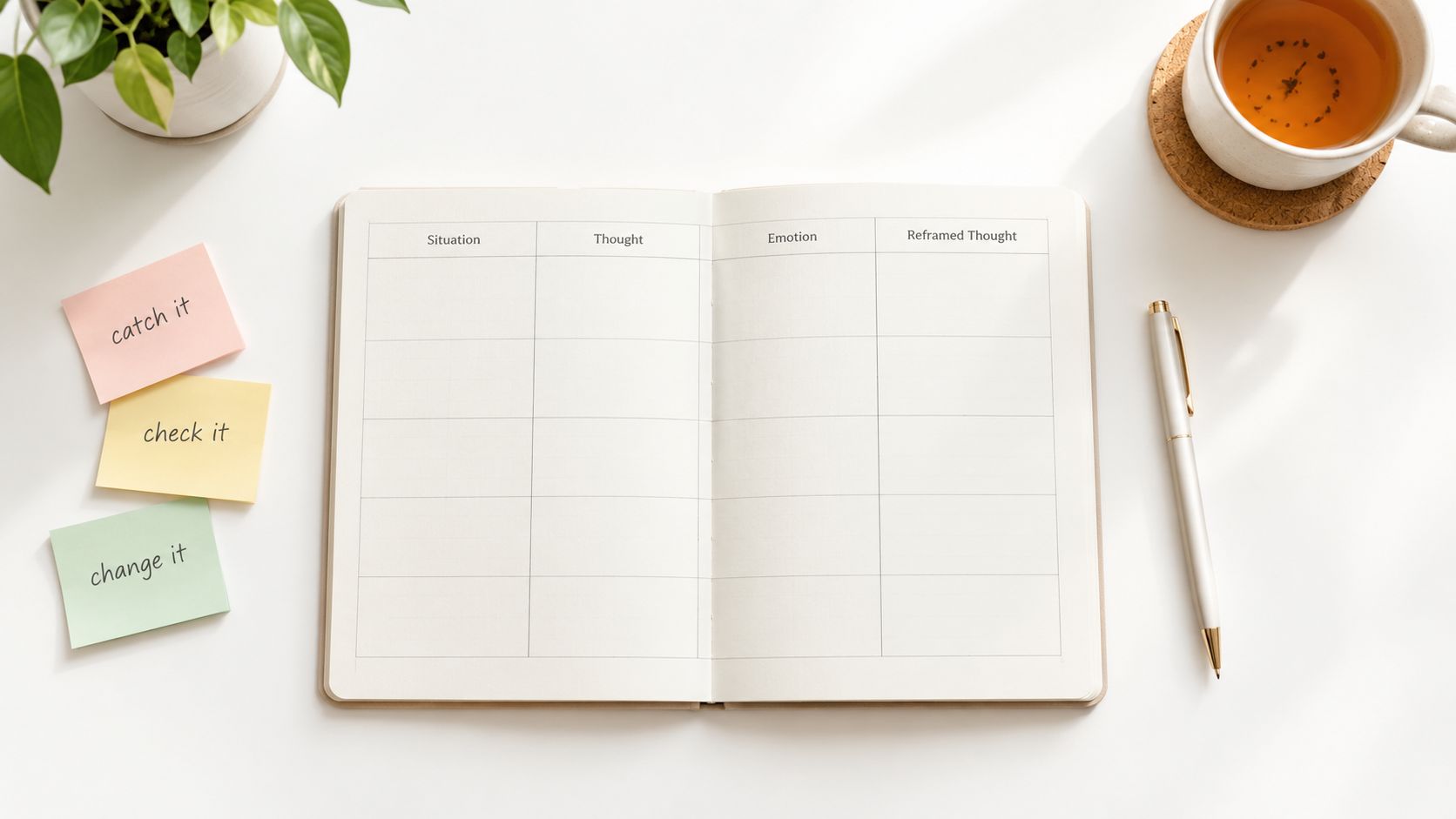
    Try this simple three-part note on your phone:

    • Trigger. What happened just before the shift?
    • Reaction. What did you feel in your body and thoughts?
    • Need. What might have helped in that moment?

    That note won’t solve anxiety by itself. But it often turns a foggy, overwhelming experience into something you can work with. And that’s where coping with anxiety and stress begins. Not with control, but with awareness.

    Techniques for Immediate Relief

    When anxiety surges, logic alone often doesn’t land. Your body has moved into alarm mode, and before you can think clearly, you need a small drop in activation. Immediate techniques work best when they are simple, repeatable, and easy to use in ordinary places like a desk, a bathroom break, a cab ride, or just before an exam or presentation.

    Start with this visual guide if your mind feels too crowded for long instructions.

    A three-step infographic on immediate relief techniques for calming anxiety through breathing, grounding, and sensory focus.

    Slow the body first

    If your chest feels tight or your thoughts are racing, begin with breathing. Not because it’s magical, but because anxious breathing is often fast and shallow. Slowing it gives your body a clearer signal that the immediate threat has passed.

    Try box breathing:

    1. Breathe in for a count of four.
    2. Hold for four.
    3. Breathe out for four.
    4. Hold for four.
    5. Repeat for a few rounds.

    If counting makes you more tense, skip the numbers. Just focus on making the exhale a little longer than the inhale.

    A second option is a physiological sigh. Take one inhale, then a small second inhale on top of it, then a long slow exhale. Do it a few times. This can be especially useful when you feel crowded by urgency.

    Ground yourself in the present

    Anxiety pulls attention into the future. Grounding pulls it back into the room.

    Use the 5-4-3-2-1 method:

    • 5 things you can see
    • 4 things you can touch
    • 3 things you can hear
    • 2 things you can smell
    • 1 thing you can taste

    This works well in places where you can’t stop everything. In traffic, before a meeting, while waiting outside an interview room, or after a difficult phone call. The point is not to feel instantly peaceful. The point is to interrupt the spiral.

    Here’s a guided explanation you can return to when you need a calm voice and a clear reminder of the basics.

    Release tension you didn’t realise you were holding

    Many people think they’re only “mentally” stressed when their body is carrying the load all day. That’s where a quick version of progressive muscle relaxation helps.

    You can do this in under two minutes:

    • Hands. Clench gently, hold, release.
    • Shoulders. Lift toward your ears, hold, release.
    • Jaw. Notice if it’s tight, then soften it.
    • Feet. Press into the floor, then let go.

    The release matters more than the squeeze. You’re teaching your body the difference between tension and ease.

    If a technique feels irritating in the moment, that doesn’t mean you’re failing. It usually means your system needs a different entry point.

    Use one-sense focus when your mind is scattered

    When your thoughts are jumping everywhere, broad mindfulness can feel too difficult. Narrowing to one sense is often easier.

    Choose one:

    • Hold something cool, warm, or textured and describe it.
    • Listen to one steady sound, like a fan, rain, or music without vocals.
    • Sip water slowly and focus on temperature and sensation.
    • Look at a fixed point and describe its colour, shape, and edges.

    This is especially useful for workplace stress when you need to stay functional rather than disappear into a longer reset.

    Don’t aim for zero anxiety

    A common mistake is using coping tools as a test. “If I still feel anxious, it didn’t work.” That standard is too harsh and usually backfires.

    A better measure is this short comparison:

    Before the technique After the technique
    Thoughts feel fast and tangled Thoughts feel slightly slower
    Body feels braced One part of the body softens
    You want to escape immediately You can stay for the next few minutes
    Everything feels urgent One task becomes possible

    That small shift matters. Relief often comes in degrees.

    What usually doesn’t help in the moment

    A few habits can make acute stress worse even when they feel comforting for a minute.

    • Arguing with every anxious thought can pull you deeper into it.
    • Checking repeatedly for reassurance often feeds the cycle.
    • Scrolling without awareness keeps your brain overstimulated.
    • Pushing through without any pause may work for an hour, then cost you later.

    If concentration is part of the problem, practical structure helps. Some people find external focus supports useful, especially when stress and distraction overlap. This guide on Pretty Progress for ADHD focus offers simple ideas for reducing friction and getting started when attention feels scattered.

    A simple emergency reset

    If you only remember one thing, remember this sequence:

    1. Exhale slowly
    2. Put both feet on the ground
    3. Name what is happening
    4. Choose one next action

    For example: “I’m anxious before this meeting. My body is activated. I’m going to drink water and review the first point only.”

    That is coping. Not dramatic. Not perfect. Just effective enough to help you stay with yourself.

    Building Long-Term Resilience and Well-being

    Immediate relief is useful. Long-term resilience is what changes your daily life. It helps you recover from pressure without being flattened by it. It also gives you more room for joy, compassion, steadiness, and a stronger sense of self when life is messy.

    Resilience is not toughness in the harsh sense. It isn’t emotional numbness, endless productivity, or pretending you’re fine. It’s the ability to bend without breaking, and to come back to yourself after stress, disappointment, conflict, or fear.

    A young man standing peacefully on a sunlit dirt path beneath a large tree in a meadow.

    Build a life that supports your nervous system

    People often ask for one technique that will fix anxiety. Usually, there isn’t one. What helps most is a set of ordinary habits that make your system less vulnerable to overload.

    Think of it this way. You are easier to overwhelm when you are underslept, overcommitted, isolated, self-critical, and constantly interrupted. You are better able to cope when your days include some structure, movement, rest, connection, and margin.

    Here are the areas worth protecting:

    • Sleep rhythm matters more than chasing the perfect night.
    • Movement helps discharge built-up tension. Walking, stretching, yoga, or any regular activity can help.
    • Meals and hydration shape mood and energy more than people realise.
    • Connection with safe people reduces the sense that you must carry everything alone.
    • Breaks prevent stress from becoming your normal background state.

    Mindfulness works better when it’s smaller

    Many people give up on mindfulness because they think it requires long meditations and a perfectly quiet mind. It doesn’t. A brief daily practice is often more realistic and more sustainable.

    Try one of these:

    • Sit for two minutes and follow your breath without trying to change it.
    • Wash your hands slowly and notice temperature, pressure, and movement.
    • During tea or coffee, take the first three sips without your phone.
    • Walk for a few minutes and feel your feet making contact with the ground.

    This kind of practice builds attention gently. Over time, you notice your stress earlier. That gives you more choice.

    Resilience often grows through repetition, not intensity. A small practice done regularly usually helps more than a big effort done once.

    Gratitude is not denial

    Positive psychology is sometimes misunderstood as forced optimism. Healthy gratitude does not ask you to ignore pain. It asks you to notice that pain is not the whole picture.

    A Journal of Clinical Psychology page notes research showing that for Indian youth struggling with stress, gratitude journaling reduced anxiety symptoms by 35% more than CBT alone in that study. You don’t need a perfect journal routine to use that idea well.

    A practical gratitude entry can be simple:

    If this feels fake Try this instead
    “I’m grateful for everything” “One thing that made today lighter was…”
    “I should be more positive” “One thing I handled better than usual was…”
    “Others have it worse” “One person or place that helped me feel safer today was…”

    That approach supports well-being without dismissing stress, anxiety, or depression.

    Self-compassion lowers burnout

    People under pressure often become harsher with themselves. They think criticism will make them more disciplined. In practice, it usually creates more shame, avoidance, and exhaustion.

    Self-compassion sounds like this:

    • “This is hard right now.”
    • “I don’t have to solve everything tonight.”
    • “Struggling doesn’t make me weak.”
    • “I can take one helpful step.”

    That voice isn’t indulgent. It’s stabilising. It helps you return to action without using fear as your fuel.

    Boundaries protect energy

    A lot of workplace stress is not just about workload. It’s about blurred limits. No clear stop time. Too many emotional demands. The expectation that you should always be reachable, agreeable, and composed.

    Useful boundaries might include:

    1. Ending one task before opening another, instead of stacking unfinished work.
    2. Not replying instantly to every message unless it is truly urgent.
    3. Taking a real pause between work and home roles, even if it’s only ten minutes.
    4. Naming your true capacity rather than agreeing first and resenting it later.

    If you’re already burnt out, boundaries may feel uncomfortable at first. That’s normal. New limits often feel rude to people who are used to your overfunctioning.

    Create a personal resilience menu

    Don’t rely on one coping strategy. Build a short menu you can return to.

    For energy

    • Morning light
    • A short walk
    • Music that shifts your state

    For calm

    • Breathing practice
    • Stretching
    • Fewer inputs for an hour

    For emotional support

    • One trusted person
    • Journalling
    • Therapy or counselling

    For meaning

    • Prayer or reflection
    • Gratitude notes
    • Time spent on something you value beyond achievement

    The strongest well-being routines are usually simple enough to keep using during difficult weeks. That’s the true test.

    Tailored Coping Strategies for Your Life

    Stress is personal. The same advice doesn’t fit a student waiting for results, a professional dealing with workplace stress, or a parent carrying everyone else’s needs. Coping with anxiety and stress works better when it matches the shape of your day.

    A young boy studying at a table while parents relax and stretch in a quiet room

    If you’re a student facing exam pressure

    Many students don’t just fear failure. They fear disappointing family, losing momentum, or being judged by one result. That makes concentration harder because every study session feels loaded.

    A more useful approach is to reduce the emotional weight of each sitting. Study in shorter blocks. Decide the goal before you begin. Keep one scrap page for “worry thoughts” so they don’t keep interrupting. Review what you completed, not only what remains.

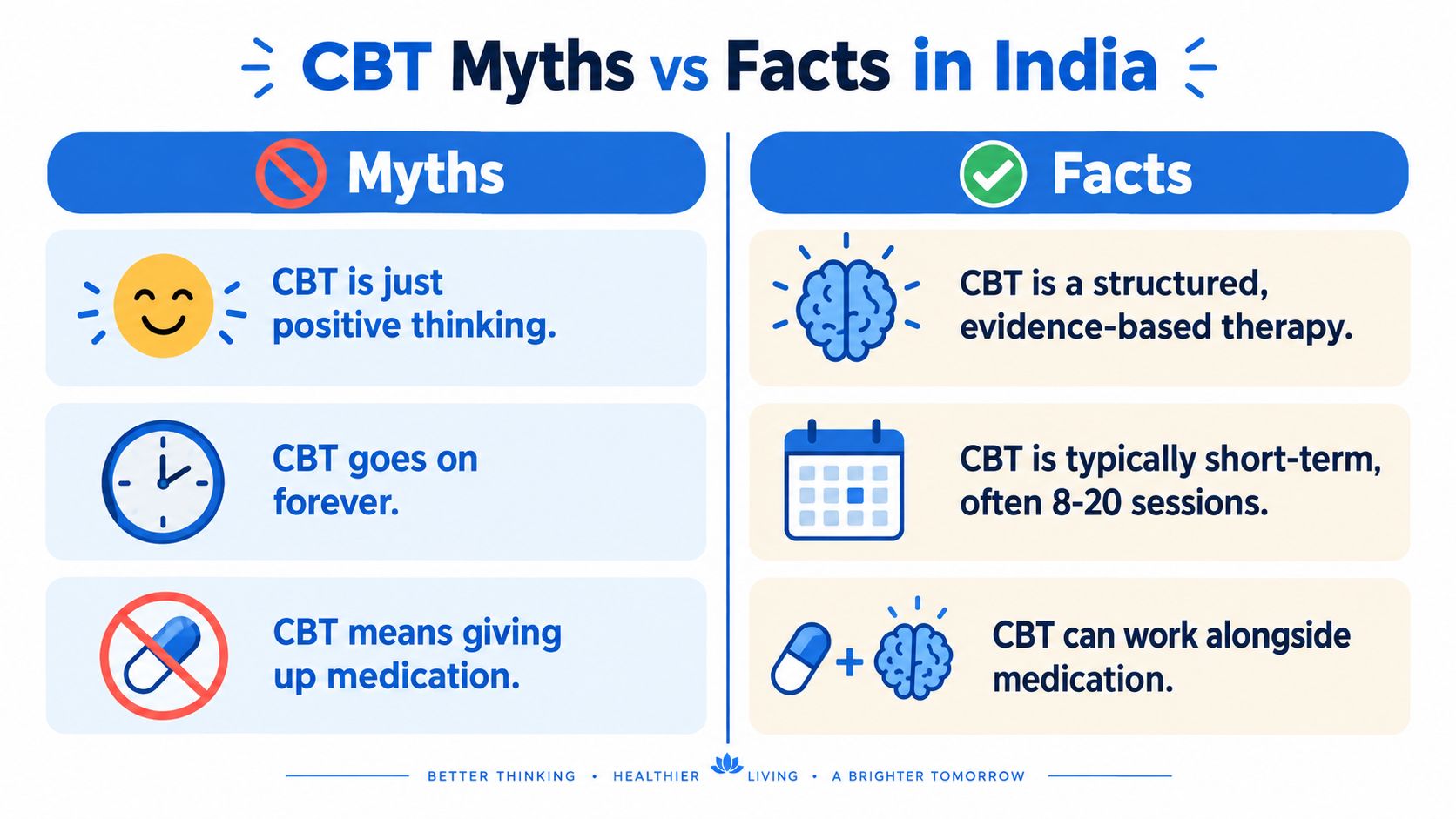
    If your mind keeps jumping to “I’m going to fail,” structured thought work can help. Indian clinical trials show a 65 to 75% reduction in anxiety scores after eight sessions of cognitive restructuring, a CBT method that challenges catastrophic thinking related to work or exams. In daily life, that can sound like replacing “If I don’t do perfectly, everything is ruined” with “This matters, but one test does not define my whole future.”

    If you’re a working professional near burnout

    Professionals often try to solve anxiety by becoming more efficient. Sometimes that helps. Often the underlying problem is that you’re operating in permanent threat mode.

    One client pattern I see often is this. The person has meetings all day, eats quickly, never really stops, then wonders why evenings feel flat or explosive. The fix is not always bigger productivity systems. It may be smaller transitions.

    Try this workday reset:

    Moment What to do
    Before work Decide the top one to three outcomes for the day
    Midday Step away from the screen for a brief body reset
    After one stressful interaction Write down facts, fears, and your next action separately
    End of day Make a short closure note so your brain doesn’t keep rehearsing tasks at night

    This is also where therapy can help with patterns like perfectionism, people-pleasing, and fear-driven overwork.

    If you’re a parent holding too much

    Parents often feel guilty for needing space. They tell themselves everyone else comes first, then end up depleted, reactive, and resentful. That isn’t selfishness. It’s overload.

    Your coping plan may need to be shorter and kinder than the plans you imagine. Five quiet minutes after school drop-off. A regular handover with a partner or family member. Lowering non-essential standards during a stressful week. Asking, “What needs doing today?” instead of “How do I do everything?”

    The goal is not to become endlessly available. The goal is to stay emotionally present without running yourself empty.

    If you’re supporting a partner through stress or anxiety

    Couples often get stuck in one of two roles. One person becomes the fixer. The other becomes the one who feels watched, corrected, or misunderstood. Neither role creates closeness.

    Try a simple communication shift:

    • Ask, “Do you want comfort, practical help, or just company?”
    • Reflect back what you heard before offering advice.
    • Agree on one calming routine you can do together, such as a short walk or quiet tea break.
    • Don’t force disclosure in the middle of high distress.

    If conflict keeps circling the same issues, couples counselling can help create safer ways to talk without blame.

    If focus problems add to your anxiety

    Sometimes the distress is not only emotional. It’s also practical. The pile of unfinished tasks keeps growing, and that itself becomes a trigger. In those cases, external supports matter.

    Use visible task lists, timers, body-based breaks, and one clear starting action. If things still feel tangled, a mental health assessment can offer useful insight into what patterns may be contributing. It’s important to remember that assessments are informational, not diagnostic. They can guide you toward the right kind of support rather than replace professional evaluation.

    For people who want a structured way to explore support options, DeTalks offers therapist discovery and science-backed assessments that can help individuals understand stress, anxiety, resilience, and related concerns in a more organised way.

    When to Seek Professional Help

    Many people wait too long to seek help because they think therapy is only for a crisis. It isn’t. Counselling is often most useful when you can still function somewhat, but doing so is taking too much effort.

    A clear sign is disruption. If anxiety, stress, burnout, or low mood keeps interfering with sleep, work, studies, relationships, appetite, concentration, or your sense of self, support is worth considering. If you’ve tried self-help repeatedly and you keep ending up in the same place, that matters too.

    There’s also a wider treatment gap. Data from the South India Mental Health Survey indicates that only 9.5% of individuals with common mental disorders sought any form of care. That means many people are carrying anxiety and depression alone for far longer than they need to.

    What therapy and counselling can actually help with

    Therapy is not just talking about feelings in the abstract. Good therapy helps you notice patterns, understand triggers, build healthier responses, and make practical changes.

    It can help with:

    • Persistent anxiety that keeps circling the same fears
    • Workplace stress and burnout that doesn’t improve with rest alone
    • Relationship conflict where stress is affecting how you speak and connect
    • Low mood or depression that leaves you flat, hopeless, or withdrawn
    • Family pressure, grief, shame, or identity struggles that feel difficult to carry by yourself

    If you’re unsure whether you need a therapist, counsellor, or psychiatrist, reading broad perspectives can help. These holistic mental health insights offer a useful overview of when different kinds of support may fit.

    What often stops people

    In India and elsewhere, people commonly worry about privacy, cost, stigma, and whether family members will understand. They may also fear being judged or told they are overreacting.

    Those worries are real. But they don’t have to make the decision for you.

    A few grounding truths help:

    Concern A more balanced view
    “I should handle this myself.” Support is a skill, not a weakness.
    “Therapy means something is seriously wrong.” Therapy can be preventive and growth-oriented too.
    “What if I can’t explain myself well?” A trained professional helps you make sense of it gradually.
    “I’m not bad enough yet.” You don’t need to be at breaking point to deserve care.

    Seeking help is not giving up. It’s choosing not to keep carrying avoidable pain alone.

    A good first session doesn’t require perfect words. It only requires honesty. You can say, “I’ve been feeling on edge for weeks,” or “I’m coping on the outside, but it’s getting harder,” or “I don’t know what’s wrong, but I know I’m not okay.” That is enough to begin.

    Your Path Forward Is a Journey of Small Steps

    Coping with anxiety and stress rarely happens through one breakthrough moment. It usually happens through small, steady choices. A slower breath. A kinder thought. A clearer boundary. A conversation you stop postponing.

    You don’t need to master everything at once. Start with what feels possible today. Use the tools that truly help, let go of the ones that don’t, and remember that support is part of well-being, not separate from it. Resilience grows this way. Subtly, consistently, and with compassion.


    If you’d like a structured next step, DeTalks offers access to mental health professionals along with informational assessments that can help you better understand what you’re experiencing. These tools aren’t diagnostic, but they can be a useful starting point for exploring therapy, counselling, and other forms of support with more clarity.

  • A Guide to Situational Anxiety and ICD-10 in India

    A Guide to Situational Anxiety and ICD-10 in India

    Feeling intense fear in specific situations is a common human experience. It's not a constant worry, but a powerful reaction tied to certain triggers, like public speaking or flying. In the medical world, this is often classified using the situational anxiety ICD 10 code, specifically F40.24 (Situational Type Phobia). This code helps professionals communicate clearly to provide the best support for your well-being.

    Understanding Situational Anxiety and Its Classification

    Image

    It’s one thing to feel nervous before a big meeting, but situational anxiety is much more intense. It’s an overwhelming wave of fear linked to a particular circumstance. You might feel calm most days, but the thought of getting into a crowded lift or crossing a high bridge can trigger powerful physical and emotional responses.

    This is a recognized mental health challenge, not a personal flaw. Its key feature is predictability; unlike general anxiety that can feel vague, situational anxiety is focused on specific triggers. This focus makes it easier to identify and manage with the right therapy and counselling.

    The Role of ICD-10 in Your Well-being Journey

    So, what is the International Classification of Diseases, 10th Revision (ICD-10)? Think of it as a universal health dictionary used by doctors and therapists everywhere, from Delhi to New York. This system ensures everyone speaks the same language about health conditions.

    Using this system is an important first step on your path to feeling better. It ensures your experience is understood correctly and helps you access the right kind of support, from effective therapy to potential insurance coverage for your treatment.

    Why a Specific Code Matters

    Having a precise code like F40.24 for situational phobias is more than just paperwork. It makes a real-world difference in your care.

    • Clarity in Assessment: It helps your therapist understand the exact nature of your anxiety, distinguishing it from other conditions like generalised anxiety or depression.
    • Tailored Support Plans: A clear assessment allows professionals to create a support plan that addresses your specific triggers, often using proven methods like therapy.
    • Access to Resources: This formal classification validates your experience and opens doors to professional mental health services and resources designed for your needs.

    In India, anxiety disorders are quite common, and understanding the situational anxiety ICD 10 classification helps shape how your challenges are understood and managed. For more clinical details, you can explore information about ICD-10 codes for specific phobias.

    How Clinicians Use ICD-10 Codes for Anxiety

    An ICD-10 code is like a universal shorthand in healthcare, ensuring every professional involved in your care is on the same page. In India's healthcare system, these codes are practical tools that bring clarity to your mental health journey.

    When a professional uses a code like F40.24 for situational anxiety, it helps them create a personalized support plan and points toward the most effective therapy or counselling. This connects your personal experience to a recognized framework, paving the way for targeted and helpful support.

    A Framework for Understanding and Support

    The code for situational anxiety belongs to a larger family of classifications. For instance, the F40 category covers phobic disorders, while F41 is for other anxiety disorders. Knowing this helps you and your therapist see the bigger picture of your mental well-being.

    This system helps demystify medical jargon, showing that these codes are simply tools designed to bring order to the process. Their purpose is to connect you with the support you need, whether for managing workplace stress or building emotional resilience.

    The International Classification of Diseases, 10th Edition (ICD-10) system plays an essential role in understanding anxiety in India, facilitating uniform documentation and policy-making. This framework supports care and helps measure therapeutic outcomes, especially for providers focusing on situational anxiety.

    To help you get a clearer picture, here's a look at some of the common codes related to anxiety.

    Common ICD 10 Codes Related to Anxiety

    This table breaks down key ICD-10 codes to help you understand the classification system. Remember, this is for informational purposes and not a substitute for a professional diagnosis.

    ICD 10 Code Diagnosis Common Examples or Triggers
    F40.00 Agoraphobia without panic disorder Fear of public transport, open spaces, or being in a crowd
    F40.10 Social phobia, unspecified Intense fear of social situations, public speaking, or being judged
    F40.248 Other specific phobia Fear of specific situations like flying, heights, or enclosed spaces
    F41.1 Generalised anxiety disorder Persistent and excessive worry about various things (work, health)
    F41.9 Anxiety disorder, unspecified Symptoms of anxiety that don't fit into a more specific category

    Understanding these codes shows how specific an assessment can be, which is crucial for getting the right kind of help.

    From Assessment to a Path Forward

    The real value of ICD-10 coding lies in its precision. To use a code, clinicians must document the specific situations that cause anxiety, like a fear of flying, and note the severity of your symptoms. This detail ensures your care is matched to your unique needs.

    As mental health awareness grows in India, standardized coding helps healthcare systems track trends and refine treatments for conditions like anxiety and depression. It's important to remember that these assessments are informational tools, not permanent labels. They are the start of a supportive journey toward building resilience and finding balance.

    Recognising the Symptoms of Situational Anxiety

    Image

    Let's talk about what situational anxiety actually feels like. Spotting the signs in your mind and body is the first step toward building resilience and finding the right support. This is about gently recognizing patterns with self-compassion, not labeling yourself.

    These feelings are valid responses to overwhelming situations. Acknowledging them is important because they are often your mind's way of suggesting it might be time to look into counselling or therapy.

    Physical Sensations: When Your Body Goes on High Alert

    Often, the first sign of situational anxiety is physical. You might notice your heart pounding, hands trembling, or a tightness in your chest that makes it hard to breathe. This happens when a specific trigger puts your body on high alert.

    Some people feel dizzy or lightheaded, while others experience a churning stomach. These are not random; they are your body's natural alarm system reacting to a perceived threat, even if that threat is a crowded metro in Mumbai or a looming deadline. This is a common human reaction, not a sign of weakness.

    Emotional and Mental Signs: The Internal Storm

    Beyond the physical feelings, situational anxiety can create an emotional storm. You might be hit with a sudden wave of dread or a sense of doom. Your thoughts may start racing, focusing on worst-case scenarios and making it hard to concentrate.

    This mental whirlwind can be draining and contribute to long-term workplace stress and even burnout. It's normal to feel irritable or overwhelmed, which can impact your overall well-being and happiness.

    A key feature is "anticipatory anxiety," where fear begins long before the event. Just thinking about an upcoming flight or presentation can trigger a strong reaction, trapping you in a cycle of worry.

    Behavioural Changes: The Powerful Urge to Escape

    One of the most telling signs is a change in your behavior. Situational anxiety creates an intense urge to avoid the triggering situation. If you fear public speaking, you might turn down a promotion to avoid presentations.

    While avoidance offers temporary relief, it can strengthen the anxiety over time, limiting your personal and professional life. Recognizing this instinct is a huge step. With professional guidance, you can learn healthier ways to manage anxiety and depression without putting your life on hold. These observations are a starting point for self-awareness, not a diagnosis.

    Situational Anxiety vs Other Anxiety Disorders

    Understanding your feelings is the first step toward managing them. While many experiences fall under the umbrella of "anxiety," different types function in unique ways. Knowing the difference is key to finding the right path forward, whether through self-help or professional therapy.

    Situational anxiety is linked to a specific, identifiable trigger. In contrast, Generalised Anxiety Disorder (GAD) is more like a constant, low-level worry about many different things, making it difficult to relax.

    Pinpointing the Core Differences

    The core difference between these conditions lies in the source of the worry and how long it lasts. This clarity is very helpful when speaking with a professional, as it guides them toward the most effective counselling for your needs.

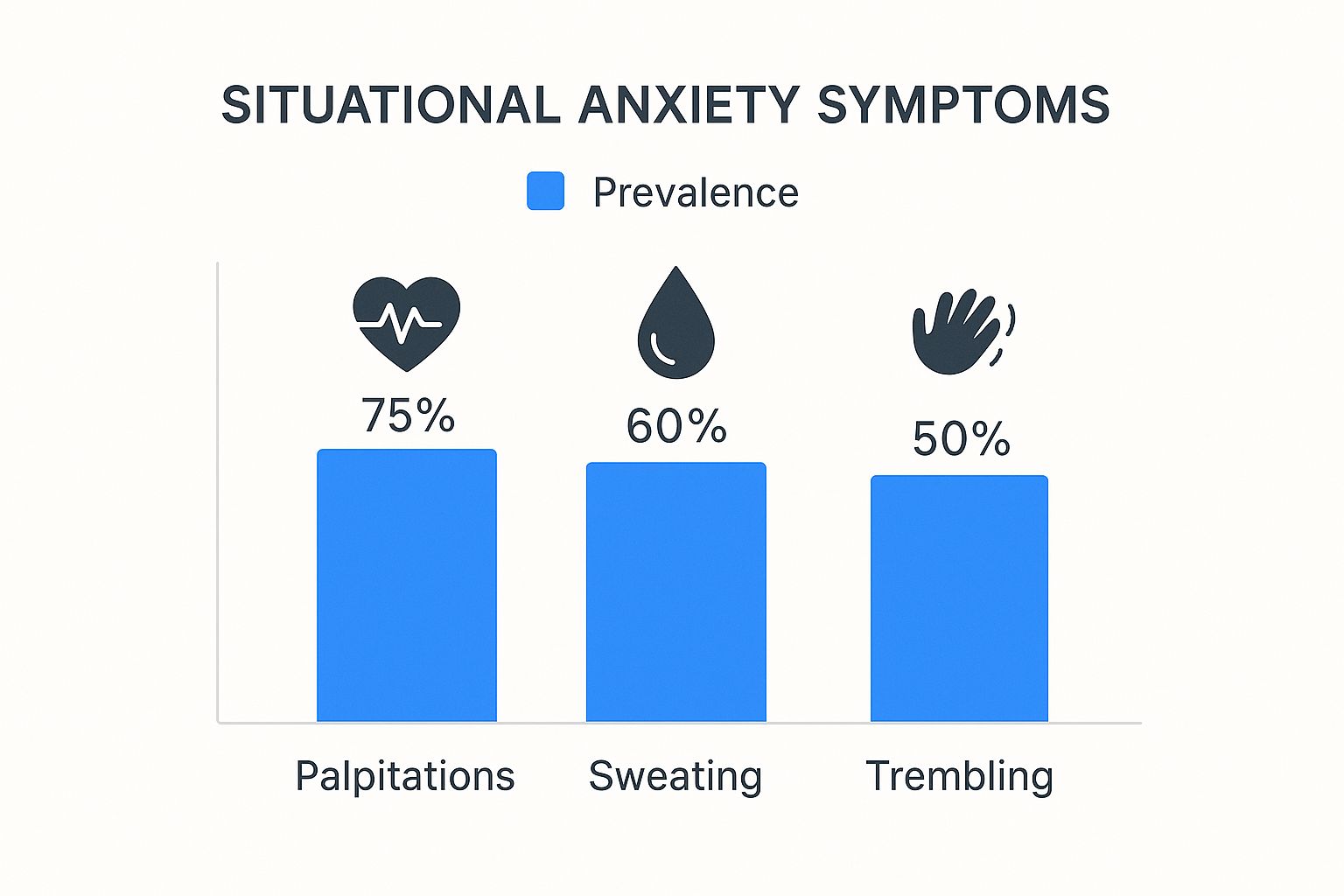
    This infographic shows how common certain physical symptoms are when situational anxiety hits, highlighting the intense bodily reaction to a trigger.

    Image

    As you can see, heart palpitations are a very common response. This reminds us how powerfully our minds and bodies are connected when we face a feared situation and how these triggers can affect our physical well-being.

    Situational Anxiety vs Other Anxiety Types

    This table can help clarify the differences between these conditions. Remember, this is an informational guide, not a substitute for a professional assessment.

    Feature Situational Anxiety (Specific Phobia) Generalised Anxiety Disorder (GAD) Social Anxiety Disorder
    Primary Fear A specific object or situation (e.g., flying, heights, enclosed spaces). Persistent, excessive worry about multiple things (e.g., health, work, family). Fear of being judged, scrutinised, or embarrassed in social situations.
    Trigger Direct exposure or anticipation of the specific trigger. Chronic and often free-floating; not tied to one specific thing. Social or performance-based situations (e.g., meetings, parties, eating in public).
    Duration of Worry Intense but generally limited to the time around the trigger. Occurs more days than not for at least six months. Persistent fear related to upcoming social events or interactions.
    Main Focus Avoiding the phobic trigger to prevent intense fear and panic. Managing uncontrollable worry and its physical symptoms, like fatigue. Avoiding social situations to escape judgement and embarrassment.

    Recognizing these distinctions can be empowering. It helps you name what you're feeling and describe it more accurately, whether you're navigating workplace stress, feelings of depression, or a specific fear.

    Building Resilience to Manage Anxiety

    Understanding situational anxiety is a great first step; the journey is about building your inner strength. Think of resilience as a muscle that gets stronger with practice. It helps you navigate life's challenges, including intense anxiety, with more balance and self-compassion.

    By equipping yourself with practical strategies, you can begin to manage the emotional and physical toll of anxiety. These tools can empower you to face triggers with more confidence and improve your overall well-being.

    Practical Strategies for Building Inner Strength

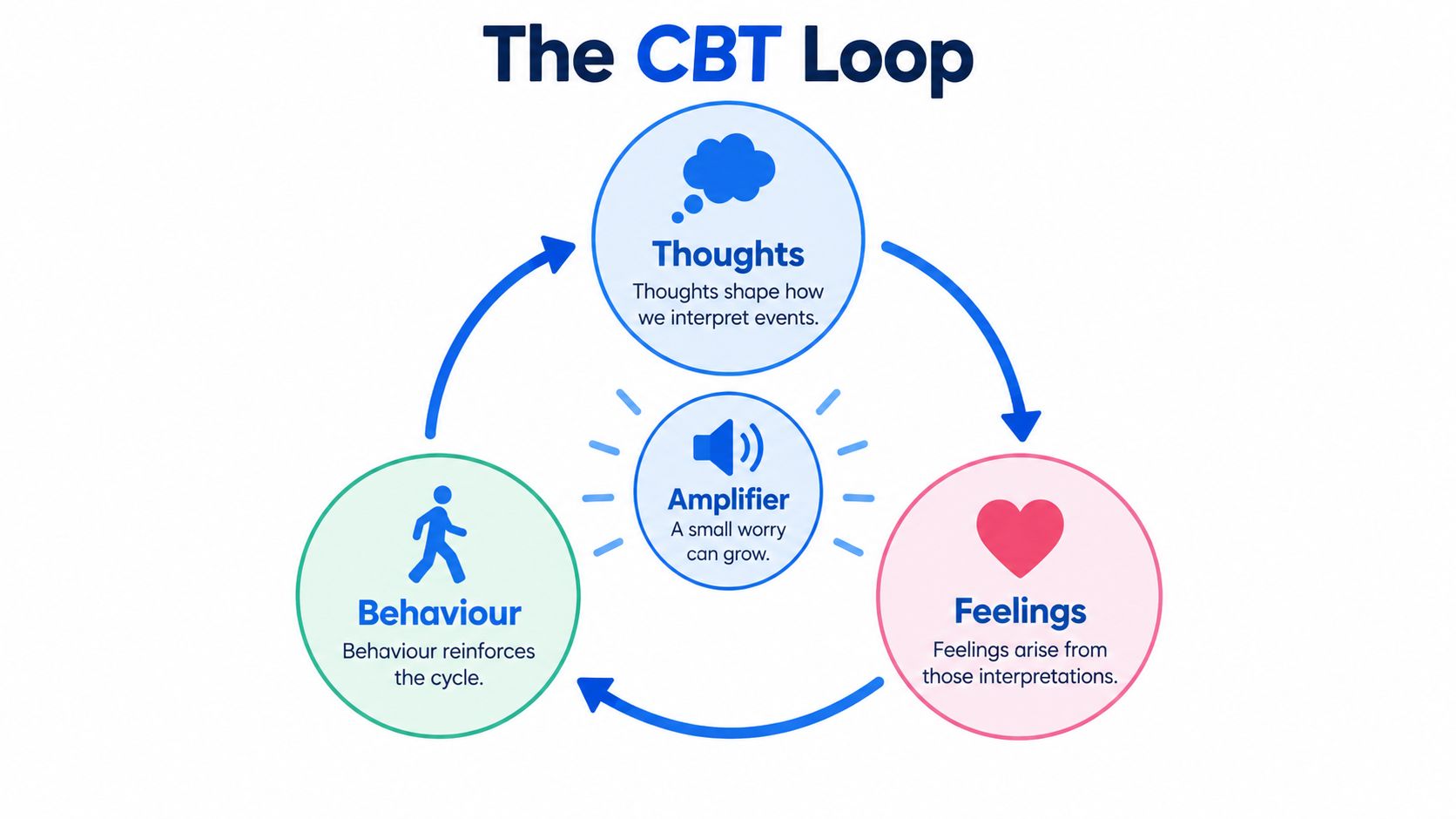
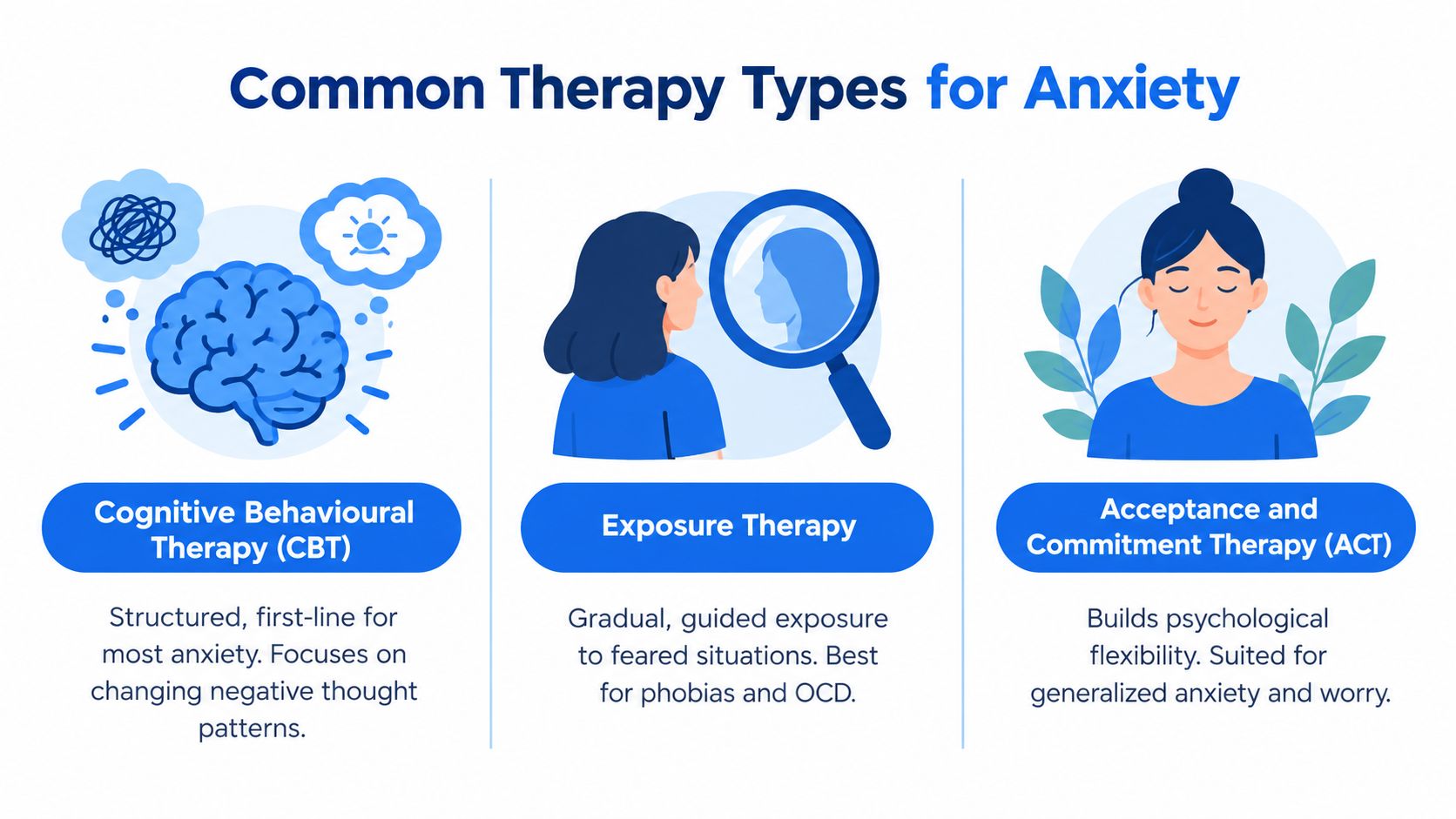
    One of the most effective tools is Cognitive Behavioural Therapy (CBT). This type of therapy helps you identify and reframe negative thought patterns that fuel anxiety. A therapist can also guide you through exposure therapy, where you gradually face your triggers in a safe, controlled way to build confidence.

    Mindfulness and deep-breathing exercises are also wonderful for calming your nervous system in the moment. Simple techniques can ground you, slow your heart rate, and bring a sense of calm. These practices are also great for managing chronic workplace stress and preventing burnout.

    "The greatest weapon against stress is our ability to choose one thought over another." – William James

    This quote captures the essence of building resilience. We can't always control external events, but we can learn to manage our responses. If you’re looking for more ways to support your journey, you might find it helpful to explore some therapeutic activities for mental health that can help nurture your mind.

    Your Path to Greater Well-Being

    Creating a personal toolkit for managing anxiety is about self-discovery and kindness. It involves finding what works for you and weaving small, positive habits into your daily life.

    • Mindful Moments: Start with just five minutes of mindfulness meditation each day to train your focus and quiet your mind.
    • Physical Movement: Regular exercise, even a short walk, is a proven way to reduce symptoms of both anxiety and depression.
    • Professional Support: Working with a counselling professional provides a safe space to explore your fears and develop coping strategies tailored to you.

    Remember that any online tools or assessments are for informational purposes only and are not a substitute for a professional diagnosis. The goal is to provide supportive takeaways that empower you to handle life's stressors and build a happier, more resilient life.

    Final Thoughts on Your Path Forward

    Image

    As we conclude, let's focus on the supportive steps you can take from here. By seeking to understand your anxiety, you've already taken a courageous step toward self-care.

    Reaching out for help is a sign of strength. Using tools like the situational anxiety ICD 10 code helps professionals provide the right support and clear the way for effective therapy.

    Embracing Your Unique Journey

    Your mental health journey is unique. Some days will be easier than others, and that is completely normal. The goal isn't a "cure," but the steady process of building resilience and self-awareness.

    Think of professional counselling as a safe space to explore your feelings and learn practical ways to cope with workplace stress, anxiety, and depression. A therapist can act as an experienced guide on your path.

    Managing anxiety is a journey, not a destination. Every step you take, no matter how small it feels, is a win. You're building a more balanced, fulfilling life, and your commitment to yourself is the most powerful tool you have.

    Gentle Reminders for the Road Ahead

    Treat yourself with the same kindness you would offer a friend. Acknowledge your progress and be patient with yourself during difficult moments.

    • You're not alone: Millions of people experience anxiety. Knowing this can reduce feelings of isolation that often accompany the struggle.
    • Support is available: Professional help is more accessible than ever. Platforms like DeTalks connect you with skilled therapists who understand.
    • Your well-being matters: Prioritizing your mental health is essential for being present in all areas of your life, from work to relationships.

    We hope you feel more informed, empowered, and a little less alone. With a clearer understanding of situational anxiety, you are better equipped to find the right support and move toward a life with more peace and happiness.

    Frequently Asked Questions

    It's natural to have questions as you navigate your mental health. Here are answers to some common queries about situational anxiety to provide more clarity on your journey to well-being.

    Is Situational Anxiety a Recognised Medical Condition?

    Yes, it is. While we may call it "situational anxiety" in daily conversation, the medical community formally classifies it within the situational anxiety ICD 10 framework. In this system, it is typically categorized as a specific phobia.

    This recognition validates your experience and is understood by doctors and therapists in India and globally. It also opens the door to effective support, such as targeted therapy and counselling, to help you manage your specific triggers.

    How Do I Know if I Need Therapy for My Anxiety?

    This is a personal question, but a good guideline is to consider its impact on your life. Is anxiety stopping you from doing things you enjoy or holding you back from professional or social opportunities?

    If you feel you are constantly battling distress from workplace stress or fear, professional support can make a significant difference. Counselling offers a confidential, non-judgmental space to explore these feelings and build resilience with practical coping strategies for anxiety or feelings of depression. Reaching out is a powerful step toward taking back control.

    Can Situational Anxiety Get Better?

    Yes, absolutely. With the right support, people can learn to manage situational anxiety and reduce its impact on their lives. There is every reason to be hopeful.

    Therapies like Cognitive Behavioural Therapy (CBT) have proven to be very effective. They help you challenge the thoughts that fuel fear, allowing you to gradually and safely face situations you once avoided. The goal is to build your confidence and skills so that anxiety no longer controls your life, empowering you to live more fully.


    At DeTalks, we can connect you with experienced professionals ready to support you on this journey. If you're ready to take the next step, you can explore our network of therapists today.