Tag: therapy for bipolar

  • Care Plan for Bipolar Disorder: A Practical Roadmap

    Care Plan for Bipolar Disorder: A Practical Roadmap

    You may be trying to keep work, family responsibilities, sleep, appointments, and changing moods organised at the same time. On a difficult week, even simple decisions, such as whom to call or whether a missed dose matters, can feel overwhelming. A practical care plan for bipolar disorder brings those decisions into one clear, compassionate routine.

    A useful plan includes clinical treatment, therapy, counselling, sleep protection, family support, workplace adjustments, relapse monitoring, and small habits that strengthen well-being. It should support safety without reducing a person to a diagnosis, and it should remain flexible as life changes.

    Why a Written Care Plan Changes the Journey

    Consider someone who has returned to work after a depressive episode. They're sleeping irregularly, answering fewer messages, and noticing that deadlines feel unusually threatening. Their psychiatrist is monitoring medication, their therapist is helping with anxiety, and a family member is trying to offer support, but nobody has written down what each person should do when warning signs appear.

    A written plan turns scattered advice into a shared roadmap. It can record the person's early signs, preferred contacts, medication questions, sleep goals, therapy priorities, and steps for urgent support. During a stable week, the person can review it calmly. During a difficult week, the plan reduces the need to make every decision from scratch.

    Long-term care, not crisis-only care

    Bipolar disorder generally needs more than treatment during a manic or depressive episode. Indian clinical guidance frames care around psychoeducation, treatment of the current episode, maintenance treatment, and social, educational, and economic rehabilitation. It recommends maintenance treatment for at least 2 years after the last episode, with decisions decided by a qualified psychiatrist. Indian clinical guidance on bipolar affective disorder

    That long-term view matters because a person may feel better before their wider life has recovered. Sleep may remain fragile, relationships may need repair, medication side effects may require attention, and workplace stress may continue. A care plan gives these areas a place beside symptom treatment.

    Practical rule: Write down who does what, when they do it, and what change should trigger a review.

    Access also shapes the plan. India's National Mental Health Survey 2015–2016 estimated a 70.4% treatment gap for bipolar affective disorder, meaning roughly 7 in 10 people who needed care weren't receiving adequate treatment. India's National Mental Health Survey findings A realistic plan therefore considers affordability, travel, stigma, availability of trained professionals, and family responsibilities, not only clinical recommendations.

    An assessment can provide useful information, but it doesn't establish a diagnosis by itself. A qualified professional diagnoses bipolar disorder, evaluates risk, and makes treatment decisions. The person receiving care should still co-own the plan, ask questions, and say when an approach isn't workable.

    Starting With Assessment, Not a Diagnosis

    A strong care plan begins with a careful clinical assessment. The purpose isn't to attach a label quickly. It's to understand patterns over time, separate overlapping concerns, identify safety risks, and choose support that fits the person's health and circumstances.
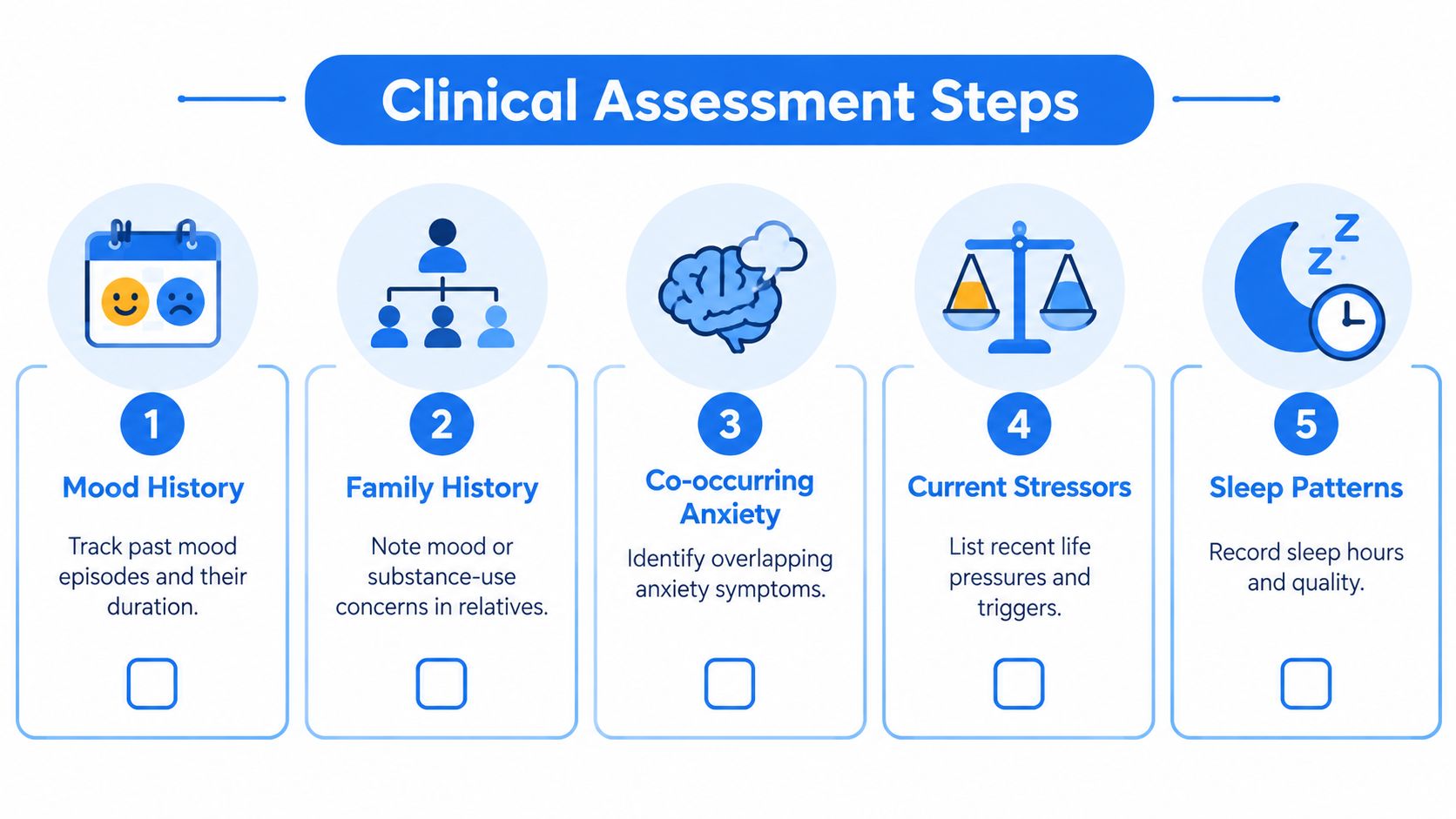
    A flowchart showing five clinical assessment steps for evaluating a patient's mental health and wellbeing.

    What a clinician usually explores

    Bring a simple record of mood, sleep, energy, medication use, major stressors, and changes in functioning. A trusted person may add helpful observations, if you consent. The clinician may explore:

    • Mood history: Past periods of unusually high energy, reduced need for sleep, impulsive decisions, irritability, depression, or mixed symptoms.
    • Family history: Mood disorders, substance-use concerns, suicide risk, and relevant medical conditions among relatives.
    • Overlapping concerns: Anxiety, depression, substance use, trauma, physical illness, medication effects, and workplace stress.
    • Current pressures: Relationship conflict, exams, grief, financial strain, workplace demands, harassment, or disrupted routines.
    • Sleep patterns: Hours slept, changes in sleep need, night-time activity, and whether sleep loss comes before mood changes.

    Clinicians may use structured tools such as the Young Mania Rating Scale and depression rating scales to document symptoms. Physical checks can include weight, blood pressure, pulse, electrocardiography, blood tests, glucose, lipids, kidney function, and liver function, depending on the person's presentation and medication needs.

    What online assessments can and cannot do

    An online screening tool can help you describe what you've been experiencing and decide what kind of support to seek. It can't confirm bipolar disorder, distinguish it reliably from every other condition, or determine which medication is safe. DeTalks assessments, like other online assessments, are informational, not diagnostic.

    India's Clinical Practice Guidelines for Bipolar Affective Disorder recommend structured clinical assessment rather than relying on a single online score. They also note that medication trials generally need at least 4–6 weeks, and around 8 weeks for lithium, before effectiveness is judged. India's Clinical Practice Guidelines for Bipolar Affective Disorder

    At a first appointment, ask what the working diagnosis is, what risks need monitoring, how follow-up will work, and what changes require urgent contact. Thorough assessment protects the later parts of the plan because medication, therapy, lifestyle support, and crisis arrangements should respond to the same understanding of the person's needs.

    Building the Four Pillars of Daily Care

    A useful weekly rhythm doesn't treat medication, therapy, routine, and relationships as competing choices. Each pillar supports the others, while different professionals and trusted people take responsibility for different parts.
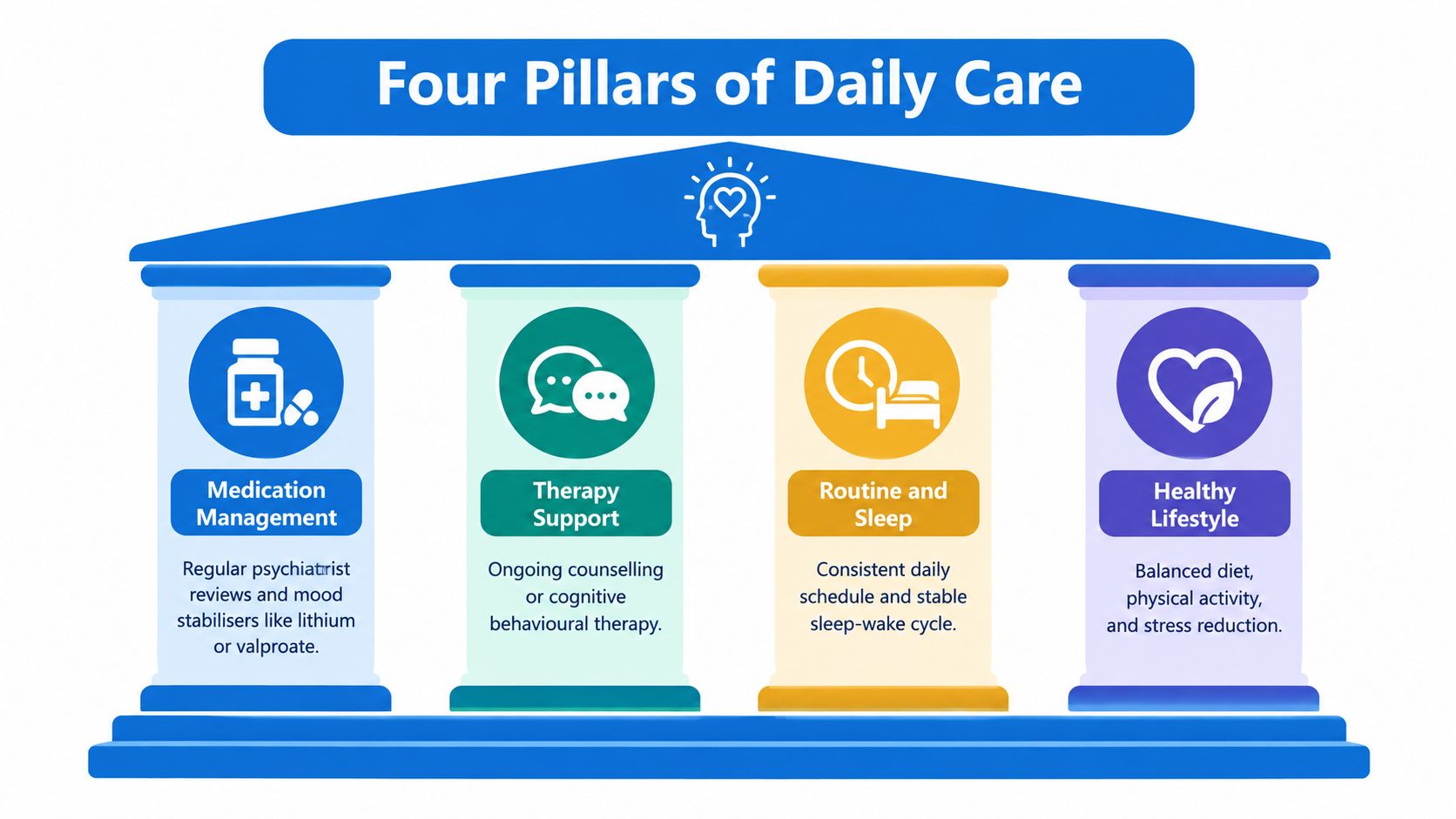
    A diagram illustrating the four pillars of daily care for managing bipolar disorder, including medication, therapy, routine, and lifestyle.

    Medication management

    A psychiatrist selects and reviews medication according to the person's mood pattern, previous response, physical health, pregnancy potential, side-effect risks, and ability to complete monitoring. Mood stabilisers such as lithium, valproate, or carbamazepine, and antipsychotic medication, may be considered for mania or maintenance. Some medicines require serum-level monitoring and other laboratory checks.

    Antidepressants used for moderate or severe bipolar depression generally need to be combined with a mood stabiliser and monitored for a switch into mania. Never start, stop, or alter medication without the prescribing psychiatrist.

    Therapy and counselling

    Therapy can help a person understand warning signs, manage difficult thoughts, rebuild routines, and address anxiety, depression, relationships, or workplace stress. Cognitive behavioural therapy, family-focused therapy, and psychoeducation may form part of care, depending on the person's needs.

    A weekly therapy session might review the mood diary, one stressful situation, one coping skill, and one practical goal. Counselling can also help family members respond without criticism and communicate concerns clearly.

    Sleep and routine

    Sleep deserves a visible place in the plan. Keep wake and sleep times as steady as possible, protect time for meals and medication, and discuss emerging sleep loss early. A sudden reduction in the need for sleep, especially with rising energy or impulsivity, should prompt contact with the clinical team rather than a self-directed change.

    Social and family support

    With consent, identify who can notice changes, attend an appointment, help organise medication questions, or provide transport during a difficult period. Family involvement shouldn't remove the person's voice or privacy. It should make agreed support easier to use.

    A simple diary can connect the four pillars:

    • Daily: Record mood, energy, sleep, medication taken, substance use, and one meaningful activity.
    • Weekly: Review patterns with a therapist or trusted person and identify one adjustment.
    • At psychiatric reviews: Discuss symptoms, side effects, functioning, physical health, and any change in risk.

    This approach keeps the care plan practical. It turns broad advice into small actions that fit ordinary days.

    Relapse Prevention and Adherence in Real Life

    Relapse prevention works best when it names the person's own early changes. One person may notice sleeping less and speaking faster. Another may withdraw, stop replying to messages, miss medication, or struggle to get out of bed. The important question is not whether a sign is dramatic. It's whether it represents a meaningful change from that person's usual pattern.

    Write each warning sign beside a specific response. For example, “two nights of sharply reduced sleep” might lead to a call to the psychiatrist, reduced evening stimulation, and a message to a trusted family member. “Feeling unsafe or unable to control risky decisions” requires urgent professional support, not private monitoring.

    Adherence is a shared problem

    An Indian study of 160 remitted patients found 60.6% adherence to medication. Family accompaniment to psychiatric visits and positive medication-related attitudes predicted better lithium adherence. Indian research on clinical aspects of bipolar disorder

    That finding challenges the idea that missed medication reflects a simple lack of motivation. Sedation, weight change, tremor, cognitive complaints, cost, travel, fear, stigma, contraception, pregnancy, breastfeeding, dehydration, alcohol, and other medicines can all affect decisions. Tell the psychiatrist what's happening rather than stopping treatment abruptly.

    Frequency What to record Why it matters
    Daily Sleep, mood, energy, medication, substance use, and major stress Shows patterns before they become crises
    Weekly Missed doses, side effects, workload, relationships, and functioning Creates a focused agenda for therapy or family review
    At each clinical review Mood state, sleep, suicidality, psychosis, adherence, physical health, and medication concerns Helps the psychiatrist make safe, individualised decisions
    When circumstances change Pregnancy plans, contraception, breastfeeding, travel, new medicines, or major stress Allows timely advice about safety and monitoring

    Digital reminders, calendars, pill organisers, or SMS support can make routines easier. They should complement psychiatric review and shared decision-making, not replace them. For people supporting a relative, a practical scheduling resource such as see how Tribulys helps may help organise shared responsibilities, appointment reminders, and agreed check-ins.

    A written relapse worksheet can include the person's early signs, the action linked to each sign, the people to contact, and the point at which emergency care becomes necessary. The plan becomes more useful when everyone understands it before a crisis begins.

    A Crisis Plan You Write Before You Need It

    An everyday care plan helps maintain stability. A crisis plan answers a different question: what should happen when safety or judgement changes quickly? Write it while the person is well enough to make choices and discuss it with the psychiatrist, therapist, and trusted supporters.
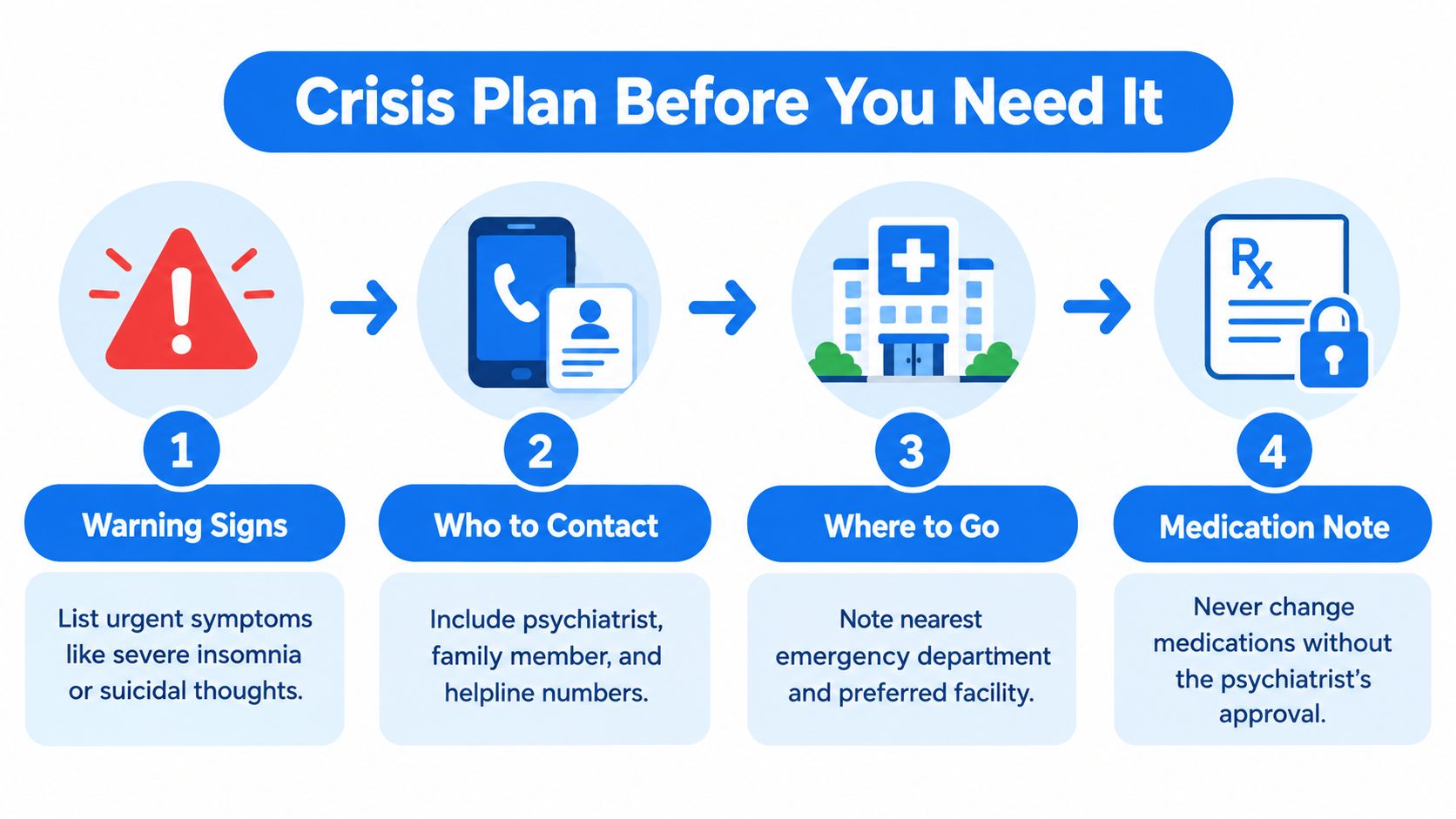
    A four-step infographic illustrating a crisis plan including warning signs, contacts, facility locations, and medication notes.

    Include four practical parts:

    1. Warning signs: List severe insomnia, suicidal thoughts, psychosis, extreme agitation, dangerous impulsivity, inability to care for basic needs, or severely impaired judgement.
    2. People to contact: Add the psychiatrist, therapist, trusted family member, and agreed helpline contacts. Keep consent and privacy clear.
    3. Places to go: Record the nearest emergency department, preferred hospital, transport options, and who can accompany the person.
    4. Medication notes: List current medicines, doses, allergies, important physical conditions, and the instruction never to change medication without psychiatric advice.

    Suicidal risk, psychosis, severe mania, and impaired judgement require professional crisis care. Don't rely on self-assessment, online information, or a family argument to manage those situations. If there's immediate danger, contact local emergency services or go to the nearest emergency department.

    A small printed summary can help when concentration is poor. Keep a copy with the person and, with consent, with a trusted supporter. The multisite Indian population study that identified a 70.4% treatment gap for current bipolar affective disorder also reported gaps of 80% in metropolitan urban areas and 60% in rural areas, making clear local escalation routes especially important. Multisite Indian study on bipolar treatment gaps

    At work, the person may choose to tell HR, an occupational-health professional, or a team leader only what's needed to request an adjustment. That might involve protected appointment time, a quieter workspace, planned breaks, or temporary workload changes without disclosing a diagnosis. The choice belongs to the person unless safety laws or immediate risk create different obligations.

    Adding Positive Psychology Without Pressure

    Well-being belongs in the care plan, but it shouldn't become another demand to perform happiness. A person living with bipolar disorder may need clinical treatment, medication review, therapy, and crisis planning while also building purpose, connection, resilience, and self-compassion.

    A smiling woman sitting in an armchair writing in a notebook next to house plants

    Indian research has reported positive associations between gratitude, self-compassion, flourishing, and life satisfaction. Research on positive psychology in India Those ideas can become small practices rather than grand promises:

    • Notice one manageable success: Reply to one message, attend an appointment, or take a short walk.
    • Use kinder self-talk: Replace “I've failed again” with “I'm having a difficult period and I'm taking the next safe step.”
    • Record gratitude carefully: Write one thing that felt supportive without pretending that pain isn't present.
    • Protect meaningful connection: Schedule time with someone who listens without judgement.
    • Name a value: Choose an action linked to family, learning, creativity, faith, service, or independence.

    Positive psychology should never mask warning signs of mania or minimise depression. Pressure to feel grateful can increase guilt when someone is unwell, while intense goal-setting can become unhelpful during rising energy. Assessments of happiness, resilience, or compassion are informational, not diagnostic.

    A weekly rhythm might pair a therapy appointment with one strengths-based activity and one recovery activity. The aim isn't constant happiness. It's a broader life in which treatment, relationships, rest, meaning, and self-understanding can grow together.

    Reviewing the Plan and Finding the Right Support

    A care plan stays useful when it changes with the person's life. At follow-up, the clinical team can review mood state, sleep, suicidality, psychosis, substance use, adherence, adverse effects, functioning, and co-occurring medical conditions. A new job, exam season, pregnancy plan, grief, relationship change, or shift in housing may require different supports.

    The person might keep a short review page with three prompts:

    • What helped: Which routines, therapy skills, people, or practical adjustments made the week safer?
    • What changed: Were there shifts in sleep, mood, energy, anxiety, depression, concentration, or impulsivity?
    • What needs attention: Is there a medication question, family concern, workplace problem, substance-use issue, or urgent risk?

    A psychiatrist remains responsible for diagnosis and prescribing. A therapist or counsellor may support emotional regulation, psychoeducation, relationships, and workplace stress. Depending on the situation, the wider team may include reproductive psychiatry, addiction services, occupational health, peer support, or a medical specialist.

    Some people also use administrative support to reduce missed appointments and improve communication. Resources such as Virtual Assistants for Mental Health can be considered alongside, not instead of, qualified mental-health care.

    For people in India, DeTalks offers access to psychologists, therapists, and psychiatrists, along with confidential assessments and curated self-help content. Its assessments can help someone organise questions and identify possible support pathways, but they don't replace professional diagnosis or crisis care.

    A steady week may look ordinary: taking prescribed medication, protecting sleep, attending therapy, checking in with a trusted person, and noticing a change early. Those actions don't promise a cure, but they can support earlier help-seeking, resilience, self-understanding, and a more manageable daily life.


    If you're looking for a care plan for bipolar disorder, DeTalks can help you find psychologists, therapists, and psychiatric support across India, explore confidential assessments, and access curated self-help resources. Visit DeTalks to take one practical next step towards steadier routines, informed care, and lasting well-being.


  • Rapid Cycling Bipolar Affective Disorder

    Rapid Cycling Bipolar Affective Disorder

    Rapid cycling affects approximately 6% of Indian patients with bipolar disorder and means experiencing four or more mood episodes in a single year. It describes the frequency of episodes, not a person's character, effort, or worth.

    You may be reading this after a confusing week. Perhaps a family member seemed unusually energetic, slept very little, and made sudden plans, then became withdrawn, anxious, and unable to work. Perhaps you've been trying to decide whether these changes are ordinary stress, burnout, depression, or something that needs psychiatric care.

    Rapid cycling bipolar affective disorder can make daily life feel unpredictable, but the pattern can be understood. With careful assessment, appropriate treatment, practical support, and compassion, people can develop greater stability and protect their relationships, work, and well-being. Any assessment or screening tool mentioned here is informational, not diagnostic. Only a qualified psychiatrist or mental health professional can evaluate your history and diagnosis.

    Understanding Rapid Mood Swings in Daily Life

    A person might start a week feeling unusually driven. They answer messages late into the night, begin several projects, speak quickly, and feel certain that every idea will succeed. A few days later, the energy has disappeared. Getting out of bed becomes difficult, ordinary decisions feel exhausting, and family members hear, “I don't know what happened to me.”

    A woman sits dreamily on her bed while a man stands in the doorway holding two coffee mugs.

    For relatives, the change can be just as unsettling. They may wonder whether the person is choosing to be distant, careless, or difficult. The person experiencing the shifts may feel ashamed, frightened, or frustrated because each state can seem to erase the confidence and plans of the previous one.

    Why the pattern feels so disruptive

    Mood episodes can affect sleep, concentration, speech, spending, relationships, appetite, and work performance. Workplace stress may intensify the strain, while anxiety about another change in mood can make rest even harder. Depression can bring hopelessness and isolation, while high-energy states may create conflict through impulsive decisions or unusually strong reactions.

    Rapid cycling doesn't mean that every change in emotion is a new episode. People naturally feel happy, sad, irritated, or tired. Clinicians look for distinct periods of mania, hypomania, depression, or mixed symptoms that meet clinical criteria and form a recurring pattern over time.

    A helpful perspective: The behaviour may be a sign of a mood episode, not a moral failure. Understanding that distinction can reduce blame and make supportive conversations safer.

    Families in India may also face hesitation about psychiatric care, concerns about social judgement, or pressure to explain symptoms only through family conflict, work pressure, or personal weakness. These factors deserve respect, but they shouldn't prevent medical evaluation. The clinical framework gives the person and family a shared language for what they're observing.

    People often show resilience even during severe disruption. They continue caring for children, attending work, managing household responsibilities, or seeking answers despite exhaustion. Recognising that effort doesn't minimise the difficulty. It helps create a more compassionate starting point for therapy, counselling, medical care, and recovery planning.

    Diagnostic Criteria and Clinical Definition

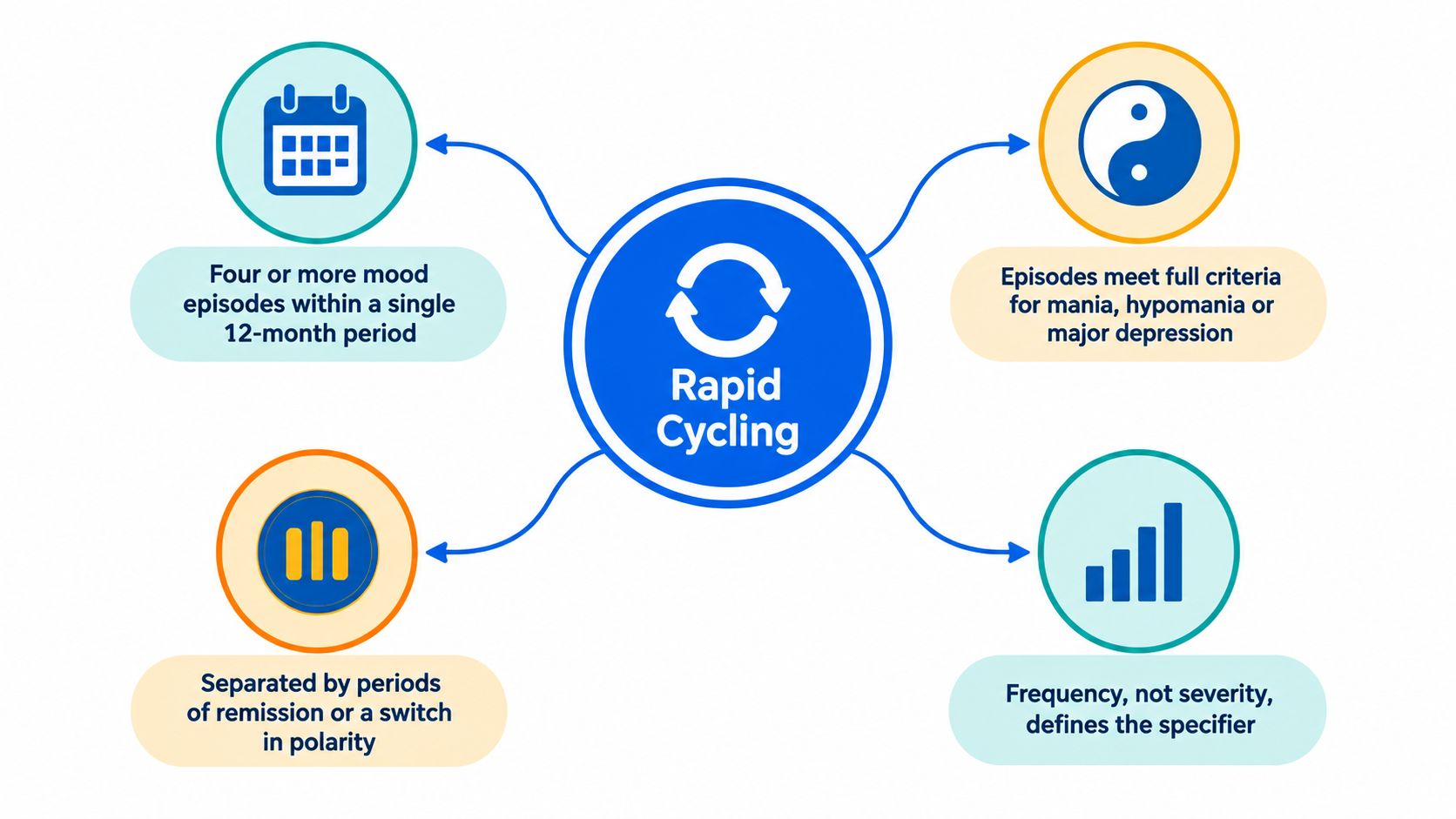
    Rapid cycling is a course pattern within bipolar disorder, not a separate type of bipolar disorder. Indian clinical guidance defines rapid cycling affective disorder as four or more depressive, manic, hypomanic, or mixed episodes in one year, with episodes separated by at least two months of remission or a switch in polarity. This definition helps clinicians distinguish separate episodes from ordinary daily mood variation.

    The key word is frequency. A person may have different combinations of high and low mood episodes, but the pattern must be assessed carefully. A period of low mood that briefly improves and then worsens may still be one episode rather than several distinct episodes.

    A diagram illustrating the clinical criteria and definitions for rapid cycling in bipolar affective disorder.

    What clinicians review

    A psychiatrist may ask about:

    • Mood states: Periods of depression, mania, hypomania, or mixed symptoms.
    • Episode boundaries: Whether there was remission or a clear switch in polarity between episodes.
    • Sleep and functioning: Changes in the need for sleep, activity, concentration, judgement, and daily responsibilities.
    • Treatment history: Medicines, antidepressant use, therapy, hospital care, and periods without treatment.
    • Medical and substance factors: Thyroid problems, alcohol or drug use, prescribed medicines, and other health conditions.

    A mood diary can help capture patterns that memory misses. Record sleep, energy, mood, medication changes, major stressors, substance use, and notable changes in activity. Family observations can be valuable, especially when high mood feels pleasant and the person doesn't recognise it as a warning sign.

    Informational knowledge is not diagnosis

    The four-episode threshold is not a self-diagnosis test. It doesn't establish bipolar disorder on its own, and it doesn't tell you whether a current crisis is mania, depression, anxiety, substance-related, or medically driven. A qualified professional needs to review the complete history, including the timing and impact of symptoms.

    India-based evidence also shows why the pattern can be missed. The BiD-CoIN study covered 773 patients and reported that about 6% had rapid cycling over their lifetime, while Indian survey data placed bipolar disorder lifetime prevalence at 0.5% and current prevalence at 0.3%. You can read the findings in the India-based Bipolar Disorder Course and Outcome study.

    Differentiating from Other Bipolar Presentations

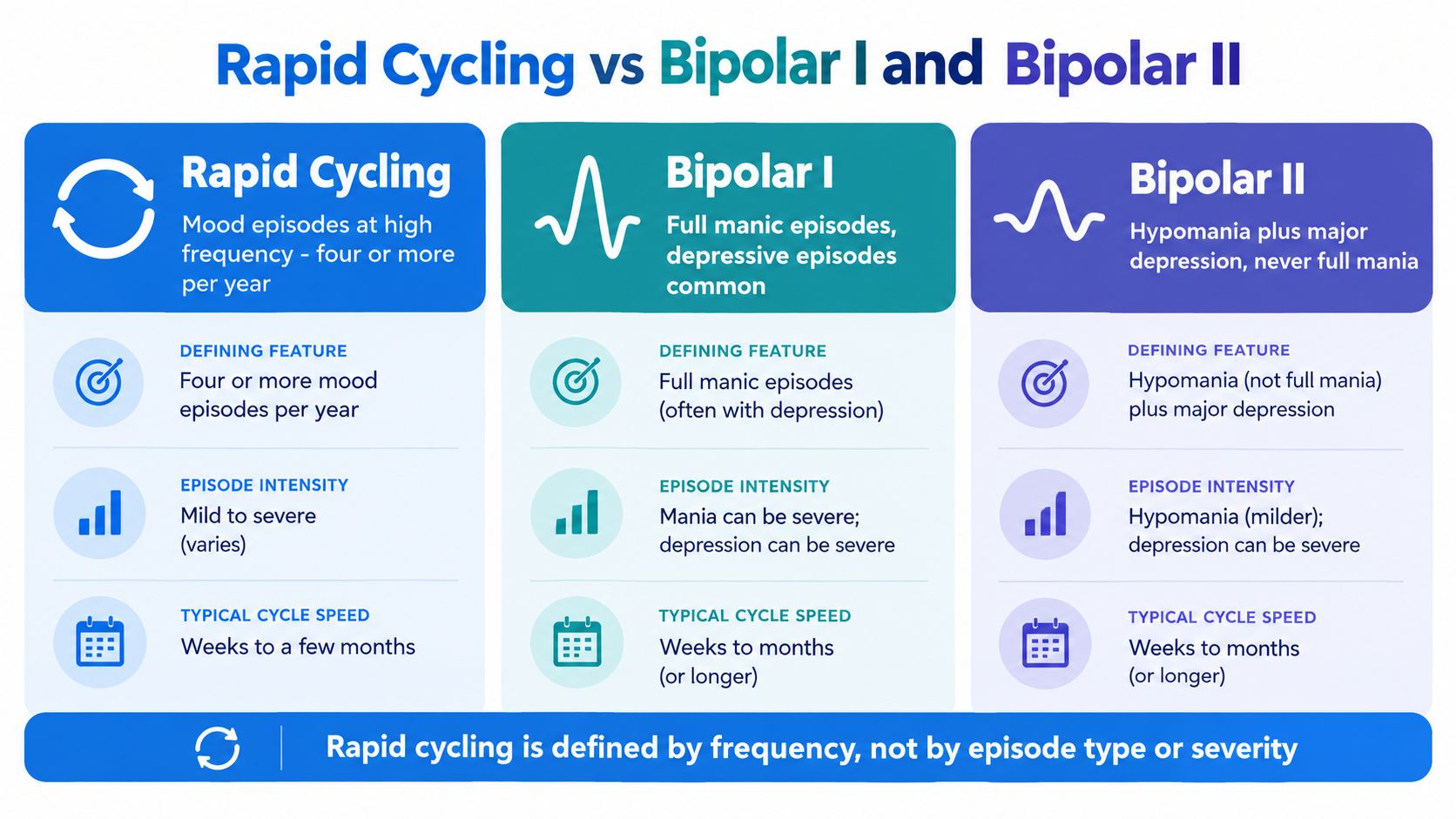
    Bipolar I, bipolar II, and rapid cycling describe different aspects of illness. Bipolar I and bipolar II refer mainly to the types of high mood episodes a person has experienced, while rapid cycling describes how often distinct episodes occur.

    Bipolar I includes at least one full manic episode. Mania can severely affect judgement, activity, sleep, speech, relationships, or safety, and may require urgent care. Depressive episodes are also common, but their presence isn't what defines bipolar I.

    Bipolar II involves hypomania and major depression, without a history of full mania. Hypomania can look like productive energy or unusually positive mood, so relatives may notice the change before the person sees it as a concern.

    A comparison chart explaining the differences between rapid cycling, Bipolar I, and Bipolar II mood disorders.

    Frequency is the defining feature

    Rapid cycling can occur in bipolar I or bipolar II. It doesn't mean that a person changes mood several times in one day, and it doesn't mean that every strong emotion represents a new episode. The clinician looks for distinct episodes that satisfy the relevant criteria and occur at the required frequency.

    Presentation Main question
    Bipolar I Has there been a full manic episode?
    Bipolar II Has there been hypomania with major depression, without full mania?
    Rapid cycling Have distinct mood episodes occurred at high frequency?

    A mixed presentation can be especially confusing. Someone may feel agitated and full of energy while also experiencing despair, guilt, or thoughts of death. That combination deserves prompt professional attention because outward activity can hide serious emotional pain.

    The pattern may also be mistaken for unipolar depression when low mood dominates. Indian reviews describe a comparatively lower rate of rapid cycling, more mania-predominant courses, and later onset than Western cohorts. This difference doesn't determine an individual's diagnosis, but it supports an India-first assessment that doesn't just copy assumptions from online Western content. The Indian review of rapid cycling and bipolar presentations provides further context.

    If someone has sudden, severe changes in sleep, judgement, energy, or mood, a clinical review is more useful than trying to assign a label at home. Seek urgent help if there is immediate danger, suicidal thinking, severe confusion, or behaviour that puts the person or others at risk.

    Causes and Triggers in the Indian Context

    Rapid cycling usually has more than one influence. Biology, sleep, stress, medicines, substance use, and access to care can interact, so blaming one event or one family member rarely helps.

    Indian clinical guidance specifically recommends checking for hypothyroidism and substance misuse, because these factors can contribute to cycling or make mood symptoms harder to control. A doctor may also review other medical conditions, current medicines, recent antidepressant changes, alcohol, cannabis, stimulants, and non-prescribed substances.

    Start with a medical and medication review

    Ask a psychiatrist or physician about:

    1. Thyroid evaluation: Discuss symptoms such as persistent fatigue, changes in weight, feeling unusually cold or restless, and changes in energy. Testing should be guided by a clinician.
    2. Substance-use screening: Share information about alcohol, cannabis, stimulants, sedatives, and other substances honestly. Confidential disclosure helps the clinician plan safer care.
    3. Medication history: Don't stop or restart psychiatric medicines without medical advice. Indian guidance recommends gradual antidepressant discontinuation when discontinuation is clinically appropriate.
    4. Episode records: Bring a timeline of mood, sleep, treatment, and major life changes to appointments.

    Workplace stress, family conflict, financial pressure, and irregular routines can amplify vulnerability. Night shifts, long commutes, exam pressure, caregiving, and stigma may make regular sleep and appointments difficult. These pressures don't cause every episode, but they can make early warning signs harder to notice.

    Build a protective routine

    Choose practical changes that fit your life:

    • Protect sleep: Keep a consistent sleep and waking pattern where possible.
    • Notice early signs: Track reduced sleep, racing thoughts, unusual confidence, withdrawal, or loss of interest.
    • Reduce avoidable strain: Plan breaks during intense work periods and ask for help before burnout becomes overwhelming.
    • Create a support plan: Decide which trusted person can notice changes and help contact the treatment team.
    • Strengthen resilience: Use breathing practice, mindfulness, movement, supportive relationships, and meaningful activities as complements to medical care.

    Resilience doesn't mean tolerating unlimited stress. It means building enough support, compassion, and flexibility to respond earlier and recover from setbacks with less isolation.

    Treatment Options and Management Strategies

    Treatment for rapid cycling bipolar affective disorder usually combines medical care, psychological support, and daily structure. The plan depends on the person's episode pattern, physical health, current medicines, safety, pregnancy-related considerations where relevant, substance use, and treatment response.

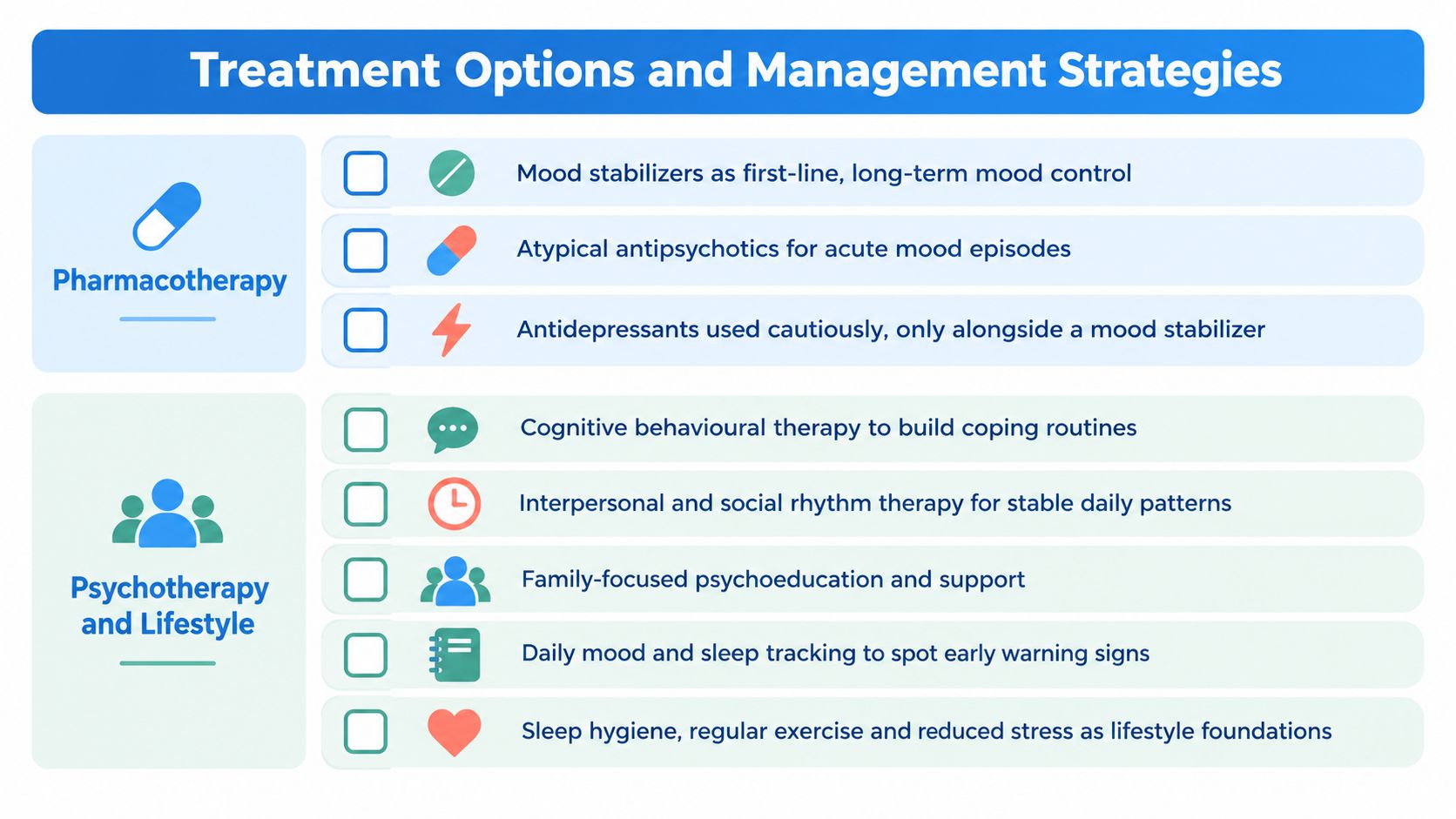
    Indian guidance recommends looking for modifiable drivers, gradually discontinuing antidepressants when appropriate, and using maintenance treatment that may combine a mood stabiliser with an antipsychotic. Medicines must be selected and monitored by a psychiatrist. Never change doses abruptly or use another person's prescription.

    A chart illustrating medication, psychotherapy, and lifestyle management strategies for treating rapid cycling bipolar affective disorder.

    Medication and monitoring

    Mood stabilisers can support long-term mood control. Antipsychotic medicines may be used for acute symptoms or maintenance, including when psychosis isn't present. Antidepressants require particular caution because, in some people with bipolar illness, they may worsen cycling or contribute to manic states. Any decision about their use or discontinuation belongs with the treating psychiatrist.

    Monitoring may include discussions about sleep, energy, suicidal thoughts, side effects, adherence, thyroid health, and substance use. A family member can help notice changes, but the person receiving care should remain involved in decisions whenever safely possible.

    Therapy and daily rhythm

    Therapy doesn't replace psychiatric care, but it can make the overall plan more workable. Cognitive behavioural therapy can help identify unhelpful thoughts and create coping routines. Interpersonal and social rhythm therapy focuses on regular daily patterns, while family-focused psychoeducation helps relatives recognise warning signs and communicate without blame.

    A useful management plan might include:

    • Mood tracking: Note mood, sleep, medicines, stress, and early warning signs.
    • Structured days: Keep meals, work, rest, and activity as regular as circumstances allow.
    • Workplace adjustments: Discuss predictable schedules, quieter tasks, planned leave, or a gradual return with appropriate professionals and workplace contacts.
    • Stress regulation: Use mindfulness, gentle exercise, relaxation, and supportive counselling.
    • Safety planning: Write down emergency contacts, warning signs, preferred services, and steps to take during a crisis.

    Therapy and counselling can also address grief, anxiety, depression, relationship strain, and the loss of confidence that may follow an episode. DeTalks offers therapist discovery, booking, informational assessments, and educational resources for people exploring mental health support in India.

    Building Resilience and Workplace Well-being

    A stable routine is a clinical tool, but it's also a way to protect ordinary happiness. People living with bipolar disorder deserve more than symptom monitoring. They deserve friendships, creativity, rest, purpose, compassion, and opportunities to enjoy life without treating every positive feeling as dangerous.

    Workplace stress can blur the line between a demanding period and an emerging mood episode. A practical plan might include a consistent sleep schedule, limits on late-night work, regular meals, brief pauses between tasks, and one trusted colleague or family member who knows how to respond if functioning changes.

    Strength without self-blame

    Resilience grows through repeated, manageable actions. It may involve attending therapy, accepting help with household tasks, keeping a mood diary, or learning to say, “I need support before this becomes a crisis.” These choices show responsibility, not weakness.

    Compassion matters in both directions. Families can ask what support would help instead of arguing about whether symptoms are real. Individuals can review difficult decisions without defining themselves by them. A counsellor can help with communication, anxiety, burnout, workplace boundaries, and relationship repair.

    Positive psychology doesn't ask anyone to feel grateful while suffering. It offers tools for identifying values, building meaningful routines, noticing moments of happiness, and developing self-esteem alongside treatment. Professional counselling can support growth during stable periods, not only during emergencies.

    A sustainable goal: Aim for earlier recognition, safer choices, and a life that contains more than illness management.

    If sleep decreases sharply, energy rises unusually, or depression deepens, contact the treatment team early. Early communication can protect well-being and reduce the pressure on the person and family to manage everything alone.

    Supportive Takeaways for Your Journey

    Rapid cycling is a recognised pattern of frequent mood episodes within bipolar disorder. The Indian clinical threshold is four or more episodes in one year, separated by remission or a switch in polarity, but only a qualified professional can determine whether that pattern applies to you.

    India's National Mental Health Survey reported bipolar disorder lifetime prevalence of 0.5% and current prevalence of 0.3%, with severe mental disorders, including bipolar affective disorder, seen more often in males and urban metro areas. The National Mental Health Survey findings help place individual experiences within a wider public health context.

    A rural Karnataka community study directly evaluated 27 patients and found that 4 patients, or 15%, had experienced rapid cycling at some time. It also reported that 7 patients, or 26%, had received no treatment, and rapid cycling was significantly more common among untreated patients, with an odds ratio of 14.25 and a 95% confidence interval of 1.16 to 174.8, with p=0.038. The community study from rural Karnataka highlights why treatment access and medical review matter, while also reminding us that a small community sample shouldn't be generalised to every person in India.

    Keep a record of mood and sleep, arrange a professional assessment, and involve a trusted person if you notice major changes. Assessments are informational, not diagnostic, and supportive care may include psychiatry, therapy, counselling, family education, workplace planning, and attention to physical health.

    You don't have to understand every mood change before asking for help. Seeking care is an act of resilience, and stability can be built through informed decisions, compassion, consistent support, and ongoing attention to well-being.


    If rapid mood changes, anxiety, depression, workplace stress, or family concerns are affecting your life, DeTalks can help you explore qualified therapists and counsellors, informational assessments, and bipolar-focused mental health resources. Visit DeTalks to take a practical first step towards personalised support for you or someone you care about.

  • Is Bipolar Genetic? Science & Family Guide

    Is Bipolar Genetic? Science & Family Guide

    A parent has just been diagnosed. Or maybe your brother has started treatment, and now your mind keeps circling the same question late at night. Is bipolar genetic, and what does that mean for me or my children?

    That question often carries fear, guilt, and confusion all at once. In many Indian families, mental health conversations still happen discreetly, if they happen at all, so people are left searching online while trying to stay calm for everyone else.

    The good news is that this question has a thoughtful answer. Genetics matter, but they aren't the whole story, and understanding that can reduce anxiety rather than increase it.

    A Question Many Families Ask

    Many families first ask about heredity after a difficult few months. Someone has had intense mood changes, sleep has gone off track, work or study has suffered, and then a psychiatrist mentions bipolar disorder. What follows is often not just concern for that person, but worry about siblings, children, marriage, and the future.

    In India, these concerns can be layered with family expectations, workplace stress, and the pressure to keep going even when emotional strain is building. People may also confuse bipolar disorder with ordinary ups and downs, or mix it up with anxiety and depression, which makes the situation feel even more overwhelming.

    According to the National Mental Health Survey findings discussed in this Indian review, the lifetime prevalence of bipolar affective disorder in India was 0.5%. That may sound small, but it still represents a very large number of individuals and families living with questions about therapy, counselling, and daily well-being.

    When the question feels personal

    A daughter may wonder, “If my father has it, will I get it too?” A spouse may ask, “Did stress bring this on?” A young adult may privately fear that every bad week means something serious is starting.

    A reassuring truth: asking about family risk is sensible. It doesn't mean you're overreacting, and it doesn't mean the answer will be frightening.

    If you want a broader overview of symptoms and age-related differences, these comprehensive bipolar disorder insights can help place genetics in a wider clinical context.

    What families usually get wrong

    A few misunderstandings are very common:

    • “If it runs in families, it must be inevitable.” It isn't.
    • “If there isn't one clear family history, it can't be bipolar.” That isn't true either.
    • “Genetics means there is one faulty gene.” The science is much more complex.
    • “If I'm worried, I should take an online test and get a final answer.” Assessments can be useful for insight, but they're informational, not diagnostic.

    That last point matters. A screening tool may help you notice patterns in mood, sleep, stress, burnout, or resilience, but diagnosis should come from a qualified mental health professional who considers the full picture.

    The Strong Link Between Genes and Bipolar Disorder

    The short answer is yes. Bipolar disorder has a strong genetic component.

    Researchers use the word heritability to describe how much of the risk for a condition is linked to genetic differences across people. A simple way to think about it is a recipe. Genes are some of the ingredients, but they aren't the finished meal on their own.

    An infographic titled Understanding Genetic Influence on Bipolar Disorder, illustrating heritability, comparative risk statistics, and environmental interaction.

    What heritability really means

    Based on research summarised by the Paris Brain Institute, genetic factors account for 60% to 85% of the risk for bipolar disorder. That makes it one of the most heritable of all mental health conditions.

    That number can sound alarming at first, so it helps to slow down and translate it. It doesn't mean a person has an 85% chance of developing bipolar disorder. It means genetics explain a large share of why risk differs from one person to another.

    Why family patterns matter

    Families often notice that mental health patterns seem to “run in the bloodline”. That's not just imagination. Twin and family research has shown a strong inherited contribution, which is why doctors ask about parents, siblings, and close relatives during an assessment.

    If one person in a family has bipolar disorder, that can be a clue worth noting. But it is still only a clue, not a prediction, and certainly not a verdict on anyone's future.

    Practical rule: Think of genes as a background vulnerability, not a timetable.

    A lot of confusion eases once people understand that highly heritable doesn't mean guaranteed. The same family can include one person with bipolar disorder, another with anxiety, another with depression, and others with no mental health condition at all.

    A short explainer can also make the science easier to absorb before reading on:

    What this means in day-to-day life

    A strong genetic link should invite awareness, not fear. If your family has a history of bipolar disorder, it may be wise to pay closer attention to mood shifts, major sleep disruption, reactions to prolonged workplace stress, and periods of unusual emotional intensity.

    That kind of awareness can support earlier therapy, counselling, or medical advice if needed. It can also help families respond with compassion rather than blame, which is often the first step towards better well-being.

    Why It Is More Than a Single Bipolar Gene

    Many people hear “genetic” and picture one switch being turned on. That isn't how bipolar disorder works.

    A better image is a cricket team. One player can't win the entire match alone. Many players contribute, each in a different way, and the final result depends on how all those pieces come together.

    The polygenic picture

    Modern research shows that bipolar disorder is polygenic. That means many genes each make a small contribution to risk, rather than one gene acting as the sole cause.

    Large genetic studies have moved far beyond the old idea of a single bipolar gene. According to this report on genomic findings, researchers have identified specific variants such as rs1006737 in the CACNA1C gene, but each variant only slightly increases risk.

    An infographic showing that bipolar disorder is a complex puzzle influenced by genetics, environment, and biology.

    Why this matters for families

    This is one of the most important points in the whole conversation about whether is bipolar genetic. If there isn't a single “bipolar gene,” then finding a family history doesn't mean there is one defective part being passed down in a simple way.

    Instead, risk builds from many small inherited factors, mixed with life experience, physical health, sleep habits, and stress exposure. That's why one sibling may struggle while another doesn't, even in the same home.

    Having a risk-related genetic variant is not the same as having the condition.

    A more useful way to think about genes

    Try this framework:

    • Genes load the background. They can increase susceptibility.
    • Biology shapes sensitivity. Brain systems involved in mood regulation may respond differently across people.
    • Life experiences influence expression. Stress, support, routine, and treatment all matter.

    This is also why genetic science can feel frustrating if you're looking for a simple yes-or-no answer. Families often want certainty. Science offers something more nuanced, but also more humane. It shows that people are not reducible to one gene, one label, or one fear.

    For people in India, this matters in practical terms. Mild or mixed symptoms may be ignored for years because they don't fit a dramatic stereotype. Understanding polygenic risk can help people take smaller changes seriously and seek support earlier, especially when anxiety, depression, sleep problems, or burnout start to cluster together.

    The Crucial Role of Environment and Epigenetics

    Genes are important, but they don't act in isolation. A helpful analogy is this: genes are the blueprint, and environment is the builder. A blueprint matters, but the final structure also depends on conditions on the ground.

    Families often find some relief in this understanding. If bipolar disorder were only about inheritance, there would be little room for action. But real life doesn't work that way.

    Triggers can shape when symptoms appear

    For some people with a genetic vulnerability, certain pressures may increase the chance that symptoms will emerge or worsen. These can include prolonged stress, major life disruption, poor sleep, substance use, and emotionally intense situations.

    In India, that may show up as relentless workplace stress, exam pressure, family conflict, caregiving strain, marital discord, or a long period of untreated anxiety or depression. None of these “cause” bipolar disorder in a simple way, but they can interact with vulnerability.

    What epigenetics means in plain language

    Epigenetics sounds technical, but the basic idea is simple. It refers to processes that influence how genes are expressed. You can think of them as dimmer switches rather than on-off buttons.

    That doesn't mean you can control everything through willpower. It means life experiences can affect how biological vulnerability is expressed over time.

    Supportive routines don't erase genetic risk, but they can make mental health more stable and easier to manage.

    The part families can influence

    Here, prevention and care become meaningful. You may not be able to change inherited risk, but you can support conditions that protect well-being.

    Some examples include:

    • Sleep protection: keeping regular sleep and wake times can help mood stability.
    • Stress reduction: therapy, counselling, boundaries at work, and rest can reduce overload.
    • Early response: getting help when mood, energy, or behaviour changes become noticeable.
    • Compassionate communication: reducing blame and shame inside the family.

    Positive psychology also belongs in this conversation. Resilience, connection, gratitude, and self-awareness don't replace treatment, but they can strengthen recovery and reduce the sense of helplessness that often comes with family mental health concerns.

    If you're using any online questionnaires to track mood or stress, remember that they can offer insight into patterns, but assessments are informational, not diagnostic. A qualified clinician is still the right person to interpret symptoms in context.

    What Genetic Risk Means for Your Family

    Once people understand that bipolar disorder can run in families, the next question is usually more practical. “What does this mean for us, specifically?”

    Context holds greater importance than panic. A raised risk is still not the same as a prediction.

    The number that often reassures families

    According to the Broad Institute summary of bipolar genetic risk, individuals with a first-degree relative, such as a parent or sibling, face a risk of approximately 9% to 10%. The same source notes that this is nearly 10 times higher than the general population, but it also means there is a 90% chance they will not develop the condition.

    That final part is the one many worried families need to hear twice. Increased risk does not mean likely outcome.

    Bipolar disorder risk among relatives

    Relationship to Person with Bipolar Disorder Approximate Lifetime Risk
    First-degree relative such as a parent or sibling 9% to 10%

    How to use this information well

    A family history can be used in a calm, practical way:

    • Notice patterns, not isolated moments. A few stressful days or one bad week don't tell the whole story.
    • Take functioning seriously. Changes in sleep, work, relationships, judgement, or daily routine deserve attention.
    • Seek informed guidance. A psychiatrist, clinical psychologist, or counsellor can help you interpret symptoms more accurately.

    Genetic counselling can also be useful for some families. It isn't a crystal ball, and it isn't a diagnosis. It's an educational conversation about inherited risk, family history, and what current science can and can't tell you.

    Numbers are most helpful when they reduce fear and improve judgement.

    That is especially important when a person already struggles with anxiety. If you know there is family history, use that knowledge to become more observant, more compassionate, and more willing to seek support early. Don't use it to monitor every emotion with dread.

    Finding Support and Building a Resilient Life

    Once the genetics question is clearer, many people feel a little lighter. Not because the issue disappears, but because the path forward becomes more practical.

    What helps most is shifting from “How do I stop this from ever happening?” to “How do I build a life that supports mental health, resilience, and well-being?” That mindset is steadier, kinder, and more realistic.

    A person sitting by a window, thoughtfully writing in a notebook near a DNA helix science poster.

    When to seek help

    It may be time to reach out for professional support if you or a family member notices ongoing changes in mood, sleep, energy, concentration, or behaviour that affect work, studies, or relationships. This is especially true if those changes come in cycles or are beginning to strain daily life.

    Help doesn't only mean crisis care. Therapy and counselling can support people who are dealing with uncertainty, family stress, caregiver fatigue, workplace stress, anxiety, depression, or burnout linked to the fear of inherited risk.

    What supportive care can look like

    Different people need different kinds of support. A helpful plan may include:

    • Therapy for emotional understanding: this can help a person recognise patterns, improve coping, and reduce shame.
    • Counselling for families: loved ones often need space to ask questions and learn how to respond supportively.
    • Lifestyle support: sleep routine, stress management, and substance avoidance can protect well-being.
    • Strength-based work: resilience, compassion, mindfulness, and healthy relationships all matter.

    If you're looking for practical next steps beyond genetics, this guide to mental health support offers a useful overview of how people can approach care in everyday life.

    Why India-specific research matters

    A lot of mental health research has historically underrepresented Asian populations. That gap matters because culture, environment, family structure, and help-seeking behaviour can shape how symptoms are understood and addressed.

    The A-BIG-NET research initiative described by the Broad Institute is analysing DNA from 27,500 patients in Asia, including India. That ongoing work reflects a wider effort to improve understanding and support options in ways that are more relevant across diverse populations.

    Small actions that strengthen resilience

    You don't need to solve everything at once. Start with what is steady and doable.

    1. Track sleep and mood gently
      A simple notebook can help you notice patterns without becoming obsessive.

    2. Reduce silent suffering
      Talk to one trusted person. Secrecy tends to increase fear.

    3. Protect daily rhythm
      Consistent meals, movement, rest, and screen boundaries can help emotional balance.

    4. Choose compassion over blame
      Families do better when they replace “What's wrong with you?” with “What support would help right now?”

    5. Use assessments carefully
      Online tools may provide insight, but they're informational, not diagnostic. Use them as a prompt for reflection or professional consultation, not as a final answer.

    A family history can become a reason to care earlier and more wisely, not a reason to lose hope.

    Living with uncertainty isn't easy. But people and families can still build happiness, stability, and meaning even when there is genetic vulnerability in the background. Knowledge can support wise action. Support can strengthen resilience. And compassionate care can make the road ahead feel far less lonely.


    If you're looking for a practical next step, DeTalks can help you explore therapy, counselling, and informational mental health assessments in one place. Whether you're concerned about bipolar disorder, anxiety, depression, burnout, family conflict, or overall well-being, it offers a simple way to connect with qualified professionals and take a calm, informed step towards greater resilience.