Tag: well-being

  • How to Deal with Exam Anxiety

    How to Deal with Exam Anxiety

    Tackling exam anxiety isn't about finding a single magic solution. It's about combining smart preparation, a healthier mindset, and some practical, in-the-moment calming tricks. The best way to get ahead of it is to start building your resilience long before you see the exam paper.

    This guide will help you create a plan that works for you. You'll learn to challenge nagging negative thoughts and make your well-being a top priority.

    Why Exam Nerves Can Feel So Overwhelming

    Feeling nervous before a big exam is completely normal. In fact, a little bit of that stress can sharpen your focus and push you to prepare properly. But sometimes, that gentle flutter of nerves can grow into something much bigger and more disruptive.

    When pre-test jitters escalate into persistent worry, physical unease, and a loop of negative thoughts, you might be dealing with exam anxiety. This is a specific type of performance anxiety where the pressure feels immense. In today's competitive world, it's a very common experience for students everywhere.

    Recognising the Signs of Exam Anxiety

    The first step to managing exam anxiety is learning to recognise what it looks and feels like. The signs can show up differently for everyone. Usually, it's a mix of physical sensations, racing thoughts, and even changes in how you act.

    These are your body's natural reactions to what it sees as a major threat. Being able to spot these signs without judgment is key for building resilience and finding what helps you stay grounded.

    Symptom Category Common Examples
    Physical Racing heart, sweaty palms, headaches, upset stomach, shallow breathing, muscle tension.
    Cognitive Mind going blank, trouble concentrating, negative self-talk ("I'm going to fail"), racing thoughts.
    Emotional Feeling irritable or on edge, a looming sense of dread, overwhelming frustration, a sudden drop in confidence.
    Behavioural Procrastinating or avoiding studying, trouble sleeping, fidgeting, changes in eating habits.

    Please remember, this table is for informational purposes only and is not a diagnostic tool. Seeing these symptoms can simply help you realise that you're having a legitimate response to stress.

    The Indian Context: A Shared Challenge

    In India, the pressure to perform well in exams is woven into our academic culture. Fierce competition for university spots and top careers creates an environment where the stakes feel sky-high. This naturally increases feelings of stress and anxiety, making it a shared societal challenge.

    This pressure has a real impact on student well-being, with data showing a significant emotional toll. You can discover more insights about these student mental health statistics for a deeper understanding of this complex issue.

    Acknowledging this context helps us remember that these feelings are not a personal failing. They are a valid response to a demanding system, which is the first step toward self-compassion.

    Realising you aren’t alone can be a powerful antidote to the isolation that anxiety often brings. It opens the door to asking for support, whether that means seeking professional counselling or talking with friends. This helps reframe anxiety as a signal that you need more tools and support to protect your well-being.

    Building Your Pre-Exam Resilience Plan

    Organized desk with open planner, laptop, water glass, and fruit bowl in sunlight

    The best way to handle exam anxiety starts long before the test day. It begins by building a strong foundation of resilience that prepares your mind and body for the pressure.

    Think of it like training for a marathon; you wouldn't just show up and hope for the best. Building a solid pre-exam routine creates sustainable habits that boost your confidence and your general well-being.

    Craft a Study Schedule That Works for You

    One of the biggest triggers for exam anxiety is feeling overwhelmed by a mountain of material. A good study plan breaks that mountain into manageable chunks. The secret is to build a schedule that’s realistic for you.

    Schedule your most challenging subjects for when you're sharpest. A great plan isn't just about what you study; it’s about making the process feel achievable.

    Here are a few tips to make your schedule effective:

    • Break it down: Instead of "Study Physics," try "Revise Chapter 3 and solve 10 practice problems." This turns a huge task into a clear goal.
    • Schedule your breaks: Your brain needs downtime. Pencil in short breaks every hour and longer ones for meals to avoid burnout.
    • Be flexible: Life happens. Build some buffer time into your week so an unexpected event won’t derail your entire plan.

    The Power of Lifestyle Habits

    You can’t pour from an empty cup. Simple things like what you eat, how much you sleep, and how often you move have a huge impact on your ability to manage stress. When your body is cared for, your mind is better equipped to handle pressure.

    Consistent sleep is non-negotiable, as it helps with memory and mood, making you less vulnerable to anxiety and even depression. Likewise, a balanced diet provides the steady fuel your brain needs for concentration.

    These aren't just extras; they are the pillars of your resilience plan. Prioritising sleep and nutrition is a powerful act of self-compassion during a stressful time.

    Challenging the Negative Inner Voice

    A huge part of exam anxiety is the stories we tell ourselves, like "You're going to fail." That inner critic can feel incredibly convincing. Learning to challenge these automatic negative thoughts is a game-changing skill for life, especially for managing future workplace stress.

    Start by noticing these thoughts without judgment. When one pops up, ask yourself: Is this thought 100% true? You could reframe "I'm going to fail" to "I've prepared for this, and I'll do my best."

    This technique, called cognitive reframing, is a cornerstone of professional therapy and counselling for anxiety. It puts you back in the driver's seat of your mind, helping you build calm, confidence, and personal happiness.

    Calm Your Mind with In-the-Moment Techniques

    Asian student in school uniform sitting on park bench practicing meditation and breathing exercises

    When your heart races just before an exam, you need practical, fast-acting tools. These techniques are like a mental first-aid kit. The goal isn't to erase anxiety but to get the physical symptoms under control so you can think clearly again.

    Learning to ground yourself pulls you out of a panic spiral. It lets the prepared, rational part of your brain take over.

    The Power of Your Breath

    One of the quickest ways to dial down a spike in anxiety is to focus on your breathing. When we get stressed, our breathing becomes shallow and rapid. By intentionally slowing it down, you send a powerful message of safety to your body.

    A simple and discreet technique is box breathing. You can do it anywhere without anyone noticing.

    Here’s how you do it:

    • Breathe in slowly for a count of four.
    • Gently hold your breath for a count of four.
    • Breathe out slowly for a count of four.
    • Hold again for a count of four.

    Repeat this cycle a few times. This tiny action can make a huge difference in slowing a racing heart and is a core skill for building real-time resilience.

    Ground Yourself with the 5-4-3-2-1 Method

    When anxiety makes your thoughts chaotic, grounding techniques are your anchor. They pull your focus into the physical world. The 5-4-3-2-1 method engages your senses, forcing your brain to concentrate on the here-and-now.

    Pause and silently identify:

    • Five things you can see (a poster, your pen, a crack on the floor).
    • Four things you can feel (your chair, the texture of your clothes).
    • Three things you can hear (distant footsteps, your own breathing).
    • Two things you can smell (the scent of a book, your cup of tea).
    • One thing you can taste (a mint, or just the taste of your own mouth).

    This exercise instantly interrupts the panic cycle. It’s an incredibly practical way to manage that overwhelming feeling.

    Small Comforts for Big Moments

    Sometimes, the simplest sensory comforts can make a real difference. A small, comforting routine can signal to your brain that it’s time to calm down. For example, sipping on a warm, non-caffeinated drink can be incredibly soothing.

    If you're looking for ideas, you could explore various teas that relax body and mind. These little acts of self-care are crucial parts of your well-being toolkit.

    Staying Focused Inside the Exam Room

    Asian student concentrating on exam paper while writing answers in bright classroom setting

    You can prepare for weeks, but panic can still hit you in the exam hall. The ticking clock and rustling papers can be peak moments for exam anxiety. What you do in these critical hours is just as important as your revision.

    The goal is to shift your brain from fear to focus. With a few smart tactics, you can keep your cool and show what you know.

    Your First Five Minutes Matter

    How you start the exam sets the tone. Don't dive into the first question immediately. Take a moment to ground yourself as a strategic move for your well-being and final mark.

    Before you write your name, take three slow, deep breaths to calm your nervous system. Next, quickly scan the whole paper to get a feel for the layout and identify the questions you feel good about.

    Build Momentum Strategically

    We've all experienced "going blank" on the first question, which can trigger a spiral of self-doubt. You can sidestep this trap with a smarter approach.

    Instead of tackling questions in order, find the ones you know you can answer easily. This builds a powerful sense of confidence and quiets that anxious voice. This makes it much easier to face tougher questions with a clear head.

    Think of each easy question as a small victory. This approach transforms the exam from a single obstacle into a series of manageable steps.

    Regain Control with Discreet Grounding

    If panic bubbles up halfway through, you need a quiet way to get back in control. A simple grounding exercise is perfect for this.

    Here’s a quick technique you can do at your desk:

    • Press your feet firmly into the floor and feel the solid ground.
    • Grip your pen tightly for a few seconds, then relax your hand.
    • Focus on your breathing for a moment, just observing the air move in and out.

    These tiny physical acts pull your attention back to the present, short-circuiting the panic cycle. Learning this now will also help you handle future workplace stress with more resilience.

    The Power of Positive Self-Talk

    The conversation in your head during an exam can make or break your performance. Negative thoughts like "I can't do this" fuel anxiety and feelings of depression.

    If you hit a wall, don't panic. Tell yourself, "Okay, I'll circle back to this one," and remind yourself of the work you put in: "I am prepared." This is about giving yourself the same encouragement you'd give a friend.

    To sharpen your performance, you can explore strategies to improve focus while studying. Building a distraction-proof environment is a huge part of dealing with exam anxiety.

    Handling the Aftermath: Post-Exam Stress and Self-Criticism

    The exam might be over, but the anxiety often isn't. The time spent waiting for results can be just as nerve-wracking. It’s easy to get caught in a loop of replaying every answer and second-guessing every choice.

    Learning to manage this post-exam period is a huge part of building lasting resilience. This skill will serve you well beyond academia, especially when dealing with workplace stress.

    Sidestep the "Exam Post-Mortem"

    You know the scene after an exam when everyone dissects every question. While it feels necessary to join in, these conversations often do more harm than good. Hearing someone took a different approach can send you into a spiral of self-doubt over something you can no longer control.

    Politely walk away from these discussions. Your energy is better spent relaxing and recharging. Acknowledge that you did your best in that moment and let it be.

    You cannot control the outcome now, but you can control how you treat yourself while you wait. Choose kindness over criticism as a powerful act of self-care.

    Give Yourself a Bit of Grace

    Our default response to a potential mistake is often to beat ourselves up. But would you ever talk to a friend that way? Treating yourself with the same kindness is a much healthier way to process the experience.

    Self-compassion isn't about making excuses; it's about acknowledging that you tried your best and that exams are difficult. This simple shift can stop anxiety from spiralling into something more serious, like depression.

    Here are a few ways to show yourself compassion:

    • Name the feeling: Simply telling yourself, "It's normal to feel anxious waiting for results," can take away much of its power.
    • Focus on effort, not outcome: Give yourself credit for the hours you put in, regardless of the final mark.
    • Plan a reward: Give yourself something to look forward to, like a movie night or a day out with friends. This shifts your focus from worry to positive anticipation.

    Reframe the Exam: It's a Tool, Not a Verdict

    It’s easy to see an exam as the final word on your intelligence. A more powerful perspective is to view it as a snapshot of your understanding at one point in time. It's just data that provides feedback on your strengths and areas for improvement.

    This mindset is key to building academic and professional resilience. Even a disappointing result becomes a learning opportunity, not a failure. If the stress ever feels like too much, remember that talking to a professional through counselling or therapy is a sign of strength.

    Knowing When to Reach Out for Support

    While self-help strategies are powerful, sometimes they aren't enough. Deciding to reach out for professional support is not a sign of weakness. It's a brave, proactive step toward protecting your mental well-being.

    The real skill is recognising when anxiety has tipped over from manageable jitters into something more persistent. You don't have to carry that burden alone.

    Signs It Might Be Time to Talk to Someone

    It can be tough to draw a line between normal stress and something needing more support. A good rule of thumb is this: if exam anxiety is negatively affecting your life outside of studying, it might be time to chat with a professional.

    Think of these signs as gentle prompts to check in with how you're really feeling.

    Consider reaching out if you notice:

    • A persistent low mood: You've felt down, hopeless, or irritable most of the time, and the feeling doesn't lift after the exam.
    • Significant changes in your habits: Your sleep patterns or appetite have dramatically shifted.
    • Social withdrawal: You find yourself pulling away from friends, family, and activities you used to enjoy.
    • Physical symptoms that won't quit: You're dealing with constant headaches or stomach problems not tied to a physical illness.

    These signals can indicate that stress is deepening into something more serious, perhaps touching on depression or a more generalised anxiety.

    Please note: The assessments and tools you may find online are great for self-reflection and gaining insight. However, they are informational and are not a substitute for a professional diagnosis from a qualified expert.

    Demystifying Therapy and Counselling

    The thought of starting therapy or counselling can feel daunting. Modern therapy is usually a warm, collaborative conversation in a safe, confidential space. You can unpack what’s on your mind with someone trained to listen and guide you.

    A therapist can help you uncover the root causes of your fears and negative thought patterns. They can also help you create personalised coping strategies and build lasting resilience to handle future academic and workplace stress.

    Academic pressure in India is immense, with studies showing that many students report high levels of test anxiety. For example, some research indicates high rates of depression, anxiety, and stress among students preparing for competitive exams. You can discover more insights about these exam anxiety statistics.

    This data shows how common these feelings are. Seeking help is a logical, healthy response and a powerful investment in your long-term happiness and success.

    Final Takeaways

    When you're in the thick of exam season, it's natural for questions and worries to pop up. Here are some supportive takeaways to keep in mind.

    Is It Normal to Feel Anxious Before an Exam?

    Yes, it’s completely normal to feel pressure before an exam. A little stress can sharpen your focus. The challenge arises when normal jitters become overwhelming anxiety that interferes with your preparation or performance.

    The goal isn't to eliminate stress but to learn to manage it. This is how you build resilience, working with your body's alert system instead of letting it take over.

    Can My Diet and Sleep Really Affect My Exam Anxiety?

    Absolutely. Your physical and mental health are directly linked. Skimping on sleep can make anxiety feel worse, while a diet high in sugar and caffeine can amplify nervousness.

    Aiming for 7-9 hours of quality sleep and eating balanced meals gives your mind and body a stable foundation to handle stress. These are fundamental pillars for good mental well-being.

    Remember, these daily choices are powerful acts of self-compassion. Caring for your body is one of the most practical ways to prepare your mind for academic challenges.

    What if These Techniques Don’t Work for Me?

    It’s completely okay if some strategies don’t click for you. Managing anxiety is a personal process with no one-size-fits-all solution. The goal is to experiment and discover the tools that fit your unique needs.

    If you’ve tried these techniques and still feel overwhelmed, reaching out for support through therapy or counselling is a sign of strength. It’s a proactive step toward taking control of your well-being, not a failure.


    Ready to take the next step in understanding and managing your mental well-being? DeTalks offers confidential, science-backed assessments and can connect you with qualified therapists who are ready to help. Explore your options and find the right support for you.

  • How to Find Purpose in Life: Your Practical Guide

    How to Find Purpose in Life: Your Practical Guide

    Finding your purpose isn't about a single, grand revelation. It's a gentle process of looking inward to understand what truly matters to you—your values, passions, and strengths—and weaving them into your daily life.

    This is an ongoing journey, a continuous conversation between who you are and what you do. It’s about building a life that feels authentic and meaningful to you.

    Starting Your Search for Meaning

    If you've ever asked yourself, "what is my purpose?", you are not alone. This question often comes up during times of change, or when challenges like workplace stress and anxiety begin to feel overwhelming.

    Feeling a bit lost is often the first step toward meaningful personal growth. It's a sign that you are ready to connect with yourself on a deeper level.

    Understanding the Search for Purpose

    Searching for meaning doesn't mean something is wrong; it's a natural part of human growth. The pressures of modern life can lead to burnout or a sense of disconnection, and this guide is here to help you reconnect with your inner voice.

    We will explore ideas from positive psychology, focusing on building skills like resilience and self-compassion to help navigate life's challenges. It's important to clarify that these exercises are for self-discovery and are not a substitute for professional diagnosis or treatment of conditions like anxiety or depression.

    "Purpose is not something you discover, but something you build. It is created in the small moments of choice, in the commitments you keep, and in the connections you nurture every day."

    An India-First Perspective on a Global Journey

    While the search for purpose is a universal human experience, our cultural context shapes this journey. In India, a strong sense of purpose is deeply linked to overall well-being and is often nurtured through community and family bonds.

    The Voluntās Foundation's Global Meaningfulness Index recently ranked India 4th globally, highlighting how purpose and belonging contribute to a meaningful life. You can discover more about how Indians find purpose in the full report.

    This guide uses an India-first context while offering insights that are globally relatable. The goal is to provide supportive takeaways that bring more clarity and well-being into your life.

    What Are Your Core Values, Really?

    Your core values are like a personal compass, guiding your decisions and behaviours. Understanding them is the first step toward building a life that feels truly yours.

    When your daily actions don't align with your deepest beliefs, it can create a sense of unease. This disconnect is a common source of workplace stress and anxiety, making it vital to identify what truly matters for your well-being.

    A Practical Way to Uncover What Matters

    The best way to identify your values is through honest self-reflection. This isn't a test; it's about listening to the wisdom of your own experiences.

    Grab a journal or open a document and explore these prompts without judgment:

    • Think of a time you felt genuinely happy. What was happening? Who was with you? Pinpoint what made that moment special—was it connection, challenge, or freedom?
    • Recall a time you were deeply proud of yourself. What did you do, and what principle did that action reflect? Perhaps it was integrity, courage, or creativity.
    • Now, consider a time you felt angry or frustrated. What injustice or broken rule triggered that feeling? Anger often points directly to a core value that has been challenged.

    This exercise is designed to connect you with what you genuinely value, not what you think you should value.

    Connecting with your fundamental beliefs gives you a solid foundation for making decisions that align with your true self. This alignment is essential for building resilience and improving your overall mental health.

    Turning Your Reflections Into a Clear Guide

    After reflecting, look for recurring themes in your writing. Words like "community," "freedom," "creativity," "security," or "kindness" may appear often.

    Try to create a list of your top five core values to bring focus and clarity to your decisions. This makes it easier to say "no" to things that drain you and "yes" to what energizes you.

    This clarity is a key step in learning how to find purpose in life. If you feel persistently stuck or are navigating challenges like depression, professional therapy or counselling can provide a supportive space to explore these ideas further.

    Connecting Passions to Your Strengths

    Purpose often emerges where your passions and natural talents meet. This is about exploring with curiosity, not pressure, to see where your energy flows most freely.

    Think about activities that make you lose track of time—these are powerful clues to your passions. Leaning into them is an effective way to manage workplace stress and prevent burnout.

    Identifying What You Genuinely Love

    A passion is something that energizes you, something you would do even without external reward. To uncover yours, reflect on these questions:

    • What topics could you discuss or read about for hours? No subject is too big or small, from sustainable farming to cinematic history.
    • If you had a free afternoon with no obligations, what would you choose to do? Let your mind wander past your to-do list.
    • What brought you joy as a child? Our earliest interests often hold a pure reflection of our authentic selves.

    This is about reconnecting with parts of yourself that feel most alive. This self-awareness is a cornerstone of strong mental well-being.

    Purpose isn’t a destination you arrive at. It's the meaning you create in your actions, day by day, by connecting with who you truly are.

    Recognising Your Natural Talents

    Your strengths are the things you do with natural ease, perhaps so easily that you don't even see them as special skills. What do others consistently ask for your help with?

    Using your talents provides a sense of competence and accomplishment, which can counter feelings of helplessness that may accompany anxiety or depression. This reinforces a positive sense of self and builds incredible resilience.

    This self-assessment is informational, not diagnostic. If feelings of inadequacy are persistent, professional counselling or therapy can offer a supportive space to explore them with compassion.

    Mapping Your Personal Purpose Drivers

    This self-reflection tool can help you see where your passions, strengths, and contributions overlap.

    My Passions (What I Love) My Strengths (What I'm Good At) My Contribution (How I Can Help Others)
    Example: Cooking traditional family recipes Example: Organising events and bringing people together Example: Hosting small potluck dinners to foster community
    Example: Mentoring junior colleagues at work Example: Explaining complex ideas in a simple, patient way Example: Volunteering to tutor students in my area of expertise
    Example: Spending time in nature and gardening Example: Planning long-term projects and staying consistent Example: Starting a small community garden in my neighbourhood

    Jot down the first things that come to mind. Seeing these areas together can spark powerful insights and offer a clearer direction.

    Turning Purpose into Actionable Goals

    Purpose comes to life through action. This is where your inner values meet the real world, turning ideas into tangible steps that shape your days.

    The key is to avoid feeling overwhelmed by breaking down your purpose into small, achievable goals. This approach creates momentum without adding pressure.

    From Vague Ideas to Concrete Steps

    Let's make this practical. If a core value is "community connection," an actionable goal moves beyond the idea and becomes a specific, doable task.

    For example, this value could become one of these goals:

    • Mentoring: Spend one hour every two weeks mentoring a junior colleague.
    • Volunteering: Commit to two hours a month with a local charity.
    • Neighbourhood Initiative: Organise a small seasonal get-together for neighbours.

    These small, consistent actions are the building blocks of a purposeful life. They provide a sense of accomplishment and reinforce your values, which is key for building resilience and improving your well-being.

    The journey toward a purpose-driven life is built on small, consistent actions, not grand gestures. Progress, no matter how small, is more important than perfection.

    Setting Goals That Nurture Your Purpose

    This practical mindset is growing in India, with many seeing life goals as a path to purpose. A recent study found that 71% of Indians view providing financial security for family as a primary life goal, reflecting a collective desire for more fulfilling lives.

    If your purpose involves your career, a guide to career promotion may be a helpful resource. The most important thing is to ensure your goals are truly your own.

    If goal-setting brings up feelings of anxiety or depression, remember that professional counselling offers a supportive space to navigate these challenges. The aim is to create a sustainable and meaningful path forward.

    How to Navigate Setbacks with Resilience

    The journey of exploring how to find purpose in life is rarely a straight line. You will encounter setbacks and moments of self-doubt along the way.

    These challenges are not signs of failure; they are part of the discovery process. Building resilience is the key to navigating these moments.

    Resilience is the inner strength that helps you bounce back, learn, and keep moving forward. It's like a muscle that you can strengthen with practice and self-compassion.

    Practising Self-Compassion in Tough Times

    When things don't go as planned, our first reaction is often self-criticism. Practicing self-compassion—treating yourself with the kindness you would offer a friend—is a healthier way to build resilience.

    This practice can reduce feelings of anxiety and prevent negative thought cycles. It begins by acknowledging your feelings without judgment.

    Here are a few ways to practice self-compassion:

    • Mindful Pauses: When you feel overwhelmed, stop and take a few deep breaths. Notice your feelings without needing to "fix" them.
    • Positive Self-Talk: Gently reframe harsh inner criticism. Instead of "I failed," try, "This was a learning experience."
    • Supportive Journaling: Write about your struggles as if you were talking to a friend, then write a kind, understanding response back to yourself.

    Seeking Support and Gaining Perspective

    Remember, you don't have to navigate this journey alone; reaching out is a sign of strength. Professional therapy or counselling provides a safe space to discuss challenges like workplace stress, anxiety, or depression.

    A therapist can offer tools to reframe negative thoughts and develop healthier coping strategies. These services are here to provide support and encourage growth.

    The ability to navigate setbacks is a crucial part of living a purposeful life. It teaches us that our purpose isn't defined by uninterrupted success, but by our capacity to grow through challenges with grace and self-kindness.

    Research in India supports this idea, showing a strong link between purpose and life satisfaction in older adults. Their well-being was tied to factors like health and living situation, showing how purpose evolves and strengthens as we age. You can learn more in the World Happiness Report.

    Building resilience is an ongoing practice. Each challenge navigated with compassion makes you stronger for the next, keeping you connected to your unique journey.

    Still Have Questions About Finding Your Purpose?

    It is completely normal for questions to arise as you explore what gives your life meaning. This is a sign that you are engaging deeply with the process.

    Let's address some common questions that come up on this path. Think of these as supportive guideposts for your personal journey.

    "What If I Don't Have One Big Passion?"

    Many of us believe purpose must be a single, grand passion, but this is rarely the case. Purpose is often found in the small, consistent ways we live our values.

    Your purpose might be expressed through being a reliable friend, a patient parent, or a supportive colleague. A collection of small, meaningful actions can boost your well-being and build powerful resilience.

    Purpose isn’t something you just find, fully formed. It’s something you build, piece by piece. You create it in the small choices you make, the promises you keep, and the relationships you nurture day in and day out.

    "Is It Okay for My Purpose to Change?"

    Yes, it is not only okay for your purpose to change, but it is expected. The priorities and insights you have at 20 will be different from those you have at 40 or 60.

    Major life events naturally shift what you find meaningful, which is a sign of healthy growth. Embracing this evolution allows you to ensure your life reflects who you are now.

    "What Should I Do If I Feel Stuck or Overwhelmed?"

    Feeling stuck is a normal part of this journey. When deep reflection stirs up difficult feelings like anxiety, it's important to pause and simplify.

    • Pick one small thing. Focus on one small action you can take today that aligns with your values.
    • Talk it out. Sharing your thoughts with someone you trust can offer a fresh perspective and reduce feelings of isolation.
    • Reach out for support. If feeling stuck persists and is linked to challenges like depression or severe workplace stress, consider professional help. Therapy or counselling is a proactive step toward getting the support you deserve.

    These assessments are informational, not diagnostic. A safe, dedicated space can help you untangle your thoughts and find clarity on your path.


    At DeTalks, we believe that everyone should have access to the right mental health support. Our platform can connect you with qualified therapists and provides scientifically-backed assessments to help you understand yourself better. It’s all about building a more resilient, meaningful life. Start your journey with DeTalks today.

  • 12 Best Mental Health Assessment Tools for 2025: A Guide

    12 Best Mental Health Assessment Tools for 2025: A Guide

    Understanding our inner world is the first step toward a more balanced and fulfilling life. Mental health assessment tools are supportive resources that offer insights into our emotional landscape, from challenges like workplace stress and anxiety to our capacity for resilience, compassion, and happiness.

    This guide explores a range of valuable assessment tools, with a special focus on options available in India while keeping a global perspective. We'll cover what each tool does and who it's for, helping you find the right fit. It’s also helpful to remember that taking care of our well-being includes rest; understanding mental health days off work can be a part of this journey.

    It's important to remember that these assessments are for informational purposes. They are designed to build self-awareness and open up helpful conversations, not to replace a formal diagnosis from a qualified therapy or counselling professional.

    1. DeTalks for Therapists | All‑in‑One Practice Management Solution

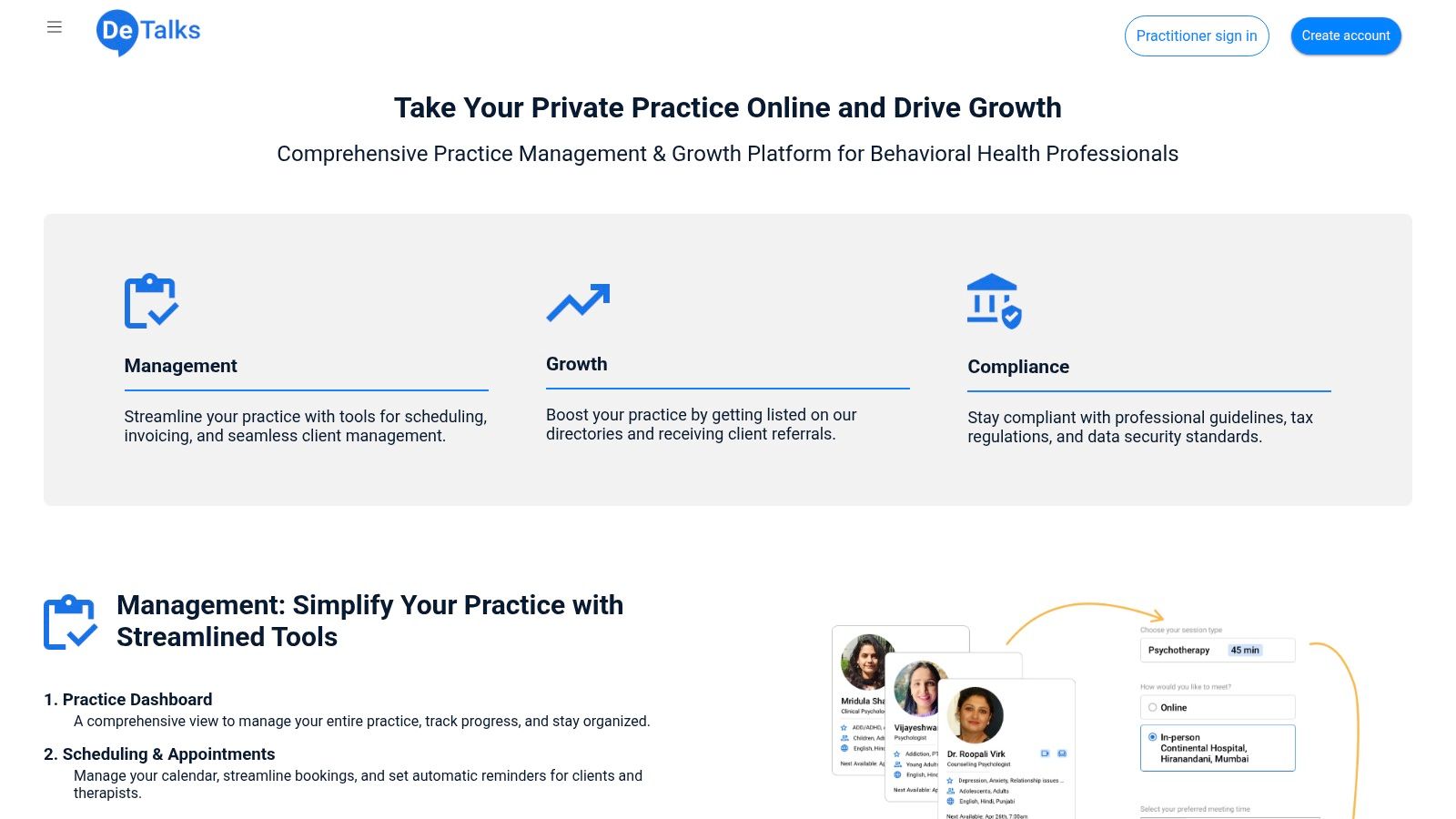
    DeTalks for Therapists is a leading all-in-one practice management solution designed for mental health professionals in India. It combines scheduling, billing, and client management with a powerful suite of mental health assessment tools, creating a seamless ecosystem. This allows therapists to focus more on providing quality care and less on administrative tasks.

    The platform’s strength is its direct integration with PsyPack Assessments, which embeds scientifically validated screening tools into the clinical workflow. Professionals can administer and review assessments for challenges like anxiety and depression within the same system they use for daily practice. This supports an informed approach to therapy and counselling from the very first session.

    DeTalks for Therapists | All‑in‑One Practice Management Solution

    Why It Excels as an Assessment Platform

    DeTalks acts as a supportive clinical partner, enhancing the therapeutic journey for both therapist and client. The built-in assessments help practitioners gain objective insights into a client's experiences with issues like workplace stress or anxiety. This helps in creating personalised care plans and tracking progress in well-being over time.

    For group practices, the system offers a central hub for managing multiple clinicians and their clients, ensuring organised and consistent care. The secure client portal also empowers individuals to actively participate in their mental health journey. This unified environment makes DeTalks an excellent choice for any practice aiming to enhance its services.

    • Best for: Individual therapists and group practices in India seeking an integrated system that combines practice management with robust, evidence-based assessment capabilities.
    • Key Features: Integrated PsyPack assessments, secure client-therapist communication, intuitive scheduling, and a dedicated client portal.
    • Pricing: Customised pricing plans are available upon request.
    • Pros: A complete all-in-one solution that saves time; provides deep clinical insights through validated assessments; enhances client engagement.
    • Cons: Primarily serves the Indian market currently; may involve a learning curve for those new to comprehensive digital platforms.

    Website: https://detalks.com/for-therapists/

    2. Pearson Clinical Assessment India (Q-global)

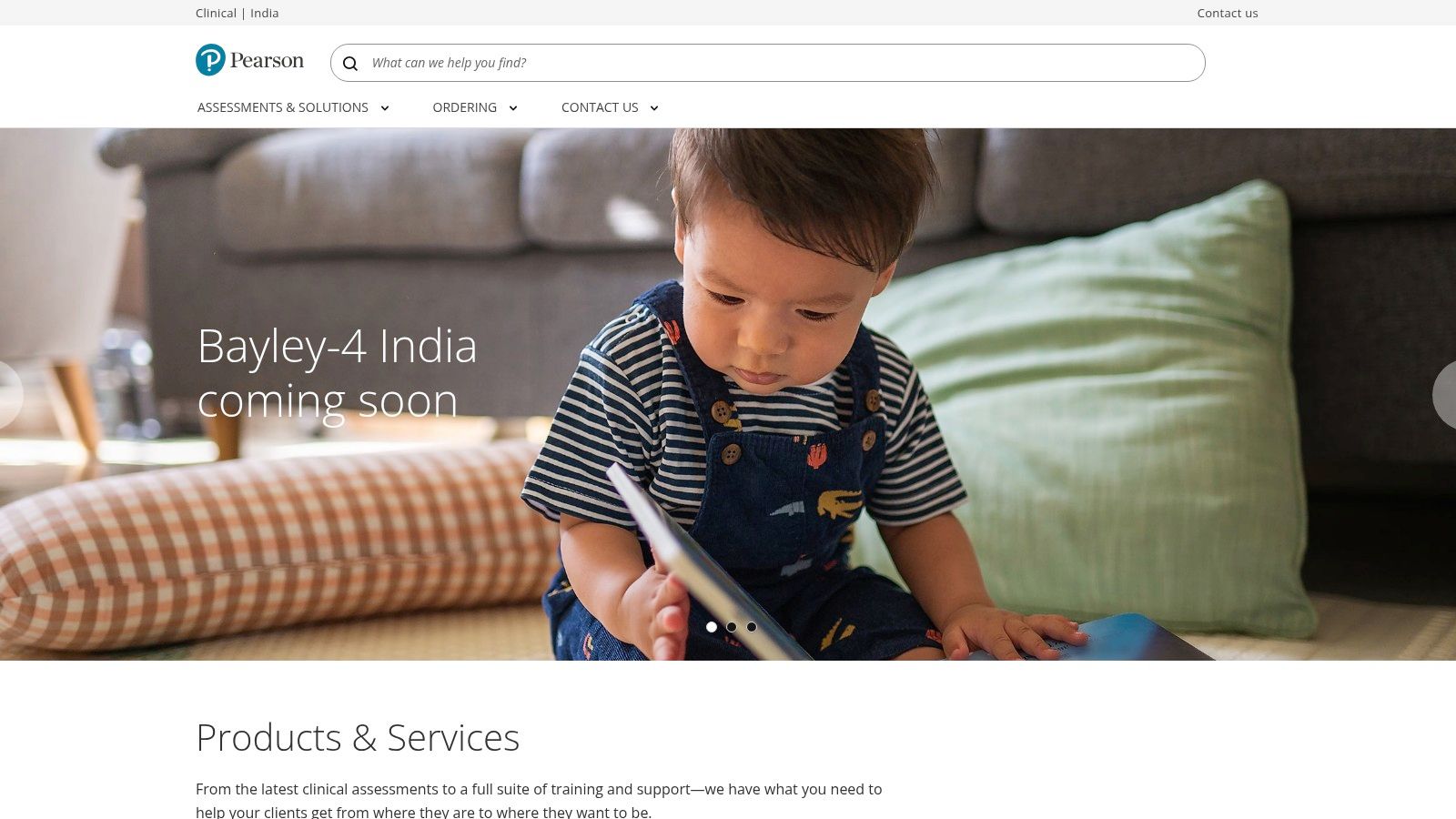
    For mental health professionals in India, Pearson Clinical is a key resource for world-renowned mental health assessment tools. It offers India-adapted versions of well-known assessments like the MMPI and Beck Depression Inventory (BDI). The platform focuses on providing tools that are culturally and linguistically relevant for Indian populations.

    Pearson Clinical Assessment India (Q-global)

    Its Q-global web platform allows practitioners to administer, score, and generate reports online. This simplifies the assessment process for understanding conditions like anxiety and depression. The platform offers a mix of digital and paper formats to suit different clinical needs.

    Access and Practical Considerations

    Access to these professional tools is restricted to qualified professionals who must verify their credentials before purchasing. Pricing is in Indian Rupees, with local support available. This platform is ideal for clinics, hospitals, and educational institutions needing validated and standardised assessment instruments for therapy and counselling.

    3. PARiConnect (PAR, Inc.)

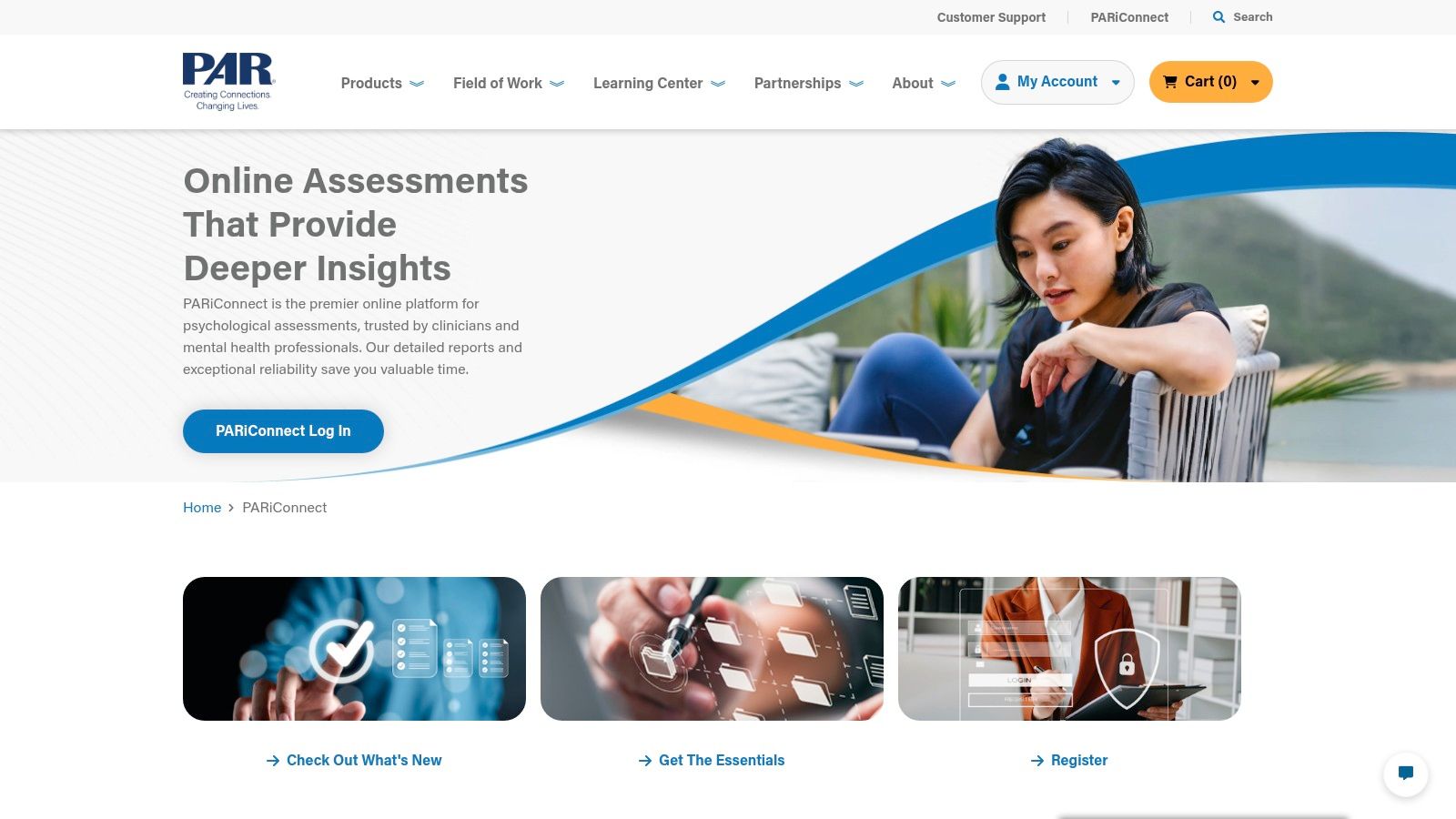
    PARiConnect from PAR, Inc. is a reliable digital platform offering a wide range of clinical mental health assessment tools. It is widely used in clinical and research settings for its extensive catalog covering challenges like anxiety, depression, and other emotional patterns. The platform's strength is its digital efficiency, helping professionals administer, score, and report on assessments online.

    PARiConnect (PAR, Inc.)

    The platform is known for its high uptime, ensuring these critical tools are almost always available. PAR continually updates its library, giving practitioners access to the latest instruments in psychological assessment. This commitment to technology and content makes it a dependable choice for modern mental health practice, supporting overall well-being.

    Access and Practical Considerations

    Access to PARiConnect's instruments is limited to qualified professionals who must register and meet specific criteria. While based in the US, its digital-first nature makes it accessible globally. The platform is ideal for professionals who need a broad, continuously updated, and highly reliable digital assessment solution for their therapy practice.

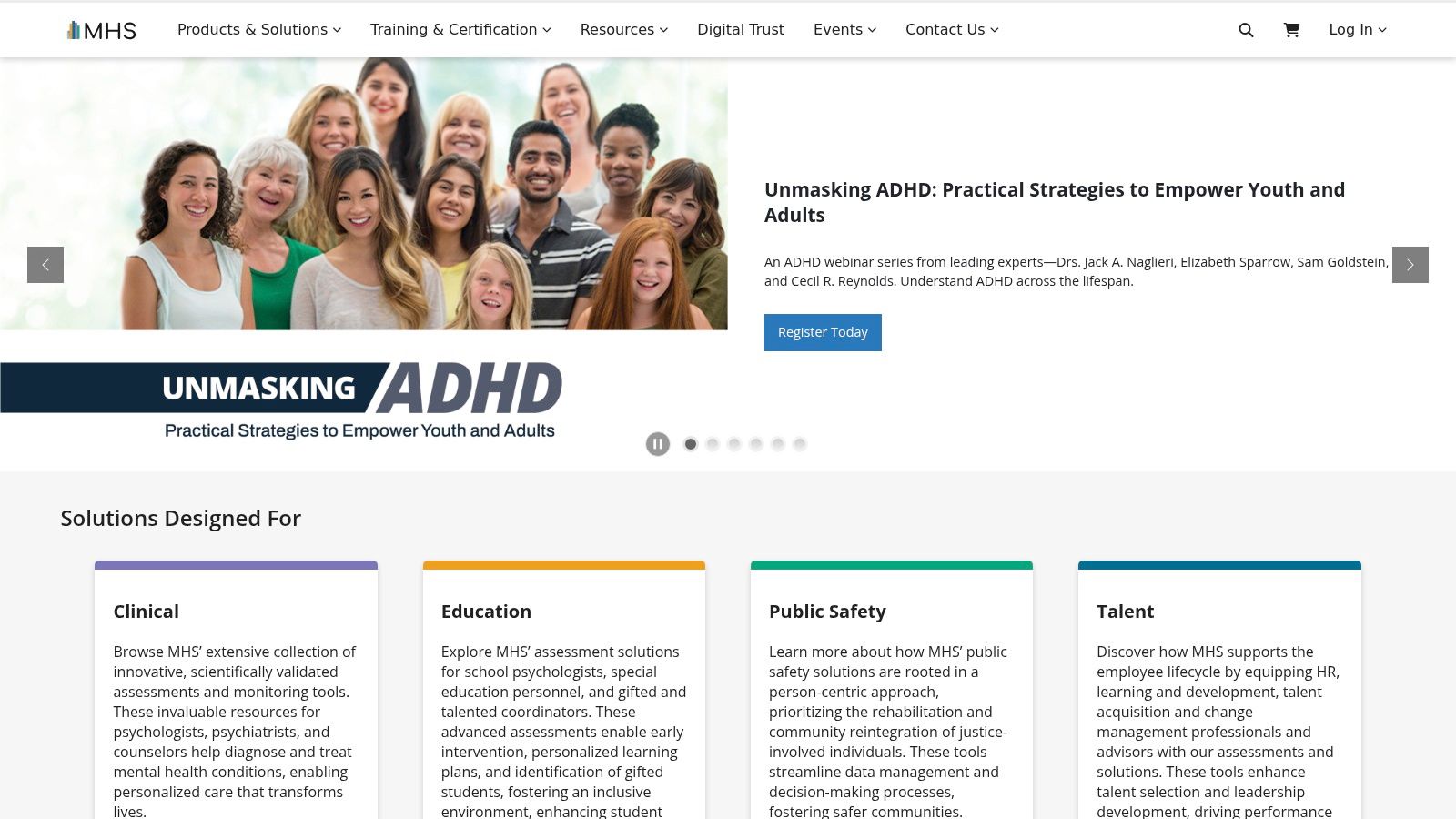
    4. MHS Online Assessment Center+ (Multi-Health Systems)

    The MHS Online Assessment Center+ (MAC+) is a powerful resource for professionals seeking a streamlined digital platform. It provides access to a wide range of MHS clinical measures covering anxiety, behaviour, and emotional patterns. The platform is efficient, offering pay-per-use digital forms and automated reminders that simplify the assessment process.

    MHS Online Assessment Center+ (Multi-Health Systems)

    A key feature is its support for remote and tele-assessment, which is crucial in today's world. This flexibility makes mental health assessment tools more accessible to clients, regardless of their location. The pay-per-use model is cost-effective, and MHS provides excellent training resources, supporting professional growth.

    Access and Practical Considerations

    Similar to other professional-grade platforms, access to the MAC+ requires professional credential verification. Users must create an account and prove their qualifications. The platform is an attractive option for educational institutions and clinicians in training, helping build skills in areas like counselling and well-being.

    5. WPS Publishing – Online Evaluation System (OES)

    WPS Publishing is a respected source for clinical assessments, especially for understanding autism and behavior. Its Online Evaluation System (OES) provides a powerful digital platform for administering, scoring, and generating reports. The system focuses on providing efficient and cost-effective tools for professionals.

    A key benefit of the OES is its pricing model, where users only pay for completed forms, which is helpful for smaller practices. The platform also offers strong support for tele-assessment, making it an excellent resource for remote counselling. Its progress monitoring reports are valuable for tracking a client's journey over time.

    Access and Practical Considerations

    Access to WPS tools requires user qualification verification to ensure assessments are used ethically. While the content is primarily oriented towards US markets, its high-quality mental health assessment tools are widely used internationally. It's ideal for practitioners who need a flexible, digital-first solution to support their clients' well-being.

    6. ePROVIDE by Mapi Research Trust (PROQOLID/COA licensing)

    For researchers and organisations conducting formal studies, ePROVIDE by Mapi Research Trust is a critical resource. It is a central hub for legally accessing and licensing validated mental health assessment tools. It simplifies the complex process of getting official permissions for copyrighted scales used in research and practice.

    The platform's strength is its large database of Clinician-Reported Outcome Assessments (COAs). It offers licensing and translation services for hundreds of instruments, which is invaluable for multicountry studies. This ensures that the correct and validated version of an assessment for conditions like anxiety or depression is being used.

    Access and Practical Considerations

    Accessing the full databases often requires a subscription or payment. The platform is not for casual users but for professionals who need to ensure their use of a specific tool is fully authorized. It is essential for clinical trials, academic research, and healthcare organisations integrating validated mental health assessment tools into their systems.

    7. HealthMeasures (PROMIS, NIH Toolbox, Neuro-QoL)

    HealthMeasures is a vital resource for anyone seeking robust, publicly available information on patient-reported outcomes. Backed by the U.S. National Institutes of Health (NIH), it provides free access to powerful tools like PROMIS. These tools cover areas like depression, anxiety, and sleep, helping to build a picture of overall well-being.

    HealthMeasures (PROMIS, NIH Toolbox, Neuro-QoL)

    The platform offers different formats, including short forms and Computerized Adaptive Tests (CATs), which provide precise and efficient measurement. This flexibility allows for integration into electronic health records or research studies. HealthMeasures also provides extensive support, making it a powerful tool for tracking well-being and resilience.

    Access and Practical Considerations

    The primary tools, such as PROMIS measures, are free to use. Users can download paper forms or access APIs for digital integration without charge. The platform is ideal for large-scale research projects and practitioners who need scientifically rigorous and cost-effective mental health assessment tools.

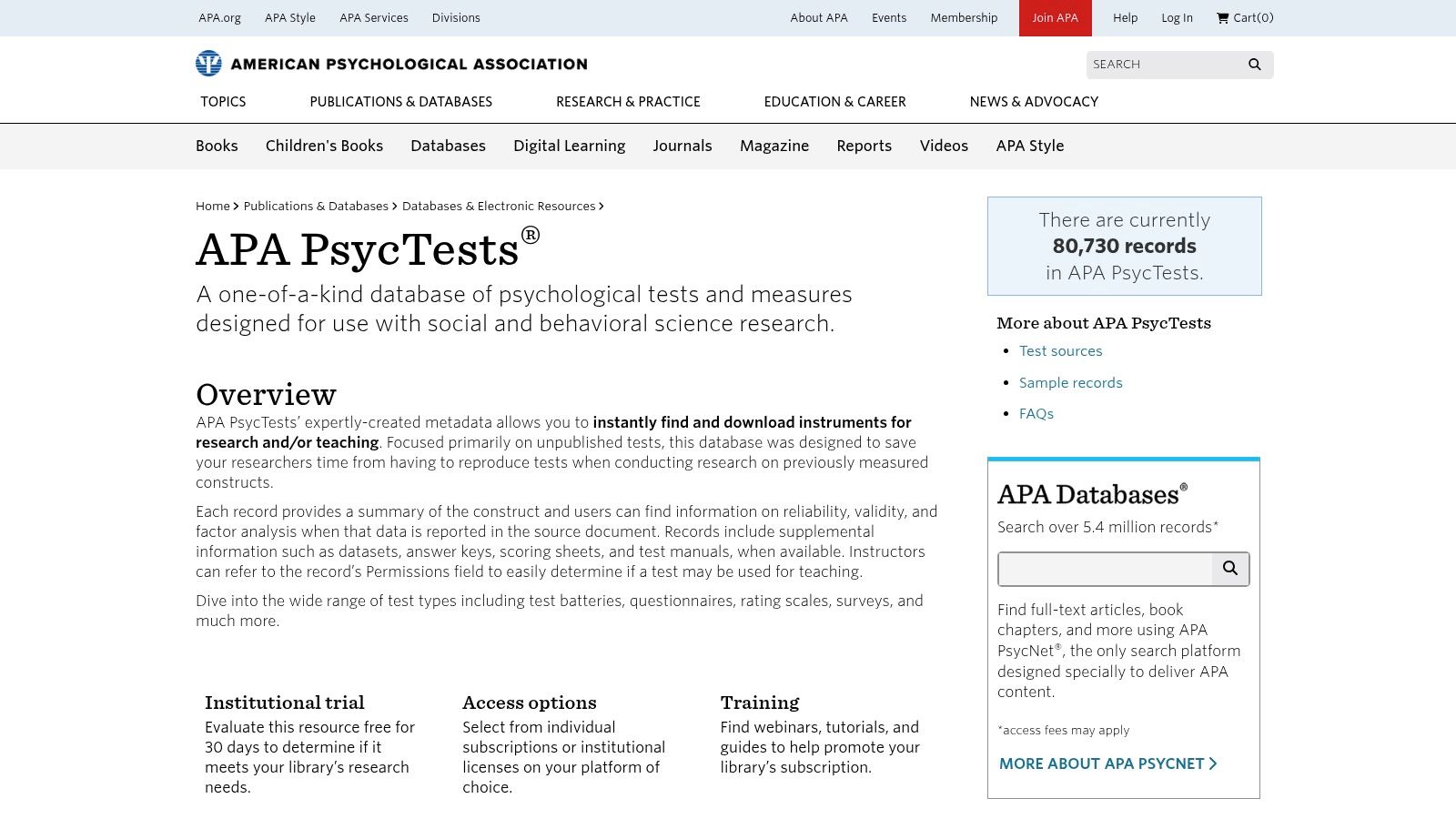
    8. APA PsycTests (American Psychological Association)

    For researchers and academics, APA PsycTests is an unparalleled database for discovering a vast range of mental health assessment tools. It is not a platform for taking tests but a comprehensive library of measures, scales, and surveys. Its value lies in providing detailed records for thousands of instruments, which is essential for academic work.

    APA PsycTests (American Psychological Association)

    The platform is a great resource for finding tools to understand experiences like workplace stress, anxiety, and depression. It offers direct downloads for many non-commercial tests and provides clear guidance on how to obtain commercial ones. It empowers professionals to find the most appropriate tools for their specific needs, from large studies to developing therapy programs.

    Access and Practical Considerations

    Access to PsycTests is typically provided through an institutional subscription, common in university and research libraries. It is an ideal resource for academic institutions rather than individual practitioners. It helps professionals and researchers find validated tools to support evidence-based practice and build resilience.

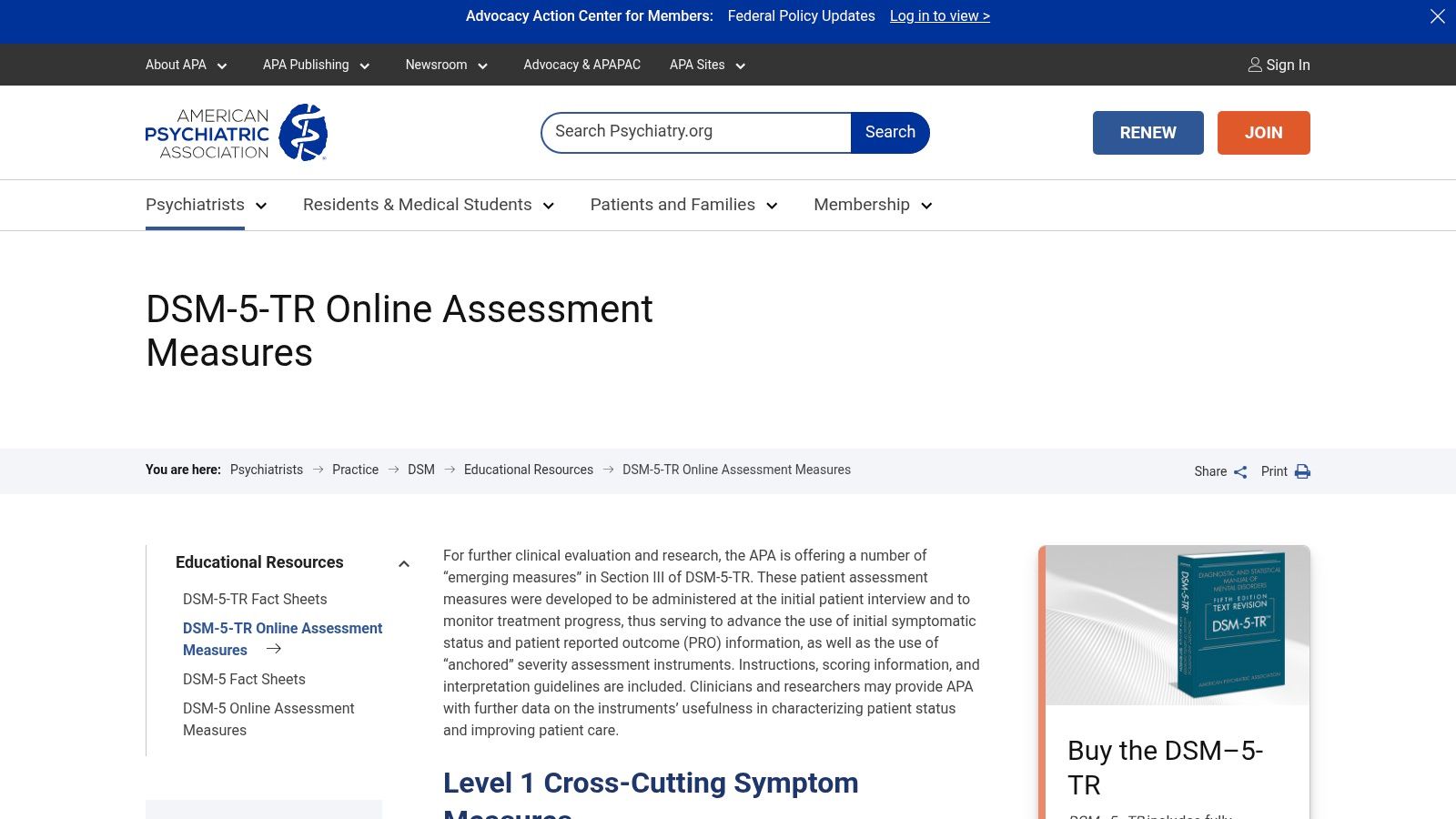
    9. American Psychiatric Association – DSM-5/DSM-5-TR Online Assessment Measures

    The American Psychiatric Association (APA) offers its official DSM-5 and DSM-5-TR Online Assessment Measures completely free of charge. These tools are designed to help practitioners systematically screen for and monitor symptoms across a range of mental health domains. They are a vital and accessible resource for clinicians worldwide.

    American Psychiatric Association – DSM-5/DSM-5-TR Online Assessment Measures

    The collection includes measures for initial broad screening and more specific tools for deeper investigation into areas like depression or anxiety. Available in adult and youth versions, these are some of the most widely used mental health assessment tools globally. They support a measurement-based care approach in therapy, establishing a baseline and tracking progress.

    Access and Practical Considerations

    Access is simple: the measures are available as free, downloadable PDFs directly from the APA website. There are no qualification checks or fees, making them incredibly accessible. It's important to remember these are informational tools; positive screens require a thorough clinical follow-up with a counselling professional.

    10. PHQ/GAD Official Screeners (Pfizer – PHQscreeners)

    Pfizer’s PHQscreeners website is an essential, no-fee resource for clinicians and public health professionals. It provides official versions of the globally recognized Patient Health Questionnaire (PHQ-9) for depression and the Generalised Anxiety Disorder (GAD-7) scale. It offers these gold-standard mental health assessment tools directly from the developers.

    The platform is designed for quick access to printable PDF screeners. These instruments are helpful for initial screening in various settings to identify individuals who may need further evaluation for anxiety or depression. The availability of multiple validated translations makes it invaluable for diverse communities in India and globally.

    Access and Practical Considerations

    Access to all screeners is completely free and unrestricted. However, these are informational tools, not diagnostic ones. It is crucial for practitioners to have supportive protocols in place. This resource is ideal for any setting needing rapid, validated, and copyright-clear screening measures to support well-being.

    11. Prasad Psycho (India)

    Prasad Psycho is a key Indian publisher and distributor of psychological tests. Their digiConnect platform facilitates online administration of many of their assessments. They are a vital resource for Indian practitioners using both international and locally developed mental health assessment tools.

    The organization focuses on professional development, regularly conducting training workshops. By partnering with test authors, Prasad Psycho ensures a relevant catalog for evaluating challenges like workplace stress and anxiety. Their local presence provides dependable support for clinics, researchers, and educational institutions across India.

    Access and Practical Considerations

    Similar to other professional distributors, access requires qualification verification. Pricing is in Indian Rupees, and one of the main benefits is the local, India-based customer support. This platform is ideal for Indian professionals seeking a mix of established tools, local support, and resources for counselling.

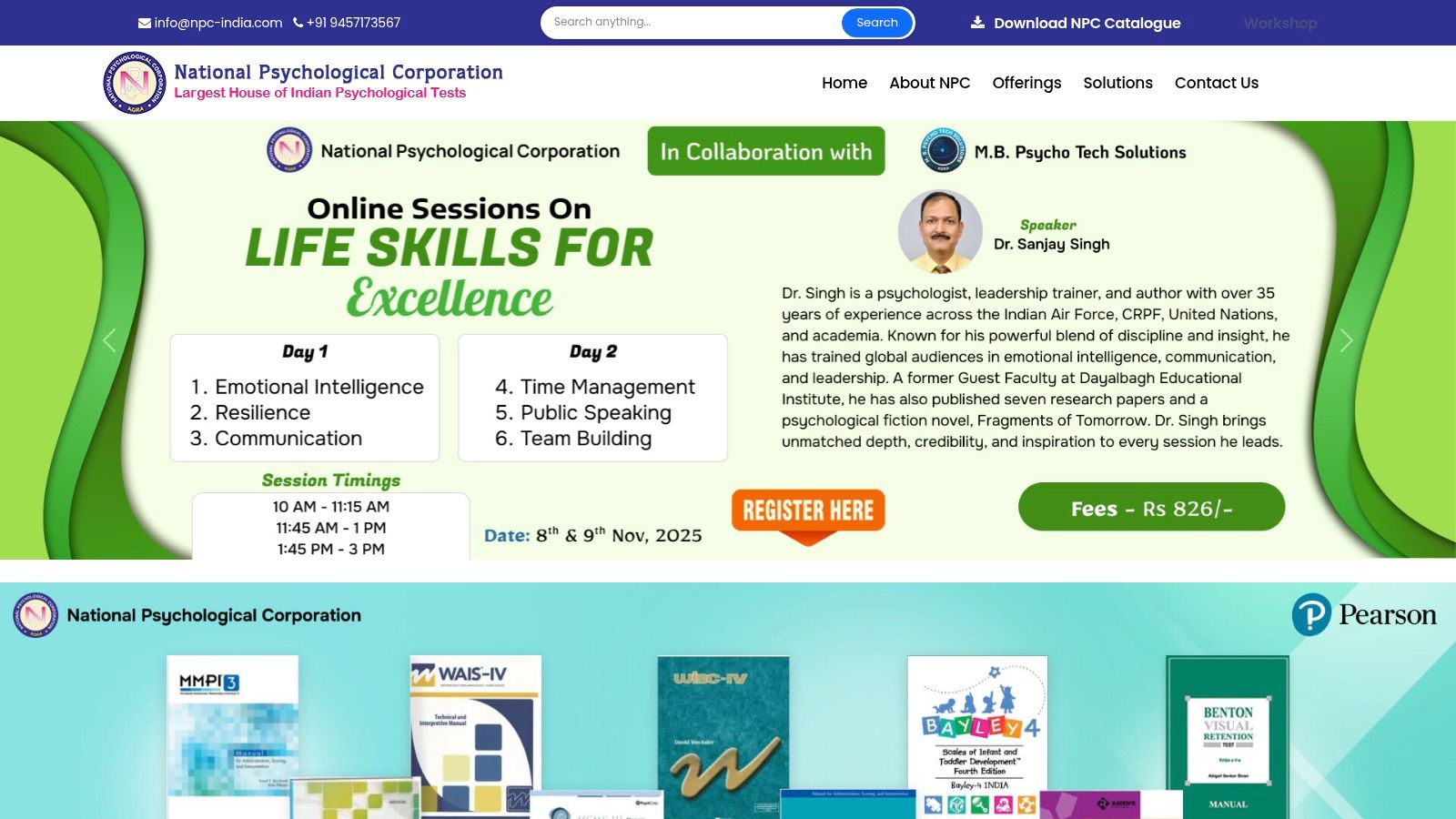
    12. National Psychological Corporation (NPC), Agra (India)

    The National Psychological Corporation (NPC) is a major Indian publisher and distributor of mental health assessment tools. It offers a vast catalog of standardized tests, many developed or adapted for Indian populations. This focus on local relevance makes it an essential resource for culturally sensitive assessments of challenges like anxiety and depression.

    National Psychological Corporation (NPC), Agra (India)

    NPC acts as a comprehensive hub, not only publishing its own instruments but also reselling for major international publishers. This provides a single point of access to a wide array of tools. Their services are particularly valuable for academic institutions and clinics engaged in local research, supporting the growth of India-centric psychological knowledge.

    Access and Practical Considerations

    Accessing NPC’s catalog requires professional qualification. Procurement is often traditional, involving phone or email orders, as the website serves as a catalog. The organization's long-standing reputation ensures reliability, making it an indispensable partner for practitioners needing India-normed psychological tests for their therapy or research work.

    Mental Health Assessment Tools: Feature Comparison of Top 12

    Product Core Features & Integration User Experience & Quality ★ Value Proposition 💰 Target Audience 👥 Unique Selling Points ✨
    🏆 DeTalks for Therapists All-in-one scheduling, secure client portal, PsyPack Assessments ★★★★☆ Streamlined clinical workflow Competitive, time-saving practice management Therapists & group practices in India Integrated evidence-based assessments
    Pearson Clinical Assessment India (Q-global) India-adapted digital & paper assessments, local support ★★★☆☆ Localized tools & training Mid-range, India-specific pricing Clinicians requiring Indian norms Local reseller network & training
    PARiConnect (PAR, Inc.) 80+ tests, online admin, batch & inventory ★★★★☆ Highly reliable platform Variable, broad test portfolio Clinics, researchers worldwide Large, updated test library
    MHS Online Assessment Center+ (MAC+) Pay-per-use digital forms, remote admin ★★★☆☆ Efficient workflow Pay-as-you-go, academic discounts Professionals using MHS tools Tele-assessment & training supports
    WPS Publishing – Online Evaluation System Autism/behavior focus, pay-per-completed form ★★★☆☆ Cost-effective, user tutorials Pay-per-completion, reduces waste Autism/behavior specialists Focused portfolio with video tutorials
    ePROVIDE by Mapi Research Trust Licensing & translations, 8,400+ instruments ★★★★☆ Authoritative metadata Subscription/licenses required Researchers & clinicians needing licenses One-stop official instrument licensing
    HealthMeasures (PROMIS, NIH Toolbox) Free PROMIS tools, adaptive testing ★★★★☆ NIH-backed, multilingual Free tools, some consulting costs Clinicians & researchers globally Free validated multi-language PROMs
    APA PsycTests Indexed test database, research-focused ★★★☆☆ Extensive, scholarly Institutional subscription required Researchers & educators Historic & comprehensive test archive
    American Psychiatric Assoc. DSM-5 Tools Free DSM-5 Cross-Cutting symptom measures ★★★★☆ Clinician-trusted Free official tools Clinicians using DSM-5 No-cost validated screening tools
    PHQ/GAD Official Screeners (Pfizer) Free PHQ-9, GAD-7 screeners with guides ★★★★☆ Widely used, evidence-based Free Primary care, public health Official, globally recognized tools
    Prasad Psycho (India) DigiConnect platform, India-centric tools & training ★★★☆☆ Local digitization & workshops India-focused pricing Indian clinicians & institutions Local test publishing & training
    National Psychological Corp. (NPC), India 1000+ India-normed tests, publishing & reselling ★★★☆☆ Established authority Moderate, local manufacturing Indian clinical & educational use Strong Indian adaptations & support

    Your Path Forward: Using Insights for Growth

    Exploring mental health assessment tools is an empowering first step toward greater self-awareness and well-being. Throughout this guide, we have looked at a variety of platforms, from comprehensive clinical systems to accessible screeners. We've also highlighted India-specific resources like Prasad Psycho and NPC to provide a relevant perspective.

    The purpose of these assessments is not to give a diagnosis but to offer a language for your inner experiences. They can help you recognize patterns related to anxiety, depression, or workplace stress. This clarity can be a powerful starting point for communicating your needs to a loved one or a mental health professional.

    Choosing the Right Tool for Your Journey

    Selecting the right tool depends on your personal goals and circumstances. A few key questions can guide you:

    • For Individuals: Are you looking for a simple check-in on your emotional state? Freely available screeners can be a great place to start. They can help you decide if seeking professional counselling or therapy could be a supportive next step.
    • For HR Leaders and Organisations: Is your goal to support employee well-being and address workplace stress? A platform offering insights into burnout and organisational health would be more suitable.
    • For Clinicians and Counsellors: Do you need reliable, validated instruments for client evaluation? Professional platforms like MHS Online, WPS, or DeTalks for Therapists are designed specifically for clinical practice.

    The true value of any mental health assessment tool is in how the information is used. The insights are not labels but starting points for a deeper conversation. They can guide you toward resources that help build resilience, enhance compassion, and foster a more fulfilling life.

    Taking the Next Meaningful Step

    Your mental health journey is a personal and ongoing process of growth. Taking the initiative to understand yourself better through these tools is an act of self-care. It acknowledges that your well-being matters and that support is available to help you navigate life's challenges.

    Whether the results encourage you to explore self-help strategies, talk about your mental health, or seek formal therapy, you are moving in a positive direction. This journey is yours, and you don't have to walk it alone. Every step contributes to building a stronger, more resilient you.


    Ready to connect with a professional who can help you interpret these insights and guide your next steps? DeTalks offers a secure and supportive platform to find qualified therapists and counsellors across India who can help you transform self-discovery into lasting growth. Visit DeTalks to begin your journey with a trusted expert today.

  • 7 Essential Compatibility Questions for Couples to Deepen Your Connection

    7 Essential Compatibility Questions for Couples to Deepen Your Connection

    Building a lasting relationship requires moving beyond initial attraction to understand each other on a deeper level. Asking the right compatibility questions for couples isn't about testing your partner, but about creating a shared map for your future, fostering resilience and well-being together. Meaningful connection is built on a foundation of mutual understanding, which requires open and honest dialogue about what truly matters.

    These conversations can sometimes feel daunting, touching on sensitive topics that might bring up feelings of anxiety or stress. However, approaching them with empathy can prevent future conflict and strengthen your bond. This guide offers a starting point for these discussions, helping you explore key life areas in a supportive way. Remember, these questions are informational tools to spark conversation, not diagnostic tests.

    1. What are your long-term life goals and dreams?

    Understanding your partner's vision for their future is one of the most critical aspects of building a life together. This foundational question goes beyond day-to-day matters, delving into the core aspirations that drive each of you. It's about discovering whether you are both rowing in the same direction or if your paths might diverge in ways that could create significant stress.

    This conversation explores career ambitions, family plans, and personal growth goals. Aligning on these big-picture items can foster a powerful sense of teamwork and mutual support, strengthening your resilience as a couple. This question is a cornerstone in couples therapy because it helps partners build a "shared meaning" system for their life together.

    Why This Compatibility Question Matters

    An honest discussion about long-term goals can prevent future misunderstanding. For instance, discovering a shared dream to live abroad can be an exciting goal to work towards together. Conversely, learning that one partner's deep desire for children isn't shared by the other brings a critical difference to light early, allowing you to address it directly.

    Key Insight: True alignment isn't about having identical goals, but about having goals that can coexist and support each other. The aim is to create a shared future that honours both individuals' dreams.

    How to Approach the Conversation

    When exploring this topic, be both structured and open-minded. Focus not just on what you want, but why you want it. Understanding the underlying values often reveals more room for connection.

    • Talk Timelines: Discuss your visions for the next five years, and then expand to a ten-year or lifetime vision. In India, conversations around timelines for marriage and family are common, so be gentle and clear.
    • Be Honest: This is the time to be clear about your non-negotiables. If starting a business or living near family is essential to your well-being, you owe it to your partner and yourself to say so.
    • Revisit Regularly: Goals and dreams are not static; they evolve. Make it a habit to check in annually to see how your visions have grown or changed.

    2. How do you handle money and financial decisions?

    Financial compatibility is a cornerstone of a stable relationship, as conflicts over money are a leading cause of stress and anxiety. This question delves into your individual and shared attitudes toward spending, saving, and debt. Understanding each other’s financial personalities is crucial for building a future free from resentment.

    The conversation covers everything from daily spending habits to long-term investment goals. Financial alignment is less about income levels and more about shared values and open communication. It’s about building a partnership that can navigate financial challenges and opportunities as a unified team.

    Why This Compatibility Question Matters

    A transparent dialogue about finances can prevent significant conflict and build a strong foundation of trust. For example, a partner who is a natural saver can find harmony with a spender by establishing a clear budget and shared goals. Discussing these topics early is essential for long-term well-being and is a common focus in pre-marital counselling.

    Key Insight: Financial harmony isn't about earning the same amount of money; it’s about agreeing on a shared approach to managing it. The goal is to create a system that feels fair and supportive to both partners.

    How to Approach the Conversation

    Talking about money can feel vulnerable, so approach it with empathy, honesty, and a focus on teamwork. To make this one of the most productive compatibility questions for couples, consider exploring dedicated money management strategies for couples to find a system that works for you.

    • Be Honest: Share your complete financial picture, including income, assets, debts, and spending habits. Hiding information can erode trust.
    • Discuss Financial Goals: Talk about short-term goals (like a vacation) and long-term ones (like buying a home or retirement). In many cultures, supporting ageing parents is also a key financial goal to discuss.
    • Establish Ground Rules: Decide on a spending limit for individual purchases that would require a joint discussion. This simple rule can prevent many arguments.

    3. How do you prefer to communicate during conflicts?

    Conflict is an inevitable part of any long-term relationship; how you navigate it determines the health and resilience of your bond. This question explores your individual conflict resolution styles and communication patterns under stress. It's about understanding whether one partner needs space to cool down while the other seeks immediate resolution.

    Discussing this helps you create a roadmap for disagreements that feels safe and productive for both of you. The goal is to work through the problem for the relationship, not against each other. This approach is central to the work of relationship experts who teach compassionate communication skills to improve well-being.

    Why This Compatibility Question Matters

    A mismatch in conflict styles can escalate minor issues, leading to resentment and emotional distance. By discussing preferences beforehand, couples can establish ground rules, like agreeing to take a 20-minute break when things get heated. These proactive conversations are foundational for building emotional safety and trust.

    Key Insight: Healthy conflict resolution isn't about avoiding arguments. It’s about having a shared strategy to handle disagreements constructively, ensuring both partners feel respected and heard.

    How to Approach the Conversation

    This conversation should happen during a time of calm, not in the middle of an argument. Use it as a collaborative session to strengthen your team dynamic and overall well-being.

    • Establish Fair-Fighting Rules: Agree on non-negotiables, such as no name-calling, no raising voices, and using "I" statements to express feelings instead of placing blame.
    • Discuss Your Triggers: Share what specific words or actions make you feel defensive or shut down. Understanding each other’s emotional triggers is a powerful act of empathy and compassion.
    • Plan for Pauses: If one or both of you need space, decide on a phrase to pause the conversation. Crucially, agree on a specific time to resume the discussion so the issue isn't left unresolved.

    4. What role do family and friends play in your life?

    Your relationship doesn't exist in a vacuum; it is part of a wider social network of family and friends. Understanding how your partner integrates these relationships is crucial for harmony. This conversation explores expectations around social commitments, family obligations, and the boundaries needed to protect your partnership.

    Aligning on this helps you present a united front, reducing potential stress and conflict caused by external influences. In collectivist cultures like in India, family often plays a significant role in a couple's life, making this conversation particularly important. This topic is a cornerstone of family systems therapy, which helps couples operate as a team when faced with external pressures.

    Why This Compatibility Question Matters

    A frank discussion about family and friends can pre-empt significant friction. For instance, one partner may see weekly family dinners as non-negotiable, while the other values quiet weekends. Discussing this early allows for a compromise that respects both needs. These are essential compatibility questions for couples wanting to build a resilient bond.

    Key Insight: A strong partnership is not about isolating yourselves, but about creating healthy boundaries that protect your relationship while you enjoy fulfilling connections with family and friends.

    How to Approach the Conversation

    Approach this topic with curiosity and a goal of mutual understanding, not judgment. The aim is to find a balance that works for your unique partnership.

    • Discuss Expectations: Talk about how often you expect to see family and friends. How much influence should they have on major relationship decisions?
    • Establish Boundaries: Have an open conversation about what feels comfortable regarding family involvement or unsolicited advice. Agree on how you will handle these situations together as a team.
    • Create Your Own Traditions: While honouring your families' traditions is important, make a conscious effort to create new rituals that are unique to your relationship.

    5. What are your expectations around intimacy and affection?

    Discussing intimacy is fundamental to a healthy partnership, yet it can be a difficult conversation to start. This question unpacks expectations around both physical and emotional closeness. It addresses everything from sexual frequency to daily acts of affection like holding hands, cuddling, or saying kind words.

    Understanding these needs prevents mismatched expectations that can lead to feelings of rejection or pressure. A shared understanding here fosters a secure and nurturing bond. This topic is central to the work of relationship experts who help couples identify their primary ways of expressing and interpreting affection.

    Why This Compatibility Question Matters

    A candid conversation about intimacy can prevent misunderstanding. For example, one partner might show love through acts of service, while the other craves physical touch and feels unloved without it. Realising this difference allows them to adapt their behaviours to meet each other's needs, strengthening their connection and compassion for one another.

    Key Insight: A fulfilling intimate life is not about having identical needs, but about understanding and honouring each other’s unique ways of connecting. The goal is to create a shared language of affection and desire.

    How to Approach the Conversation

    Creating a safe, judgement-free space is paramount when discussing such a personal topic. Approach the conversation with curiosity and a genuine desire to understand your partner's perspective.

    • Use "I" Statements: Frame your needs from your own perspective to avoid sounding accusatory. For instance, say "I feel most loved when we cuddle," instead of "You never cuddle me."
    • Schedule Intimacy Check-ins: Make it a regular, low-pressure habit to talk about your intimate life. This normalises the conversation and prevents issues from escalating.
    • Be Patient and Compassionate: Differences in desire and affectionate styles are normal. Focus on finding a middle ground that leaves both partners feeling valued and seen.

    6. How do you balance work and personal life?

    Discussing how you each manage the boundary between your professional and personal lives is essential for modern relationships. This question uncovers your attitudes toward ambition, downtime, and how you protect your relationship from workplace stress. It's about setting shared expectations for availability and mutual support during busy periods.

    This conversation is vital in preventing burnout and resentment from building when work-related anxiety spills over into home life. This topic is frequently addressed by career counsellors who emphasise creating a sustainable partnership where both professional and personal well-being can thrive. You can find helpful strategies for balancing work and family life to guide your discussion.

    Why This Compatibility Question Matters

    A transparent dialogue about work-life balance helps you function as a supportive unit. For instance, partners can successfully navigate one person's demanding work schedule by agreeing on dedicated quality time. Clarifying these perspectives early on is one of the most practical compatibility questions for couples to address to avoid chronic conflict and burnout.

    Key Insight: A healthy work-life balance in a relationship isn't about a perfect 50/50 split every day. It's about creating a flexible system that respects both partners' ambitions and prioritises the relationship's well-being.

    How to Approach the Conversation

    Frame this discussion around teamwork and mutual respect for each other's professional paths and personal needs. The goal is to build a supportive structure that works for both of you, especially during times of high stress.

    • Define Boundaries Together: Discuss what is acceptable. Should work calls be taken during dinner? Is it okay to check emails in bed? Setting these ground rules prevents future friction.
    • Discuss Future Ambitions: Talk about where you see your careers in five or ten years. Be honest about goals that will impact your shared life, like relocation for a job.
    • Plan for “Relationship Maintenance”: Proactively schedule technology-free date nights. This ensures your connection remains a priority, not an afterthought to demanding jobs.

    7. What are your core values and deal-breakers?

    While goals define where you are going, your core values represent the foundation of who you are. This fundamental question explores the non-negotiable principles that guide your life. It's about uncovering the moral compass each of you follows and identifying the lines that, if crossed, could damage the relationship.

    This conversation covers everything from honesty and loyalty to personal integrity. Often highlighted in relationship counselling, clarifying these values helps couples understand each other’s motivations on a much deeper level. This fosters a sense of profound respect and security.

    Why This Compatibility Question Matters

    A frank discussion about values and deal-breakers is a powerful preventative measure against future conflict. For instance, discovering a shared value for kindness can be incredibly bonding. Conversely, realising that one partner’s deal-breaker is dishonesty while the other values privacy to the point of secrecy can reveal a critical point of friction.

    Key Insight: A successful relationship doesn't require identical values, but it does demand respect for each other’s values and alignment on the most critical ones. Deal-breakers, by their nature, are non-negotiable and must be honoured.

    How to Approach the Conversation

    This conversation requires vulnerability and absolute honesty. It’s not about judging your partner’s values but about understanding them and seeing how they align with your own.

    • List Your Top Five: Each partner can write down their top five core values (e.g., honesty, adventure, security, compassion, growth). Share your lists and discuss why each value is so important to you.
    • Define Your Deal-Breakers: Be explicit about the behaviours or situations you cannot tolerate in a relationship. This could include infidelity, disrespect, or a lack of ambition.
    • Explore the ‘Why’: Don't just state a value; explore the life experiences that shaped it. Understanding the story behind a value builds empathy and deeper connection.

    7 Key Compatibility Questions for Couples Comparison

    Compatibility Question Implementation Complexity 🔄 Resource Requirements ⚡ Expected Outcomes 📊 Ideal Use Cases 💡 Key Advantages ⭐
    What are your long-term life goals and dreams? Medium 🔄 Low ⚡ Shared vision; prevents future conflicts 📊 Early-stage relationship alignment Creates shared purpose; clarity in decisions ⭐
    How do you handle money and financial decisions? Medium-High 🔄 Medium ⚡ Financial harmony; trust building 📊 Couples managing joint finances Prevents money conflicts; promotes transparency ⭐
    How do you prefer to communicate during conflicts? High 🔄 Medium ⚡ Healthier conflict resolution 📊 Relationships needing communication improvement Reduces misunderstandings; builds empathy ⭐
    What role do family and friends play in your life? Medium 🔄 Low-Medium ⚡ Balanced social/family expectations 📊 Couples integrating social/family dynamics Establishes boundaries; prevents social conflicts ⭐
    What are your expectations around intimacy and affection? Medium 🔄 Low ⚡ Deeper emotional and physical connection 📊 Long-term relationship satisfaction Ensures needs met; fosters vulnerability ⭐
    How do you balance work and personal life? Medium 🔄 Low-Medium ⚡ Realistic time management; mutual support 📊 Dual-career couples; managing stress Prevents resentment; supports career goals ⭐
    What are your core values and deal-breakers? Medium 🔄 Low ⚡ Fundamental compatibility; respect boundaries 📊 Early relationship vetting Prevents wasted time; establishes shared principles ⭐

    Your Path Forward: Supportive Takeaways

    Navigating a long-term relationship is a journey of continuous discovery, not a destination. These compatibility questions for couples are not a final exam you pass or fail. Instead, they are powerful tools to illuminate the path you are walking together, helping you recalibrate your shared compass from time to time.

    The true value of these conversations lies in the process of exploration itself. Discovering a difference is not a red flag; it is an invitation. It is an opportunity to practise empathy, listen to understand, and build the crucial skills of negotiation and compromise that form the bedrock of any resilient partnership.

    Key Takeaways for Your Relationship Journey

    To make these discussions truly transformative, keep these core principles in mind:

    • Embrace Ongoing Dialogue: Compatibility is not a one-time assessment. Make these conversations a regular, gentle ritual in your relationship.
    • Prioritise Safe Communication: The goal is connection, not conflict. Create a safe, judgement-free space where both partners feel secure enough to be vulnerable.
    • Focus on Growth, Not Perfection: The strength of your relationship is measured by how you approach differences. This is where true partnership and happiness are forged.

    When to Seek Professional Support

    Sometimes, these questions can unearth deeper issues related to anxiety, depression, or past experiences. If you find yourselves stuck in repetitive arguments, or if the topics feel too overwhelming to tackle alone, seeking professional guidance is a sign of strength and commitment to your well-being.

    A qualified therapist or counsellor provides a neutral, supportive environment to navigate these complexities. They can equip you with communication strategies, help you understand recurring conflicts, and guide you in building a more secure and resilient connection. This is an investment in the health of your relationship, helping you face life’s future challenges together.


    Ready to turn these conversations into lasting connection? The trained professionals at DeTalks specialise in helping couples navigate complex topics, improve communication, and build stronger bonds in a safe, confidential space. Explore relationship counselling and start your journey toward deeper understanding today at DeTalks.