Tag: well-being tools

  • What Is Psychological Assessment and Its Benefits

    What Is Psychological Assessment and Its Benefits

    You may be searching for answers after weeks of poor sleep, workplace stress, anxious thoughts, low motivation, or changes in a relationship. Perhaps you've completed an online questionnaire and are now wondering whether the result means you have anxiety or depression. Psychological assessment can offer useful direction, but it isn't a verdict, a cure, or a substitute for therapy or counselling.

    In simple terms, it's a structured way to understand how you think, feel, and behave. A qualified professional combines conversations, carefully chosen tools, observations, and relevant background information to answer a specific question. The result should help you understand yourself and consider appropriate support, including self-help, counselling, psychiatric care, or further evaluation.

    When You Wonder If Something Is Wrong

    Consider a student who sits at her laptop for hours but can't absorb what she's reading. She worries about falling behind, feels tense whenever she opens her notebook, and has started avoiding messages from friends. A working professional might recognise a similar pattern after months of workplace stress, burnout, irritability, and restless sleep.

    In either situation, the first question may be, “What's happening to me?” The second is often, “Do I need a psychological assessment?” Those questions deserve a calm answer, not a label.

    A woman focused on her studies while working on a laptop and reading an open notebook indoors.

    Assessment is information, not a final judgement

    A psychological assessment gathers evidence about a person's experiences and functioning. It may highlight symptoms of stress, anxiety, depression, attention difficulties, or emotional strain, while also identifying strengths such as resilience, compassion, motivation, or supportive relationships.

    A screening questionnaire can suggest that a concern deserves attention. It usually can't establish a clinical diagnosis on its own. Diagnosis requires a thorough evaluation by an appropriately qualified professional, with attention to history, context, symptoms, and how those symptoms affect daily life.

    That distinction matters in India, where people may use the word “assessment” to mean a quick online test, a clinical diagnosis, or an evaluation intended for court. These are different purposes. A screening tool helps flag a possible concern, a clinical assessment supports diagnosis and treatment planning, and a legal evaluation addresses a clearly defined question within a formal process.

    Why clarity matters in India

    The National Mental Health Survey of India, conducted in 2015–16, used a uniform scientific method across 12 states, 43 districts, 80 sub-districts, 729 clusters, 10,152 households, and 34,802 individuals. It used structured diagnostic methods, including MINI 6.0 for adults and MINI Kid for adolescents, reflecting a move from informal clinical judgement towards large-scale, evidence-based measurement. The survey estimated 13.67% lifetime mental morbidity and 10.56% current mental morbidity, and concluded that nearly 150 million people in India required mental healthcare services. The survey's findings are available through PubMed.

    People also ask whether assessment can help with cognitive changes in an older family member. For practical support alongside professional evaluation, families may find this resource on managing early stage dementia at home useful.

    Remember: An assessment is a starting point for understanding, not a statement about your worth or your future.

    Understanding the Building Blocks of Assessment

    A useful way to understand assessment is to compare it with a general health check-up. A doctor doesn't rely only on one number from a blood test. They ask questions, review history, observe signs, and interpret findings together. Psychological assessment follows a similar multi-method approach.

    An infographic titled Understanding Psychological Assessment explaining clinical interviews, psychological tests, observation, and collateral information methods.

    The conversation comes first

    A clinical interview gives the psychologist the story behind the concern. You might discuss your current difficulties, past experiences, health, relationships, work or studies, sleep, coping habits, and what you hope to learn.

    This isn't an interrogation. A good interview helps the professional decide which questions are relevant and prevents a questionnaire from being interpreted without context. For example, difficulty concentrating might relate to anxiety, poor sleep, grief, workplace pressure, medication, or several factors at once.

    Standardised tools add structure

    Psychological tests use established questions and scoring procedures to examine areas such as mood, personality, memory, attention, abilities, or coping. In Indian psychiatric practice, professional publications recognise tools including PHQ-2, PHQ-9, the Beck Depression Inventory, and MoCA for screening and assessment in clinical settings. The Indian Journal of Psychiatry publication discusses these instruments.

    A score has meaning only when interpreted against suitable norms or a clearly described reference group. The same raw score can mean different things depending on the tool, purpose, population, and setting.

    Observation shows patterns in action

    Behavioural observation focuses on how you respond during an assessment or in a relevant environment. The professional may notice attention, communication, persistence, emotional expression, problem-solving approach, or signs of discomfort.

    Observation doesn't mean someone is judging your personality from a single gesture. It's one source of information, considered alongside your report and the test results.

    Other perspectives can complete the picture

    With your knowledge and consent, collateral information may come from a parent, partner, teacher, medical record, or another professional involved in your care. This can be particularly useful when assessing children, cognitive concerns, school functioning, or workplace difficulties.

    The purpose isn't to replace your voice. It's to understand how a concern appears across settings and whether different accounts point to the same pattern.

    Common Types of Psychological Assessments

    Different assessments answer different questions. Someone experiencing panic and constant worry may need a screening measure for anxiety, while a person facing memory changes may need a cognitive assessment. A manager concerned about workplace stress may need an organisational measure rather than a personal diagnostic questionnaire.

    The table below offers a practical comparison. Typical length varies by tool and purpose, so these descriptions should guide questions, not determine what you need.

    Assessment Type What It Measures Typical Length When It Helps
    Screening assessment Possible symptoms of anxiety, depression, stress, or burnout Brief When you want an initial indication of whether further support may be useful
    Personality assessment Patterns in thinking, feeling, relating, values, and preferences Varies When exploring relationships, career confusion, coping, or personal growth
    Cognitive assessment Attention, memory, reasoning, and problem-solving Often more detailed When there are concerns about learning, concentration, ageing, or cognitive functioning
    Behavioural assessment Triggers, habits, responses, and patterns in daily situations Varies When a person wants to understand and change a recurring behaviour
    Well-being assessment Resilience, compassion, happiness, strengths, and life satisfaction Usually focused When the aim includes growth, emotional balance, or positive psychology
    Workplace assessment Stress, employee well-being, organisational support, and related experiences Tool-dependent When examining workplace stress, burnout risk, or organisational conditions

    Screening for common concerns

    A screening tool can help someone notice a pattern they've been minimising. For example, a person who says, “I'm just tired,” may recognise through a structured measure that low mood, loss of interest, worry, or exhaustion are affecting daily functioning.

    The result should lead to a conversation, not self-diagnosis. It can help you decide whether to speak with a therapist, counsellor, psychologist, or doctor.

    Looking beyond symptoms

    Assessment doesn't have to focus only on what feels wrong. Positive psychology measures can explore resilience, compassion, happiness, gratitude, self-esteem, emotional intelligence, and purpose. These areas can help a person understand what supports their well-being and where they'd like to grow.

    Workplace tools also differ in design and purpose. A published review describes measures such as the 37-item A Shortened Stress Evaluation Tool, the 141-item standard and 80-item brief Brief Job Stress Questionnaire, a 14-item Mental Health Audit, and an India-developed Employee Well-Being Scale with 31 items. The review explains these workplace assessment approaches.

    Your Journey Through the Assessment Process

    Knowing what happens can make the first appointment feel less uncertain. You don't need to arrive with the perfect explanation. A simple description such as “I'm overwhelmed and can't focus” is enough to begin.

    A five-step infographic showing the psychological assessment journey from initial referral to follow-up recommendations and next steps.

    Step 1, referral or self-referral

    Some people are referred by a doctor, school, employer, or another mental health professional. Others contact a psychologist themselves because they want clarity about anxiety, depression, attention, relationships, workplace stress, or well-being.

    Ask what question the assessment is designed to answer. If the purpose isn't clear, the process can feel like a collection of tests rather than a meaningful service.

    Step 2, initial consultation

    The psychologist will usually ask about your concerns, history, daily functioning, health, and goals. This is also your opportunity to explain cultural, family, educational, or work circumstances that may influence your experience.

    Feeling nervous is common. You can request clarification, ask how information will be used, and discuss any test that makes you uncomfortable.

    Step 3, formal assessment

    You may complete questionnaires, answer interview questions, perform memory or attention tasks, or take part in other structured activities. Try to answer truthfully rather than choosing responses that seem more acceptable.

    There's no prize for producing a particular result. The most useful assessment reflects your actual experience.

    Step 4, interpretation and feedback

    The psychologist reviews your responses in context. Interpretation isn't merely a matter of adding up scores. It involves considering the quality of the tool, relevant norms, your history, cultural setting, strengths, and the question that prompted the assessment.

    Feedback should happen in language you can understand. You should be able to ask, “What does this mean in my daily life?” and “What does it suggest I do next?”

    Step 5, recommendations and follow-up

    Recommendations might include self-help resources, counselling, therapy, lifestyle changes, workplace support, psychiatric consultation, or another assessment. The right next step depends on the findings and your goals.

    This video can offer another accessible introduction to the assessment journey:

    Why Quality and Validation Matter

    A questionnaire can look professional and still be unsuitable for a particular purpose. Trustworthy assessment depends on reliability, validity, norms, and objectivity.

    Reliability asks whether a tool produces reasonably consistent results. Validity asks whether it measures what it claims to measure. A test may give consistent scores while measuring the wrong thing, so both questions matter.

    The problem with outdated norms

    Indian training material commonly teaches that reliability coefficients should exceed +0.70, while validity should be supported by criterion-related and construct evidence rather than face plausibility alone. The assessment material from eGyanKosh explains these technical foundations.

    Many tests used in India still rely on old norms, incomplete standardisation, or no established norms at all. This creates measurement error. A person may be directed towards self-help when they need counselling, or towards a more intensive pathway when the score has been misunderstood.

    A raw score isn't a conclusion. It becomes useful only when a qualified professional connects it to appropriate norms, context, and the person's lived experience.

    What local validation looks like

    Cultural context affects how people describe distress, cope with pressure, and understand questions. A tool validated for an Indian population or a clearly defined local reference group gives the interpreter a stronger basis for understanding results.

    One Indian undergraduate study of GHQ-12 reported Cronbach's alpha of .784, CFI .989, TLI .982, and RMSEA .039, supporting acceptable internal consistency and structural validity in that sample. The study provides its psychometric findings.

    Before completing an assessment, ask whether the tool has been validated for people like you, whether its norms are current, and how the cutoff will be interpreted. For a broader overview of evidence-based professional practice, this compliance guide for psychologists can also help you understand the kinds of standards responsible services should consider.

    Ethical Safeguards and Your Rights

    Psychological assessment involves private information. You may share details about family life, trauma, health, relationships, work, or thoughts that you haven't discussed elsewhere. Ethical practice should protect your dignity before, during, and after testing.

    Consent should be meaningful

    Before you agree, the professional should explain the purpose of the assessment, what it involves, who will interpret the results, how the information will be stored, and who may receive a report. You should have a chance to ask questions before beginning.

    Consent isn't a formality. You can ask why a particular test is being used and how it relates to the question being assessed.

    Confidentiality has boundaries

    Results should be handled privately and shared only within the agreed boundaries. If an employer, school, family member, court, or another professional is involved, ask what information will be shared and in what format.

    Confidentiality can have legal and safety-related limits, so a responsible practitioner should explain those limits clearly. Don't hesitate to ask whether the final report will include raw scores, conclusions, recommendations, or all of these.

    Screening isn't diagnosis

    A screening result may indicate that you're experiencing significant distress. It doesn't prove that you have a mental health disorder. Diagnosis requires a full evaluation by a qualified professional, and it should consider the whole person rather than a single number.

    Legal evaluation is also separate from both screening and ordinary clinical care. In custody cases, a 2026 Supreme Court-linked judgment stressed that psychological or psychiatric assessments shouldn't be ordered routinely, should have explicit reasons, and should generally be conducted by an independent expert. The Ministry of Health and Family Welfare document discusses the treatment gap and related context.

    The same source reports that India's treatment gap for mental disorders ranged from 70% to 92%. Clear explanations can help people understand when assessment is appropriate, while reducing the risk that a screening score is treated as a diagnosis or a legal verdict.

    Making Sense of Your Results and Next Steps

    Results can bring relief, confusion, or both. A finding that names a difficulty may feel heavy at first, but it can also provide language for an experience you've been carrying alone. A result that highlights strengths can be equally valuable because resilience and well-being deserve attention, not just symptoms.

    Start with a feedback conversation

    Read the report with the professional who interpreted it. Ask:

    • Meaning: Which findings are most important in everyday life?
    • Context: What other factors could have influenced my responses?
    • Strengths: What resources, skills, or relationships can I build on?
    • Support: Would therapy, counselling, self-help, coaching, or psychiatric care be appropriate?
    • Follow-up: What should I monitor, and when should we review the plan?

    You don't need to understand every technical term immediately. Ask for examples and request a plain-language summary if the report feels difficult to follow.

    Turn insight into a manageable plan

    Choose next steps that fit your circumstances. Someone experiencing workplace stress may begin with boundaries, rest, and counselling. Someone facing persistent anxiety or depression may need a fuller clinical evaluation. Another person may use positive psychology exercises to strengthen compassion, happiness, purpose, or resilience.

    Share your results with family only if you feel safe and comfortable doing so. You can explain the practical implication without disclosing every private detail.

    DeTalks offers a directory of psychologists, therapists, and counsellors, along with scientifically validated psychological assessments and screening tools for concerns such as stress, anxiety, depression, burnout, and well-being. It can be one place to explore assessment information and connect with professional support, while remembering that tools are informational and shouldn't be used as self-diagnosis.

    Supportive takeaway: Understanding yourself better is a courageous first step. You don't have to interpret every result alone, and asking for help is a practical act of care.


    If you're exploring stress, anxiety, depression, burnout, or personal growth, visit DeTalks to browse qualified mental health professionals and learn about validated assessment options. Use what you discover as a guide for a thoughtful conversation about therapy, counselling, resilience, and well-being.
  • Top 12 Personal Development Plan Template Resources for 2025

    Top 12 Personal Development Plan Template Resources for 2025

    Starting a journey of self-improvement is a meaningful step. Yet, turning big goals into small, manageable actions can feel challenging. A good personal development plan template can provide the structure you need to move from intention to achievement.

    This guide helps simplify your search for the right tool. It is for anyone navigating life's demands, whether you're managing workplace stress, dealing with anxiety, or building greater resilience. We have curated a list of the best platforms offering a high-quality personal development plan template.

    From flexible tools like Asana and ClickUp to creative spaces like Canva, each option is reviewed to help you find what fits. Your personal development plan might focus on building healthy habits that actually stick. The right template can help you track your progress in a way that feels supportive and clear.

    1. Template.net

    Template.net is like a large digital library for anyone needing a structured personal development plan template quickly. It offers a wide variety of designs for different needs, from professionals managing workplace stress to students planning their careers. You can find simple one-page plans or more detailed roadmaps.

    The platform is especially helpful for people in India looking for easy downloads. Templates are available in common formats like Word and Google Docs, and an online editor allows for quick adjustments before you download. This makes it simple to get started on your well-being journey.

    Key Considerations

    While many templates are free, some of the more detailed designs may require a subscription. It's also good to remember that some templates focus more on looks than function. You may need to browse a bit to find a practical tool for building resilience.

    Best For: Users who need a visually organised, ready-to-use template for immediate download.

    Website: Template.net

    2. Smartsheet

    Smartsheet provides practical tools for creating a personal development plan template using familiar spreadsheet formats. It’s well-suited for professionals and HR managers who prefer a data-driven way to track goals and progress. The platform offers a collection of free templates for Excel, Google Sheets, and Word.

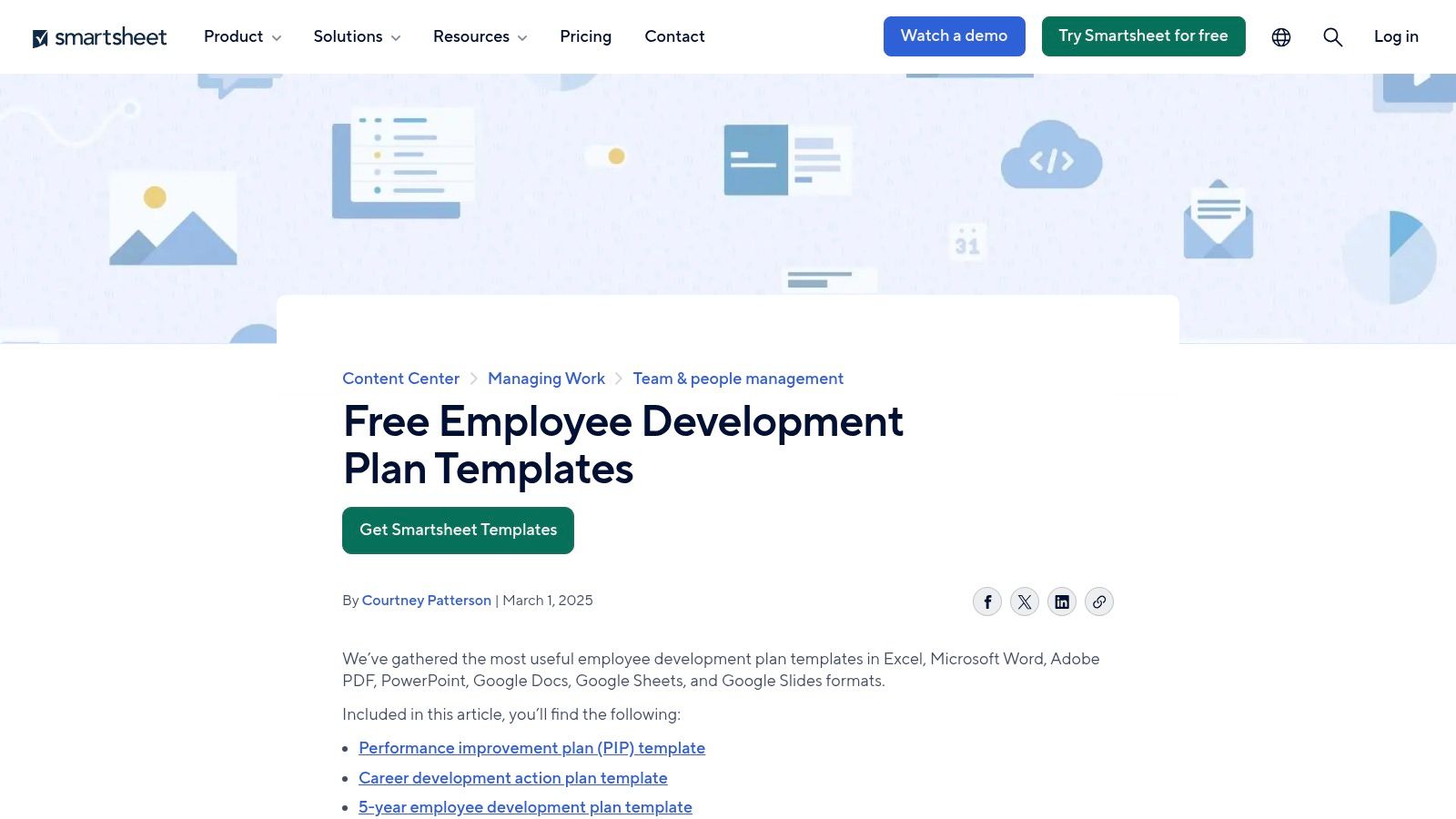
    A screenshot of the Smartsheet website showing a personal development plan template.

    Unlike platforms focused on design, Smartsheet’s strength is its functional structure. Templates include frameworks for performance improvement and career planning. Many are available for direct download, which is great for users in India wanting quick access to tools that help manage workplace stress and anxiety.

    Key Considerations

    The templates are free, but the website heavily promotes its paid software, which can be a bit distracting. The templates themselves are sometimes found within long articles, so finding the download link might take a moment.

    Best For: Professionals and HR managers who prefer spreadsheet-based, functional templates for goal tracking.

    Website: Smartsheet

    3. Canva

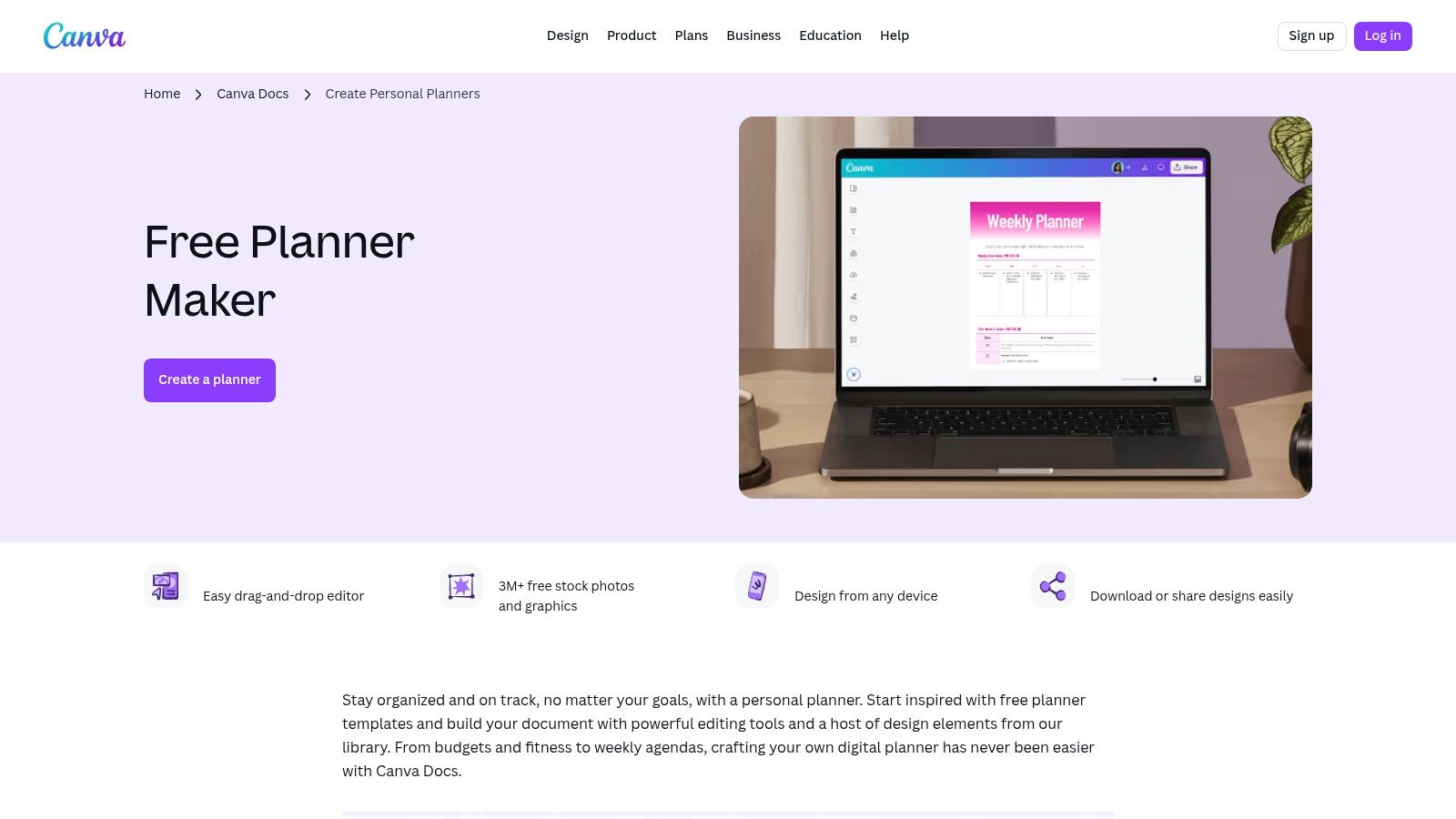
    Canva helps turn a simple personal development plan template into a visually engaging and motivating document. It's a great choice if you want your plan to be both functional and beautiful. Its easy-to-use editor lets you customise layouts and add graphics to create a plan that truly inspires you.

    A screenshot of the Canva website displaying personal development plan templates.

    The platform offers a large library of templates, including planners and goal sheets. For users in India, Canva offers a smooth experience with local pricing. Its collaboration features also make it easy to share your plan with a mentor or through counselling, fostering a supportive environment for growth.

    Key Considerations

    The free version is very useful, but some premium designs and tools require a Pro subscription. Since the focus is on visuals, you might need to put a little extra thought into making the template practical for tracking your progress.

    Best For: Individuals who want a highly customisable, visually polished plan that can be easily shared or presented.

    Website: Canva

    4. ClickUp

    ClickUp changes the personal development plan template from a static page into a dynamic project. It offers a template within its project management platform, which is ideal for actively tracking your well-being goals. This approach helps you manage personal growth with the same focus as a professional project.

    The template includes helpful features like custom statuses to see if you're on track and fields for logging goals and wins. Its real strength is helping you take action. This is especially useful for professionals in India managing workplace stress by breaking down large goals into smaller, more achievable steps.

    Key Considerations

    Because the platform is so comprehensive, there can be a learning curve. To use the template, you need to use the ClickUp workspace, which might feel like too much if you just want a simple plan. The free version is generous, but advanced features require a paid plan.

    Best For: Individuals who prefer a task-based, highly organised system for continuous tracking and execution of their development goals.

    Website: ClickUp

    5. Miro (Miroverse templates)

    Miro offers an interactive way to create a personal development plan template. It uses digital whiteboards where you can visually map out your growth journey. This format is great for workshops, coaching, or manager-employee planning, turning the process into a real-time collaboration.

    The platform is designed for creative brainstorming and flexible planning. It's ideal for individuals in India and around the world who prefer a less rigid environment. Using tools like this can help build resilience and a shared sense of purpose in a team. You can also explore Miro's AI-powered capabilities for more ideas.

    Key Considerations

    The free-form style might feel unstructured for those who prefer a clear, spreadsheet-like format. While the free plan is good for individual use, extensive team features are part of the paid subscriptions. A stable internet connection is also needed for the best experience.

    Best For: Teams, mentors, and visual thinkers who want a collaborative and interactive planning experience.

    Website: Miro

    6. Asana

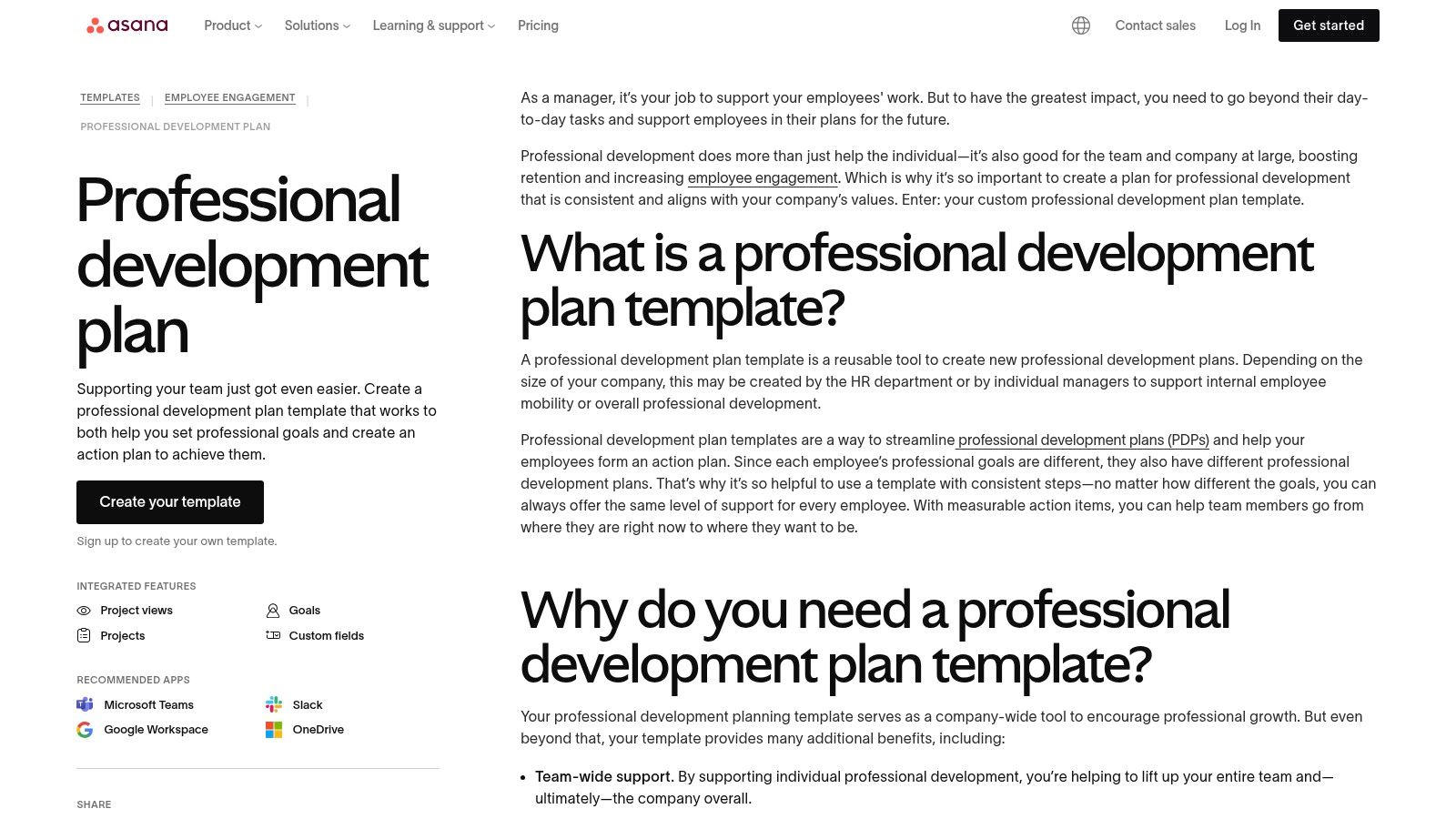
    Asana helps turn personal development into an actionable project. Its personal development plan template is integrated into its task management system, making it great for professionals who already use Asana. Your plan becomes a dynamic project with tasks and due dates, perfect for structured growth.

    A screenshot of the Asana website showing its professional development plan template.

    This approach is very effective for tracking progress, especially in a professional setting. You can link your development plan to team goals or performance reviews, creating transparency. This organized method can help manage workplace stress by keeping everything in one place.

    Key Considerations

    To use the template, you must set up an Asana workspace, which might not be ideal for someone seeking a simple, standalone document. The platform is most beneficial when used with a team. The free plan is quite generous for individuals and small teams.

    Best For: Professionals and teams who want to integrate personal development directly into their project management workflows.

    Website: Asana

    7. Notion

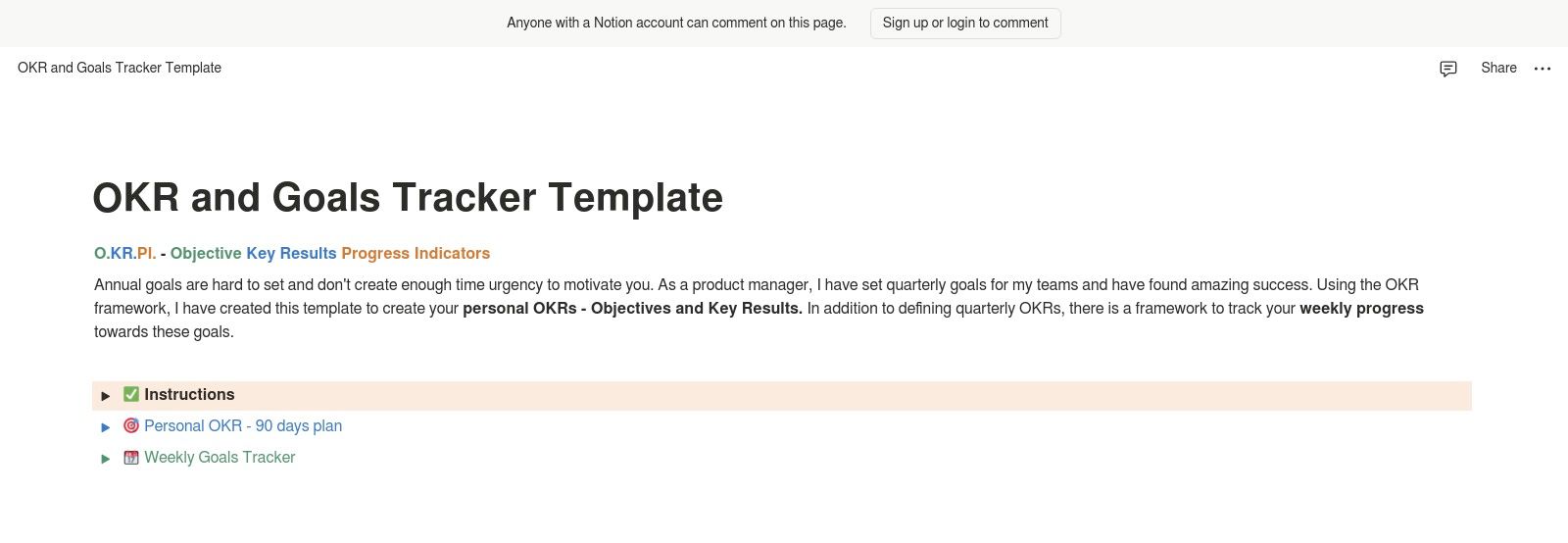
    Notion transforms a static personal development plan template into a flexible, all-in-one digital workspace. It allows you to build a completely customised system, linking goals to projects and daily habits. You can create interconnected pages for tracking objectives, making it a powerful tool for organising your life.

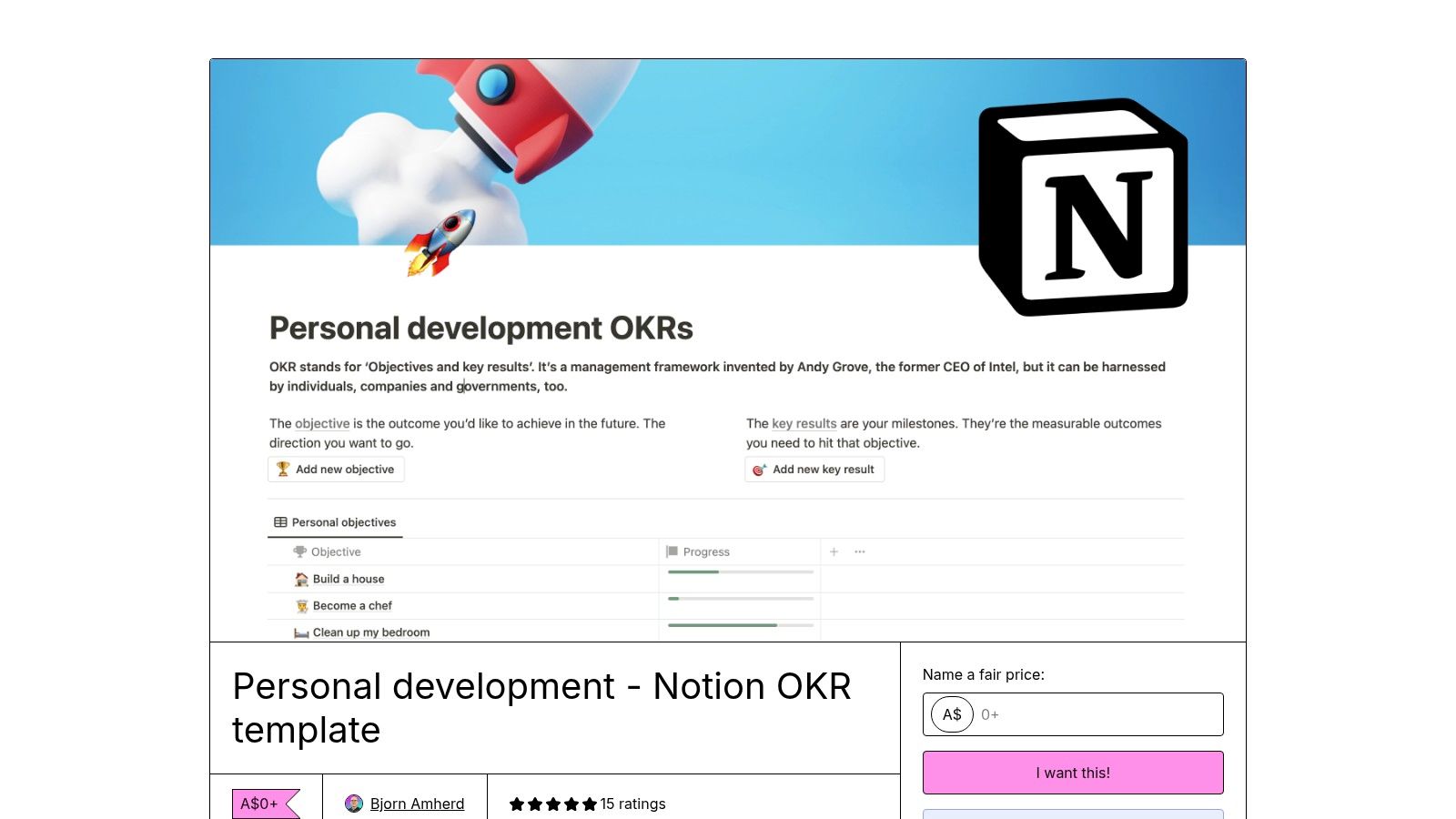
    A screenshot of a Notion workspace showing a goals and OKR tracker template.

    The platform has a strong community that shares many free goal-setting templates you can easily add to your workspace. For individuals in India who enjoy digital customisation, Notion’s free plan is often enough. This makes it a great choice for building resilience and an organised approach to growth.

    Key Considerations

    Notion's great flexibility comes with a steeper learning curve. You may need to invest some time upfront to understand how it works. It's less of a quick-download solution and more of a long-term tool for creating a personalised productivity and well-being hub.

    Best For: Tech-savvy users who want a highly customisable, integrated system to manage all aspects of their personal development.

    Website: Notion

    8. Etsy

    Etsy is a marketplace where independent creators offer unique and creative versions of a personal development plan template. These templates often feel more like guided workbooks, with sections for reflection and habit tracking. They are perfect for those who prefer a more holistic and visually appealing approach.

    The platform is excellent for users who want to print their plans or use them on a tablet. Most are instant digital downloads in PDF or Canva formats. The wide variety of styles, from minimal to colourful, makes it easier to find a template that supports your personal well-being journey.

    Key Considerations

    Since these are made by individual sellers, quality can vary. It’s a good idea to read descriptions and reviews before buying. Some templates might be more aesthetic than practical, so be sure it has the structure you need for your goals.

    Best For: Individuals who prefer a creative, printable, or digitally annotatable workbook-style planner.

    Website: Etsy

    9. Creative Market

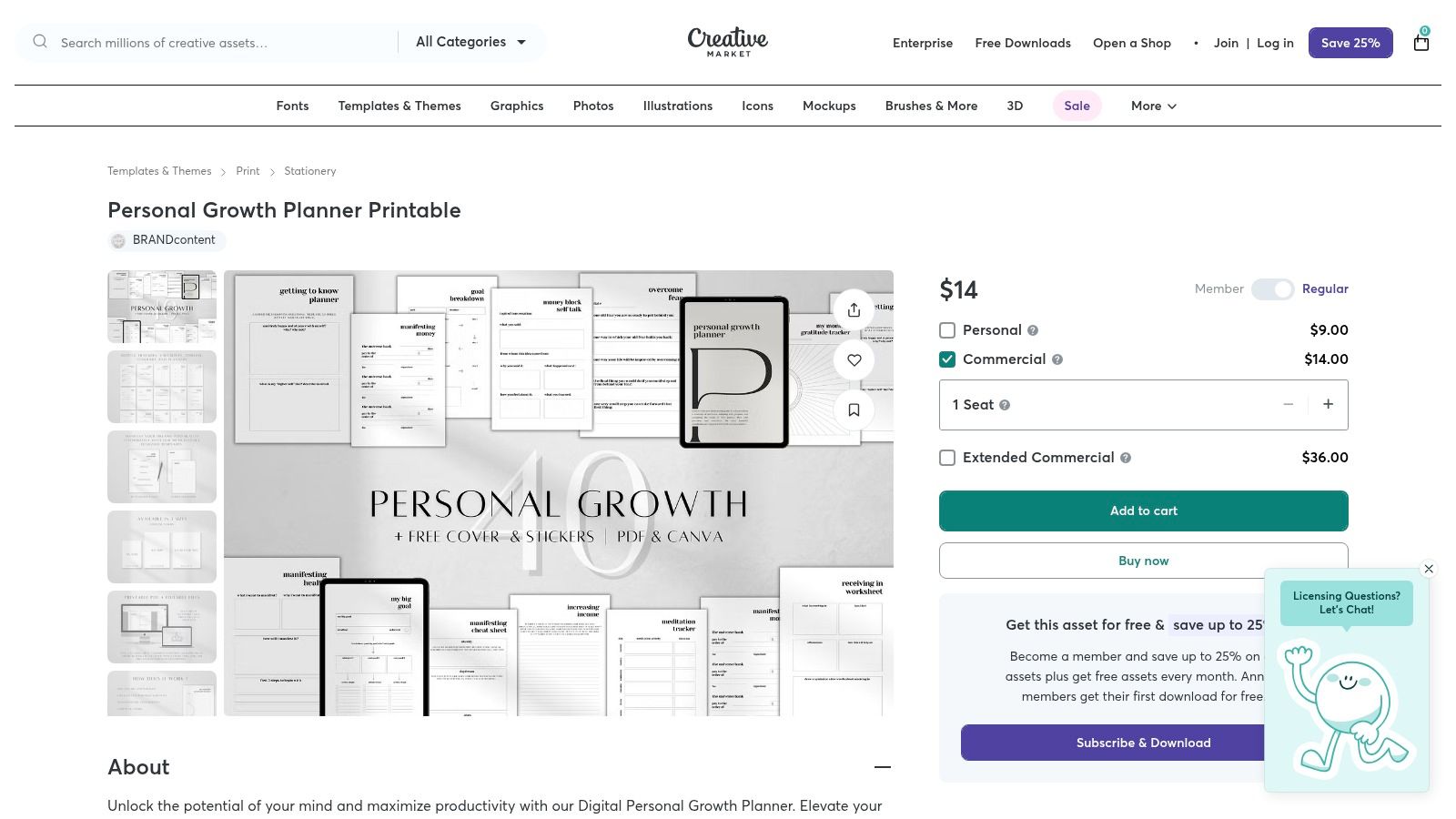
    Creative Market is a digital marketplace for design assets, including polished and professional personal development plan template collections. It is an excellent resource for coaches, professionals, or small businesses who need a visually impressive template. Many are sold as comprehensive planner bundles, offering great value.

    A screenshot of the Creative Market website displaying a personal growth planner template.

    The platform provides editable source files, often for Canva, along with printable PDFs. This allows for deep customisation, which is ideal for client-facing work in counselling or corporate training. The one-time purchase model is clear, and it’s a good idea for users in India to check licence terms for commercial use.

    Key Considerations

    Since it’s a marketplace, quality and structure can differ. Some templates might focus more on appearance than on practical elements. Be sure to read the item description carefully to ensure it meets your needs for managing well-being and growth.

    Best For: Coaches, trainers, and professionals who need a customisable, design-forward template for client work.

    Website: Creative Market

    10. Gumroad

    Gumroad is a digital marketplace where creators sell their digital products directly. For those seeking a modern personal development plan template, it offers sophisticated systems, many designed for tools like Notion. You can find all-in-one dashboards that integrate goal setting, habit tracking, and journaling.

    A screenshot of a Gumroad product page showing a Notion-based personal development plan template.

    This platform is great for tech-savvy individuals in India and worldwide who want an instant and interactive solution. Products are delivered immediately after purchase. The variety is huge, from simple trackers to complex systems that help manage everything from workplace stress to personal well-being.

    Key Considerations

    As Gumroad is a marketplace, the quality and complexity can vary. It's important to check previews and user ratings before buying. While many options are affordable, their usefulness depends on your comfort with the platform they are built for, such as Notion.

    Best For: Users who prefer integrated digital systems within tools like Notion and want to support independent creators.

    Website: Gumroad

    11. AIHR (Academy to Innovate HR)

    AIHR (Academy to Innovate HR) offers a professional and structured personal development plan template. Grounded in HR best practices, this resource is perfect for professionals and managers. The template is evidence-based and guides you through identifying skills, setting clear goals, and defining actionable steps.

    The template is a free download in Word and PDF formats, making it easy to access. AIHR also provides detailed guides and examples to help you fill out the plan effectively. This extra context is very valuable for building resilience and skills in a professional environment.

    Key Considerations

    The templates are naturally designed for a professional context. If your focus is purely on personal well-being outside of work, you might need to adapt the language a bit. The core template is free, though the site also promotes paid courses.

    Best For: Professionals and team leaders who want a credible, HR-approved template for structured career and skill development.

    Website: AIHR

    12. TemplateLab

    TemplateLab is a great resource for a large collection of free personal development plan template options in Word and PDF. The platform allows users in India and worldwide to compare different formats quickly. You can find everything from simple forms to more detailed professional development plans.

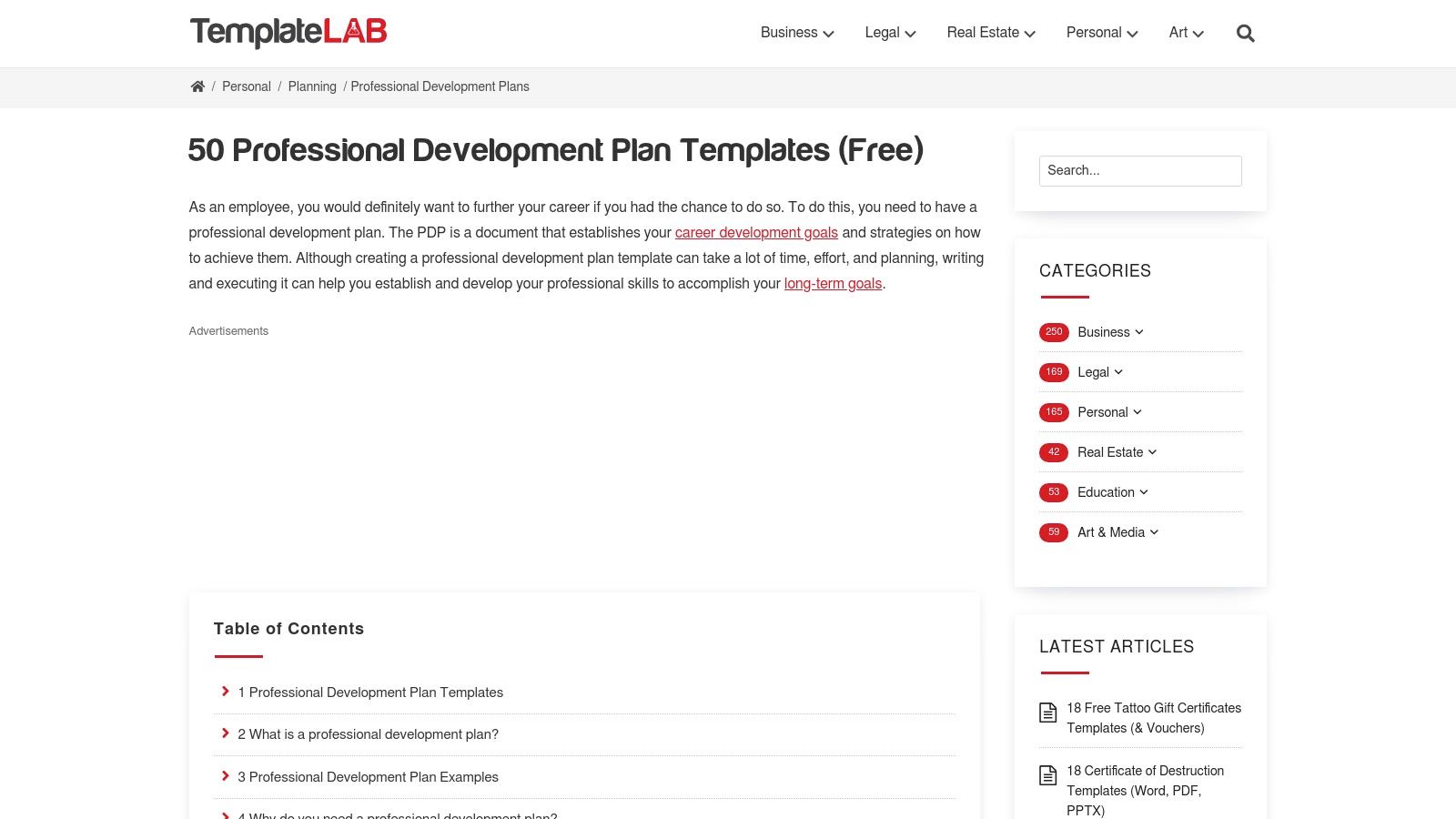
    A screenshot of the TemplateLab website showing various professional development plan templates.

    The direct download model, with no sign-ups, is a big plus for efficiency. The site also offers SMART goal worksheets to help break down larger ambitions into manageable steps. The templates are simple Word forms, making them easy to adapt for your personal journey toward better well-being.

    Key Considerations

    TemplateLab focuses more on function than on visual design; many templates are quite basic. The website is also ad-supported, which can sometimes be a distraction as you search for the right tool to manage workplace stress and build resilience.

    Best For: Individuals who want to compare many different free PDP formats quickly before committing to one.

    Website: TemplateLab

    Personal Development Plan Templates: 12-Resource Comparison

    Provider Core features ✨ Experience & Quality ★ Price / Value 💰 Target audience 👥 Best for 🏆
    Template.net ✨ Wide PDP formats + online editor ★★★★☆ 💰 Freemium (downloads/subscription) 👥 Users wanting ready‑to‑use documents 🏆 Deep PDP template variety
    Smartsheet ✨ Spreadsheet templates & trackers ★★★★☆ 💰 Many free downloads; platform upsell 👥 HR teams & spreadsheet users 🏆 Practical trackers & HR frameworks
    Canva ✨ Drag‑drop visuals, collaboration ★★★★☆ 💰 Free / Pro for brand assets 👥 Presenters & visually oriented users 🏆 Polished, shareable PDPs
    ClickUp ✨ Task-based PDPs, automations ★★★★☆ 💰 Freemium (best with paid plan) 👥 People needing execution & monitoring 🏆 Ongoing tracking & reminders
    Miro ✨ Visual canvases + real‑time collab ★★★★☆ 💰 Free plan / paid team features 👥 Coaches, managers, workshop facilitators 🏆 Interactive planning workshops
    Asana ✨ Task owners, due dates, dashboards ★★★★☆ 💰 Free for small teams; paid tiers 👥 Teams integrating PDPs into workflows 🏆 Structured development conversations
    Notion ✨ Databases, relations, duplicable templates ★★★★☆ 💰 Free / Paid upgrades 👥 Power users who customize systems 🏆 Highly customizable all‑in‑one PDP
    Etsy ✨ Printable kits, guided prompts ★★★☆☆ 💰 Low‑cost one‑time purchases 👥 Users preferring printables/tablet use 🏆 Designer workbook styles
    Creative Market ✨ Polished printable + editable files ★★★★☆ 💰 One‑time purchases (varied price) 👥 Professionals needing branded assets 🏆 High‑quality, client‑ready templates
    Gumroad ✨ Creator‑made Notion/OKR templates ★★★★☆ 💰 Affordable/pay‑what‑you‑want 👥 Notion users & indie‑supporters 🏆 Quick plug‑ins & dashboards
    AIHR ✨ Evidence‑based IDP + guides ★★★★★ 💰 Free templates & examples 👥 HR professionals & L&D teams 🏆 HR‑aligned, best‑practice IDPs
    TemplateLab ✨ Large collection of Word/PDF samples ★★★★☆ 💰 Free downloads (ad‑supported) 👥 Users comparing multiple formats quickly 🏆 Fast access to many PDP structures

    Your Journey Forward: Embracing Growth with Self-Compassion

    Choosing to work on your personal development is an act of self-care and courage. This guide has shown a variety of resources, from structured tools like ClickUp to creative platforms like Canva. Each one can be a helpful companion on your journey toward greater well-being.

    There is no single "best" personal development plan template. The right tool is the one that fits your personality and goals. Your path is your own, and a template is just a guide to help you move forward with more clarity and intention.

    Choosing Your Guide: A Final Thought

    To choose the best template for you, consider what you need most:

    • For Visual Thinkers: If you are motivated by design and creativity, platforms like Canva, Miro, or Etsy will likely feel most comfortable. They help you build a plan that is inspiring to look at.
    • For Structure-Oriented Professionals: If you like organization and clear metrics, tools such as Smartsheet, ClickUp, or Asana are great choices. They help you manage workplace stress and career goals with precision.
    • For Ultimate Customisation: If you enjoy building your own systems, Notion offers incredible flexibility. It allows you to create a personalised dashboard for your professional goals and mental well-being practices.
    • For Simplicity and Ease: Sometimes, the simplest tool is the most effective. The easy-to-download documents from Template.net or TemplateLab offer a direct way to get your thoughts on paper and start taking action.

    Moving Forward with Kindness

    Remember, a personal development plan is a living document, not a rigid set of rules. Life is unpredictable, and it’s okay for your priorities to change. This is a sign of growth, not a setback. Challenges like stress, anxiety, or burnout are part of being human.

    Check in with your plan regularly and adjust it with self-compassion. This journey is about continuous learning and becoming more resilient, not about achieving perfection. The goal is sustainable well-being, and you deserve to treat yourself with kindness along the way.

    Your commitment to growth is a sign of your strength. By choosing a personal development plan template that feels right and approaching it with flexibility, you are setting yourself up for a more fulfilling life.


    If you feel overwhelmed while creating your plan, you don't have to navigate it alone. Assessments in these templates are informational, not diagnostic, but talking to someone can help. DeTalks offers a supportive space with professional therapy and counselling to help you build resilience, manage stress, anxiety, or feelings of depression, and align your actions with your values. Explore how guided support can enhance your journey at DeTalks.