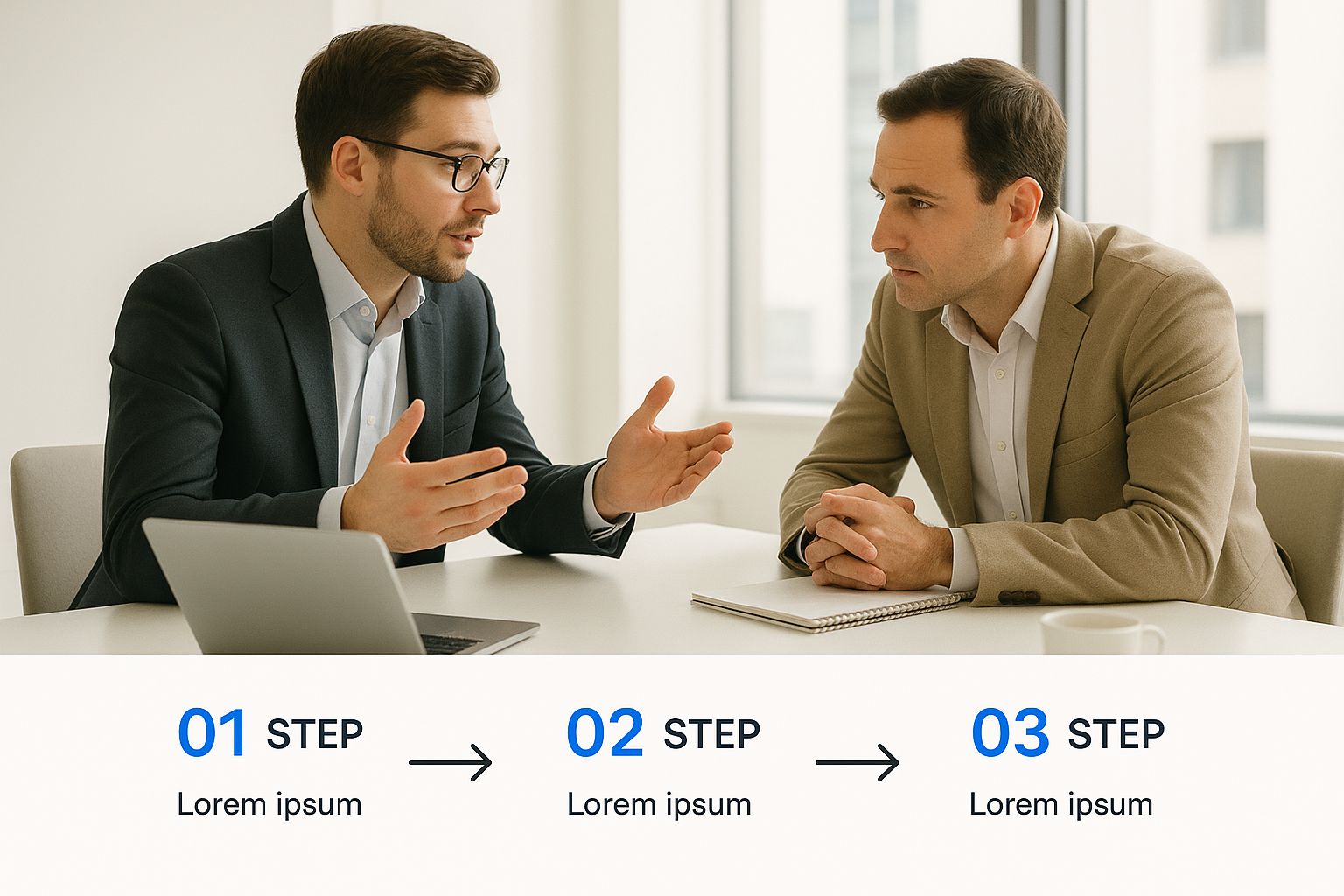
A small misunderstanding can change the mood of your whole day. Your manager asks for a “quick update”, you give a brief reply, and later learn they wanted details you never realised they needed. At home, a partner says, “You’re not listening,” even though you were trying hard to stay calm and helpful.
These moments can leave you tense, ashamed, confused, or tired. When miscommunication keeps happening, it can feed workplace stress, relationship strain, self-doubt, and even make existing anxiety or low mood feel heavier.
A communication skills test can help, but not in the harsh, exam-like way many people imagine. Used well, it acts more like a gentle check-in. It can show how you speak, listen, respond under pressure, and express emotion, so you can understand yourself with more clarity and less blame.
The Hidden Stress of Miscommunication
Riya had prepared carefully for her team meeting. She knew the numbers, had finished the slides, and answered every question her manager asked. Still, she left the room with a knot in her stomach because the feedback was, “You need to communicate more clearly.”
That kind of comment can sting. It sounds simple, but it often lands as a judgement on your intelligence, confidence, or worth.

When stress changes how you speak
Under pressure, many people speak too fast, go silent, become defensive, or miss emotional cues. That doesn’t mean they’re careless. It often means their nervous system is overloaded.
A student facing exam stress may sound abrupt when they’re scared. A professional dealing with burnout may stop asking questions because they’re mentally exhausted. A couple in conflict may repeat the same argument because each person is trying to be heard, not because either person is cruel.
Miscommunication often looks like a personality problem when it’s really a skills problem mixed with stress.
The workplace shows this clearly. If you want a practical view of how poor communication affects businesses, it helps to see how small gaps in clarity can lead to confusion, delay, and tension across teams.
A test can offer clarity, not criticism
A communication skills test proves useful. It doesn’t exist to shame you or rank you as “good” or “bad”. It gives structure to something that usually feels vague and emotional.
Instead of thinking, “Why do people always misunderstand me?”, you can ask more specific questions:
- Do I explain ideas clearly
- Do I interrupt when I’m anxious
- Do I struggle to say what I need
- Do I miss body language or tone
- Do I listen to reply instead of listening to understand
That shift matters. Clearer self-understanding can reduce blame, soften conflict, and support well-being. It can also help people build resilience, because they stop seeing every difficult conversation as proof that something is wrong with them.
What Is a Communication Skills Test Really
A communication skills test is best understood as a mirror for your conversation habits. It reflects patterns you may not notice on your own, such as how you listen, how directly you speak, how you manage conflict, and how you respond when emotions rise.

Many people hear the word “test” and immediately think of pass or fail. That’s not the most helpful way to view it. In personal growth, therapy, counselling, education, or professional development, these tools are usually meant to offer structured feedback, not final judgement.
What it usually looks at
A communication skills test may focus on several areas at once. Some tools ask you to rate yourself. Others use role-play, observation, or practical scenarios.
Common areas include:
- Verbal clarity. How clearly you explain an idea, request, or concern.
- Active listening. Whether you notice key details, ask follow-up questions, and show the other person you understand.
- Non-verbal awareness. How well you read facial expression, posture, eye contact, and tone.
- Emotional expression. Whether you can communicate feelings in a steady, respectful way.
- Assertiveness. How comfortably you say no, set boundaries, or make requests without becoming aggressive or withdrawn.
Some people are strong in empathy but weak in directness. Others are confident at work yet shut down in personal conflict. A good assessment helps separate these patterns instead of treating communication as one single trait.
What it is not
A communication skills test is informational, not diagnostic. It cannot diagnose depression, anxiety, a relationship disorder, or any mental health condition.
That distinction is important. If a person struggles to speak in meetings, the issue may involve confidence, language background, workplace culture, fear of criticism, or fatigue. A test can point toward a pattern, but it doesn’t replace a therapist, counsellor, psychologist, or psychiatrist.
Practical rule: Use assessment results as a starting point for reflection, not as a fixed label.
Improving communication can still support mental health in meaningful ways. When people learn to speak more clearly, listen with care, and set boundaries, they often feel less helpless in difficult situations. That can strengthen day-to-day resilience and reduce the tension that often surrounds conflict.
A short explainer can make this easier to picture in real life.
Why this matters for well-being
Communication shapes how safe we feel with others. If you often feel misunderstood, ignored, or unable to express yourself, that can undermine mood, confidence, work performance, and closeness in relationships.
When people improve these skills, they often notice changes that feel simple but powerful:
- Less guesswork in hard conversations.
- More self-respect when setting boundaries.
- Better conflict recovery after disagreement.
- More compassion for themselves and others.
That’s why a communication skills test can be helpful in both professional and personal settings. It gives you language for patterns that used to feel confusing.
Exploring Different Types of Communication Tests
Not all communication assessments work in the same way. Some are private and reflective. Others are practical and interactive.

Self-report questionnaires
These are the most familiar type. You read statements about your own habits and rate how often they feel true.
A self-report format might ask whether you avoid conflict, interrupt others, struggle to express needs, or feel comfortable discussing emotions. This kind of test is easy to access and useful for self-reflection, especially if you're beginning your journey with therapy, counselling, or personal development.
Its main strength is convenience. Its main limitation is that people don’t always see themselves clearly, especially when stress, shame, or overconfidence gets in the way.
Observational assessments
In this format, another person watches how you communicate. That observer may be a trainer, counsellor, therapist, educator, coach, or workplace assessor.
They may watch a live conversation, a group discussion, or a structured exercise. They look for things like turn-taking, listening, body language, emotional regulation, and how you handle disagreement.
This type often feels more grounded because it captures real behaviour, not just self-perception. At the same time, it depends on context. A person may communicate very differently with a friend than with a senior manager, spouse, or unfamiliar evaluator.
Situational judgement and role-play tests
These are practical and often surprisingly revealing. You’re given a scenario and asked how you’d respond, or you act it out in a simulated conversation.
For example, you may need to respond to a frustrated client, resolve a disagreement with a colleague, or speak to a family member who feels hurt. These tests can show how you think under pressure, whether you choose avoidance, clarity, empathy, or defensiveness.
They’re often useful in training and hiring, but they can also support self-understanding. The challenge is that knowing the “right” answer on paper doesn’t always mean you can use it when you're angry, anxious, or overwhelmed.
A quick comparison
| Type | Best for | What it measures well | Main limitation |
|---|---|---|---|
| Self-report questionnaire | Private reflection | Self-awareness, preferences, perceived habits | You may under-rate or over-rate yourself |
| Observational assessment | Coaching, counselling, training | Real-time behaviour, listening, body language | Results can change with setting and comfort |
| Situational judgement or role-play | Practice and applied learning | Responses under structure, conflict style, decision-making | A simulated answer may differ from real-life behaviour |
Which one feels right
The best choice depends on why you're taking a communication skills test.
- If you want quiet self-reflection, start with self-report.
- If you want specific behavioural feedback, observation may help more.
- If you want to practise difficult conversations, role-play is often the clearest option.
A useful assessment doesn’t just describe you. It helps you notice what happens when pressure, emotion, and relationships enter the room.
Some people benefit from more than one format. A questionnaire may reveal what you believe about your communication, while observation shows what you do in the moment. That difference can be uncomfortable, but it’s often where growth begins.
What to Expect with Sample Questions and Scenarios
Many people feel nervous before taking a communication skills test because they don’t know what will be asked. Once you see the format, the process usually feels much less intimidating.
Self-report examples
A self-report question often sounds simple. You read a statement and choose how often it applies to you, such as never, rarely, sometimes, often, or almost always.
Examples include:
- When I disagree with someone, I stay calm enough to explain my view clearly.
- I notice when another person wants empathy rather than advice.
- I avoid difficult conversations even when they matter.
- I ask questions to make sure I’ve understood correctly.
These questions aren’t trying to catch you out. They’re looking for patterns, especially in conflict, emotional expression, and listening.
Situational examples
A situational judgement test gives you a realistic problem and asks how you’d respond. The goal isn’t perfect wording. It’s to understand your instinct.
Here is a workplace example. Your colleague says, “You never update me on time,” in front of the team. Which response feels closest to what you’d do?
- Stay silent and discuss it later, even though you feel upset.
- Defend yourself immediately and list everything you did.
- Say, “I’d like to understand what felt delayed to you. Let’s review it after the meeting.”
- Make a joke to reduce tension and move on.
A personal-life version might ask how you respond when a partner says, “You’re always distracted when I talk.” The test may assess whether you become defensive, curious, avoidant, or emotionally open.
Observational examples
In an observational exercise, a facilitator may ask you to join a short discussion or role-play. They’re not only listening to your words. They’re also noticing the way you deliver them.
They may look at:
- Turn-taking during group discussion
- Tone of voice when disagreement appears
- Eye contact and posture
- Whether you clarify or assume
- How you respond when someone seems hurt or confused
A student may be asked to discuss a project with peers. A professional may practise giving feedback to a team member. A couple in counselling may be guided through a structured conversation where each person speaks for a set time while the other listens and reflects back what they heard.
If a question feels hard, that doesn’t mean you’re failing. It often means the test has touched a real-life pressure point.
What helps before you start
You don’t need to prepare in the same way you would for an academic exam. It helps more to arrive honest and settled.
A few simple habits can make the experience easier:
- Pause before answering. Fast answers aren’t always accurate answers.
- Think about recent situations. Real examples are better than ideal versions of yourself.
- Notice your stress level. If you're tired or upset, your responses may reflect that moment.
- Stay curious. The point is learning, not performing.
For many people, seeing sample questions reduces shame. They realise the test is asking ordinary human questions about clarity, listening, emotion, and conflict. That makes it easier to engage with the process openly.
Understanding Your Score and Its Meaning
When results arrive, many people search for a verdict. Am I good at communication or bad at it? That’s usually the least useful question.
A communication skills test is better read as a profile, not a grade. It shows where you may already have strengths and where extra support could help.
There is no pass or fail
A lower score in one area doesn’t mean you’re doomed to struggle. It may show that a skill becomes harder for you under stress, or that you never had the chance to learn it in a supportive environment.
A person can be warm, thoughtful, and deeply caring, yet still struggle with assertiveness. Another person can be articulate and quick-thinking, yet miss emotional cues and come across as distant. Neither profile is a moral failure.
How to read common score areas
If your results are broken into categories, it helps to read each one in plain language.
| Score area | What a relative strength may suggest | What a lower area may suggest |
|---|---|---|
| Active listening | You pick up details, show attention, and help others feel heard | You may drift, interrupt, or focus on your own response too quickly |
| Verbal clarity | You explain ideas in an organised way | You may assume others understand more than they do |
| Emotional expression | You can name feelings and communicate them respectfully | You may go silent, sound harsh, or hide what matters |
| Non-verbal awareness | You notice tone, posture, and shifts in mood | You may miss cues or misread them |
| Assertiveness | You can state needs and boundaries with steadiness | You may avoid, appease, or become reactive |
These patterns can point toward helpful next steps. Someone with strong empathy but low directness may benefit from practising boundary-setting. Someone with high clarity but low listening may need to slow down and ask more questions.
Treat it as a snapshot
Scores reflect a moment in time. If you take an assessment during burnout, conflict, grief, or severe workplace stress, your communication may look very different from how it does when you feel safe and rested.
That’s why interpretation matters. Results should be held lightly and used with context.
- Ask what was happening in your life when you took the test
- Look for recurring patterns, not isolated awkward moments
- Focus on one or two areas for growth instead of everything at once
- If results bring up distress, talk them through with a therapist or counsellor
A score can also help reduce self-blame. Instead of saying, “I ruin every conversation,” you might learn, “I struggle with verbal clarity when I feel criticised,” or “I stop listening well when I’m already overwhelmed.” That kind of language is gentler, more accurate, and more useful.
Who Can Benefit from a Communication Skills Test
A communication skills test can help far more people than those preparing for interviews. It can support students, professionals, couples, and anyone trying to improve self-understanding and daily well-being.
Students facing pressure and uncertainty
College and university students in India often carry multiple pressures at once. They may be managing exams, family expectations, career confusion, friendships, and a changing sense of identity.
The relevance is practical. In India, a 2023 survey by the National Sample Survey Office and the Ministry of Skill Development and Entrepreneurship found that 72% of employers in urban areas such as Mumbai, Delhi, and Bangalore prioritise communication skills as the top criterion for hiring fresh graduates. The same source notes that a 2024 ASSOCHAM study found 81% of professionals with anxiety or burnout scored below average on active listening and verbal clarity tests in the context discussed in that report on communication skills and hiring relevance in India.
For a student, that doesn’t mean “speak perfectly or fall behind”. It means communication is worth practising early, with compassion, before job pressure rises.
Working professionals under strain
A professional may know their subject well and still struggle to present ideas, give feedback, or ask for support. That gap often becomes more visible during workplace stress, conflict with managers, or burnout.
A communication skills test can help someone notice whether the issue is clarity, listening, tone, or difficulty being assertive. That makes professional growth more specific. It can also support emotional health, because unclear feedback at work often feeds self-criticism and anxiety.
Couples and families stuck in repeating patterns
Many relationship problems aren’t caused by lack of love. They grow from habits like interrupting, assuming intent, avoiding vulnerable topics, or expressing pain as anger.
In couples work or family counselling, a communication-focused assessment can create a calmer starting point. It gives people shared language. Instead of “You never care”, the conversation can move toward “I don’t feel heard when I’m interrupted” or “I shut down when conflict gets intense.”
People seeking personal growth
Some readers aren’t in crisis. They want stronger self-awareness, better boundaries, more ease in social situations, or greater emotional intelligence.
That’s a valid reason to take a communication skills test. It can support goals linked to resilience, compassion, confidence, happiness, and deeper connection with others.
Better communication isn’t only about speaking well. It’s about living with less fear, less confusion, and more honesty in your relationships.
In that sense, the tool can serve both practical outcomes and inner well-being. It helps people notice not just how they talk, but how they relate.
Finding the Right Test and Its Limitations
Not every communication skills test deserves your trust. Some are thoughtful and context-sensitive. Others are too generic, too culture-bound, or too simplistic to be helpful.
Why context matters in India
India is multilingual, layered, and regionally diverse. People often switch between languages, tones, and styles depending on whether they’re speaking with parents, teachers, clients, managers, or friends.
A test built around one narrow communication style can miss that reality. A person may communicate effectively in Hindi, Tamil, Bengali, Marathi, or a bilingual mix, yet score poorly on a tool that assumes standardised English phrasing, Western norms of assertiveness, or unfamiliar non-verbal cues.
That concern isn’t small. A 2023 NIMHANS study found that 68% of mental health assessments, including communication-related ones for anxiety and depression, show low reliability when applied across non-Hindi and non-English speaking populations in rural South India. The same source also states that recent 2025 data from the Indian Journal of Psychiatry indicates only 12% of available online assessments are validated for Indian contexts, as discussed in this piece on communication testing and assessment validity.
Common limitations to keep in mind
Even a solid assessment has limits. It can guide reflection, but it can’t capture the whole person.
Some common issues include:
- Cultural bias. The tool may reward one style of speaking and undervalue others.
- Context dependency. You may speak confidently at work but shut down in intimate relationships, or the reverse.
- Performance effect. Some people answer with the ideal response rather than their usual one.
- Stress distortion. Fatigue, anxiety, depression, and burnout can affect how you respond on that day.
- Over-interpretation. Users sometimes treat a score like a diagnosis when it isn’t one.
How to choose more carefully
If you’re using a test for self-understanding, therapy, counselling, or professional development, look for signs that it was created with care.
A stronger option usually has:
- Clear purpose, so you know whether it’s for hiring, coaching, education, or self-reflection.
- Transparent framing, which states that results are informational, not diagnostic.
- Cultural relevance, especially if you're in a multilingual or regionally distinct setting.
- Practical feedback, not just a vague label.
- Qualified follow-up, such as interpretation support from a therapist, counsellor, or trained facilitator.
If you're also comparing broader evaluation tools, it can help to see how providers discuss comprehensive adult mental health assessments. The useful lesson is not to self-diagnose from a single quiz, but to value tools that explain scope, limits, and next steps clearly.
A good assessment respects complexity. It doesn’t flatten culture, language, stress, and personality into one neat score.
That’s especially important for people already dealing with anxiety, depression, or uncertainty about whether they need therapy. In those cases, a communication test can offer insight, but it shouldn’t carry more authority than it holds.
From Insight to Action Your Next Steps with DeTalks
Insight only helps if you do something gentle and realistic with it. After a communication skills test, the next step isn’t to overhaul your whole personality. It’s to choose one practical direction.

If your results show small, workable gaps
You may notice one or two habits that are getting in your way. Perhaps you speak too quickly when nervous, avoid conflict, or forget to check whether you understood the other person correctly.
That kind of result often responds well to small practice:
- Use a pause before replying in tense conversations.
- Reflect back one sentence before giving your opinion.
- Replace mind-reading with checking, such as “Did you mean…?”
- Prepare one clear boundary sentence for work or home.
- Keep a short communication journal after difficult interactions.
These are modest actions, but they can support confidence and emotional steadiness.
If you want skill-building and structure
Some people don’t need deep therapeutic work. They need guided practice. That might include communication workshops, speaking exercises, role-play, coaching, or self-help resources focused on clarity and confidence.
If speaking up at work is one of your pain points, ChatPal's guide on confident speaking offers practical ideas that can complement what you learn from an assessment. Resources like that can help you rehearse new habits before using them in real conversations.
If the results connect to deeper distress
Sometimes communication difficulties are not just about technique. They’re tied to fear of rejection, chronic self-criticism, relationship wounds, burnout, or symptoms of anxiety and depression.
In those cases, support from therapy or counselling can be valuable. A therapist can help you explore what happens inside you before, during, and after difficult conversations. You might learn that your silence is a form of self-protection, or that your irritability rises when you feel unseen, ashamed, or emotionally flooded.
This is where compassionate support matters most. The goal isn’t to make you polished. It’s to help you communicate in ways that feel safer, clearer, and more aligned with your values.
How to use assessment insights wisely
A helpful way to move forward is to turn broad results into one living question.
Try questions like these:
- What situations make my communication harder
- What do I need in order to listen well
- Where do I confuse being nice with avoiding honesty
- When do stress and burnout change my tone
- Which relationship feels safest to practise in first
Those questions keep the process human. They also make room for well-being, not just performance.
Growth in communication often begins with self-compassion. People learn faster when they feel safe enough to notice their patterns without attacking themselves.
A steady path forward
You don’t need to become charismatic overnight. You don’t need to sound perfect in every meeting, family discussion, or therapy session.
You can begin with one conversation. One apology said more clearly. One boundary stated with kindness. One moment of listening without preparing your defence.
Over time, those moments can support better relationships, lower stress, more emotional clarity, and stronger resilience. Not because a test fixes you, but because insight gives you a place to begin.
A communication skills test is most useful when you treat it as information, not identity. Let it guide reflection. Let it open questions. Let it help you decide whether self-help, skills practice, counselling, or therapy would support you best right now.
If you want a supportive place to explore assessments, self-help resources, and professional mental health support, DeTalks can help you take that next step with care. You can use it to better understand your communication patterns, connect with qualified therapists and counsellors, and find support for anxiety, workplace stress, relationship challenges, resilience, and overall well-being.