Tag: workplace mental health

  • Workplace Mental Health: A Guide for Indian Companies

    Workplace Mental Health: A Guide for Indian Companies

    86% of employees in India's corporate sector are struggling with mental health issues, according to the 2025 Corporate Wellness Index reported by The Federal. That number changes the conversation. Workplace mental health isn't a side topic for HR. It's part of how people work, lead, cope, recover, and stay connected to their teams.

    For new managers, this can feel intimidating. You may worry about saying the wrong thing, crossing a line, or taking on a problem you're not trained to solve. The good news is that you don't need to be a therapist to create a healthier workplace. You need awareness, empathy, clear habits, and a willingness to respond with care.

    Workplace mental health includes difficult experiences like workplace stress, anxiety, depression, and burnout. It also includes positive states such as resilience, compassion, purpose, and well-being. A mentally healthy workplace doesn't mean nobody struggles. It means people can speak up earlier, get support more easily, and work in an environment that doesn't negatively impact mental health.

    In India, this topic also sits inside real cultural pressures. Family expectations, economic uncertainty, long working hours, career competition, and hesitation around therapy or counselling all shape how employees experience distress. That makes practical leadership even more important.

    Understanding Workplace Mental Health

    Workplace mental health is the connection between a person's psychological well-being and their work environment. It includes how people feel during the workday, how they handle pressure, how safe they feel speaking up, and whether the organisation supports health in practice, not just in policy.

    Many managers think mental health means only serious illness. That's a common misunderstanding. In daily work life, it often shows up first as reduced focus, irritability, poor sleep, emotional exhaustion, fear about job stability, or a feeling that one can't switch off after office hours.

    It exists on a spectrum

    A team member can be productive and still be struggling. Another employee may look cheerful in meetings and still carry heavy anxiety. Someone else may not meet the threshold for a clinical condition but still feel worn down by relentless workplace stress.

    That's why it helps to think in three broad zones:

    • Stable and supported: The person feels challenged but not overwhelmed, and can recover after pressure.
    • Strained but functioning: The person is coping, but signs of stress, anxiety, or low mood are building.
    • Distressed and needing support: The person may need adjustments, counselling, therapy, medical guidance, or time to recover.

    None of these states say anything about character or commitment. They describe human responses to pressure.

    A healthy workplace doesn't ask people to be unaffected by stress. It helps them handle stress without losing dignity, safety, or hope.

    Why managers need a broader view

    Managers often focus on deadlines, performance, and behaviour. Those matter. But people's behaviour usually makes more sense when you ask what pressure they're carrying.

    For example, a team member who misses follow-ups may not be careless. They may be mentally overloaded. A colleague who becomes sharp or withdrawn may not be “difficult”. They may be exhausted, worried, or ashamed to admit they're struggling.

    Positive psychology belongs in this conversation too. Resilience, happiness, compassion, and emotional balance are not soft extras. They shape whether people recover after setbacks, ask for help early, and support each other under pressure.

    What good support looks like

    A mentally healthier workplace usually has a few visible traits:

    Area What employees notice
    Leadership behaviour Managers check in respectfully and don't mock vulnerability
    Work design Expectations are clearer, and pressure is discussed openly
    Support pathways People know where to go for counselling, therapy, or HR help
    Team culture Colleagues don't treat stress or depression as weakness

    This is shared work. HR can build systems, leaders can shape culture, and employees can use support. When all three move together, workplace mental health stops being a compliance document and starts becoming part of everyday management.

    The Reality of Mental Health in Indian Workplaces

    Mental health at work has a human cost, and it also has a business cost. In India, those two realities are closely linked. When people are emotionally drained, teams feel it in missed deadlines, conflict, disengagement, absenteeism, and quiet underperformance.

    According to Deloitte's report on mental health and employers, mental health conditions in India's workplace incur an economic cost of approximately INR 110,000 crore, roughly US$14 billion, annually, driven by absenteeism, attrition, and reduced productivity. For leaders, that means this issue affects not only well-being but also operations, retention, and long-term organisational stability.

    An infographic titled The Reality of Mental Health in Indian Workplaces, highlighting key statistics on employee well-being.

    What the cost really means

    The business language can sound cold, so it helps to translate it into daily examples. Absenteeism is when someone can't come to work because they're unwell. Presenteeism is more subtle. The person is present, but they can't fully focus, decide, collaborate, or contribute at their usual level.

    In practice, managers may notice things like:

    • Slower thinking: Good employees taking much longer on familiar tasks
    • Emotional friction: Small disagreements becoming bigger than they should
    • Reduced initiative: People doing the minimum because they're mentally depleted
    • Frequent withdrawal: Camera off, silence in meetings, and low engagement over time

    These aren't always attitude problems. Often, they're signs that a person's internal resources are running low.

    Why the pressure feels so intense in India

    Indian workplaces often combine ambition with uncertainty. Employees may deal with long commutes, family obligations, pressure to be constantly available, and fear of falling behind peers. For many, job insecurity adds another layer of anxiety that a standard wellness talk doesn't touch.

    A manager might say, “Take care of yourself,” while also rewarding only the people who stay online late every night. That mixed message confuses teams. It tells employees that well-being is welcome in theory, but risky in practice.

    Business reality: If leaders ignore workplace stress for too long, the effects often appear first as performance problems, not as clear requests for help.

    Why generic wellness advice isn't enough

    Yoga sessions, meditation apps, and celebration days can help some people. But they don't fix structural problems like unclear roles, harsh management, impossible timelines, or fear around layoffs. If the system creates chronic stress, individual coping tools can only do so much.

    That's why mature organisations look at both sides of the issue:

    • Personal support: counselling access, therapy options, peer support, self-help tools
    • Organisational design: manageable workloads, fair expectations, respectful leadership, psychological safety

    When managers understand this difference, they stop asking only, “Why isn't this employee coping better?” and start asking, “What in the work environment is adding to the strain?”

    Your Legal and Human Responsibilities as an Employer

    Every employer in India has a duty that goes beyond salary, leaves, and policy manuals. People spend a large part of their lives at work. If the workplace creates avoidable psychological harm, leaders can't treat that as a private issue for the employee to solve alone.

    The legal picture matters here, but the human principle is simpler. Employers are responsible for building an environment where people aren't punished, sidelined, or mocked for mental health challenges.

    What the law is trying to protect

    India's legal framework recognises mental health rights. Yet there is often a gap between rights on paper and daily workplace reality. As noted in the Indian Journal of Medical Research article on workplace stress, despite the Mental Healthcare Act (2017) guaranteeing non-discrimination, laws are often “not executed or regulated effectively,” leaving employees with mental disorders unable to verbalize problems and experiencing distress privately.

    That sentence matters because it describes what many managers miss. Silence at work doesn't always mean everything is fine. Sometimes it means the employee doesn't trust the system enough to speak.

    What new managers should do in practice

    Legal responsibility becomes real through everyday behaviour. Employees usually judge the workplace by what their manager does in ordinary moments, not by what the handbook says.

    A useful starting point is this checklist:

    • Protect dignity: Don't joke about anxiety, depression, burnout, therapy, or medication.
    • Respond early: If someone's behaviour changes, check in privately instead of waiting for a formal crisis.
    • Keep privacy in mind: A manager doesn't need every personal detail to offer support or involve HR appropriately.
    • Avoid punishment disguised as performance management: If a struggling employee needs support, start there before labelling them “uncommitted”.
    • Know your internal route: Be clear on when to refer to HR, occupational support, counselling services, or emergency response.

    Compliance is not the same as culture

    Many companies have policies that mention well-being, inclusion, or non-discrimination. Those are important, but they don't automatically create safety. Employees watch how managers handle leave requests, performance dips, emotional conversations, and return-to-work moments.

    Here's a simple contrast:

    Policy only Policy plus practice
    Mental health support exists on paper Managers actively remind people how to access support
    Anti-discrimination statement exists Leaders stop stigma in meetings and side conversations
    Leave is technically available Employees can use it without being quietly penalised

    Manager's rule of thumb: If an employee would feel safer telling a friend than telling their manager, the workplace still has work to do.

    The deeper responsibility

    You're not expected to diagnose, treat, or fix someone. You are expected to lead fairly. That means reducing unnecessary stress where you can, responding compassionately when someone struggles, and making sure help is reachable without shame.

    That approach protects the employee. It also protects the organisation from becoming the kind of place where people suffer privately until the problem becomes much harder to address.

    Recognising Signs of Distress and Using Assessments

    Managers usually notice the impact of distress before they hear the words. A person may not say, “I'm experiencing anxiety” or “I think I'm burning out.” They may become quieter, more forgetful, more reactive, or less able to keep up with work that used to feel manageable.

    That's why observation matters. Not to label people, but to notice when support may be needed.

    A professional infographic titled Recognising Signs of Distress and Using Assessments, listing five key signs of mental health struggles.

    Signs that deserve attention

    Some signs are emotional. Others appear in performance, communication, or physical habits. One sign alone doesn't confirm a problem, but a pattern is worth noticing.

    Common indicators include:

    • Behavioural changes: withdrawal from colleagues, irritability, unusual defensiveness, or less participation
    • Work pattern shifts: missed deadlines, reduced concentration, repeated errors, or disengagement from tasks
    • Physical signs: visible fatigue, headaches, poor sleep, appetite changes, or low energy
    • Attendance concerns: frequent absences, sudden leave requests, or repeated lateness
    • Cognitive strain: trouble making decisions, remembering details, or staying organised

    A manager's role is not to interpret these as proof of a diagnosis. Your role is to recognise that something may be affecting the person's well-being and to respond with curiosity and care.

    How to start the conversation

    The most helpful opening is often the simplest. Focus on what you've observed, not what you think is wrong.

    For example:

    • “I've noticed you seem more stretched than usual. How are you doing?”
    • “You don't seem like yourself lately. Is there anything affecting work that you'd like to talk through?”
    • “I've seen a change in your energy and focus. Would some support or adjustment help right now?”

    These questions invite conversation without pressure. They also reduce shame because they don't assume weakness or failure.

    Don't ask, “What's your diagnosis?” Ask, “What support would help you do your work more safely and sustainably?”

    Where assessments fit in

    Some employees find it hard to describe what they're feeling. That's where structured tools can help. A review highlighted by 1to1help on workplace mental health in India notes that workplace anxiety among Indian workers ranges from 7% to 57%, and depression ranges from 10% to 52.9%. These wide ranges show why assessments are informational tools to guide support, not make a final diagnosis.

    That point is essential. Assessments can help a person notice patterns in mood, stress, or resilience. They can guide the next step, which may be self-help, counselling, therapy, coaching, or psychiatric care. They are not a label and they aren't the final word on someone's mental health.

    If someone wants a simple starting point for self-reflection, they might explore mood states assessment tools that help track patterns in feelings like tension, fatigue, and confusion. Used thoughtfully, tools like this can support awareness before a person decides what kind of help they need.

    What managers should avoid

    When you notice signs of distress, a few responses usually make things worse:

    • Minimising it: “Everyone is stressed.”
    • Moralising it: “You need to be stronger.”
    • Diagnosing it: “You definitely have burnout.”
    • Turning it into gossip: discussing concerns casually with others

    A better response is steady, private, and respectful. Notice the change. Check in. Offer support options. Then follow up.

    How to Build a Mentally Healthy Workplace Culture

    Culture is what employees learn from repeated experience. It's the tone in meetings, the way managers react under pressure, and the hidden rules about whether it's safe to say, “I'm not coping well.” If you want better workplace mental health, culture has to do more than look supportive. It has to behave supportively.

    A diverse team of office professionals collaborating around a table during a meeting about supportive workplace culture.

    Start with what people experience every day

    A healthy culture usually doesn't begin with a campaign. It begins with ordinary management habits. Are workloads discussed openly? Can people ask for help without being judged? Do managers reward only visible overwork, or do they value sustainable performance?

    Leaders can build trust through small but consistent actions:

    • Name pressure early: say when a period will be demanding and discuss how the team will manage it
    • Clarify priorities: if everything is urgent, employees stay anxious and confused
    • Normalise support: mention counselling, therapy, and well-being resources as routine tools, not last resorts
    • Model boundaries: if managers send the message that rest is laziness, employees will hide strain until it becomes serious

    Move beyond wellness theatre

    Some organisations put energy into awareness days, posters, or motivational talks. Those can be useful, but they don't replace structural support. If the team faces unrealistic timelines, poor role clarity, or public shaming from leaders, no amount of positive messaging will feel credible.

    A stronger approach includes a mix of prevention and support:

    Focus area What it looks like in practice
    Policy Clear anti-discrimination and well-being policies that people can actually use
    Manager capability Training managers to recognise distress, respond sensitively, and refer appropriately
    Work design More realistic planning, clearer responsibilities, and less avoidable chaos
    Support access Practical routes to counselling, therapy, leave, or workplace adjustments

    Here's a useful discussion to bring into leadership conversations:

    Positive psychology has a place at work

    Recovery matters, but prevention matters too. Teams function better when leaders actively build resilience, compassion, gratitude, and psychological safety. These ideas don't mean pretending everything is fine. They mean creating conditions where people can recover after setbacks, speak openly, and feel valued as human beings.

    A few examples make this concrete:

    • A manager thanks someone for raising a workload risk early instead of criticising them for “complaining”.
    • A team lead checks whether a high performer is overloaded, rather than assuming they can absorb endless extra work.
    • Colleagues ask, “What support do you need?” instead of “Why can't you handle this?”

    Culture test: If people only feel safe discussing stress after they've already hit a breaking point, the culture is still reactive.

    Reduce stigma around care

    Employees are more likely to seek help when leaders speak about care in normal language. Therapy isn't only for crisis. Counselling isn't a sign of weakness. Taking support for anxiety, depression, or burnout can be part of responsible self-management, just like getting help for a physical health concern.

    Managers don't need perfect words. They need respectful ones. When people hear calm, non-judgemental language from leadership, they're more likely to ask for support before problems deepen.

    Practical Well-being Strategies for Every Employee

    Employees can't control every workplace condition, but they can build habits that protect their energy, improve self-awareness, and make it easier to ask for help early. Practical well-being isn't about being cheerful all the time. It's about noticing strain, responding sooner, and using support without shame.

    A professional woman stretching at her desk with a wellness plan notebook in a bright office.

    Start with daily regulation

    When workplace stress rises, people often abandon the very habits that help them cope. They skip breaks, eat irregularly, work late, and stay mentally switched on long after the workday ends. Over time, that can intensify anxiety, low mood, fatigue, and irritability.

    A simple personal toolkit can help:

    • Protect transition time: create a short routine between work and home, even if you work remotely
    • Break the stress loop: stand up, stretch, breathe slowly, or step away briefly when your body feels overloaded
    • Set one boundary clearly: for example, define a realistic cut-off time for non-urgent messages
    • Acknowledge your state: “I'm tense”, “I'm exhausted”, or “I'm worried” is more useful than pretending you're fine

    Know when self-help isn't enough

    Self-care matters, but it has limits. If distress is persistent, affects sleep, concentration, motivation, relationships, or your ability to function, professional support may help. That support might include counselling, therapy, coaching, medical advice, or a combination of these.

    Some people wait because they think others have it worse. Others worry they need to be in crisis before asking for help. Neither is true. Support can be useful when things feel confusing, heavy, or hard to manage, even if you're still showing up to work every day.

    Pay attention to gendered stress

    Workplace pressure doesn't affect everyone in the same way. A 2022 McKinsey Health Survey cited in this LinkedIn post by Happy Place to Work India found that 72% of female employees in India experience severe workplace stress, compared to 54% of men. That gap matters.

    Women may face layered demands across work, caregiving, safety concerns, social expectations, and emotional labour. Managers should respond with compassion, not assumptions. Employees should also feel permitted to ask for support that reflects their actual context.

    If your body is always braced, your mind rarely feels rested. Small recovery habits are not indulgent. They help you stay functional.

    Use support tools with clarity

    Some employees like journalling. Others prefer guided exercises, peer support, or structured planning. HR teams and managers who want practical ideas for designing supportive routines may find this HR playbook for employee wellness useful as a conversation starter for healthier team habits.

    One more reminder matters here. Assessments can be helpful for reflection, but they are informational, not diagnostic. They can point you towards what kind of support may help. They don't replace a qualified professional's judgement.

    If you're struggling, the next step doesn't have to be dramatic. It can be as simple as speaking to someone you trust, asking HR what support exists, or booking a first counselling or therapy session.

    Your Commitment to a More Compassionate Workplace

    A more humane workplace doesn't appear all at once. It grows through repeated choices made by managers, HR teams, leaders, and employees. Some of those choices are structural, like fair workloads and clear policies. Others are personal, like listening without judgement when someone says they're not doing well.

    The strongest organisations don't treat workplace mental health as an annual initiative. They treat it as part of how people are managed every day. That means noticing stress before it becomes crisis, respecting privacy, reducing stigma around counselling and therapy, and creating room for both recovery and resilience.

    What lasting progress often looks like

    It usually looks ordinary at first. A manager checks in sooner. A team lead resets an unrealistic deadline. An employee uses counselling before burnout deepens. HR updates a process so support is easier to access and less intimidating.

    These actions may seem small, but they shape culture over time.

    • Compassion becomes visible when people aren't punished for being honest.
    • Resilience becomes realistic when teams have support, not just slogans.
    • Well-being becomes credible when leaders align expectations with human limits.

    Keep the standard practical and kind

    Perfection isn't the goal. People will still have hard weeks, stressful projects, and moments of struggle. What matters is whether the workplace adds unnecessary harm or helps people recover with dignity.

    If you're a manager, start with one question. What can I change this month so my team feels safer asking for help? If you're an employee, ask yourself something just as important. What support have I been postponing because I thought I should handle this alone?

    Progress in workplace mental health often begins before anyone feels fully ready. It starts when someone chooses to respond with care instead of silence.

    A compassionate workplace is good for performance, retention, and trust. It's also the right way to treat people. That's reason enough to keep going.


    If you're looking for a trusted place to take the next step, DeTalks can help you find qualified therapists, psychologists, and mental health professionals, explore confidential evidence-based assessments, and access support for concerns ranging from workplace stress, anxiety, depression, and burnout to resilience, happiness, and emotional well-being.


  • A Compassionate Guide to Corporate Employee Wellness

    A Compassionate Guide to Corporate Employee Wellness

    Corporate employee wellness is more than a business strategy; it’s a commitment to supporting the whole person. This means looking beyond physical health to nurture the mental, physical, and emotional well-being of your team. When people feel genuinely cared for, you build the foundation for a resilient, engaged, and thriving organisation.

    The Growing Need for Corporate Employee Wellness

    In today's fast-paced world, the lines between work and personal life often blur, placing significant pressure on employees. Constant connectivity and high expectations can fuel a silent crisis of workplace stress, leaving people feeling overwhelmed. This isn't just about a heavy workload; it's about the cumulative emotional and mental toll it takes.

    When left unaddressed, this pressure can lead to serious challenges like chronic anxiety, depression, or burnout. These issues affect not only an individual's performance but their entire quality of life. Acknowledging this reality is the first step toward creating a healthier, more supportive workplace for everyone.

    Three corporate employees, two men and one woman, discuss a calendar on a tablet in a bright office.

    Understanding the Human Impact

    To truly appreciate why these programs matter, it helps to understand the core of employee well-being. It’s a mix of job satisfaction, a sense of purpose, connection with colleagues, and the ability to manage stress. When well-being declines, the entire organisation feels the impact through lower morale and reduced innovation.

    This is particularly relevant in India’s demanding corporate environment, where many employees report facing mental health challenges. These are not just statistics; they are a clear call for proactive, compassionate support systems. Such systems are no longer a 'nice-to-have' but an essential part of a responsible business.

    From Challenge to Opportunity

    Focusing on wellness isn't just about addressing problems; it’s about building a foundation of positive mental health. This means cultivating practical skills like resilience to help people navigate setbacks and fostering a culture of compassion. When colleagues feel supported by one another, the entire workplace feels stronger.

    Investing in employee wellness is an investment in your company's greatest asset—its people. When employees feel genuinely cared for, they bring their best selves to work, driving creativity, collaboration, and sustainable growth for the entire organisation.

    This shift in perspective moves the conversation from managing issues to actively promoting happiness and fulfilment. Supportive services like confidential therapy and counselling are vital, of course. It's also important to clarify that any assessments offered are informational tools for self-awareness, not clinical diagnoses.

    A strong wellness program sends a powerful, supportive message: we see you, we value you, and we are here for you. This approach is invaluable for building a workplace where everyone has the chance to flourish.

    Listening to What Your Team Truly Needs

    An effective corporate wellness program begins with a simple, powerful action: listening. It's easy to offer popular perks, but without understanding what your team is experiencing, your efforts may miss the mark. A one-size-fits-all approach rarely works because every company culture is unique.

    The goal is to build something genuinely helpful, not just another corporate exercise. This starts by gathering real insights to create a foundation of trust. When your team sees their feedback shaping the program, they are far more likely to feel seen and get involved.

    Building a Clear Picture from the Ground Up

    The first step is to create safe, confidential channels for people to share their thoughts and feelings. This isn't about collecting complaints; it's about identifying patterns in workplace stress or other challenges. Understanding what would truly make a difference in their day-to-day well-being is key.

    Anonymous surveys are a great way to start this conversation, allowing for honest feedback without fear of judgment. It’s important to frame these surveys clearly: their purpose is to help design a better support system, not to diagnose anyone.

    A few areas you might explore in a confidential survey:

    • Mental and Emotional Health: Gently inquire about stress levels, feelings of burnout, and awareness of support for anxiety or depression.
    • Workplace Culture: Ask about psychological safety, manager support, and connection with colleagues.
    • Work-Life Balance: Explore workloads, the effectiveness of flexible policies, and the pressure to be 'always-on'.
    • Physical Health: Inquire about ergonomic setups, opportunities for movement, and interest in health-related activities.

    Going Beyond the Numbers

    Surveys provide the 'what,' while conversations help you understand the 'why.' Small, informal focus groups can uncover the personal stories behind the data. These sessions are ideal for exploring the nuances of workplace culture and individual challenges.

    For these discussions to be effective, people must feel safe enough to speak openly. Using a neutral facilitator and ensuring confidentiality helps create the psychological safety needed for honest conversations.

    The most impactful wellness strategies are co-created with employees, not just designed for them. By bringing your team into the discovery process, you turn a top-down initiative into a shared commitment to a healthier culture.

    This deep listening is what separates generic perks from meaningful support. It's an investment that pays off, as seen in the growing corporate wellness market in India, which is projected to reach USD 4.0 billion by 2033. This surge, detailed in a report on the Indian corporate wellness market growth from IMARC Group, shows the clear link between employee well-being and business success.

    To help guide your efforts, here is a simple breakdown of the core areas to explore.

    Table: Key Areas for Your Employee Wellness Needs Assessment

    This table summarises the core domains to investigate when assessing your organisation's wellness needs. Using this as a guide will help you create a targeted and effective programme that addresses the right issues from the start.

    Wellness Domain What to Assess Example Tools
    Mental & Emotional Stress levels, burnout risk, anxiety, depression symptoms, access to mental health support, emotional resilience. Anonymous surveys (e.g., Perceived Stress Scale), confidential focus groups, one-on-one interviews.
    Physical Well-being Activity levels, nutrition habits, sleep quality, ergonomic comfort (office and remote), preventive health interest. Health Risk Assessments (HRAs), lifestyle questionnaires, biometric screenings (optional), feedback on facilities.
    Workplace Culture Psychological safety, manager support, team connection, recognition, workload manageability, communication clarity. Culture surveys (e.g., Officevibe), pulse surveys, exit interview data analysis.
    Financial Wellness Financial stress, retirement planning confidence, debt management concerns, interest in financial education. Financial wellness surveys, usage data from existing employee assistance programmes (EAPs).
    Work-Life Integration Ability to disconnect, flexible work effectiveness, childcare/eldercare challenges, use of paid time off. Employee feedback sessions, workload analysis, survey questions on work boundaries.

    By thoughtfully exploring these areas, you move beyond assumptions and build your program on a solid foundation of data and empathy. This ensures that the support you provide, whether it's counselling or flexible work, is what your team genuinely needs.

    Designing a Holistic Programme That Actually Works

    Once you understand your team's needs, you can build a program that offers meaningful support. A great wellness program is a thoughtful strategy that supports the whole person. It should weave together three core pillars: mental health, physical well-being, and a positive workplace culture.

    An integrated approach ensures that each element strengthens the others, creating a supportive ecosystem. For example, offering therapy is a great step, but its impact is multiplied in a culture where leaders openly discuss managing workplace stress.

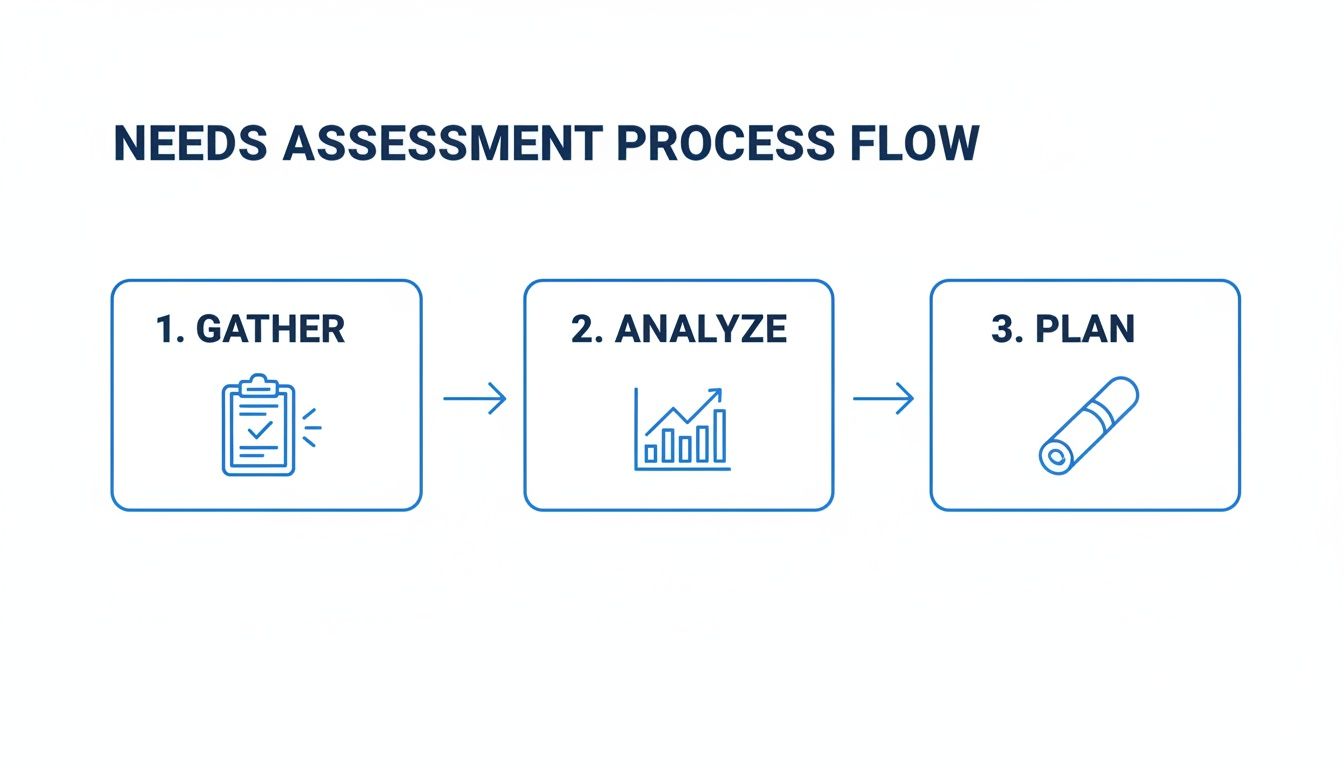
    This simple flow chart shows how to turn raw data into a solid, well-structured plan.

    Flowchart illustrating the needs assessment process steps: gather, analyze, and plan.

    This process ensures every part of your wellness program is grounded in what employees actually told you, making it relevant and effective right from the start.

    The Mental and Emotional Health Pillar

    Supporting mental health is essential in any modern wellness program. It begins with making professional help easy to access and free from stigma. Offering confidential access to counselling and therapy for challenges like anxiety or depression sends a powerful message that it's okay to seek support.

    Proactive education is just as important as reactive support. Consider workshops on practical topics that address the feedback you received from your team.

    • Stress Management Techniques: Teach evidence-based methods like mindfulness to help people handle daily pressures.
    • Building Resilience: Host sessions focused on developing coping skills and bouncing back from setbacks.
    • Digital Detox and Boundaries: Offer guidance on switching off to prevent burnout and protect personal time.

    It is vital to clarify that any assessments offered are informational, not diagnostic. They are tools for self-awareness and personal growth, empowering people with insights, not labels.

    The Physical Well-being Pillar

    Physical and mental health are deeply connected. This part of your program should encourage healthy habits and reduce physical strain. This is especially important in hybrid work models, where home office setups can vary.

    Simple, practical steps can make a huge impact. Offer ergonomic assessments for both office and remote workstations to prevent chronic pain. You can also introduce policies that encourage movement, like "walking meetings" or breaks between video calls.

    A supportive workplace doesn't just look after the employee; it cares for the person. By integrating physical and mental health support, you acknowledge that well-being is interconnected, fostering a culture where people can truly thrive.

    Voluntary health screenings or fun wellness challenges can also build a sense of community. These activities can motivate employees to engage with their health while strengthening team bonds. The goal is to make the healthy choice the easy choice.

    The Financial Wellness Pillar

    Financial stress is a significant, often hidden, source of anxiety and lost productivity. A dedicated financial wellness program for employees can show your team you care about their overall stability. These programs can provide confidential, expert guidance on a range of topics.

    • Budgeting and Debt Management Workshops
    • Retirement Planning Seminars
    • Access to Confidential Financial Advisors

    Providing these resources can demystify personal finance and give your team the tools to build a secure future. This helps remove a major source of underlying stress and worry.

    The Cultural Foundation Pillar

    No amount of perks will be effective in a toxic culture. Fostering an environment of psychological safety and compassionate leadership is the most important pillar. This is the foundation upon which all your other wellness initiatives will either grow or wither.

    Psychological safety means creating a space where people feel secure enough to voice concerns or admit mistakes without fear. This requires intentional effort, starting with leadership. Training managers in empathetic communication and active listening is a vital first step.

    Leaders set the tone for the entire organisation. When they prioritize their own well-being and respect boundaries, they give their teams permission to do the same. This cultural shift turns corporate employee wellness from an initiative into a lived reality.

    Choosing the Right Tools and Partners for Success

    Building a great corporate wellness program doesn't mean you have to create everything from scratch. Leaning on the expertise of external partners and smart digital tools can amplify your efforts. This makes high-quality support accessible to everyone on your team.

    The key is to find partners who align with your company's values and understand your team's specific needs. Think of them as an extension of your commitment to your people. Their expertise brings credibility and helps your program scale effectively.

    Vetting Your Potential Wellness Partners

    With so many options available, it's important to focus on a few non-negotiable criteria. This will help you find partners who are genuinely invested in your team's health and happiness. A simple checklist can guide your conversations and ensure you compare everyone on the same factors.

    • Credentials and Expertise: Look into the qualifications of their professionals. Do they have experience with common issues like workplace stress, anxiety, or depression?
    • Confidentiality and Data Security: This is critical. Ask about their privacy policies and ensure they have robust systems for protecting employee data.
    • Scalability and Accessibility: Can the solution grow with your company and is it easy for all employees to use?
    • Cultural Fit: Does their approach feel empathetic and human? You want to foster a warm, welcoming environment.

    Choosing a wellness partner is a lot like hiring a key team member. They need the right skills, of course, but they also have to share your core values of empathy, confidentiality, and genuine care.

    Getting this right ensures that the tool or service you introduce becomes a trusted resource, not just another unused benefit.

    How a Platform Like DeTalks Can Be an Ally

    Digital platforms are a cornerstone of modern corporate employee wellness, offering a private, stigma-free way for people to seek support. A comprehensive platform like DeTalks can be a powerful ally in addressing critical mental health needs. It helps bridge the gap between needing help and actually getting it.

    For instance, a platform can give your team confidential access to vetted therapists and counsellors. An employee can discreetly find a professional who specialises in their specific challenge. This fosters a huge sense of psychological safety and empowers them to take action.

    Empowering Employees with Self-Awareness Tools

    Beyond one-on-one therapy, the best partners offer tools that encourage proactive mental fitness. It can be hard to recognise the early signs of burnout or notice when our resilience is low. This is where scientifically validated assessments can be incredibly useful.

    It is vital to be clear that assessments are informational, not diagnostic. They are designed to give someone personal insights into their emotional patterns, resilience levels, or stress triggers. They empower employees to take that crucial first step, whether it leads to self-help resources or professional counselling.

    By offering such tools, you give your team the language and understanding to be more intentional about their mental health. It builds a foundation of positive psychology, helping people cultivate skills like compassion and happiness. The right partners make quality support accessible and help you create a thriving workplace.

    Launching and Championing Your Wellness Initiative

    Even the best corporate employee wellness program needs a thoughtful rollout and consistent support. A great plan is only as good as its execution. This is where you move from strategy to inspiring action, making wellness a living part of your company culture.

    The success of your launch depends on leadership buy-in that goes beyond a generic email. When leaders personally and publicly support the program, it sends a powerful message. Their active participation shows that well-being is a core company value.

    Diverse corporate employees attend a wellness workshop, listening to a male speaker, holding coffee cups.

    Securing Authentic Leadership Buy-In

    True advocacy starts at the top. Encourage leaders to share their own stories about managing workplace stress or finding a healthy work-life balance. A senior manager admitting they use therapy is far more impactful than any corporate memo.

    This vulnerability normalizes conversations around mental health and gives everyone permission to focus on their own well-being. It helps reframe seeking help for anxiety or burnout as a sign of strength.

    When leadership champions wellness, it transforms from a policy into a principle. Their authentic engagement is the single most important factor in building a culture where employees feel genuinely supported.

    Equip your leaders with simple, empathetic language that focuses on the human side of well-being. Their consistent, visible support will drive engagement and build long-term trust.

    Crafting Communication That Actually Connects

    How you talk about your wellness initiative matters greatly. Your communications should feel warm, encouraging, and respectful. Use positive language that focuses on goals like building resilience, fostering compassion, and finding more happiness at work.

    Always be clear about confidentiality. Reassure your team that their use of services like counselling is completely private. This trust is the bedrock of a successful program, especially for mental health support.

    Financial stress is a huge burden, and with more companies shifting to hybrid work, prioritizing well-being is essential. To see how these shifts are shaping employer offerings, you can find a deeper analysis of the top wellness trends in India on BharatSURE.com.

    Building a Network of Wellness Champions

    While leadership support is critical, peer-to-peer enthusiasm gives a program real energy. Invite employees who are passionate about well-being to become "Wellness Champions." These individuals can generate authentic buzz on the ground.

    These champions don't need to be experts, just approachable advocates who can share information and organize informal activities. Their genuine passion will make the initiative feel like a shared community effort.

    Driving Engagement with Meaningful Activities

    A strong launch should be followed by a steady rhythm of engaging activities. Create a calendar that keeps well-being front and centre to embed healthy habits into your company’s DNA.

    Here are a few ideas:

    • Themed Wellness Months: Dedicate each month to a different aspect of well-being, like mindfulness or financial fitness.
    • Team-Based Challenges: Build connection with group challenges, like a team step-counting competition.
    • Skill-Building Workshops: Host interactive sessions on practical topics like improving sleep or managing depression.

    Consistency and authentic advocacy are what truly count. A well-launched and continuously championed program becomes a cultural asset, creating a workplace where everyone has the support they need to thrive.

    Measuring Real Impact and Fostering a Better Future

    Once your wellness program is running, how do you know if it's making a difference? Measuring what matters is the final piece of the puzzle. It’s about looking beyond simple participation to understand the real human impact of your efforts.

    To get a complete picture, you need to track both hard numbers and personal stories. This means combining quantitative data with rich, qualitative feedback. This combination reveals the true value of what you’re doing.

    Seeing the Full Story in Your Data

    Quantitative metrics provide concrete evidence of change. These numbers show how your wellness initiatives are influencing key business outcomes.

    Start with a few core indicators:

    • Employee Turnover and Retention: A drop in turnover is a powerful sign that people feel more supported.
    • Absenteeism Rates: Healthier, less stressed employees naturally take fewer sick days.
    • Usage of Wellness Resources: Track engagement with offerings like confidential therapy or counselling to see what resonates.

    These metrics help connect wellness efforts to the overall health of the business. They demonstrate that investing in your people's well-being is a smart, sustainable strategy.

    The most meaningful measure of success isn't just a lower healthcare spend. It's creating a workplace where people feel seen, supported, and psychologically safe enough to bring their whole selves to work.

    The Power of Qualitative Feedback

    While numbers are essential, stories give them meaning. Qualitative feedback reveals how your program is truly changing lives. This is where you hear about an employee using mindfulness to navigate workplace stress or finding the courage to seek help for their anxiety.

    Gathering these insights can be simple. Regular, confidential satisfaction surveys with open-ended questions encourage people to share their personal experiences. These stories turn abstract data into relatable human accounts that inspire others and secure ongoing leadership support.

    Remember to always position any assessments as informational tools for self-awareness around challenges like depression or burnout, not as diagnostic tests.

    Redefining ROI as Return on Individual

    Ultimately, the goal is to shift the conversation around ROI to "Return on Individual." This perspective focuses on what truly matters: a healthier, more resilient, and more engaged workforce.

    Corporate employee wellness is a continuous journey of listening, adapting, and caring. It's about progress, not perfection. By measuring what counts—like individual growth in resilience and happiness— you build a workplace where your people don’t just work, they thrive.

    Your Questions About Corporate Wellness, Answered

    As you explore corporate wellness, questions are bound to arise. Whether you're a leader or a team member, clarity is key. Here are straightforward answers to some common questions.

    How Can We Get Employees to Actually Use Mental Health Resources?

    It comes down to building trust and reducing stigma, starting with leadership. Consistent, positive communication that frames mental health support as a tool for strength is effective. Think of it as a gym for your mind.

    Absolute confidentiality is non-negotiable for services like therapy or counselling. When leaders are open about their own experiences with workplace stress, it encourages others to prioritize their well-being.

    Building trust is the most critical first step. An employee will only reach for support if they feel psychologically safe and are absolutely certain their privacy will be respected.

    What's the Difference Between a Wellness Assessment and a Medical Diagnosis?

    This is a crucial distinction. A wellness assessment is an informational tool designed to give you personal insights into your emotional state, resilience, or anxiety triggers. It is a snapshot to help you become more self-aware.

    A formal diagnosis for a condition like depression can only be made by a qualified clinical professional. Assessments are a starting point for personal reflection, never a clinical label.

    We Have a Small Budget. What Are Some Cost-Effective Wellness Ideas?

    You don't need a huge budget to make a real difference. Some of the most impactful initiatives are cultural and cost very little. You could introduce "no-meeting" blocks for focused work or encourage managers to have regular, informal check-ins.

    Other low-cost ideas include:

    • Organising free workshops led by talented people on your own team.
    • Championing small habits, like taking a full lunch break away from a desk.
    • Creating a dedicated channel for sharing positive news or gratitude.

    These simple shifts can dramatically improve the daily work experience and cultivate a healthier, more supportive environment for everyone.


    Ready to build a workplace where your team can truly thrive? DeTalks provides the tools and expert support to make mental well-being a cornerstone of your culture. Explore our confidential therapy services and science-backed assessments at https://detalks.com.