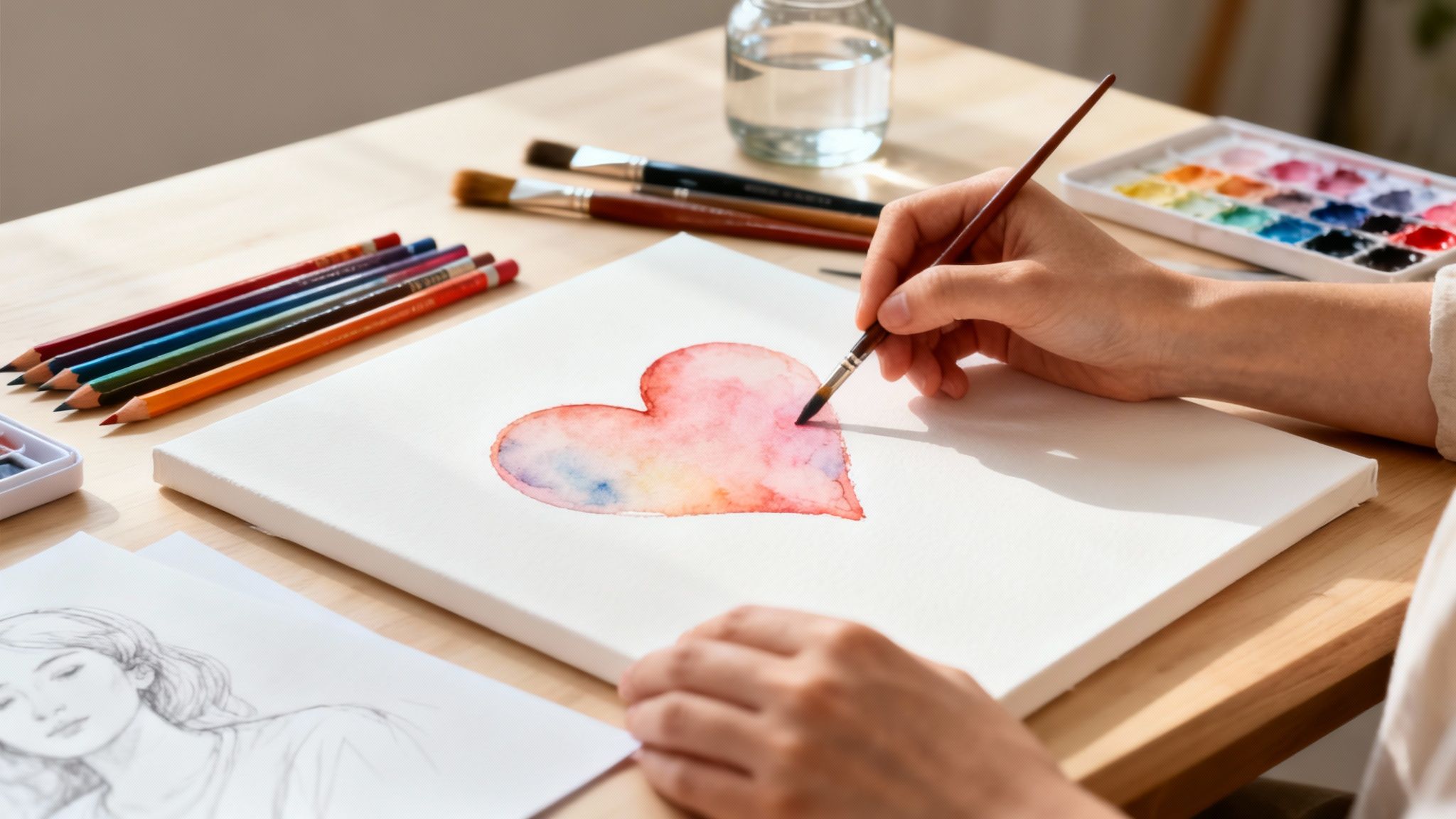
Have you ever struggled to find the right words for a feeling? Art therapy offers a gentle way to express yourself without needing to say a thing. It is a form of professional therapy that uses creative processes like drawing, painting, or sculpting to help you explore emotions and support your well-being.
Think of it as a safe space where you can work through challenges, from workplace stress to anxiety, with a trained mental health professional. The focus is always on your inner experience, not your artistic talent.
Understanding Art Therapy Beyond The Canvas
When people hear "art therapy," they often imagine a casual art class, but the two are very different. Art therapy is a form of counselling guided by a qualified therapist who combines creative techniques with psychological principles to support mental health.
The goal is not to create a masterpiece but to focus on the process of creating. This journey becomes a new language for expressing thoughts and feelings that might be difficult to put into words.
In India, where life's pressures can sometimes feel overwhelming, finding a healthy outlet is important. Art therapy provides a powerful way to navigate challenges like anxiety, depression, and burnout, offering a different approach to traditional talk therapy. If you’re curious, you can learn more about what is art therapy and its potential for personal growth.
To make the distinction clearer, let's break down the core differences.
Art Therapy vs Art Class Key Differences
| Aspect | Art Therapy | Art Class |
|---|---|---|
| Primary Goal | Emotional expression, self-discovery, and well-being. | Skill development and creating a finished product. |
| Focus | The internal creative process and personal meaning. | The external product and aesthetic quality. |
| Facilitator | A licensed mental health professional with training in therapy. | An artist or instructor focused on teaching techniques. |
| Outcome | Improved well-being, insight, and resilience. | A completed piece of art and enhanced artistic ability. |
| Environment | A confidential, non-judgemental, and therapeutic space. | An educational or recreational setting. |
As you can see, one is about exploring your inner world, while the other is about honing an outer skill. Both are valuable but serve different purposes for mental well-being.
A Path To Resilience And Self-Discovery
Art therapy is not just for navigating challenges; it is also a wonderful tool for personal growth and happiness. It helps you cultivate qualities that lead to a more balanced life, such as emotional resilience, self-awareness, and deeper self-compassion.
This unique approach empowers you by:
- Making Feelings Tangible: Putting an emotion on paper or in clay can make it feel less overwhelming and more manageable. It moves the feeling from inside your head to in front of you.
- Promoting Mindfulness: The act of creating gently pulls your focus to the present moment, which is a powerful way to quiet an anxious mind.
- Building Inner Strengths: Your therapist helps you find meaning in your art, identify patterns, and uncover strengths you can use in everyday life.
At its core, art therapy is about connection—with a therapist, your inner self, and a non-verbal language everyone can speak. It offers a path to well-being that honours your unique experience.
Not A Test, But A Conversation
It is important to understand that there are no "tests" in art therapy. Any observations a therapist makes about your art are informational, not diagnostic.
These insights are simply part of the therapeutic conversation. They help the therapist better understand your perspective and tailor the sessions to your needs, making the journey supportive and personal.
How Your Brain Benefits from Creative Expression
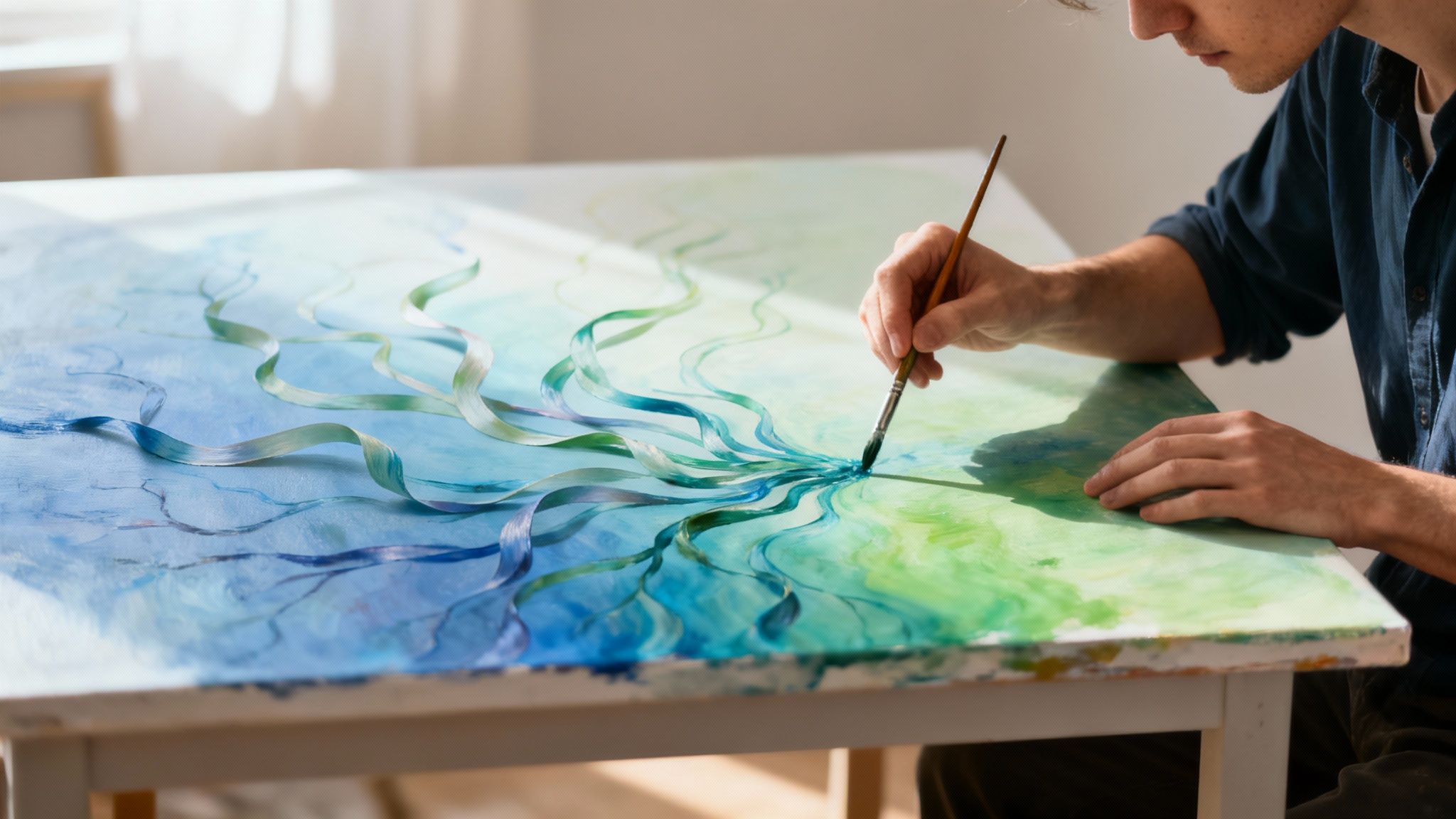
Have you ever noticed how doodling during a meeting or colouring can feel so calming? This is more than a simple distraction; it's a natural process that positively affects your brain.
When you're experiencing high anxiety or workplace stress, your mind can feel chaotic. The simple act of creating grounds you in the present moment by engaging your senses, a state known as mindfulness.
This has a real biological impact. Research shows that just 45 minutes of creative activity can lower cortisol, the body’s main stress hormone. This is a key reason why art therapy is so effective for managing daily stress, anxiety, and symptoms of depression.
Untangling Thoughts and Building Resilience
Sometimes, words are not enough, especially for complex feelings like burnout or grief. Art therapy builds a bridge where language falls short, allowing you to give a feeling a colour, shape, or texture.
Imagine your anxiety is a tangled knot. Trying to describe it can make it feel tighter. In art therapy, you might draw that knot, placing it on the page outside of yourself, where you can begin to gently untangle it with a therapist's support.
This process does more than offer temporary relief; it builds lasting resilience. Each time you express and process an emotion creatively, you strengthen your ability to cope with future challenges.
Activating the Brain's Reward System
Creative expression also stimulates the brain’s reward centre, releasing dopamine, which is linked to feelings of happiness and satisfaction. This results in a better mood and a natural boost in motivation and compassion.
Creating art involves sensory processing, motor skills, and emotional reflection. This full-brain activity promotes well-being and personal insight, making it a powerful tool in positive psychology.
This is why art therapy is such an effective form of counselling. It works on both emotional and neurological levels, helping you process the past, manage the present, and build a stronger foundation for your future mental health and well-being.
Exploring Different Art Therapy Techniques
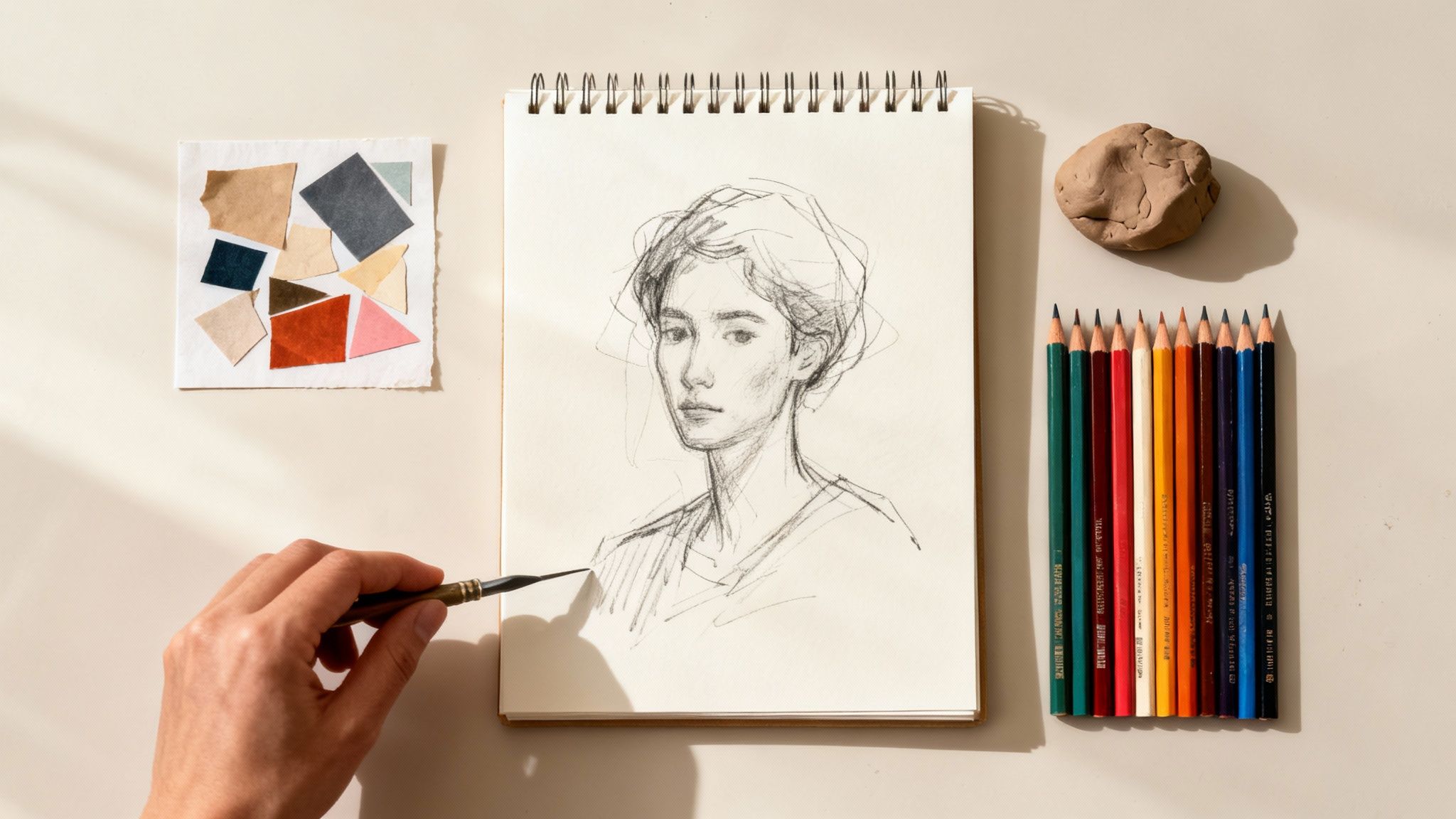
So, what actually happens in an art therapy session? A therapist guides you through different creative methods, each chosen to help you explore your inner world in a gentle, non-verbal way.
The goal is to open a new channel for self-expression and discovery. The techniques are always tailored to your comfort level, making the process feel safe and deeply personal.
The Expressive Power of Drawing and Painting
Drawing and painting are direct ways to get feelings out of your head and onto a page. A therapist might suggest a spontaneous drawing of what your day feels like or ask you to paint an emotion like anxiety or joy.
This simple act can make a feeling feel more tangible and less overwhelming. The final image then becomes a starting point for a supportive conversation with your therapist, helping you understand yourself better.
Art therapy isn't about the final product; it’s about the journey. A simple line drawing can reveal more about your inner state than a technically perfect portrait, offering a window into your emotional landscape.
Weaving Stories with Collage and Sculpture
When experiences feel fragmented, especially with workplace stress or burnout, collage can help piece your story together. Arranging images and textures creates a visual narrative of your challenges, strengths, and hopes.
Working with materials like clay can also be incredibly grounding. The physical sensation of moulding something with your hands anchors you in the present, which can be a powerful way to build resilience and create a symbol of your inner strength.
The Calming Focus of Mandala Art
A popular technique, especially in the Indian context, is Mandala Art Therapy. Mandalas are circular designs that symbolize wholeness, and creating one is a meditative practice that can quiet a busy mind.
This structured activity is known to reduce symptoms of anxiety and depression by promoting mindfulness. In India, where many young adults navigate academic and social pressures, Mandala Art Therapy is a valuable tool for building resilience. Studies in the Indian Journal of Intellectual Property show it can lead to improved mood stability.
These are just a few examples. Your therapist’s job is to help you find the creative doorway that feels right for you, creating a supportive path to explore, heal, and grow.
Who Art Therapy Can Help the Most
One of the best things about art therapy is its versatility. It supports a wide range of people, no matter their age or what they are going through.
Because this form of counselling does not rely only on words, it offers a powerful outlet for anyone who finds it hard to voice their feelings. This makes it effective for children and teenagers, as well as adults feeling overwhelmed by complex emotions.
Support for Students and Young Adults
Student life, especially in India, can be incredibly stressful with exams and social pressures leading to anxiety. Art therapy provides a safe and effective way to untangle these feelings without words.
For example, a student could draw what exam stress looks like, making the pressure feel more separate and manageable. For more ideas, this resource offers helpful strategies for supporting students with anxiety and fostering emotional well-being.
This creative process does more than provide immediate relief; it builds resilience. It gives young people healthier ways to cope with life's challenges, supporting their long-term well-being.
A Tool for Professionals and Couples
In the corporate world, workplace stress and burnout are common challenges. Art therapy offers a way to process these feelings without the pressure of having to find the "right" words after a long day.
Couples can also find it incredibly helpful. Creating something together can highlight their relationship dynamics in a new way, opening up conversations that lead to a deeper connection.
Navigating Mental Health Challenges
Art therapy can be a profound source of support for people managing conditions like depression or anxiety. The creative process can be soothing, helping to calm the nervous system and ease symptoms.
Assessments in art therapy are always informational, never diagnostic. They are simply tools to help your therapist understand your inner world and better support your unique journey toward well-being.
Research in India has shown that art therapy can significantly lower anxiety levels. By providing a gentle way to work through difficult experiences, this therapy helps people rebuild a sense of safety, control, and self-worth. It is about nurturing the inner strengths and resilience needed to live a more balanced life.
What to Expect in Your First Session
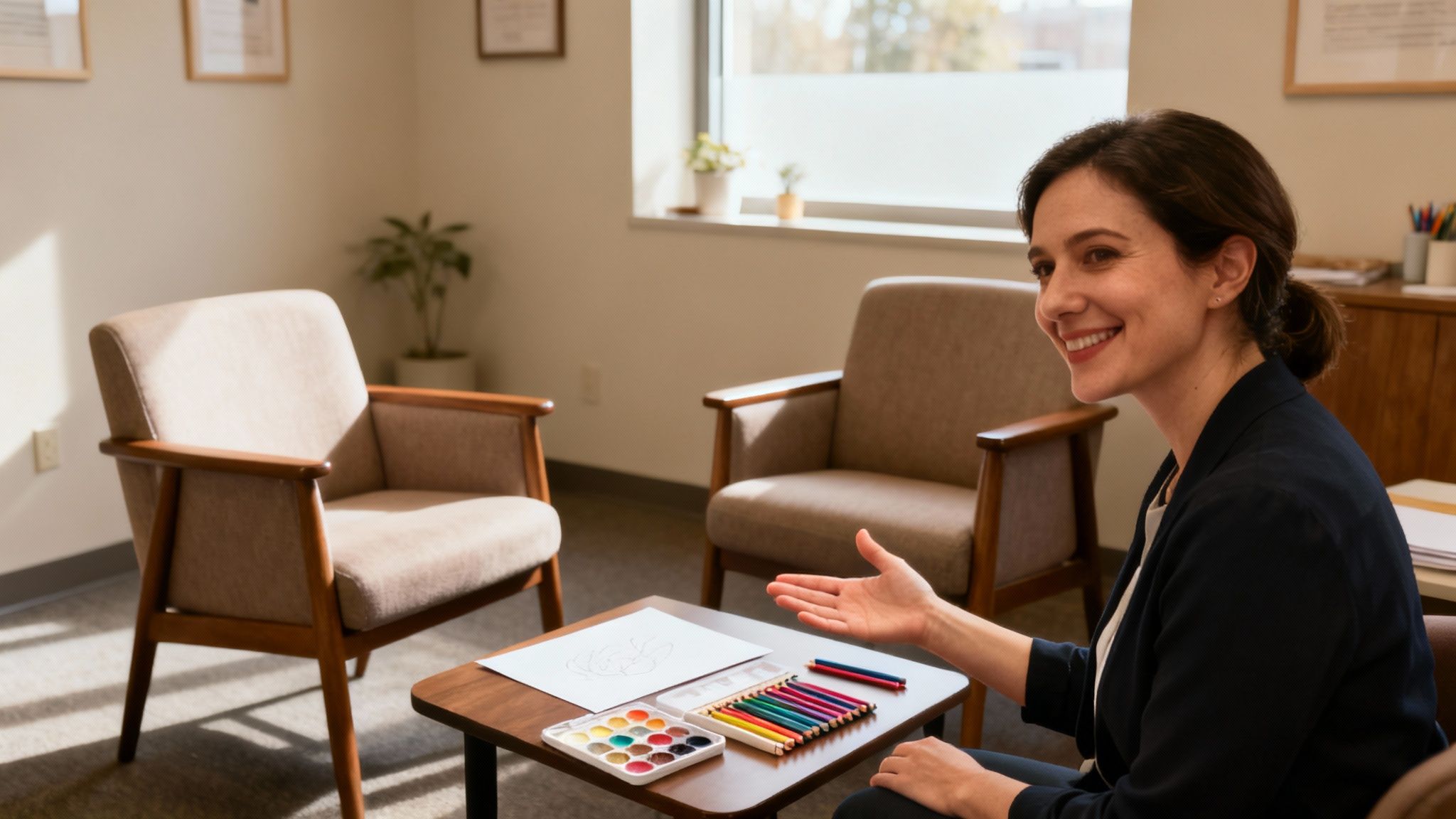
Stepping into any kind of therapy for the first time can feel a bit uncertain, which is completely normal. Your first art therapy session is all about making you feel comfortable, safe, and heard.
There is no pressure to be an artist; you don't need any skill at all. This first meeting is more about connection than creation, giving you and your therapist a chance to get to know each other.
Building a Connection First
Your session will likely start with a relaxed chat. Your therapist will want to understand what brought you to therapy and what you hope to experience.
Think of it as a collaborative conversation to establish a supportive space. This helps the therapist understand your world, whether you’re navigating workplace stress, anxiety, or simply exploring personal growth.
After talking, your therapist will introduce you to the art supplies. They will make it clear there are no rules, encouraging you to simply choose whatever materials you feel drawn to.
The Creative Process Unfolds
Once you feel settled, your therapist might offer a gentle prompt to get you started. This is not a test but a soft invitation to begin your creative exploration.
The prompt could be as simple as:
- “Pick a colour that matches your mood today.”
- “Draw a line that represents your week.”
- “Create a place on the paper where you feel safe.”
The real focus is on what you experience while creating. The final product is simply a snapshot of your inner world in that moment.
Remember that any assessments are purely informational, not diagnostic. They are tools to help your therapist understand your perspective and tailor the counselling to best support your path to well-being.
Reflection and Insight
When you feel finished, your therapist will gently invite you to talk about your art if you are comfortable. They might ask open-ended questions like, “What was that experience like for you?”
This conversation helps build a bridge between your art and your life, often leading to new insights. You will leave that first session not with a cure, but with a feeling of connection and a safe space to continue your journey toward well-being and resilience.
How to Find a Qualified Art Therapist in India
Starting therapy is a significant step, and finding the right person is crucial. In India, as conversations around mental well-being grow, it is important to know what to look for in an art therapist.
Art therapy is a specialized field that blends psychology with creative expression. A qualified professional will have a master’s degree in art therapy or a related field like clinical psychology or counselling, along with supervised clinical experience.
Key Credentials to Look For
Never feel hesitant to ask a potential therapist about their qualifications. A true professional will be happy to share their background and approach with you.
Here’s a quick checklist of things to verify:
- Educational Background: Look for a postgraduate degree in a relevant mental health field.
- Specialised Training: Ask about their specific certifications in art therapy.
- Supervised Experience: Inquire about their supervised clinical hours.
This ensures you find a partner who is genuinely equipped to support you, whether you’re navigating anxiety, depression, or workplace stress.
Questions to Ask a Potential Therapist
Finding the right fit is about feeling a sense of comfort and connection. Think of your first consultation as a two-way conversation to see if their style works for you.
Here are a few questions you might want to ask:
- What is your therapeutic approach and how do you use art?
- Do you have experience with challenges similar to mine?
- How do you ensure the therapy space feels confidential and safe?
Your comfort and trust are the foundation of effective therapy. Asking these questions empowers you to make an informed choice and find a professional who feels like a true ally on your journey toward building resilience.
Platforms like DeTalks can simplify this search. They offer a directory of verified psychologists and counsellors, taking the guesswork out of the process and letting you focus on finding the right support for your well-being.
Common Questions About Art Therapy
It is completely normal to have questions when considering any kind of therapy. Feeling curious or even a little hesitant is part of the process. Let's walk through some common questions to help clarify what art therapy is all about.
My goal is to provide clear, straightforward answers. Sometimes, simply knowing what to expect is the most helpful first step you can take.
Do I Need to Be Good at Art to Try Art Therapy?
This is the biggest myth, and the answer is a definite no. Art therapy is not about creating a masterpiece; it is all about the process of exploring your inner world without judgment.
Your therapist is interested in your expression, not your technique. A single line on a page can hold as much meaning as a detailed painting.
Is Art Therapy Only for Children or Severe Trauma?
While art therapy is a wonderful tool for children and for processing trauma, its reach is much wider. It is a powerful form of counselling for people of all ages dealing with life's many challenges.
It can help with managing workplace stress, navigating difficult relationships, or working through feelings of anxiety and depression. It is also a way for anyone to build resilience and get to know themselves better.
Art therapy is for anyone seeking a different way to connect with themselves. It’s a gentle yet profound approach to well-being that can support you wherever you are on your life journey, from overcoming obstacles to cultivating greater self-compassion.
What if I Don’t Know What to Create?
Feeling stuck in front of a blank page is a common feeling, and that is perfectly okay. A good art therapist is trained for these moments and will guide you with warmth and patience.
They will offer gentle prompts to help you get started. The goal is simply to ease you into the creative process without any pressure.
How Does Online Art Therapy Work?
Online art therapy brings the benefits of a session into your own comfortable space. You will use simple, easy-to-find supplies like paper, pencils, or basic paints.
The session happens over a secure video call where your therapist guides you, just as they would in person. This makes it easier to get confidential therapy from qualified professionals, offering a flexible and effective way to support your well-being.
Your journey to well-being is a personal one, and art therapy offers a creative and supportive path forward. It provides tools for self-expression, helps build resilience, and fosters a deeper connection with yourself. Remember, the first step is often the most important, and help is available.
Ready to explore this path further? DeTalks makes it easy to find and connect with qualified art therapists and mental health professionals across India. Visit https://detalks.com to learn more.
Leave a Reply