
When you're starting your journey to better mental health, one of the first questions is often who to see. The terms 'therapist' and 'psychiatrist' are often used interchangeably, but they represent two different paths to well-being. Knowing the difference helps you find the right support from the start.
The simplest way to think about it is this: Psychiatrists are medical doctors who specialize in mental health, allowing them to provide medical assessments and prescribe medication. Therapists use talk therapy and counselling to guide you through challenges, helping you build coping skills for greater resilience and happiness.
Understanding Your Path to Well-Being

Taking that first step toward mental well-being is an act of courage. Whether you're navigating workplace stress, managing anxiety, or seeking to build resilience, understanding your options is empowering. The goal is to find a supportive, confidential space where you feel truly heard.
This guide is here to clarify the roles of therapists and psychiatrists. We'll explore their training, the methods they use, and the kind of support you can expect, helping you make an informed decision that feels right for you.
Therapist vs Psychiatrist at a Glance
To cut through the confusion, it helps to see the core differences side-by-side. The main distinction lies in their education and how they support your well-being. A psychiatrist approaches mental health from a medical perspective, while a therapist uses psychological and conversational frameworks.
This table offers a clear, side-by-side summary, helping you quickly understand each professional's role.
| Key Aspect | Therapist (Psychologist, Counselor) | Psychiatrist (Medical Doctor) |
|---|---|---|
| Primary Focus | Explores thoughts, feelings, and behaviours through talk therapy (psychotherapy). | Provides medical assessments for mental health conditions and manages treatment, often with medication. |
| Education | Master's or Doctoral degree (e.g., M.Phil, PhD, PsyD) in psychology, counselling, or social work. | Medical degree (MBBS, MD) followed by specialised training in psychiatry. |
| Can Prescribe Medication? | No, they cannot prescribe medication in India. | Yes, they are licensed medical doctors who can prescribe and manage medication. |
| Typical Concerns Addressed | Workplace stress, relationship issues, anxiety, mild depression, building resilience, and personal growth. | Severe depression, bipolar disorder, schizophrenia, and other conditions where medication may be helpful. |
If you feel your challenges stem from thought patterns or life events, a therapist is an excellent starting point for therapy or counselling. If you suspect a biological component that might benefit from medication, a psychiatrist can provide the right medical support.
Why This Distinction Matters in India
Understanding this difference is particularly vital in the Indian context. Here, psychiatrists are medical doctors who provide assessments, prescribe medication, and sometimes offer therapy. Therapists and psychologists are the primary providers of psychotherapy, also known as 'talk therapy' or counselling.
The need for both is immense, as India has a significant shortage of mental health professionals, with only about 0.75 psychiatrists per 100,000 people. This highlights how vital each role is. Psychiatrists often manage complex conditions medically, while therapists provide crucial psychological support to help people build lasting resilience. You can read more in this study about the mental health workforce in India.
A Key Takeaway: The question isn't "which one is better?" but "which one is the right fit for me right now?" One helps you build skills through conversation, while the other provides medical assessment and treatment.
Ultimately, both professionals aim to improve your mental well-being. Many people see both at the same time, combining therapy insights with medication management for a powerful, collaborative approach.
The Role of a Therapist in Your Journey

Your journey to better well-being often begins with a meaningful conversation, which is where a therapist comes in. A therapist, such as a psychologist or counsellor, is trained to listen, understand, and guide you through life’s difficulties in a safe, confidential setting.
A therapist’s main tool is psychotherapy, or what most of us call 'talk therapy'. The process is designed to help you explore your thoughts, feelings, and behaviours to understand yourself better and build healthier ways to cope with challenges like stress or anxiety.
What Happens in Therapy
Therapy is a collaborative partnership built on trust. It’s about more than just talking about problems; it’s about actively finding solutions and developing skills like resilience that will serve you long after your sessions end.
A good therapist helps you spot recurring patterns that may be holding you back, offering a fresh, non-judgmental perspective. This partnership is the foundation for creating real, lasting change in your life.
Common Approaches Therapists Use
Therapists use various proven methods, adapting them to your unique needs. These are flexible frameworks designed to help you find what truly works for you, whether you're facing burnout or seeking greater happiness.
Here are a few common therapeutic approaches:
- Cognitive Behavioural Therapy (CBT): A practical, hands-on approach that helps you identify and reframe unhelpful thought patterns and behaviours. It's effective for managing anxiety, depression, and workplace stress.
- Mindfulness-Based Therapies: These techniques teach you to ground yourself in the present moment, observing thoughts without judgment. It's a fantastic way to build emotional regulation and reduce stress.
- Psychodynamic Therapy: This approach explores how past experiences might be shaping your current feelings and actions. It can lead to profound insights and deep healing.
A skilled therapist often blends techniques to create a plan tailored to your goals. This could mean overcoming a specific challenge or cultivating more compassion and joy in your life.
Therapy is a space where you learn to become your own emotional expert. The goal is not just to solve immediate problems but to build inner resilience and self-compassion to handle future challenges with confidence.
Beyond Challenges Toward Growth
While therapy is an incredible resource for navigating issues like anxiety or burnout, it’s not just for when you're struggling. It's also a powerful tool for personal growth, helping you nurture qualities like gratitude, emotional intelligence, and compassion. Many people seek counselling to build stronger relationships or connect with a deeper sense of purpose.
When considering your options, a crucial first step is finding a mental health therapist who is the right fit for you. Remember that any assessments a therapist might use are informational tools to guide your sessions, not formal medical diagnoses. The process is about understanding, not labelling, putting you in charge of your well-being journey.
The Psychiatrist’s Role in Your Treatment
While a therapist guides you through conversation, a psychiatrist approaches your mental health from a medical perspective. A psychiatrist is a medical doctor who has specialised in psychiatry, which is the crucial difference between a therapist and a psychiatrist.
Their medical training (MBBS or MD) means they understand the complex connections between your mind and body. They view mental health through a biological lens, considering factors like brain chemistry and genetics to get a complete picture of your well-being.
A Medical Approach to Mental Well-being
Because they are medical doctors, psychiatrists can provide a formal medical assessment of mental health conditions. They conduct in-depth evaluations, which often include discussing your personal and family medical history.
This medical assessment creates a clear roadmap for treatment. It is not about labelling you but about understanding the root causes of your distress so you can get the most effective support possible.
A psychiatrist’s work typically includes:
- Medical Assessment: Identifying specific conditions like major depressive disorder, bipolar disorder, or anxiety disorders.
- Medication Management: Prescribing and adjusting medications to help manage symptoms related to brain chemistry.
- Comprehensive Evaluations: Examining your overall health to understand the interplay between physical and mental well-being.
When Medication Becomes Part of the Plan
One of a psychiatrist’s most important roles is medication management. For certain conditions, medication can be a key support, stabilizing symptoms to create the mental space needed for healing and growth. It often allows you to get more out of other treatments like therapy.
A psychiatrist's medical expertise is often essential for conditions such as:
- Severe Depression: Medication can help lift the heavy fog when symptoms make daily life difficult.
- Bipolar Disorder: Medication is a primary tool for managing the extreme shifts between mania and depression.
- Schizophrenia and Psychotic Disorders: Antipsychotic medications are key to managing symptoms and improving quality of life.
- Severe Anxiety and OCD: Medication can reduce the intensity of overwhelming anxiety, making therapeutic work more approachable.
The decision to start medication is a partnership between you and your psychiatrist. They will walk you through the options, potential benefits, and side effects in a clear, supportive way, ensuring you feel comfortable and in control.
Psychiatrists Can Also Offer Counselling
It’s a common myth that psychiatrists only prescribe medication. Many are also trained in psychotherapy and offer counselling alongside medical treatment, creating a combined approach that can be very effective.
This means a psychiatrist might not only manage your medication but also provide talk therapy to help you build coping skills. Their ability to blend both medical and therapeutic support makes them uniquely suited to handle complex mental health situations.
Making the Right Choice for Your Needs
Starting your mental health journey can feel like standing at a fork in the road. Therapist or psychiatrist? The truth is, it’s less about picking the "better" path and more about choosing the best starting point for you.
Let's look at some real-life situations to see how these roles play out. This clarity can give you the confidence to take that first step toward better well-being.
When to Start with a Therapist
Think of a therapist as your first point of contact for a wide range of life’s challenges. Their focus is on helping you build skills, explore your thoughts, and find new ways to navigate difficulties through therapy or counselling.
Consider reaching out to a therapist first if you're dealing with things like:
- Workplace Stress and Burnout: A therapist can provide practical strategies to manage stress, set healthy boundaries, and build genuine resilience.
- Relationship Issues: Counselling offers a space to improve communication, understand different perspectives, and work through conflict constructively.
- Mild to Moderate Anxiety or Depression: Therapy provides concrete coping mechanisms to manage persistent feelings of worry or sadness effectively.
- Personal Growth and Self-Esteem: A therapist acts as an invaluable guide if you want to understand yourself better, build confidence, or find a clearer sense of purpose.
If therapy feels like the right direction, this guide on choosing a therapist that's the right fit for you is an excellent resource.
This flowchart gives a clear picture of the psychiatrist's medical-focused process.
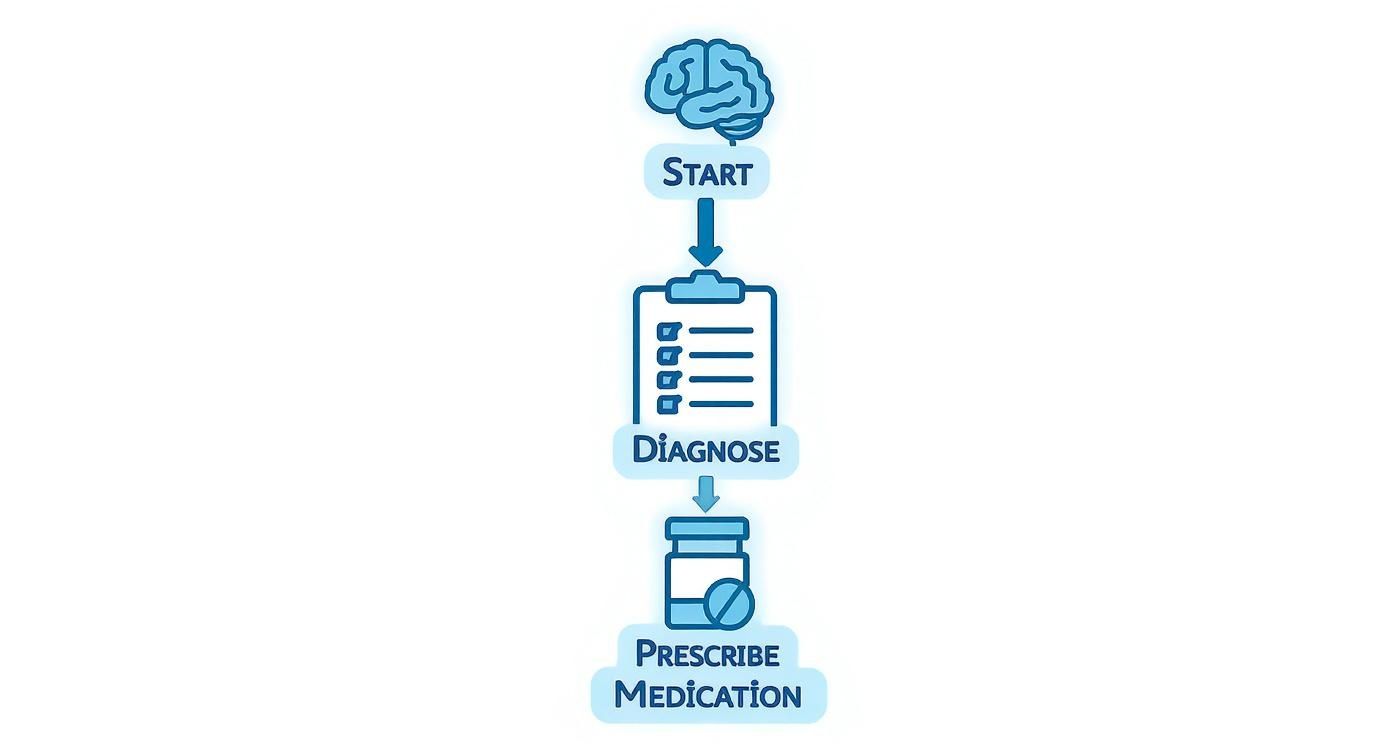
It highlights the core medical functions—providing an assessment and prescribing medication—that set psychiatrists apart.
When to Consider a Psychiatrist
A psychiatrist's medical background becomes essential when symptoms are more severe or seem to have a strong biological component. Their ability to conduct a medical evaluation and prescribe medication can provide stability for recovery.
You might want to see a psychiatrist if you're experiencing:
- Severe or Overwhelming Symptoms: If anxiety or depression makes it difficult to function at work, school, or home, a medical evaluation is a wise step.
- Intense Mood Swings: Experiencing extreme highs and lows could be a sign of a condition like bipolar disorder, which often benefits from medication management.
- Thoughts of Self-Harm: If you are having thoughts of harming yourself, it is critical to seek immediate help from a medical professional like a psychiatrist.
- Symptoms of Psychosis: Hearing or seeing things that aren't there, or holding beliefs that don’t align with reality, requires a psychiatric evaluation.
It’s important to remember that any assessment from a professional is a tool to guide your treatment. It is meant to help you understand what's happening, not to put you in a box.
A Supportive Takeaway: When in doubt, starting with a therapist is almost always a great first move. They are trained to assess your situation and will refer you to a psychiatrist if they feel medication could be a helpful part of your plan.
You Do Not Have to Choose Just One
The paths of therapy and psychiatry are not mutually exclusive. In fact, they often work together to create a stronger and more effective support system for your well-being.
For instance, a psychiatrist might prescribe medication to help lift the fog of severe depression. This can provide enough relief for you to have the energy and focus to fully engage in your therapy sessions.
This collaborative care ensures that both the biological and psychological sides of your well-being are addressed. It gives you a well-rounded foundation for healing, and that's what truly matters.
Which Professional to See Based on Your Concerns
Sometimes, a simple scenario-based guide can make all the difference. Use this table to get a clearer idea of whether a therapist or a psychiatrist might be the better initial contact for your specific goals.
| Your Primary Goal or Concern | A Therapist Is a Good Starting Point If… | A Psychiatrist May Be Necessary If… |
|---|---|---|
| Managing Stress & Burnout | You need coping strategies, want to set better boundaries, and build resilience to daily pressures. | Your stress has led to severe physical symptoms, panic attacks, or an inability to function at all. |
| Navigating Relationship Problems | You're looking to improve communication, resolve conflicts, or work through family dynamics. | The relationship stress is triggering severe depression, anxiety, or thoughts of self-harm. |
| Feeling Depressed or Anxious | Your symptoms are mild to moderate, and you're ready to learn new thought patterns and coping skills. | Your symptoms are so severe you can't get out of bed, go to work, or manage basic daily tasks. |
| Improving Self-Esteem | You want to explore your past, challenge negative self-talk, and build confidence in a supportive setting. | Your low self-esteem is part of a larger, more complex mental health condition needing assessment. |
| Dealing with Trauma | You need to process past events in a safe space and learn to manage triggers through specialised talk therapy. | Your trauma symptoms (like flashbacks or severe dissociation) are debilitating and preventing you from engaging in therapy. |
| Exploring Identity or Purpose | You're seeking clarity on life goals, personal values, or identity questions in a reflective environment. | N/A – This is almost always best suited for a therapist. |
Remember, this is just a starting point. The most important thing is to reach out to someone, as a good professional will always help guide you to the right type of care.
How Therapists and Psychiatrists Collaborate for You

Choosing between a therapist and a psychiatrist often isn't an either-or decision. Some of the best mental health outcomes happen when these professionals team up, creating a robust support system designed specifically for you. This collaborative model ensures every angle of your well-being is covered.
This integrated approach brings together the best of both worlds. The psychiatrist handles the biological side, including medication and physical health, while the therapist works with you on the psychological and emotional components.
A Partnership for Your Well-being
Think of this partnership like building a house. A psychiatrist can lay the foundation, perhaps using medication to manage severe symptoms of depression or anxiety. This creates stability for you to work with a therapist, who helps you build the life you want on that solid ground.
The synergy here is incredibly powerful. Medication from a psychiatrist can quiet the noise of anxiety, making it possible to fully engage in therapy. In those sessions, you can then learn practical skills to manage thoughts and build long-term resilience.
Medication can offer the stability needed for the deeper, transformative work of therapy to truly take root. It’s not about choosing one over the other; it's about how they can work in harmony for your benefit.
This two-pronged approach is a hallmark of high-quality mental healthcare, both in India and globally. It's built on the understanding that our minds and bodies are deeply connected.
How Collaboration Works in Practice
So, what does this teamwork actually look like? It’s a coordinated effort where both professionals communicate (always with your consent) to ensure your treatment is aligned and effective. This makes the experience feel seamless, so you never feel stuck in the middle.
Here’s a common scenario:
- Initial Consultation: You might start by seeing a therapist for workplace stress. They might then refer you to a psychiatrist if they feel medication could help manage underlying severe anxiety.
- Shared Goals: With your permission, your therapist and psychiatrist can share insights. Your psychiatrist gets a better picture of the challenges you’re tackling in therapy, and your therapist understands how medication might be affecting your mood.
- Adjusting Your Plan: As you make progress, your team fine-tunes your care. For instance, as you build strong coping skills in therapy, your psychiatrist might discuss gradually reducing medication over time.
This teamwork ensures you are at the centre of your own care. It looks beyond the basic difference between therapist and psychiatrist and focuses on their combined strength.
Supportive Takeaways for Your Journey
This collaborative model is all about empowering you. It provides a comprehensive safety net, addressing both immediate symptoms and the root causes of your difficulties.
Ultimately, this partnership offers a path to not just healing but thriving. It combines medical support with the skill-building of counselling, fostering a greater sense of happiness and self-compassion.
What to Expect in Your First Appointment
https://www.youtube.com/embed/RiGIvbHpluE
Booking that first appointment is a huge step and a real act of self-care. It’s completely normal to feel a bit nervous, so let’s pull back the curtain on what a first meeting with a therapist or a psychiatrist usually looks like.
Knowing what’s coming can make the process feel less mysterious. Remember, this first meeting is as much about you figuring out if they're a good fit as it is about them getting to know you.
Your First Session with a Therapist
Your first therapy session is really just a conversation to see if you connect. It's not an interrogation; think of it more as two people getting to know each other in a supportive space.
You'll have a chance to talk about what brought you in, whether it's anxiety, depression, or workplace stress. Your therapist will listen and ask thoughtful questions, and they’ll also explain how their approach to counselling works.
This initial appointment is all about building rapport. The most important thing is that you leave feeling heard, respected, and safe enough to be yourself.
There's no pressure to say the "right" thing. It’s simply a space for you to share your story and start thinking about what you’d like to achieve on your journey to better well-being.
Your First Appointment with a Psychiatrist
A first visit with a psychiatrist will feel more like a doctor's appointment because they are medical doctors. Their main objective is to conduct a thorough evaluation of your mental and physical health.
They'll ask specific questions about your symptoms: what they are and how they affect your daily life. You can also expect to discuss your family’s medical history, sleep habits, and appetite, helping them understand the biological side of what you're experiencing.
This initial meeting is more structured and informational than a therapy session. Afterward, the psychiatrist might discuss whether medication could be a useful part of your treatment, explaining the options so you can make an informed decision together.
A few things to remember:
- You're in control: Both appointments are a two-way street. You have every right to ask questions.
- Honesty is your best tool: Being open helps them understand how to support you best.
- It’s all about the fit: Trust is everything in both therapy and psychiatric care. If it doesn’t feel right, it is okay to find someone else.
Making that first call is often the hardest part. Now that you know what to expect, you can walk in feeling more prepared to start building resilience for a healthier, happier life.
Common Questions About Therapists and Psychiatrists
It’s completely normal to have questions when you’re trying to find the right mental health support. Getting straight answers can help you feel more confident about taking the next step.
Think of this as a practical guide. Understanding things like referrals and assessments means you can start your journey smoothly.
Do I Need a Referral to See a Psychiatrist?
This depends on where you are in India and your healthcare plan. For the most part, you can book an appointment directly with a psychiatrist.
However, some insurance providers or hospital networks may require a referral from your general physician (GP) first. It’s always a good idea to check their policy before booking.
Can a Therapist Give a Formal Diagnosis?
This is where the difference between a therapist and psychiatrist really stands out. A clinical psychologist, who is a type of therapist, is qualified to provide a formal medical diagnosis for conditions like anxiety or depression.
Other therapists and counsellors focus on assessing your symptoms to create an effective therapy plan. They help you understand your challenges and equip you with coping skills, but a formal medical diagnosis usually comes from a psychiatrist or a clinical psychologist.
Remember, any assessment you receive is an informational tool to guide your treatment. It’s about understanding what you need, not about being stuck with a label.
How Do I Know if Medication Is Right for Me?
The decision to take medication is a personal one, made in conversation with a qualified professional like a psychiatrist. They will look at your symptoms, health history, and goals to determine if medication would be a useful part of your plan.
Often, therapy is suggested as the first step, or is used alongside medication for the best results. A good professional will always lay out all the options, ensuring you feel in control of your journey.
Who Is Better for Workplace Stress or Burnout?
If you’re dealing with workplace stress, burnout, or need to learn better coping mechanisms, a therapist is a fantastic starting point. Their expertise in counselling can help you build the resilience and practical strategies you need to handle professional pressures.
If that stress leads to severe anxiety or depression, your therapist might recommend you also see a psychiatrist. A psychiatrist can then assess whether medication might offer some much-needed relief to help you function again.
Finding the right professional is a key step in your mental health journey. At DeTalks, we make it easier to connect with qualified therapists and access scientifically validated assessments to understand your needs better. Explore our directory and take the first step towards clarity and well-being today at https://detalks.com.
Leave a Reply