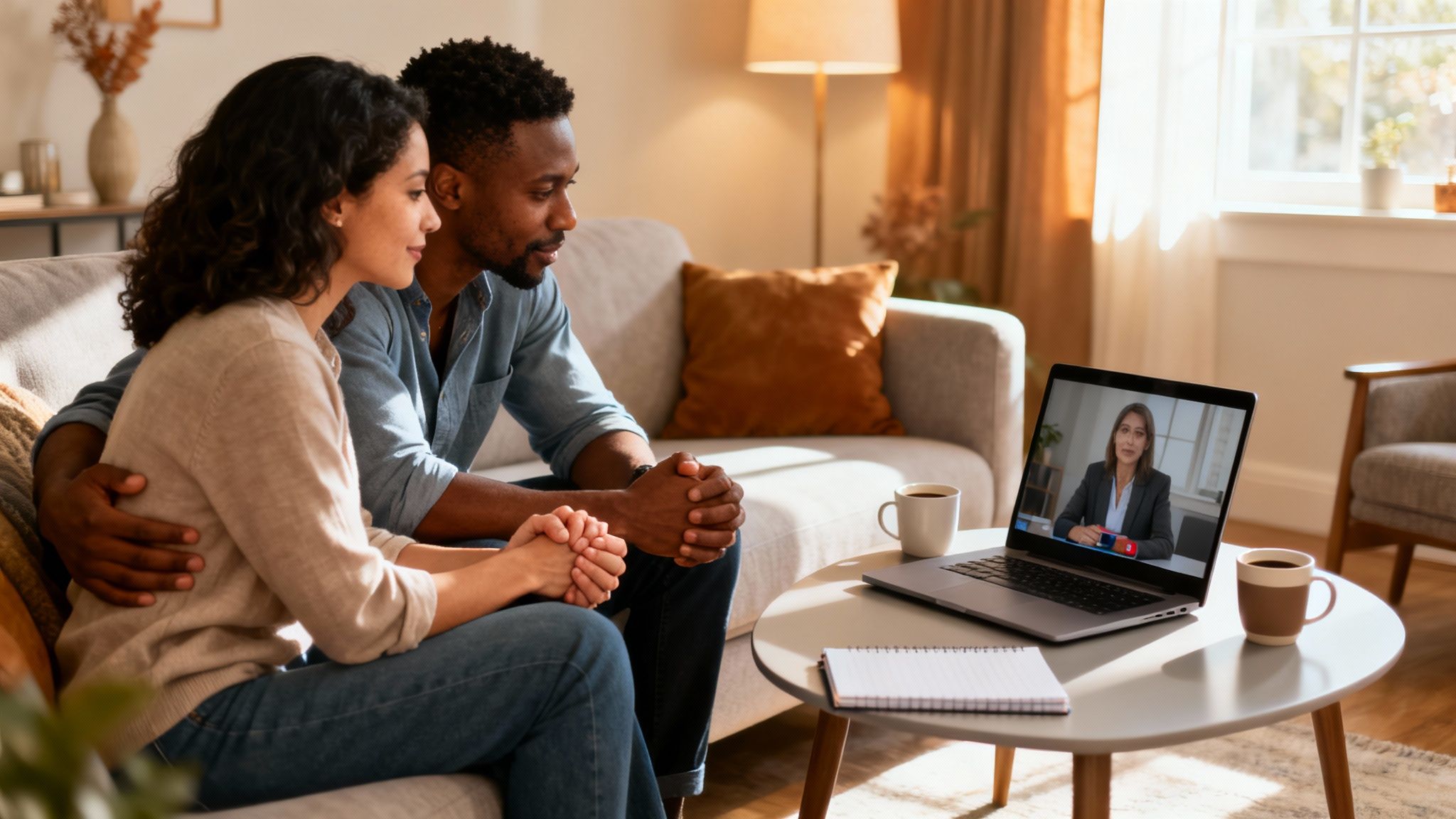
Every relationship, like a garden, needs care and attention to flourish. Online couples counselling offers a warm, practical way for partners to nurture their connection, providing expert guidance from the comfort and privacy of your home. Taking this step is a positive move toward building a stronger, more resilient partnership.
Why Modern Couples Are Turning to Online Therapy
Life today is often busy and demanding. Juggling work, family, and personal time can create stress in a relationship, leading to communication gaps that leave partners feeling disconnected. Seeking support is a healthy, proactive way to keep your bond strong.
Online therapy provides a convenient and private space for couples to work through challenges together. It removes common barriers like travel and scheduling conflicts, making it easier to prioritize your relationship. This allows you to connect with a qualified professional in a calm, focused headspace for important conversations.
A Space to Grow and Understand Each Other
At its heart, couples counselling helps foster deeper understanding and emotional closeness. A neutral professional guides you both to explore communication patterns, identify difficult areas, and find new ways to support one another. The goal is not just to fix problems, but to build lasting skills for a happier future, helping you solve communication breakdowns in a relationship.
Digital support is becoming increasingly common, especially for busy couples in places like India and around the world. As we grow more comfortable with virtual interactions, online therapy is seen as both effective and practical. It fits naturally into our modern lives.
Taking Proactive Steps for a Healthier Bond
Deciding to start therapy is a powerful sign of your commitment to each other and your future. It's a true investment in your shared well-being, helping you navigate current challenges and face future ones as a stronger team.
Think of online couples counselling as a dedicated workshop for your relationship. It is a space to build stronger foundations and learn new tools for growth, guided by an expert who supports your shared goals.
By addressing issues like lingering anxiety or unresolved arguments, you can prevent them from becoming bigger problems. This supportive process helps partners develop greater empathy, strengthen their emotional connection, and rediscover joy. It's all about building a future where you both feel heard, valued, and understood.
Understanding How Online Couples Counselling Works
Taking the first step into couples counselling can feel uncertain. It helps to understand what happens in a session. Online couples counselling is professional relationship therapy delivered through a secure video call, offering expert support with greater flexibility.
Your therapist acts as a skilled guide and neutral third party, not a judge. Their role is to help you both hear each other's perspectives in a safe and respectful environment. This allows for open and honest conversations.
The main goals are to improve communication skills, find healthier ways to manage disagreements, and rekindle your emotional connection. It is a collaborative effort between you, your partner, and your therapist to strengthen your relationship's foundation.
This visual captures some of the core reasons why so many couples are finding this approach helpful.
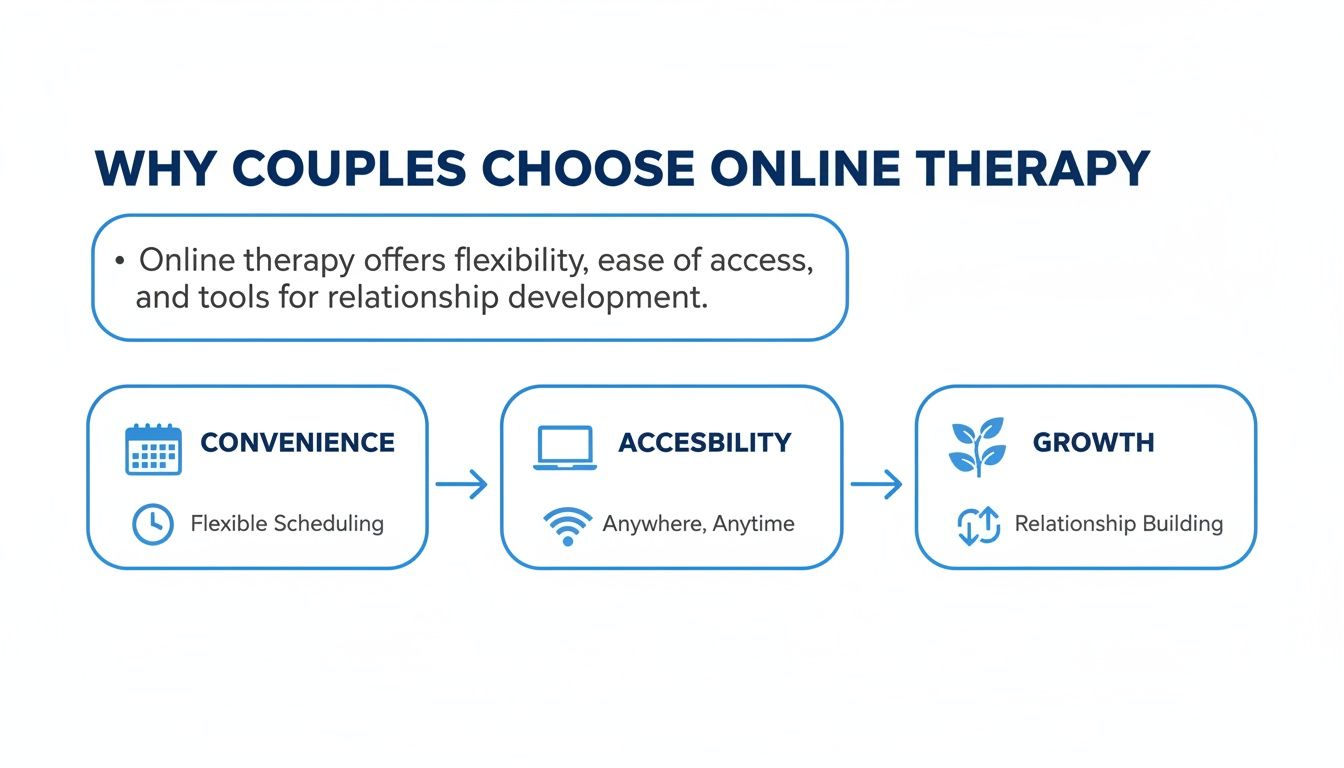
This blend of convenience, accessibility, and a genuine focus on growth makes online therapy a practical choice for investing in your partnership.
What Kinds of Issues Can Be Addressed?
Couples seek therapy for many reasons, from daily friction to major life events. Online counselling provides a structured space to work through a wide range of issues that can create distance and stress in a relationship.
Some common areas of focus include:
- Communication Breakdowns: Feeling like you're talking past each other is a common challenge. Therapy teaches you how to listen actively and express yourselves clearly.
- Conflict Resolution: If you're stuck in the same arguments, a counsellor can provide tools to break the cycle and find resolutions.
- Trust and Infidelity: Rebuilding trust is a difficult emotional journey. A therapist can guide you through the necessary conversations to heal and move forward.
- Life Transitions: Major changes like marriage, a new baby, or a job change can strain a relationship. Therapy helps you navigate these shifts as a team.
How a Typical Session Is Structured
While each therapist has their own style, most online sessions follow a similar flow. You and your partner will join a secure video call from a quiet, private space, either together or from different locations.
Your counsellor will begin by creating a calm and safe atmosphere. The first few sessions focus on getting to know your relationship's history, understanding your perspectives, and clarifying your shared goals for counselling.
"The goal of therapy is not to assign blame. Instead, it is about identifying unhelpful patterns and building new, healthier ways of relating to each other. It’s a journey toward greater resilience and well-being, both as individuals and as a couple."
As you progress, your therapist will introduce practical exercises and communication strategies. These tools can help manage challenges like workplace stress and anxiety, building a deeper connection. The process is designed to be supportive, fostering empathy and guiding you toward a happier partnership.
Is Online Relationship Support Right for You?
Taking the first step toward relationship support is a positive and hopeful move. Counselling is not just a last resort; it's a valuable resource for any couple looking to deepen their bond and build a more satisfying life together. It’s about being proactive, not just reactive.
Many couples find themselves in a routine that feels more like roommates than partners. Online therapy creates a dedicated time to unpack these feelings, understand the disconnect, and learn practical skills to bring back intimacy and affection.
Scenarios Where Online Counselling Can Help
Every relationship is unique, but many of the challenges couples face are common. Online counselling is particularly helpful when traditional in-person therapy is difficult to access. If any of these situations sound familiar, online support could be a great fit.
Consider online support if you're:
- Stuck in the Same Old Fights: A therapist can act as a neutral guide, helping you break negative patterns and learn healthier ways to communicate.
- Recovering from a Betrayal: Guided therapy provides a safe, structured path to work through the hurt, explore forgiveness, and decide how to move forward together.
- Making a Long-Distance Relationship Work: Online counselling bridges the physical gap, offering a dedicated space to strengthen your connection across any distance.
- Wrangling Hectic Schedules: The flexibility of online sessions makes it possible to prioritize your relationship, even with demanding jobs or family commitments.
A Proactive Approach to a Healthier Partnership
You don’t have to wait for a crisis to seek support. Proactive counselling can help a good relationship become even stronger, like preventative care for your partnership. It helps you maintain your emotional and relational health.
This approach is all about building resilience. You'll learn tools to handle life's challenges, from workplace stress to unexpected changes, as a unified team. This focus on positive psychology helps you create more joy, compassion, and happiness in your life together.
How to Find the Right Online Couples Therapist
Finding a therapist who makes you both feel safe and understood is the most important step. Think of them as a guide who can help you navigate difficult conversations with skill and compassion. Taking the time to find the right fit is an investment in your relationship's future.
The goal is to find the right person for your unique partnership. The connection you build with your counsellor, known as the therapeutic alliance, is a strong predictor of a positive outcome. It is vital that you both feel comfortable with their approach.
Understanding Credentials and Specialisations
As you search, you will find therapists with various qualifications. Look for professionals with specific training in relationship dynamics. Specialised certifications in couples work are a significant advantage.
Two highly respected, evidence-based approaches you might see are:
- The Gottman Method: This practical approach is based on decades of research. It focuses on skills for managing conflict, deepening friendship, and creating shared meaning.
- Emotionally Focused Therapy (EFT): This model helps couples understand and change negative cycles. It aims to create a more secure emotional bond by helping you express deeper needs and feelings.
A therapist trained in these methods will have a clear framework to help you address challenges and grow together.
Using Platforms Like DeTalks to Your Advantage
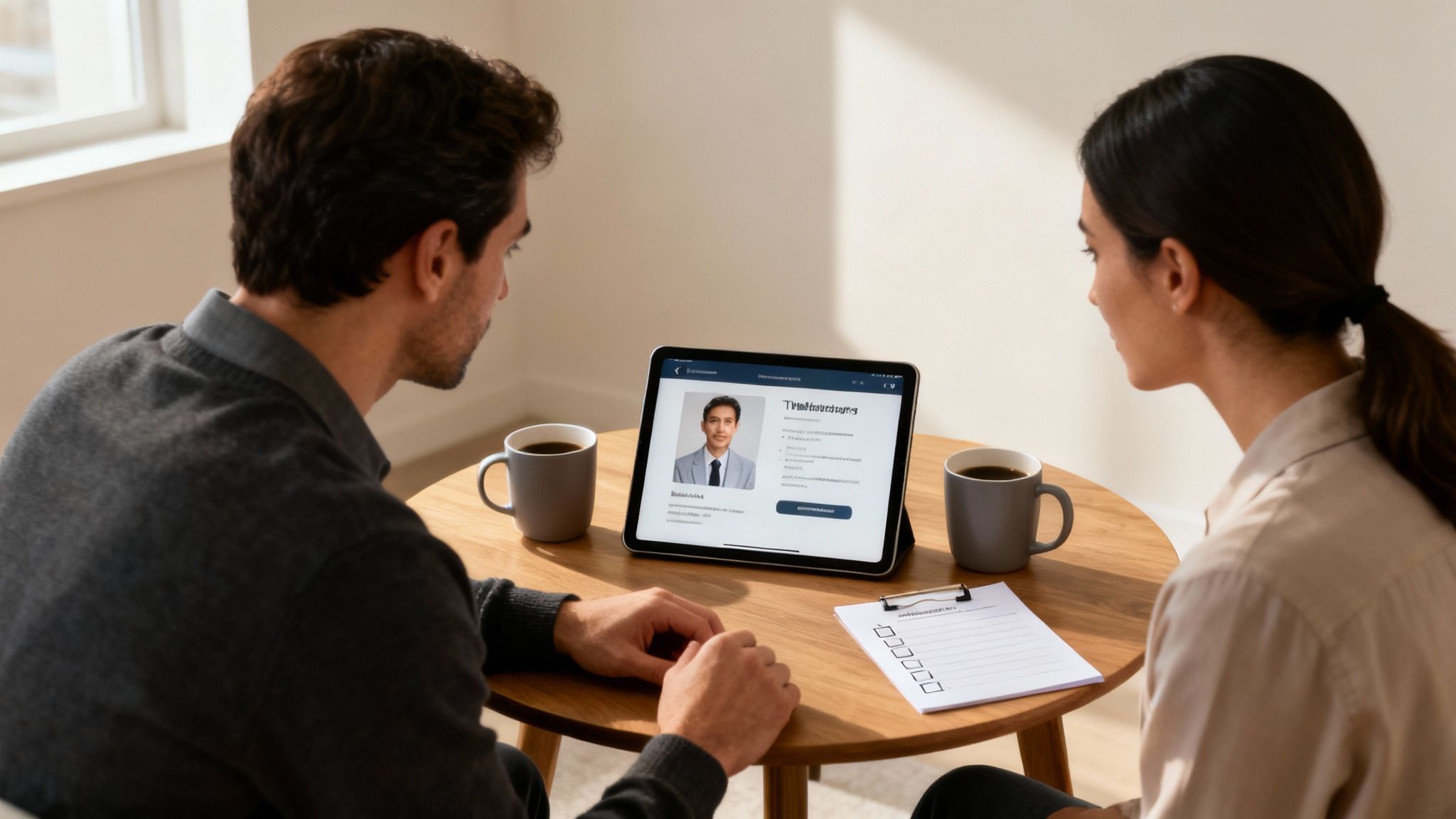
Modern platforms like DeTalks make it much easier to find a qualified professional. You can filter your search based on specific needs and browse detailed profiles that outline their experience and therapeutic philosophy.
Reading these profiles carefully is key. Does their approach resonate with you? Do they have experience with challenges like workplace stress, managing anxiety as a couple, or navigating feelings of depression? This helps you create a shortlist of potential therapists.
Remember, the initial consultation is a two-way interview. It's your opportunity to assess the therapist, just as much as they are getting to know you. Feeling a sense of connection and trust from that very first conversation is a fantastic sign.
Many platforms offer introductory calls, which are valuable for getting a feel for the therapist. This is your chance to ask questions and see how they interact with both of you. Pay attention to how you feel during and after the call.
Key Questions to Ask in a Consultation
An initial consultation is the perfect time to ensure the therapist's approach aligns with your goals. Having a few questions ready can help you make a confident decision. This is a conversation to see if your communication styles connect.
Here’s a quick checklist to guide your discussion:
- What is your approach to couples counselling? This helps you understand their philosophy and the methods they use.
- What’s your experience with issues like ours? You want someone who has navigated similar territory before.
- How do you structure your sessions? This gives you a practical idea of what to expect.
- How do you ensure both of us feel equally heard? A skilled therapist is neutral and balances the conversation.
- How do you view setting goals for therapy? This clarifies how you'll work together to define a successful outcome.
Choosing a therapist is a personal decision. The goal is to find a culturally sensitive professional who helps you both feel seen and hopeful. A thoughtful search sets the stage for a positive experience with online couples counselling and a stronger partnership.
What to Expect in Your First Few Sessions
It is completely normal to feel a mix of hope and nervousness before your first therapy session. Starting online couples counselling is a big step. The first few meetings are about building a foundation of trust and helping you get comfortable with the process and your therapist.
Your therapist will likely begin by getting to know you and your relationship’s history. They will listen as you describe your challenges and, just as importantly, what you hope to achieve together. This helps the therapist gain a complete picture of your connection.
Setting the Stage for Open Conversation
The goal of early meetings is not to determine who is right or wrong. It's a team effort to identify recurring patterns that may be creating distance between you. Your therapist acts as a guide, helping you see these cycles from a fresh, more compassionate perspective.
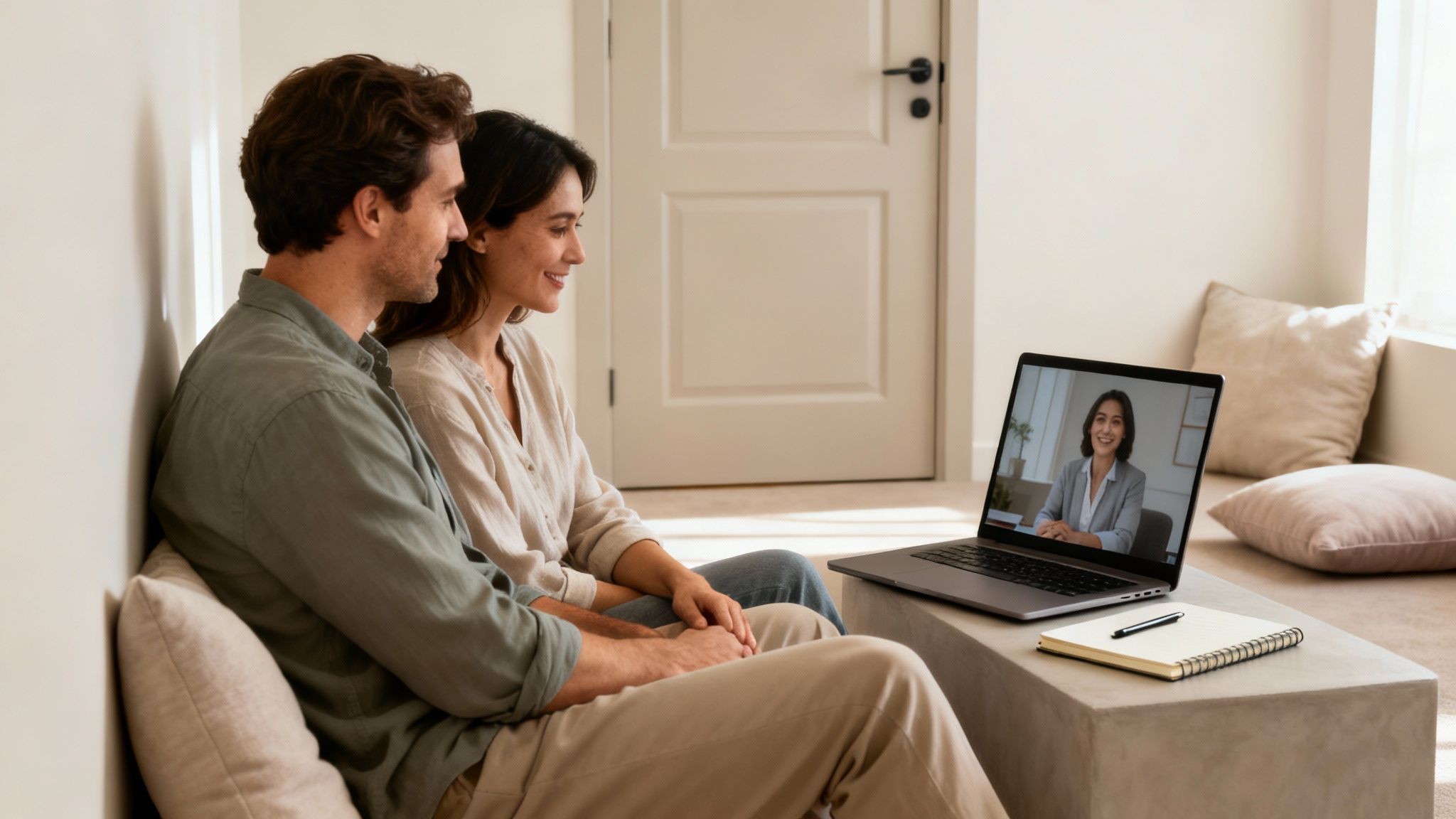
To get the most out of your sessions, prepare your physical space beforehand. Find a quiet, private spot where you won't be interrupted. A stable internet connection and comfortable seating will help you focus on the conversation and each other.
Understanding the Role of Assessments
Sometimes, a therapist might use questionnaires to gather more information. These are not tests. They are simply tools to offer insights into things like communication styles, sources of workplace stress, or individual well-being.
It’s important to remember that these assessments are not diagnostic. They are informational guides that provide a clearer starting point for your therapy journey, highlighting both strengths and areas for growth.
This information helps your therapist tailor the counselling specifically to you, ensuring the process is relevant and effective.
Establishing Collaborative Goals
By the end of the first few sessions, you, your partner, and your therapist will work together to set clear, achievable goals. This is a critical step that ensures everyone is on the same page and working toward a shared vision. This process turns a vague hope for change into a concrete plan for building a stronger connection.
These initial meetings are a guided exploration focused on building resilience and fostering compassion. The supportive takeaways should leave you feeling hopeful and better equipped for the journey ahead, focusing on your shared well-being rather than promises of a cure for challenges like anxiety or depression.
Making the Most of Your Therapy Journey
Starting online couples counselling shows you are both invested in building a stronger future together. Getting the most out of it requires patience, practice, and a commitment from both of you to apply what you learn in your daily lives.
It's normal for challenges to arise during therapy; in fact, they are often opportunities for growth. For instance, one partner may feel hesitant at first. Approaching this with empathy and framing therapy as something you are doing for the relationship can help.
Navigating Common Hurdles Together
If your partner is unsure, focus the conversation on shared goals, like wanting more laughter or less tension. This shifts the dynamic from blame to collaboration, making therapy feel like a positive investment in your future happiness.
Talking about sensitive subjects can also feel uncomfortable, but this discomfort is often a sign of progress. A good therapist creates a safe, non-judgmental space for these conversations. Remembering this can help you move through the difficult moments.
Overcoming these small challenges together can become a powerful part of the therapeutic process itself. It’s in these moments—showing patience with a skeptical partner or offering support during a tough conversation—that you begin to build new patterns of compassion and resilience.
Here are a few practical tips to help you navigate this:
- Create a "We" Frame: Talk about therapy as something "we" are doing for "us" to reinforce that you are a team.
- Practice Patience: Lasting change takes time. Celebrate small wins and acknowledge the effort you are both making.
- Schedule Practice Time: Set aside 15-20 minutes a few times a week to practice the communication exercises your therapist provides.
From Insights to Action
A key challenge is applying what you learn in therapy to real life. It takes consistent practice to use new skills when you are feeling stressed or frustrated. This is where the real work of building a stronger relationship happens.
This journey also helps rebuild your emotional bond and address feelings of isolation. To deepen your connection and learn more about overcoming distance, you may find it helpful to explore resources on how to deal with loneliness and build real connections.
Ultimately, making the most of your online couples counseling comes down to showing up for your sessions, your partner, and yourself. It is an active process of turning moments of anxiety and friction into opportunities for a much deeper connection.
Frequently Asked Questions
It's completely normal to have a few questions before diving into online couples counselling. Let's walk through some of the most common ones to help you get a clearer picture of what to expect and feel confident about taking this step for your relationship.
Is Online Couples Counselling as Effective as In-Person Therapy?
Absolutely. For most couples, online therapy can be just as powerful as sitting in a therapist's office. A growing body of research, along with countless real-world success stories, shows that video sessions deliver fantastic results in improving communication, navigating conflict, and boosting overall relationship happiness.
Ultimately, what makes therapy work isn't the room you're in—it's your commitment to the process and the connection you build with your therapist. The best format is simply the one that works for your life and allows you both to show up fully and engage.
What If My Partner Is Hesitant to Try Counselling?
This is a big one, and it's something many couples face. The key is to approach the conversation with empathy, not pressure. Try framing it as a project you can tackle together to make your team stronger, rather than something meant to "fix" your partner or place blame.
Often, suggesting just one initial consultation can feel like a much smaller, less intimidating step. Many partners who are initially on the fence find that the privacy and comfort of being at home for online couples counselling takes a lot of the pressure off. Once they see it's a supportive space, that hesitation usually melts away.
How Much Does Online Couples Counselling Typically Cost?
Costs can range quite a bit, and they usually depend on the therapist's level of experience, their specific qualifications, and the platform you choose. The good news is that many online services offer access to professionals at various price points, so you can often find great support that aligns with your budget.
It can be helpful to reframe the cost. Instead of viewing it as just another weekly bill, think of it as a meaningful investment in the long-term health, happiness, and resilience of your partnership.
How Will We Know If the Therapy Is Working?
Progress in therapy isn't always a dramatic, overnight change. More often, it reveals itself in small but significant shifts in your daily interactions. You might suddenly realise you're able to talk about a touchy subject without it blowing up, or you catch yourself truly listening to your partner's side of things instead of just waiting for your turn to talk.
Here are a few signs you're on the right track:
- You start feeling more like partners and less like roommates.
- You notice disagreements de-escalate much faster than they used to.
- You feel a renewed sense of hope and optimism about your future together.
A good therapist will also make a point of checking in with you both regularly. They'll help you reflect on the goals you set at the beginning and see how you’re progressing, ensuring the counselling stays on track and genuinely helps you both.
Ready to take that first step towards a stronger, happier relationship? The right support can make all the difference. On DeTalks, you can find experienced therapists who specialise in working with couples. Take a look and book a confidential session today. You can explore your options and find a therapist on DeTalks.
Leave a Reply