
The idea of family life cycle stages offers a warm and helpful way to see how families grow and change. Like individuals, families evolve through a series of predictable phases. Each stage brings its own unique joys, learning opportunities, and a fresh set of challenges.
This framework helps normalise the hurdles we all face on this journey. It reframes them not as personal failings, but as natural parts of a shared human experience, fostering resilience and understanding.
Understanding Your Family's Evolving Journey
While every family’s story is unique, there is a common rhythm to how most of us grow and transition. Thinking about your family's path in terms of these stages can act like a roadmap, helping you anticipate what’s next and navigate challenges with more compassion.
It's a way of realising that the stress of new parenthood or the quiet of an empty home is a well-trodden path. This perspective shifts the focus from "what's wrong with us?" to "how can we grow through this?", empowering you to see challenges as opportunities for connection and well-being.
The Natural Flow of Family Life
Looking at your family this way builds resilience and encourages open conversations about what each person is experiencing. This shared understanding is the first step toward strengthening your family's mental health and finding healthier ways to relate to one another.
The timeline below gives a simple visual of the core phases many families experience.
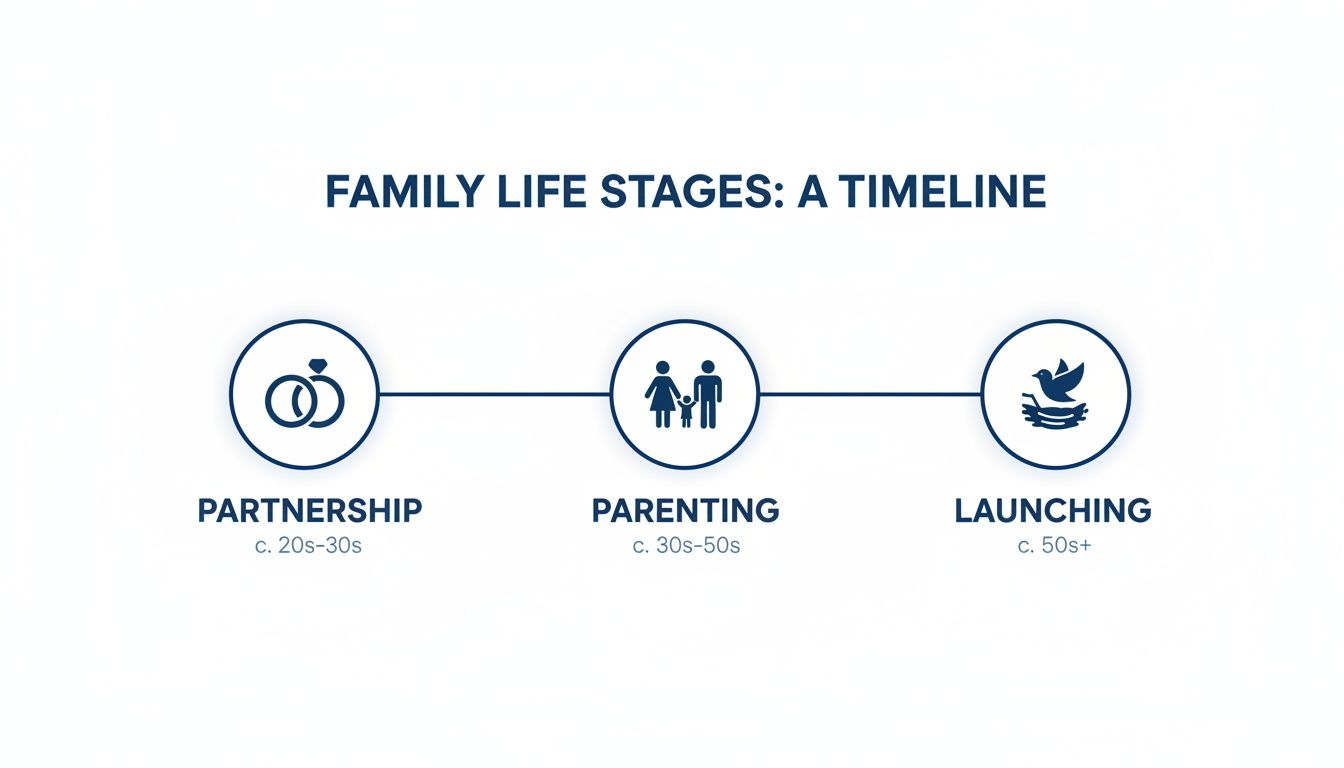
As you can see, each stage—from building a partnership to parenting and eventually launching children—marks a major shift in the family’s focus and priorities.
To give you a clearer picture, here’s a quick breakdown of what to expect at each stage.
Overview of Key Family Life Cycle Stages
| Stage | Primary Task | Common Challenge |
|---|---|---|
| 1. Single Young Adult | Establishing independence & identity | Balancing career goals with personal relationships |
| 2. The New Couple | Merging two lives into a new system | Navigating differences in values, habits & finances |
| 3. Family with Young Children | Adjusting to new parenting roles | Exhaustion, loss of personal time & couple intimacy |
| 4. Family with Adolescents | Increasing flexibility of family boundaries | Managing conflicts over independence & responsibility |
| 5. Launching Children | Releasing adult children into the world | Adjusting to the "empty nest" & redefining roles |
| 6. Family in Later Life | Accepting shifting generational roles | Coping with health issues, retirement & new family dynamics |
This table is just a snapshot, but it illustrates how the focus and pressures on a family naturally change over the years.
Understanding these stages feels especially relevant in an India-first context, where family is central but modern pressures like intense workplace stress are common. Seeking support through counselling during these transitions isn’t a sign of weakness; it’s a proactive step toward building a happier, stronger family and nurturing your well-being.
Building a Foundation: From Independence to Partnership
The journey into adulthood often unfolds in two parts: first, learning to stand on our own, and then, learning to walk alongside someone else. These early family life cycle stages are about laying a foundation of independence, communication, and mutual respect. This exciting and sometimes messy period is filled with growth but also brings its own pressures.
The first major step is becoming your own person, which involves both financial and emotional independence. Young adults are often juggling career-building, managing finances, and discovering their identity away from their family. It's no surprise that this can be a time of significant workplace stress and personal anxiety.
The Young Adult Journey
In many cultures, including India, it's common for young adults to live at home while establishing their careers. This dynamic calls for a delicate balance of honouring family traditions while carving out space for personal freedom. It requires patience and clear communication from everyone involved.
Ultimately, the goal is to develop a strong, secure sense of self. This personal foundation is what you'll carry into future relationships. Building resilience now—learning to manage stress and bounce back from setbacks—is a direct investment in your long-term well-being.
Moving from dependence to independence is a profound emotional shift. It's not just about what you do, but about how you see yourself—as capable, responsible, and ready for the next chapter of life.
Forming a New Partnership
The next stage begins when two people decide to build a life together. This "new couple" phase is a beautiful, yet intricate, process of merging two separate worlds. You’re blending habits, values, family stories, and deeply held hopes for the future.
This is where the real work of creating a partnership begins. As the initial glow settles, the practical realities of daily life emerge. Disagreements over money or chores aren't signs of trouble, but normal growing pains as a couple learns to function as a team.
In India, this transition can be particularly intense for newly married couples. While marital happiness is often high initially, challenges in adjusting can cause friction for some. A significant factor is communication, with many young couples reporting that simple gaps in understanding lead to conflict. You can find more insights on these family connection trends on the ASPE website.
Creating a Resilient Bond
Strong communication is the bedrock of a lasting partnership, helping you solve problems, share dreams, and support each other through tough times. When communication falters, small misunderstandings can grow into larger conflicts, leading to feelings of loneliness or resentment.
This is why seeking support early on can make a profound difference. Relationship counselling or therapy isn't about admitting failure; it’s a smart, proactive step to build healthy communication skills. Learning to listen actively and express needs constructively is one of the most powerful things you can do for your relationship's happiness.
By investing in their connection during this foundational stage, couples build a resilient bond that can handle the pressures of later family life cycle stages. This early effort creates a deep sense of security and teamwork, helping them face future storms, including potential struggles with anxiety or depression, together.
Navigating the Intensity of the Parenting Years
The arrival of children marks a huge shift in the family dynamic, launching one of the most intense and rewarding phases of the family life cycle stages. Life is completely reorganised around the needs of a new, dependent person. This is a fundamental recalibration of your identity, responsibilities, and daily rhythm.
Almost overnight, a couple must learn to operate as a parenting team, which can strain time, energy, and emotional reserves. The spotlight naturally moves to the child's well-being, and finding moments for connection as a couple can feel like a challenge. For most, this period is a powerful mix of profound joy and significant stress.

The Demands of Parenting Young Children
Raising small children is an all-consuming job that can easily lead to parental burnout. It's common to feel overwhelmed by the constant demands, and some mothers may grapple with challenges like postpartum depression. These feelings are not a sign of failure, but a normal human reaction to a life-altering event.
This is where building a strong support system becomes essential. This might mean leaning on family, connecting with other new parents, or seeking professional counselling to navigate the emotional journey. Simply acknowledging the struggle is a crucial first step toward building the resilience you need to thrive.
To better understand your child’s evolving needs on this journey, exploring a guide on the various stages of child development by age can be an invaluable resource.
Navigating the Adolescent Years
Just when you think you've mastered parenting, the teenage years arrive and change the game again. This stage is built around a key challenge: adolescents need both firm boundaries and growing freedom. Their main task is to form their identity, which often involves pushing back against family rules.
For parents, this can feel like walking a tightrope as a child who once clung to your hand now seeks more privacy. This is a healthy and necessary part of growing up, but it can create friction. Open communication becomes more critical—and often, more challenging—than ever.
The goal is not to control your teen, but to coach them. It’s about shifting from being a manager of their life to a consultant they can trust, helping them make good choices while allowing them the space to learn from their mistakes.
In many Indian families, this stage is heightened by immense academic pressure, which can lead to a rise in family conflicts. Studies show that many parents in urban areas experience burnout tied to competitive schooling. This pressure also impacts mental health, with a significant number of adolescents showing signs of depression linked to high parental expectations. You can discover more insights about family life cycle pressures from this study.
Fostering Connection and Resilience
Throughout these demanding parenting years, leading with compassion—for your children and yourself—is key. It's about balancing expectations with unconditional love and support.
Here are a few practical ways to nurture your family's well-being:
- Schedule One-on-One Time: Even 15 minutes of focused, distraction-free time with each child can strengthen your bond and keep communication open.
- Practice Active Listening: When your teen talks, put your phone away and just listen. Resisting the urge to jump in with advice helps them feel heard and understood.
- Establish Family Rituals: Consistent rituals, like a weekly movie night, build a comforting sense of stability and connection during a time of constant change.
- Prioritise Self-Care: You cannot pour from an empty cup. Making time for your own mental health isn’t selfish; it’s an essential part of being a present and patient parent.
The added pressure of parenting can sometimes bring back old challenges like unresolved workplace stress or personal anxiety. Seeking therapy is a powerful step toward creating a healthier family environment. It also models for your children that asking for help is a sign of strength, building a foundation of emotional intelligence and resilience.
Embracing Change as Children Leave Home
The day your child leaves home is a massive turning point in the family journey. After years of a life built around their needs, the house suddenly becomes quiet. The daily rhythm you took for granted is gone.
This stage is often called the "empty nest," but it's more helpful to see it as a profound transition. It is an ending, but it is also a beginning that opens new doors for personal growth and for reconnecting with your partner.
It's completely normal to feel a mix of emotions, including sadness, loneliness, and anxiety, as you adapt to this new reality. After pouring so much of yourself into parenting, it's natural to ask, "What now?" This shift can feel especially jarring in nuclear families where the parent-child bond is so central.

Rediscovering Life Beyond Parenting
While this is a time for letting go, it's also a powerful opportunity to rediscover yourself. Now is the time to turn your focus inward and remember who you were before you were a parent. It’s your chance to dust off old hobbies, find new passions, and invest energy back into your own well-being.
This period can also test your relationship as a couple. For many years, the shared project of raising children may have masked underlying issues. With the kids gone, those challenges might surface, which is an invitation to strengthen your bond and redefine your partnership.
This stage isn’t really about an empty home, but about newly available space. It's a chance to refill your life with personal passions, renewed connections, and a different kind of purpose.
Strengthening Your Partnership
Successfully navigating this stage is about turning toward each other, not away. With the children gone, you have the time and space to remember why you fell in love. It’s an opportunity to be partners and friends again, not just co-parents.
To build resilience as a couple and find happiness in this new phase, try these supportive strategies:
- Communicate Openly: Talk about your feelings—the good and the bad. Acknowledging the sadness alongside the excitement builds empathy and compassion.
- Create New Rituals: The old family routines are gone, so create new ones for just the two of you, like a weekly date night or planning a trip together.
- Respect Individual Growth: Encourage each other to pursue separate interests. This brings fresh energy and new experiences back into your relationship to share.
When to Seek Professional Support
Sometimes, this transition can feel overwhelming and may bring feelings of anxiety or depression to the surface. If you feel stuck in sadness or find that old conflicts are causing distress, professional therapy can be an incredible help.
Couples counselling offers a safe, structured space to work through issues and learn healthier ways to communicate. Seeking support is a proactive step toward protecting your collective well-being as you step into this next phase of life. It is an investment in a happy and fulfilling future, together.
Finding Meaning and Well-Being in Later Life
The later stages of the family journey bring a shift in our roles and responsibilities. This chapter often begins with being part of the "sandwich generation"—those caught between caring for their children and supporting their ageing parents. It’s a time defined by giving, which can easily lead to personal strain and burnout.
Juggling the needs of multiple generations, a career, and your own life can stretch you emotionally and financially. This balancing act is a common cause of high workplace stress and caregiver burnout, especially when self-care gets pushed aside.

Navigating the Demands of Caregiving
In an India-first context, the sandwich generation experience often defines the middle-age stage of the family life cycle. Many adults find themselves grappling with this dual duty to parents and children, which can contribute to burnout.
Later on, as retirement begins, a new set of challenges appears. A growing number of older adults in urban areas live alone, which can fuel feelings of loneliness. You can learn more about these family life cycle trends to see how these patterns play out.
Feeling overwhelmed when pulled in so many directions is completely normal. Acknowledging the anxiety or stress is an important first step. Leaning on support systems—family, friends, or professional counselling—is crucial for protecting your own well-being.
Embracing the Retirement Years
The shift into retirement marks another massive chapter in the family life cycle stages. After decades built around work and family, the sudden influx of unstructured time can feel both freeing and unsettling. For many, a career is a source of identity, purpose, and social connection.
Losing that familiar structure can leave you feeling adrift. This is also a time when health concerns may come to the forefront, requiring lifestyle adjustments. The key to a happy retirement is to proactively build new routines and find new sources of meaning that fit who you are now.
Retirement isn’t just an ending. It’s an invitation to consciously design a life filled with purpose, connection, and joy—on your own terms. It's a time to finally invest in yourself.
This stage is a powerful opportunity to pour energy into personal passions and nurture a positive outlook. By embracing ideas from positive psychology, you can build resilience and find genuine happiness and satisfaction in your later years.
Cultivating Happiness and Purpose
Finding meaning in later life is an active process of rediscovery. It’s about shifting focus from the roles you used to have to the joys you can find today.
Here are a few gentle but powerful ways to boost your well-being:
- Practise Gratitude: Making a daily habit of noticing the good things can dramatically improve your mood and foster happiness.
- Maintain Social Connections: Be intentional about staying connected with friends and family to combat loneliness. These bonds are a lifeline for your emotional health.
- Embrace New Hobbies: This is the perfect time to learn something new, which keeps your mind sharp and can introduce you to new friends.
- Focus on Mindfulness: Simple practices like meditation can help manage anxiety and keep you grounded in the present, helping you appreciate the simple joys of life.
If adjusting to these changes feels like a struggle, or if feelings of depression persist, reaching out for professional support can make all the difference. Therapy provides a safe, compassionate space to explore what you're feeling and create a plan for a truly fulfilling life in your later years.
Supportive Steps for Your Family's Well-Being
Moving through the different stages of family life is a journey filled with wonderful moments and some tough challenges. The first step to building a stronger, more connected family is acknowledging that struggles are a normal part of the story. You don't have to navigate these transitions alone; support is available to help your family thrive.
Knowing when to reach out for help is a sign of strength. Professional support can offer tools to communicate better, handle disagreements constructively, and boost your family's overall well-being. It’s about learning how to grow together through life's inevitable ups and downs.
Finding the Right Support for Your Family
Different challenges call for different solutions. The key is finding a type of support that fits what your family is going through.
- Individual Therapy: Personal struggles like anxiety, depression, or workplace stress can affect the whole family. Individual therapy provides a safe, one-on-one space to work through these issues.
- Couples Counselling: This is a proactive step for partners looking to strengthen their relationship. Counselling can help you navigate big changes, from new parenthood to life after the kids have moved out.
- Parenting Guidance: This type of support offers parents practical strategies to create a calmer, more positive home and navigate behavioural challenges.
Using Assessments for Personal Insight
On the path to better understanding, tools like psychological assessments can offer valuable clues. These screeners can help you get a clearer picture of your emotional habits, personality traits, or symptoms of stress.
It is critical to remember that these assessments are informational tools, not diagnostic ones. Think of them as a personal snapshot—a helpful starting point for self-reflection or a conversation with a mental health professional, but not a final verdict.
A crucial aspect of ensuring long-term family well-being involves engaging in comprehensive estate planning to secure everyone's future. This practical step provides peace of mind across all life stages.
Taking these supportive steps is an investment in your family’s happiness and resilience. Every action you take helps build a stronger foundation for whatever comes next.
Frequently Asked Questions About the Family Life Cycle
Thinking about how families grow and change often brings up some common questions. Here are some clear answers to help guide you.
Do All Families Follow These Stages Exactly?
Absolutely not. Think of this framework as a helpful map, not a strict set of rules. Every family’s journey is unique, and modern family life is incredibly diverse.
Single-parent households, blended families, couples without children, and LGBTQ+ families all carve their own paths. The key insight is that all families face transitions that call for new skills, patience, compassion, and fresh ways of relating to each other.
How Can I Tell if Stress Is Normal or a Sign of a Deeper Problem?
A bit of stress or sadness is completely normal during a big life change. These feelings are usually tied to a specific challenge and tend to ease as you adjust.
A red flag may be when those feelings stick around, feel overwhelming, or interfere with your daily life, work, or relationships. If it feels like you're constantly struggling, it could be a sign of something more, like depression or an anxiety disorder. That's a good cue to consider seeking professional support for your well-being.
Remember, reaching out for counselling is a proactive step toward building resilience. It's not about waiting for a crisis but about learning better ways to cope with life's challenges.
How Do I Talk to a Family Member About Therapy?
Bringing up therapy can feel tricky, so it’s important to lead with kindness and genuine concern.
Find a quiet, private time to talk. Start by using "I" statements to share your feelings, such as, "I've been feeling worried about us lately," which feels softer than an accusation.
Frame it as a team effort to make your family life stronger and more connected. Normalising the idea by saying something like, "Lots of families get support to get through tough patches" can also help. Be patient, as your goal is to open the door with compassion, not force them through it.
Navigating your family's unique journey is easier with the right support. DeTalks connects you with qualified therapists and counsellors who can provide guidance at every stage, helping you build stronger bonds and greater well-being. Start your journey toward a healthier family life with DeTalks.
Leave a Reply