
Healing from childhood trauma isn't about erasing the past, but learning to live alongside it so it no longer controls your future. It's a journey of understanding how early experiences affect you today and building a life defined by your own strength and compassion.
This process often involves professional support, like therapy or counselling, combined with small, kind habits you build for yourself each day. It is a path toward greater well-being, one step at a time.
Understanding the Echoes of Childhood Trauma

Childhood trauma is not always a single, major event. Often, it's the ongoing stress of feeling unsafe, emotional neglect, or witnessing conflict that leaves a lasting mark.
These experiences can shape how your nervous system develops, creating automatic responses and beliefs that carry into adulthood. Understanding this is the first step toward compassion for yourself.
The effects can appear in unexpected ways, such as overwhelming workplace stress, constant anxiety, or feelings of depression. These are not character flaws; they are understandable human responses to experiences that were too difficult for a child to process alone.
The Lasting Impact on Well-being
Think of your nervous system as being wired for high alert after difficult childhood experiences. This can make it hard to relax, trust others, or feel truly safe in the world.
This constant state of "fight or flight" can affect your relationships, career, and overall happiness. Sadly, these experiences are widespread in India, where studies on child maltreatment in India show a significant link between childhood adversity and later mental health challenges like depression and anxiety.
Recognising the Signs in Adulthood
The first step toward healing is recognising how past trauma may be showing up in your life today. The signs are often subtle and can be mistaken for parts of our personality.
The table below outlines common ways these past experiences can manifest in adulthood. Seeing your own experiences here can be a validating reminder that you are not alone.
| Area of Impact | Common Manifestations |
|---|---|
| Emotional | Intense mood swings, chronic anxiety, feelings of numbness or emptiness, difficulty managing anger. |
| Behavioural | Perfectionism, people-pleasing, substance misuse, self-sabotaging behaviours, difficulty with motivation. |
| Relational | Fear of intimacy or abandonment, difficulty trusting others, repeating unhealthy relationship patterns, social isolation. |
| Cognitive | Negative self-talk, persistent feelings of shame or guilt, difficulty concentrating, a sense of a foreshortened future. |
| Physical | Chronic fatigue, unexplained aches and pains (like headaches or stomach issues), sleep disturbances, heightened startle response. |
Recognising these signs can be both difficult and empowering. It is a shift away from self-blame and toward self-compassion.
Healing begins when you accept that your feelings are valid reactions to what you went through, not a reflection of who you are.
At DeTalks, we offer assessments to help bring clarity to your well-being. Please remember, these are informational tools to support your journey, not diagnostic labels.
Finding Your Footing with Safety and Stability
Before you can explore the past, your mind and body need to feel safe in the present moment. Creating a sense of stability is the foundational first step in the healing process.
When a difficult memory or feeling arises, your nervous system can react as if the threat is happening now. The goal is to gently bring yourself back to the present, reminding every part of you that you are safe.
Simple Grounding Techniques for Immediate Relief
Grounding techniques are simple, sensory-based tools to reconnect with the present when you feel anxious or overwhelmed. They are especially helpful for managing sudden waves of workplace stress or anxiety.
A straightforward and effective method is the 5-4-3-2-1 technique. It pulls your attention away from distressing thoughts and anchors it in your immediate surroundings.
Here’s how it works:
- 5 Things You Can See: Look around and name five objects you see, like a book, a plant, or a pen.
- 4 Things You Can Touch: Notice four physical sensations, such as the texture of your clothing or the feeling of your feet on the floor.
- 3 Things You Can Hear: Listen for three distinct sounds, like distant traffic, a clock ticking, or your own breath.
- 2 Things You Can Smell: Focus on two scents in your environment, such as coffee brewing or soap on your hands.
- 1 Thing You Can Taste: Notice one thing you can taste, like a sip of water or the lingering taste of your last meal.
This simple act engages your senses and interrupts the panic cycle. It’s a powerful way to signal to your nervous system that you are safe, which can reduce feelings of anxiety.
Creating Your Personal Sanctuary
A sanctuary can be a real or imagined space where you feel completely safe and calm. It’s a mental retreat you can access whenever you need comfort and security.
To create one, close your eyes and picture a peaceful place, like a quiet beach or a cosy room. Fill this imagined space with comforting details: the warmth of the sun, the sound of gentle waves, or the scent of rain.
Your ability to create safety for yourself is a testament to your resilience. It's about building a present where you have the tools to feel steady.
Setting boundaries is another way to build a sanctuary in your daily life. Saying "no" to draining situations or limiting contact with stressful people is an act of self-preservation that protects your well-being and builds resilience against burnout.
Navigating Professional Paths to Healing
Seeking professional help is a courageous step on the path to healing. Therapy provides a safe, confidential space to explore difficult memories and feelings with a trained guide.
It’s a partnership where you learn new ways to relate to your past so it no longer dictates your present. This process helps you build a future filled with greater peace and well-being.
Understanding Different Therapy Approaches
Different therapy approaches are like different tools for healing. Finding what works for you will depend on your personal history and comfort level.
Trauma-Focused Cognitive Behavioural Therapy (TF-CBT)
This structured therapy helps you understand the connection between your thoughts, feelings, and behaviours. TF-CBT teaches practical skills to challenge unhelpful thought patterns and manage overwhelming emotions.
Eye Movement Desensitisation and Reprocessing (EMDR)
EMDR uses bilateral stimulation (like following a light with your eyes) to help your brain reprocess traumatic memories. It helps reduce the emotional intensity of triggers and flashbacks, allowing memories to be stored in a less disruptive way.
Somatic Therapies
This body-centered approach recognises that trauma is held in the body as well as the mind. Somatic therapies use techniques like breathwork and mindful movement to release stored tension and calm the nervous system.
Comparing Trauma Therapy Approaches
Here’s a simple comparison to help you understand these methods. The best option is the one that feels right for your unique needs.
| Therapy Type | What It Focuses On | Who It Might Help |
|---|---|---|
| Trauma-Focused CBT (TF-CBT) | Changing unhelpful thought patterns and behaviours linked to the trauma. | Individuals who want a structured, skills-based approach to challenge negative thinking. |
| Eye Movement Desensitisation and Reprocessing (EMDR) | Using bilateral stimulation to help the brain reprocess and integrate "stuck" traumatic memories. | People who struggle with intense flashbacks or find it difficult to talk about the trauma directly. |
| Somatic Therapies | Releasing trapped trauma from the body through physical awareness and movement. | Those who experience a lot of physical symptoms (like tension or pain) and feel disconnected from their body. |
Remember, all these approaches aim to help you heal in a safe environment. The path you choose is less important than your commitment to the journey.
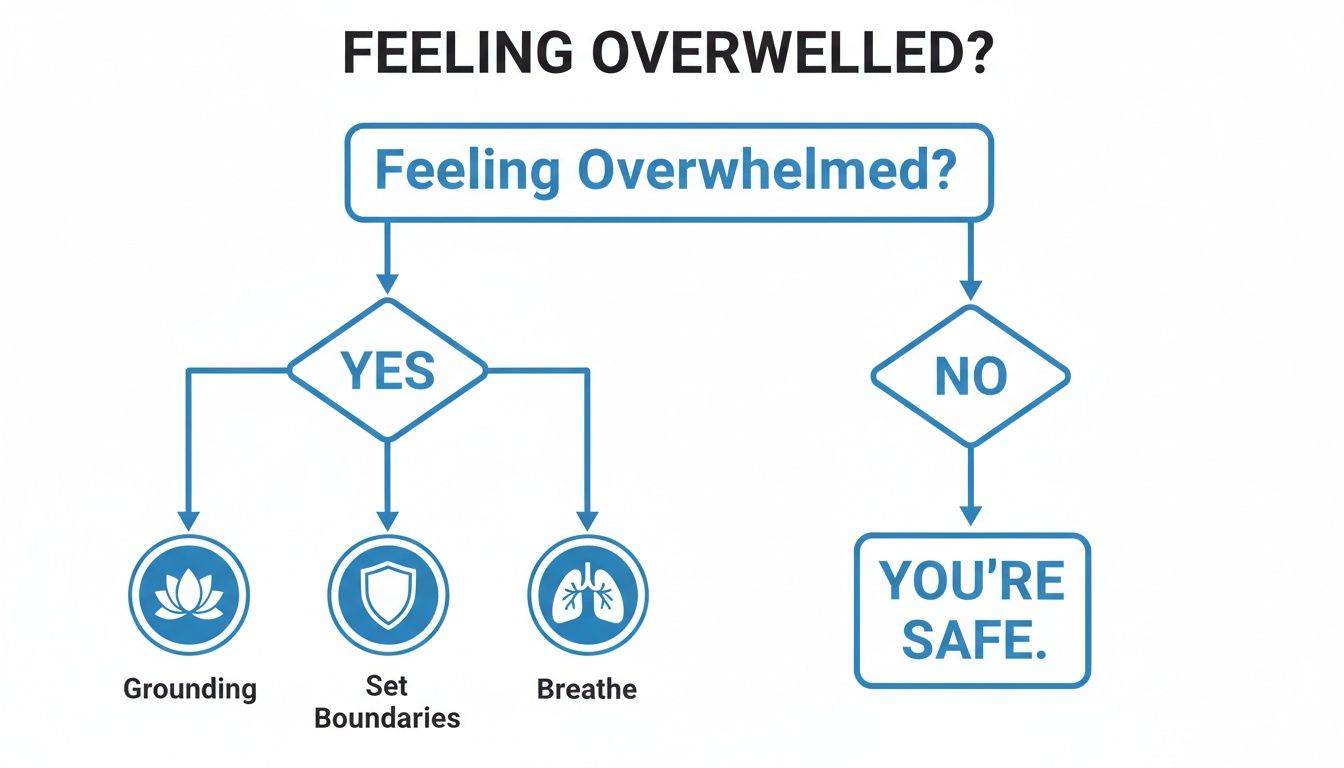
When you feel overwhelmed, simple actions like grounding yourself or taking deep breaths can be a lifeline. These small steps bring you back to the present and reinforce your sense of safety.
Finding the Right Therapist in India
The relationship with your therapist is as important as the type of therapy. Feeling seen, heard, and understood is the foundation of healing.
In India, trauma-informed care is becoming more accessible, which is vital. Research from the International Society for Traumatic Stress Studies highlights how childhood emotional abuse is a significant predictor of adult depression and anxiety.
Your first call with a therapist is a chance to see if they are the right fit for you. Trust your instincts; a good therapist will make you feel respected and hopeful.
Don't hesitate to ask questions during your first conversation. You might ask about their experience with childhood trauma or what a typical session feels like. Finding the right guide is a powerful act of self-care and an investment in your resilience.
Building Your Personal Support System

While professional therapy is key, your healing journey also happens outside the counselling room. Building a personal support system is about surrounding yourself with compassion and understanding.
This involves intentionally cultivating relationships and routines that nurture your spirit. It’s a network that offers a sense of safety and belonging.
Finding Your People: Identifying Nourishing Relationships
Take a gentle look at your existing relationships. Notice who leaves you feeling seen and respected, and who leaves you feeling drained or anxious.
A nourishing relationship is one where you feel safe to be yourself and express your needs. Prioritising these connections is an act of self-compassion that builds emotional resilience.
A true support system doesn’t try to fix you; it creates a safe space where you can heal yourself. It's about the quality of connection, not the quantity of friends.
Focus your energy on relationships that lift you up. This conscious choice is a key part of healing and contributes to long-term well-being and happiness.
Learning to Ask for What You Need
It can be hard to talk about your healing journey, but clear communication can turn a well-meaning friend into a true ally. You don't have to share every detail; instead, focus on what you need in the present.
For example, you could say, "I'm feeling overwhelmed today and could use someone to listen without offering advice." Being specific helps others support you in a way that truly helps.
This kind of open communication strengthens your bonds and reduces feelings of isolation. It teaches others how to show up for you effectively.
Creating Your Toolkit of Healthy Coping Skills
Your support system also includes the relationship you have with yourself. Developing healthy coping skills gives you reliable tools to turn to when you feel overwhelmed.
Consider adding these practices to your toolkit:
- Creative Expression: Drawing or writing can be a powerful outlet for emotions that are hard to put into words.
- Mindful Movement: Gentle activities like yoga or walking can help release physical tension and calm your nervous system.
- Journaling: Writing down your thoughts and feelings can bring clarity and help you process experiences without judgement.
Online tools can also be part of your support system. You might explore resources like Lunabloom AI for personalized well-being to find guided exercises that support your journey toward lasting happiness and compassion.
Reclaiming Your Narrative with Self-Compassion

Childhood trauma often leaves behind a harsh inner critic that fosters shame and self-blame. A vital part of healing is learning to treat yourself with the same kindness you would offer a friend.
This practice is about fundamentally changing your relationship with yourself. Self-compassion means acknowledging your pain with warmth and understanding, which is essential for building emotional resilience.
Practical Exercises to Cultivate Kindness
Learning self-compassion is a skill that grows with practice. It may feel unfamiliar at first, but starting with small, gentle exercises can make a big difference.
Here are a few practices to try:
- Compassionate Letter Writing: Write a letter to the younger version of yourself who went through those painful experiences. Offer the words of comfort, validation, and protection they needed to hear.
- The Self-Compassion Break: When you feel a wave of self-criticism, take a minute to pause. First, acknowledge your pain ("This is a moment of suffering"). Second, connect to your shared humanity ("Suffering is a part of life"). Finally, offer yourself kindness ("May I be kind to myself").
From Surviving to Thriving: Post-Traumatic Growth
Healing can also lead to something hopeful called post-traumatic growth. This is the idea that overcoming adversity can lead to positive psychological changes, like a new sense of purpose or deeper relationships.
This growth does not erase the pain but coexists with it. It’s the strength you find in your own resilience and the new empathy you develop for others.
Healing isn't about erasing your story. It's about realising you are the author and can write a new chapter filled with compassion, purpose, and well-being.
The statistics can be difficult, but there is hope. We know from these findings from the National Center for Biotechnology Information that early, trauma-informed care is proven to reduce long-term anxiety and depression. Confidential assessments and connecting with the right therapist can break cycles of pain and turn statistics into stories of resilience.
This journey is about moving forward with all parts of yourself. It’s about holding your past with tenderness while creating a future defined by the resilient and compassionate person you are becoming.
Answering Your Questions About the Healing Journey
Taking the first steps toward healing is a courageous act, and it’s natural to have questions. This section addresses common concerns to offer clarity and reassurance for the path ahead.
Remember, healing is not about achieving a flawless, pain-free state. It’s about learning to live with your story, building resilience, and creating a more authentic and whole life.
How Long Does It Take to Heal From Childhood Trauma?
There is no set timeline for healing; it is a deeply personal journey. The goal is not to be "cured" but to loosen the hold that trauma has on your daily life, so you feel more present and in control.
Some people notice shifts in a few months of therapy, while for others, it's a more gradual process. A good counsellor will help you move at a pace that feels safe for you.
Can I Heal From Trauma Without Professional Therapy?
You can certainly make progress on your own with self-help strategies like mindfulness, journaling, and nurturing strong relationships. These tools build a strong foundation for well-being.
However, deep-seated trauma often benefits from professional guidance. A therapist trained in trauma can offer specialised techniques like EMDR or somatic therapies that are difficult to do alone. If you feel stuck or overwhelmed by anxiety or depression, seeking counselling is a sign of strength.
Think of therapy as specialised support for emotional wounds. It's a safe space designed to help you heal what hurts.
What If Talking About the Trauma Makes Me Feel Worse?
This is a valid and common fear. A good trauma therapist will never push you to discuss painful memories before you are ready.
The first phase of therapy is always about building safety and stability. Your counsellor will help you develop coping skills first, so you have the tools to manage difficult emotions. If you consistently feel worse after sessions, it's important to discuss this with your therapist.
Is It Ever Too Late to Start Healing From Past Trauma?
No, it is never too late to begin healing. The brain has an incredible capacity for change at any age. I have seen people start their journey decades after the trauma occurred and still find profound relief and peace.
Taking that first step, no matter your age, is a powerful act of self-compassion. It's an investment in a future that can be brighter, more connected, and more fulfilling than you might imagine. Your story is still being written.
At DeTalks, we believe everyone deserves compassionate, professional support. Our platform connects you with qualified therapists across India who specialise in trauma, anxiety, depression, and overall well-being. Whether you’re ready to start therapy, explore a science-backed assessment, or simply learn more, we are here to help you take the next step. Visit https://detalks.com to begin your journey toward healing and resilience today.
Leave a Reply