The principles of development and growth are predictable patterns that guide our lives from birth to old age. They explain how we change on every level—physically, mentally, and emotionally. This lifelong journey shapes everything from our childhood bonds to our adult resilience.
Understanding this process helps us navigate life's challenges with compassion and build a true sense of well-being.
Your Lifelong Journey of Growth and Change

Think of this guide as a map for your personal journey, helping you make sense of your own story and experiences. It offers a warm, professional perspective on the path we all walk.
When you see your life through this lens, many things become clearer. It brings understanding to challenges like workplace stress or relationship patterns, and shows what it takes to cultivate happiness and build resilience.
A Personal and Empowering Map
We will explore the biological, cognitive, and social-emotional shifts that make you who you are. The goal is to make these ideas feel personal and show how they can help you move from just getting by to truly thriving.
This journey is about understanding:
- Biological changes: The physical maturation of your body and brain.
- Cognitive shifts: How your ability to think, remember, and solve problems changes over time.
- Socio-emotional growth: The way you build relationships, handle your feelings, and find your place in the world.
To take a more active role in this journey, it can be helpful to create a personal development plan. It provides structure and direction for your efforts.
Your development is a unique, lifelong journey. Understanding its principles is a powerful tool for self-compassion, resilience, and growth, reminding us that challenges are not just obstacles but opportunities.
Navigating Challenges with Understanding
While we will discuss common challenges like anxiety and depression, the focus is on empowerment through understanding. This information is not for self-diagnosis. Any assessments you encounter are purely informational tools to help guide you toward the right support, such as therapy or counselling.
In India, this understanding is particularly important, as many people face mental health challenges. This highlights the urgent need for accessible platforms that help people build resilience and live with purpose.
Ultimately, understanding the core principles of our own growth helps us see that feeling overwhelmed by workplace stress is a shared human experience, not a personal failing. This perspective is the first step toward building a healthier, more fulfilling life.
The Three Threads That Weave Your Life Story

Our lives are like a tapestry woven from three interconnected threads: biological, cognitive, and socio-emotional development. These areas are in a constant, dynamic dance. When you pull on one thread, the others move with it, creating the unique pattern that is your life story.
Let's explore each of these essential threads to see how they form the foundation for your personal growth and well-being.
Your Biological Blueprint
The first thread is our biological development, which covers the physical changes in your body and brain. This includes genetics, hormones, nutrition, and overall health. It directly impacts your energy, mood, and ability to handle stress.
For example, the exhaustion that often fuels workplace stress is a biological signal for rest. Similarly, the brain chemistry changes linked to conditions like anxiety or depression show how deeply our biology is tied to our emotional reality.
Your Thinking Mind
Next is cognitive development, which involves how you think, learn, remember, and solve problems. It is the inner world of your thoughts and beliefs that shapes how you interpret life's events.
Imagine a student overwhelmed by exam pressure. Their ability to manage time and quiet anxious thoughts are cognitive functions. When these are strained, it can affect their physical health and emotional state, showing how tightly these threads are woven.
Growth occurs when these three domains—biological, cognitive, and socio-emotional—work in harmony. When you seek support through therapy or counselling, you are essentially helping to re-align these threads, strengthening your overall well-being and resilience.
Your Social and Emotional World
The final thread is socio-emotional development, which includes your feelings, personality, and relationships. It’s about how you form connections, show empathy, and navigate the social world.
A team leader trying to motivate their staff relies on this domain. When this area is challenging, it can lead to burnout or isolation, which can drain their focus and take a toll on their physical health.
The Core Domains of Human Development
| Domain of Development | What It Covers | A Real-World Example |
|---|---|---|
| Biological | Physical body and brain changes, genetics, hormones, health, and motor skills. | A toddler learning to walk, or a teenager experiencing a growth spurt. |
| Cognitive | Thought processes, learning, memory, language, and problem-solving. | A child learning to read, or an adult strategising a solution to a work problem. |
| Socio-Emotional | Feelings, personality, self-concept, and relationships with others. | A preschooler learning to share toys, or a couple navigating a disagreement. |
Your body, mind, and heart are truly inseparable. Understanding how they interact is key to grasping the core principles of development and growth and nurturing your well-being.
How Different Theories Explain Your Growth
Developmental theories are like different lenses, each offering a unique way to make sense of your life's journey. They frame your struggles and triumphs as part of a shared, predictable human story.
These frameworks can be incredibly validating, showing that challenges are often predictable chapters in our growth. This shift in perspective can be a powerful catalyst for self-compassion and resilience.
Erikson's Eight Stages of Life
Psychologist Erik Erikson saw life as a series of eight psychosocial stages, each defined by a central challenge. Successfully navigating each one helps us build a core psychological strength.
Picture these stages as distinct life chapters:
- Infancy: Learning trust or mistrust.
- Early Childhood: Developing a sense of independence.
- Adolescence: Forming a personal identity.
- Young Adulthood: Forming deep, intimate relationships.
- Middle Adulthood: Finding a sense of purpose.
- Late Adulthood: Feeling a sense of fulfilment and wisdom.
This model offers a compassionate view of our struggles. It shows that feeling lost at certain points isn't a sign you're broken; it’s an essential part of becoming who you are meant to be.
Your Story Through Erikson's Lens
Consider a young professional in their late twenties feeling adrift and jumping between jobs. This uncertainty can lead to anxiety or depression, leaving them feeling isolated.
From Erikson’s perspective, this isn't just a career slump but a natural part of this life chapter. Seeing it this way can be a huge relief, shifting the narrative from self-criticism to curious self-exploration.
"Your personal story is not a random series of events but a patterned journey of growth. Theories like Erikson's offer a map, reminding you that even the most confusing detours are part of a larger, meaningful path toward self-discovery and well-being."
Or think of a mid-career professional feeling unfulfilled. This feeling isn't just workplace stress—it’s a deeper call to find meaning. Recognising this can unlock the motivation for real change, and counselling can provide a supportive space to explore what comes next.
The Power of Your Mindset in Growth
Other theories focus on the core beliefs we hold about ourselves. Understanding the difference between a growth mindset vs fixed mindset is fundamental to personal development.
- A fixed mindset is the belief that our talents are set in stone, leading to avoiding challenges.
- A growth mindset is the belief that our abilities can be developed, fostering a love of learning and resilience.
Cultivating a growth mindset is a game-changer. It transforms setbacks from proof of failure into opportunities to grow, which is a cornerstone of lasting emotional well-being.
Key Concepts That Shape Your Personal Path
A few core concepts help us understand the principles of development and growth. They offer a hopeful perspective, reminding you that your past doesn't have to write your future.
One of the most powerful of these is neuroplasticity. Your brain is dynamic and can be re-routed throughout your life. This means you can always learn new skills and shift unhelpful thought patterns, making the positive change that happens in therapy always possible.
Your Journey's Milestones and Surprises
Your life is shaped by two different kinds of events. Understanding the difference can help you be kinder to yourself when things get stressful.
- Normative Events: These are predictable life transitions most of us go through, like starting a job or retiring.
- Non-normative Events: These are unexpected curveballs, like a sudden illness or job loss, that demand a great deal of resilience.
The diagram below shows how some core milestones, as seen through Erikson's theory, build upon each other.
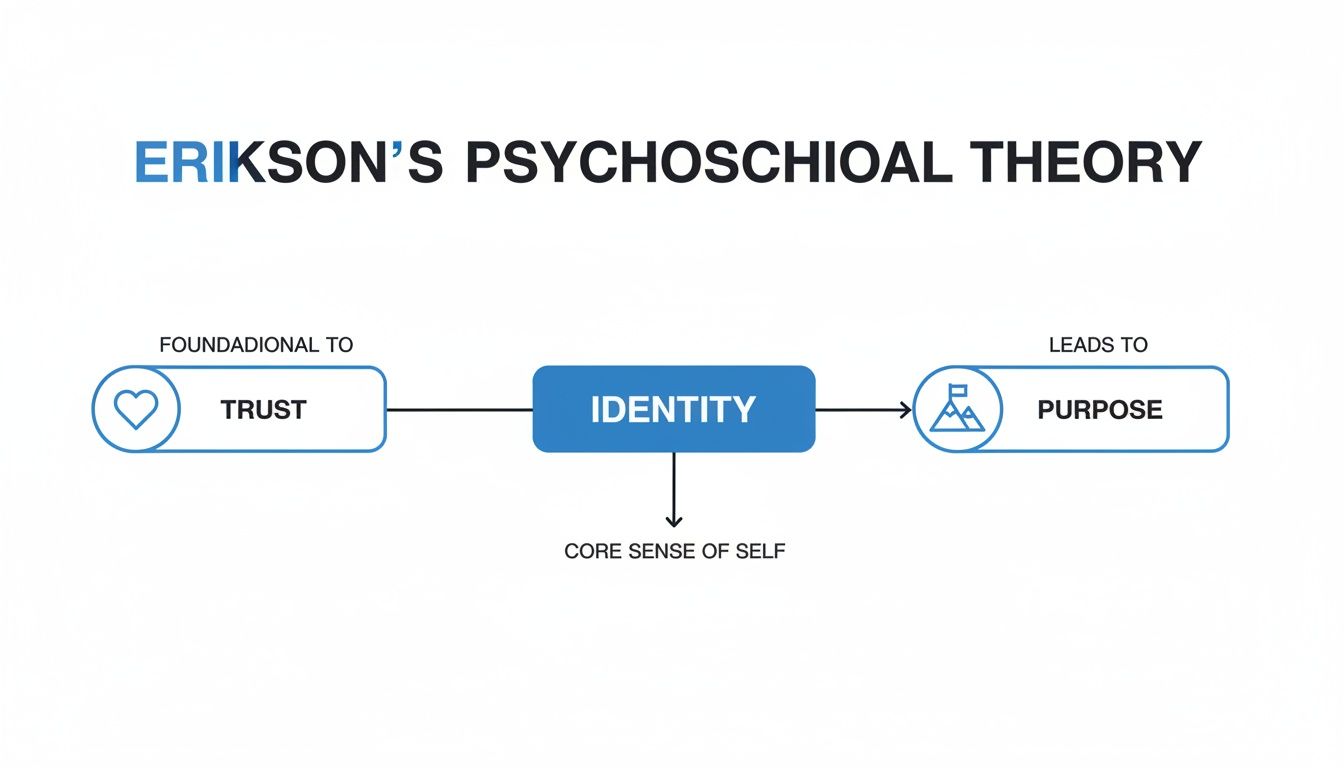
Successfully navigating early challenges, like learning to trust, lays the groundwork for later building a solid sense of identity and purpose.
The Balance of Risk and Resilience
Personal development involves a constant push-and-pull between risk factors and protective factors. Risk factors, like chronic workplace stress, increase the chance of negative outcomes. Protective factors are strengths that buffer against adversity.
Resilience isn’t about avoiding hardship; it's about your capacity to recover and grow from it. It's a skill you can actively build through self-awareness, strong relationships, and professional guidance from a counsellor.
Building resilience is a cornerstone of protecting your well-being. It means strengthening protective factors, like nurturing friendships and seeking professional support through counselling when facing challenges like anxiety or burnout.
This balance is especially important in the Indian context, where rapid urbanisation creates new pressures. In India, mental health challenges are highest in urban metro areas, with nearly 1 in 20 adults experiencing depression. You can learn more in the full report about these mental health findings.
Applying These Principles for a Healthier Life
Knowing the principles of development and growth is about having a practical toolkit to build a healthier, more fulfilling life. The real magic happens when we put these ideas into action.
When we apply these insights, we begin to see our own challenges, and those of others, through a much more compassionate lens. This shift in perspective is often the first step toward lasting change.
Nurturing Growth in Your Personal Life
For parents, understanding developmental milestones can turn stressful moments into opportunities for connection. Knowing what to expect at different ages allows you to respond with more patience and empathy.
It's the same in our adult relationships. These principles foster a deeper sense of compassion and make it easier to navigate disagreements with mutual understanding.
Creating Healthier Work Environments
In the professional world, this knowledge is essential for creating genuine well-being. Leaders who grasp adult development are better equipped to tackle workplace stress and prevent burnout.
In India, the mental health market is projected to grow, driven by rising awareness. A staggering 86% of employees in Indian companies report mental health struggles, fueling a huge demand for counselling. You can find more on this growing need for workplace mental health support.
This shows a clear link between developmental principles and building resilient, thriving teams. When organisations prioritise psychological safety and growth, everyone wins.
Assessments and screening tools are valuable for gaining self-awareness, but they are informational, not diagnostic. Think of them as a compass pointing you toward the right kind of support, whether it's self-help resources or professional therapy.
The Role of Therapy and Counselling
Therapy and counselling are where these principles come to life in a structured, supportive space. A good therapist helps you make sense of your life story, spot patterns, and build new skills.
Whether you're dealing with anxiety, depression, or relationship struggles, a counsellor acts as your guide. They empower you to move forward with more clarity and confidence.
This process is built on concepts like neuroplasticity, a powerful reminder that you can change and grow at any age. It’s a collaborative journey toward building resilience and tapping into your inner strength.
Supportive Takeaways for Applying These Principles
- For Parents and Families: Use your understanding of developmental stages to build stronger, more empathetic connections.
- For Professionals: Apply these concepts to combat workplace stress and cultivate environments that promote resilience and well-being.
- For Personal Growth: Recognise that seeking therapy is a proactive step, using these principles to navigate challenges like anxiety and depression with expert guidance.
Your Path Forward: From Knowledge to Hope
As we conclude this journey through the principles of development and growth, the real takeaway is finding hope and a more compassionate view of your life. It's about seeing challenges not as personal failures but as part of your story.
Moments of workplace stress, bouts of anxiety, or feeling lost are not endpoints. They are opportunities to build resilience and discover what you truly need to thrive.
Embracing Your Journey with Self-Compassion
Real growth often starts with self-compassion. It's the ability to pause and acknowledge your feelings without judgment.
This shift in mindset is incredibly powerful. It allows you to improve your well-being and find the courage to take the next step on your unique path.
Your path is uniquely yours. The goal isn't perfection, but being present and compassionate with yourself through every season of life. Recognising when you need support is a true sign of strength.
The Power of Seeking Support
Finally, remember you don't have to figure all this out on your own. Reaching out for professional support through therapy or counselling is a courageous investment in yourself.
Whether you're dealing with depression or simply want to understand yourself better, a professional can offer guidance and a safe space for change. We hope this guide leaves you with a renewed sense of empowerment and hope for the journey ahead.
Frequently Asked Questions
It’s natural for big ideas about human development to spark personal questions. We've gathered some of the most common ones here, offering clear and supportive answers to help you connect these concepts to your own life.
How Can Understanding Developmental Principles Help with My Anxiety?
It’s easy to feel like anxiety is a permanent part of who you are, but developmental principles show us that’s not the case. Think of it less as a personal flaw and more as a learned response to your life experiences.
The concept of neuroplasticity, for example, is incredibly hopeful. It means your brain is not fixed; it can physically change and forge new, calmer pathways. Therapy often leans on this very idea, helping you understand past triggers and build new coping skills. This knowledge can loosen anxiety's grip and give you back a sense of control.
Is My Child's Behaviour Normal for Their Age?
This is a question almost every parent asks, and it’s a good one. Developmental science gives us a general roadmap for what to expect at different ages, whether it's social skills, emotional outbursts, or cognitive leaps. But it's just a map, not a rigid timeline—every child’s journey is unique.
If you’re worried, a chat with a professional who offers counselling can be incredibly reassuring. They can help you see the difference between a normal developmental phase and something that might need a bit more support, making sure you feel confident in helping your child thrive.
Remember, assessments are tools for understanding, not labels. They're simply a supportive first step to gain clarity and find the right path forward for you or your family.
I Feel Stuck in My Career. Can These Principles Help?
Absolutely. We don't just stop growing and changing once we leave school. That feeling of being "stuck" is often a sign of a new adult developmental stage, a natural point where we step back and re-evaluate our identity, our purpose, and what truly makes us happy. It's not a sign of failure; it’s a sign you're evolving.
Often, this feeling is tied to workplace stress and burnout, signalling that something needs to shift. Counselling can be an amazing space to unpack these feelings, get clear on your values, and turn this confusing time into a powerful catalyst for both personal and professional growth.
How Do I Know if I Need Professional Help?
Just asking this question is a huge sign of self-awareness and strength. A good rule of thumb is to consider the impact. If challenges with anxiety, depression, or unrelenting stress are getting in the way of your daily life, your relationships, or your ability to function at work, it might be time to reach out.
Professional support isn’t about fixing something that’s broken; it’s about giving you the tools to build resilience and navigate life’s inevitable challenges with more confidence.
Taking that first step can feel daunting, but you don't have to figure it all out on your own. DeTalks is a safe, trusted space where you can connect with qualified therapists and use scientifically validated assessments to understand yourself better.
Ready to explore your path to well-being? Find the right support for your journey today at https://detalks.com.
Leave a Reply