
Tag: counselling support

  • High Functioning Anxiety Signs Help and Coping Guide

    High Functioning Anxiety Signs Help and Coping Guide

    You may be the person who answers messages quickly, submits excellent work, remembers everyone's deadlines, and still lies awake replaying a meeting. At home, you may care for family, keep plans organised, and tell people you're fine while your shoulders stay tight and your mind keeps scanning for the next problem.

    This experience is often called high functioning anxiety. The label can help describe a painful mismatch between visible achievement and private distress, but it shouldn't minimise what you're carrying or replace proper assessment. In India, where academic expectations, family responsibilities, urban pressures, and workplace stress can overlap, anxiety may remain hidden behind competence.

    This guide will help you recognise the pattern, understand how it differs from related experiences, and consider supportive next steps involving therapy, counselling, self-care, resilience, compassion, and well-being.

    When Success Feels Uneasy Inside

    Riya arrives early for a client presentation in Bengaluru. She has checked the slides, prepared answers for difficult questions, and reassured her colleagues. During the meeting, she smiles, speaks clearly, and handles an unexpected question well.

    Afterwards, everyone praises her composure. Riya goes back to her desk and notices that her jaw hurts from clenching. She reads the same email several times, worries that her answer sounded careless, and spends the evening preparing for problems that may never happen.

    Nothing about her performance tells the full story.

    A student in Delhi may submit assignments before the deadline but feel sick whenever a teacher sends a message. A parent in Pune may manage school schedules, work calls, and household responsibilities while feeling unable to rest. A senior professional in Mumbai may lead a team confidently but experience racing thoughts each night.

    These people aren't necessarily seeking attention, lacking gratitude, or failing to cope. They may have learned to respond to anxiety by becoming exceptionally prepared, agreeable, productive, or dependable. Those qualities can bring real achievements, yet the internal cost may include constant tension, poor sleep, irritability, and reduced happiness.

    A professional woman smiling during a business meeting with colleagues, with a subtle anxious reflection visible behind.

    Why the pattern stays hidden

    People often assume that serious anxiety must stop someone from working, studying, socialising, or managing daily responsibilities. That assumption misses people who keep functioning by using worry as fuel.

    You may tell yourself that the pressure is useful because it helps you avoid mistakes. You may also believe you're not allowed to ask for help because others have heavier responsibilities. Over time, this reasoning can make distress harder to recognise.

    A full calendar and a successful career don't prove that your mind and body feel safe.

    Early experiences can shape how a person responds to pressure, safety, and expectations. If you're trying to understand how difficult experiences may affect adult life, the Integrative Psychiatry of America trauma guide offers background that may help you reflect with greater compassion.

    The important question isn't whether you're still achieving. It's whether anxiety is taking away sleep, connection, physical comfort, choice, or the ability to enjoy what you've worked for.

    Understanding What High Functioning Anxiety Really Means

    High functioning anxiety isn't a formal diagnosis in India or in global diagnostic manuals. It's a descriptive phrase for a performance pattern, where a person appears capable and productive while experiencing ongoing anxiety internally.

    Think of a phone that displays a full battery but drains rapidly in the background. It may continue running apps and responding to messages, yet it needs constant charging. In a similar way, you may keep meeting expectations while using intense mental effort to manage worry, uncertainty, and fear of mistakes.

    The label and the clinical question

    The phrase usually describes an outward style rather than a separate disorder. A person might over-prepare, avoid disappointing others, work beyond reasonable limits, or use perfectionism to prevent feared outcomes.

    Those behaviours don't automatically indicate an anxiety disorder. A qualified mental-health professional considers the duration, intensity, physical symptoms, triggers, distress, and effect on relationships, health, studies, and work before making a diagnosis.

    India's measured data provides useful context. The National Mental Health Survey 2015–16 reported a current prevalence of 2.57% for any anxiety disorder among adults, with specific rates of 0.5% for panic disorder and 0.6% for generalized anxiety disorder. The survey also found higher anxiety-disorder prevalence in urban settings than rural ones. These findings come from India's broader anxiety burden, not from a separate category called high functioning anxiety. National Mental Health Survey findings

    A later nationally representative analysis reported a 30-day prevalence of 0.47% for social anxiety disorder in India and an average age of 35.68 years among affected individuals, showing that anxiety can occur during working-age years while people continue social and occupational roles. The figures describe diagnosable anxiety conditions, not the informal label.

    What resilience really means

    Resilience doesn't mean tolerating unlimited pressure without support. It means developing ways to respond, recover, seek help, and remain connected to your values.

    Compassion matters here. You don't have to reject ambition, discipline, or excellence. You can keep those strengths while questioning the belief that fear must always power them.

    For an organisational perspective, this resource on how managers can address workplace anxiety may help leaders think about communication, workload, psychological safety, and practical support.
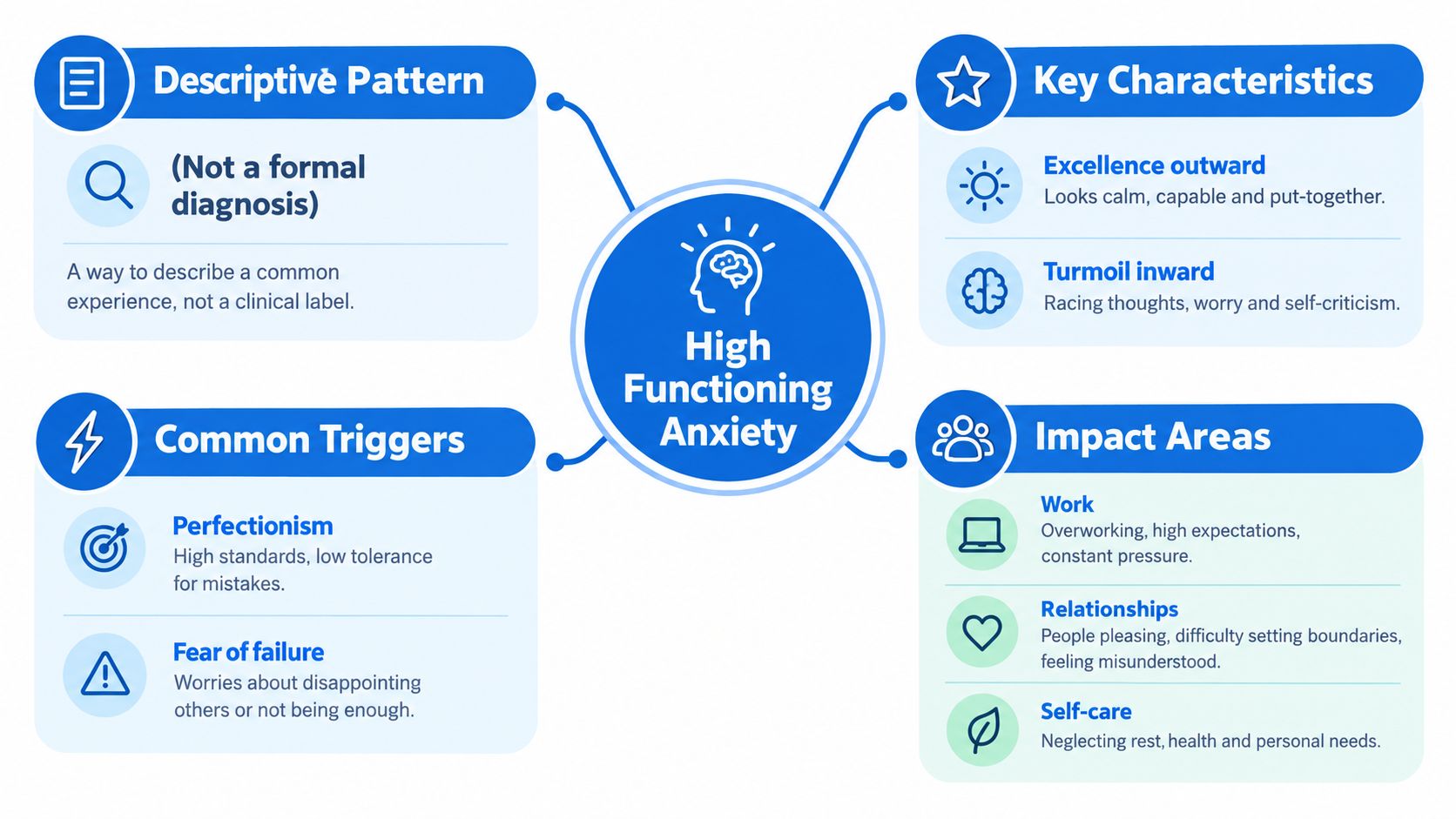
    An infographic diagram outlining the definition, characteristics, triggers, and impact areas of high functioning anxiety.

    Hidden Signs You May Be Living With High Functioning Anxiety

    High functioning anxiety often shows up in two layers. Other people notice the visible layer, such as punctuality, preparation, responsibility, and achievement. You experience the private layer, which may include fear, mental exhaustion, bodily tension, and an inability to switch off.

    The internal signs can be easy to dismiss because they've become familiar. You may think, “I've always been a worrier,” or “I just care about doing things properly.” Familiarity doesn't mean a pattern is harmless.

    What may be happening internally

    Common experiences include:

    • Constant worry: Your mind keeps scanning for mistakes, criticism, delays, conflict, or future problems.
    • Overthinking: You replay conversations, analyse messages, and search for the perfect response.
    • Difficulty relaxing: Free time feels uncomfortable, so you fill it with chores, planning, work, or scrolling.
    • Sleep disruption: Your body feels tired, but your mind becomes active when the day gets quiet.
    • Irritability: Small interruptions may feel overwhelming because your mental capacity is already stretched.
    • Physical tension: You may clench your jaw, tighten your shoulders, hold your breath, or experience headaches and stomach discomfort.
    • Fear of failure: A small error can feel like proof that you're unsafe, inadequate, or about to disappoint someone.
    • People-pleasing: You say yes quickly, even when you're exhausted, because refusal feels risky.
    • Over-preparation: You prepare for every possible question or outcome to reduce uncertainty.
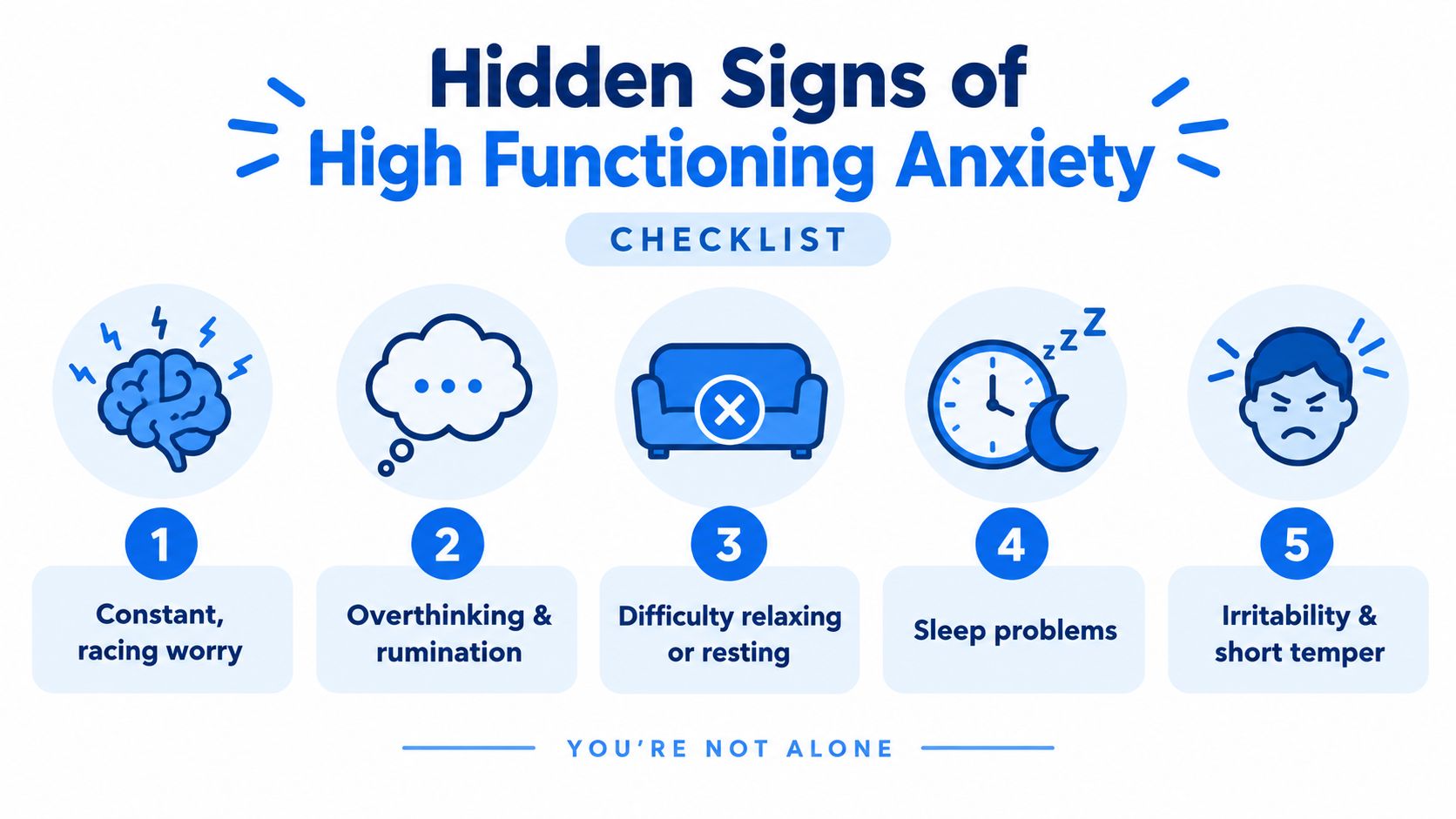
    A checklist infographic illustrating five common hidden signs of high functioning anxiety with icons and labels.

    Why outward success can mislead

    A person may look calm in a meeting because they've rehearsed extensively. A student may look disciplined because fear prevents them from taking breaks. A caregiver may seem endlessly strong because they've learned to hide exhaustion.

    This can create a difficult loop. Worry prompts overwork, overwork reduces sleep, poor sleep increases sensitivity, and increased sensitivity creates more worry. Workplace stress may then affect concentration, patience, physical health, and emotional balance even when performance remains acceptable.

    Functioning tells you what someone manages to do. It doesn't tell you what that effort costs.

    You don't need to experience every sign to deserve support. If anxiety repeatedly affects your sleep, relationships, self-care, concentration, or sense of happiness, consider speaking with a qualified professional. A resource on therapy for high functioning anxiety can also help you explore how hidden symptoms may appear in daily life.

    You can use the following video as a general educational prompt, but personal assessment still requires a trained clinician who can understand your context.

    Why It Happens Causes and Risk Factors in India and Beyond

    High functioning anxiety rarely comes from one cause. A person's temperament may combine with learned beliefs, family expectations, academic competition, workplace culture, financial concerns, health worries, and past experiences of criticism or unpredictability.

    Some people grow up receiving praise mainly for achievement. They may learn that being organised, useful, or successful earns approval, while rest feels undeserved. Others may take on adult responsibilities early and become highly independent because relying on people didn't feel safe or practical.

    Pressure across life stages

    Academic stress can be especially powerful. Longitudinal adolescent research in India found that academic stress directly increased generalized-anxiety and panic symptoms, while also operating indirectly through physiological hyperarousal. Persistent arousal, disrupted sleep, and performance pressure can reinforce one another rather than remain isolated problems. Indian research on academic stress and anxiety symptoms

    Urban environments may add another layer through commuting, competition, housing concerns, social comparison, and demanding work patterns. India's anxiety burden has also changed over time. The Global Burden of Disease analysis reported 44.9 million people with anxiety disorders in India in 2017, while newer reporting on the same data family stated that prevalence rose from 2,591.9 cases per 100,000 people in 1990 to 5,792.8 per 100,000 in 2023, an increase of about 123%. The Lancet analysis and related reporting30475-4/fulltext)

    Older Indian epidemiology also estimated broader neurotic disorders at 20.7% in a meta-analysis of 33,572 people, with higher prevalence in urban communities than rural communities, 35.7% versus 13.9%. These figures cover broader categories and shouldn't be treated as a direct measure of high functioning anxiety.

    The workplace and emotional health

    Workplace stress can encourage over-functioning. An Indian Journal of Psychiatry workplace review reported anxiety prevalence across Indian workers ranging from 7% to 57%, while a white-collar urban-India sample found 55% had moderate-to-severe anxiety and 78% had moderate-to-high stress. Indian workplace mental-health review

    Resilience, compassion, supportive relationships, meaningful rest, and emotional awareness can soften this cycle. They don't erase difficult circumstances, but they can help you respond without treating every demand as an emergency.

    Anxiety and depression can also overlap. Persistent worry, sleep loss, isolation, and self-criticism may reduce pleasure and motivation, so a complete assessment should consider mood as well as anxiety.

    How High Functioning Anxiety Differs From Similar Experiences

    The same behaviour can have different explanations. Working late may reflect genuine interest, financial necessity, perfectionism, anxiety, or burnout. Restlessness may come from worry, attention difficulties, poor sleep, or several factors together.

    The table below offers questions for reflection, not conclusions. It can help you decide whether a conversation with a psychologist, psychiatrist, or counsellor would be useful.

    High Functioning Anxiety Versus Related Experiences

    Experience Core Pattern When to Consider Professional Support
    High functioning anxiety Ongoing worry or tension exists alongside visible achievement, preparation, people-pleasing, or over-responsibility. Seek support when the effort affects sleep, physical comfort, relationships, self-care, concentration, or enjoyment, even if work continues.
    Generalized anxiety disorder Worry is persistent, difficult to control, and spread across several areas of life, with associated emotional or physical distress. Consider assessment when worry feels excessive, occupies much of your mental space, or interferes with daily functioning. Only a qualified clinician can diagnose it.
    Burnout Exhaustion and reduced capacity develop after sustained demands, often with detachment, frustration, or a sense that work has become unsustainable. Reach out when rest doesn't restore you, work-related distress continues, or your health and relationships are deteriorating.
    ADHD-related restlessness Attention regulation difficulties, impulsivity, disorganisation, or restlessness may occur across settings and aren't necessarily driven by fear. Seek an ADHD-informed assessment when attention and organisation difficulties have been longstanding and appear beyond anxious situations.
    Perfectionism Very high standards and fear of mistakes shape behaviour, but perfectionism itself isn't automatically an anxiety disorder. Consider help when standards cause procrastination, shame, excessive checking, avoidance, or an inability to accept completed work.

    Questions that clarify the pattern

    Ask yourself whether worry appears mainly during a specific situation or follows you across the day. Notice whether you're avoiding tasks because they're uninteresting, because attention slips, or because you fear judgement or failure.

    Burnout often points you towards the demands and conditions that have drained you. Anxiety may continue even after the demand ends, because the mind keeps predicting danger. Both can occur together, and treating one while ignoring the other may leave you feeling stuck.

    Screening questionnaires can organise your observations and indicate whether further discussion may help. They're informational, not diagnostic. A professional looks at your personal history, medical context, sleep, mood, relationships, and current pressures before deciding what support fits.

    Evidence Based Support and Everyday Coping Strategies That Help

    Support works best when it addresses both the anxious pattern and the environment that keeps feeding it. Therapy can help you examine fearful predictions, perfectionistic rules, avoidance, and people-pleasing without blaming you for having developed them.

    Cognitive Behavioural Therapy, or CBT, can help you identify unhelpful thought patterns and test more balanced responses. Acceptance and Commitment Therapy, or ACT, focuses on making room for difficult feelings while choosing actions connected to your values.

    Medication may be appropriate for some people, but it should be discussed with and prescribed by a qualified clinician. Don't start, stop, or change psychiatric medication without medical guidance.
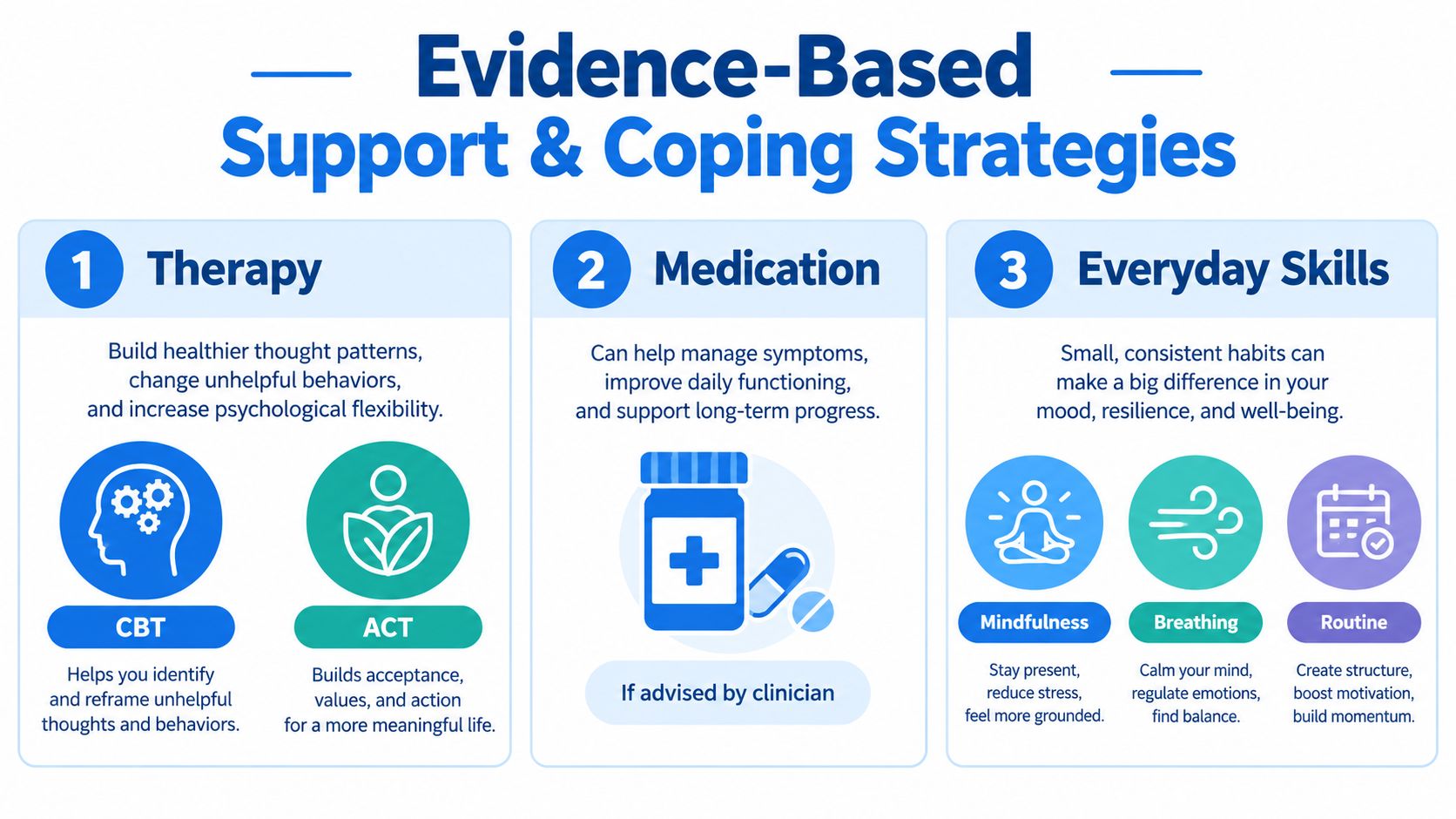
    An infographic titled Evidence-Based Support and Coping Strategies, showing three categories: therapy, medication, and everyday skills.

    Small practices that protect well-being

    Try one practice consistently before adding several more:

    • Create a transition ritual: After work, change clothes, take a short walk, or sit before beginning home responsibilities.
    • Name the worry: Write the concern in one sentence, then separate what you can influence from what you can't control.
    • Set a boundary: Replace an automatic yes with, “I'll check my schedule and reply later.”
    • Use slower breathing: Let the exhalation lengthen naturally without forcing deep breaths or treating the exercise as a test.
    • Protect sleep cues: Keep a regular wind-down routine, reduce stimulating work close to bedtime, and place tomorrow's tasks on paper.
    • Practise compassion: Speak to yourself as you would to a trusted colleague who had made an honest mistake.
    • Notice gratitude: Record a small moment of support, pleasure, meaning, or competence without using it to dismiss your distress.

    Mindfulness can help you observe thoughts without immediately obeying them. Emotional intelligence grows when you can identify feelings, communicate needs, and recognise how stress changes your behaviour.

    Progress means building steadier choices, not feeling calm every minute.

    Counselling and self-help can complement one another. Resilience grows through repeated recovery, realistic limits, supportive relationships, meaningful activity, and professional care when symptoms persist.

    Finding Clarity With Screening and Support Through DeTalks

    You don't have to wait until your performance collapses before seeking help. Persistent worry, disrupted sleep, frequent physical tension, irritability, panic symptoms, emotional numbness, or growing strain in relationships are reasonable reasons to speak with a professional.

    Start by describing what happens rather than relying only on the label. You might say, “I'm meeting my responsibilities, but I'm constantly tense and unable to rest,” or, “My worry is affecting my sleep and concentration.” Clear examples help a therapist or counsellor understand the difference between ordinary pressure and a pattern that needs care.

    What screening can and can't tell you

    An anxiety assessment can help you organise symptoms such as nervousness, excessive worry, and difficulty relaxing. Tools such as the GAD-7 may offer a structured starting point, but an assessment result isn't a diagnosis and shouldn't be used to label yourself.

    A clinician considers the full picture, including physical health, medication, substance use, sleep, depression, trauma, attention difficulties, family pressures, workplace conditions, and safety. If you experience thoughts of harming yourself or feel unable to stay safe, seek urgent local emergency or crisis support rather than relying on an online questionnaire.

    Choosing appropriate support

    Look for a qualified psychologist, therapist, counsellor, or psychiatrist whose experience matches your concerns. You can ask how they work with anxiety, burnout, workplace stress, academic pressure, sleep problems, depression, and perfectionism.

    DeTalks offers a directory for finding psychologists, therapists, and mental-health professionals across India, along with scientifically validated assessments and screening tools. You can use these resources to reflect on anxiety, resilience, and well-being, then consider whether self-help, counselling, therapy, coaching, or psychiatric care is appropriate.

    Seeking support isn't evidence that you're weak or incapable. It's a practical way to stop using fear as your only source of motivation and to make room for compassion, happiness, connection, and sustainable achievement.


    If high functioning anxiety feels familiar, visit DeTalks to explore confidential assessments and connect with psychologists, therapists, or counsellors across India. Take one manageable step today, write down the symptoms affecting your life, share them with someone you trust, and choose support that helps you build resilience without sacrificing your well-being.

  • What Is Psychological Assessment and Its Benefits

    What Is Psychological Assessment and Its Benefits

    You may be searching for answers after weeks of poor sleep, workplace stress, anxious thoughts, low motivation, or changes in a relationship. Perhaps you've completed an online questionnaire and are now wondering whether the result means you have anxiety or depression. Psychological assessment can offer useful direction, but it isn't a verdict, a cure, or a substitute for therapy or counselling.

    In simple terms, it's a structured way to understand how you think, feel, and behave. A qualified professional combines conversations, carefully chosen tools, observations, and relevant background information to answer a specific question. The result should help you understand yourself and consider appropriate support, including self-help, counselling, psychiatric care, or further evaluation.

    When You Wonder If Something Is Wrong

    Consider a student who sits at her laptop for hours but can't absorb what she's reading. She worries about falling behind, feels tense whenever she opens her notebook, and has started avoiding messages from friends. A working professional might recognise a similar pattern after months of workplace stress, burnout, irritability, and restless sleep.

    In either situation, the first question may be, “What's happening to me?” The second is often, “Do I need a psychological assessment?” Those questions deserve a calm answer, not a label.

    A woman focused on her studies while working on a laptop and reading an open notebook indoors.

    Assessment is information, not a final judgement

    A psychological assessment gathers evidence about a person's experiences and functioning. It may highlight symptoms of stress, anxiety, depression, attention difficulties, or emotional strain, while also identifying strengths such as resilience, compassion, motivation, or supportive relationships.

    A screening questionnaire can suggest that a concern deserves attention. It usually can't establish a clinical diagnosis on its own. Diagnosis requires a thorough evaluation by an appropriately qualified professional, with attention to history, context, symptoms, and how those symptoms affect daily life.

    That distinction matters in India, where people may use the word “assessment” to mean a quick online test, a clinical diagnosis, or an evaluation intended for court. These are different purposes. A screening tool helps flag a possible concern, a clinical assessment supports diagnosis and treatment planning, and a legal evaluation addresses a clearly defined question within a formal process.

    Why clarity matters in India

    The National Mental Health Survey of India, conducted in 2015–16, used a uniform scientific method across 12 states, 43 districts, 80 sub-districts, 729 clusters, 10,152 households, and 34,802 individuals. It used structured diagnostic methods, including MINI 6.0 for adults and MINI Kid for adolescents, reflecting a move from informal clinical judgement towards large-scale, evidence-based measurement. The survey estimated 13.67% lifetime mental morbidity and 10.56% current mental morbidity, and concluded that nearly 150 million people in India required mental healthcare services. The survey's findings are available through PubMed.

    People also ask whether assessment can help with cognitive changes in an older family member. For practical support alongside professional evaluation, families may find this resource on managing early stage dementia at home useful.

    Remember: An assessment is a starting point for understanding, not a statement about your worth or your future.

    Understanding the Building Blocks of Assessment

    A useful way to understand assessment is to compare it with a general health check-up. A doctor doesn't rely only on one number from a blood test. They ask questions, review history, observe signs, and interpret findings together. Psychological assessment follows a similar multi-method approach.

    An infographic titled Understanding Psychological Assessment explaining clinical interviews, psychological tests, observation, and collateral information methods.

    The conversation comes first

    A clinical interview gives the psychologist the story behind the concern. You might discuss your current difficulties, past experiences, health, relationships, work or studies, sleep, coping habits, and what you hope to learn.

    This isn't an interrogation. A good interview helps the professional decide which questions are relevant and prevents a questionnaire from being interpreted without context. For example, difficulty concentrating might relate to anxiety, poor sleep, grief, workplace pressure, medication, or several factors at once.

    Standardised tools add structure

    Psychological tests use established questions and scoring procedures to examine areas such as mood, personality, memory, attention, abilities, or coping. In Indian psychiatric practice, professional publications recognise tools including PHQ-2, PHQ-9, the Beck Depression Inventory, and MoCA for screening and assessment in clinical settings. The Indian Journal of Psychiatry publication discusses these instruments.

    A score has meaning only when interpreted against suitable norms or a clearly described reference group. The same raw score can mean different things depending on the tool, purpose, population, and setting.

    Observation shows patterns in action

    Behavioural observation focuses on how you respond during an assessment or in a relevant environment. The professional may notice attention, communication, persistence, emotional expression, problem-solving approach, or signs of discomfort.

    Observation doesn't mean someone is judging your personality from a single gesture. It's one source of information, considered alongside your report and the test results.

    Other perspectives can complete the picture

    With your knowledge and consent, collateral information may come from a parent, partner, teacher, medical record, or another professional involved in your care. This can be particularly useful when assessing children, cognitive concerns, school functioning, or workplace difficulties.

    The purpose isn't to replace your voice. It's to understand how a concern appears across settings and whether different accounts point to the same pattern.

    Common Types of Psychological Assessments

    Different assessments answer different questions. Someone experiencing panic and constant worry may need a screening measure for anxiety, while a person facing memory changes may need a cognitive assessment. A manager concerned about workplace stress may need an organisational measure rather than a personal diagnostic questionnaire.

    The table below offers a practical comparison. Typical length varies by tool and purpose, so these descriptions should guide questions, not determine what you need.

    Assessment Type What It Measures Typical Length When It Helps
    Screening assessment Possible symptoms of anxiety, depression, stress, or burnout Brief When you want an initial indication of whether further support may be useful
    Personality assessment Patterns in thinking, feeling, relating, values, and preferences Varies When exploring relationships, career confusion, coping, or personal growth
    Cognitive assessment Attention, memory, reasoning, and problem-solving Often more detailed When there are concerns about learning, concentration, ageing, or cognitive functioning
    Behavioural assessment Triggers, habits, responses, and patterns in daily situations Varies When a person wants to understand and change a recurring behaviour
    Well-being assessment Resilience, compassion, happiness, strengths, and life satisfaction Usually focused When the aim includes growth, emotional balance, or positive psychology
    Workplace assessment Stress, employee well-being, organisational support, and related experiences Tool-dependent When examining workplace stress, burnout risk, or organisational conditions

    Screening for common concerns

    A screening tool can help someone notice a pattern they've been minimising. For example, a person who says, “I'm just tired,” may recognise through a structured measure that low mood, loss of interest, worry, or exhaustion are affecting daily functioning.

    The result should lead to a conversation, not self-diagnosis. It can help you decide whether to speak with a therapist, counsellor, psychologist, or doctor.

    Looking beyond symptoms

    Assessment doesn't have to focus only on what feels wrong. Positive psychology measures can explore resilience, compassion, happiness, gratitude, self-esteem, emotional intelligence, and purpose. These areas can help a person understand what supports their well-being and where they'd like to grow.

    Workplace tools also differ in design and purpose. A published review describes measures such as the 37-item A Shortened Stress Evaluation Tool, the 141-item standard and 80-item brief Brief Job Stress Questionnaire, a 14-item Mental Health Audit, and an India-developed Employee Well-Being Scale with 31 items. The review explains these workplace assessment approaches.

    Your Journey Through the Assessment Process

    Knowing what happens can make the first appointment feel less uncertain. You don't need to arrive with the perfect explanation. A simple description such as “I'm overwhelmed and can't focus” is enough to begin.

    A five-step infographic showing the psychological assessment journey from initial referral to follow-up recommendations and next steps.

    Step 1, referral or self-referral

    Some people are referred by a doctor, school, employer, or another mental health professional. Others contact a psychologist themselves because they want clarity about anxiety, depression, attention, relationships, workplace stress, or well-being.

    Ask what question the assessment is designed to answer. If the purpose isn't clear, the process can feel like a collection of tests rather than a meaningful service.

    Step 2, initial consultation

    The psychologist will usually ask about your concerns, history, daily functioning, health, and goals. This is also your opportunity to explain cultural, family, educational, or work circumstances that may influence your experience.

    Feeling nervous is common. You can request clarification, ask how information will be used, and discuss any test that makes you uncomfortable.

    Step 3, formal assessment

    You may complete questionnaires, answer interview questions, perform memory or attention tasks, or take part in other structured activities. Try to answer truthfully rather than choosing responses that seem more acceptable.

    There's no prize for producing a particular result. The most useful assessment reflects your actual experience.

    Step 4, interpretation and feedback

    The psychologist reviews your responses in context. Interpretation isn't merely a matter of adding up scores. It involves considering the quality of the tool, relevant norms, your history, cultural setting, strengths, and the question that prompted the assessment.

    Feedback should happen in language you can understand. You should be able to ask, “What does this mean in my daily life?” and “What does it suggest I do next?”

    Step 5, recommendations and follow-up

    Recommendations might include self-help resources, counselling, therapy, lifestyle changes, workplace support, psychiatric consultation, or another assessment. The right next step depends on the findings and your goals.

    This video can offer another accessible introduction to the assessment journey:

    Why Quality and Validation Matter

    A questionnaire can look professional and still be unsuitable for a particular purpose. Trustworthy assessment depends on reliability, validity, norms, and objectivity.

    Reliability asks whether a tool produces reasonably consistent results. Validity asks whether it measures what it claims to measure. A test may give consistent scores while measuring the wrong thing, so both questions matter.

    The problem with outdated norms

    Indian training material commonly teaches that reliability coefficients should exceed +0.70, while validity should be supported by criterion-related and construct evidence rather than face plausibility alone. The assessment material from eGyanKosh explains these technical foundations.

    Many tests used in India still rely on old norms, incomplete standardisation, or no established norms at all. This creates measurement error. A person may be directed towards self-help when they need counselling, or towards a more intensive pathway when the score has been misunderstood.

    A raw score isn't a conclusion. It becomes useful only when a qualified professional connects it to appropriate norms, context, and the person's lived experience.

    What local validation looks like

    Cultural context affects how people describe distress, cope with pressure, and understand questions. A tool validated for an Indian population or a clearly defined local reference group gives the interpreter a stronger basis for understanding results.

    One Indian undergraduate study of GHQ-12 reported Cronbach's alpha of .784, CFI .989, TLI .982, and RMSEA .039, supporting acceptable internal consistency and structural validity in that sample. The study provides its psychometric findings.

    Before completing an assessment, ask whether the tool has been validated for people like you, whether its norms are current, and how the cutoff will be interpreted. For a broader overview of evidence-based professional practice, this compliance guide for psychologists can also help you understand the kinds of standards responsible services should consider.

    Ethical Safeguards and Your Rights

    Psychological assessment involves private information. You may share details about family life, trauma, health, relationships, work, or thoughts that you haven't discussed elsewhere. Ethical practice should protect your dignity before, during, and after testing.

    Consent should be meaningful

    Before you agree, the professional should explain the purpose of the assessment, what it involves, who will interpret the results, how the information will be stored, and who may receive a report. You should have a chance to ask questions before beginning.

    Consent isn't a formality. You can ask why a particular test is being used and how it relates to the question being assessed.

    Confidentiality has boundaries

    Results should be handled privately and shared only within the agreed boundaries. If an employer, school, family member, court, or another professional is involved, ask what information will be shared and in what format.

    Confidentiality can have legal and safety-related limits, so a responsible practitioner should explain those limits clearly. Don't hesitate to ask whether the final report will include raw scores, conclusions, recommendations, or all of these.

    Screening isn't diagnosis

    A screening result may indicate that you're experiencing significant distress. It doesn't prove that you have a mental health disorder. Diagnosis requires a full evaluation by a qualified professional, and it should consider the whole person rather than a single number.

    Legal evaluation is also separate from both screening and ordinary clinical care. In custody cases, a 2026 Supreme Court-linked judgment stressed that psychological or psychiatric assessments shouldn't be ordered routinely, should have explicit reasons, and should generally be conducted by an independent expert. The Ministry of Health and Family Welfare document discusses the treatment gap and related context.

    The same source reports that India's treatment gap for mental disorders ranged from 70% to 92%. Clear explanations can help people understand when assessment is appropriate, while reducing the risk that a screening score is treated as a diagnosis or a legal verdict.

    Making Sense of Your Results and Next Steps

    Results can bring relief, confusion, or both. A finding that names a difficulty may feel heavy at first, but it can also provide language for an experience you've been carrying alone. A result that highlights strengths can be equally valuable because resilience and well-being deserve attention, not just symptoms.

    Start with a feedback conversation

    Read the report with the professional who interpreted it. Ask:

    • Meaning: Which findings are most important in everyday life?
    • Context: What other factors could have influenced my responses?
    • Strengths: What resources, skills, or relationships can I build on?
    • Support: Would therapy, counselling, self-help, coaching, or psychiatric care be appropriate?
    • Follow-up: What should I monitor, and when should we review the plan?

    You don't need to understand every technical term immediately. Ask for examples and request a plain-language summary if the report feels difficult to follow.

    Turn insight into a manageable plan

    Choose next steps that fit your circumstances. Someone experiencing workplace stress may begin with boundaries, rest, and counselling. Someone facing persistent anxiety or depression may need a fuller clinical evaluation. Another person may use positive psychology exercises to strengthen compassion, happiness, purpose, or resilience.

    Share your results with family only if you feel safe and comfortable doing so. You can explain the practical implication without disclosing every private detail.

    DeTalks offers a directory of psychologists, therapists, and counsellors, along with scientifically validated psychological assessments and screening tools for concerns such as stress, anxiety, depression, burnout, and well-being. It can be one place to explore assessment information and connect with professional support, while remembering that tools are informational and shouldn't be used as self-diagnosis.

    Supportive takeaway: Understanding yourself better is a courageous first step. You don't have to interpret every result alone, and asking for help is a practical act of care.


    If you're exploring stress, anxiety, depression, burnout, or personal growth, visit DeTalks to browse qualified mental health professionals and learn about validated assessment options. Use what you discover as a guide for a thoughtful conversation about therapy, counselling, resilience, and well-being.