Tag: employee well-being

  • Workplace Mental Health: A Guide for Indian Companies

    Workplace Mental Health: A Guide for Indian Companies

    86% of employees in India's corporate sector are struggling with mental health issues, according to the 2025 Corporate Wellness Index reported by The Federal. That number changes the conversation. Workplace mental health isn't a side topic for HR. It's part of how people work, lead, cope, recover, and stay connected to their teams.

    For new managers, this can feel intimidating. You may worry about saying the wrong thing, crossing a line, or taking on a problem you're not trained to solve. The good news is that you don't need to be a therapist to create a healthier workplace. You need awareness, empathy, clear habits, and a willingness to respond with care.

    Workplace mental health includes difficult experiences like workplace stress, anxiety, depression, and burnout. It also includes positive states such as resilience, compassion, purpose, and well-being. A mentally healthy workplace doesn't mean nobody struggles. It means people can speak up earlier, get support more easily, and work in an environment that doesn't negatively impact mental health.

    In India, this topic also sits inside real cultural pressures. Family expectations, economic uncertainty, long working hours, career competition, and hesitation around therapy or counselling all shape how employees experience distress. That makes practical leadership even more important.

    Understanding Workplace Mental Health

    Workplace mental health is the connection between a person's psychological well-being and their work environment. It includes how people feel during the workday, how they handle pressure, how safe they feel speaking up, and whether the organisation supports health in practice, not just in policy.

    Many managers think mental health means only serious illness. That's a common misunderstanding. In daily work life, it often shows up first as reduced focus, irritability, poor sleep, emotional exhaustion, fear about job stability, or a feeling that one can't switch off after office hours.

    It exists on a spectrum

    A team member can be productive and still be struggling. Another employee may look cheerful in meetings and still carry heavy anxiety. Someone else may not meet the threshold for a clinical condition but still feel worn down by relentless workplace stress.

    That's why it helps to think in three broad zones:

    • Stable and supported: The person feels challenged but not overwhelmed, and can recover after pressure.
    • Strained but functioning: The person is coping, but signs of stress, anxiety, or low mood are building.
    • Distressed and needing support: The person may need adjustments, counselling, therapy, medical guidance, or time to recover.

    None of these states say anything about character or commitment. They describe human responses to pressure.

    A healthy workplace doesn't ask people to be unaffected by stress. It helps them handle stress without losing dignity, safety, or hope.

    Why managers need a broader view

    Managers often focus on deadlines, performance, and behaviour. Those matter. But people's behaviour usually makes more sense when you ask what pressure they're carrying.

    For example, a team member who misses follow-ups may not be careless. They may be mentally overloaded. A colleague who becomes sharp or withdrawn may not be “difficult”. They may be exhausted, worried, or ashamed to admit they're struggling.

    Positive psychology belongs in this conversation too. Resilience, happiness, compassion, and emotional balance are not soft extras. They shape whether people recover after setbacks, ask for help early, and support each other under pressure.

    What good support looks like

    A mentally healthier workplace usually has a few visible traits:

    Area What employees notice
    Leadership behaviour Managers check in respectfully and don't mock vulnerability
    Work design Expectations are clearer, and pressure is discussed openly
    Support pathways People know where to go for counselling, therapy, or HR help
    Team culture Colleagues don't treat stress or depression as weakness

    This is shared work. HR can build systems, leaders can shape culture, and employees can use support. When all three move together, workplace mental health stops being a compliance document and starts becoming part of everyday management.

    The Reality of Mental Health in Indian Workplaces

    Mental health at work has a human cost, and it also has a business cost. In India, those two realities are closely linked. When people are emotionally drained, teams feel it in missed deadlines, conflict, disengagement, absenteeism, and quiet underperformance.

    According to Deloitte's report on mental health and employers, mental health conditions in India's workplace incur an economic cost of approximately INR 110,000 crore, roughly US$14 billion, annually, driven by absenteeism, attrition, and reduced productivity. For leaders, that means this issue affects not only well-being but also operations, retention, and long-term organisational stability.

    An infographic titled The Reality of Mental Health in Indian Workplaces, highlighting key statistics on employee well-being.

    What the cost really means

    The business language can sound cold, so it helps to translate it into daily examples. Absenteeism is when someone can't come to work because they're unwell. Presenteeism is more subtle. The person is present, but they can't fully focus, decide, collaborate, or contribute at their usual level.

    In practice, managers may notice things like:

    • Slower thinking: Good employees taking much longer on familiar tasks
    • Emotional friction: Small disagreements becoming bigger than they should
    • Reduced initiative: People doing the minimum because they're mentally depleted
    • Frequent withdrawal: Camera off, silence in meetings, and low engagement over time

    These aren't always attitude problems. Often, they're signs that a person's internal resources are running low.

    Why the pressure feels so intense in India

    Indian workplaces often combine ambition with uncertainty. Employees may deal with long commutes, family obligations, pressure to be constantly available, and fear of falling behind peers. For many, job insecurity adds another layer of anxiety that a standard wellness talk doesn't touch.

    A manager might say, “Take care of yourself,” while also rewarding only the people who stay online late every night. That mixed message confuses teams. It tells employees that well-being is welcome in theory, but risky in practice.

    Business reality: If leaders ignore workplace stress for too long, the effects often appear first as performance problems, not as clear requests for help.

    Why generic wellness advice isn't enough

    Yoga sessions, meditation apps, and celebration days can help some people. But they don't fix structural problems like unclear roles, harsh management, impossible timelines, or fear around layoffs. If the system creates chronic stress, individual coping tools can only do so much.

    That's why mature organisations look at both sides of the issue:

    • Personal support: counselling access, therapy options, peer support, self-help tools
    • Organisational design: manageable workloads, fair expectations, respectful leadership, psychological safety

    When managers understand this difference, they stop asking only, “Why isn't this employee coping better?” and start asking, “What in the work environment is adding to the strain?”

    Your Legal and Human Responsibilities as an Employer

    Every employer in India has a duty that goes beyond salary, leaves, and policy manuals. People spend a large part of their lives at work. If the workplace creates avoidable psychological harm, leaders can't treat that as a private issue for the employee to solve alone.

    The legal picture matters here, but the human principle is simpler. Employers are responsible for building an environment where people aren't punished, sidelined, or mocked for mental health challenges.

    What the law is trying to protect

    India's legal framework recognises mental health rights. Yet there is often a gap between rights on paper and daily workplace reality. As noted in the Indian Journal of Medical Research article on workplace stress, despite the Mental Healthcare Act (2017) guaranteeing non-discrimination, laws are often “not executed or regulated effectively,” leaving employees with mental disorders unable to verbalize problems and experiencing distress privately.

    That sentence matters because it describes what many managers miss. Silence at work doesn't always mean everything is fine. Sometimes it means the employee doesn't trust the system enough to speak.

    What new managers should do in practice

    Legal responsibility becomes real through everyday behaviour. Employees usually judge the workplace by what their manager does in ordinary moments, not by what the handbook says.

    A useful starting point is this checklist:

    • Protect dignity: Don't joke about anxiety, depression, burnout, therapy, or medication.
    • Respond early: If someone's behaviour changes, check in privately instead of waiting for a formal crisis.
    • Keep privacy in mind: A manager doesn't need every personal detail to offer support or involve HR appropriately.
    • Avoid punishment disguised as performance management: If a struggling employee needs support, start there before labelling them “uncommitted”.
    • Know your internal route: Be clear on when to refer to HR, occupational support, counselling services, or emergency response.

    Compliance is not the same as culture

    Many companies have policies that mention well-being, inclusion, or non-discrimination. Those are important, but they don't automatically create safety. Employees watch how managers handle leave requests, performance dips, emotional conversations, and return-to-work moments.

    Here's a simple contrast:

    Policy only Policy plus practice
    Mental health support exists on paper Managers actively remind people how to access support
    Anti-discrimination statement exists Leaders stop stigma in meetings and side conversations
    Leave is technically available Employees can use it without being quietly penalised

    Manager's rule of thumb: If an employee would feel safer telling a friend than telling their manager, the workplace still has work to do.

    The deeper responsibility

    You're not expected to diagnose, treat, or fix someone. You are expected to lead fairly. That means reducing unnecessary stress where you can, responding compassionately when someone struggles, and making sure help is reachable without shame.

    That approach protects the employee. It also protects the organisation from becoming the kind of place where people suffer privately until the problem becomes much harder to address.

    Recognising Signs of Distress and Using Assessments

    Managers usually notice the impact of distress before they hear the words. A person may not say, “I'm experiencing anxiety” or “I think I'm burning out.” They may become quieter, more forgetful, more reactive, or less able to keep up with work that used to feel manageable.

    That's why observation matters. Not to label people, but to notice when support may be needed.

    A professional infographic titled Recognising Signs of Distress and Using Assessments, listing five key signs of mental health struggles.

    Signs that deserve attention

    Some signs are emotional. Others appear in performance, communication, or physical habits. One sign alone doesn't confirm a problem, but a pattern is worth noticing.

    Common indicators include:

    • Behavioural changes: withdrawal from colleagues, irritability, unusual defensiveness, or less participation
    • Work pattern shifts: missed deadlines, reduced concentration, repeated errors, or disengagement from tasks
    • Physical signs: visible fatigue, headaches, poor sleep, appetite changes, or low energy
    • Attendance concerns: frequent absences, sudden leave requests, or repeated lateness
    • Cognitive strain: trouble making decisions, remembering details, or staying organised

    A manager's role is not to interpret these as proof of a diagnosis. Your role is to recognise that something may be affecting the person's well-being and to respond with curiosity and care.

    How to start the conversation

    The most helpful opening is often the simplest. Focus on what you've observed, not what you think is wrong.

    For example:

    • “I've noticed you seem more stretched than usual. How are you doing?”
    • “You don't seem like yourself lately. Is there anything affecting work that you'd like to talk through?”
    • “I've seen a change in your energy and focus. Would some support or adjustment help right now?”

    These questions invite conversation without pressure. They also reduce shame because they don't assume weakness or failure.

    Don't ask, “What's your diagnosis?” Ask, “What support would help you do your work more safely and sustainably?”

    Where assessments fit in

    Some employees find it hard to describe what they're feeling. That's where structured tools can help. A review highlighted by 1to1help on workplace mental health in India notes that workplace anxiety among Indian workers ranges from 7% to 57%, and depression ranges from 10% to 52.9%. These wide ranges show why assessments are informational tools to guide support, not make a final diagnosis.

    That point is essential. Assessments can help a person notice patterns in mood, stress, or resilience. They can guide the next step, which may be self-help, counselling, therapy, coaching, or psychiatric care. They are not a label and they aren't the final word on someone's mental health.

    If someone wants a simple starting point for self-reflection, they might explore mood states assessment tools that help track patterns in feelings like tension, fatigue, and confusion. Used thoughtfully, tools like this can support awareness before a person decides what kind of help they need.

    What managers should avoid

    When you notice signs of distress, a few responses usually make things worse:

    • Minimising it: “Everyone is stressed.”
    • Moralising it: “You need to be stronger.”
    • Diagnosing it: “You definitely have burnout.”
    • Turning it into gossip: discussing concerns casually with others

    A better response is steady, private, and respectful. Notice the change. Check in. Offer support options. Then follow up.

    How to Build a Mentally Healthy Workplace Culture

    Culture is what employees learn from repeated experience. It's the tone in meetings, the way managers react under pressure, and the hidden rules about whether it's safe to say, “I'm not coping well.” If you want better workplace mental health, culture has to do more than look supportive. It has to behave supportively.

    A diverse team of office professionals collaborating around a table during a meeting about supportive workplace culture.

    Start with what people experience every day

    A healthy culture usually doesn't begin with a campaign. It begins with ordinary management habits. Are workloads discussed openly? Can people ask for help without being judged? Do managers reward only visible overwork, or do they value sustainable performance?

    Leaders can build trust through small but consistent actions:

    • Name pressure early: say when a period will be demanding and discuss how the team will manage it
    • Clarify priorities: if everything is urgent, employees stay anxious and confused
    • Normalise support: mention counselling, therapy, and well-being resources as routine tools, not last resorts
    • Model boundaries: if managers send the message that rest is laziness, employees will hide strain until it becomes serious

    Move beyond wellness theatre

    Some organisations put energy into awareness days, posters, or motivational talks. Those can be useful, but they don't replace structural support. If the team faces unrealistic timelines, poor role clarity, or public shaming from leaders, no amount of positive messaging will feel credible.

    A stronger approach includes a mix of prevention and support:

    Focus area What it looks like in practice
    Policy Clear anti-discrimination and well-being policies that people can actually use
    Manager capability Training managers to recognise distress, respond sensitively, and refer appropriately
    Work design More realistic planning, clearer responsibilities, and less avoidable chaos
    Support access Practical routes to counselling, therapy, leave, or workplace adjustments

    Here's a useful discussion to bring into leadership conversations:

    Positive psychology has a place at work

    Recovery matters, but prevention matters too. Teams function better when leaders actively build resilience, compassion, gratitude, and psychological safety. These ideas don't mean pretending everything is fine. They mean creating conditions where people can recover after setbacks, speak openly, and feel valued as human beings.

    A few examples make this concrete:

    • A manager thanks someone for raising a workload risk early instead of criticising them for “complaining”.
    • A team lead checks whether a high performer is overloaded, rather than assuming they can absorb endless extra work.
    • Colleagues ask, “What support do you need?” instead of “Why can't you handle this?”

    Culture test: If people only feel safe discussing stress after they've already hit a breaking point, the culture is still reactive.

    Reduce stigma around care

    Employees are more likely to seek help when leaders speak about care in normal language. Therapy isn't only for crisis. Counselling isn't a sign of weakness. Taking support for anxiety, depression, or burnout can be part of responsible self-management, just like getting help for a physical health concern.

    Managers don't need perfect words. They need respectful ones. When people hear calm, non-judgemental language from leadership, they're more likely to ask for support before problems deepen.

    Practical Well-being Strategies for Every Employee

    Employees can't control every workplace condition, but they can build habits that protect their energy, improve self-awareness, and make it easier to ask for help early. Practical well-being isn't about being cheerful all the time. It's about noticing strain, responding sooner, and using support without shame.

    A professional woman stretching at her desk with a wellness plan notebook in a bright office.

    Start with daily regulation

    When workplace stress rises, people often abandon the very habits that help them cope. They skip breaks, eat irregularly, work late, and stay mentally switched on long after the workday ends. Over time, that can intensify anxiety, low mood, fatigue, and irritability.

    A simple personal toolkit can help:

    • Protect transition time: create a short routine between work and home, even if you work remotely
    • Break the stress loop: stand up, stretch, breathe slowly, or step away briefly when your body feels overloaded
    • Set one boundary clearly: for example, define a realistic cut-off time for non-urgent messages
    • Acknowledge your state: “I'm tense”, “I'm exhausted”, or “I'm worried” is more useful than pretending you're fine

    Know when self-help isn't enough

    Self-care matters, but it has limits. If distress is persistent, affects sleep, concentration, motivation, relationships, or your ability to function, professional support may help. That support might include counselling, therapy, coaching, medical advice, or a combination of these.

    Some people wait because they think others have it worse. Others worry they need to be in crisis before asking for help. Neither is true. Support can be useful when things feel confusing, heavy, or hard to manage, even if you're still showing up to work every day.

    Pay attention to gendered stress

    Workplace pressure doesn't affect everyone in the same way. A 2022 McKinsey Health Survey cited in this LinkedIn post by Happy Place to Work India found that 72% of female employees in India experience severe workplace stress, compared to 54% of men. That gap matters.

    Women may face layered demands across work, caregiving, safety concerns, social expectations, and emotional labour. Managers should respond with compassion, not assumptions. Employees should also feel permitted to ask for support that reflects their actual context.

    If your body is always braced, your mind rarely feels rested. Small recovery habits are not indulgent. They help you stay functional.

    Use support tools with clarity

    Some employees like journalling. Others prefer guided exercises, peer support, or structured planning. HR teams and managers who want practical ideas for designing supportive routines may find this HR playbook for employee wellness useful as a conversation starter for healthier team habits.

    One more reminder matters here. Assessments can be helpful for reflection, but they are informational, not diagnostic. They can point you towards what kind of support may help. They don't replace a qualified professional's judgement.

    If you're struggling, the next step doesn't have to be dramatic. It can be as simple as speaking to someone you trust, asking HR what support exists, or booking a first counselling or therapy session.

    Your Commitment to a More Compassionate Workplace

    A more humane workplace doesn't appear all at once. It grows through repeated choices made by managers, HR teams, leaders, and employees. Some of those choices are structural, like fair workloads and clear policies. Others are personal, like listening without judgement when someone says they're not doing well.

    The strongest organisations don't treat workplace mental health as an annual initiative. They treat it as part of how people are managed every day. That means noticing stress before it becomes crisis, respecting privacy, reducing stigma around counselling and therapy, and creating room for both recovery and resilience.

    What lasting progress often looks like

    It usually looks ordinary at first. A manager checks in sooner. A team lead resets an unrealistic deadline. An employee uses counselling before burnout deepens. HR updates a process so support is easier to access and less intimidating.

    These actions may seem small, but they shape culture over time.

    • Compassion becomes visible when people aren't punished for being honest.
    • Resilience becomes realistic when teams have support, not just slogans.
    • Well-being becomes credible when leaders align expectations with human limits.

    Keep the standard practical and kind

    Perfection isn't the goal. People will still have hard weeks, stressful projects, and moments of struggle. What matters is whether the workplace adds unnecessary harm or helps people recover with dignity.

    If you're a manager, start with one question. What can I change this month so my team feels safer asking for help? If you're an employee, ask yourself something just as important. What support have I been postponing because I thought I should handle this alone?

    Progress in workplace mental health often begins before anyone feels fully ready. It starts when someone chooses to respond with care instead of silence.

    A compassionate workplace is good for performance, retention, and trust. It's also the right way to treat people. That's reason enough to keep going.


    If you're looking for a trusted place to take the next step, DeTalks can help you find qualified therapists, psychologists, and mental health professionals, explore confidential evidence-based assessments, and access support for concerns ranging from workplace stress, anxiety, depression, and burnout to resilience, happiness, and emotional well-being.

  • Finding Indian Work Life Balance in 2026

    Finding Indian Work Life Balance in 2026

    Trying to find a healthy Indian work life balance can feel like a constant struggle, but it's a conversation we can no longer afford to ignore. For many of us, the lines between professional drive and personal life have blurred, turning balance into a distant goal instead of a daily necessity.

    The Search for Balance in Modern India

    Let's be honest. In India’s dynamic, fast-moving work culture, the pressure to not just succeed, but to excel, is immense. This ambition is a powerful engine for our country's growth, but it often comes at a high personal cost, contributing to widespread workplace stress and anxiety.

    Finding a sustainable Indian work life balance isn’t about working less; it's about working with greater intention and living a more conscious life. It's about creating harmony where your career and your personal well-being support each other, leading to long-term success and genuine happiness.

    The goal was never a perfect 50/50 split—that’s an impossible standard. Real balance is the flexibility to navigate the shifting demands of your job and your life without your mental health paying the price.

    Understanding the Pressure

    So, where does this strain come from? It’s a mix of things: constant connectivity through our phones, fierce competition, and a cultural expectation of "presenteeism"—the idea that long hours at your desk equal dedication. This makes it incredibly difficult to ever truly switch off and can leave you feeling perpetually "on."

    This relentless pressure can show up in a few key ways:

    • Persistent Stress: That nagging feeling of being constantly overwhelmed by your to-do list.
    • Rising Anxiety: The constant worry about your performance, job security, or the next step in your career.
    • Risk of Burnout: The deep emotional, physical, and mental exhaustion that comes from being stressed for too long.

    Ultimately, tackling India’s work-life balance challenge is a shared responsibility. It starts with individuals learning to build resilience and set firm boundaries, but it also demands a cultural shift in workplaces toward genuinely supporting people. Knowing when to ask for help—whether through therapy or counselling—isn't a weakness; it's a sign of profound strength. As your trusted partner in mental health, DeTalks is here to help you find the guidance and resources you need to navigate this journey toward a healthier, more balanced life.

    Why Is Balance So Hard to Achieve in India?

    If you feel like finding a healthy work-life balance in India is an uphill battle, you’re not alone. It can often feel like a race where the finish line keeps moving. This isn't a personal failure; it's a shared experience woven into our professional culture.

    One of the biggest hurdles is the unspoken pressure of presenteeism. This is the subtle expectation to be seen working late or to be constantly available online, even when you aren't being productive. This culture mistakenly equates long hours with dedication, making it incredibly difficult to truly switch off.

    The Cultural and Systemic Pressures

    This pressure is amplified by the intense competition and collective ambition that define our professional landscape. The fear of falling behind pushes many of us to sacrifice personal time, letting work bleed into every corner of life. This can easily fuel anxiety and lock you into a persistent cycle of stress, where genuine rest starts to feel like an out-of-reach luxury.

    Recent data paints a stark picture. The 2025 Global Work-Life Balance Index ranked India a low 42nd out of 60 countries, with a score of just 45.81 out of 100. The report highlighted familiar reasons: an average work week of 46.7 hours, few flexible work options, and a strong culture of presenteeism.

    Despite this, a striking 78% of Indian employees said they prioritise family time, showing a massive disconnect between our values and our daily reality. You can discover more insights about these work-life balance findings and what they mean for employees.

    This next visual captures how these forces interact—linking ambition, high pressure, the mental toll it takes, and why finding balance has become so urgent.

    Conceptual model showing work-life strain in India: ambition fueled by pressure leads to mental toll and need for balance.

    As you can see, while ambition is a powerful driver, it's the unchecked pressure that leads to a heavy mental toll. This is what makes the search for balance absolutely essential for our well-being.

    From External Pressure to Internal Strain

    Over time, these external demands can feel like internal ones. The constant need to perform can feed anxiety, depression, and a sense of being perpetually overwhelmed. It also chips away at our personal resilience, because there is simply no time left for the activities that recharge our minds and bodies.

    Remember, the struggle for a better Indian work-life balance is not a sign of weakness. It’s a natural response to a demanding system that often prioritises output over well-being.

    Understanding this context is the first step toward reclaiming your time and mental space. The goal isn't to diminish your ambition, but to learn how to pursue success in a way that doesn't cost you your health. Seeking support through therapy or counselling can offer tools to manage this pressure and build a more sustainable and fulfilling life.

    Recognising the Signs of Burnout and Stress

    A tired Indian man sits at a desk, head in hands, next to a closed laptop and a cup of tea.

    When does 'working hard' cross the line into 'working unwell'? Knowing the difference is the first step towards getting your well-being back on track. It’s easy to dismiss exhaustion as just part of being ambitious, but chronic workplace stress can quietly damage your health.

    Burnout isn’t just about feeling tired; it’s a state of emotional, physical, and mental exhaustion from prolonged stress. Similarly, anxiety isn't just everyday worrying; it can be a persistent sense of dread that interferes with your life. These are serious signals from your mind and body that you may need support.

    Realising that you're struggling is not an admission of failure. It is an act of self-awareness and strength, empowering you to take proactive steps for your well-being.

    This struggle is especially common in India’s high-pressure industries like the tech sector, which is facing a major burnout crisis. A March 2025 survey found that 72% of IT professionals were working beyond the mandated 48 hours per week. Of those, 52% pointed directly to a poor Indian work life balance as the reason. You can read the full research about these burnout trends for a deeper look.

    Physical and Emotional Warning Signs

    The toll of burnout often shows up in your body, thoughts, and actions. Physically, you might notice a deep fatigue that sleep doesn't seem to fix, frequent headaches, stomach issues, or changes in your appetite. Think of these as your body’s red flags.

    Emotionally, you might start feeling cynical about your job, disconnected from colleagues, or as if nothing you do matters. A tell-tale sign of burnout is that feeling of just going through the motions with no motivation. This often spills over into your personal life, making you feel irritable and overwhelmed.

    To help you get a clearer picture, we've put together a table outlining some common indicators. Please remember, this is for informational purposes only and is not a diagnostic tool.

    Recognizing the Warning Signs of Burnout

    This table helps you identify common emotional, physical, and behavioural signs associated with chronic workplace stress and burnout.

    Sign Category Common Indicators to Watch For
    Emotional Exhaustion Feeling constantly drained, cynical, and detached from your work and colleagues.
    Physical Symptoms Experiencing frequent headaches, stomach issues, changes in sleep, or unexplained fatigue.
    Behavioural Changes Procrastinating more than usual, withdrawing from social activities, or becoming irritable.
    Reduced Performance Struggling to concentrate, making more mistakes, or feeling a lack of accomplishment in your work.

    If these signs feel familiar, it might be a good time to consider seeking support. The goal is to build the self-awareness you need to act early. Catching these signs is crucial for building resilience and seeking help—whether through therapy or other support—before stress evolves into burnout, anxiety, or depression.

    Practical Strategies to Reclaim Your Well-Being

    Young Indian man enjoys reading a book and hot drink on his balcony.

    Knowing you have a poor Indian work-life balance is one thing; doing something about it is where real change begins. This isn't about a dramatic overhaul, but about making small, deliberate choices every day that help you reclaim your time and headspace.

    The most effective place to start is with boundaries. You have to be the one to decide when your workday is over and create a real separation between your job and your life. It can feel awkward at first, but it’s the only way to stop the chronic workplace stress that leads to burnout.

    Building Resilience and Setting Boundaries

    Building personal resilience starts the moment you give yourself permission to disconnect. It means treating your personal time with the same importance as a major client meeting. Block out time in your calendar for yourself, whether it's for a workout, reading a book, or just sitting quietly without a screen.

    Here are a few ways to make this happen:

    • Communicate Your Availability: Be clear about your working hours in your email signature and online status. This manages expectations from the start.
    • Create a “Shutdown” Ritual: At the end of the day, take five minutes to tidy your workspace, write down your top three priorities for tomorrow, and then close your laptop. This simple act signals to your brain that work is done.
    • Practise Saying 'No' Gracefully: When you’re at capacity, you can say, "I’d love to help, but my plate is full this week. Can we look at this next Monday?" This protects your time while showing you’re a team player.

    Flexibility also plays a massive role. A recent Randstad India survey found that 52% of Indian employees would consider quitting a job if it didn't offer enough flexibility. You can read more about these workplace flexibility findings to see how critical this has become.

    Embracing Mindfulness and Self-Compassion

    Managing the internal pressure we put on ourselves is just as important. Simple mindfulness practices can make a huge difference. Taking a few deep breaths before a stressful meeting or a quick walk at lunchtime can help tame anxiety and sharpen your focus.

    Self-compassion is the other side of that coin. It’s about treating yourself with the same kindness you’d show a friend who is struggling. Instead of criticising yourself for feeling overwhelmed, simply acknowledge that you're in a tough spot. This small shift can make a big difference in fighting off feelings of depression and isolation.

    Remember, these strategies are for your information and well-being, not for self-diagnosis. If you are struggling, professional therapy or counselling can offer personalised guidance.

    For many, the ultimate strategy is to find a role that’s built for balance from the ground up. Exploring and applying to top remote companies can open up the flexibility you need. These small but consistent efforts are the building blocks of a healthier, more balanced life.

    How Leaders Can Build a Healthier Work Culture

    Five Indian professionals, men and women, smiling and discussing around a table in a bright office.

    While every employee plays a role in their own well-being, leaders truly set the tone. Improving the Indian work life balance isn’t just a feel-good initiative; it’s a driver of productivity, innovation, and loyalty. The shift begins when you stop seeing your team as resources and start seeing them as people.

    A healthy culture starts with psychological safety, where people can voice concerns or talk about struggles without fear of being penalised. When leaders openly discuss mental health and normalise conversations around workplace stress and anxiety, they send a powerful signal: your well-being matters here. This can dramatically lower the risk of burnout and depression across your team.

    Leading by Example

    The quickest way to change a culture is by what you do every day. If you’re sending emails at 10 PM, you’re setting an unspoken expectation for your team to be constantly online. If you never take a proper holiday, you’re telling them that rest is not a priority.

    Real leadership is about respecting boundaries—both yours and your team's. It's about consciously moving the focus from hours worked to results delivered. A team that feels trusted and respected is an engaged, motivated team, one far more likely to build resilience and navigate challenges effectively.

    A supportive work culture doesn’t just happen; it is intentionally built. It requires compassion, consistency, and a genuine commitment from leaders to prioritise the human beings on their team.

    Concrete Actions for a Healthier Culture

    Moving from a culture of constant pressure to one of sustainable performance requires deliberate action. While individuals must manage their own boundaries, employers have a clear responsibility to support them in maintaining a good work-life balance.

    Here are a few practical steps you can start taking today:

    • Encourage Full Disconnection: Actively tell your team to log off and recharge. Consider a "right to disconnect" guideline that discourages after-hours contact.
    • Model Healthy Boundaries: Take your full lunch break away from your desk. Leave at a reasonable time and be open about how you use your downtime to disconnect.
    • Promote Open Dialogue: Make one-on-ones about more than just project updates. Ask your team members how they're really doing with their workload and stress levels.
    • Focus on Outcomes, Not Hours: Shift your performance metrics. Celebrate the quality of work and achievement of goals, not who is online the latest.

    Taking these steps helps build a culture where reaching out for therapy or counselling is seen not as a failure, but as a proactive step towards well-being. This is how you create a workplace where everyone can genuinely thrive.

    When to Seek Professional Support

    There are times when self-help strategies just don’t seem to be enough. If you've been trying to manage chronic workplace stress on your own but still feel overwhelmed, that’s perfectly okay. Realising you need more support isn't a sign of failure—it's a sign of self-awareness.

    Deciding to speak with a professional through therapy or counselling can be a game-changer. It provides a safe, confidential space to unpack the sources of your stress with someone trained to listen. This becomes especially important when feelings of anxiety or burnout start impacting your daily life and relationships.

    Understanding Your Needs

    Taking that first step can often feel like the hardest part. At DeTalks, we offer confidential, science-backed psychological assessments to help you get started. Please keep in mind, these tools are for informational purposes to offer clarity; they are not intended to provide a diagnosis.

    Think of these assessments as a personal map. They help you put a name to what you're feeling and point you toward the right kind of support, whether that’s a self-help routine, coaching, or one-on-one counselling.

    For many people, improving their Indian work life balance means learning new ways to cope and building genuine resilience. A good therapist can offer personalized tools to manage office dynamics, deal with persistent anxiety or feelings of depression, and reshape your relationship with work.

    Finding the Right Path Forward

    Recognising that you need help is the first hurdle. The next is finding a professional you can trust. Platforms like DeTalks were created to simplify that search, connecting you with vetted therapists and counsellors across India who understand the challenges you're facing.

    Remember, seeking counselling is an investment in your long-term health and happiness. It’s about equipping yourself with the tools not just to survive a demanding work culture, but to genuinely thrive within it.

    Frequently Asked Questions

    Thinking about improving your Indian work life balance often brings up tough questions. Let’s tackle a few of the most common ones we hear from people starting this journey.

    Is Good Work-Life Balance Possible in India?

    Yes, absolutely. But it doesn’t just happen—you have to be intentional about creating it.

    Forget the myth of a perfect 50/50 split. Real balance is about consistently setting boundaries, protecting your well-being, and communicating your needs. Small, steady actions build resilience and are more sustainable than massive changes, helping you feel in control of your life.

    How Do I Talk to My Manager About My Workload?

    Frame the conversation around performance and efficiency, not just how overwhelmed you feel. Instead of saying, “I’m completely overloaded,” try a more constructive approach.

    For example, you could say, “To ensure I’m delivering the best quality work on our top priorities, could we review my current tasks and align on what’s most critical?” This positions you as a proactive problem-solver, not just someone complaining about workplace stress.

    Acknowledging you feel burned out isn't a sign of weakness; it's the first brave step toward recovery. Focus on one small, restorative action you can take today—it makes the path forward feel manageable and builds momentum for lasting change.

    What Is the First Step if I Feel Burned Out?

    The very first step is to acknowledge how you're feeling, without judgment. Burnout is a real and valid response to prolonged stress.

    After that, pick one small, achievable action. It could be taking your full lunch break away from your screen, logging off on time for one day, or booking a confidential consultation for therapy or counselling. Starting small is key to breaking through the paralysis that burnout, anxiety, and depression can create.

    These feelings are powerful signals from your body and mind telling you that something needs to shift. Listening is an act of strength.


    If these challenges resonate with you and you’re looking for support that understands your situation, DeTalks is here. Explore our directory of trusted professionals and take the first step toward a more balanced life by visiting https://detalks.com.

  • 10 Effective Workplace Conflict Resolution Strategies

    10 Effective Workplace Conflict Resolution Strategies

    Workplace conflict is a natural part of professional life. When people with different ideas, styles, and pressures work together, disagreements can happen. These moments don't have to harm team morale; instead, they can be opportunities for growth and stronger relationships when handled with care.

    This guide offers practical and supportive workplace conflict resolution strategies. We will explore a range of methods, from collaborative problem-solving to mediation and assertive communication, to help you navigate disputes with confidence and empathy. For a comprehensive overview, explore this essential guide on Conflict Resolution in the Workplace: Your Essential Guide.

    Managing disagreements is about more than just finding a solution; it's also about managing the workplace stress and anxiety that can come with them. We'll touch on how these strategies support overall well-being and when seeking professional support through counselling or therapy can be a helpful step. The goal is to build your resilience in a way that prioritises both professional outcomes and personal peace of mind.

    1. Collaborative Problem-Solving (Win-Win Approach)

    Collaborative problem-solving turns a "me versus you" conflict into an "us versus the problem" partnership. This strategy encourages everyone to work together to find a solution that meets everyone's most important needs. It’s about creating a true win-win outcome, not just a compromise where everyone loses something.

    Diverse team collaborates to form a circle with colorful puzzle pieces, representing problem-solving and unity.

    This approach builds trust and strengthens relationships. By validating each person's perspective, it reduces defensiveness and lowers workplace stress, making everyone feel invested in a positive result.

    How to Implement Collaborative Problem-Solving

    1. Set the Stage: Find a private, neutral space. Start by agreeing on a shared goal, like: "We both want what's best for the project. Let's figure this out together."
    2. Share Perspectives: Each person explains their viewpoint and the needs behind it. Use "I" statements to avoid blame, for example, "I feel concerned about the deadline because I need enough time for quality checks."
    3. Brainstorm Solutions Together: List all possible ideas without judgment. At this stage, the goal is to be creative and open to different options.
    4. Evaluate and Choose: Review the ideas and select the one that best meets everyone's core needs.

    Example Dialogue:
    Instead of: "You can't change the project timeline now; it’s your fault we're behind."
    Try: "I understand the timeline is tight. My main concern is ensuring we have enough time for a thorough quality review. Can we brainstorm ways to build that in without delaying the launch?"

    This method turns a potential source of burnout into an opportunity for teamwork and innovation, building a healthier and more resilient workplace.

    2. Mediation

    Mediation involves a neutral third person who helps guide a conversation between people in conflict. The mediator doesn't decide the outcome but helps each person understand the other's perspective. This is one of the most effective workplace conflict resolution strategies for empowering people to find their own solutions.

    Three professionals in a modern office, one speaking while two others listen intently.

    This process is helpful when communication has broken down or there's a power imbalance. It creates a safe space that can reduce the workplace stress and anxiety of direct confrontation. Many organisations in India and globally use mediation to resolve disagreements respectfully.

    How to Implement Mediation

    1. Select a Neutral Mediator: Choose an impartial person, like someone from HR or a certified professional, who is trusted by everyone.
    2. Establish Ground Rules: The mediator sets rules for a respectful conversation, such as listening without interrupting.
    3. Facilitate Guided Dialogue: The mediator gives each person time to share their side. They help clarify points and find common ground.
    4. Move Towards Agreement: The mediator assists the parties in brainstorming solutions. Once an agreement is reached, it’s written down to ensure clarity.

    Example Dialogue:
    Mediator: "Rohan, you've mentioned the report deadlines are causing stress. Priya, you've shared that you need more detailed input to meet those deadlines. What's a first step we could take to bridge this gap between information and timing?"

    Mediation transforms a difficult situation into a structured problem-solving session, building communication skills and resilience for the future.

    3. Assertive Communication

    Assertive communication is about expressing your thoughts and needs clearly and respectfully, without being aggressive or passive. It's a powerful way to advocate for yourself while honouring others. This approach creates a foundation for honest dialogue and effective problem-solving.

    This communication style builds self-respect and mutual respect. By fostering clear boundaries, it can lower workplace stress and anxiety, as people feel safe to speak up without fear of negative consequences.

    How to Implement Assertive Communication

    1. Use 'I' Statements: Frame your concerns from your own perspective to avoid sounding accusatory. Focus on the impact of the behaviour, not the person's character.
    2. Stay Calm and Neutral: Maintain a composed tone of voice and relaxed body language. This helps convey respect and a willingness to work together.
    3. Be Specific and Outcome-Oriented: Clearly state the issue and what you would like to see happen. For example, say, "I could use some help with these reports to meet our deadline."
    4. Listen Actively: After you speak, give the other person your full attention. Acknowledge their perspective to show you are in a two-way conversation.

    Example Dialogue:
    Instead of: "You always interrupt me in meetings, and it's completely disrespectful."
    Try: "I feel frustrated when I'm interrupted while presenting my ideas. I would appreciate it if I could finish my points before we discuss them."

    This method helps prevent small frustrations from becoming major conflicts or contributing to burnout, promoting a healthier and more resilient work culture.

    4. Arbitration

    Arbitration is a formal process where a neutral third party, called an arbitrator, hears both sides of a dispute and makes a binding decision. Unlike mediation, the arbitrator's ruling is final and legally enforceable. This is one of the more structured workplace conflict resolution strategies, often used for serious issues.

    This method provides a definite end to a conflict, which is important for serious disputes like contract disagreements. It is often faster and more confidential than going to court, helping to manage the prolonged stress and anxiety that can come with unresolved conflicts.

    How to Implement Arbitration

    1. Review Agreements: Check if an employment contract requires arbitration for certain types of disputes.
    2. Select an Arbitrator: Both parties agree on a neutral arbitrator, often from a professional organisation, with relevant expertise.
    3. Prepare Your Case: Gather all relevant documents, evidence, and witness information. Organise your points clearly and focus on the facts.
    4. Attend the Hearing: Present your case to the arbitrator in a formal hearing. The arbitrator will listen to both sides before making a final decision.

    Example Scenario:
    Conflict: An employee claims wrongful termination, which the company disputes. Internal discussions and mediation have not worked.
    Arbitration Action: Both parties proceed to arbitration as per their agreement. They present their cases to a neutral arbitrator, who makes a binding decision.

    Arbitration provides a clear resolution when other methods don't work, preventing long-term disputes that can contribute to chronic workplace stress.

    5. Active Listening

    Active listening is a communication skill where the goal is to fully understand what the other person is saying, both in words and emotions. This important strategy involves hearing the message and the feelings behind it. It helps people feel heard and respected, which can de-escalate tension.

    Man and woman in a professional setting, actively discussing, possibly resolving a workplace conflict.

    This approach is highly effective because it builds trust and connection. When people feel understood, they are more open to dialogue and collaboration, which can reduce workplace stress and foster greater resilience.

    How to Implement Active Listening

    1. Give Your Full Attention: Put away distractions and maintain open body language. Show the other person you are present and engaged.
    2. Listen Without Interrupting: Allow the speaker to finish their thoughts completely. Your goal is to understand, not to debate.
    3. Reflect and Clarify: Gently paraphrase what you heard to check your understanding. You could say, "What I'm hearing is…" or "It sounds like you felt frustrated when…"
    4. Ask Open-Ended Questions: Encourage them to share more by asking questions that need more than a "yes" or "no" answer. For example, "Can you tell me more about that?"

    Example Dialogue:
    Instead of: "That's not what happened. You're overreacting."
    Try: "It sounds like you felt completely overlooked when the decision was made without your input. Is that right? I want to understand what that was like for you."

    By prioritising understanding, active listening turns a confrontation into a conversation and helps build a supportive work environment.

    6. Compromise

    Compromise is a practical strategy where each person agrees to give up something to reach a solution. Unlike collaboration's win-win goal, compromise is about finding a fair middle ground. It's a useful tool for resolving issues quickly when a perfect solution isn't possible.

    This approach works well for time-sensitive issues or when the stakes are moderate. It shows flexibility and a commitment to moving forward, which can prevent stalemates that increase workplace stress.

    How to Implement Compromise

    1. Clearly Define Positions: Each person states their ideal outcome and what they might be willing to concede. Transparency is key to finding a fair balance.
    2. Identify Non-Negotiables: Determine the absolute must-haves for each side. This helps focus the conversation on areas with more flexibility.
    3. Propose and Counter-Propose: Begin making and responding to offers, moving closer to an agreement with each step.
    4. Formalise the Agreement: Once a compromise is reached, write it down to avoid future confusion. Ensure everyone agrees on the terms.

    Example Dialogue:
    Instead of: "My team needs the entire marketing budget for this launch. We can't do it with less."
    Try: "I understand your project is also a priority. My team's critical need is the budget for digital ads. Could we reallocate the print budget to your team in exchange for the full digital ad spend?"

    Using compromise shows a pragmatic approach to problem-solving, helping to maintain relationships and reduce the anxiety of long disputes.

    7. Conflict Coaching

    Conflict coaching is a one-on-one process where a trained professional helps someone build skills to manage disagreements. Unlike mediation, coaching focuses on empowering one person to handle difficult conversations with more confidence. It's a proactive strategy that supports personal growth and well-being.

    This approach is valuable because it addresses the root of conflict behaviour, like communication habits or unmanaged workplace stress. By building an individual's resilience, organisations can cultivate a more emotionally intelligent workforce and reduce issues like anxiety and burnout.

    How to Implement Conflict Coaching

    1. Identify the Need: Recognise when an employee could benefit from developing their conflict management skills, especially before a difficult conversation.
    2. Select a Qualified Coach: Engage a coach with expertise in workplace conflict. This could be part of a broader counselling or EAP offering.
    3. Set Clear Goals: The employee and coach work together to define specific goals, such as learning to receive feedback calmly. These assessments are informational, not diagnostic.
    4. Practice and Apply: Through role-playing and reflection, the employee practices new skills in a safe space and applies them to real situations.

    Example Dialogue:
    Instead of: "I just can't work with them. We're always arguing."
    A coach might ask: "Let's explore that. What specific behaviours trigger your frustration? Can we identify a different way you could respond next time to change the outcome and lower your stress?"

    Conflict coaching is a personalised strategy that equips people with lasting skills to navigate challenges with confidence and compassion.

    8. Restorative Justice Practices

    Restorative justice focuses on repairing harm and rebuilding relationships rather than on punishment. It brings together those who have been harmed with those who caused the harm to understand the impact. The goal is to figure out what needs to be done to make things right.

    This method is highly effective for addressing serious interpersonal issues like bullying or discrimination. It promotes accountability, empathy, and healing, helping to restore trust and manage collective workplace stress.

    How to Implement Restorative Justice Practices

    1. Engage a Trained Facilitator: Restorative processes need a skilled, neutral facilitator to create a safe space and guide the conversation.
    2. Prepare All Participants: The facilitator meets with each person individually to explain the process and listen to their perspective.
    3. Conduct the Restorative Circle: Everyone gathers to discuss what happened, how people were affected, and what is needed to repair the harm.
    4. Create a Repair Plan: The group develops a concrete plan of action to address the harm and prevent it from happening again.

    Example Dialogue:
    Instead of: "HR has decided your comment was inappropriate and you will receive a formal warning."
    Try: "We'd like to hold a restorative circle. The goal is for you to hear directly from your colleagues about the impact of your words and for us all to work together on a plan to repair the trust that was broken."

    By prioritising healing, this strategy helps organisations address deep-seated issues and build a more supportive and accountable culture.

    9. Direct Negotiation / Interests-Based Relational (IBR) Approach

    Direct negotiation empowers people in conflict to find common ground through structured communication. The Interests-Based Relational (IBR) approach focuses on understanding the "why" behind each person's position. This transforms a debate into a mutual search for a solution that respects everyone's core needs.

    This method is effective because it separates people from the problem, which reduces defensiveness. By focusing on interests instead of rigid demands, it opens up more creative outcomes and strengthens relationships, building team resilience.

    How to Implement Direct Negotiation (IBR)

    1. Prepare and Set the Scene: Before meeting, think about your own needs and priorities. Arrange to talk in a private, neutral space.
    2. Explore Interests, Not Positions: Use open-ended questions to understand the other person's needs. Ask, "Why is that important to you?" to get beyond surface-level demands.
    3. Generate Multiple Options: Brainstorm a variety of potential solutions together without judgment. The goal is to create a pool of possibilities.
    4. Select a Solution Using Objective Criteria: Evaluate the options against fair standards, like company policy or industry best practices.

    Example Dialogue:
    Instead of: "My department needs a ₹5 Lakh budget increase, and that's final."
    Try: "My core interest is ensuring our team has the resources for the new marketing campaign. Can we explore how the current budget allocation could be adjusted or if other resources are available to meet that goal?"

    This approach helps manage workplace stress by turning potential deadlocks into opportunities for stronger, more sustainable agreements.

    10. Organisational Policy and Procedure Implementation

    A structured approach using formal policies provides a clear, consistent, and fair framework for managing disagreements. This strategy relies on predefined procedures to guide everyone, reducing confusion. It shifts conflict handling from a personal issue to a systematic, organisational process.

    This method is crucial for handling serious issues and creating a psychologically safe environment. Formalising the process reduces workplace stress and anxiety by assuring staff that their concerns will be taken seriously. This is especially relevant in the Indian context, where clear policies help navigate diverse workplace cultures.

    How to Implement Organisational Policies and Procedures

    1. Develop and Communicate Policies: Create easy-to-understand policies for handling grievances, codes of conduct, and harassment. Make sure everyone knows where to find them.
    2. Define a Clear Escalation Path: Outline the step-by-step process for reporting and resolving a conflict, such as talking to a manager, then HR.
    3. Train Managers and Staff: Provide managers with the training needed to apply these policies fairly. Educate all employees on their rights and responsibilities.
    4. Review and Refine: Regularly review how well the procedures are working. Use feedback to make improvements that support employee mental well-being.

    Example Dialogue:
    Instead of: "Just figure it out between the two of you; I don't want to get involved."
    Try: "I understand this is a difficult situation. As per our company's grievance policy, the first step is a documented conversation. Let's schedule a time for you to meet with an HR representative who can guide you through the process fairly."

    Using established policies ensures that conflicts are managed with the structure and seriousness they require, promoting a culture of respect.

    Comparison of 10 Workplace Conflict Resolution Strategies

    Strategy 🔄 Implementation complexity ⚡ Resources & speed ⭐ Expected effectiveness 📊 Results / impact 💡 Ideal use cases / tips
    Collaborative Problem-Solving (Win‑Win) High — needs facilitation, time, EI ⚡ Slow; moderate resources (facilitators, time) ⭐⭐⭐⭐ — durable, mutual satisfaction 📊 Long‑term solutions; stronger relationships 💡 Use with cooperative parties; focus on interests, brainstorm options
    Mediation Medium — structured sessions with neutral facilitator ⚡ Faster than formal processes; requires trained mediator ⭐⭐⭐⭐ — 70–80% success when voluntary 📊 Confidential outcomes; preserves autonomy and privacy 💡 Good when both parties agree to participate; select certified mediators
    Assertive Communication Low–Medium — training and practice required ⚡ Fast in use; low resource once trained ⭐⭐⭐ — prevents escalation, improves clarity 📊 Reduces misunderstandings; builds transparent culture 💡 Use 'I' statements, stay calm; ideal for everyday conflicts
    Arbitration High — formal hearing, legal considerations ⚡ Moderate speed; high cost (arbitrator fees) ⭐⭐⭐⭐ — binding and enforceable outcomes 📊 Conclusive resolution; may strain relationships; limited appeals 💡 Use for serious/contractual disputes; choose experienced arbitrator
    Active Listening Low — skill-based, scalable ⚡ Low cost; time‑variable (can be time‑intensive) ⭐⭐⭐ — de‑escalates and uncovers needs 📊 Increases feeling of being heard; prevents escalation 💡 Ideal for early‑stage conflicts; reflect, paraphrase, validate feelings
    Compromise Low — simple, quick process ⚡ Fast; minimal resources ⭐⭐⭐ — practical but often partial satisfaction 📊 Quick productivity preservation; may leave resentment 💡 Use for time‑sensitive issues; ensure roughly equal concessions
    Conflict Coaching Medium–High — individualized sessions ⚡ Slower; moderate–high cost for coach time ⭐⭐⭐⭐ — strong long‑term skill gains 📊 Builds capability; often leads to self‑resolution later 💡 Use when one party needs development; hire certified coaches
    Restorative Justice Practices High — skilled facilitation and preparation ⚡ Time‑intensive; requires trained facilitators ⭐⭐⭐⭐ — effective for repairing harm and reducing recidivism 📊 Promotes accountability, healing, preserved relationships 💡 Best for harm‑based incidents; prepare parties and follow up on repair plans
    Direct Negotiation / IBR Medium — structured party‑to-party process ⚡ Faster than mediation; low third‑party cost ⭐⭐⭐⭐ — strong when parties engaged and skilled 📊 Ownership of agreements; durable if fair 💡 Use when parties willing to negotiate; prepare interests and options
    Organizational Policy & Procedure Implementation High — systemic design, legal alignment ⚡ Slow to implement; high upfront resources, scalable later ⭐⭐⭐⭐ — high consistency and compliance 📊 Predictability and reduced legal risk; may feel bureaucratic 💡 Use for organization‑wide consistency; train managers and review regularly

    Building a Culture of Resilience and Compassion

    Navigating workplace disagreements is a skill we can all learn and improve. This guide has covered ten different workplace conflict resolution strategies, from collaborative problem-solving to formal procedures. Each offers a unique way to turn disputes into opportunities for growth and a more supportive work environment.

    A common theme across these methods is the importance of understanding, respect, and proactive communication. Skills like Active Listening help us see beyond words to the feelings underneath, reducing workplace stress and building connection. These approaches help create a culture where people feel safe to speak up, knowing they will be treated with fairness and empathy.

    Supportive Takeaways for Lasting Change

    Creating a positive workplace is an ongoing journey. Here are some key principles to keep in mind:

    • Address Issues Early: It's often easier to resolve misunderstandings when they are small. Clear organisational policies can provide a helpful framework for this.
    • Lead with Empathy: Trying to see a situation from another's perspective is a powerful tool. It helps reduce defensiveness and opens the door to collaboration and better well-being.
    • Keep Learning: Conflict resolution is a skill that grows with practice. Trying out techniques like assertive communication can build your confidence over time.
    • Prioritise Mental Health: It's important to recognise when conflict is affecting your mental health, leading to anxiety, depression, or burnout. Seeking support through counselling or therapy is a sign of strength and an investment in your resilience.

    Your Actionable Next Steps

    Putting these ideas into practice is where change happens. Start small by choosing one strategy, like Active Listening, to focus on in your next team meeting. Notice how it changes the conversation.

    You might also consider talking with your team about creating clearer communication guidelines. Remember, building a positive workplace is also about fostering shared values. You can explore boosting integrity and building a resilient ethical culture to reinforce trust and respect.

    Ultimately, resolving workplace conflict is about building a foundation of mutual respect and compassion. By using these strategies, you are investing in a healthier and more supportive future for yourself and your organisation.


    If navigating workplace dynamics feels overwhelming, professional support can make all the difference. DeTalks offers confidential, expert-led therapy and counselling to help you build resilience, improve communication skills, and manage workplace stress effectively. Explore how our services can support your well-being journey at DeTalks.

  • Navigating Stress in Organisational Behaviour

    Navigating Stress in Organisational Behaviour

    Feeling stressed at work is a common human experience, not a personal failing. When we explore stress in organisational behaviour, we're looking at the connection between our work environment and our personal well-being. It helps us understand why some workplaces feel supportive while others leave us feeling drained.

    Why Workplace Stress Is a Shared Experience

    Think of a person at work like a plant. A healthy organisation provides the right conditions to grow strong and flourish. But in a difficult environment without support or respect, even the strongest person can begin to struggle.

    Workplace stress often happens when the demands of a job outweigh the resources available to manage them. This feeling is a shared reality for many, which tells us it's often an environmental issue, not an individual one.

    The Scale of the Challenge in India

    In India, this challenge is significant. A study of over 1,000 companies revealed that 86% of employees are dealing with mental health concerns. Given that corporate India employs nearly 50 million people, this suggests a widespread issue affecting millions. You can read the full report to understand the full scope.

    If you are feeling the pressure of workplace stress, anxiety, or burnout, you are not alone. It is a collective experience often rooted in organisational culture and structure.

    Realising this is a shared experience is the first step toward change. It helps us shift from asking, "What's wrong with me?" to "What can we improve in this environment?"

    Moving from Stress to Well-being

    Understanding stress is only part of the story. The study of organisational behaviour also guides us toward building positive experiences, such as resilience, compassion, and happiness at work. By identifying the causes of stress, we can design systems that support our well-being.

    This guide is an informational resource, not a diagnostic tool. We will explore these ideas in simple terms, creating a space for open conversation and practical, supportive solutions. The goal is to offer clarity on challenges like anxiety and depression while providing insights into building personal resilience.

    Identifying the Root Causes of Workplace Stress

    To manage stress, we first need to understand its source. Workplace stress is often a mix of factors from our daily tasks, team dynamics, or even the overall company atmosphere.

    Pinpointing these sources is a crucial step toward feeling better. When we make the concept of stress in organisational behaviour tangible, we can see what’s really going on.

    Stressors at Different Organisational Levels

    Workplace stress often comes from a combination of individual, group, and organisational factors. Each layer can add its own pressures, contributing to feelings of anxiety or burnout.

    Let’s break it down:

    • Individual Level: These are pressures tied directly to your role, such as unclear expectations or conflicting instructions from managers. Having too much to do in too little time (role overload) is a classic example.

    • Group Level: Your relationships with colleagues and managers significantly impact your well-being. Poor communication, unresolved conflict, or a lack of team support can make the workplace feel isolating. For a closer look, you might explore cognitive dissonance and burnout in the workplace.

    • Organisational Level: This is about the company's culture and policies. A culture that promotes overwork or lacks fairness can create a stressful foundation for everyone.

    To help you visualise these sources of stress, the table below provides examples relevant to the Indian context but relatable globally.

    Common Stressors in the Workplace

    Stressor Category Description Example in an Indian Context
    Role-Based Stress Issues directly related to an employee's job responsibilities and expectations. An IT professional in Bengaluru is given conflicting project deadlines from their Indian manager and their US-based client, creating role conflict.
    Interpersonal Stress Conflicts or poor relationships with colleagues, managers, or subordinates. A team member in a Mumbai-based marketing agency feels isolated due to a lack of support and constant passive aggression from their line manager.
    Organisational Culture The underlying values, beliefs, and practices that shape the work environment. A company in Gurgaon has an unwritten rule that employees must stay online late, creating a culture of presenteeism and burnout.
    Work-Life Imbalance The inability to maintain a healthy boundary between professional and personal life. A sales executive in Delhi is expected to answer calls and emails from clients on weekends and during family holidays, blurring personal time.
    Career Development Concerns related to job security, promotions, and future career prospects. An employee at a manufacturing plant in Pune feels stagnant and anxious due to a lack of clear growth opportunities and training programmes.

    This table shows how stress is often a systemic issue stemming from the work environment itself.

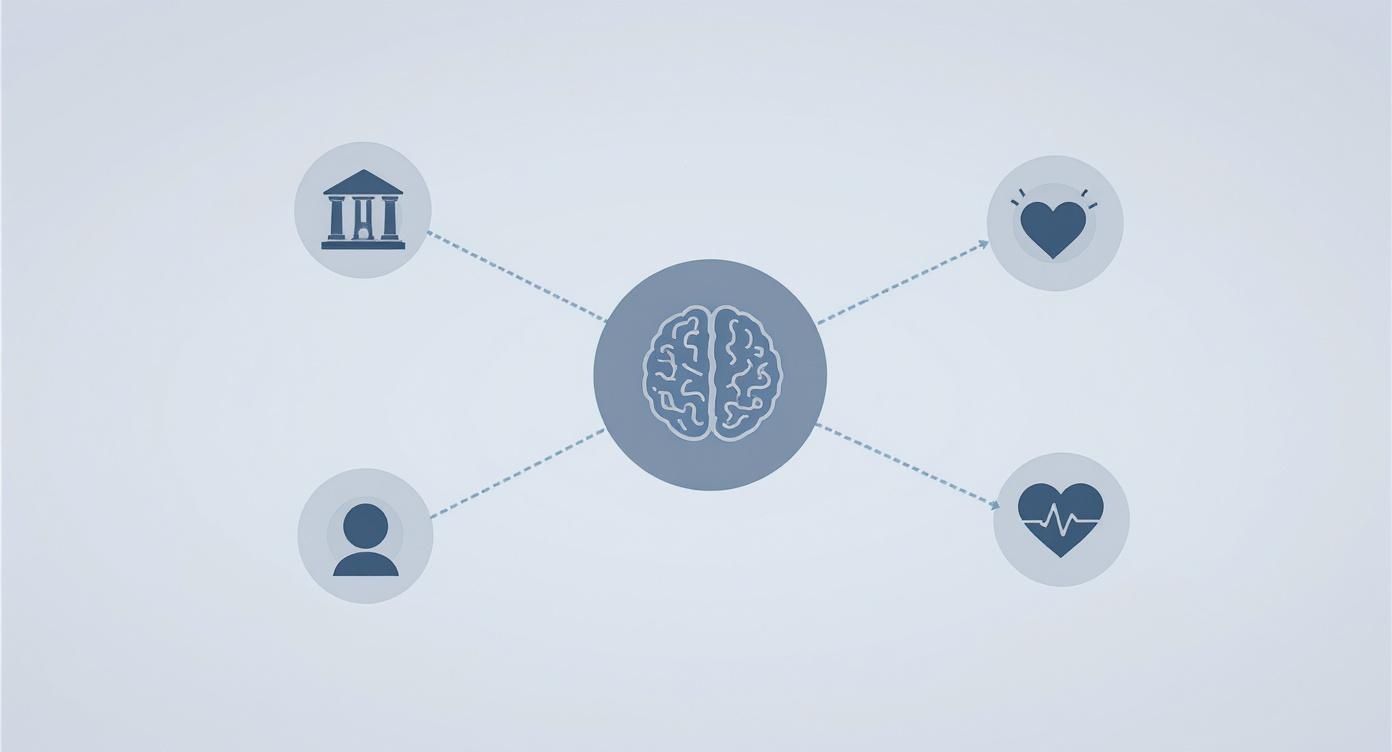
    This concept map helps visualise how your environment, personal well-being, and individual factors all come together to shape your experience of workplace stress.

    Infographic about stress in organisational behaviour

    As the map illustrates, stress is rarely just a personal problem; it’s an outcome of the entire ecosystem you work in.

    The Blurring Lines Between Work and Life

    In India, the expectation to be "always on" has become a significant source of stress. A recent survey revealed that 52% of employees feel burnt out because of poor work-life balance. This challenge is especially common in demanding sectors, leading to chronic workplace stress.

    Finding the root cause of your stress isn't about blaming anyone. It’s about gaining clarity so you can find the right help, whether that means talking to a manager, seeking counselling, or setting better boundaries.

    Understanding these triggers is empowering. It shifts the conversation from a vague feeling of unease to a clear view of the challenges, helping you protect your mental health from pressures that can contribute to anxiety and depression.

    How Stress Impacts People and Performance

    A person sitting at their desk, looking stressed and holding their head in their hands, with blurred office background.

    When work pressures build up, the effects can extend beyond the office. The experience of stress in organisational behaviour can ripple through every part of a person's life and, in turn, affect an organisation's performance.

    For an individual, chronic workplace stress can lead to persistent anxiety and even depression. It can also show up physically through fatigue, headaches, and a weakened immune system. This constant drain can lead to burnout—a state of emotional, physical, and mental exhaustion.

    The Personal Toll of Workplace Stress

    The impact on a person's well-being is deep and wide-ranging, affecting both mind and body.

    • Psychological Impact: This can include constant worry, feeling overwhelmed, or difficulty making decisions. It can also strain personal relationships and diminish joy in hobbies.
    • Physical Impact: Chronic stress can disrupt sleep and contribute to long-term health issues. It is the body's way of signalling that it is under too much pressure.
    • Behavioural Impact: People under stress may withdraw from social activities or become more disconnected from their work and colleagues.

    It's important to clarify that this information is for awareness, not self-diagnosis. If these feelings resonate, reaching out for professional counselling is a positive step toward building resilience.

    The Organisational Cost of Employee Distress

    When people in an organisation are struggling, the entire system is affected. These personal challenges often translate into measurable business problems. Investing in employee well-being is therefore a sound business strategy.

    A Gallup report found that 30% of Indian employees feel stressed daily. This strain directly impacts loyalty, with nearly half of all employees actively looking for new jobs. You can find more details in the report on Indian employees' workplace stress on Business Standard.

    This widespread strain can lead to higher employee turnover, absenteeism, and a decline in productivity. Addressing workplace stress is essential for building a healthy and successful organisation.

    Practical Strategies to Build Personal Resilience

    While organisations have a responsibility to create a healthy environment, you also have the power to build your own skills for managing pressure. Cultivating personal resilience is about finding practical, compassionate ways to support your own mental well-being.

    Think of these strategies as your personal toolkit for navigating tough times. They are here to support you as you navigate workplace stress.

    Mindfulness in the Moment

    When anxiety hits during a chaotic workday, mindfulness can be a simple yet powerful tool. It involves pausing to bring your attention to the present moment without judgment. This mental pause gives you space to respond thoughtfully instead of reacting instinctively.

    You don't need to meditate for hours. Just taking five minutes to focus on your breath can make a difference in managing stress.

    The Power of Setting Boundaries

    The line between work and personal life has become increasingly blurred. Setting clear boundaries is one of the most effective ways to prevent burnout and protect your well-being.

    This can be as simple as:

    • Defining your work hours: Decide on a time to log off and communicate it to your team.
    • Saying no respectfully: It's okay to decline a new task if your plate is full to ensure you can do your current work well.
    • Creating "no-work" zones: Designate times or spaces where work is off-limits.

    Boundaries are not about building walls; they are about protecting your energy so you can be present at work and at home.

    "Self-compassion is simply giving the same kindness to ourselves that we would give to a good friend." – Kristin Neff

    Practicing self-compassion means accepting that you are human and will have challenging days. Treating yourself with kindness, especially when you feel overwhelmed by stress in organisational behaviour, is key to building lasting resilience and can be a powerful antidote to feelings of depression.

    Seeking Support and Celebrating Wins

    You don't have to navigate workplace stress alone. Reaching out to a trusted colleague or friend can offer a new perspective and make you feel understood. If stress persists, seeking professional therapy or counselling is a sign of strength.

    Also, remember to acknowledge your progress, no matter how small. Celebrating small wins builds positive momentum and a genuine sense of accomplishment and happiness.

    How Leaders Can Cultivate a Healthier Work Environment

    The most effective solution to stress in organisational behaviour involves changing the environment that causes it. A healthy workplace is built by leaders who understand that employee well-being is a business essential. This means creating a culture where support is part of the daily routine.

    It starts with creating psychological safety, where people feel safe to speak up or admit mistakes without fear. To learn more, it's worth exploring how prioritizing employee well-being through addressing psychosocial risks is a leadership responsibility.

    Lead with Empathy and Set Clear Expectations

    Training managers to lead with empathy is essential. This includes teaching them to recognise early signs of burnout, anxiety, and depression and respond with support.

    Clear and fair policies also create a low-stress foundation. When people understand their roles and believe the system is fair, it removes significant uncertainty and reduces workplace stress.

    An organisation’s true commitment to mental health is shown in its daily actions. It's about creating a culture where asking for help is seen as a strength.

    Provide Support That's Easy to Access and Confidential

    Employee Assistance Programmes (EAPs) are a vital resource. They provide a confidential way for employees to access professional help for various challenges.

    These programmes typically offer:

    • Confidential Counselling: A safe space to discuss stress, anxiety, or family issues.
    • Therapy Services: Connections to therapists who can provide structured support for building mental resilience.
    • Financial and Legal Guidance: Help with external stressors that affect an employee's overall well-being.

    By investing in a robust EAP, a company shows it values its employees as whole people. It's important to remember these assessments are informational, not diagnostic.

    It’s Okay to Ask for Help: Getting Professional Support for Workplace Stress

    Asking for help with workplace stress is a sign of strength and a proactive step for your career and health. Just as you would see a doctor for a physical injury, challenges like stress, anxiety, and burnout deserve expert care.

    Therapy and counselling offer a confidential space to talk without judgment. A professional can help you understand your stress triggers, learn coping skills, and build lasting resilience. You don't have to navigate the complexities of stress in organisational behaviour alone.

    Finding the Support That Fits You

    Finding help is often easier than you think, but remember that assessments offered are informational, not diagnostic.

    Here are a few ways to find support:

    • Employee Assistance Programmes (EAPs): Your company may offer an EAP with free, confidential access to counselling.
    • Private Practice: You can search for a therapist who specialises in workplace stress or anxiety. Platforms like DeTalks can connect you with qualified professionals.
    • Community Resources: Non-profit organisations often provide quality mental health support at a lower cost.

    Professional support is not a magic cure; it provides tools and guidance to help you navigate stress. The goal is to empower you, helping you feel more in control and on a path toward better work-life health.

    Taking that first step is a powerful act of self-care. It opens the door to understanding your experiences with stress, anxiety, or depression, and equips you with skills for lasting well-being.

    Quick Answers to Common Questions

    Having questions about stress in organisational behaviour is normal. Here are straightforward answers to some common queries. Please note this information is for educational purposes and is not a substitute for professional advice.

    Can Workplace Stress Ever Be a Good Thing?

    Yes, in small doses. A bit of pressure, known as 'eustress', can be motivating and help you meet deadlines.

    The problem arises when pressure becomes constant and overwhelming, leading to distress. This is when negative effects like anxiety and burnout appear. The goal is to feel challenged, not chronically overwhelmed.

    Is It My Fault If I Can't Handle the Stress?

    Absolutely not. Workplace stress is rarely a sign of personal weakness.

    It often points to a larger issue, like a mismatch between job demands and available support. Realising this helps shift the focus from self-blame to finding solutions, like building personal resilience or advocating for a healthier work culture.

    What's the Difference Between Stress and Burnout?

    Stress is often characterised by over-engagement—feeling frantic and overwhelmed by responsibilities. You feel like you're doing too much.

    Burnout, in contrast, is about disengagement. It involves emotional exhaustion, cynicism, and feeling empty. While chronic stress can lead to burnout, they are different experiences.

    Burnout is the result of prolonged, unmanaged workplace stress. It's a state of total depletion, which is why addressing stress early is so important.

    When Should I Get Professional Help?

    A good guideline is to seek support if stress is consistently affecting your daily life, work, or relationships.

    If you are experiencing persistent feelings of anxiety, sadness, or hopelessness, reaching out for counselling or therapy is a proactive step. You don't have to wait for a crisis to ask for help.


    We all need support sometimes. At DeTalks, we make it easy to find qualified professionals who offer the confidential guidance you need to handle workplace challenges. If you're ready to build resilience and find a better balance, explore our network of therapists and take that first important step.