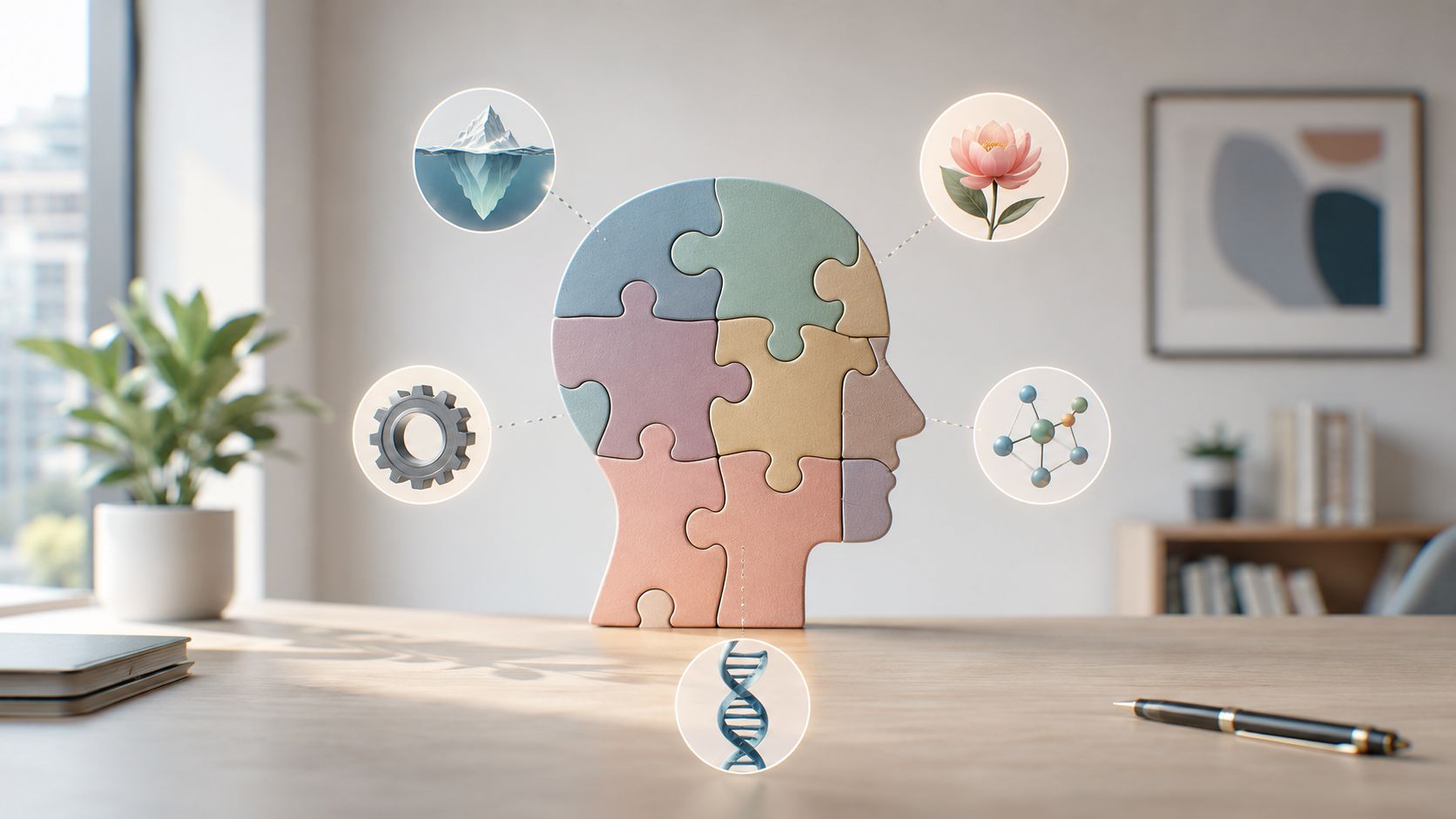
You're in a Monday morning review, and two things are happening at once. One colleague wants clear structure before speaking, another jumps in with fast ideas, and a third has gone quiet after a tense email from a client. This dynamic is often not called “personality theory” in the workplace; it's referred to as friction, missed deadlines, or a tough quarter.
In organisational behaviour, personality matters because it shapes how people respond to feedback, pressure, ambiguity, and teamwork. The point is not to put people into boxes. The point is to understand fit, stress tolerance, and working style so managers can support performance and well-being with more care.
That matters even more in Indian workplaces, where long hours, client demands, and changing roles can make workplace stress feel constant. A thoughtful view of personality helps leaders notice who needs clearer direction, who thrives with autonomy, and who may need earlier support for anxiety, burnout, or low morale.
Why Personality Matters in the Modern Workplace
A team lead at an IT services firm once described a common pattern to me. The same sprint review that energised one engineer left another feeling exposed, while a project manager interpreted silence as disengagement and the engineer experienced it as caution. None of them was “wrong”, but their personality styles were shaping the whole meeting.
That is why the theories of personality in OB are useful in real life. They help leaders see that people can be conscientious, cautious, outgoing, or emotionally sensitive without any of those traits being a flaw.
Work gets done through differences, not in spite of them
Personality affects who asks questions, who follows up, who reacts quickly to criticism, and who needs time to process. In a startup, that can decide whether a founder's fast-moving style energises a team or leaves people behind. In a customer operations centre, it can decide whether someone stays calm during repeated complaints or feels drained by the pace.
The important shift is to move from labelling people to understanding patterns. A manager who knows a team member is highly conscientious may trust them with detailed follow-through, while a manager who recognises strong emotional sensitivity can give feedback in a steadier, private way.
Practical rule: use personality to improve the work environment, not to excuse poor treatment or lower standards.
Personality also matters because it connects to mental well-being. People under heavy pressure do not all show stress in the same way, and a one-size-fits-all response often misses the underlying need. Some want coaching, some need clearer goals, and some benefit from counselling or therapy when pressure starts affecting sleep, concentration, or mood.
That is why organisations increasingly use personality ideas in hiring, team building, and employee support. The strongest use case is not prediction for its own sake, it is better matching between people, roles, and support systems.
Understanding the Major Personality Theories

The easiest way to understand personality theory is to ask one simple question. Does the theory explain people as stable patterns, hidden motives, learned behaviour, or a search for growth?
Trait theory gives the clearest workplace signal
Trait theory treats personality as stable characteristics that can be measured across situations. In modern psychology, the best-known version is the Big Five, which includes openness, conscientiousness, extraversion, agreeableness, and neuroticism. This trait-based logic matters in OB because it turns personality into measurable dimensions instead of fixed types, and that makes it more useful for workplace decisions Simply Psychology on the Big Five model.
For a hiring manager, trait theory is like a dashboard. It does not tell the whole story, but it helps you see likely strengths and risks before someone joins a role.
Psychoanalytic and humanistic views explain different sides of work life
Psychoanalytic theory looks at unconscious processes, early experience, and defence mechanisms. In a workplace, that can show up when someone becomes defensive after criticism, avoids responsibility, or reacts strongly to status loss. The value of this view is not diagnosis, it is better listening when behaviour seems more loaded than the situation alone explains Organisational behaviour personality overview.
Humanistic theory looks at growth, meaning, and self-actualisation. Think of it as the part of work that asks, “Does this role help the person become more capable and more fulfilled?” That lens matters for motivation, leadership development, compassion, and positive psychology.
Social learning and biology add the missing context
Social-cognitive theory says behaviour is shaped by learning, observation, and environment. A new manager can become more decisive because her boss models clear decision-making, not because she was born that way. Biological perspectives remind us that temperament and stress reactivity also matter, which is why some people cope differently with the same workload.
A useful resource for leaders who want to connect personality with leadership behaviour is Intonetic coaching for executives. It fits well with the practical question many HR teams ask, which is how to turn theory into better daily decisions.
How Personality Theories Shape Organizational Decisions

The most practical place to start is with recruitment and role design. Conscientiousness has the strongest link to job performance in multiple OB summaries, which is why teams often use trait-based tools when they need reliability, persistence, and follow-through SCIRP discussion of trait theory and OB outcomes.
Traits help with role fit, not just selection
A methodical analyst and a highly persuasive sales lead may both be strong performers, but they succeed in different ways. Trait theory helps managers see that role fit is not about choosing the “best” personality, it is about choosing the right pattern for the task.
For HR, that can mean asking better questions during interviews. Does this role require detailed execution, constant client interaction, or steady handling of conflict? The answer should guide how personality information is interpreted.
Psychodynamic ideas help leaders read tension more carefully
A manager does not need to become a therapist to notice defensive behaviour. If a person becomes unusually sharp after a small correction, the issue may not be laziness or attitude, it may be threat, shame, or pressure that has built up over time.
That matters in conflict resolution. Leaders who understand defence mechanisms are more likely to pause, slow down the exchange, and separate the person from the immediate reaction.
Useful distinction: personality theories do best work when they help you ask better questions, not when they give you a shortcut to judgment.
Humanistic ideas support motivation and growth
Humanistic theory is especially helpful in development conversations. It reminds managers that people are not just outputs, they are also trying to grow, belong, and find meaning.
That is where positive psychology fits naturally. Programmes that support resilience, compassion, and happiness work best when they are linked to real work conditions, not empty slogans. A person who feels valued is often better able to learn, recover, and contribute consistently.
Comparing Popular Personality Assessment Tools
Some tools are useful for work, and some are mainly useful for conversation. The difference matters, especially when organisations are making decisions that affect careers, well-being, and trust.
A practical guide on culture fit evaluation guide can help teams think more carefully about fit without sliding into sameness. That distinction is important because good culture fit should never mean hiring people who all think alike.
| Assessment Tool | Theoretical Basis | Workplace Validity | Best Use Cases |
|---|---|---|---|
| Big Five inventory | Trait theory | Strong for workplace prediction and role fit | Hiring support, team design, coaching |
| Myers-Briggs Type Indicator | Type theory | Widely used, but best treated as informational | Self-understanding, workshop discussion |
| Holland's vocational theory | Career-fit typology | Useful for career matching | Career guidance, job interest exploration |
| Psychoanalytic-style interpretation | Psychodynamic theory | Limited for formal selection | Coaching conversations, reflective leadership work |
The Big Five is the most defensible option when the goal is to predict behaviour at work. Its strength is that it stays close to observable tendencies rather than dramatic labels.
The Myers-Briggs Type Indicator is popular because it is easy to discuss and easy to remember. However, for workplace decisions, it should remain a tool for self-reflection, not for diagnosis or hard selection.
Holland's model can be useful when someone is asking, “What kind of work suits me?” That makes it valuable in career counselling and early professional guidance, especially for students and career changers.
The most important boundary is simple. These assessments are informational tools for self-understanding, not diagnostic tests for depression, anxiety, or any other mental health condition OB material on MBTI usage and limits.
Personality, Stress, and Workplace Well-Being

When workload rises, personality differences become easier to see. Someone high in neuroticism is more likely to feel emotional strain under pressure, while someone high in conscientiousness often manages deadlines with more steadiness and follow-through SCIRP discussion of neuroticism and job outcomes.
Stress does not land the same way for everyone
The same client escalation can trigger sharp anxiety in one person and focused action in another. That does not mean one person is weaker, it means their stress response is different.
Leaders need compassion. If a manager responds to every struggle with “everyone is busy”, they miss the chance to stop small problems from becoming burnout.
The person–organization transaction view adds another layer. It says personality and workplace shape each other through attraction, selection, transformation, manipulation, and attrition, so fit is not a one-time event person–organization transaction perspective.
Fit can protect both performance and well-being
That model matters in high-pressure settings like IT services, customer operations, and early-career roles. If the environment rewards only speed, then careful people may feel squeezed. If the environment ignores emotional strain, then strong performers may still leave.
A supportive culture can do the opposite. It can reinforce healthy habits, reward thoughtful execution, and make room for people who need a different pace to do their best work.
Compassionate leadership is not soft management. It is the practice of noticing strain early enough to prevent avoidable harm.
This is also where therapy and counselling become relevant. When stress starts to affect sleep, mood, concentration, or relationships, workplace support should include a clear path to professional help, not just resilience talk. The goal is not to pathologise normal pressure, but to respond early and humanely.
The research note from India's Ministry of Statistics and Programme Implementation in 2024 points to measurable distress in the working-age population, which strengthens the case for careful interpretation of personality and stress in organisational settings India-focused survey reference in the brief.
Implementing Personality Insights in Indian Workplaces

Indian workplaces often combine hierarchy, speed, and emotional distance in ways that can hide strain. A young professional may look “fine” in front of a manager while struggling with workload, role ambiguity, or confidence.
Start with ethics, not convenience
Use validated tools for development and fit, and avoid using personality data as a blunt instrument. If a tool cannot be explained clearly to the person taking it, it probably should not guide a serious workplace decision.
Read results in context
A trait score means more when you know the role, the team culture, and the person's stage of career. A direct, fast-moving startup may need a different blend of traits than a regulated corporate function, even when both are hiring for similar technical skills.
Reassess after onboarding
The ASTMA view matters here. A person can look like a strong fit in recruitment and still struggle after joining if the culture, manager style, or reward system pushes against their strengths.
Train managers to interpret carefully
Managers need simple guidance on what to do with personality information. They should know when a person may need clarity, coaching, more structure, or space to recover after a difficult period.
Keep support paths visible
If someone seems stuck in persistent stress, withdrawn behaviour, or repeated conflict, a manager should know when to suggest counselling or therapy. That conversation should be supportive, private, and free of stigma.
Organizations that do this well tend to protect both performance and dignity. They also make room for emotional intelligence, resilience, and better well-being without pretending that everyone needs the same support.
Common Misconceptions and Ethical Boundaries
One of the biggest mistakes in workplace personality use is treating assessment results like fate. A person is not permanently “the anxious one” or “the leader type”, and no test should be used to freeze someone into a role.
That matters because personality assessments measure tendencies, not destiny. Good managers use results to inform decisions, then combine them with observation, work samples, and conversation.
A second mistake is mixing assessment with diagnosis. Personality tools are not clinical instruments for depression, anxiety, or any other mental health condition, and they should never be used that way.
A third mistake is assuming a popular label is the same thing as evidence. The gap between textbook theory and measurement validity is real, and many workplace summaries still present personality as a neat classroom taxonomy instead of a decision tool.
The ethical boundary is simple. If a personality result is being used to exclude, shame, or stereotype someone, the organisation has crossed the line.
Best practice: use personality data to widen understanding and improve support, not to reduce a person to a label.
For HR leaders, that means staying honest about what each tool can and cannot do. For professionals, it means using assessments for insight, then seeking counselling or therapy when the issue is deeper than a work-style question.
The strongest workplaces respect both performance and humanity. They use personality knowledge to build better teams, not to rank people's worth.
If you're trying to use personality insights more responsibly in hiring, leadership, or self-understanding, DeTalks can help you find the right next step. Explore DeTalks for supportive assessments, counselling options, and practical mental health guidance that fits real work and life pressures.
Leave a Reply