Tag: mental well-being

  • Recognizing Job Burnout: 10 Signs to Watch For

    Recognizing Job Burnout: 10 Signs to Watch For

    In today's fast-paced professional world, it can be hard to tell the difference between dedication and exhaustion. While a strong work ethic is admirable, relentless pressure can overwhelm our ability to cope, leading to job burnout. This is more than just feeling tired; it is a state of emotional, physical, and mental exhaustion caused by prolonged workplace stress, and recognizing the signs is the first step toward reclaiming your well-being.

    This guide is designed to help you identify and understand the key signs of job burnout with clarity and compassion. We will explore the subtle shifts in your behaviour, emotions, and physical health that may signal a deeper issue. Understanding these indicators can empower you to build lasting resilience.

    Our goal is to provide helpful insights that encourage you to take meaningful steps for your well-being. Throughout this list, you will find supportive self-check prompts, relatable examples from the Indian workplace, and guidance on when professional support, such as therapy or counselling, might be beneficial. Please remember, this information is for self-reflection and awareness, not a substitute for a professional diagnosis.

    1. Chronic Exhaustion and Fatigue

    This is more than just feeling tired after a long week; it’s a deep, persistent sense of depletion that rest no longer seems to fix. Chronic exhaustion is a hallmark sign of job burnout, where prolonged workplace stress has drained your internal resources. It’s the feeling of running on empty, where even starting the workday feels overwhelming.

    This deep-seated fatigue affects every part of your life, making it hard to concentrate, connect with loved ones, or find happiness in activities you once enjoyed. It’s a core indicator that your job's demands have consistently outpaced your ability to recover, impacting your overall well-being.

    Real-Life Scenarios

    • A software developer in Bengaluru stares blankly at their code, unable to find the mental energy to problem-solve, despite getting eight hours of sleep.
    • A school teacher in Mumbai feels bone-tired even after the long summer holidays, dreading the start of a new academic year.
    • A customer service agent ends each day feeling so drained they have no energy left for their family, often falling asleep right after dinner.

    Quick Self-Check

    Ask yourself these questions:

    • Do I wake up feeling just as tired as when I went to bed?
    • Does my weekend rest feel insufficient to prepare me for the week ahead?
    • Is "I'm so tired" a constant thought in my daily life?

    Actionable Next Steps

    1. Energy Auditing: For one week, track your energy levels on a scale of 1-10 at different times. Note which tasks drain you most and which, if any, energise you.
    2. Strategic Disconnection: Schedule non-negotiable "offline" hours each evening. This means no work emails or calls after a set time.
    3. Prioritise Rest, Not Just Sleep: Engage in activities that are truly restorative for you, like a quiet walk, listening to music, or a hobby.

    Important Note: If you've taken a proper holiday and still feel completely exhausted, it may be more than simple tiredness. This could be a good time to consider seeking professional support from a therapist for guidance.

    2. Increased Cynicism and Detachment

    This sign of job burnout involves creating an emotional distance from your work, colleagues, and even the purpose of your role. What once felt meaningful now seems pointless, leading to negative attitudes and disengagement. This shift is a key emotional indicator of mounting workplace stress.

    Young professional man standing alone by office window looking contemplative and stressed at work

    This detachment is a natural defence against overwhelming demands and feeling a lack of control. It can show up as a lack of compassion toward clients or a cynical outlook on company goals. This creates a barrier that protects you from further emotional investment.

    Real-Life Scenarios

    • A social worker in Kolkata, after handling difficult cases, becomes cynical about their ability to create change, treating new clients with less compassion.
    • A manager in a Delhi tech firm starts dismissing their team's innovative ideas after seeing their own feedback ignored by senior leadership.
    • A non-profit employee in Chennai grows skeptical about their organisation's mission, feeling their work is disconnected from the cause they once supported.

    Quick Self-Check

    Ask yourself these questions:

    • Do I find myself being sarcastic or overly critical about my job?
    • Have I lost the sense of purpose that my work once provided?
    • Do I feel emotionally disconnected from my clients or the outcome of my work?

    Actionable Next Steps

    1. Reconnect with Your 'Why': Take 15 minutes to write down what initially drew you to your role. Identify small aspects of your daily work that still align with these values.
    2. Seek Meaningful Micro-Projects: Volunteer for a small, short-term project that interests you. This can help re-ignite a sense of purpose.
    3. Practice Mindful Engagement: Choose one interaction per day and commit to being fully present. Listen actively to rebuild positive connections.

    Important Note: If you consistently feel strong negative emotions toward your job, it may be harming your professional relationships and mental well-being. This is a clear signal that speaking with a therapist or counsellor could be helpful.

    3. Reduced Performance and Productivity

    This sign of job burnout appears as a persistent drop in your professional effectiveness. Tasks that once felt manageable now seem overwhelming, and you might find yourself missing deadlines or making uncharacteristic errors. This can create a cycle where falling behind increases anxiety, which further impacts performance.

    Person working on laptop with document showing red markings and coffee on desk

    When burnout sets in, the cognitive resources needed for problem-solving and creativity are depleted. Your output slows down not from a lack of skill, but from mental and emotional exhaustion. This can lead to feelings of incompetence and frustration, showing that workplace stress may have become unmanageable.

    Real-Life Scenarios

    • A sales professional in Delhi who consistently exceeded targets is now struggling to meet their basic quota.
    • A graphic designer in Pune takes twice as long to complete projects, and their work now requires multiple revisions.
    • A project manager in Hyderabad notices frequent timeline slippages, feeling unable to stay organised and on top of details.

    Quick Self-Check

    Ask yourself these questions:

    • Am I making more careless mistakes in my work than usual?
    • Do I find myself procrastinating on tasks I used to handle promptly?
    • Have colleagues commented on a change in my work quality?

    Actionable Next Steps

    1. Break Down Your Tasks: Deconstruct large projects into smaller, manageable steps. Completing these mini-tasks can provide a sense of accomplishment.
    2. Create Focus Blocks: Dedicate specific blocks of time (e.g., 90 minutes) to a single task, eliminating distractions.
    3. Re-evaluate Your Workload: Honestly assess if your responsibilities are realistic. Prepare for a constructive conversation with your manager about prioritisation.

    Important Note: If your performance has dropped significantly despite your best efforts, it may be a sign that burnout is impacting your career. Seeking professional counselling to develop coping strategies can be a crucial next step.

    4. Emotional Instability and Irritability

    This sign of job burnout can show up as a shortened fuse and unpredictable mood swings, turning minor annoyances into major emotional events. You might feel constantly on edge, quick to anger, or easily frustrated by tasks and colleagues. This isn't about your personality; it's a symptom of your emotional reserves being low due to workplace stress.

    When your capacity to manage stress is depleted, your ability to regulate emotions weakens. You might find yourself snapping at a coworker or feeling a sense of simmering anger that follows you home. This is a clear indicator that the pressure of your job has overwhelmed your psychological defences.

    Real-Life Scenarios

    • A senior nurse in Delhi becomes uncharacteristically sharp with junior staff over small procedural questions.
    • An IT project manager in Pune overreacts with intense frustration when a team member reports a minor delay.
    • A marketing executive finds herself close to tears during a regular performance review, even when the feedback is constructive.

    Quick Self-Check

    Ask yourself these questions:

    • Do I get disproportionately angry or upset over small problems at work?
    • Have my colleagues or family commented on me being more "moody" lately?
    • Do I feel a constant sense of frustration during my workday?

    Actionable Next Steps

    1. Implement the 'PAUSE' Technique: When you feel a strong reaction building, consciously Pause, Acknowledge the feeling, Understand the trigger, Step back, and then Execute your response.
    2. Schedule Micro-Breaks: After a challenging meeting, take a deliberate five-minute break. Step away from your desk to reset your emotional state.
    3. Use an Emotion Journal: At the end of each day, write down moments that triggered strong emotions. This helps you recognise patterns.

    Important Note: If irritability is leading to significant conflicts at work or home, or if you feel a persistent sense of anger you cannot control, professional help may be needed. This level of emotional difficulty suggests burnout is severely impacting your mental health and well-being.

    5. Neglect of Physical Health and Self-Care

    When workplace stress becomes chronic, self-care is often the first thing to be sacrificed. This sign of job burnout appears as a decline in personal health habits like exercise, nutrition, and sleep. This creates a cycle where poor physical health further depletes energy and resilience.

    Worn dirty running shoes with water bottle and notebook on wooden table after workout

    This neglect isn’t just about being "too busy"; it's a symptom of mental and emotional resources being so low that you no longer have the capacity to care for your own needs. This can lead to physical issues, compounding feelings of exhaustion and low self-worth. It highlights the deep connection between mental well-being, stress, and physical health.

    Real-Life Scenarios

    • An emergency room doctor in Delhi starts gaining weight from relying on unhealthy takeaway meals and skipping sleep.
    • A school teacher in Chennai frequently skips lunch and has stopped their morning yoga routine to keep up with grading.
    • A software developer in Hyderabad notices they are getting frequent colds during a crunch project, realising they haven't exercised in weeks.

    Quick Self-Check

    Ask yourself these questions:

    • Have my exercise routines become non-existent?
    • Am I relying more on processed food or caffeine to get through the day?
    • Have I been putting off doctor’s appointments or ignoring new physical symptoms?

    Actionable Next Steps

    1. Schedule Self-Care: Block time in your calendar for exercise or relaxation just as you would for a work meeting. Treat these as non-negotiable appointments.
    2. Start Small: Instead of a full workout, commit to a 10-minute walk. Small, achievable steps are more sustainable.
    3. Track Health Metrics: Keep a simple log of your sleep, diet, or physical activity. Recognising the signs you need a digital detox can also be crucial for your well-being.

    Important Note: If you are consistently getting sick or ignoring persistent physical pain because you lack the energy to seek help, it’s a critical sign. This physical manifestation of burnout warrants a visit to your doctor and a re-evaluation of your work-life balance, possibly with a mental health professional.

    6. Withdrawal from Social Connections

    This sign of job burnout involves a growing tendency to isolate yourself. It’s an active avoidance of social interactions at work and in your personal life. When workplace stress is all-consuming, the energy required for conversations or simple check-ins with friends feels like too much.

    This withdrawal is damaging because it cuts you off from relationships that could help you cope. Social connection is a powerful buffer against stress and a key part of emotional well-being. By isolating yourself, you may inadvertently deepen the burnout cycle, making it harder to find perspective or receive support.

    Real-Life Scenarios

    • A senior executive in Delhi starts eating lunch alone at her desk and puts her headphones on to avoid casual chats with her team.
    • A young lawyer in Mumbai consistently turns down invitations for after-work events, which were once a regular part of his routine.
    • A healthcare worker in Chennai, feeling emotionally drained, stops calling her friends and family on her days off.

    Quick Self-Check

    Ask yourself these questions:

    • Do I actively avoid team lunches or social gatherings I used to enjoy?
    • Do I feel exhausted by the thought of socialising after work?
    • Have my friends or family mentioned that I seem distant lately?

    Actionable Next Steps

    1. Schedule One Connection: Proactively schedule a short, low-pressure coffee break or phone call with a trusted colleague or friend this week.
    2. Honour One Commitment: Choose one upcoming social invitation to accept, even if it’s just for an hour.
    3. Communicate Your Struggle: If you feel safe doing so, open up to a trusted friend or family member. Simply saying, "I'm feeling withdrawn because of work stress," can be a powerful first step.

    Important Note: If you find yourself avoiding all social contact for weeks and the thought of interacting with anyone feels overwhelming, it's a strong sign that burnout is impacting your mental health. This is a critical time to seek professional counselling to rebuild those connections.

    7. Loss of Motivation and Purpose

    This sign of job burnout goes beyond a simple lack of enthusiasm; it’s a deep feeling that your work has lost all meaning. What once felt like a fulfilling career now feels pointless and disconnected from your core values. This profound loss of drive can make even important projects seem trivial.

    When purpose disappears, the emotional buffer that helps you navigate workplace stress erodes, leaving you vulnerable to cynicism and despair. This can be particularly challenging in roles where a belief in one's impact is a primary motivator, such as in healthcare or education. It can impact your sense of happiness and fulfilment.

    Real-Life Scenarios

    • A doctor in Delhi begins to lose the motivation to help patients, feeling their efforts make no real difference due to systemic hurdles.
    • An NGO worker in Kolkata starts to doubt if their organisation is creating any genuine impact, feeling disconnected from the mission.
    • A veteran teacher in Chennai finds themselves questioning whether their teaching methods truly influence students' futures.

    Quick Self-Check

    Ask yourself these questions:

    • Do I struggle to remember why I chose this career?
    • Does the thought "What's the point?" frequently cross my mind at work?
    • Have my long-term professional goals become unclear or disappeared?

    Actionable Next Steps

    1. Reconnect with Your 'Why': Write down the original reasons you entered your field. What excited you? Seeing it on paper can help reignite that initial spark.
    2. Seek Meaningful Micro-Projects: Identify one small task within your role that still feels meaningful. Focus your energy there to create an island of purpose.
    3. Talk to a Mentor or Counsellor: Discuss your feelings with a trusted mentor or a professional therapist. They can offer an objective perspective.

    Important Note: If you feel a complete void where your professional ambition used to be, and this is spilling into your personal life, it is a significant sign of severe burnout. This is a critical time to seek professional counselling to navigate these complex feelings.

    8. Increased Absenteeism and Presenteeism

    This sign appears in two ways: either you’re physically absent from work more often, or you’re physically present but mentally and emotionally checked out. Both absenteeism (frequently calling in sick) and presenteeism (showing up but being unproductive) are key signs of job burnout. They signal a disconnect from your responsibilities, driven by workplace stress.

    When burned out, the effort to be productive feels impossible. Absenteeism becomes a way to escape a stressful environment, while presenteeism is a form of passive withdrawal. You may be at your desk, but your mind is elsewhere, impacting both your well-being and productivity.

    Real-Life Scenarios

    • A call centre employee in Pune begins calling in sick almost every Monday, unable to face another high-pressure week.
    • An IT professional in Hyderabad sits at his desk for eight hours, but spends most of his time scrolling through personal sites, completing minimal work.
    • A healthcare worker in Delhi forces herself to go to work despite feeling unwell, moving through her shift on autopilot.

    Quick Self-Check

    Ask yourself these questions:

    • Have I been using sick leave more often just to avoid work?
    • When I am at work, do I feel like I'm just going through the motions?
    • Do I find myself counting down the minutes until I can leave?

    Actionable Next Steps

    1. Analyse the 'Why': When you feel the urge to disengage, pause and identify the specific trigger. Is it a project, a meeting, or the overall workload?
    2. Communicate Your Capacity: Schedule a conversation with your manager. Instead of just stating you're overwhelmed, focus on specific challenges and solutions.
    3. Take a True Day Off: If you take a day off, commit to it fully. Do not check work emails. Use the time for genuine rest and recovery.

    Important Note: If you find yourself making excuses to avoid work or consistently receive feedback that you seem disengaged, it's a strong signal. This suggests your coping mechanisms are strained, and professional counselling can provide healthier strategies to manage workplace stress.

    9. Physical Symptoms and Health Problems

    Burnout isn’t just an emotional or mental state; it often shows up physically. Chronic workplace stress can lead to tangible health problems like persistent headaches, stomach issues, and unexplained muscle pain. These are your body’s way of signalling that it's struggling under prolonged pressure from stress or anxiety.

    When these physical symptoms arise without a clear medical cause, it's a strong indicator that workplace stress is the culprit. Ignoring these signs can lead to more serious, long-term health issues, making it crucial to recognise this connection as one of the key signs of job burnout. It highlights the link between stress, anxiety, and even symptoms related to depression.

    Real-Life Scenarios

    • A corporate executive in Delhi experiences frequent, intense migraines that peak during high-pressure project deadlines.
    • A teacher in Chennai develops stomach issues that worsen during the school year but ease during holidays.
    • A nurse in Kerala finds herself catching every cold going around the hospital, a sign her immune system is compromised by stress.

    Quick Self-Check

    Ask yourself these questions:

    • Am I experiencing more headaches, stomach problems, or muscle aches than usual?
    • Do I seem to be getting sick more often?
    • Do my physical symptoms get worse on workdays and better on weekends?

    Actionable Next Steps

    1. Symptom Journaling: Keep a simple diary tracking your physical symptoms alongside your daily work activities and stress levels.
    2. Consult a Healthcare Professional: Schedule a medical check-up to rule out other underlying conditions, and be sure to inform your doctor about your work stress.
    3. Incorporate Body Awareness Practices: Engage in gentle practices like yoga or simple stretching throughout your day to release physical tension.

    Important Note: If doctors cannot find a specific medical reason for recurring physical ailments, or if your symptoms only improve when you are away from work, it's a powerful signal that burnout is the underlying cause. This is a critical time to explore counselling to manage the stress affecting your physical well-being.

    10. Cynical Attitude Toward Organisational Change and Feedback

    This sign of job burnout appears as a deep-seated resistance and dismissive attitude toward new initiatives or feedback at work. When you're burned out, it's common to assume the worst about changes, seeing them as more pointless work. This isn't just healthy skepticism; it's a pervasive negativity that rejects ideas before they are explored.

    This cynical outlook stems from a loss of faith in leadership and the organisation's mission. It’s a defence mechanism born from feeling powerless and repeatedly disappointed. This attitude erodes your engagement and traps you in a cycle of negativity and workplace stress.

    Real-Life Scenarios

    • An IT professional in Hyderabad hears about a new efficiency programme and immediately thinks, "Great, another way for them to track us."
    • A marketing executive in Delhi receives constructive feedback but internally rejects it, believing her manager is just finding fault.
    • A team in Pune is told about new mental health resources but cynically assumes the company is just "ticking a box."

    Quick Self-Check

    Ask yourself these questions:

    • Is my first reaction to any new company announcement negative?
    • Do I automatically find flaws in feedback instead of considering its merit?
    • Have I lost belief that any new initiative at my job can lead to improvement?

    Actionable Next Steps

    1. Seek Clarity: Instead of making assumptions, proactively ask questions. Understanding the "why" behind a change can sometimes reduce cynicism.
    2. Separate Feelings from Facts: Acknowledge your feelings of frustration. Then, try to objectively evaluate a new initiative or piece of feedback.
    3. Conduct a Small Test: If possible, give a new policy a genuine, small-scale effort before judging it entirely.

    Important Note: If your cynicism has evolved into a complete distrust of your entire profession, it’s a sign that burnout has deeply affected your professional outlook. This is an ideal time to speak with a therapist to unpack these feelings and explore a path toward professional well-being and resilience.

    10 Signs of Job Burnout: Comparison

    Sign 🔄 Complexity ⚡ Resource needs 📊 Expected outcomes 💡 Ideal use cases ⭐ Key advantages
    Chronic Exhaustion and Fatigue Low–Moderate — easy to self-report, gradual onset Low — tracking, sleep hygiene, primary care Restored energy if workload & sleep addressed; may need medical follow-up Early detection; workload reviews and short-term rest Readily observable; motivates immediate changes
    Increased Cynicism and Detachment Moderate — attitudinal, may be masked Moderate — coaching, therapy, culture work Improved engagement with value-aligned interventions When morale, empathy or client care decline Flags need for emotional restoration and boundary-setting
    Reduced Performance and Productivity Low — measurable via output/quality metrics Moderate — managerial support, reprioritization, possible role change Measurable recovery if tasks restructured and supported Performance drops, missed deadlines, error spikes Observable indicator that prompts managerial action
    Emotional Instability and Irritability Moderate — fluctuating, affects interactions Low–Moderate — stress management, brief therapy Better emotional regulation with targeted supports High-conflict teams or frequent interpersonal incidents Clear signal for stress reduction and wellness programs
    Neglect of Physical Health and Self-Care Low–Moderate — visible lifestyle changes Moderate–High — medical evaluation, lifestyle programs Physical health can improve with sustained self-care & treatment When somatic issues or illness frequency rise Concrete health markers that prompt medical attention
    Withdrawal from Social Connections Moderate — gradual social pullback Low — peer support, scheduled socialization, groups Reconnection reduces isolation and improves resilience Declining team cohesion or social participation Identifiable and addressable via social support interventions
    Loss of Motivation and Purpose High — deep, value-related causes Moderate — coaching, role exploration, sabbatical options Possible career realignment or restored purpose with time Mission-driven sectors showing wide disengagement Prompts meaningful reflection and long-term change
    Increased Absenteeism and Presenteeism Low — quantifiable in attendance/productivity data Low–Moderate — HR policies, accommodations, counselling Reduced lost time when underlying causes addressed When HR metrics show spikes in leave or low output Quantifiable signal that triggers formal interventions
    Physical Symptoms and Health Problems Low–Moderate — somatic signs often clear but nonspecific High — medical tests, ongoing treatment, lifestyle change Health stabilization if combined medical & workload adjustments Recurrent headaches, GI issues, hypertension during stress Medical validation of burnout; prompts clinical care
    Cynical Attitude Toward Organizational Change and Feedback Moderate — cultural and trust-based Moderate — leadership engagement, transparent communication Better change adoption if trust and clarity are rebuilt During reorgs, new initiatives, or repeated failed promises Reveals systemic trust issues and need for leadership action

    Your Path Forward: From Awareness to Action

    Recognising yourself in these signs of job burnout is an act of self-awareness and the first step toward reclaiming your well-being. Burnout is a response to prolonged workplace stress; it is an organisational challenge, not a personal weakness. Understanding this distinction is vital as you begin your journey toward recovery and greater resilience.

    The path forward is paved with small, intentional steps. It is not about a complete life overhaul overnight but about making sustainable changes that honour your limits and prioritise your health. The journey involves re-evaluating your relationship with work and building a more balanced and fulfilling life through compassion for yourself.

    Supportive Takeaways: From Recognition to Resilience

    As you reflect on this information, let these core principles guide your next steps:

    • Burnout is a Spectrum: It develops over time, moving from early signs of stress to chronic exhaustion. It is never too late to take supportive action for yourself.
    • Listen to Your Body and Mind: The physical and emotional signs are your body's alarm system. These signals are valid indicators that something needs to change for your well-being.
    • Boundaries are a Necessity: Establishing clear boundaries between your work and personal life is fundamental to recovery and building resilience. This means protecting your time for rest and rejuvenation.

    Actionable Next Steps: Building Your Recovery Toolkit

    Awareness without action can lead to feeling stuck. Use the momentum from identifying the signs of job burnout to implement tangible changes. Your strategy should be personalised, focusing on what you can control.

    1. Start a Dialogue: The first conversation can be the most impactful. If you feel comfortable, speak with your manager about your workload and the sources of your stress. This conversation is not about blame; it is about collaborative problem-solving.

    2. Reconnect with Your 'Why': Burnout often disconnects us from our sense of purpose. Reflect on what initially drew you to your field. Find small ways to reconnect with aspects of your job that you find meaningful to foster happiness at work.

    3. Prioritise Strategic Rest: Recovery requires more than just sleep; it involves activities that replenish your mental and emotional energy. To prevent job burnout, it is crucial to understand strategies for managing your well-being, including insights on how to avoid burnout by integrating proactive rest into your routine.

    4. Seek Professional Support: Navigating burnout alone can be overwhelming. Therapy and counselling offer a confidential space to process your experiences, develop coping strategies, and build resilience. A therapist can help you identify the root causes of workplace stress, anxiety, or feelings of depression, and create a supportive plan for recovery.

    Your well-being is your most critical asset. Addressing the signs of job burnout is an investment in a healthier, more sustainable future. This moment is a turning point—an opportunity to redesign your work life in a way that supports your vitality and passion.


    Ready to take the next step? If you are struggling with the signs of job burnout, connecting with a mental health professional can provide the support you need. DeTalks offers a secure and accessible platform to find qualified therapists across India who specialise in workplace stress, anxiety, and building resilience. Visit DeTalks to start your journey toward a more balanced and fulfilling professional life today.


  • A Guide to Online Therapy for Depression

    A Guide to Online Therapy for Depression

    Taking the first step toward managing depression is an act of courage. This guide offers a warm and clear look at how online therapy for depression is making professional support more accessible across India and globally. It’s a private, flexible way to connect with a qualified therapist who can help you navigate feelings of stress and find a way forward.

    Starting Your Path to Well-being

    Deciding to seek help for depression can feel overwhelming, but it is a hopeful and powerful choice. Online therapy, also known as online counselling, brings professional support directly to you, wherever you feel most comfortable. This allows for meaningful sessions with a therapist without leaving your home.

    Think of it as building a supportive bridge to better mental health. Online therapy connects you with the tools and guidance needed to manage challenges like workplace stress, anxiety, or depression. These platforms provide a safe, confidential space to explore your feelings and learn healthy coping skills.

    Woman relaxing peacefully in comfortable armchair by sunny window during mental health therapy session

    Embracing a New Way to Access Support

    The concept of therapy is evolving beyond the traditional clinic setting. This shift is particularly significant in places like India, where technology is transforming healthcare access. There is a growing demand for convenient mental health services, indicating a positive change in awareness and reduced stigma.

    This growing acceptance is reflected in market trends. In 2024, India's online mental health market was valued at USD 133.47 million, with projections reaching USD 451.73 million by 2033. This growth highlights how many people are finding value in online support, which you can read more about in this shift in mental health care in India.

    Online therapy for depression isn't a quick fix, but a journey of self-discovery and resilience with a trusted professional. It combines convenience with confidentiality, offering a powerful path toward well-being.

    Building Resilience and Well-being

    Therapy is not just about managing challenges; it's also about nurturing your strengths. It helps you build resilience, that inner capacity to bounce back from adversity. Through guided conversations, you can cultivate self-compassion, find more happiness, and enhance your overall emotional health.

    • Navigating Challenges: Learn effective strategies to manage stress, anxiety, burnout, and symptoms of depression.
    • Fostering Strengths: Discover and build on your inner resources like resilience, self-compassion, and emotional awareness.
    • Improving Relationships: Gain clarity on your relationships and develop healthier ways to communicate and connect with others.

    On some platforms, you may find assessments to better understand your current state of well-being. It is important to remember that these are informational tools, not a formal diagnosis. They serve as a helpful starting point for you and your therapist to understand your needs.

    How Online Therapy for Depression Actually Works

    So, what does online therapy for depression look like in practice? It involves having a supportive, professional conversation from a space where you feel completely at ease. You build a genuine connection with a therapist through secure video calls, phone chats, or messaging.

    The core goal is the same as in-person therapy: to create a safe, non-judgmental space. Here, you can explore your feelings, learn practical ways to cope with challenges like depression and anxiety, and work toward feeling more like yourself again.

    Professional woman therapist smiling during virtual video call session on laptop screen

    Different Ways to Connect with Your Therapist

    Online counselling offers several communication methods to suit your comfort level and schedule. Each format provides a unique way to engage in therapy.

    • Video Sessions: This format closely mirrors a traditional face-to-face meeting. Seeing your therapist allows for non-verbal cues to deepen understanding and connection.

    • Audio (Phone) Calls: If you prefer not to be on camera, audio sessions are a great alternative. Focusing solely on the conversation can make it easier for some people to open up.

    • Live Chat or Messaging: This involves real-time, text-based conversations. Typing out your thoughts can feel less intimidating than speaking, offering a discreet and comfortable option.

    • Asynchronous Messaging: This allows you to send messages to your therapist, who replies within a specific timeframe. It's incredibly flexible and gives you time to reflect on your thoughts before sharing them.

    What Happens in a Typical Session

    Regardless of the format, an online session is structured to support you. The first appointment is usually about getting to know each other, discussing what brought you to therapy, and exploring your goals.

    From there, your therapist will work with you to create a personalized plan. This might involve talking through difficult experiences, learning new skills to manage depression, or examining thought patterns related to workplace stress. The entire process is centered on your unique needs.

    The real power of online therapy lies in its ability to meet you where you are, both emotionally and physically. It removes barriers, making consistent, professional support a realistic part of modern life.

    Remember, therapy is a partnership. Your therapist is there as a guide, but your active participation is what drives meaningful progress.

    Building a Strong Therapeutic Bond Online

    A common question is whether you can truly connect with a therapist you've never met in person. The answer is a clear yes. Research and personal experiences show that the therapeutic alliance—the bond of trust between you and your counsellor—can be just as strong online.

    This connection is the foundation for real change. A skilled therapist knows how to create a sense of empathy, safety, and presence, even through a screen. Ultimately, consistency, active listening, and a shared commitment to your well-being build this powerful relationship.

    Finding the Therapeutic Approach That Fits You

    Starting online therapy is a significant step, and it's helpful to know that "therapy" includes various approaches. Each style has its own philosophy, and finding the right one is key to your progress. It's about finding a method that resonates with your personality and what you hope to achieve.

    This process empowers you to be an active participant in your own journey. Understanding the different types of therapy can help you make an informed choice.

    Cognitive Behavioural Therapy (CBT)

    Cognitive Behavioural Therapy (CBT) is a well-researched and widely used approach. It is based on the idea that your thoughts, feelings, and behaviours are interconnected. By changing unhelpful thought patterns, you can positively influence how you feel and act.

    A CBT therapist helps you identify and challenge negative thought patterns. They teach you practical, hands-on tools to replace these with more balanced and helpful thoughts. This approach focuses on making changes in the here and now.

    CBT helps you become more aware of your thought patterns. It provides skills to restructure thoughts in a way that supports your well-being, focusing on practical solutions for current challenges.

    Interpersonal Therapy (IPT)

    While CBT focuses inward, Interpersonal Therapy (IPT) looks outward at your relationships. This approach recognizes that our connections with others significantly impact our mental health. Difficulties in relationships can be a major source of stress and contribute to depression.

    IPT helps you identify and resolve issues within your key relationships. This could involve navigating conflict, processing grief, or adapting to major life changes. By improving communication and strengthening your social support system, you can lift your mood and build resilience.

    Psychodynamic Therapy

    Psychodynamic therapy explores how past experiences and unresolved conflicts may shape your current emotions and behaviours. It aims to uncover deeper, often unconscious, patterns that may be contributing to depression.

    This approach helps you connect the dots between your past and present, offering deep insights into why you feel the way you do. By addressing these underlying issues in a safe space, you can begin to heal and break free from old patterns.


    This table offers a quick comparison of common methods used in online therapy for depression.

    Comparing Online Therapy Approaches for Depression

    Therapy Type Primary Focus Best Suited For
    Cognitive Behavioural Therapy (CBT) Identifying and changing negative thought patterns and behaviours. People looking for practical, structured strategies to manage current symptoms of depression and anxiety.
    Interpersonal Therapy (IPT) Improving relationships and social functioning to relieve distress. Individuals whose depression seems linked to relationship conflicts, grief, or major life transitions.
    Psychodynamic Therapy Exploring past experiences and unconscious thoughts to understand current feelings. Those who want to gain deep insight into the root causes of their depression and recurring emotional patterns.
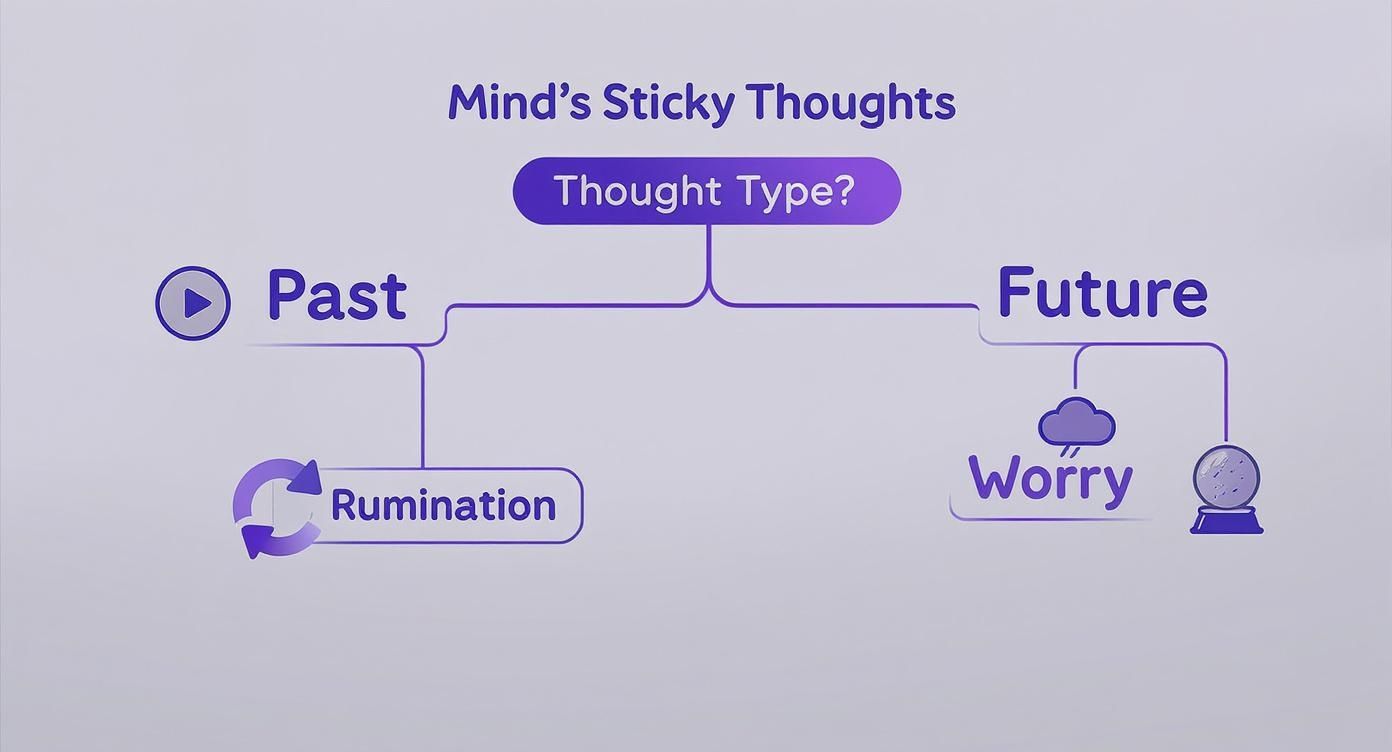
    Mindfulness-Based Therapies Using mindfulness and meditation to increase awareness and acceptance of the present moment. Anyone struggling with rumination or worry, looking to break free from cycles of negative thinking.

    It's good to know that many therapists use an integrative approach. They blend techniques from different models to create a plan tailored specifically to you.

    The most important factor for success isn't the specific type of therapy, but the connection you feel with your therapist. Finding someone you trust is the true foundation for growth.

    Is Online Counselling Right for You? A Look at the Real Benefits and Drawbacks

    Choosing how to support your mental health is a deeply personal decision. Online counselling has made therapy more accessible for many, but it's important to understand if it's the right fit for you. Let's have an honest look at its strengths and limitations.

    For many dealing with depression, online therapy can be transformative, especially in a country like India. It removes the barrier of distance, allowing you to connect with a skilled therapist from anywhere. This flexibility helps you find time for yourself, whether during a lunch break or late in the evening.

    There is also a sense of comfort in speaking from your own familiar space. For someone feeling nervous about starting therapy, this can make it much easier to open up. It offers a gentle way to begin the process of healing and self-discovery.

    The Upside: What Makes Digital Support So Powerful?

    The primary advantage of online therapy is accessibility. When you're managing workplace stress or the weight of depression, removing obstacles is key. Online platforms put professional help at your fingertips, making consistent care a real possibility.

    Here’s a breakdown of the key advantages:

    • No Commuting: Attend sessions from anywhere with an internet connection, saving time and travel costs.
    • Fits Your Schedule: Many online therapists offer flexible hours, including evenings and weekends.
    • Your Safe Space: Speaking from home can feel less intimidating and more private, promoting openness in counselling.
    • A Wider Pool of Experts: Access therapists with specific specializations, not just those in your local area.

    The shift to digital mental healthcare has already shown a positive impact. During the COVID-19 pandemic, online therapy became mainstream in India. One study noted that between 2020 and 2025, average depression scores showed a significant drop, with online support playing a key role. You can read the full study on pandemic-era mental health trends to learn more.

    The Other Side of the Coin: Practical Limitations to Consider

    While the benefits are clear, it's important to be realistic about the drawbacks. Online therapy may not be suitable for everyone or every situation. For instance, it relies entirely on technology, and a poor internet connection can disrupt a session.

    Building a strong therapeutic connection through a screen can also feel different for some. While many form deep bonds with their online therapists, others may miss the energy of an in-person meeting.

    It's absolutely critical to understand that online therapy is not suitable for severe mental health crises. If you are having thoughts of harming yourself or are in a psychiatric emergency, you need immediate, in-person help. A crisis helpline or the nearest hospital is your safest option.

    Finally, ensuring privacy in your home environment is crucial. It’s important to find a confidential space for your sessions. Taking these practical challenges into account will help you make an informed choice for your well-being and resilience.

    How to Find the Right Online Therapist for You

    Choosing a therapist is about finding a genuine connection with someone you trust. Think of it as seeking a skilled guide for your journey. You want someone who knows the terrain and helps you feel safe, heard, and understood.

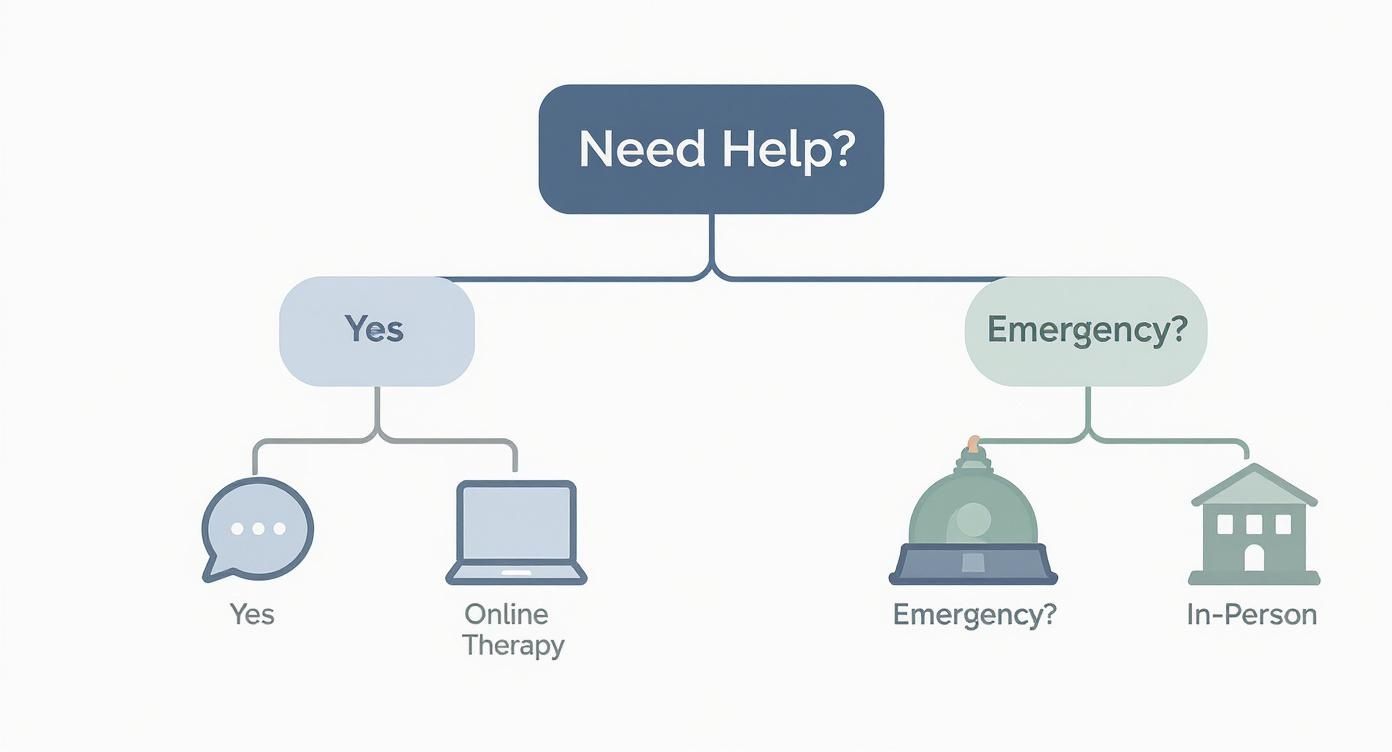
    The process of finding the right professional can feel daunting, but breaking it down into small steps helps. The goal is to find someone whose expertise and style align with your needs. This chart can help you think through your options.

    Mental health support flowchart showing options for online therapy, in-person care, and emergency services

    As you can see, online therapy is an excellent option for consistent, ongoing support. However, for crisis situations, immediate in-person help is essential.

    Verifying Qualifications and Specialisations

    First, ensure any therapist you consider has the right credentials. In India, look for professionals with degrees like an M.A., M.Sc., or M.Phil in Clinical Psychology. Registration with the Rehabilitation Council of India (RCI) is a strong indicator of professional standing.

    Beyond qualifications, look into their areas of expertise. Many therapists specialize in challenges like depression, anxiety, or workplace stress. Finding someone experienced in the areas you need help with can make a significant difference.

    The Importance of Cultural and Personal Fit

    A therapist who understands your cultural background can be incredibly helpful. When you don't need to explain cultural nuances, you can focus on the core issues more quickly. This shared context can build a bridge of understanding from the very first session.

    Beyond culture, a personal connection is vital. You need to feel comfortable being your authentic self without judgment. The right therapist creates an environment of validation and respect, which is the foundation for a strong therapeutic relationship.

    The right therapist doesn't just listen to your words; they hear the feelings behind them. Trust your intuition—the "chemistry check" during an initial consultation is often the most reliable guide to finding the right fit for your journey.

    Using Initial Consultations to Your Advantage

    Many online platforms offer introductory sessions, often at a reduced cost. Use this as a no-pressure opportunity to see if you connect with the therapist. It's a time to ask questions and notice how you feel during the conversation.

    Here are a few questions you might consider asking:

    • What is your approach to helping people with depression?
    • How do you help clients build resilience and improve their well-being?
    • What does a typical counselling session with you look like?
    • How will we track progress in therapy?

    Pay attention to both their answers and their energy. Do they seem empathetic and respectful? This initial interaction provides a valuable preview of what a long-term therapeutic relationship might feel like.

    Remember, it is perfectly okay if the first person isn't the right fit. Taking the time to choose thoughtfully is a powerful act of self-care.

    Your Journey Towards Lasting Resilience

    The path to feeling better is a gradual process of building inner strength and self-compassion. This journey is uniquely yours, and every step you take is a genuine victory.

    Remember that asking for help is a sign of strength, not weakness. Online therapy for depression is a valid and effective tool that can provide the supportive guidance you need to navigate feelings of depression, anxiety, or workplace stress.

    Supportive Takeaways for Your Path Forward

    As you move forward, keep these gentle reminders in mind. Think of them as anchors to hold onto during the natural ups and downs of your emotional health.

    • Your Feelings Are Valid: Whatever you are feeling is real and deserves to be heard. Therapy offers a safe, non-judgmental space to explore those feelings.
    • Progress Over Perfection: Healing is not a straight line. Focus on gradual progress rather than an impossible standard of perfection.
    • Kindness is Key: Be gentle with yourself throughout this process. Self-compassion is a powerful skill for building emotional resilience.

    A Brighter, More Balanced Future

    Despite the growing acceptance of online therapy for depression in India, a significant gap remains between those who need help and those who receive it. The National Mental Health Survey found that while many Indians could benefit from support, few access it. Online counselling is helping close this gap, though challenges like digital literacy and stigma persist, as noted in resources on mental wellness in India on youremotionalwellbeing.org.

    This highlights the importance of accessible, professional support. Online platforms are working to make quality care more widely available, connecting more people with qualified therapists.

    Every step you take towards understanding your mental well-being is a courageous move. Exploring your options with curiosity and kindness opens the door to a future where you feel more in control, understood, and hopeful.

    We encourage you to explore the possibilities that online therapy offers. Professional support is available to help you navigate challenges and build a life with greater happiness and meaning. Your journey matters, and you don’t have to walk it alone.

    Your Questions About Online Therapy, Answered

    Deciding to explore online therapy is a big step, and it's natural to have questions. This section provides clear, straightforward answers to common concerns. Our goal is to offer the clarity you need to feel confident moving forward.

    Everyone's path is different, and finding what works for you is what truly matters. We hope these answers help you on your journey.

    Is Online Therapy Actually as Good as Meeting in Person?

    For many people with mild to moderate depression, research shows that online therapy can be just as effective. The success of therapy depends on the connection you build with your therapist and your commitment to the process, not the format.

    The flexibility of online therapy is a major advantage. Connecting via video, audio, or chat from your own comfortable space can sometimes make it easier to open up.

    How Do I Know My Sessions Are Private?

    Reputable online therapy platforms use secure, encrypted technology to protect your conversations. This is similar to the security used for online banking, ensuring your information remains confidential.

    Therapists are also bound by the same strict professional ethics and confidentiality laws, whether online or in person. Always check a platform's privacy policy to ensure you feel secure.

    Your privacy isn't just a feature; it's a fundamental part of ethical therapy. A trustworthy platform will be upfront about how they protect your data, so you can focus on what matters—your well-being.

    What if I Don't Click With the First Therapist I Try?

    It’s completely normal and okay if you don’t connect with the first therapist you meet. The 'therapeutic alliance,' or your relationship with your therapist, is a key factor in successful therapy. You need to feel safe and understood.

    Most online services make it easy to switch to a new counsellor. Don't be discouraged by an initial mismatch; think of it as part of the process of finding the right fit for your journey toward resilience.

    What’s the Typical Cost for Online Therapy in India?

    The cost of online therapy can vary depending on the therapist's experience and the platform used. The good news is that online therapy is often more affordable than traditional in-person sessions.

    In India, session prices typically range from around ₹800 to over ₹2,500. Many platforms offer subscription plans or package deals that can make consistent support more budget-friendly.


    Taking the first step can feel challenging, but you don't have to do it alone. DeTalks offers a safe, supportive space to find qualified therapists who understand depression. You can explore our directory of professionals or take one of our confidential, science-backed assessments to get a clearer picture of your needs. See how we can help at https://detalks.com.

  • 8 Signs You Need a Therapist: A Guide to Well-Being

    8 Signs You Need a Therapist: A Guide to Well-Being

    In our fast-paced world, it's easy to dismiss ongoing stress or sadness as 'just a bad week'. While everyone faces challenges, sometimes these feelings point to a need for more support. Recognising these signs is a courageous first step toward better well-being and building resilience.

    This guide offers a warm and clear look at experiences that suggest counselling could be helpful. The goal is to help you understand yourself better, not to diagnose. Seeking therapy is a positive step for your health, like visiting a gym for physical fitness.

    We will explore common signs like lasting sadness, overwhelming anxiety, and relationship issues. This information is a starting point for self-awareness, designed to empower you. These assessments are informational only and not a substitute for a professional diagnosis.

    If you're wondering whether therapy is right for you, these signs can offer clarity. For more insights, this guide on 'Do I Need Mental Health Treatment: Recognizing the Signs and Getting Help' is a helpful resource. Consider this article a supportive tool on your journey to well-being.

    1. Persistent Sadness or Hopelessness

    It’s natural to feel sad after a disappointment or loss. But when sadness or hopelessness lasts for more than two weeks and impacts your daily life, it may be one of the clearer signs you need a therapist. This is more than a bad mood; it’s a heavy feeling that can affect your energy, sleep, and joy.

    A person looking out a window on a rainy day, conveying a sense of sadness and introspection.

    This prolonged emotional state can be related to conditions like depression. It's not a sign of weakness or something you can just "snap out of." Counselling offers a safe space to understand these feelings and learn healthy ways to cope.

    What Does This Look Like in Daily Life?

    • A recent graduate in India feels unmotivated for months after a tough job search, losing interest in hobbies and friends.
    • A new parent feels a deep sadness that goes beyond the "baby blues," making it hard to connect with their child.
    • A professional with a successful career feels a constant sense of hopelessness about the future for no clear reason.

    Quick Self-Assessment

    Ask yourself these questions. Please remember, these are for reflection, not diagnosis.

    • Have I felt sad or hopeless most days over the past two weeks?
    • Have I lost interest in things I used to enjoy?
    • Do these feelings make it hard to manage work, school, or relationships?

    Actionable Next Steps

    If you relate to these patterns, consider these gentle steps:

    1. Track Your Mood: Note your feelings in a journal each day. This can help you see patterns and share them with a professional.
    2. Talk to Someone You Trust: Sharing with a friend or family member can help you feel less alone.
    3. Rule Out Physical Causes: Some health issues, like vitamin deficiencies, can mimic symptoms of depression. A visit to your doctor can be a useful step.
    4. Find the Right Support: Look for therapists who specialise in mood concerns. Platforms like DeTalks connect you with qualified professionals in India for support and growth.

    When to Seek Immediate Help: If feelings of hopelessness include thoughts of self-harm, it is a medical emergency. Please contact a crisis helpline. Your life is important, and help is available.

    2. Overwhelming Anxiety and Panic Attacks

    Worry is a normal part of life, but when it becomes constant and uncontrollable, it’s a sign that you might need support. If you experience sudden, intense episodes of fear known as panic attacks, it’s one of the key signs you need a therapist. This isn't just "being a worrier"; it's a level of anxiety that can disrupt your life.

    When anxiety interferes with work, social life, or daily tasks, it may be related to a condition like an anxiety disorder. These conditions are very treatable. Professional counselling offers effective strategies to manage symptoms and regain a sense of calm.

    What Does This Look Like in Daily Life?

    • A university student in India constantly worries about exams and their future, finding it hard to concentrate or sleep.
    • A professional experiences sudden panic attacks before big meetings, with a racing heart and fear of losing control.
    • An individual starts avoiding crowded places like markets or metros for fear of having a panic attack.

    Quick Self-Assessment

    Ask yourself these questions. Please remember, these are for reflection, not diagnosis.

    • Do I feel worried or on edge most days?
    • Do I find it hard to control my worrying?
    • Have I experienced sudden, intense episodes of fear (panic attacks)?
    • Does anxiety stop me from doing things I need to do?

    Actionable Next Steps

    If these patterns seem familiar, here are some small steps you can take:

    1. Learn Grounding Techniques: When you feel overwhelmed, try the 5-4-3-2-1 method: name five things you see, four you feel, three you hear, two you smell, and one you taste.
    2. Practise Deep Breathing: Take a few minutes each day for slow, deep breathing. This can help calm your nervous system and reduce feelings of anxiety.
    3. Review Your Lifestyle: Reducing caffeine can sometimes help lessen anxiety. A consistent sleep schedule is also very important for your well-being.
    4. Connect with a Professional: Look for therapists who specialise in anxiety and cognitive-behavioural therapy (CBT). Platforms like DeTalks offer access to qualified professionals across India.

    When to Seek Immediate Help: If anxiety leads you to avoid daily responsibilities or is accompanied by thoughts of self-harm, please seek immediate help. Contact a crisis helpline or visit an emergency room.

    3. Relationship and Social Connection Problems

    Our connections with others are vital for our well-being, but they can also be a source of stress. If you often find yourself in conflict, struggle to maintain healthy bonds, or feel very isolated, these are strong signs you need a therapist. These challenges often point to deeper patterns in how we communicate and connect.

    Two people sitting back-to-back on a sofa, looking disconnected and upset, illustrating relationship conflict.

    Whether it’s frequent arguments with a partner or difficulty making friends, these issues can impact your mental health. A therapist can help you understand the root causes. They can also provide tools for building more satisfying and resilient relationships.

    What Does This Look Like in Daily Life?

    • A young professional finds their relationships feel one-sided and draining, as they struggle to say "no."
    • A couple feels stuck in the same arguments, leading to resentment and emotional distance.
    • A student feels intensely lonely and avoids social events, which stops them from forming friendships.

    Quick Self-Assessment

    Ask yourself these questions. Please remember, these are for reflection, not diagnosis.

    • Do I often feel lonely or disconnected, even when with others?
    • Do I find myself in the same kind of unhealthy relationships over and over?
    • Does the thought of social events cause me significant stress or anxiety?

    Actionable Next Steps

    If these patterns feel familiar, here are some gentle steps to consider:

    1. Identify a Pattern: Reflect on your relationships. Acknowledging a recurring theme or conflict is the first step.
    2. Practise One Boundary: Start small. Set a simple boundary, like asking for 15 minutes of quiet time after work.
    3. Explore Communication Styles: Try using "I" statements (e.g., "I feel hurt when…") instead of "You always…" in a conversation.
    4. Seek Professional Guidance: Look for therapists who specialise in relationship dynamics or couples counselling. DeTalks offers access to professionals who provide a non-judgemental space to work on these skills.

    When to Seek Immediate Help: If conflicts involve emotional, verbal, or physical abuse, your safety is the priority. Please contact a domestic violence helpline or local authorities. You deserve to be safe.

    4. Uncontrolled Anger or Emotional Outbursts

    Everyone feels angry sometimes; it's a normal emotion. But when anger is explosive and hard to control, it may be a sign that something deeper needs attention. If your reactions feel too intense for the situation, this is one of the key signs you need a therapist.

    This type of anger is often more than a "short temper." It can come from unresolved issues, chronic stress, or anxiety. Professional counselling provides a safe place to find the triggers for your anger and learn healthier ways to manage it.

    What Does This Look Like in Daily Life?

    • A professional snaps at colleagues over small issues, leading to problems with workplace stress and team dynamics.
    • A parent finds themselves yelling over minor mistakes, feeling guilty afterwards but unable to change the pattern.
    • An individual has intense outbursts during arguments, saying hurtful things that harm their relationships.

    Quick Self-Assessment

    Ask yourself these questions. Please remember, these are for reflection, not diagnosis.

    • Do I feel my anger is often too intense for the situation?
    • Have my angry outbursts negatively affected my relationships or work?
    • Do I feel regret or shame after I calm down?

    Actionable Next Steps

    If these patterns are familiar, consider these constructive steps:

    1. Identify Your Triggers: Note when you feel angry. This helps you recognise early warning signs.
    2. Develop a "Time-Out" Plan: When you feel anger rising, step away. Taking a short walk or listening to music can help.
    3. Practise Assertive Communication: Learn to express your feelings respectfully, rather than letting frustration build.
    4. Seek Professional Guidance: A therapist can help you explore the roots of your anger. DeTalks connects you with professionals in India who specialise in emotional regulation.

    When to Seek Immediate Help: If your anger leads to aggression, violence, or thoughts of harming yourself or others, it is critical to seek immediate help. Contact a crisis helpline or go to the nearest emergency room.

    5. Trauma Symptoms or Intrusive Memories

    Difficult life events can leave a lasting impact. If you find yourself reliving a distressing event through flashbacks, nightmares, or intrusive thoughts, this is one of the critical signs you need a therapist. These are not just bad memories; they are vivid and can feel like the event is happening again.

    These experiences are often related to post-traumatic stress. You might also find yourself feeling constantly on edge or avoiding things that remind you of the event. A trauma-informed therapist provides a safe space to process these memories and heal.

    What Does This Look Like in Daily Life?

    • A survivor of an accident has flashbacks and feels panic when they hear loud noises like screeching tires.
    • Someone who experienced workplace bullying feels constantly on edge and has nightmares about their former job.
    • An adult who grew up in a difficult home feels emotionally numb and is easily startled by loud noises.

    Quick Self–Assessment

    Ask yourself these questions. Please remember, these are for reflection, not diagnosis.

    • Do I have unwanted memories, flashbacks, or nightmares about a past event?
    • Do I avoid things that remind me of a difficult experience?
    • Do I often feel jumpy, on guard, or emotionally numb?

    Actionable Next Steps

    If you relate to these patterns, consider these gentle steps:

    1. Practice Grounding Techniques: When overwhelmed, focus on your senses. Name five things you see, four you touch, three you hear, two you smell, and one you taste to return to the present.
    2. Create a Sense of Safety: Identify people, places, and activities that make you feel calm and safe.
    3. Find a Trauma-Informed Therapist: Look for professionals trained in approaches like EMDR or Somatic Experiencing.
    4. Connect with Specialised Support: Platforms like DeTalks can connect you with qualified therapists in India who specialise in trauma, ensuring you receive compassionate and effective care.

    When to Seek Immediate Help: If trauma symptoms are causing intense distress or thoughts of self-harm, please reach out to a crisis line immediately. Healing is possible, and you don’t have to do it alone.

    6. Substance Abuse or Addictive Behaviours

    Using substances like alcohol, or behaviours like excessive shopping, to cope with pain can be harmful. When this becomes your main way to handle stress and you can’t stop despite negative outcomes, it's a critical sign you need a therapist. These behaviours often mask deeper issues like anxiety or depression.

    Addiction is a complex condition that affects your brain and judgment. Therapy offers a non-judgmental space to understand the root causes. It helps you develop healthier, more sustainable ways to cope with life's challenges.

    What Does This Look Like in Daily Life?

    • A student drinks heavily to deal with academic pressure, often missing classes as a result.
    • A professional compulsively shops online late at night to escape workplace stress, creating financial problems.
    • An individual uses more prescription medication than prescribed to manage emotional distress, not just physical pain.

    Quick Self-Assessment

    Ask yourself these questions. Please remember, these are for reflection, not diagnosis.

    • Do I use a substance or behaviour to escape or forget my problems?
    • Have my attempts to stop or cut back been unsuccessful?
    • Is this behaviour causing problems in my relationships, work, or finances?

    Actionable Next Steps

    If you see these patterns in yourself, seeking help is a sign of strength:

    1. Identify Your Triggers: Notice what situations or feelings lead you to the behaviour. This awareness is the first step.
    2. Seek Specialised Support: Look for therapists who specialise in addiction and recovery.
    3. Explore Support Groups: Organisations like Alcoholics Anonymous (AA) or SMART Recovery offer valuable peer support.
    4. Find the Right Professional: Platforms like DeTalks connect you with therapists in India who understand addiction, offering a confidential path to recovery.

    When to Seek Immediate Help: If substance use leads to a medical emergency (like an overdose) or severe withdrawal symptoms, seek immediate medical attention. Your physical safety is the top priority.

    7. Sleep Problems Affecting Daily Functioning

    Good sleep is essential for mental and physical health. While an occasional bad night is normal, chronic issues like insomnia or waking up exhausted can be important signs you need a therapist. Poor sleep is deeply connected to your emotional state and can be a sign of anxiety or depression.

    When your mind is racing with worries, it's hard to relax enough to sleep. This creates a cycle where lack of sleep makes it harder to cope with stress, which in turn makes sleep more difficult. A therapist can help you address the root causes of your sleep problems.

    What Does This Look Like in Daily Life?

    • A student lies awake for hours with anxious thoughts before exams, leading to poor performance.
    • An individual has recurring nightmares that disrupt their sleep, leaving them tired and fearful during the day.
    • A professional wakes up at 3 a.m. worrying about work and can't fall back asleep.

    Quick Self-Assessment

    Ask yourself these questions. Please remember, these are for reflection, not diagnosis.

    • Do I often struggle to fall asleep, stay asleep, or wake up feeling unrested?
    • Are my sleep problems making it hard to concentrate or manage my emotions?
    • Have I noticed a link between my stress levels and the quality of my sleep?

    Actionable Next Steps

    If you relate to these patterns, consider these gentle steps:

    1. Prioritise Sleep Hygiene: Create a calming bedtime routine. Avoid screens an hour before bed and stick to a consistent sleep schedule.
    2. Avoid Stimulants: Cut back on caffeine and alcohol in the evening, as they can disrupt sleep.
    3. Explore Relaxation Techniques: Practice deep breathing or meditation to calm your nervous system before bed.
    4. Seek Professional Guidance: A therapy called CBT-I is a very effective, non-medical approach to insomnia. DeTalks can connect you with therapists trained to help with sleep issues.

    When to Seek Immediate Help: If poor sleep is paired with extreme disorientation or thoughts of self-harm, please contact a crisis helpline or see a doctor immediately.

    8. Difficulty Coping with Major Life Changes or Grief

    Life is full of changes, and some can shake our sense of stability. Losing a loved one, a job loss, or a major health diagnosis can be very difficult to navigate. When adjusting feels impossible, it can be one of the most important signs you need a therapist.

    A person sitting on a packed suitcase, looking contemplative, symbolising a major life change or transition.

    While grief and stress are normal, feeling stuck for a long time can disrupt your life and well-being. A therapist provides a compassionate space to process these feelings. They can help you honour your past and find a way to rebuild your life with meaning and resilience.

    What Does This Look Like in Daily Life?

    • A recent retiree feels a loss of identity and purpose, struggling with unstructured days.
    • A person going through a divorce feels overwhelmed by loneliness and the challenge of building a new life.
    • Someone who lost a family member finds their intense grief isn't lessening over many months.

    Quick Self-Assessment

    Ask yourself these questions. Please remember, these are for reflection, not diagnosis.

    • Am I struggling to accept a major life change that happened months ago?
    • Does my grief or stress interfere with my ability to work, sleep, or maintain relationships?
    • Do I feel a persistent sense of identity loss since the change?

    Actionable Next Steps

    If you are finding it hard to cope, these steps can offer a path forward:

    1. Allow Yourself to Grieve: Give yourself permission to feel all your emotions without judgment. There is no "right" timeline for healing.
    2. Maintain Simple Routines: Small, consistent routines can provide a sense of stability when things feel uncertain.
    3. Find Specific Support: Look for support groups for people going through similar life transitions.
    4. Seek Professional Guidance: A therapist specialising in grief and life transitions can provide crucial support. DeTalks connects you with qualified counsellors in India who can help you navigate these chapters with compassion.

    When to Seek Immediate Help: If your grief is so overwhelming that you have thoughts of harming yourself, please seek emergency help immediately. Support is available to help you through this pain.

    8-Point Comparison: Signs You Need a Therapist

    Sign / Condition Complexity 🔄 Resources ⚡ Expected Outcomes ⭐📊 Ideal Use Cases Key Advantages 💡
    Persistent Sadness or Hopelessness Moderate 🔄 — weeks to months of therapy/med management Therapist, possible medication, support network ⚡ Symptom reduction and improved daily functioning ⭐⭐📊 Major depressive episodes, persistent depressive disorder Early recognition enables effective intervention; builds coping skills 💡
    Overwhelming Anxiety and Panic Attacks Moderate‑High 🔄 — CBT/exposure and routine practice CBT therapist, possible meds, apps/support groups ⚡ Fewer panic episodes; improved coping and functioning ⭐⭐⭐📊 Panic disorder, GAD, social anxiety, agoraphobia Strong evidence for CBT; practical grounding techniques taught 💡
    Relationship and Social Connection Problems Moderate 🔄 — interpersonal/attachment work; may involve partners Couples/family therapy, group therapy, self-work ⚡ Better communication, healthier boundaries, stronger relationships ⭐⭐📊 Couples conflict, codependency, social withdrawal Improves conflict resolution and emotional intelligence 💡
    Uncontrolled Anger or Emotional Outbursts Moderate‑High 🔄 — emotion regulation and sometimes trauma work Anger‑management therapy, trauma‑informed clinicians, groups ⚡ Fewer outbursts; improved regulation and repaired relationships ⭐⭐📊 Intermittent explosive disorder, workplace/family conflicts Reduces relational/legal harm; teaches coping plans and de‑escalation 💡
    Trauma Symptoms or Intrusive Memories High 🔄 — trauma processing can be intensive and staged Trauma‑trained therapist (EMDR/CPT/PE), stable supports ⚡ Significant symptom reduction with appropriate treatment ⭐⭐⭐📊 PTSD, complex childhood trauma, severe flashbacks/nightmares Evidence‑based trauma modalities; potential for deep healing 💡
    Substance Abuse or Addictive Behaviors High 🔄 — multifaceted, often long‑term recovery work Specialized addiction programs, medical support, peer groups ⚡ Recovery possible but requires sustained support; relapse risk remains ⭐⭐📊 Alcohol/drug use disorders, behavioral addictions Addresses root causes; community accountability boosts success 💡
    Sleep Problems Affecting Daily Functioning Low‑Moderate 🔄 — CBT‑I and behavioral changes Sleep specialist or CBT‑I provider, apps, sleep hygiene tools ⚡ Improved sleep quality and daytime cognition/mood ⭐⭐📊 Insomnia, PTSD/nightmare‑related sleep disruption, circadian issues Nonpharmacologic, evidence‑based treatments improve overall mental health 💡
    Difficulty Coping with Major Life Changes or Grief Moderate 🔄 — grief/adjustment therapy over time Individual therapy, support groups, time and routines ⚡ Better adaptation, restored purpose and functioning ⭐⭐📊 Bereavement, divorce, job loss, major health or identity shifts Normalizes transitions; builds resilience and new coping strategies 💡

    Your Next Steps Toward Emotional Well-Being

    Recognising parts of your own experience in this list is an act of self-awareness. Seeing these signs you need a therapist is a sign of strength. The journey to well-being is not about avoiding challenges, but about learning to navigate them with greater skill, resilience, and self-compassion.

    Remember, therapy isn't only for a crisis. It's a proactive space to manage workplace stress, process life changes, and build a happier life. Counselling offers a confidential path forward if you are struggling or just feel something isn't right.

    Key Takeaway: Recognising the need for support is a strength. Therapy provides tools not just to cope with challenges like anxiety and depression, but to build a more resilient and fulfilling life.

    Turning Recognition into Action

    Understanding the signs is the first step; taking action is the next. Breaking it down into small tasks can make the process feel less overwhelming. The goal is to move from awareness to empowerment.

    Here is a practical, step-by-step guide to get you started:

    1. Reflect and Acknowledge: Take a moment to acknowledge which points resonated with you, without judgment. Ask yourself: "What is one area where I need the most support right now?"
    2. Research and Explore: Look into different types of therapy, like Cognitive Behavioural Therapy (CBT). Exploring broader resources on mental health and well-being can also provide guidance and reduce any anxiety about the process.
    3. Find the Right Fit: Your connection with your therapist is very important. Look for professionals whose specialties align with your needs, whether it's trauma, relationship issues, or workplace stress.
    4. Schedule Your First Appointment: This is a concrete commitment to your well-being. The first session is just a conversation, with no pressure to have everything figured out.

    Taking this step is an act of courage. It is a declaration that your mental health matters. You are not alone on this journey, and dedicated support is within your reach.


    Ready to take that first step? DeTalks simplifies the process of finding the right therapist for your unique needs. Browse through verified professionals, read about their specialities, and book a confidential session online at DeTalks to begin your journey toward greater well-being today.

  • How to Build Resilience and Thrive Under Pressure

    How to Build Resilience and Thrive Under Pressure

    Building resilience isn't about avoiding life's storms; it's about learning how to sail your ship through them. It is a skill you can develop to help you recover from adversity, manage change, and protect your well-being. This is especially true when dealing with intense workplace stress or personal challenges.

    What Resilience Really Means and Why It Matters

    Life can be unpredictable, bringing demanding projects at work or personal difficulties at home. Resilience is that inner strength that helps you get back up and move forward, rather than letting a setback define your story.

    This isn't about being stoic or "toughing it out" alone. It is a gentle but firm process of acknowledging your feelings, learning from the experience, and taking the next step forward with a renewed sense of direction. This compassionate approach is key to your long-term well-being.

    Here in India, many of us juggle high-pressure careers, family duties, and the fast pace of modern life. That constant pressure can lead to workplace stress, anxiety, and burnout. Learning how to build resilience is a vital tool for protecting your mental health and creating a sustainable path to happiness and fulfillment.

    Developing these skills proactively empowers you to manage stress before it becomes overwhelming. It gives you the confidence to face whatever comes next, strengthening your inner foundation.

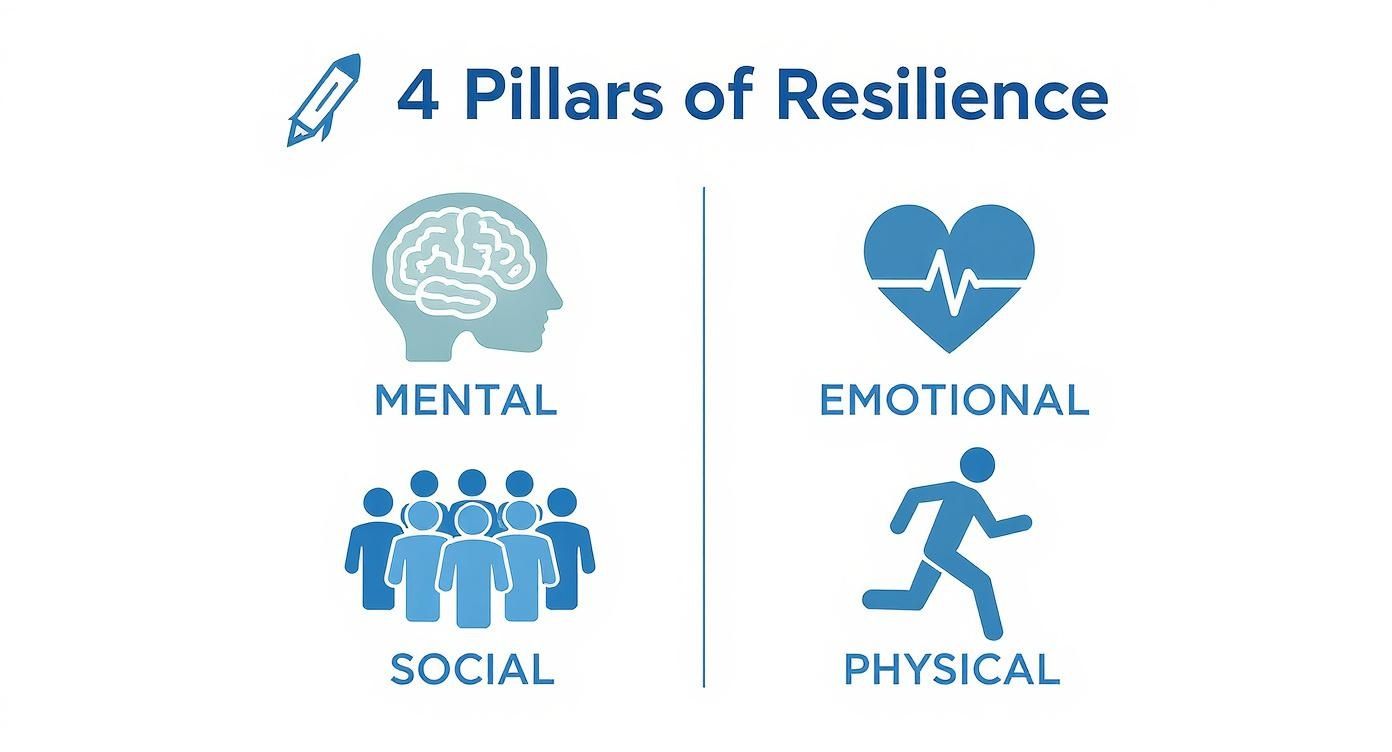
    The Four Pillars of Resilience

    To build lasting resilience, it helps to focus on four key, interconnected areas of your life. Strengthening each pillar creates a solid foundation for your overall well-being, making you better equipped to handle pressure.

    Let's break down these core components that contribute to building personal resilience.

    Pillar What It Means Why It's Important
    Mental This involves your thoughts, mindset, and cognitive skills. It's about staying flexible, solving problems, and maintaining a hopeful outlook. A strong mental pillar helps you reframe negative thoughts, see challenges as opportunities, and stay focused under pressure.
    Emotional This is your ability to manage and understand your emotions. It includes self-awareness, emotional regulation, and expressing feelings constructively. Emotional resilience prevents you from being overwhelmed by feelings, allowing you to respond thoughtfully rather than reactively.
    Social This refers to your connections and support network. It's about building strong, positive relationships and knowing how and when to ask for help. A solid social pillar provides a sense of belonging and offers practical and emotional support, reminding you that you're not alone.
    Physical This covers your physical health—sleep, nutrition, and exercise. Your body and mind are deeply linked. Taking care of your body boosts your mood, reduces stress hormones, and provides the energy needed to face challenges head-on.

    When you look at it this way, it’s clear that lasting strength comes from a balanced approach.

    The infographic below offers a great visual of how these four pillars—mental, emotional, social, and physical—work together.

    Infographic about how to build resilience

    True resilience isn't just about mental toughness; it is a holistic practice. Caring for your mind is just as vital as caring for your body and nurturing your relationships.

    Cultivating these pillars is a continuous practice, not a one-time fix. Small, consistent efforts in each area add up, improving your ability to navigate life's inevitable ups and downs. This guide will give you practical steps to strengthen each one.

    Building resilience is not about preventing storms but about learning how to navigate them. It is an act of self-compassion that allows you to bend without breaking, adapt without losing yourself, and grow stronger through adversity.

    Sometimes, the most resilient thing you can do is ask for help. Seeking professional support through therapy or counselling is a powerful way to build coping strategies and gain personalised insights. This support can help you navigate feelings of anxiety or depression and build a more resilient mindset for the long haul.

    Develop a Resilient Mindset

    Think of your mindset as the filter through which you process everything, from a frustrating traffic jam to a major career setback. Building a resilient mindset isn't about pretending problems don't exist. It's about shifting how you see them: as temporary hurdles you can overcome, not permanent roadblocks.

    This perspective is a game-changer for navigating workplace stress and life's challenges. It is the difference between taking feedback personally and seeing it as an opportunity to grow. When you frame events with intention, you take back control and build mental fortitude.

    A person sitting calmly and meditating, representing a resilient mindset

    Challenge Negative Thought Patterns

    Our brains have a natural tendency to focus on the negative, which can trap us in thought loops that amplify anxiety. The good news is you can break this cycle by challenging the automatic stories you tell yourself. This is known as cognitive reframing.

    Imagine your team misses a deadline on a key project. An automatic thought might be, "This is a catastrophe. I've failed." This all-or-nothing thinking can be paralysing.

    Instead, pause and ask yourself some gentle questions. "Is this thought 100% true?" "What's a more realistic way to see this?" "What can I learn from this?" This act of questioning shifts you from panic to problem-solving, an essential skill for managing workplace stress.

    Cultivate an Optimistic Outlook

    Real optimism is not blind positivity; it is a realistic, hopeful view of the future. Resilient people believe that setbacks are temporary and that they can influence what happens next. This belief is a powerful antidote to the hopelessness that can be linked with depression.

    You can actively train your brain to be more optimistic. Each evening, try jotting down three things that went well that day, no matter how small. This simple habit trains your brain to notice the good, creating a healthier balance to its natural focus on the negative.

    "Your mindset is your most powerful asset in building resilience. By consciously choosing to reframe challenges and focus on what you can control, you turn adversity into an opportunity for growth and strengthen your overall well–being."

    Focus on what you can control, rather than wasting energy on things you can't. This shift creates a profound sense of agency, which is the bedrock of a resilient mindset.

    Integrate Mindfulness into Your Day

    Mindfulness is simply paying attention to the present moment without judgement. It creates a crucial pause between a stressful event and your reaction. In that gap, you find the freedom to choose a considered response, which is key to managing anxiety.

    You don’t need an hour for meditation to feel the benefits. Start with small practices you can weave into your day, like a three-minute breathing exercise or paying full attention while drinking your morning coffee. These small acts help you stay grounded when things get chaotic, protecting your long-term well-being. If thoughts feel persistently overwhelming, seeking professional therapy or counselling can provide structured guidance.

    Master Your Emotional Responses

    Bouncing back from setbacks is deeply connected to how you manage your emotions. It is completely human to feel frustrated, disappointed, or anxious in high-pressure environments. The goal isn't to suppress these feelings, but to acknowledge them without letting them take control.

    Developing emotional regulation is a cornerstone of learning how to build resilience. It is the ability to pause between a feeling and a reaction. That pause gives you the power to respond with clarity, which helps prevent emotional exhaustion and burnout from workplace stress.

    A person taking a deep, calming breath in a serene setting, representing emotional control.

    Acknowledge and Name Your Feelings

    The first step in managing your emotions is to notice what you are feeling. We often try to ignore difficult feelings, but this usually gives them more power. A simple, effective technique is the 'emotional check-in'.

    Take a moment to pause and ask, "What am I feeling right now?" Try to be specific. Instead of "I feel bad," you might identify the feeling as "disappointed" or "overwhelmed." Naming the emotion creates distance, letting you observe it instead of being consumed by it. This practice can be very helpful for managing anxiety.

    Soothe Your Nervous System with Tactical Breathing

    When you're stressed, your body's fight-or-flight response activates. You can consciously calm this response with controlled breathing. A simple and effective method is 'box breathing', used by many to stay calm under pressure.

    Here’s how to do it: breathe in for a count of four, hold for four, breathe out for four, and hold for four. Repeating this cycle for just a few minutes signals to your brain that you are safe. It's a powerful tool you can use anywhere to quiet anxious thoughts.

    Emotional regulation isn't about controlling what you feel, but about choosing how you respond. By acknowledging your feelings with compassion and using simple grounding techniques, you build a foundation of inner stability that supports your overall well-being.

    Cultivate Self-Compassion

    In cultures like ours in India, there is often pressure to appear strong. This can make it hard to be kind to ourselves when we stumble. Self-compassion is treating yourself with the same kindness you would offer a good friend.

    It involves acknowledging difficult feelings without judgement and remembering that mistakes are part of the shared human experience. Instead of harsh self-criticism, try gentle self-talk. This shift is fundamental to building emotional resilience because it allows you to learn from setbacks without losing your self-worth.

    If you find that feelings of anxiety or depression are persistent, please know that seeking professional support is an act of strength. Therapy and counselling provide a safe space to develop these skills. Platforms like DeTalks offer access to qualified professionals and informational assessments to help you understand your emotional patterns; please note these are not a substitute for a professional diagnosis.

    Lean on Your Support System

    No one gets through tough times completely on their own. We often think of resilience as inner grit, but it is greatly amplified by the people around us. Our connections are a strong defence against workplace stress and personal crises.

    This is especially true in a culture like India, where community is at the heart of everything. These bonds are a fundamental part of our mental well-being. Nurturing these connections is a proactive investment in your emotional health.

    A group of friends supporting each other, symbolizing a strong support system.

    Nurture Your Key Relationships

    Great relationships need to be tended to, like a garden. It is the small, consistent acts of connection that build the strongest bonds. This could be a weekly call to your parents or a coffee date with a close friend.

    Keeping lines of communication open makes it feel more natural to reach out when you're struggling. When you are with people you care about, give them your full attention. Real connection is also built on authenticity; sharing your own struggles creates a safe space for others to do the same.

    Overcome the Hesitation to Ask for Help

    Many of us see asking for help as a sign of weakness or feel like we are a burden. We need to flip that script. Reaching out is an act of strength and self-awareness that shows you are taking charge of your well-being.

    The people who care about you want to be there for you. If it feels daunting, start small by asking for a tiny favour or simply texting a friend to listen. This power of connection is a vital resilience tool for everyone.

    "Leaning on others isn't a sign of weakness; it is the ultimate recognition of our shared humanity. Our connections are our greatest strength, turning individual struggles into collective resilience."

    Know When Professional Support Is the Next Step

    Friends and family are incredible, but sometimes their support is not enough. If you are stuck in persistent feelings of depression, battling overwhelming anxiety, or facing complex emotional issues, seeking professional counselling is a brave move.

    A therapist provides a confidential, non-judgemental space with specialised tools to help you develop effective coping strategies. Platforms like DeTalks can connect you with qualified professionals who can provide expert guidance. Investing in therapy is a significant investment in your long-term resilience and mental health.

    Take Proactive Steps with Self-Care and Problem-Solving

    When stress or anxiety feels overwhelming, it is easy to feel helpless. Taking control where you can is a powerful way to build resilience. Proactive problem-solving and foundational self-care are two of the best tools for reclaiming your sense of agency.

    https://www.youtube.com/embed/K4ns53t77bk

    These two pillars work together. Good physical health fuels your mental capacity for clear thinking, while a structured approach to challenges prevents emotional drain. By focusing on these areas, you shift from reacting to life’s stressors to actively managing them.

    Break Down Overwhelming Challenges

    When a problem feels too big, our instinct is often to avoid it, which only increases anxiety. The key is to break it down into smaller, more manageable pieces. This approach makes any issue feel less intimidating and creates a clear path forward.

    First, define the problem with clarity. Instead of a vague worry like, "I'm failing at work," get specific: "I am behind on the Q3 report and struggling with the new sales data." This transforms an emotional burden into a practical, solvable issue. Then, you can brainstorm potential solutions without judgement and identify a single, small step you can take right now. Taking that first step builds momentum and reinforces your belief in your ability to handle challenges. For deeper insights, it’s worth exploring resources on understanding the interplay between mental health, coping strategies, and support systems during challenging life transitions.

    Prioritise Your Physical Well-Being

    Self-care is not an indulgence; it is a non-negotiable part of any resilience strategy. Your mind and body are deeply connected. When you neglect your physical health, your capacity to handle stress plummets, leaving you more vulnerable to burnout and anxiety.

    Think of your physical well-being as the foundation your mental strength is built upon. This does not require a complete lifestyle overhaul. It is about making small, consistent choices that add up over time.

    Aim for 7-8 hours of quality sleep, focus on balanced meals, and move your body in a way you enjoy for 20 minutes a day. These habits provide the fuel your brain and body need to function at their best under pressure.

    Self-care is not about escaping your life; it's about creating a life you don't need to escape from. It's the daily practice of tending to your physical and emotional needs so you have the strength to face challenges head-on.

    These proactive steps are about empowerment. By methodically solving problems and caring for your body, you prove to yourself that you are capable and have the energy to show up as your best self. If you find it difficult to stay consistent, professional counselling can provide the structure and support to build these vital habits.

    When It's Time to Reach Out for Professional Support

    Building resilience is a powerful journey, but you don't always have to walk it alone. Recognizing when you need to bring in an expert is a sign of incredible strength and self-awareness. It is not a setback, but an act of taking charge of your well-being.

    Sometimes, the pressures of work, anxiety, or feelings of depression can become too much to handle with your current toolkit. If you feel stuck or find that constant worry is getting in the way of your life, it might be time for professional support.

    Spotting the Signs

    How do you distinguish a rough patch from something more serious? Here are a few signals that it might be time to consider professional counselling or therapy:

    • Your Mood Won’t Lift: You’ve felt down or irritable for weeks, and it's impacting your work and relationships.
    • Anxiety Has Taken Over: The worry is constant, making it hard to focus or relax.
    • Your Coping Habits Aren't Helping: You are leaning on behaviours you know aren't good for you in the long run.
    • Nothing Seems Fun Anymore: The hobbies you used to love now feel like a chore.

    Think of a therapist as a guide for your mind. They have the map and the tools to help you navigate tricky terrain, offering fresh perspectives and proven strategies you might not find on your own.

    This guide provides information, but it cannot replace a professional diagnosis. A conversation with a qualified therapist can bring clarity and a personalised roadmap. Platforms like DeTalks are designed to help you find verified professionals across India. Sometimes, specialised support is exactly what’s needed to navigate a specific life challenge and bolster your resilience—for example, understanding what a lactation consultant does can be a game-changer for a new parent's mental well-being.

    Supportive Takeaways

    Building resilience is an ongoing practice of self-compassion and growth, not a destination. Remember that small, consistent steps in your thoughts, emotions, and connections can lead to profound strength over time.

    Is Resilience Something You’re Born With, or Can You Learn It?

    The good news is that resilience is not a fixed trait you either have or don't. It is a collection of skills and mindsets that anyone can learn and strengthen. Think of it like a muscle; the more you practice, the stronger it becomes.

    Your capacity for resilience grows with every intentional act of self-compassion and every time you reach out for support. It is a dynamic strength that you can actively develop throughout your life.

    How Long Does It Take to Build Resilience?

    Building resilience is a lifelong journey, not a race with a finish line. You can start to feel meaningful changes within a few weeks of consistent practice. The key is consistency, not perfection.

    Be patient with yourself and celebrate small victories along the way. These are the building blocks of lasting strength and well-being.

    Can I Build Resilience on My Own, or Do I Need a Therapist?

    Many people make incredible progress on their own using self-guided strategies like the ones in this guide. You can absolutely build a strong foundation by yourself.

    However, if you're dealing with persistent challenges like severe anxiety or depression, professional counselling is a valuable resource. A therapist offers a supportive space and personalised guidance to help you work through specific roadblocks. Seeking professional help is a powerful step towards taking control of your health.


    If you feel ready for that next step, DeTalks is here to help. Our platform connects you with verified therapists and offers scientifically validated assessments to give you a clearer picture of your mental well-being. Please remember, these assessments are for informational purposes and are not a substitute for a professional diagnosis.

    Start exploring your path to greater resilience today.

  • A Gentle Guide on How to Cope with Depression

    A Gentle Guide on How to Cope with Depression

    Coping with depression often begins with a single, brave moment: acknowledging your feelings without judgment. From that honest starting point, you can begin to build a life that supports your well-being, one small step at a time.

    Your First Step in Understanding Depression

    The fact that you are here reading this is a significant step. It takes incredible strength to seek support, and it is the very foundation of building resilience and finding your footing again.

    It is important to remember that depression is a real health condition, not a personal failing or a sign of weakness. It can affect anyone and can change how you feel, think, and handle daily activities.

    You Are Not Alone in This Journey

    One of the hardest parts of depression is the feeling of being completely alone, but this is a feeling, not a fact. Millions of people in India and across the globe understand the weight of challenges like workplace stress, anxiety, or burnout.

    In India, learning how to cope with depression is a quiet struggle for many. National surveys show that millions have faced depressive disorders, yet stigma often prevents them from seeking help. You can read more about the latest statistics on depression in India to understand the wider context.

    Think of this guide as a warm, supportive conversation offering gentle, practical ideas. We will focus on small, achievable actions you can take, starting today.

    Depression does not have to be a life sentence. Making a decision to get help is a courageous first step on the road to feeling better.

    Embracing Self-Compassion as a Starting Point

    If there is one tool that can change everything, it is self-compassion. When you are struggling, your inner critic can become very loud, so the key is to treat yourself with the kindness you would offer a friend.

    This isn’t about ignoring the pain but holding it with understanding. It is about recognizing that your struggle is a part of the shared human experience.

    Here are a few small ways to practice self-compassion right now:

    • Acknowledge the feeling: Simply name what you are feeling. Saying to yourself, "This is a moment of suffering," can reduce its power.
    • Just breathe: Take a few slow, deep breaths to ground yourself in the present moment and calm your nervous system.
    • Soften your inner voice: When you notice harsh self-talk, try replacing it with something gentler, like, "I am doing the best I can today."

    Finding your way back to a place of well-being is a journey, not a race. The following sections will offer more tools for your path, from immediate grounding techniques to finding professional support.

    Grounding Techniques for Overwhelming Moments

    When depression and anxiety feel overwhelming, it can seem impossible to face the future. In these moments, grounding techniques can gently pull you back to the present.

    Think of these as lifelines for when you feel adrift. They are simple, immediate actions that require very little energy, which is crucial when motivation is low.

    Using Your Senses to Find Stability

    Engaging your five senses is one of the most reliable ways to ground yourself. A well-known method is the 5-4-3-2-1 technique, which shifts your focus from inner turmoil to the world around you.

    Here’s how to put it into practice:

    • See 5 things: Look around and name five objects you can see, without judgment. A book, a pen, a light switch.
    • Feel 4 things: Bring awareness to four physical sensations. The texture of your clothes, the solid ground beneath your feet.
    • Hear 3 things: Listen carefully for three distinct sounds. The hum of a fan, distant traffic, your own breathing.
    • Smell 2 things: Try to identify two scents in the air, such as the smell of soap or a nearby cup of tea.
    • Taste 1 thing: Focus on one thing you can taste, like a sip of water or the natural taste in your mouth.

    This simple sensory scan can interrupt the cycle of difficult thoughts. It reminds your body that you are physically safe, even when your emotions feel turbulent.

    The Power of Breath in Calming the Mind

    Your breath is a powerful, built-in tool you always have with you. When we feel anxious, our breathing often becomes shallow, signaling stress to our brain.

    A simple technique is box breathing: breathe in for a count of four, hold for four, breathe out for four, and hold again for four. Repeating this cycle can lower your heart rate and quiet feelings of panic.

    When your thoughts are racing, your breath is the one thing you can always control. Focusing on a slow, steady rhythm is a direct way to soothe your body and, in turn, quiet your mind.

    For extra support, a guided meditation for stress relief and inner peace can be very helpful. Having a calm voice guide you through the process can make a real difference.

    Real-World Scenarios for Grounding

    Knowing when to use these techniques is as important as knowing how. If a wave of anxiety hits during a work meeting, you can discreetly press your feet into the floor or gently grip the arms of your chair.

    These small, unnoticed actions can be the anchor you need to get through the moment. They are essential tools for building resilience and taking care of your well-being in the real world.

    Building a Sustainable Self-Care Routine

    Lasting well-being is nurtured through small, consistent actions, especially on days you don't feel like it. Think of a self-care routine not as another demand but as a gentle way to support your mind and body.

    When you're in the middle of a depressive episode, start with impossibly small steps. The goal is to simply show up for yourself, not to achieve perfection.

    The Four Pillars of Gentle Self-Care

    It helps to think about self-care in four core areas. Just pick one tiny action from a single pillar to start making a positive change.

    • Gentle Movement: This isn’t about intense exercise. A simple ten-minute walk or a few gentle stretches can be surprisingly effective at lifting your mood.
    • Nourishing Your Body: When energy is low, focus on simple, nourishing choices. A piece of fruit or a glass of water gives your body fuel without pressure.
    • Meaningful Connection: Depression thrives on isolation. Sending a quick text to a friend or a five-minute call can be a powerful reminder that you are not alone.
    • Restful Stillness: Your mind needs a break from workplace stress and anxiety. Try five minutes of quiet breathing or listening to one calming song without distractions.

    This approach is not about "fixing" yourself but about gently caring for yourself. It helps build resilience over time by creating a reliable foundation.

    Rethinking Self-Care for Mental Well-being

    The idea of "self-care" is often presented as expensive or demanding, which can feel discouraging. It's time to reclaim it as something compassionate and genuinely supportive.

    This table contrasts some common myths with a more gentle, realistic approach.

    Common Myth A More Compassionate Approach
    "Self-care has to be a big, planned activity." "Self-care can be a two-minute action, like stepping outside for fresh air."
    "You must be productive and happy all the time." "Rest is a vital and productive part of self-care and well-being."
    "Self-care means pushing through the pain." "Self-care means listening to my body and giving it what it needs."
    "You have to do it perfectly every single day." "Consistency is more important than perfection. A small act on a bad day is powerful."

    Internalizing these shifts can help you build a routine that works for you. This frees you from guilt and replaces it with genuine self-compassion.

    Making Your Routine Stick When Motivation is Low

    The secret to consistency when motivation is low is to make your actions feel almost too easy to skip. If a twenty-minute walk feels impossible, aim for just two minutes.

    The goal isn’t to accomplish a big task but to create a tiny bit of positive momentum. A small success can make the next step feel a little easier.

    True self-care is not about adding another 'should' to your list. It's about subtracting pressure and adding moments of kindness, compassion, and gentle attention to your day.

    Another strategy is "habit stacking," where you link a new habit to an existing one. For example, you could practice two minutes of deep breathing right after you brush your teeth.

    Ultimately, a sustainable routine is a personal one. Learning how to cope with depression is a journey of patience, starting by meeting yourself where you are today.

    Navigating Your Inner World

    Depression can fill your mind with difficult thoughts and emotions. This section offers simple tools, free of jargon, to help you notice and work with what's happening inside.

    Noticing Unhelpful Thought Patterns

    Our brains form thinking habits, and during times of depression or anxiety, unhelpful patterns can emerge. These might include seeing things as all-or-nothing or jumping to negative conclusions.

    Instead of judging yourself for these thoughts, try to simply recognize them. A gentle acknowledgment like, "There's that all-or-nothing thinking again," can create helpful space.

    “Your thoughts are not facts. They’re just passing events in your mind.”

    Writing can be a powerful tool here. Explore ways to process feelings through writing for anxiety and depression to see your thoughts more clearly.

    Finding a More Balanced View

    Once you spot a pattern, you can invite a kinder dialogue with yourself. Ask, "Is there another way to look at this?" or imagine what you might say to a friend.

    For example, instead of thinking, "I failed that presentation," you might shift to, "I stumbled on a few points, but the rest went well." This approach, used in therapy, helps you find a more realistic middle ground.

    This skill is particularly important for young adults in India who face intense pressures. Studies on findings on youth mental health in India highlight the impact of competition and stress on their well-being.

    The Power of Gentle Action

    When motivation is low, small, manageable actions can create positive momentum. This idea is used in counselling for depression and focuses on choosing simple, kind activities.

    You could listen to one favorite song, water a plant, or stand outside for two minutes of fresh air. These micro-steps are not about a to-do list; they are gentle reminders of your capability.

    How and When to Seek Professional Support

    Deciding to seek professional help is not a sign of weakness but a powerful act of self-care. It shows you are ready to invest in your well-being and is a sign of true strength.

    Many people wonder if their feelings are "bad enough" for therapy. If your mood consistently affects your life, relationships, or work, that is more than enough reason to talk to someone.

    Recognising the Signs It’s Time to Talk

    Noticing the signs that you need more support is a huge first step. It can be the start of a journey that genuinely improves your quality of life.

    Here are a few common signs it might be time for professional guidance:

    • A Persistent Low Mood: You feel sad, empty, or hopeless most of the time.
    • Loss of Interest: The things you used to enjoy now feel like a major effort or bring no joy.
    • Changes in Sleep or Appetite: You are sleeping or eating much more or much less than usual.
    • Constant Fatigue: You feel completely drained, even after a full night's sleep.
    • Overwhelming Feelings: You are struggling with intense anxiety, irritability, or feelings of worthlessness.
    • Difficulty Functioning: It's hard to keep up with work, relationships, or daily tasks.

    If this sounds familiar, therapy offers a safe, confidential space to explore these feelings. It is a place to build new skills for coping with depression and improving your well-being.

    Who Can Help? Understanding Different Professionals

    The world of mental health can be confusing. In India, several types of professionals can help, each with different skills.

    A counsellor or therapist typically uses talk therapy to help you develop coping strategies for challenges like workplace stress or anxiety. They do not prescribe medication.

    A psychologist has advanced training and can provide therapy and conduct psychological assessments. They generally do not prescribe medication.

    A psychiatrist is a medical doctor who specializes in mental health. They can diagnose conditions, offer therapy, and are licensed to prescribe medication.

    Finding the right professional is all about finding the right fit for you. Don't be afraid to take your time until you find someone you genuinely feel comfortable and safe with.

    How to Find the Right Support in India

    Finding a therapist is much easier today than it used to be. Platforms like DeTalks simplify the process, allowing you to find qualified professionals across India.

    Context also matters. In India, gender can play a role in mental health, as women often face unique social pressures that impact their well-being. You can read more about these gender-specific mental health findings in India.

    This infographic breaks down a simple framework—Notice, Reframe, Act—that can help you manage difficult thoughts.

    It’s a great reminder that building mental resilience begins with noticing your thoughts, gently challenging them, and taking a small, positive step forward.

    Questions to Ask in Your First Session

    Think of your first appointment as a two-way conversation. It is your chance to see if the therapist is a good fit for you.

    You might want to ask questions like:

    • What’s your approach to therapy?
    • Do you have experience with what I'm going through?
    • What can I expect from our sessions?
    • How will we track progress?

    This first chat is about building a sense of trust and connection. Taking this step is a profound move toward healing and building a more resilient life.

    Common Questions About Coping With Depression

    Navigating mental health can bring up many questions. This section provides clear answers to common concerns about depression.

    How Do I Talk To My Family About My Depression

    Starting a conversation about your mental health can feel difficult. It can help to find a quiet moment with someone you trust.

    You could try saying, "I've been finding it hard to get through the day lately, and I'm worried it might be depression." Framing it as a health concern can help others understand.

    What Should I Expect From My First Therapy Session

    Your first therapy or counselling session is usually a gentle conversation. You will talk about what brought you there and what you are hoping to work on.

    It is not a test, but a chance for you and the therapist to get to know each other. There is no pressure to share everything at once.

    “The first session is a gentle introduction. It’s about building a foundation of trust where you can feel safe enough to be vulnerable. There's no pressure to share everything at once.”

    Finding a therapist you feel comfortable with is key. It is okay to explore different options until you find the right fit for you.

    How Can I Manage When I Have Zero Energy

    Depression can make everyday tasks feel exhausting. The key is to scale back your expectations and celebrate small wins.

    This approach helps you build small moments of accomplishment. A few low-energy ideas include listening to one song, stepping outside for two minutes, or sending a short text to a friend.

    Will I Have To Be On Medication Forever

    The question of lifelong medication is a common and valid concern. For many, medication can provide the stability needed to fully engage in therapy and build coping skills.

    Treatment plans are personalized and decided with your psychiatrist. As you build resilience, some people gradually reduce their dosage under professional guidance.

    What’s The Difference Between Sadness And Depression

    Sadness is a natural human emotion, often tied to a specific event. Depression, however, is a clinical condition that is persistent and interferes with daily life.

    Here’s a quick comparison:

    Sadness Depression
    Tied to a specific event Persistent feelings of emptiness
    Resolves in days or weeks Can persist for weeks, months, or longer
    Doesn’t derail daily routines Interferes with work, social life, and self-care

    When a low mood disrupts your life for an extended period, seeking support can make a significant difference.


    Remember, healing is a process, and every small step you take is a sign of your strength and resilience. Your journey toward well-being is unique, and being patient and compassionate with yourself is the most important part. You are not alone, and support is available to help you navigate this path.

  • How to Stop Thinking About Something for Good

    How to Stop Thinking About Something for Good

    When you're trying to stop thinking about something, the fastest way isn't to fight the thought. Instead, try to acknowledge it without judgement and then deliberately shift your focus to something that requires your full attention—like a puzzle or a physical task. This gives your brain permission to let go, which can reduce the thought's power and bring a sense of mental calm.

    Why Your Brain Gets Stuck on Certain Thoughts

    A person sitting calmly, looking out a window, representing a moment of mental clarity and peace.

    It can be frustrating when your mind gets stuck on a thought and refuses to let go. You might find yourself replaying a conversation, a mistake, or a worry over and over. This is a common human experience, especially when we're dealing with stress.

    This guide offers practical strategies to help you reclaim your mental space. We'll explore why our brains sometimes get stuck—a process often called rumination—and see how it's linked to challenges like workplace stress, anxiety, and even burnout.

    Understanding the Thought Loop

    It's helpful to see this pattern not as a personal flaw, but as a mental habit that can be changed with practice. Learning how to stop thinking about something is a skill that builds resilience. It helps you treat yourself with more compassion when your mind feels like it's spinning.

    Often, these persistent thoughts are your brain’s attempt to solve a problem or protect you. When you're facing uncertainty, your mind can go into overdrive, replaying scenarios to find a solution or avoid future hurt.

    This experience is incredibly common. In India, where conversations around mental health are becoming more open, studies show many adults live with conditions like anxiety and depression, where rumination is a frequent challenge. For more insight, you can explore the full report on maternal mental health risk and resources.

    Shifting from Coping to Thriving

    Building good mental health isn’t about banishing all negative thoughts, but about changing your relationship with them. It’s about noticing when a thought is no longer productive and learning to gently guide your attention elsewhere. This shift can significantly improve your overall well-being.

    Acknowledging your thoughts without judgement is the first step toward reclaiming your mental peace. It’s about moving from being controlled by your thoughts to becoming an observer of them.

    This guide offers you practical strategies to find relief. By understanding the 'why' behind these thought loops, you can start using effective techniques to break the cycle and move from simply coping with stress to truly thriving.

    Getting to Grips with Those Sticky Thoughts

    Ever find your mind stuck on replaying a mistake from work or a comment from a friend? That feeling of a thought looping on repeat is something we all go through. It's a completely normal part of being human.

    These thought loops aren't a personal failing; they’re a mental habit built over time. The first step to breaking free is understanding why it happens. When you get the ‘why,’ you can approach the pattern with kindness instead of frustration.

    Past Regrets vs. Future Fears

    These persistent thoughts usually fall into two categories: rumination or worry. They might feel the same—exhausting and stressful—but they are tied to different timelines.

    Rumination is all about the past. It's when your brain gets stuck replaying something that has already happened, like dissecting a tense conversation or cringing at an awkward moment. It’s like watching the same scene of a movie over and over, hoping for a different ending.

    Worry, on the other hand, is focused on the future. This is your brain spinning out "what if" scenarios and imagining things that could go wrong, like stressing about a deadline or a family gathering. It’s a cycle of negative forecasting about things that haven't even happened.

    In high-pressure situations, both of these can go into overdrive. The relentless pace of work can trigger rumination about your performance, while personal challenges can fuel a constant stream of worry.

    Why Your Brain Puts Certain Thoughts on Repeat

    So, what's really going on in our heads? At its core, this mental looping is often your brain's threat-detection system working a bit too hard to keep you safe. When something stressful happens, your brain flags it as a problem that needs solving.

    It replays the thought, trying to analyse it from every angle to prevent something similar from happening again. The trouble is, this system can get stuck, especially when trying to "solve" an emotional hurt. Instead of a solution, you just end up with more anxiety and a drained mental battery.

    Realising this is a game-changer. Your brain isn’t your enemy; it’s just trying to protect you. This shift in perspective can take you from self-criticism to curiosity, which is far more productive for making a change.

    This is far from a rare experience. One study of urban Indian populations found that many people often felt unable to stop dwelling on their personal worries. It highlights how deeply rumination is linked to common struggles like anxiety and depression. You can dive deeper into this topic and learn more about the research into behavioural health.

    Shifting from Habit to Healthy Coping

    Thinking of these thought patterns as a habit—not a fixed part of your personality—is incredibly freeing. It means that with the right strategies, you can build new, healthier mental pathways that support your well-being.

    Building resilience isn't about never having a negative thought again. It's about getting better at noticing when you’re stuck in a loop and knowing how to gently guide your attention back to the present. This is a core skill for managing daily stress and other mental health challenges.

    Acknowledging you’re caught in a loop, without judgement, is the starting point. Professional therapy and counselling often work on building this exact awareness, helping you change your relationship with your thoughts. Once you understand your own mind, you can start to loosen the grip those sticky thoughts have on you.

    Practical Ways to Break the Thought Cycle

    Knowing why your mind gets stuck is one thing; knowing what to do about it in the moment is another. These strategies are a mental toolkit of proven methods to pause a thought spiral and pull yourself back to the present.

    The goal isn't to find a single magic bullet. Some days, a quick breathing exercise will work, while on others, you might need something more hands-on. The key is to experiment and find what helps you find calm and clarity.

    Ground Yourself in the Here and Now

    When your mind is spinning with worries or regrets, the most powerful thing you can do is connect with the present moment. Grounding techniques pull your focus away from internal chaos and onto the physical world around you. They're simple, discreet, and can be done anywhere.

    One of the most reliable methods is the 5-4-3-2-1 technique. It engages your senses to reconnect with your environment.

    Just take a slow, deep breath, and then gently notice:

    • Five things you can see (a pen on your desk, the light on the wall).
    • Four things you can physically feel (the texture of your clothes, the ground beneath your feet).
    • Three things you can hear (the hum of a computer, birds outside, your own breathing).
    • Two things you can smell (the scent of coffee, the air from a window).
    • One thing you can taste (the lingering taste of mint or just the neutral taste in your mouth).

    This simple exercise forces your brain to shift gears from abstract worries to concrete, sensory details. It’s a fantastic circuit-breaker for anxiety and rumination, giving your mind a much-needed moment of peace.

    Rewrite the Story with Cognitive Reframing

    Persistent thoughts often come with a negative story we tell ourselves, like "I'm a failure." Cognitive reframing is the art of catching that story, questioning its truth, and choosing a more balanced or compassionate alternative. This isn't about toxic positivity; it's about finding a more realistic perspective.

    Let's say you made a mistake at work, and your mind is replaying it with the thought, "I mess everything up." To reframe it, you could challenge that thought:

    • Is it really true that I always mess things up?
    • What are some examples of when I've succeeded?
    • What can I learn from this specific mistake?

    A healthier reframe might sound like, "I made a mistake and it's frustrating, but this one event doesn't define my competence. Everyone makes mistakes, and I can learn from this." This small shift validates your feelings without letting the negative thought spiral, helping you build resilience, especially with workplace stress.

    Use Your Body to Interrupt the Pattern

    Sometimes, the quickest way to change your mind is to change what your body is doing. A "pattern interrupt" is a simple physical action that breaks your current mental state and forces your brain to reset. It's like a kill switch for an obsessive thought.

    If you find yourself stuck in a loop, try an immediate physical shift.

    • Get up and walk into a different room.
    • Splash some cold water on your face.
    • Put on an upbeat song and move for a minute or two.
    • Clench your fists tightly for ten seconds, then release.

    These actions create a sharp sensory jolt that yanks your brain out of its rut. The goal is to create a moment of pause so you can consciously choose what to focus on next.

    Give Your Brain a Different Job

    An idle mind is often a playground for intrusive thoughts. One of the best ways to stop thinking about something is to give your brain a task that's more compelling and demands its full attention.

    Passively watching TV often won't cut it, as there's still too much mental bandwidth for your mind to wander. You need something that actively engages your brain.

    Try one of these:

    • Tackle a Sudoku or a crossword puzzle.
    • Play a tricky strategy game on your phone.
    • Try learning something new, like a few chords on a guitar.
    • Listen to an engrossing podcast or audiobook.

    By absorbing your focus, these activities leave little room for the looping thought. The challenge for many is how to effectively break negative thought patterns that feel so automatic. Giving your brain a demanding new task is a practical way to redirect that mental energy.

    Whether your thoughts are stuck in the past (rumination) or fixated on the future (worry), this decision tree can help you visualise the mental habit.

    Infographic about how to stop thinking about something

    Simply recognising whether you're ruminating or worrying is a huge first step toward choosing the right strategy to get unstuck.

    Your mind is not your enemy. These techniques are compassionate tools to gently guide your attention back to a place of peace and control, boosting your overall well-being.

    Remember, finding what works for you is a process. If you're struggling, professional counselling can offer personalised strategies and support. This journey to manage your thoughts is a powerful step toward a happier, more resilient you.

    Using Scheduled Worry Time as a Proactive Strategy

    It might sound counterintuitive, but one of the best ways to deal with nagging worries is to stop fighting them all day. Instead, you can give them their own designated spot on your calendar. This technique is known as ‘thought postponement’ or, more simply, ‘worry scheduling’.

    The idea is straightforward: rather than letting anxious thoughts hijack your attention, you make a deal with your mind. You acknowledge the worry, jot it down, and promise to give it your undivided attention later, during a pre-planned, limited time slot.

    This simple shift puts you back in control and changes your relationship with worry from a constant battle to a structured appointment. It's a crucial step in learning how to stop thinking about something that just won't let go.

    How to Set Up Your Worry Time

    Creating a worry schedule is a practical skill that builds mental resilience. It validates your concerns without letting them run your life. Here’s a simple way to get started.

    First, pick a specific time and place for your daily 'worry appointment', aiming for a 15 to 20-minute window. It's best not to schedule it right before bed. The location should be somewhere you can think without being interrupted.

    Then, as you go about your day, notice when a worry pops into your head. Don't push it away. Just see it, write it down in a notebook, and mentally 'park' it, knowing you'll come back to it during your scheduled time.
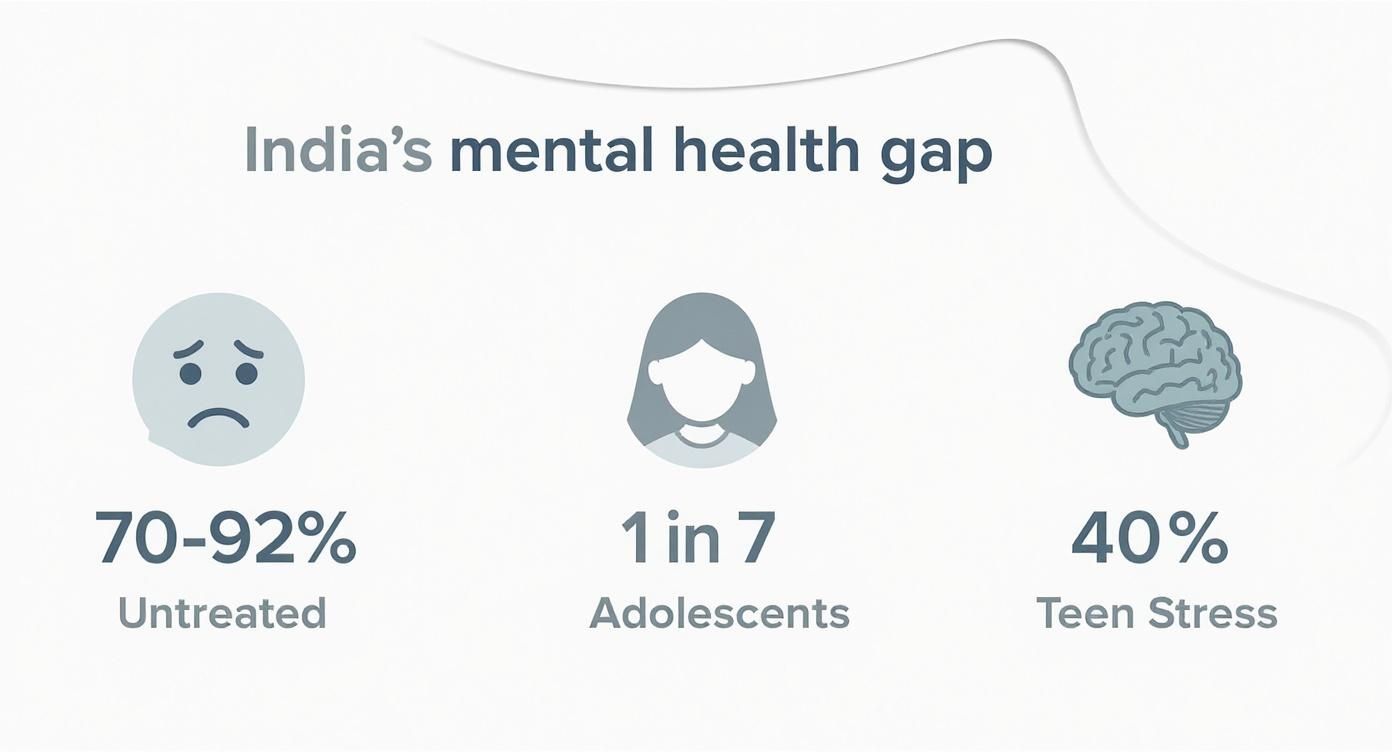
    This act of writing and postponing is incredibly empowering. You’re sending a clear message to your brain: "I hear you, and I will give this my full attention—but on my terms." This can dramatically lower the background noise of anxiety.

    When your scheduled worry time arrives, sit down with your list and let yourself think about each item. You can analyse the problem, brainstorm solutions, or just feel whatever emotions come up. When your timer goes off, close the notebook and consciously move on to something pleasant.

    The Psychology Behind Postponing Worry

    This technique is effective because it addresses what keeps a thought loop going: a false sense of urgency and a feeling of being out of control. Worry scheduling challenges both of these things.

    By setting a specific time, you're teaching your brain that not every anxious thought is an emergency. This breaks the cycle of mental reactivity that contributes to workplace stress and burnout. You start to learn the difference between productive problem-solving and just spinning your wheels.

    You might also discover that many worries you wrote down in the morning lose their power by the evening. When you review your list, some of them might seem less important. It's a great way to see how many of our anxieties are fleeting.

    Making Your Worry Journal Effective

    Your 'Worry Journal' is the main tool for this practice. It doesn't need to be fancy—any notebook will do. To make it a supportive part of your well-being routine, you can give it some structure.

    • The Worry List: This is where you quickly jot down the thought during the day. A quick note is fine, like: "Worried about the upcoming project presentation."
    • The Worry Session: During your scheduled time, you can go deeper. Ask yourself questions like, "Realistically, what's the worst that could happen?" or "What's one small thing I could do about this?"
    • The Outcome: After your session, you might note down a potential next step or a decision to let it go. This helps create a sense of closure.

    This structured practice is a form of self-compassion, allowing you to listen to your feelings without getting lost in them. If you find your worries consistently feel overwhelming, seeking professional therapy or counselling can provide more targeted support for challenges like anxiety or depression.

    Building Long-Term Mental Resilience

    A person practising yoga on a mat outdoors, with a serene natural backdrop suggesting peace and long-term well-being.

    While in-the-moment tricks are crucial, learning how to stop thinking about something for good comes down to building mental resilience. This is about weaving small, sustainable habits into your life that support your day-to-day well-being.

    Think of it as strengthening your mental immune system. When you're resilient, unwanted thoughts may still appear, but they have less power to derail your day. This long-term view helps you shift from reacting to stress to proactively building a more balanced life.

    Over time, these habits can change your relationship with your mind, reducing the intensity of thought loops that often fuel anxiety or depression.

    Nourishing Your Body to Calm Your Mind

    It’s impossible to separate mental and physical health—they are two sides of the same coin. How your body feels directly affects your mind's ability to manage challenges like workplace stress. Looking after your physical self is a non-negotiable step toward lasting resilience.

    Simple, consistent actions can make a big difference:

    • Move Your Body Regularly: A brisk 30-minute walk or a gentle yoga session can do wonders. Physical activity releases endorphins—your body’s natural mood lifters—and helps burn off stress hormones.
    • Fuel Your Brain: A diet rich in omega-3s, vitamins, and minerals supports healthy brain function. On the other hand, too much processed food and sugar can sometimes contribute to mood swings and feelings of anxiety.
    • Prioritise Sleep: Sleep is your brain's nightly reset button. Aiming for 7-8 hours of quality rest can make a massive difference in your ability to regulate your thoughts and feelings.

    The Power of Connection and Purpose

    We are wired for connection. When we feel isolated, negative thought patterns can feel much bigger than they are. Building strong social ties and engaging in meaningful activities acts as a powerful buffer against worry.

    These things pull you out of your own head. Try scheduling a weekly coffee with a friend or joining a local group for a hobby you enjoy. Activities that demand your full attention, like gardening or learning an instrument, are brilliant for getting into a state of 'flow,' where your mind is simply too occupied to ruminate.

    Building resilience isn't a solo mission. It's about weaving a supportive net of healthy habits, meaningful connections, and self-compassion that can catch you when you stumble.

    Cultivating Self-Compassion and Gratitude

    Perhaps one of the most profound changes you can make is in your inner dialogue. We can be hard on ourselves for getting stuck on a thought. Learning to treat yourself with the same kindness you'd show a friend is the essence of self-compassion and a cornerstone of mental resilience.

    Another simple but powerful practice is gratitude. Each day, take a moment to notice three small things that went well or that you’re thankful for. This simple act starts to rewire your brain to scan for the good, providing a much-needed counterbalance to our natural tendency to focus on what's wrong.

    These shifts won't fix everything overnight, but they build a supportive pathway toward a more peaceful mind. And if these feelings ever seem too heavy to manage on your own, remember that seeking therapy or counselling is a sign of incredible strength.

    When It’s Time to Talk to Someone

    While these strategies are fantastic for managing your thoughts, it's also crucial to know when you might need extra support. You can fix a leaky tap yourself, but for a major plumbing issue, you call a professional. Taking that step for your mental health is a sign of strength.

    If you find that these thought loops are constantly disrupting your sleep, making it hard to focus, or straining your relationships, it might be time to reach out. It’s especially important if these thoughts leave you feeling hopeless or have taken the joy from activities you used to love.

    A Few Signs to Watch For

    How do you know when it’s time to call in a professional? Here are a few signs that your internal chatter might have become something more serious:

    • Your Day-to-Day is a Struggle: Simple tasks feel overwhelming, and you're finding it tough to keep up with your responsibilities.
    • The Emotional Toll is High: The thoughts are causing real emotional pain, constant anxiety, or symptoms of depression.
    • You're Pulling Away: You find yourself avoiding friends or social gatherings that you once enjoyed.

    Deciding to see a therapist or counsellor isn't giving up; it's gearing up. It shows you're ready to take charge of your mental well-being and build lasting resilience.

    What Does Professional Help Involve?

    Seeing a professional gives you a safe, confidential space to unpack what’s going on in your head. A good therapist will equip you with proven, personalised strategies. One of the most effective is Cognitive Behavioural Therapy (CBT), which is brilliant for challenging intrusive thoughts and developing healthier ways to cope.

    The need for this kind of support is significant. In India alone, it's estimated that many people are dealing with a mental health condition, but most never get the help they need. If you're interested in the numbers, you can discover more insights on mental health statistics.

    Please remember that while online assessments can be informative, they are not a substitute for a diagnosis from a qualified professional. Only they can provide a proper assessment and help you figure out the best path forward.

    Got Questions About Taming Your Thoughts? You're Not Alone.

    When you first start trying to manage your thoughts, it's normal for questions to come up. This is a personal journey, and figuring out what works for you takes patience.

    Let's explore some common questions to help you build healthier mental habits with more confidence. Remember, learning how to stop thinking about something is a skill that gets stronger with practice.

    How Long Until I See a Difference?

    This is the big question, and the honest answer is: it depends. Some techniques, like grounding exercises, can offer a sense of calm almost instantly. They're fantastic for in-the-moment relief from anxiety.

    Deeper skills like cognitive reframing are more like building muscle; they take several weeks of consistent effort to show results. Your well-being is a journey, and consistency is what builds lasting resilience.

    Is It a Bad Sign That I Can’t Just “Stop Thinking”?

    Not at all; this is one of the most common concerns we hear. It doesn't mean you're weak; it just means your brain is trying to do its job. Our minds are designed to solve problems, and sometimes they get stuck on a thought, especially if it's tied to a strong feeling.

    It only becomes an issue when it causes significant distress or disrupts your daily life. If you feel the thoughts are pulling you down into a low mood, professional counselling can be a game-changer, especially if they feel connected to depression.

    Do These Methods Work for Thoughts About a Specific Person?

    Yes, absolutely. These strategies are effective for any kind of repetitive thought, whether it’s about an event, a worry, or a person. The goal is always the same: to break the cycle of rumination, no matter the topic.

    When you’re stuck on thoughts about someone, scheduling worry time or getting lost in an activity you love can be especially helpful. The first step is to notice the thought, acknowledge it without judgement, and then gently guide your attention elsewhere.


    Ready to get a clearer picture of what’s going on in your mind? At DeTalks, we provide confidential assessments to help you understand your thought patterns. Please note these are for informational purposes only and are not diagnostic. We can also connect you with skilled therapists who can support you every step of the way. Take a look at your options and find the right path for you at https://detalks.com.

  • Finding Closure in a Relationship: A Guide to Healing and Moving On

    Finding Closure in a Relationship: A Guide to Healing and Moving On

    When a relationship ends, the desire for "closure" can feel overwhelming. It isn't about getting a perfect apology or having one last dramatic conversation. Closure is the internal sense of peace that allows you to truly move forward, and it's essential for your long-term well-being.

    Understanding Why Closure Matters for Your Well-being

    A person sitting on a window sill, looking out thoughtfully, symbolizing reflection and the need for closure.

    A significant relationship is like a story, and an ending without answers can feel like a book with the last chapter missing. This leaves a void filled with "what ifs" and unresolved emotions. Finding closure in a relationship is your chance to write that final chapter for yourself and make sense of the ending.

    This process is deeply personal and looks different for everyone. It might involve an honest conversation for one person, while for another, it could be a quiet journey of self-reflection. The goal is to integrate the experience into your life's story in a way that helps you grow.

    The Emotional Cost of Unresolved Endings

    Without closure, you might feel emotionally stuck, as if waiting for something that may never come. This limbo can be draining, contributing to challenges like workplace stress and personal anxiety. Your mind can get caught in a loop, replaying old moments and searching for answers.

    This emotional weight can affect other areas of your life, making it hard to focus on new goals. Common challenges include:

    • Lingering Sadness: A persistent feeling of loss that can cast a shadow over your days.
    • Intrusive Thoughts: The person or breakup frequently comes to mind, even when you don't want it to.
    • Difficulty Trusting: Feeling hesitant to open up to new people for fear of being hurt again.

    Finding closure is less about the other person and more about reclaiming your own emotional energy. It’s a compassionate act of self-preservation that allows you to reinvest in your own happiness and future.

    Building Resilience Through Acceptance

    The path to closure is a powerful journey in building resilience. It involves accepting that some questions may never be answered and trusting in your own strength to heal. In contexts like India, where community ties are strong, pressure to "move on" can add complexity, but true healing takes time.

    Approaching this journey with self-compassion is the first step toward transforming pain into personal growth. Professional support through counselling or therapy can offer a safe space to navigate these emotions and build your inner strength. Please note that any assessments mentioned here are informational and not a substitute for a professional diagnosis.

    Recognising the Signs You Lack Closure

    A thoughtful individual looking out a rain-streaked window, symbolizing the melancholic and reflective state of lacking closure.

    Feeling stuck after a relationship ends is very common and often signals a need for closure in the relationship. Noticing these signs without self-judgment is the first step toward healing. It’s not a weakness, but an acknowledgment that an important chapter feels unfinished.

    This lack of resolution can appear in your thoughts, feelings, and daily behaviours. By identifying these patterns, you can address what's happening underneath and begin to build resilience and foster your happiness.

    Emotional and Cognitive Patterns

    Do you find your mind replaying old conversations or moments from the relationship? This is a natural but often unhelpful attempt to make sense of things. This mental loop can lead to anxiety and emotional exhaustion as you search for a missing piece of the puzzle.

    These thoughts can be accompanied by a persistent sadness or low-grade depression that lingers long after the initial breakup. It's as if a part of you remains emotionally tied to the past, making it difficult to be present in your life. Idealising the past—remembering only the good times—can also create a powerful sense of longing that keeps you from moving on.

    Remember, these thoughts and feelings are a normal part of grieving an unresolved ending. The goal is not to force them away but to gently acknowledge them as signals that your mind is seeking peace.

    Behavioural Indicators to Watch For

    A lack of closure often influences our actions, sometimes without us realising it. Frequently checking an ex-partner’s social media is a common behaviour that keeps you connected to their life, preventing the emotional distance needed for healing. This can fuel a painful cycle of comparison and what-ifs.

    You might also find yourself bringing up your ex in conversations, which can be a subconscious way of keeping their memory alive. Similarly, you may find it difficult to trust new people, projecting old hurts onto potential future partners. The following table can help you reflect on your experience, but remember, it is for informational purposes, not diagnosis.

    Common Signs You May Be Lacking Closure

    Category Common Signs and Feelings
    Emotional Lingering sadness or anger, intense emotional swings when reminded of the ex, a persistent feeling of being "stuck."
    Cognitive Constantly replaying memories, idealising the past relationship, creating "what if" scenarios, difficulty concentrating.
    Behavioural Checking their social media, avoiding places that remind you of them, difficulty forming new connections, talking about them often.

    Seeing yourself in these signs is a courageous first step. It shifts the focus from what someone else did to what you can do for your own well-being. This awareness opens the door to healing, including options like professional counselling to help you find peace on your own terms.

    Why Abrupt Endings Impact Our Connections

    A sudden end to any meaningful connection—be it a friendship, mentorship, or romance—can leave us feeling confused and searching for answers. This gap can lead to replaying conversations in our minds. Without clear explanations, feelings of anxiety can grow as we try to understand what happened.

    Beyond Romantic Relationships

    Recognising that abrupt endings happen in all types of relationships can bring valuable perspective. Consider:

    • Mentorships that end when a guide moves on
    • Friendships that drift apart without a clear reason
    • Colleagues who suddenly change teams or jobs

    Often, these shifts are due to life circumstances like job changes or family needs, rather than personal rejection. Viewing these endings as a natural part of life helps build emotional strength and resilience.

    When we step back, sudden goodbyes feel less like personal failures and more like life’s unexpected turns. Learning to adapt to these shifts is a key part of emotional well-being.

    Building Skills For Life’s Transitions

    The skills you use to find closure in a relationship are valuable in many areas, from managing workplace stress to navigating friendship changes. Consider these steps:

    • Acknowledge Your Feelings: Allow yourself to feel confusion, sadness, or even relief.
    • Create Small Rituals: Writing a letter you don’t send can be a powerful symbolic act.
    • Seek Support: Talking with trusted friends or a mental health professional can provide comfort.

    Professional counselling offers a safe space to develop these coping strategies, turning feelings of loss into opportunities for growth. Please remember, any self-assessments here are informational and should not replace a professional diagnosis.

    Practical Strategies for Creating Your Own Closure

    Waiting for someone else to provide peace can leave you feeling powerless. True, lasting closure in a relationship is something you create for yourself. This shift in perspective is empowering, moving you from a passive role to an active one where you are in charge of your own happiness.

    You have full control over this internal process, regardless of your ex-partner's actions. By focusing on compassionate and practical strategies, you can begin to heal. These techniques help you process feelings, build resilience, and reinvest energy back into your life.

    Write an Unsent Letter

    Getting your thoughts and feelings out of your head and onto paper can be incredibly effective. Try writing a letter to your ex that you have no intention of sending. This provides a private space to express everything you need to say without fear of their reaction.

    This exercise is entirely for you. It's a chance to articulate your pain, ask unanswered questions, and reflect on what the relationship meant. When you're done, you can keep it, tear it up, or safely burn it as a symbolic act of letting go.

    Set Firm Digital Boundaries

    In today's world, a breakup often lingers online, and seeing an ex's updates can hinder healing. Setting firm digital boundaries is a necessary act of self-preservation that reduces triggers for anxiety. This protects your emotional space as you move forward.

    Consider these gentle but effective steps:

    • Mute their accounts: This stops their posts from appearing in your feed without severing the connection entirely.
    • Unfollow or unfriend: If muting isn't enough, creating a cleaner break can provide more emotional distance.
    • Be mindful of screen time: Reducing time on social media lessens the temptation to check up on them.

    These actions create the mental and emotional space needed for your heart to heal, free from constant digital reminders.

    Creating closure is an internal journey of acceptance and self-compassion. It's about acknowledging your pain, honouring your story, and consciously deciding to turn the page toward a new chapter focused on your well-being.

    Embrace Mindfulness and Self-Compassion

    Navigating an unresolved ending can amplify your inner critic, leading to guilt or feelings of depression. Mindfulness can help you observe difficult thoughts without getting lost in them. It teaches you to acknowledge a painful memory and gently return your focus to the present.

    Pairing mindfulness with self-compassion is crucial. Treat yourself with the same kindness you would offer a friend going through a hard time. A key part of this is reclaiming your self-worth and reconnecting with who you are outside of the relationship. Should you struggle, counselling or therapy can provide valuable support, but remember that this guide is informational and not a substitute for professional diagnosis.

    Deciding If You Should Talk to Your Ex

    While you hold the power to create your own closure in a relationship, the desire for one last conversation can be strong. Deciding whether to reach out requires careful thought to protect your emotional well-being. The goal is to support your healing, not to reopen old wounds or increase your anxiety.

    Before sending that message, be honest with yourself about your intentions. Are you genuinely seeking clarity to move on, or are you hoping for an apology or even reconciliation? Managing your expectations is key, as you cannot control how your ex will respond.

    This decision tree is a tool to help you explore your feelings and choose a healthy path forward. Remember, these are informational prompts, not a diagnostic assessment.

    Infographic about closure in relationship

    As the graphic illustrates, the ultimate goal is always inner peace. The good news is that you can achieve this on your own terms, whether you decide to have a conversation or not.

    Tips for a Constructive Conversation

    If you decide that talking is the right choice for you, some preparation can make the conversation more constructive. This isn't about assigning blame but about calmly expressing your feelings. A simple plan can help you stay focused and maintain your composure.

    Consider these communication strategies:

    • Use 'I' Statements: Phrasing things from your perspective helps avoid blame. For example, say "I felt hurt" instead of "You hurt me."
    • Set a Time Limit: Agreeing on a specific duration for the talk prevents it from becoming emotionally draining.
    • Choose a Neutral Location: Meeting in a quiet public place, like a coffee shop, can help keep the conversation calm.

    Preparing for All Outcomes

    Even with the best preparation, the conversation may not go as you hope. Be emotionally prepared for the possibility that your ex may not be willing or able to give you what you need. This readiness helps protect your resilience and well-being.

    Remember, their response—or lack of one—doesn't change your value or make your feelings any less valid. Real closure comes from your ability to accept the outcome, whatever it is, and keep moving forward on your own healing path.

    If you are struggling with this decision, professional counselling can offer valuable support. A therapist can provide a safe space to work through your emotions and develop strategies for managing any lingering feelings of depression or related challenges like workplace stress. This guide is for informational purposes only and is not a substitute for a professional diagnosis.

    How Therapy Can Support Your Healing Journey

    A therapist and client sitting in a calm, sunlit room, engaged in a supportive conversation.

    Sometimes, the journey to find closure in a relationship feels too challenging to walk alone. Professional support like therapy or counselling offers a confidential and non-judgmental space to unpack complex feelings. It provides a steady hand to guide you through the emotional fog.

    A therapist acts as a neutral guide, helping you explore the roots of your pain, whether it shows up as anxiety, sadness, or symptoms of depression. They help you connect the breakup to its impact on your life, from your happiness to workplace stress. This structured support can make the healing process feel much less lonely and more manageable.

    How Counselling Builds Resilience

    Good therapy is more than just talking; it provides practical tools for healing. A skilled therapist can help you identify and challenge unhelpful thought patterns that keep you stuck. This is a cornerstone of building emotional resilience and fostering greater self-compassion.

    A counsellor can work with you to:

    • Reframe negative thoughts: Learn to see the situation from a more balanced perspective, free from self-blame.
    • Develop coping strategies: Acquire healthy ways to manage intense emotions when they arise.
    • Strengthen your sense of self: Rediscover who you are and what you value, separate from your past relationship.

    Seeking professional help is not a sign of weakness; it is an act of profound strength. It’s a commitment to your own healing and a step toward reclaiming your peace of mind and happiness.

    The skills you learn in therapy can benefit you for a lifetime. If you're exploring options, understanding how professional guidance compares to therapy can help you decide what's right for you. Ultimately, counselling empowers you to create your own closure, fostering a sense of peace that comes from within. Please remember, any information here is educational and not a substitute for a professional diagnosis.

    Your Questions About Closure, Answered

    The end of a relationship often leaves behind many questions and a sense of uncertainty. It is completely normal to wonder what comes next. This section offers supportive insights into common concerns people have while seeking closure in a relationship.

    Your journey is unique, so these are not strict rules but gentle guidance to help you find your footing.

    How Long Does It Take to Get Closure?

    There is no set timeline for finding closure, as it is a deeply personal process. The time it takes depends on the length of the relationship, the nature of the breakup, and your individual way of processing emotions. For some, peace may come in weeks; for others, it may take many months.

    Instead of focusing on a timeline, try to celebrate small steps toward acceptance and well-being. Acknowledging small victories, like a day without checking their social media, is a great way to recognize your growing resilience. Healing is not linear, so be patient and compassionate with yourself.

    Can I Get Closure Without Talking to My Ex?

    Yes, absolutely. For many, creating closure independently is the most empowering and healthy path forward. True closure in a relationship is an internal shift where you find peace and acceptance within yourself.

    You can achieve this through journaling, talking with trusted friends, or seeking professional counselling. Relying on an ex for that finality can keep you emotionally dependent. Taking ownership of the process puts you back in control of your healing and happiness.

    Closure is not external; it comes from you. We can choose to have closure… or not. Maybe we’re not ready to fully let go, and that’s okay, but it’s your choice.

    What If Trying to Get Closure Makes Me Feel Worse?

    It is common to feel worse when revisiting the "why" of a breakup, especially if it involves talking to an ex. If you find that your efforts are increasing your distress, anxiety, or sadness, it is a sign to pause. Your well-being must always come first.

    In these moments, shift your focus to self-care and grounding techniques that help you feel stable. This is also an excellent time to consider professional therapy. A counsellor can provide a safe, guided space to process these tough emotions without feeling overwhelmed. Remember, any assessments in this guide are informational, not diagnostic.

  • How to Control Your Mind and Thoughts: A Practical Guide to Inner Calm

    How to Control Your Mind and Thoughts: A Practical Guide to Inner Calm

    Learning to guide your mind is not about forcing your thoughts into silence. It's a much gentler process of becoming a kind observer, noticing your thoughts without getting lost in them, and then choosing how you want to respond. This simple shift can transform your inner world from a source of stress into a space of peace and intention.

    Understanding the Chatter in Your Mind

    A person sitting peacefully with eyes closed, representing mental calm and control.

    Does your mind sometimes feel like it has a life of its own, replaying old worries or creating new ones? This constant mental chatter is a shared human experience. The secret to learning how to control your mind and thoughts isn't to fight the noise, but to first understand it with curiosity.

    A helpful starting point is to realise you are not your thoughts. Imagine sitting on a quiet riverbank as your thoughts float by like leaves on the water. Your role is simply to watch them pass, creating a peaceful distance between you and the current of your mind.

    Why Is It So Hard to Quiet the Mind?

    Our brains are designed to solve problems, which is helpful until they start treating every small worry as an urgent threat. This can lead to persistent feelings of anxiety and even burnout, especially with the demands of modern life.

    Consider these common challenges:

    • Workplace Stress: You might find yourself mentally replaying a difficult conversation with a manager, draining your energy long after the workday has ended.
    • Anxiety and Worry: A minor disagreement can trigger a wave of negative thoughts, making it hard to see the bigger picture in your relationships.
    • The Inner Critic: Many of us have a harsh internal voice that highlights mistakes, which can contribute to feelings of depression and low self-worth.

    This constant mental activity impacts our well-being, straining relationships and affecting our happiness. Writing these thoughts down can be a powerful first step; you might try learning how to journal for self-discovery and mental clarity to better understand them.

    It's Okay to Find It Hard

    If you feel overwhelmed by your thoughts, please know you are not alone. In India, this is a significant challenge, with studies showing that nearly one in seven people may experience a mental health concern. The journey toward mental well-being is a common one.

    Acknowledging your struggles with self-compassion is the first step toward building emotional resilience and lasting well-being. The goal isn't to silence your mind, but to learn its language.

    This guide offers practical, gentle techniques to help you navigate your inner world. These are not quick fixes but skills that build a healthier relationship with your mind. Remember, seeking support through therapy or counselling is a sign of strength on the path to lasting change.

    Practical Mindfulness for a Quieter Mind

    A person sitting peacefully with eyes closed, representing mental calm and control.

    Mindfulness is not about sitting in a silent room trying to empty your mind, which can feel intimidating. It’s simply the practice of paying attention to the present moment without judgment. This is a powerful way to manage the mental chatter that fuels workplace stress and anxiety.

    Think of it as gently training your mind. When it wanders, you simply guide it back to the present moment. The goal is not to erase your thoughts but to observe them without getting carried away, building your inner resilience and peace.

    A Simple Breathing Exercise for When You're Under Pressure

    Imagine you're minutes away from a big presentation and your heart is racing. Instead of letting panic take over, try this simple three-minute breathing exercise. It can help calm your nervous system and clear your mind.

    Find a comfortable place to sit and close your eyes if you feel comfortable. Breathe in slowly through your nose for a count of four, hold for two, and then breathe out slowly through your mouth for a count of six. Repeat this for a few minutes, focusing only on the rhythm of your breath.

    The 5-4-3-2-1 Grounding Technique for Anxious Moments

    When thoughts race and feelings of anxiety become overwhelming, the 5-4-3-2-1 technique can be a helpful anchor. It pulls your attention out of your head and back into the world around you, breaking the cycle of worry.

    Wherever you are, gently pause and notice:

    • 5 things you can see: Look around and name five objects, like your desk, a pen, or a plant.
    • 4 things you can feel: Bring your attention to physical sensations, like the texture of your chair or the feeling of your feet on the floor.
    • 3 things you can hear: Listen closely for three distinct sounds, such as typing, birds outside, or the hum of a fan.
    • 2 things you can smell: Notice any scents in the air, like coffee or fresh air from a window.
    • 1 thing you can taste: Focus on one taste, perhaps by taking a sip of water or just noticing the current taste in your mouth.

    This sensory scan grounds you in the present moment, making it harder for anxious thoughts to hold their grip. It's a wonderful tool for regaining a sense of control.

    To give you a few more ideas, here are some other quick and easy mindfulness exercises you can slot into your day.

    Simple Mindfulness Exercises You Can Do Anywhere

    This table offers a quick-reference guide to practical exercises for calming the mind and grounding yourself in the present moment.

    Technique When to Use How It Helps
    Mindful Walking During a break, on your way to a meeting Focus on the sensation of your feet hitting the ground. This breaks you out of autopilot and connects your mind and body.
    Body Scan At your desk, before sleep Mentally scan your body from toes to head, noticing any tension or sensation without judgement. This releases physical stress.
    Mindful Listening In a conversation, during a commute Choose one sound (like a clock ticking or a bird) and focus all your attention on it. This sharpens your focus and calms the mind.
    Single-Tasking When you feel scattered and overwhelmed Pick one task (e.g., replying to one email) and do only that. It stops the mental juggling and reduces feelings of being overwhelmed.

    These small, consistent actions train your brain over time.

    By practising these small acts of mindfulness, you are not just managing stress in the moment; you are training your brain to be more present and less reactive, contributing to your long-term well-being.

    For a more structured approach, programs like Mindfulness-Based Stress Reduction (MBSR) offer a deeper exploration of these principles. Each mindful moment is a step toward navigating your inner world with more calm and kindness.

    Reshape Your Thoughts with Cognitive Reframing

    A person looking at their reflection in a puddle, symbolizing a change in perspective.

    Often, it’s not a situation that causes distress, but our interpretation of it. Cognitive reframing is a technique that helps you change your perspective to change how you feel. This is a core skill when learning how to control mind and thoughts.

    This isn't about ignoring reality or forcing positivity. It's about finding a more balanced and helpful way to see things, building your resilience and improving your overall well-being.

    First, Catch the Automatic Negative Thought

    The process begins with awareness. It's important to notice unhelpful, automatic thoughts as they arise, especially in response to stressors like workplace stress or family expectations. These thoughts can be self-critical and drain your energy.

    For example, if you make a mistake on a report, your automatic thought might be, "I'm so incompetent." This thought can trigger feelings of anxiety and shame. The first step is to simply notice this thought without judging yourself for having it.

    Next, Gently Question That Thought

    Once you spot a negative thought, gently challenge it. Automatic thoughts are often exaggerations, not facts. Questioning them helps loosen their grip and see the situation more clearly.

    Ask yourself simple questions:

    • Is there evidence for this thought? Did anyone actually call me incompetent, or am I assuming?
    • Is there another way to look at this? Could this mistake be a learning opportunity?
    • What would I tell a friend in this situation? We are often kinder to others than we are to ourselves.

    This gentle questioning helps you find a more balanced view. It is an essential skill for managing your thoughts and feelings.

    Finally, Find a More Balanced Alternative

    The last step is to replace the unhelpful thought with one that is more realistic and constructive. This new thought should feel believable and move you away from black-and-white thinking.

    Let's go back to our example:

    • Original Thought: "I'm so incompetent. Now everyone will think I'm terrible at my job."
    • Reframed Thought: "I made a mistake, and I feel disappointed. I can learn from this and remember to double-check next time. One mistake doesn't cancel out all my hard work."

    This reframed perspective acknowledges what happened without spiraling into a personal attack. It's a compassionate approach that empowers you to respond constructively.

    If you find that these negative patterns are deeply ingrained and contributing to feelings of depression or anxiety, working with a professional through therapy or counselling can provide the guidance you need.

    How to Build Your Emotional Resilience

    A plant growing through a crack in a concrete sidewalk, symbolizing resilience.

    When we talk about how to control mind and thoughts, the goal is to nurture your resilience. This is the inner strength that helps you bounce back from challenges with greater wisdom. Resilience is a skill you develop through conscious effort.

    This skill is your ally for navigating everything from daily frustrations to more significant setbacks. By focusing on small, consistent actions, you strengthen your capacity to cope and protect your well-being.

    Cultivate Self-Compassion

    Practising self-compassion is one of the kindest and most effective ways to build resilience. It means treating yourself with the same care you would offer a good friend during a tough time. It helps you acknowledge your feelings without adding harsh self-criticism.

    When your inner critic becomes loud, it can fuel feelings of anxiety or even depression. Try placing a hand over your heart and telling yourself, "This is a difficult moment." This simple act can calm your nervous system and shift your perspective from self-blame to self-support.

    Build Your Support System

    You don't have to navigate life’s challenges alone. A strong support system—family, friends, or a professional offering counselling—is a cornerstone of resilience. Sharing your struggles reminds you that you are part of a larger human experience.

    In India, deep community and family bonds can be a powerful source of strength. Leaning on your support system is not a weakness; it's a brave and powerful act that reinforces your ability to cope.

    Building resilience is a journey of small, intentional steps. It’s about learning to support yourself through difficult moments and remembering that every challenge overcome adds to your strength and promotes happiness.

    Find Meaning in Your Experiences

    Resilient people often find a sense of purpose, even in adversity. This isn't about forcing a "silver lining" on a painful event. It's about reflecting on what the experience taught you about yourself and your values.

    Ask yourself honest questions:

    • What did I learn from this situation?
    • Did this experience clarify what matters most to me?
    • How can I use this knowledge to move forward?

    This reflection helps you integrate difficult experiences into your life story in a way that fosters growth. If you're struggling to find meaning, professional therapy offers a safe space to explore these feelings and find a path toward healing.

    Knowing When to Seek Professional Support

    The techniques in this guide are helpful for building mental resilience, but sometimes self-help isn't enough. Realising you might need more support is an act of strength and self-awareness. The journey of learning how to control your mind and thoughts is one you don't have to take alone.

    It may be time to seek support if negative thoughts persistently disrupt your daily life, making it hard to work, sleep, or connect with others.

    Consider reaching out if you're experiencing:

    • Persistent feelings of hopelessness or dread.
    • Overwhelming anxiety that you can't seem to manage.
    • A loss of interest in activities you once enjoyed.

    Choosing to get help is a powerful, proactive step toward reclaiming your well-being.

    Understanding Therapy and Counselling

    Therapy and counselling provide a safe, confidential space to explore your thoughts and feelings without judgment. A qualified professional can help you understand the root of your challenges, whether related to workplace stress, past experiences, or symptoms of depression. They offer personalised strategies and support you in navigating your inner world.

    Unfortunately, many who could benefit from this support don't seek it. In India, a significant treatment gap exists, with studies showing 70% to 92% of individuals with mental health concerns receive no formal care due to stigma, cost, or lack of access. You can learn more about India's mental health imperatives on visionias.in.

    Deciding to seek professional support is a courageous and empowering step. It’s an investment in yourself and a commitment to living a more balanced, fulfilling life.

    How to Take the First Step

    Taking the first step can feel daunting, but it can be simple. You can start by talking to someone you trust, like a close friend or family member. Voicing your feelings can be a great relief.

    Another option is to research online platforms that connect you with qualified therapists, putting you in control of the process. The goal is to begin a journey of understanding and healing. The right therapist will walk alongside you, offering tools and insights to help you build a healthier relationship with your mind.

    Got Questions? We’ve Got Answers

    It’s natural to have questions as you begin to work with your mind. Asking questions is a wonderful sign that you are on the right path to greater self-awareness. Here are answers to some common inquiries.

    Can You Really Control Every Thought?

    No, and that’s perfectly okay. The goal is not to become a mental dictator, which is exhausting and unrealistic. Instead, the aim is to change your relationship with your thoughts.

    Think of it as learning to watch clouds pass by without getting caught in a storm. You learn to observe your thoughts, decide which ones deserve your attention, and let the unhelpful ones drift away. It's less about control and more about influence.

    How Long Until I Start Seeing a Difference?

    There is no magic timeline, as everyone's journey is unique. Some people notice a small shift in awareness or calm within a few days of practising mindfulness.

    For more deeply ingrained thought patterns, it may take several weeks of consistent practice to see a significant change. Patience and self-compassion are key.

    Your mind is like a garden; you can't force flowers to bloom overnight. Consistent, gentle care is what brings results, and every garden grows at its own pace.

    This process is about progress, not perfection. Every small effort contributes to long-term well-being and builds resilience to life's challenges, including workplace stress.

    Can I Use These Tips to Manage Serious Anxiety by Myself?

    These techniques are excellent for everyday stress and can help with mild to moderate anxiety. However, they are not a substitute for professional medical advice or therapy. Assessments mentioned in this context are for informational purposes only and are not diagnostic.

    If your thoughts are causing significant distress or interfering with your daily life, please reach out to a qualified mental health professional. These tools can then become a valuable part of a broader, expert-guided support plan.

    What If I Try These Techniques and They Don't Work?

    First, please don't be discouraged. It's normal for one technique to resonate more than another. Feel free to try a different approach or adapt one to better suit your needs.

    If you have been trying for a while and feel stuck, that is a clear sign that it may be time to speak with a therapist or counsellor. They can offer personalised strategies and explore what might work best for you. Professional counselling is about finding a path that is uniquely yours.


    If you're looking for that professional guidance, DeTalks is a great place to start. They can connect you with qualified therapists and offer science-backed assessments to help you get a clearer picture of your mental health. Explore the professional support available and take the next step toward a more balanced life by visiting https://detalks.com.

  • Top 7 Best Mental Health Books & Where to Find Them

    Top 7 Best Mental Health Books & Where to Find Them

    Navigating our mental health is a vital part of life. In a country as vibrant and demanding as India, challenges like workplace stress and anxiety can feel overwhelming, but books can be powerful companions on this path. They offer insights that support our well-being and help us build resilience.

    This guide highlights some of the best mental health books and where to find them easily, whether you prefer physical copies or digital versions. Our goal is to connect you with stories and strategies that resonate, making your search simple and supportive.

    Whether you're seeking ways to manage anxiety or depression, or aiming to cultivate resilience and happiness, the right book can serve as a guide. While reading is a positive step, and can complement therapy or counselling, please remember that these books are for informational purposes only and are not a substitute for a professional diagnosis.

    Let's explore some of the best platforms and titles to support your journey toward greater well-being. For more ideas after exploring our list, you can discover more best mental health books for all ages to enrich your understanding.

    1. Flipkart

    For readers in India, Flipkart is an accessible and budget-friendly place to start a mental wellness library. As a major e-commerce platform, it offers a wide range of the best mental health books, covering topics from anxiety and depression to workplace stress. Its India-focused approach makes it a practical choice for finding valuable resources.

    Flipkart

    The platform’s key advantage is its competitive pricing and frequent sales, which make popular titles more affordable. With multiple sellers, you can compare prices and delivery times to find the best deal. This is especially helpful for those looking to learn about resilience and well-being without overspending.

    Navigating Flipkart for Mental Health Books

    The large selection can seem overwhelming, but using the platform's filters helps narrow your search by author, language, and customer ratings. Reading user reviews can also offer genuine insights into a book's content and its real-world impact before you decide to buy.

    Pro Tip: Look for "Flipkart Assured" sellers when possible. This badge indicates that the product meets quality checks and will be shipped faster, ensuring a more reliable purchasing experience.

    Key Features and Considerations

    Flipkart’s marketplace model means that while prices are competitive, packaging quality can vary between sellers. However, its comprehensive returns policy provides a safety net if a book arrives in less-than-ideal condition.

    Platform Highlights:

    • Payment Flexibility: Offers a wide range of payment options, including UPI, cards, and Cash on Delivery (COD), making it accessible for all users.
    • Regional Languages: You can find many popular mental health titles translated into various Indian languages, making wellness literature more inclusive.
    • Wishlist Functionality: Use the wishlist to save books and get notifications when their prices drop.

    Overall, Flipkart is an excellent resource for those who value variety, competitive pricing, and the convenience of home delivery anywhere in India.

    Website: https://www.flipkart.com

    2. SapnaOnline

    For those looking for foundational books often recommended in therapy, SapnaOnline is a reliable and focused online bookstore. It offers a well-curated selection of psychology and self-help classics. This makes it an ideal place to find some of the best mental health books for managing challenges like anxiety and depression while building resilience.

    SapnaOnline

    The platform's strength is its consistent stock of classic self-help titles. Unlike broader e-commerce sites, SapnaOnline feels more like a traditional bookstore, prioritising well-regarded books over passing trends. Its clear pricing helps you make informed decisions, ensuring you get a fair price on staples for personal growth and well-being.

    Navigating SapnaOnline for Mental Health Books

    The website's simple interface makes finding specific titles easy. You can browse categories like psychology and self-help to discover relevant books. Searching for an author’s name will quickly bring up their key works in multiple formats, allowing you to choose what suits your needs.

    Pro Tip: When searching for a book, check for different publishers and editions. Sometimes, an older edition is available at a more accessible price, offering the same valuable content.

    Key Features and Considerations

    SapnaOnline's focused approach means you are less likely to be distracted by unrelated products, making for a more intentional browsing experience. While its user interface may be simpler than larger marketplaces, its reliability in sourcing core mental health texts is a major advantage.

    Platform Highlights:

    • Classic Availability: An excellent source for standard self-help titles often recommended by counsellors and therapists.
    • Transparent Pricing: Clear display of MRP and discounted prices in INR helps you budget effectively.
    • Multiple Editions: Offers various formats like paperback and hardcover, giving you control over cost and durability.

    Ultimately, SapnaOnline is a trustworthy source for readers, students, and professionals looking to build a solid foundation of mental health knowledge with time-tested books.

    Website: https://www.sapnaonline.com

    3. Bookswagon

    For readers seeking specialised or international titles, Bookswagon is an essential online bookstore in India. While it stocks popular bestsellers, its real strength is its extensive catalogue of academic texts. This makes it a go-to platform for finding some of the best mental health books that might be harder to locate elsewhere, including guides on specific therapeutic approaches.

    Bookswagon

    The platform's main appeal is its competitive pricing on international editions and academic books. By sourcing globally, Bookswagon often offers significant discounts, making specialised knowledge on topics like resilience, anxiety, and depression more accessible. Paired with free or low-cost shipping, it's a compelling option for dedicated learners.

    Navigating Bookswagon for Mental Health Books

    Bookswagon’s interface is straightforward and prioritises search. When looking for a book, pay attention to the product page details, which clearly display shipping estimates. Because many titles are imported, delivery times can vary, so it’s wise to plan your purchases ahead.

    Pro Tip: Use the "Request a Book" feature if you can't find a particular title. Bookswagon’s team will try to source it for you, which is an invaluable service for hard-to-find texts.

    Key Features and Considerations

    Bookswagon’s focus on sourcing international books is its defining feature, but this can lead to longer delivery times. The stock status for niche imports can fluctuate, so it's a good idea to act quickly if you see a rare book you want.

    Platform Highlights:

    • International & Academic Focus: Great access to a wide range of academic and international editions in psychology and mental health.
    • Deep Discounts: Often provides highly competitive pricing, especially on specialised titles that are typically expensive.
    • Transparent Timelines: Product pages clearly state estimated dispatch times, helping you manage expectations.

    Bookswagon is an excellent choice for the reader building a specialised library on mental well-being, offering a treasure trove of knowledge at a competitive price.

    Website: https://www.bookswagon.com

    4. Crossword Bookstores (online)

    For those who appreciate a more curated shopping experience, Crossword Bookstores' online platform is a reliable place to find the best mental health books. As a well-established national chain, its website provides a thoughtful collection of wellness, mindfulness, and self-help literature. It blends online convenience with the assurance of a familiar brand.

    Crossword Bookstores (online)

    The primary advantage of Crossword’s online store is its consistency. Unlike sprawling marketplaces, fulfilment comes directly from the chain, ensuring predictable delivery and packaging. This reliability is valuable when you are purchasing resources to support your well-being journey and want a smooth, stress-free transaction.

    Navigating Crossword for Mental Health Books

    The website is designed for easy browsing, with clear categories that help you find relevant titles. Start by exploring sections like "Health & Fitness" or "Self-Help" to discover staff picks and current bestsellers. The search function is effective for finding specific authors or topics, from practical guides on building resilience to books on happiness.

    Pro Tip: Keep an eye out for "Pre-order" options on upcoming releases. This allows you to be among the first to receive new and anticipated mental health books from leading authors.

    Key Features and Considerations

    Crossword's curated approach means you are more likely to find high-quality, impactful books. While its selection may not be as exhaustive as larger marketplaces for very niche titles, its strength lies in offering a well-rounded and accessible collection.

    Platform Highlights:

    • Curated Collections: Discover expertly selected books focused on key areas like mindfulness, workplace stress, and emotional intelligence.
    • Predictable Fulfilment: Enjoy consistent packaging and reliable delivery timelines, removing guesswork.
    • Visible Discounts: Pricing in INR is clearly displayed with discounts shown directly on product pages.

    Ultimately, Crossword's online platform is an ideal choice for readers who value curation, reliability, and a straightforward purchasing experience for their mental wellness library.

    Website: https://www.crossword.in

    5. Audible India

    For those who prefer listening, Audible India provides an immersive and convenient way to access a vast library of mental health resources. It offers many of the best mental health books in audio format, perfect for listening during a commute or moments of quiet reflection. Its India-specific platform ensures localised pricing and a selection covering topics from anxiety to building resilience.

    Audible India

    The primary advantage of Audible is its subscription model, which offers excellent value. For a monthly fee, members receive a credit to purchase any audiobook, which they can keep forever. This makes even high-priced, therapy-informed books highly accessible, along with a growing library of guided meditations and wellness programs.

    Navigating Audible India for Mental Health Books

    Finding the right content is easy with Audible’s dedicated categories and search function. You can search for specific titles or browse curated lists in the "Health & Wellness" section. Listen to the narrator’s sample before purchasing, as a calming voice can enhance the experience for sensitive topics like managing depression or stress.

    Pro Tip: Use the bookmark or "clip" feature to save key insights and powerful quotes. This allows you to easily revisit specific moments in a book that resonate with you.

    Key Features and Considerations

    While Audible offers incredible convenience, some international titles may be unavailable due to regional licensing. However, its expansive catalogue still provides plenty of high-quality content. The user-friendly mobile app, with features like adjustable playback speed and offline listening, ensures a seamless experience.

    Platform Highlights:

    • Credit-Based Ownership: Your monthly credit allows you to own an audiobook permanently, even if you cancel your subscription.
    • Exclusive Content: Access Audible Originals and exclusive podcasts focused on well-being and personal growth.
    • Easy Exchange Policy: If you are not satisfied with an audiobook, Audible offers a hassle-free exchange policy for members.

    Audible India is an outstanding choice for anyone who finds it easier to absorb information through listening, turning idle time into valuable opportunities for learning.

    Website: https://www.audible.in

    6. Google Play Books

    For those who prefer instant access, Google Play Books is an exceptional digital storefront for discovering the best mental health books. It offers a seamless, cross-device experience, allowing you to buy an eBook and immediately start reading it on your phone or tablet. With pricing in INR and a vast catalogue, it’s a modern and convenient option.

    Google Play Books

    The platform’s primary strength is its immediacy and portability. There are no shipping delays; your chosen book on managing anxiety or building resilience is available the moment you buy it. This digital format is perfect for those who travel or prefer a minimalist approach, ensuring supportive resources are always a tap away.

    Navigating Google Play Books for Mental Health

    Finding relevant titles on Google Play Books is straightforward. You can search directly for authors or topics like "workplace stress" or "compassion." The platform also provides generous free samples, allowing you to read a chapter before committing to a purchase.

    Pro Tip: Use the search function within a book to quickly find specific concepts or exercises. This makes digital editions useful for workbooks on topics like depression or counselling techniques.

    Key Features and Considerations

    The cloud-based synchronisation is a standout feature, as it saves your reading progress and notes across all your devices. However, regional licensing restrictions mean some popular international titles may not always be available in the Indian store.

    Platform Highlights:

    • Instant Access: Books are delivered digitally immediately after purchase, eliminating the wait for physical shipping.
    • Search and Notes: The ability to search text and export your highlights is practical for structured self-improvement.
    • Cross-Device Sync: Start reading on your laptop and seamlessly continue on your phone or tablet.

    Google Play Books is an excellent choice for readers who prioritise convenience, portability, and powerful digital tools to engage with their reading on mental wellness.

    Website: https://play.google.com/store/books

    7. Penguin Random House India

    For readers seeking authority and quality, Penguin Random House India is a great source for discovering the best mental health books directly from a leading publisher. While not a retail store, its website is an invaluable tool for finding curated reading lists tailored to an Indian audience. It acts as a trusted starting point to identify high-quality publications on topics from anxiety to building resilience.

    The platform’s core strength lies in its editorial guidance. Penguin often features curated collections like "Essential Mental Health Reads," which spotlight significant works from both global and Indian authors. This expert-led selection helps you find credible and impactful books on well-being and positive psychology.

    Navigating Penguin Random House India for Mental Health Books

    The website is best used as a discovery and verification tool. Each book has a dedicated page with its ISBN, official price, and a summary. Use their search bar with keywords like "counselling," "workplace stress," or "happiness" to explore titles within their catalogue.

    Pro Tip: Pay attention to the "Buy Now" links on product pages. These direct you to authorised online retailers, ensuring you purchase a genuine copy.

    Key Features and Considerations

    Penguin’s role as a publisher, not a retailer, defines its utility. You won't compare sellers, but you will get definitive information from the source. This is useful for confirming the official price before you shop elsewhere.

    Platform Highlights:

    • Authoritative Information: Provides official details like ISBNs and MRP, which is crucial for discerning readers.
    • Curated Reading Lists: Offers editorially selected lists that guide readers toward impactful books on mental well-being.
    • Focus on Indian Context: Features India-specific editions and champions books by Indian authors writing on mental health.

    Penguin Random House India is less of a store and more of a trusted guide, helping ensure your mental health library is built on a foundation of quality.

    Website: https://penguin.co.in

    Best Mental Health Books — 7-Platform Comparison

    Platform Fulfillment Complexity 🔄 Cost & Resource ⚡ Content Quality ⭐ Ideal Use Cases 💡 Expected Outcomes 📊
    Flipkart Medium — marketplace model; seller-dependent packaging & returns Low cost; frequent discounts; COD & express options ⭐⭐⭐⭐ — large mainstream/academic catalog; niche imports variable Price hunting, quick delivery for popular titles High availability for mainstream books; inconsistent fulfillment for third‑party sellers
    SapnaOnline Low — dedicated bookstore with stable sourcing & workflows Moderate cost; transparent INR pricing and regular discounts ⭐⭐⭐⭐ — reliable availability of CBT/self‑help classics Finding therapy staples, clear edition choices Dependable supply of standard therapy texts; fewer editorial guides
    Bookswagon Medium — mix of in‑stock and requested imports; dispatch times can vary Often low prices; free/cheap shipping; longer lead times for imports ⭐⭐⭐ — strong on international/academic titles; stock can fluctuate Locating academic/obscure clinician texts and imports Good pricing on niche titles but occasional long dispatch times
    Crossword (online) Low — retail chain standards with consistent fulfillment Moderate — predictable pricing; smaller discount depth than marketplaces ⭐⭐⭐ — curated selections, strong Indian-published titles Buying current bestsellers, curated wellness picks with predictable delivery Reliable delivery and packaging; narrower selection for niche academic books
    Audible India Low — digital delivery via app; subscription model simplifies access Subscription or credit cost; instant access, offline listening ⭐⭐⭐⭐ — excellent audio editions and guided programs Consuming mental‑health books on commute; audio-first learners Immediate access to many titles; some regional licensing gaps
    Google Play Books Low — instant digital delivery and cross-device sync One-time purchase; instant access; no shipping costs ⭐⭐⭐ — searchable eBooks; useful for study and note export Fast access to eBooks, searchable text for study/workbooks Instant availability and helpful study features; some titles region‑restricted
    Penguin Random House India Low — publisher site with editorial curation; routes to retailers Variable — MRP listed; often links to retailers for purchase ⭐⭐⭐⭐ — authoritative metadata and curated lists for India Discovering credible India editions and editorial recommendations Clear edition info and curated picks; purchase often via third‑party retailers

    Your Journey Forward: Supportive Takeaways

    Exploring the best mental health books is a meaningful act of self-care. The true benefit comes from gently weaving their insights into your daily life. The goal is not perfection, but to patiently build sustainable practices for your well-being.

    Remember, the wisdom in these pages is a compass, not a rigid map. Whether you're learning to manage anxiety, build resilience against workplace stress, or cultivate self-compassion, be kind to yourself. Some strategies will resonate immediately, while others may take time.

    Turning Knowledge into Practice

    • Start Small: Choose one simple concept that resonated with you, like a breathing exercise or a journaling prompt. Practice it consistently for a week before adding another.
    • Plan Ahead: Decide in advance when and where you will practice a new habit. For example, "When I feel stressed after a meeting, I will take three deep breaths at my desk."
    • Schedule Well-being: Block out time for your mental health practices, just as you would for a meeting. This reinforces their importance and helps build consistency.

    Choosing Your Next Step

    Align your reading with your current needs. Are you looking to understand depression, find tools for anxiety, or build healthier relationships? Let your immediate challenges guide your selection. The best books are the ones that speak to your present situation.

    Your path is your own, and every step you take towards nurturing your mind is a victory. The journey to improved well-being is a lifelong practice of returning to yourself with kindness and courage.


    If the insights from these books open up questions or you feel you would benefit from personalised guidance, professional support can be an invaluable next step. DeTalks offers a safe and confidential space to connect with qualified therapists who can help you apply these concepts and navigate your unique challenges. Find the right counsellor for your journey at DeTalks.

  • How to Find a Therapist: A Practical Guide for Your Well-being

    How to Find a Therapist: A Practical Guide for Your Well-being

    Deciding to find a therapist is a powerful first step on your personal journey. Before searching, it helps to reflect on what you need, understand your options, and know where to begin your search for support. This guide will help you create a clear map for your path forward.

    Starting Your Search for the Right Therapist

    Looking for a therapist is a significant investment in your well-being. It’s a positive step, whether you're navigating challenges like stress, anxiety, or depression, or aiming to build a more resilient and fulfilling life. The process begins with one simple, personal question: “What am I hoping to achieve?”

    Answering that honestly gives you a clearer picture of the support you need. Remember, therapy isn't just for crisis moments; it's also a powerful space for personal growth and building the life you want.

    Why Are You Seeking Therapy Now?

    Everyone's reasons for starting therapy are unique. Perhaps workplace stress is leading to burnout, or you are looking for ways to manage feelings of anxiety or depression. Your path might also be about positive growth.

    Many people explore therapy to build resilience, cultivate self-compassion, improve relationships, or connect with a deeper sense of purpose. Taking a moment to think about your "why" helps you clarify your goals. For instance, are you thinking:

    • "I need skills to manage my anxiety in social situations." (Navigating specific challenges)
    • "I want to feel more confident and believe in myself." (Personal growth and happiness)
    • "I'm going through a major life transition and need support." (Coping with change)
    • "My partner and I are struggling to communicate effectively." (Improving relationships)

    Pinpointing your core motivation makes it much easier to find a professional whose skills and experience align with what you need.

    Understanding the Mental Health Landscape in India

    Finding a qualified therapist in India can sometimes feel challenging, and there are systemic reasons for this. India faces a significant mental health treatment gap, with many people who need support not receiving it. This is compounded by a shortage of qualified professionals and social stigma that can make reaching out feel difficult.

    However, things are changing for the better. There's a growing awareness of mental well-being, and more people are seeking support for everything from workplace stress to clinical depression. This has led to an expansion of both online and in-person services, making therapy more accessible.

    Remember, any difficulty in finding a therapist is a reflection of the system, not a reflection of you or the importance of your needs. Taking the step to look is a courageous act.

    This checklist is designed to help you organize your thoughts before you dive into the search.

    A Self-Reflection Checklist to Clarify Your Needs

    Use this checklist to reflect on your goals and preferences before you start your search for a therapist.

    Area of Reflection Guiding Questions Your Notes
    Your Primary Goal What is the #1 thing you want to change or achieve through therapy?
    Key Challenges What specific feelings, situations, or patterns are causing you distress?
    Therapy Style Do you want a therapist who mostly listens, or one who gives direct advice and "homework"?
    Practical Needs What’s your budget per session? What days/times work for your schedule?
    Personal Comfort Do you have a preference for your therapist’s gender, age range, or cultural background?

    Spending 15-20 minutes on these questions can bring incredible clarity and make the process feel more manageable.

    Clarifying Your Personal Preferences

    Beyond your core goals, the practical details are very important. Finding a setup that fits your life is key to sticking with therapy long-term.

    Think about what truly works for you. Does meeting a therapist in a face-to-face setting feel right, or does the convenience of online therapy from home sound more appealing?

    Here are a few key preferences to consider:

    • Session Format: Do you prefer online video calls, phone sessions, or in-person meetings?
    • Therapist's Gender: You might find it easier to open up to a therapist of a specific gender.
    • Language: It's vital that your therapist is fluent in a language you can express yourself in completely.
    • Budget: Be realistic about what you can comfortably afford per session or on a monthly basis.

    Modern platforms can help you filter your options effectively. Once you have a clearer idea of your needs, you can begin your search on BuddyPro, which allows you to find professionals based on these exact preferences.

    Exploring Different Therapy Options in India

    Once you know what you’re looking for, you can start exploring where to find that support. The mental health landscape in India has expanded, offering more choices than ever, from traditional in-person counselling to the convenience of online platforms.

    This means you can find a path that fits your life and comfort level. Whether you prefer meeting in person or need the flexibility of online sessions, a solution is available for you.

    The Rise of Online Therapy Platforms

    In recent years, online therapy has become a popular choice for many people. Platforms like DeTalks bring professional counselling to those who might have struggled to access it before, especially in smaller towns or with busy schedules.

    The main benefit is convenience. You can speak with a qualified professional from home, eliminating travel time and giving you access to a wider pool of specialists.

    The data highlights the need for accessible mental health care in India, and online services are helping to bridge this gap.

    Infographic about how to find a therapist

    These numbers show that many people who need help aren't getting it, with young people facing particular challenges.

    Finding In-Person Counselling

    While online therapy offers flexibility, the traditional face-to-face approach remains a powerful choice. Meeting a therapist in a dedicated, neutral space can build a strong sense of safety and connection.

    If you’re looking for a local practitioner, here’s where you can start:

    • Ask for recommendations: Your doctor or a trusted friend may be able to suggest a well-regarded professional.
    • Check local directories: Community health centers or local websites often list qualified therapists.
    • Contact hospitals: Many large hospitals have psychology departments with outpatient services.

    Consider practical factors like travel time and the clinic's atmosphere, as the right environment can make a big difference.

    Choosing between online and in-person therapy is a personal decision. There's no right or wrong answer—only what works best for your comfort, lifestyle, and therapeutic goals.

    Understanding the Evolving Mental Health Market

    India's mental health market is becoming more diverse and sophisticated. We are seeing a range of services from inpatient care for serious conditions to accessible telemedicine for managing day-to-day anxiety and depression.

    This growth reflects a greater investment in well-being. While inpatient services meet acute needs, issues like depression, anxiety, and workplace stress affect many people. New, specialised services are emerging to help individuals build resilience and improve their lives. You can read the full research about the India mental health market for more details.

    How to Check a Therapist's Credentials

    Once you have a few names of potential therapists, the next step is to ensure they are qualified. This is an empowering way to take an active role in your own care.

    Verifying credentials ensures that the person you confide in has the proper training to help you navigate your challenges, whether it's managing anxiety or building healthier relationships.

    Understanding Different Mental Health Roles

    In India, several key professionals work in mental health, and their titles can sometimes be confusing. Knowing the difference between roles like 'counsellor' and 'psychologist' will help you find the right fit.

    Let's clarify these roles. The following table compares the most common mental health professionals in India.

    Types of Mental Health Professionals in India

    Professional Title Typical Qualifications Can They Prescribe Medication? Key Focus Areas
    Psychiatrist MBBS, MD in Psychiatry Yes Assessment of mental health conditions, medication management, and treatment for complex disorders.
    Clinical Psychologist M.Phil in Clinical Psychology, RCI Licence No Psychotherapy, psychological assessments (informational, not diagnostic), and support for a wide range of mental health concerns.
    Counsellor/Psychotherapist Usually a Master’s degree (MA/MSc) in Psychology No Providing talk therapy for life challenges like stress, grief, relationship problems, and personal growth.

    Understanding these distinctions helps narrow your search. A psychiatrist is the right choice if you think you may need medication, while a clinical psychologist is ideal for in-depth therapy. A counsellor can be a great ally for support with life's hurdles.

    The RCI Licence: A Mark of Credibility

    For clinical psychologists, the most important credential is their RCI registration number. The Rehabilitation Council of India (RCI) is the government body that regulates their training and practice in the country.

    An RCI licence confirms the psychologist has completed a rigorous, supervised M.Phil programme. You can and should ask for their RCI number and verify it on the RCI website.

    Think of an RCI licence as a quality-assurance seal. It confirms a clinical psychologist has met national standards for education and ethical practice, giving you peace of mind.

    Navigating the Unregulated Field of Counselling

    In India, the field of counselling is largely unregulated, which means there isn't a single, mandatory licensing body. This can make verifying a counsellor's background more challenging.

    However, there are many skilled and ethical counsellors available. It simply means you need to be a more informed and proactive searcher.

    This situation reflects a broader issue in India's mental health landscape, which faces a critical shortage of professionals. There are only 0.75 psychiatrists per 100,000 people, and only a few thousand clinical psychologists are RCI registered. You can explore more insights on India's mental health landscape to understand the full context.

    Questions to Ask When Credentials Aren't Standardised

    Since there isn't a single licence for counsellors, it's important to ask direct questions during your initial consultation. A genuine professional will appreciate your diligence.

    Here are a few things you can ask:

    • What is your educational background? Look for at least a Master’s degree in Psychology (MA/MSc).
    • What specific therapeutic training have you had? Ask about their approaches, like Cognitive Behavioural Therapy (CBT) or mindfulness-based techniques.
    • Do you receive regular supervision? This is a great sign that they are committed to providing high-quality care.
    • Are you part of any professional associations? Membership in organisations shows a commitment to professional standards.

    Asking these questions helps build a foundation of trust and ensures you are placing your well-being in capable hands.

    Making the Most of Your First Session

    A therapist and client having a productive first session.

    Congratulations on booking your first therapy session. It's normal to feel a mix of excitement and nervousness.

    This initial meeting is an opportunity for you and the therapist to see if you are a good fit. The main goal is to lay the groundwork for a safe, trusting relationship, which is where the real work happens.

    What to Expect in Your First Conversation

    Your first session may be more structured. The therapist will likely cover essentials like confidentiality and scheduling, then shift the focus to what brought you to counselling.

    They may ask open-ended questions like, "What’s on your mind?" or "What are you hoping to get from therapy?" There are no right or wrong answers. Sharing a bit about what you're navigating—whether it’s workplace stress, anxiety, or a desire to build resilience—is a great start.

    You are in control of the conversation. Share what feels comfortable, as a good therapist will always respect your pace.

    Setting the Stage for a Good Fit

    The connection you build with your therapist, known as the "therapeutic alliance," is a key factor in successful therapy. Research shows this bond is more critical than the specific techniques a therapist uses.

    During your first meeting, pay attention to how you feel. Do you feel seen and heard? Trust your instincts. It's perfectly okay to keep looking if the connection doesn't feel right.

    Your comfort and sense of safety are non-negotiable. This first session is your chance to see if that connection is there. A good fit helps create a solid foundation for your journey toward improved well-being.

    Thoughtful Questions to Ask Your Therapist

    This is also your opportunity to interview them. Coming prepared with questions can help you feel more in control and ensure their approach aligns with your needs.

    Here are a few ideas:

    • About Their Experience:

      • "What’s your experience working with people dealing with issues like mine (e.g., anxiety, depression, burnout)?"
      • "Which therapeutic approaches do you use most often, and why?"
    • About the Therapeutic Process:

      • "What does a typical session with you look like?"
      • "How will we track progress together?"
      • "What’s your philosophy on the therapist-client relationship?"
    • About Practical Details:

      • "What are your fees and payment policies?"
      • "What is your policy for rescheduling sessions?"
      • "How can I contact you between sessions if needed?"

    Asking these questions is about making an informed choice and starting your partnership on a collaborative note.

    Supportive Takeaways for Your Path Ahead

    After your first session, take a moment to reflect. The goal isn't to feel "cured" but to feel that you've found a safe space to begin your work.

    Focus on how the interaction felt, not on immediate results. This is a journey of progress, not perfection. Just showing up is a powerful act of self-care.

    Building a Supportive Path Forward

    Deciding to find a therapist is the start of a journey of healing and growth. Therapy is a collaboration where your voice and experiences are central.

    Together, you and your therapist will explore patterns, build new skills, and create a life that feels more authentic to you.

    The Journey Is Not Always a Straight Line

    It's okay if the first therapist you meet isn't the right one. This is not a failure but a crucial part of the process. The connection with your therapist needs to feel right for you to open up and do meaningful work.

    Continuing the search shows your commitment to finding the support you deserve. Every conversation teaches you more about what you need and brings you one step closer to the right fit.

    Your commitment to finding the right support is what matters most. Acknowledging a mismatch and choosing to continue the search is an act of empowerment and a testament to your dedication to your mental health.

    Nurturing Your Well-Being Beyond the Session

    Real progress often happens between appointments as you apply insights from therapy to your daily life. It’s about weaving what you learn into your everyday routines.

    This might mean practicing new ways of thinking, like using mindfulness exercises during a stressful workday. If you're building resilience, you might start a gratitude journal. You might also explore tools like effective time management strategies for adults with ADHD to manage daily life better.

    These small, consistent actions reinforce the work you do in sessions and create lasting change.

    A Focus on Growth and Resilience

    Therapy isn't just about managing challenges like workplace stress, anxiety, or depression. It's also a space to cultivate positive aspects of your life, such as joy, meaning, and connection.

    Your path can include building skills that make life richer, such as:

    • Strengthening Resilience: Learning to navigate life’s ups and downs with emotional balance.
    • Fostering Self-Compassion: Treating yourself with kindness, especially during difficult times.
    • Cultivating Happiness: Actively identifying and nurturing what brings you genuine joy.

    This approach shifts the focus from simply "fixing" what's wrong to actively building what's right, helping you move from coping to flourishing.

    Supportive Takeaways for Your Path Ahead

    As you move forward, remember that this is your journey, unfolding at its own pace. There's no set timeline for growth, only a commitment to showing up for yourself with kindness.

    Be patient with yourself. Some weeks will feel like great progress, while others may feel slow. The goal isn't a "cure" but a deeper connection with yourself and the tools to build a more resilient, meaningful life.

    Your Questions, Answered

    It’s completely normal to have questions as you start looking for a therapist. Let's address some of the most common ones to help you feel more confident.

    How Do I Know If a Therapist Is the Right Fit for Me?

    Finding the right therapist is more about a feeling of connection than a checklist. During your first conversation, notice how you feel. Do you feel seen, heard, and respected without judgment?

    That feeling of safety is the foundation of a good therapeutic relationship. Trust your intuition. If something feels off, it’s okay to keep looking for someone else.

    What Is the Difference Between Counselling and Therapy?

    These terms are often used interchangeably, but there's a slight distinction. Counselling is often short-term and focuses on specific issues, providing practical tools for challenges like workplace stress or life transitions.

    Therapy tends to be a deeper, longer-term process that explores the roots of ongoing patterns, such as chronic anxiety or depression. Neither is better; it just depends on your current needs.

    How Much Does Therapy Cost in India and Is Online Therapy Cheaper?

    The cost of therapy in India varies depending on the therapist's experience and location. An in-person session in a major city can range from ₹1,000 to ₹3,000 or more.

    Online therapy has made support more accessible and often more affordable, with some platforms offering sessions starting from ₹500–₹800. While cost is a factor, always verify the professional's credentials to ensure you receive quality care.

    Your mental health journey is a marathon, not a sprint. Remember to be patient and kind to yourself as you navigate the process of finding the right support. The goal is progress, not perfection.

    How Can I Bring Up a Difficult Topic with My Therapist?

    It's common to feel anxious about discussing something deeply personal. A good therapist is trained to create a safe space for these conversations.

    You can start simply by saying, "There’s something I want to talk about, but I'm finding it difficult to bring up." This invites your therapist to guide the conversation gently, at a pace that feels comfortable for you.


    Ready to find your person? At DeTalks, we've brought together qualified and compassionate therapists from all over India to make your search easier. You can browse profiles, filter by what's important to you, and book a session that works for your life, all in one confidential, supportive space.

    Visit DeTalks to start exploring today.