Tag: personal growth

  • How to Respect Yourself: A Guide to Building Lasting Confidence

    How to Respect Yourself: A Guide to Building Lasting Confidence

    Learning how to respect yourself means honouring your own needs, values, and boundaries. It isn't built on grand gestures but through small, consistent actions that form the foundation of genuine well-being. This quiet inner confidence helps you handle everything from workplace stress to personal challenges with greater resilience.

    Understanding What Self-Respect Truly Means

    A person sitting peacefully on a rock, looking out over a misty valley at sunrise, symbolizing self-reflection and well-being.

    Self-respect has nothing to do with arrogance; it is a core part of your mental health. It shapes how you see the world and provides a deep, internal validation that anchors you, regardless of external praise or criticism. This inner strength helps you navigate life's inevitable challenges, from daily frustrations to significant hurdles like anxiety and depression.

    When self-respect is low, you might constantly seek others' approval, struggle to say "no," or fall into a cycle of harsh self-criticism. These patterns can lead to burnout and reduce your happiness. Building self-respect involves unlearning these habits and cultivating a kinder, more compassionate inner voice.

    The Connection Between Respect and Resilience

    Resilience is the ability to bounce back from adversity, and it is built on a foundation of self-respect. When you value yourself, you are more likely to protect your well-being during stressful times. This could mean taking a needed break when you feel overwhelmed by workplace stress or seeking counselling to work through difficult emotions.

    This connection is supported by research. A study highlighted that individuals with lower self-respect were more likely to report symptoms of depression. This shows the protective role that feeling valued and assertive plays in our emotional balance.

    Core Pillars of Self-Respect

    To build this inner strength, it's helpful to understand its key components. Exploring topics like How to Be a Confident Man can offer insights, as genuine self-esteem is built from the inside out. Let's look at the areas that create a strong sense of self.

    Core Pillars of Self-Respect

    A quick look at the fundamental components of self-respect we'll explore in this guide.

    Pillar What It Means for You
    Setting Boundaries Protecting your time, energy, and emotional well-being without guilt.
    Self-Compassion Treating yourself with the same kindness you'd offer a good friend.
    Personal Growth Actively investing in your skills, health, and what makes you happy.
    Supportive Environment Surrounding yourself with people who uplift and validate you for who you are.

    Fostering self-respect is an ongoing commitment to honouring yourself. It is a journey that empowers you to build a more authentic, balanced, and fulfilling life.

    Setting Healthy Boundaries to Honour Yourself

    A person's hands gently pushing away a tangled mess of strings, symbolizing the creation of clear personal space and boundaries.

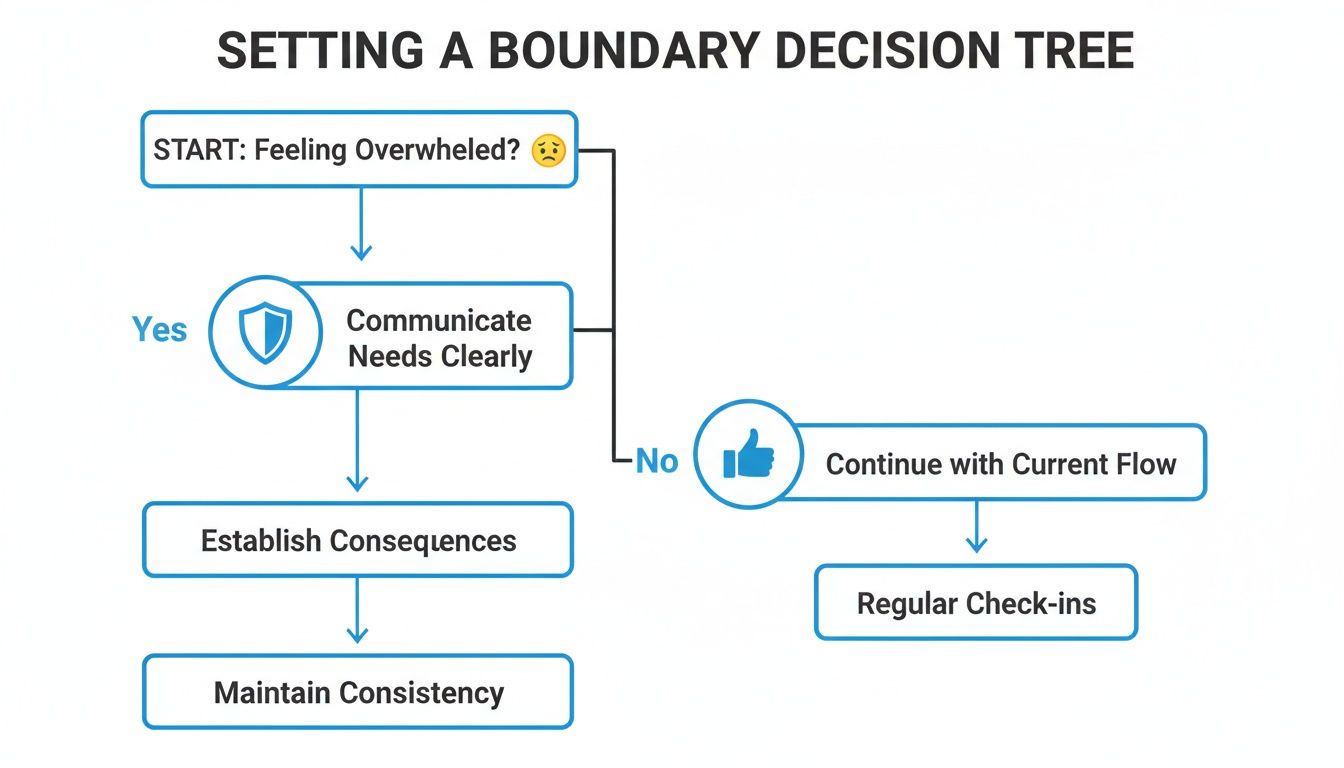
    Learning how to respect yourself often comes down to setting healthy boundaries. Think of a boundary not as a wall, but as a way to protect your time, energy, and peace of mind. In doing so, you teach others how you expect to be treated.

    This can feel difficult at first, especially in cultures where saying 'no' might be seen as unhelpful. However, consistently failing to set limits can lead to workplace stress and personal burnout, which can harm your mental health over time.

    What Healthy Boundaries Look Like in Daily Life

    Boundaries are often small, quiet choices you make every day to prioritise your needs. It's about recognising these moments and acting on them.

    For instance, a healthy boundary could be:

    • Politely declining an extra project when your schedule is already full.
    • Telling a friend, "I'd love to support you, but I don't have the emotional capacity for a heavy conversation right now."
    • Stepping away from negative office gossip.
    • Leaving work on time to protect your personal life.

    These are not aggressive actions. They are calm, clear statements about what you need to stay balanced and well.

    "When you speak to yourself with the utmost respect, I promise you that your life…will quickly improve. The energy of the words you use permeates your experiences and influences your self-worth and behaviour."

    This gets to the heart of it—boundaries start internally. They begin with respecting your own needs enough to communicate them.

    How to Communicate Your Needs with Confidence

    The fear of setting a boundary is often about how the other person will react. The key is to be firm yet kind, focusing on your needs rather than their behaviour. This simple shift can ease tension and lead to a more understanding conversation.

    Try this simple, three-part framework:

    1. State the situation factually: Start with a neutral observation. "I've noticed I'm taking on projects that are pushing my deadlines back."
    2. Explain how it affects you: Use "I" statements to share your feelings. "I feel overwhelmed and stressed when my workload gets this high."
    3. Clearly define what you need: Be direct about the necessary change. "From now on, I need to complete my current tasks before I can consider taking on anything new."

    Using this structure turns a potentially difficult exchange into a constructive one. It’s a skill that builds resilience and helps you feel less anxious.

    If setting boundaries consistently feels challenging, exploring it through counselling can provide personalised tools and support. Remember, this is a practice that becomes more natural with time.

    Choosing Self-Compassion Over Self-Criticism

    A person sitting in a comfortable chair by a window, journaling in a notebook with a warm cup of tea beside them, illustrating a moment of quiet self-compassion.

    Many of us have a persistent inner critic that focuses on every mistake and dismisses accomplishments. Over time, this can lead to feelings of inadequacy, anxiety, and even depression. A key part of learning how to respect yourself is to consciously replace that critical voice with a kinder, more supportive one.

    This is the essence of self-compassion. It's about treating yourself with the same warmth you would offer a friend during a hard time. It means accepting that being human involves imperfection, and that is okay.

    Understanding Your Inner Dialogue

    The first step is to simply listen to how you talk to yourself. When you make a mistake, is your reaction harsh or forgiving? This internal voice has a significant impact on your overall well-being.

    A study in India noted that while many people have stable self-esteem, a significant portion struggles with low levels. This suggests many are dealing with a harsh inner critic, making the path to self-respect challenging. You can explore the findings on self-esteem fluctuations and mental health for more context.

    Practical Ways to Cultivate Self-Compassion

    Shifting from self-criticism to self-compassion is a gradual practice. It requires patience and a commitment to building new, supportive mental habits.

    Here are a few ways to get started:

    • Reframe Your Thoughts: When you catch yourself in a negative spiral, pause and challenge the thought. Instead of, "I failed that presentation," try, "That was tough, but I did my best and I know how to improve."
    • Practise Mindful Self-Kindness: When you feel overwhelmed, place a hand over your heart and breathe. Offer yourself gentle words like, "This is a difficult moment. I will be kind to myself."
    • Journal Your Feelings: Writing without judgment can be a powerful release. It helps you process difficult emotions and gain a clearer, more compassionate perspective.

    By practising radical self-respect, you lighten your energy field and emotional state. You then can give much-deserved unconditional love to your body-confidence journey… and yourself.

    Choosing self-compassion is a profound act of self-respect. It strengthens your mental health, giving you the resilience to handle workplace stress with more grace. If your inner critic feels too overwhelming, seeking therapy or counselling can offer a supportive space to learn these skills.

    Investing in Your Personal Growth and Well-being

    A person watering a small plant that is growing in a pot on their windowsill, signifying nurturing personal growth.

    Actively investing in yourself is one of the most powerful ways to build self-respect. This means intentionally nurturing your mind, body, and spirit. It is a quiet affirmation to yourself that you are worthy of your own time and care.

    You don't need to make grand changes; lasting growth often comes from small, consistent daily actions. It's about carving out moments in your life for things that truly fulfil you. For example, finding just 20 minutes a day for a hobby or taking a short walk at lunchtime can significantly improve your well-being.

    Nurturing Your Mind and Emotional Health

    Prioritising your mental health is a fundamental part of respecting yourself. This involves being honest about your feelings and taking deliberate steps to support your well-being.

    Here are a few practical places to start:

    • Mindfulness and Meditation: A few minutes of mindfulness each day can help manage anxiety and stress. Many apps offer guided sessions for beginners.
    • Journaling for Clarity: Writing down your thoughts can help you untangle them. Journaling provides a private space to explore emotions and gain perspective.
    • Learning Something New: Engaging your brain by learning a new skill builds confidence and fosters a growth-oriented mindset.

    This commitment to personal growth often benefits your professional life. Learning how to build confidence at work can make you feel more empowered and valued in your career.

    Seeking Professional Support is an Act of Strength

    Sometimes, we need guidance on our growth journey. Reaching out for therapy or counselling is a courageous move toward becoming healthier. Recognising you need support and seeking it is a profound act of self-respect. A therapist provides a safe space to work through challenges like workplace stress, anxiety, or depression.

    While online assessments can offer initial insights, they are for informational purposes only and are not a substitute for a professional diagnosis. They can be a starting point for self-awareness, not the final word. Every step you take to invest in your growth sends a powerful message: you are valuable and worthy of care.

    Shape an Environment That Feeds Your Self-Worth

    Self-respect doesn't grow in isolation; it thrives or withers based on your environment. The people you surround yourself with and the spaces you inhabit can either nurture your confidence or subtly damage it. Take an honest look at your relationships and surroundings to see what supports your well-being.

    A significant part of learning how to respect yourself is making deliberate choices about who gets your time and energy. Move towards people who energise and validate you, and create distance from those who leave you feeling drained or insecure.

    Choose Your Company Wisely

    Intentionally spend time with friends, family, and colleagues who listen and celebrate your successes. It also means creating healthy distance from those who are persistently critical or dismissive. This isn't about cutting people off, but about managing your exposure to negativity.

    This could mean:

    • Making more time for a supportive friend.
    • Politely limiting time with a critical relative.
    • Collaborating with positive, team-oriented colleagues.

    These small changes can reduce background anxiety and create mental space for self-worth to grow. You are simply protecting your peace.

    An environment of respect and validation isn't a luxury; it’s a fundamental need for building lasting resilience and happiness. When you surround yourself with positivity, you give yourself the best possible chance to thrive.

    Interestingly, a supportive environment can be found in unexpected places. Research in East Midnapore, India, found that rural students reported slightly higher self-esteem than their urban peers. This suggests strong community ties can be incredibly powerful. You can explore how social factors influence self-worth in this research if you're curious.

    Craft a Physical Space That Respects You

    Your physical surroundings are as important as your social ones. A cluttered, chaotic space can reflect and amplify feelings of workplace stress or being overwhelmed. Creating a calm, organised space that feels like you is a powerful act of self-care.

    You don't need a major overhaul. Start small by clearing your desk, adding a plant to your room, or hanging art you love. When your external world feels orderly, it sends a strong message to your inner world that you are in control and you matter.

    If your environment is a source of distress, talking to a professional can help. Therapy or counselling offers a safe space to develop strategies for building a life that truly supports you. Please remember, any information here is for guidance and not a substitute for a professional diagnosis.

    The Road Ahead: Making Self-Respect a Daily Practice

    Building self-respect is a continuous practice, much like tending a garden. It requires consistent, conscious choices every day to honour who you are and what you need. This journey is deeply personal, and every small step is a genuine victory.

    The tools we've discussed—setting boundaries, practising self-compassion, and investing in your growth—are your allies. These are not just ideas; they are skills that build real emotional resilience.

    It is also vital to consider your surroundings. Chronic workplace stress or draining relationships can erode your self-worth. Protecting your peace is a fundamental part of learning how to respect yourself.

    Your journey to self-respect is a process of commitment, not perfection. Be patient with yourself, embrace the learning curve, and know that you are deeply worthy of your own respect, every single day.

    If you find yourself wrestling with anxiety or the heavy weight of depression, reaching out for help is a sign of strength. Professional support through therapy or counselling is an investment in your relationship with the most important person in your life: you. These are supportive takeaways, not promises of a cure.

    Got Questions? Let's Talk About Self-Respect

    As you begin this journey, some common questions may arise. These answers are meant to offer clarity and support along the way.

    Isn't Self-Respect Just the Same as Self-Esteem?

    That's a great question. While they sound similar, there's a key difference. Self-esteem is often tied to your performance and achievements; it can fluctuate with successes and failures.

    Self-respect is steadier. It is an underlying sense of honour for who you are, your values, and your needs, regardless of external circumstances. This stable foundation is what truly supports your long-term well-being.

    Is It Even Possible to Build Self-Respect in a Toxic or Difficult Situation?

    Yes, it absolutely is. In fact, challenging environments are often where self-respect becomes your most powerful tool for managing workplace stress and preventing burnout. The key is to focus on what you can control.

    You can start small by setting one manageable boundary, practising a moment of self-compassion, or giving yourself credit for navigating a tough day. These internal shifts build incredible resilience over time.

    Building self-respect in a tough situation isn’t about changing everything at once. It’s about reclaiming your power, one small, consistent act of self-care and boundary-setting at a time.

    So, How Long Does This Whole Self-Respect Thing Take?

    There is no finish line. Building self-respect is not a project to complete but a lifelong practice. It is a conscious choice you make every day.

    Instead of focusing on a timeline, focus on the daily process. You will notice gradual shifts as you consistently apply these ideas. Celebrating small wins reinforces your foundation of self-worth and can be a powerful way to manage feelings of anxiety or depression.

  • How to Find Purpose in Life: Your Practical Guide

    How to Find Purpose in Life: Your Practical Guide

    Finding your purpose isn't about a single, grand revelation. It's a gentle process of looking inward to understand what truly matters to you—your values, passions, and strengths—and weaving them into your daily life.

    This is an ongoing journey, a continuous conversation between who you are and what you do. It’s about building a life that feels authentic and meaningful to you.

    Starting Your Search for Meaning

    If you've ever asked yourself, "what is my purpose?", you are not alone. This question often comes up during times of change, or when challenges like workplace stress and anxiety begin to feel overwhelming.

    Feeling a bit lost is often the first step toward meaningful personal growth. It's a sign that you are ready to connect with yourself on a deeper level.

    Understanding the Search for Purpose

    Searching for meaning doesn't mean something is wrong; it's a natural part of human growth. The pressures of modern life can lead to burnout or a sense of disconnection, and this guide is here to help you reconnect with your inner voice.

    We will explore ideas from positive psychology, focusing on building skills like resilience and self-compassion to help navigate life's challenges. It's important to clarify that these exercises are for self-discovery and are not a substitute for professional diagnosis or treatment of conditions like anxiety or depression.

    "Purpose is not something you discover, but something you build. It is created in the small moments of choice, in the commitments you keep, and in the connections you nurture every day."

    An India-First Perspective on a Global Journey

    While the search for purpose is a universal human experience, our cultural context shapes this journey. In India, a strong sense of purpose is deeply linked to overall well-being and is often nurtured through community and family bonds.

    The Voluntās Foundation's Global Meaningfulness Index recently ranked India 4th globally, highlighting how purpose and belonging contribute to a meaningful life. You can discover more about how Indians find purpose in the full report.

    This guide uses an India-first context while offering insights that are globally relatable. The goal is to provide supportive takeaways that bring more clarity and well-being into your life.

    What Are Your Core Values, Really?

    Your core values are like a personal compass, guiding your decisions and behaviours. Understanding them is the first step toward building a life that feels truly yours.

    When your daily actions don't align with your deepest beliefs, it can create a sense of unease. This disconnect is a common source of workplace stress and anxiety, making it vital to identify what truly matters for your well-being.

    A Practical Way to Uncover What Matters

    The best way to identify your values is through honest self-reflection. This isn't a test; it's about listening to the wisdom of your own experiences.

    Grab a journal or open a document and explore these prompts without judgment:

    • Think of a time you felt genuinely happy. What was happening? Who was with you? Pinpoint what made that moment special—was it connection, challenge, or freedom?
    • Recall a time you were deeply proud of yourself. What did you do, and what principle did that action reflect? Perhaps it was integrity, courage, or creativity.
    • Now, consider a time you felt angry or frustrated. What injustice or broken rule triggered that feeling? Anger often points directly to a core value that has been challenged.

    This exercise is designed to connect you with what you genuinely value, not what you think you should value.

    Connecting with your fundamental beliefs gives you a solid foundation for making decisions that align with your true self. This alignment is essential for building resilience and improving your overall mental health.

    Turning Your Reflections Into a Clear Guide

    After reflecting, look for recurring themes in your writing. Words like "community," "freedom," "creativity," "security," or "kindness" may appear often.

    Try to create a list of your top five core values to bring focus and clarity to your decisions. This makes it easier to say "no" to things that drain you and "yes" to what energizes you.

    This clarity is a key step in learning how to find purpose in life. If you feel persistently stuck or are navigating challenges like depression, professional therapy or counselling can provide a supportive space to explore these ideas further.

    Connecting Passions to Your Strengths

    Purpose often emerges where your passions and natural talents meet. This is about exploring with curiosity, not pressure, to see where your energy flows most freely.

    Think about activities that make you lose track of time—these are powerful clues to your passions. Leaning into them is an effective way to manage workplace stress and prevent burnout.

    Identifying What You Genuinely Love

    A passion is something that energizes you, something you would do even without external reward. To uncover yours, reflect on these questions:

    • What topics could you discuss or read about for hours? No subject is too big or small, from sustainable farming to cinematic history.
    • If you had a free afternoon with no obligations, what would you choose to do? Let your mind wander past your to-do list.
    • What brought you joy as a child? Our earliest interests often hold a pure reflection of our authentic selves.

    This is about reconnecting with parts of yourself that feel most alive. This self-awareness is a cornerstone of strong mental well-being.

    Purpose isn’t a destination you arrive at. It's the meaning you create in your actions, day by day, by connecting with who you truly are.

    Recognising Your Natural Talents

    Your strengths are the things you do with natural ease, perhaps so easily that you don't even see them as special skills. What do others consistently ask for your help with?

    Using your talents provides a sense of competence and accomplishment, which can counter feelings of helplessness that may accompany anxiety or depression. This reinforces a positive sense of self and builds incredible resilience.

    This self-assessment is informational, not diagnostic. If feelings of inadequacy are persistent, professional counselling or therapy can offer a supportive space to explore them with compassion.

    Mapping Your Personal Purpose Drivers

    This self-reflection tool can help you see where your passions, strengths, and contributions overlap.

    My Passions (What I Love) My Strengths (What I'm Good At) My Contribution (How I Can Help Others)
    Example: Cooking traditional family recipes Example: Organising events and bringing people together Example: Hosting small potluck dinners to foster community
    Example: Mentoring junior colleagues at work Example: Explaining complex ideas in a simple, patient way Example: Volunteering to tutor students in my area of expertise
    Example: Spending time in nature and gardening Example: Planning long-term projects and staying consistent Example: Starting a small community garden in my neighbourhood

    Jot down the first things that come to mind. Seeing these areas together can spark powerful insights and offer a clearer direction.

    Turning Purpose into Actionable Goals

    Purpose comes to life through action. This is where your inner values meet the real world, turning ideas into tangible steps that shape your days.

    The key is to avoid feeling overwhelmed by breaking down your purpose into small, achievable goals. This approach creates momentum without adding pressure.

    From Vague Ideas to Concrete Steps

    Let's make this practical. If a core value is "community connection," an actionable goal moves beyond the idea and becomes a specific, doable task.

    For example, this value could become one of these goals:

    • Mentoring: Spend one hour every two weeks mentoring a junior colleague.
    • Volunteering: Commit to two hours a month with a local charity.
    • Neighbourhood Initiative: Organise a small seasonal get-together for neighbours.

    These small, consistent actions are the building blocks of a purposeful life. They provide a sense of accomplishment and reinforce your values, which is key for building resilience and improving your well-being.

    The journey toward a purpose-driven life is built on small, consistent actions, not grand gestures. Progress, no matter how small, is more important than perfection.

    Setting Goals That Nurture Your Purpose

    This practical mindset is growing in India, with many seeing life goals as a path to purpose. A recent study found that 71% of Indians view providing financial security for family as a primary life goal, reflecting a collective desire for more fulfilling lives.

    If your purpose involves your career, a guide to career promotion may be a helpful resource. The most important thing is to ensure your goals are truly your own.

    If goal-setting brings up feelings of anxiety or depression, remember that professional counselling offers a supportive space to navigate these challenges. The aim is to create a sustainable and meaningful path forward.

    How to Navigate Setbacks with Resilience

    The journey of exploring how to find purpose in life is rarely a straight line. You will encounter setbacks and moments of self-doubt along the way.

    These challenges are not signs of failure; they are part of the discovery process. Building resilience is the key to navigating these moments.

    Resilience is the inner strength that helps you bounce back, learn, and keep moving forward. It's like a muscle that you can strengthen with practice and self-compassion.

    Practising Self-Compassion in Tough Times

    When things don't go as planned, our first reaction is often self-criticism. Practicing self-compassion—treating yourself with the kindness you would offer a friend—is a healthier way to build resilience.

    This practice can reduce feelings of anxiety and prevent negative thought cycles. It begins by acknowledging your feelings without judgment.

    Here are a few ways to practice self-compassion:

    • Mindful Pauses: When you feel overwhelmed, stop and take a few deep breaths. Notice your feelings without needing to "fix" them.
    • Positive Self-Talk: Gently reframe harsh inner criticism. Instead of "I failed," try, "This was a learning experience."
    • Supportive Journaling: Write about your struggles as if you were talking to a friend, then write a kind, understanding response back to yourself.

    Seeking Support and Gaining Perspective

    Remember, you don't have to navigate this journey alone; reaching out is a sign of strength. Professional therapy or counselling provides a safe space to discuss challenges like workplace stress, anxiety, or depression.

    A therapist can offer tools to reframe negative thoughts and develop healthier coping strategies. These services are here to provide support and encourage growth.

    The ability to navigate setbacks is a crucial part of living a purposeful life. It teaches us that our purpose isn't defined by uninterrupted success, but by our capacity to grow through challenges with grace and self-kindness.

    Research in India supports this idea, showing a strong link between purpose and life satisfaction in older adults. Their well-being was tied to factors like health and living situation, showing how purpose evolves and strengthens as we age. You can learn more in the World Happiness Report.

    Building resilience is an ongoing practice. Each challenge navigated with compassion makes you stronger for the next, keeping you connected to your unique journey.

    Still Have Questions About Finding Your Purpose?

    It is completely normal for questions to arise as you explore what gives your life meaning. This is a sign that you are engaging deeply with the process.

    Let's address some common questions that come up on this path. Think of these as supportive guideposts for your personal journey.

    "What If I Don't Have One Big Passion?"

    Many of us believe purpose must be a single, grand passion, but this is rarely the case. Purpose is often found in the small, consistent ways we live our values.

    Your purpose might be expressed through being a reliable friend, a patient parent, or a supportive colleague. A collection of small, meaningful actions can boost your well-being and build powerful resilience.

    Purpose isn’t something you just find, fully formed. It’s something you build, piece by piece. You create it in the small choices you make, the promises you keep, and the relationships you nurture day in and day out.

    "Is It Okay for My Purpose to Change?"

    Yes, it is not only okay for your purpose to change, but it is expected. The priorities and insights you have at 20 will be different from those you have at 40 or 60.

    Major life events naturally shift what you find meaningful, which is a sign of healthy growth. Embracing this evolution allows you to ensure your life reflects who you are now.

    "What Should I Do If I Feel Stuck or Overwhelmed?"

    Feeling stuck is a normal part of this journey. When deep reflection stirs up difficult feelings like anxiety, it's important to pause and simplify.

    • Pick one small thing. Focus on one small action you can take today that aligns with your values.
    • Talk it out. Sharing your thoughts with someone you trust can offer a fresh perspective and reduce feelings of isolation.
    • Reach out for support. If feeling stuck persists and is linked to challenges like depression or severe workplace stress, consider professional help. Therapy or counselling is a proactive step toward getting the support you deserve.

    These assessments are informational, not diagnostic. A safe, dedicated space can help you untangle your thoughts and find clarity on your path.


    At DeTalks, we believe that everyone should have access to the right mental health support. Our platform can connect you with qualified therapists and provides scientifically-backed assessments to help you understand yourself better. It’s all about building a more resilient, meaningful life. Start your journey with DeTalks today.

  • How to Ignore Someone Who Hurt You and Heal

    How to Ignore Someone Who Hurt You and Heal

    Choosing to ignore someone who hurt you is a powerful step towards protecting your peace. It’s a conscious decision to reclaim your emotional energy and focus on your own healing, rather than getting caught in a cycle of pain.

    This approach isn’t about avoiding conflict, but about prioritizing your mental well-being. By stepping back from a hurtful situation, you create the space needed to move forward with clarity and strength.

    Why Ignoring Someone Can Be a Powerful Act of Self-Care

    When someone causes us pain, our first instinct might be to confront them or seek an apology. While these feelings are valid, staying engaged can sometimes lead to prolonged stress, anxiety, and emotional burnout.

    Learning to ignore someone who hurt you is an act of self-preservation, not weakness. It's a choice to stop investing your energy into a situation that brings you down, allowing you to focus on your own well-being.

    The Psychology Behind Strategic Disengagement

    Ignoring someone is more than just silence; it's a psychological tool for creating an emotional buffer. This distance helps prevent their actions from continuing to affect your inner peace and mental health.

    This act of disengagement can break the cycle of replaying hurtful memories, which often contributes to feelings of anxiety and sometimes depression. It is a practical strategy for building emotional resilience.

    In India, this approach is a common way to manage emotional distress and regain stability. You can find more information about these coping strategies on this mental health resource.

    By choosing to ignore someone, you are not saying the hurt didn't happen. You are saying that your peace is more important than the conflict, and your future is more valuable than your past pain.

    Protecting Your Mental Energy

    Every interaction and thought consumes emotional energy. Constantly focusing on someone who has hurt you drains this energy, leaving you with less for your own happiness, goals, and well-being.

    Image

    Strategically ignoring someone helps you conserve your energy in several ways:

    • It Reduces Rumination: You stop obsessively replaying the hurtful situation, freeing up mental space.
    • It Lowers Emotional Reactivity: With less engagement, the person has less power to trigger an emotional response from you.
    • It Builds Self-Compassion: This choice reinforces the message that you deserve peace and that protecting your well-being is a priority.

    This shift in focus from them to you is a vital part of healing. Exploring this further through professional counselling or therapy can provide additional support and guidance.

    Here are some practical ways to create the emotional distance you need to heal.

    Ignoring someone who hurt you isn't just about silence; it's about creating space for your own recovery. Think of it as building a protective boundary to reduce their influence over your emotional state.

    This act of self-preservation helps you regain a sense of calm and control. When you learn to disengage emotionally, you reduce the daily anxiety and stress that can come from difficult relationships.

    Try the Grey Rock Method

    When you can't completely avoid someone, like a colleague or family member, the 'grey rock method' is useful. The idea is to become as uninteresting as a grey rock in your interactions.

    You remain emotionally non-responsive, keeping answers short and factual. By not sharing personal feelings, you remove the emotional reaction they may be seeking.

    For example, if a difficult colleague asks about your weekend, a simple, "It was quiet, thanks," is enough. Over time, the lack of engagement often causes them to lose interest.

    Set Your Digital Boundaries

    In today's connected world, protecting your peace means setting digital boundaries too. Social media can be a source of painful reminders, making it difficult to move on and protect your mental well-being.

    Here are a few steps you can take to protect your online space:

    • Mute or Unfollow: This allows you to stop seeing their content without the potential drama of blocking them.
    • Restrict or Block: For a firmer boundary, blocking them prevents all contact and creates clear separation.
    • Be Mindful of Mutual Friends: You might need to temporarily mute mutual contacts if their posts frequently feature the person.

    This visual guide breaks down the core steps for creating emotional distance and protecting your mental health.

    Infographic about how to ignore someone who hurt you

    As the infographic shows, the journey begins by acknowledging your feelings, then moves to setting boundaries, and finally shifts the focus back to your own healing and growth.

    Practice Mindfulness to Manage Your Thoughts

    One of the biggest challenges is managing intrusive thoughts about the person or situation. These thoughts are common and can feel powerful because they often relate to things we care about.

    Mindfulness can help you observe these thoughts without getting carried away by them. It teaches you to acknowledge their presence and then gently guide your focus back to the present moment.

    When a thought about the person arises, simply notice it without judgment and let it pass. This practice is a key skill for building emotional resilience and is often taught in therapy.

    Remember, a thought is just a thought. You don't have to engage with it, believe it, or act on it. Letting it pass without judgement is a skill that strengthens over time.

    This technique, often used in counselling, helps you stop investing energy in past hurts. It empowers you to redirect that focus towards your own happiness and well-being.

    How to Set and Enforce Clear Boundaries

    A person setting a boundary by holding their hand up in a stop gesture, with a calm expression.

    Boundaries are essential when you're moving on from someone who has hurt you. They are the clear lines you draw to protect your emotional energy and support your well-being.

    Setting boundaries is an act of self-respect. It reinforces your decision to prioritize your own peace and communicates that you are committed to your healing journey.

    Figure Out Your Personal Lines in the Sand

    Before you can enforce a boundary, you need to know what your limits are. Take some time to reflect on what leaves you feeling drained, anxious, or disrespected in interactions.

    Identifying specific triggers—like certain topics of conversation or unwanted contact—helps you understand where a boundary is needed. This clarity is the first step toward protecting yourself.

    "A boundary is a clear statement of what is okay for you and what is not okay. It's not a request; it's a declaration of your needs and limits, crucial for maintaining emotional balance."

    Establishing these lines is vital for your mental health. You can find helpful strategies for setting boundaries and practicing self-care to prevent burnout for more guidance.

    How to Communicate Your Boundaries Without a Fight

    Communicating boundaries doesn't require a confrontation. A simple, direct, and calm approach is often the most effective way to express your needs.

    You don't need to provide a lengthy explanation; a simple 'no' is a complete sentence. Having a few phrases ready can help you respond confidently without feeling flustered.

    Here are a few examples you can adapt:

    • For unwanted requests: "I'm not able to help with that right now."
    • For intrusive questions: "I'd prefer not to discuss my personal life, thank you."
    • To stop contact: "I need some space right now and won't be responding to messages."

    These statements are polite but firm, helping you avoid additional anxiety or conflict.

    Dealing With Mutual Friends and Awkward Social Events

    Navigating relationships with mutual friends can be challenging. They may not understand your need for distance and might try to mediate, which can be draining.

    You don't have to share all the details with them. A simple and consistent response is often the best approach to maintain your boundary respectfully.

    Try saying something like, "I appreciate your concern, but this is a personal matter I'm handling privately." This respects their friendship while reinforcing your decision and building your own resilience. Professional counselling can also offer a supportive space to navigate these social challenges.

    Navigating Social and Workplace Situations

    Knowing how to ignore someone who hurt you is one thing, but it can be difficult when you can't avoid them. Encounters at work or social events can create stress and anxiety.

    With a clear plan, you can handle these moments gracefully and protect your peace. The goal is to be polite but firm in your boundaries, managing any awkwardness without adding to your workplace stress.

    Strategies for Group Settings

    When in a group with this person, aim for polite but distant interactions. You can acknowledge their presence without engaging in a deep conversation, keeping any necessary communication brief and neutral.

    For example, on a work project, keep all discussions focused strictly on the task. If they ask a direct question, provide a short, factual answer to maintain a professional boundary.

    This is a common coping mechanism. Research has shown that many professionals choose to minimize contact with those who have caused them emotional pain, often feeling an immediate reduction in stress. You can explore the research about these mental health findings for more insight.

    Handling Questions from Others

    It's likely that friends, family, or colleagues may notice the distance and ask questions. Remember, you are not obligated to explain your personal life to anyone.

    Having a simple, prepared response can help you feel more in control. This allows you to set a boundary without feeling put on the spot.

    Your boundaries are for your protection, not for others' understanding. A simple, consistent response is often more effective than a detailed explanation.

    You could say something calm like, "I'm focusing on my own well-being right now and choosing to keep some distance." This is an honest reply that politely signals you don't wish to discuss it further, which can help reduce follow-up anxiety.

    Here are a few phrases you can adjust to your situation:

    • For a curious coworker: "I prefer to keep my focus on our work."
    • For a well-meaning friend: "I appreciate your care, but I'm handling this in my own way."
    • For a family member: "I'm being civil, but for my own peace, I'm choosing not to engage more than I have to."

    Handling these situations is about reinforcing your decision to prioritize your mental health. If the emotional weight feels too heavy, professional counselling or therapy can offer a safe space to develop coping skills and build resilience.

    Turning Your Focus to Healing and Growth

    A person journaling in a notebook with a calm, natural background.

    Ultimately, this process is about your healing, not about them. Learning to ignore someone who hurt you frees up significant emotional energy that you can now invest back into yourself.

    This experience, while painful, can be a catalyst for positive change. By turning your focus inward, you can transform hurt into an opportunity for building resilience, practicing self-compassion, and moving forward with a renewed sense of purpose.

    Rechanneling Your Emotional Energy

    Consider the energy spent replaying conversations or worrying about future interactions. That energy is now yours to redirect toward things that bring you joy and fulfillment.

    This is a conscious choice to invest in your own growth and happiness. It's a crucial step in recovering from the emotional impact of anxiety and moving toward a healthier state of mind.

    This mindset is becoming more common, especially among young adults in India. Recent studies, like the India Youth Mental Health Survey findings, show that ignoring as a coping strategy is often linked to lower levels of immediate distress.

    Practical Steps for Self-Investment

    Investing in yourself doesn't require grand gestures. Small, consistent actions can lead to significant healing and help you rebuild your sense of self-worth.

    Here are a few tangible things you can start doing today:

    • Journal to Process Feelings: Writing down your thoughts and emotions can be a powerful way to process them without judgment.
    • Rediscover Your Passions: Reconnect with hobbies you love or explore new interests that spark your curiosity and excitement.
    • Connect with Nature: Spending time outdoors, even for a short walk, can reduce stress and improve your mood.

    These actions are not just distractions; they are deliberate acts of self-care. They remind you of your own value and support your journey toward well-being.

    "Healing doesn't mean the damage never existed. It means the damage no longer controls our lives."

    This is a powerful reminder that your past does not have to define your future. Every step you take toward your own well-being is a victory.

    Building Resilience for the Future

    This challenging experience has taught you valuable lessons in emotional resilience. You have learned how to protect your peace, set boundaries, and prioritize your mental health—skills that will serve you throughout your life.

    This journey is a testament to your strength. Choosing to grow from hurt is an empowering act, and remember, professional counselling can offer valuable support if you feel stuck.

    Knowing When It’s Time to Ask for Help

    Ignoring someone who hurt you is a powerful strategy for self-protection. However, some pain is too deep or complex to navigate alone, and seeking professional help is a sign of strength.

    If you find that feelings of sadness, anger, or anxiety are persistent and affecting your daily life, it may be time to talk to a professional. Struggling with sleep, changes in appetite, or a loss of interest in activities you once enjoyed are all signs that support could be beneficial.

    What Therapy and Counselling Can Truly Offer

    A therapist or counsellor provides a safe, confidential, and non-judgmental space to explore your feelings. They can help you understand the root of your pain, develop healthy coping skills, and build lasting emotional resilience.

    Please note: the information here is for educational purposes and is not a substitute for professional diagnosis. Your mental health journey is unique, and expert guidance is always recommended.

    In therapy, you can learn to identify and change unhelpful thought patterns that keep you feeling stuck. Just as you might consult an expert for other challenges, like finding a behaviorist for a pet, professional support for your own well-being offers specialized guidance to help you heal.

    Taking That First Step Towards Healing

    Often, the most challenging step is deciding to seek help. Fortunately, conversations around mental health are becoming more open in India, making it easier to find qualified support.

    Starting counselling can help you heal from this specific hurt and equip you with tools to handle future challenges. If you're experiencing signs of depression or significant workplace stress, a professional can provide the guidance you need to move forward. You do not have to carry this burden alone.


    At DeTalks, we're firm believers that the right support is essential for a healthier, more resilient life. Our platform is designed to connect you with qualified therapists and provides scientifically validated assessments to help you understand your needs and start your healing journey. Take the first step with DeTalks today.