
Learning how to self love isn't a single decision but a gentle, daily practice. It means choosing to treat yourself with kindness, making peace with your imperfections, and consistently prioritising your own well-being. At its heart, it’s about building resilience and compassion from the inside out, so your sense of worth comes from within.
What Self-Love Actually Means and Why It Matters
Self-love is often mistaken for bubble baths and spa days, but it goes much deeper. It is the foundational respect you have for yourself that shapes your thoughts, feelings, and actions every day.
It’s about shifting away from a harsh inner critic and learning to speak to yourself with the warmth you would offer a friend. In a culture like India, where community needs often come first, prioritising yourself can feel unfamiliar. But it's not selfish; it's essential for building the emotional strength needed to navigate life.
The Connection to Your Well-Being
A lack of self-love can make you more vulnerable to life's challenges. It can turn a simple mistake into a source of spiralling anxiety or transform workplace stress into burnout. A consistently critical inner voice can erode your confidence, leaving you susceptible to sadness and even depression.
Conversely, cultivating self-love helps build an internal support system. It equips you with the tools to manage stress, bounce back from setbacks, and maintain a healthier perspective. For a deeper look, understanding what self-compassion is offers a practical framework for your mental wellness.
A Look at Self-Love in India
Globally, India's Self-Love Index score is 52, just one point below the global average of 53, according to a report from The Body Shop and Ipsos. This suggests many in India are on this journey, but there is still room for growth in nurturing our inner well-being.
To understand this better, let's explore the key components of a self-love practice.
Core Pillars of Self-Love
| Pillar | What It Means in Practice |
|---|---|
| Self-Compassion | Treating yourself with kindness when you fail or feel inadequate, instead of self-criticism. |
| Boundaries | Saying "no" to things that drain your energy and protecting your mental and emotional space. |
| Self-Acceptance | Embracing all parts of yourself—the good, the bad, and the messy—without judgement. |
| Prioritising Needs | Recognising and honouring your own needs for rest, nourishment, and joy. |
| Mindfulness | Staying present with your thoughts and feelings without getting carried away by them. |
Each pillar works with the others to create a strong, supportive relationship with yourself.
Self-love is not a final destination but a continuous practice. It's about choosing to show up for yourself with kindness, especially on the days when it feels the most difficult. This commitment is a powerful step toward lasting well-being.
Committing to this journey can genuinely improve your life. Here are some of the benefits:
- Improved Resilience: You can handle life's ups and downs with greater emotional balance.
- Healthier Relationships: Valuing yourself helps you nurture respectful and supportive connections with others.
- Reduced Anxiety and Stress: A kind inner voice is a powerful tool for soothing anxiety and managing daily stress.
- Greater Happiness: Accepting yourself fully creates space for a more authentic and lasting sense of joy.
This guide provides practical, actionable steps for your journey. While therapy is a valuable resource, the small habits you build daily are the true cornerstones of a healthy relationship with yourself.
Understanding the Barriers to Loving Yourself
Have you ever wondered why being kind to yourself can feel so difficult? The journey to self-love starts not with forcing positive thoughts, but with gently understanding what stands in the way.
Often, the biggest roadblocks are internal, like old thought patterns and painful memories. Others come from external pressures and expectations. The goal isn't to judge these barriers, but to see them clearly, as awareness is the first step toward compassion.
The Harsh Inner Critic
We all have that nagging inner voice that is quick to point out mistakes and dismiss successes. This inner critic often echoes critical messages we heard from others long ago.
It's the voice that whispers you’re not smart enough after an error at work or not attractive enough when you see your reflection. Living with this constant commentary is exhausting, fuelling feelings of anxiety and inadequacy that can lead to burnout. Learning how to self love means learning to see this voice as a misguided attempt to protect you.
The Weight of Societal and Family Expectations
In India, cultural and family pressure to follow specific life paths is strong. We are often measured by external benchmarks like academic success, career choices, or marriage. When our lives don't match that blueprint, it's easy to see it as a personal failure.
This can take a heavy toll, especially on young people, contributing to rising rates of depression and other emotional challenges. You can read more about the findings on adolescent mental health in India to understand this issue better.
Self-love involves gently separating your self-worth from the expectations of others. It’s about learning to define success and happiness on your own terms.
Lingering Effects of Past Experiences
Our pasts shape us in ways we don't always realise. Painful events can create limiting beliefs that run in the background of our minds, such as "I am not worthy of love."
These old wounds can become major barriers, causing us to self-sabotage or avoid taking chances. Acknowledging this pain is a courageous act of self-love. For many, a safe space like therapy or counselling is key to processing these experiences and writing a kinder story for themselves.
Common Roadblocks to Watch For
Identifying specific patterns can be incredibly helpful. Here are a few common ones you might recognise:
- Perfectionism: The belief that you must be flawless to be worthy of love, which creates an intense fear of making mistakes.
- Comparison: Constantly measuring your life, body, or career against others, especially on social media.
- Unresolved Guilt or Shame: Holding on to past mistakes and letting them define who you are today.
- Neglecting Your Needs: A habit of putting everyone else first, which often leads to feeling drained and resentful.
Remember, identifying these patterns isn't about finding more flaws. It's about gathering information to know which areas of your life need more gentleness and attention. This is the foundation for building lasting resilience and well-being.
Cultivating Daily Self-Compassion Practices

The real work of self-love begins with actively practising kindness toward yourself. This isn't about grand gestures but about the small, consistent choices you make every day to build a more supportive inner voice.
Self-compassion means responding to your own mistakes and imperfections with the kindness you’d offer a friend. Building this skill creates an internal source of strength, helping you navigate everything from workplace stress to personal setbacks with greater resilience.
From Self-Criticism to Self-Kindness
The first step is simply to notice how you talk to yourself. When you make a mistake, do you immediately call yourself "lazy" or an "idiot"? Awareness is the crucial starting point for change.
Once you catch that critical voice, gently reframe the thought. Instead of, "I can’t believe I said that," try, "That wasn’t my most articulate moment, but everyone has off-days." This shift removes the harsh judgment that fuels anxiety.
Mindful Self-Compassion in Action
Mindfulness is a powerful tool for paying attention to the present moment without judgment. When paired with compassion, it helps you acknowledge difficult feelings without letting them take over your day.
Here’s a simple two-minute breathing exercise you can do anywhere:
- Settle into your chair with your feet flat on the floor. Gently close your eyes or lower your gaze.
- Take three slow, deep breaths, in through your nose and out through your mouth.
- Place a hand over your heart or on your lap, feeling its warmth and gentle pressure.
- Acknowledge whatever you're feeling by silently saying, "This is a moment of stress."
- Offer yourself a phrase of kindness, like, "May I be kind to myself," or, "It’s okay."
- Take one last deep breath and slowly bring your awareness back to the room.
Practices like this help build new neural pathways for self-compassion, improving your overall well-being.
Rewriting Your Inner Story with Journaling
Journaling is another effective way to challenge negative self-talk in a private, judgment-free space. The simple act of writing can bring clarity to overwhelming emotions, like anxiety or feelings linked to depression.
Don't worry about writing perfectly; just five minutes a day is a great start. If you feel stuck, try one of these prompts:
- What’s one thing I did today that I can feel proud of, no matter how small?
- If my best friend were going through this, what kind words would I offer them?
- What is one of my needs that I’ve been ignoring? How can I honour it this week?
- Write a letter of forgiveness to yourself for a past mistake you've been holding onto.
Your inner world is like a garden. Journaling helps you pull out the weeds of self-criticism and plant the seeds of self-compassion. With consistent care, a kinder, more resilient version of you will begin to grow.
Using Affirmations That Actually Feel Genuine
Positive affirmations can feel inauthentic if you're struggling with deep-seated inadequacy. The secret is to craft affirmations that feel believable to you right now.
Instead of making a huge leap, try using "bridge" statements. These acknowledge where you are while gently pointing you toward where you want to go.
| Instead of This (If It Feels Fake) | Try This More Believable Affirmation |
|---|---|
| "I love my body completely." | "I am learning to appreciate my body for what it can do." |
| "I am a confident person." | "I am open to building more confidence in myself." |
| "I am completely free from anxiety." | "I am capable of handling my anxiety with kindness." |
These gentler statements make the practice feel more honest and effective. They are a practical step in learning how to self love without feeling like you are pretending. Remember, this journey is about progress, not perfection.
If negative beliefs feel deeply entrenched, these practices may not be enough on their own. When workplace stress, anxiety, or low self-worth feel too heavy to carry alone, seeking professional counselling or therapy is a courageous act of self-care.
How to Set Boundaries for Better Well-Being
Setting boundaries is one of the most practical ways to show yourself love. It isn't about building walls but about defining your personal space to protect your energy and mental health.
Many of us, especially in India where community ties are central, struggle with saying "no." However, constantly prioritising others' needs can lead to resentment, anxiety, and burnout. Setting a boundary is an act of self-respect that strengthens relationships in the long run.
Understanding Different Types of Boundaries
Boundaries appear in nearly every area of our lives, and getting good at setting healthy boundaries is key to protecting your energy. The first step is to notice where you need them most.
Here are the main types:
- Emotional Boundaries: These protect your feelings, allowing you to empathise without absorbing others' stress.
- Physical Boundaries: This relates to your personal space, privacy, and comfort with physical touch.
- Digital Boundaries: This involves managing your online life, such as not checking work emails after hours or limiting social media.
Weak boundaries are a fast track to workplace stress and exhaustion. Every boundary you set sends a powerful message: "My well-being matters."
Practical Phrases for Setting Boundaries Politely
Saying the words out loud is often the hardest part because we fear conflict. The key is to be clear, kind, and firm without needing to over-explain or apologise.
Here are a few real-life examples:
Scenario 1: At Work
Your boss assigns another project when you're already overwhelmed.
- Try: "Thank you for trusting me with this. My plate is full right now, and I couldn't give this the focus it deserves. Can we discuss priorities?"
Scenario 2: With Family
A relative gives unsolicited advice that is starting to wear on you.
- Try: "I appreciate that you care so much. For this, though, I need to figure it out for myself. I'd rather we talk about something else."
Scenario 3: With Friends
A friend calls to vent for hours, leaving you drained.
- Try: "I can tell this is weighing heavily on you. I only have about 15 minutes before I have to go, but you have my full attention until then."
A boundary isn't a rejection of someone else. It's an acceptance of yourself and your own limits. This is foundational for building resilience and preventing the kind of burnout that can lead to feelings of depression.
Navigating the Aftermath of Setting a Boundary
When you first start setting boundaries, some people may not like it, especially if they are used to you always saying "yes." This is a normal reaction, but it doesn't mean you've done anything wrong.
Hold your ground with compassion and calmly repeat your boundary if needed. Over time, the people who respect you will adjust. You are teaching others how to treat you, which is a cornerstone of self-love and long-term happiness.
If setting boundaries consistently fills you with extreme anxiety, or if people repeatedly violate them, it might be worth exploring this in therapy. A counsellor can provide tools and a safe space to build this vital skill.
Knowing When to Seek Professional Support
The journey toward self-love is deeply personal, often built through daily practices. But sometimes, these tools may not feel like enough, and that's perfectly okay.
Reaching out for professional support isn’t a sign of failure. In fact, it’s one of the most courageous acts of self-care you can take.
Recognising you need help is a profound expression of self-love. It means you value your well-being enough to seek guidance when challenges like persistent workplace stress or sadness feel too heavy. A therapist or counsellor offers a safe, confidential space to explore these feelings without judgment. This assessment is for informational purposes and not a clinical diagnosis.
This decision tree can help you map out how to communicate your needs when you're feeling overwhelmed—a crucial skill for protecting your mental health.
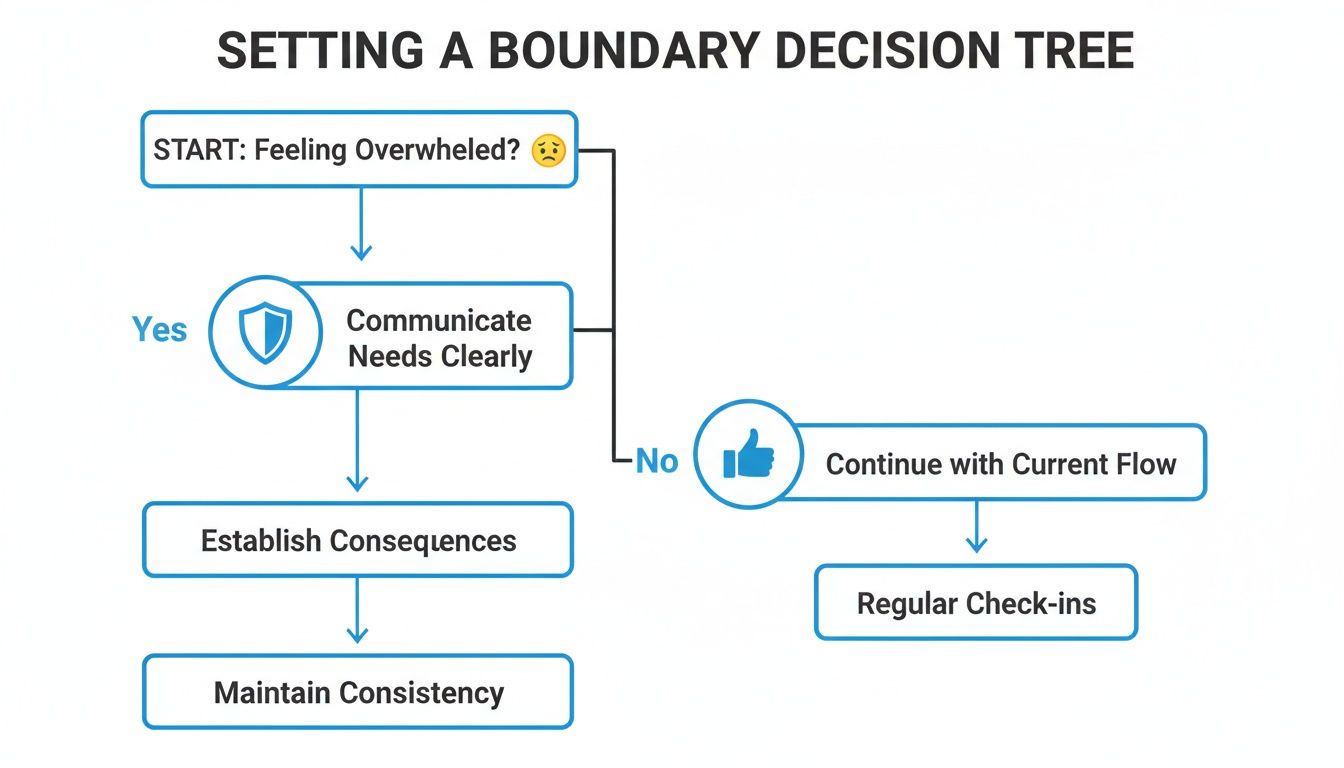
As the visual guide shows, simply acknowledging that you're overwhelmed is the first step toward taking action to support yourself.
Signs It Might Be Time for Counselling
How do you know when it’s time to seek support? If certain patterns persist, professional help could make a real difference. Here are a few common indicators to look for:
- Persistent Low Mood: Feeling sad, empty, or hopeless most days for more than a couple of weeks, which can sometimes be a sign of depression.
- Overwhelming Anxiety: Worry and fear are interfering with your work, relationships, or daily routine.
- Difficulty Coping: Feeling consistently overwhelmed by life and struggling to manage stress.
- Relationship Strain: Your personal struggles are creating conflict or distance in your relationships.
What to Expect from Therapy
The idea of therapy can feel intimidating, especially with the misconceptions that still exist in India. A therapy session is simply a dedicated time for you to talk through your thoughts and feelings with a trained professional.
A good therapist listens with empathy, helps you spot unhelpful patterns, and gives you practical strategies to build resilience. It's a collaborative process aimed at empowering you to navigate life with greater self-awareness and compassion.
Seeking therapy is not about "fixing" something that is broken. It's about investing in your own well-being, learning new skills for living, and building a stronger, more compassionate relationship with yourself.
The Proven Impact of Professional Guidance
This kind of structured support has a real, measurable impact. For example, research on targeted programmes in India has shown how effective they can be.
One study in Gujarat found that after an assertiveness training programme, adolescents' average self-esteem scores jumped from 11.33 to 21.16. This highlights the power of guided intervention. You can learn more about these encouraging research findings and see the data for yourself.
This shows that working with a professional can provide the tools needed to build a stronger sense of self-worth and genuine happiness. Whether you’re navigating anxiety, depression, or simply want to learn how to self love on a deeper level, counselling is an invaluable resource.
Got Questions About Self-Love? Let's Talk.
When you first start exploring how to love yourself, it's normal for questions to arise. This path is personal and can feel complex at times. Here are some honest answers to common questions we hear.
Isn't Focusing on Myself a Bit… Selfish?
This is a common concern, especially in cultures that prioritise family and community. But the answer is a firm no.
Genuine self-love isn’t about shutting others out; it’s about ensuring your own cup is full so you have something left to give. When you're running on empty, it's impossible to be the patient, present, and resilient person you want to be for others. Looking after your well-being isn't selfish—it's the foundation that allows you to be a supportive partner, parent, or friend.
How Long Until I "Get" This Self-Love Thing?
Self-love is more of a lifelong practice than a destination. There’s no final exam to pass.
That said, you can start feeling small but powerful shifts quickly. After a few weeks of consistent effort, you might notice you’re catching your inner critic faster or that it’s easier to challenge a negative thought. Deeper work, like building solid boundaries or healing old wounds, naturally takes more time, so be patient with yourself through the process.
The goal here is consistency, not perfection. Every tiny step forward counts. Each moment of self-kindness is a win on your journey toward accepting and loving yourself more fully.
These Positive Affirmations Just Feel Fake. Am I Doing It Wrong?
This is a completely valid feeling. When your self-worth has taken a hit, repeating "I am worthy" can feel like a lie. The trick is to start with statements that feel more believable right now.
Instead of making a big leap, use "bridge statements" that honour where you are while gently nudging you in a kinder direction.
- Instead of "I am worthy," try: "I am willing to believe I could be worthy."
- Instead of "I love myself," try: "I am learning to be kinder to myself."
- Instead of "I am a confident person," try: "I am taking small steps to build my confidence."
This softer approach makes the practice feel more genuine and less like a chore.
Can I Really Practice Self-Love When I'm Dealing with Depression or Anxiety?
Yes, absolutely. In fact, self-compassion practices can be a powerful support when navigating challenges like anxiety or depression. Being kind to yourself in a tough moment can help soothe your nervous system and interrupt the cycle of self-blame.
However, it’s crucial to remember that these practices are a support system, not a substitute for professional help. If you're struggling, please reach out for professional support through therapy or counselling. A good therapist can give you personalised tools and a safe space to heal.
At DeTalks, we know that taking that first step can feel daunting. Our platform is designed to make it easier, connecting you with qualified therapists and offering scientifically validated assessments to help you understand what you need. These assessments are for informational purposes only and are not a substitute for a clinical diagnosis. Find the right support for your journey today at DeTalks.
Leave a Reply