
It's Sunday night, your phone is face down, and your mind won't settle. You keep replaying a meeting, checking how your chest feels, then wondering why rest doesn't feel restful anymore. If that sounds familiar, you're not alone, and you don't need to wait until things feel unbearable before you look for support.
When Worry Becomes More Than a Bad Week
It is common to feel stressed before a deadline, an exam, or a difficult conversation. That kind of worry usually eases when the moment passes. Anxiety feels different when it stays in the background, returns without a clear reason, or starts shaping what you avoid.
You might notice racing thoughts before work, poor sleep, muscle tension, stomach discomfort, or a fast heartbeat. You might cancel plans, reread messages for reassurance, or feel on edge even on a quiet day. None of these signs alone confirms a condition, but together they deserve attention.
A simple way to pause and check
Ask yourself three gentle questions. How long has this been happening, how often does it interrupt work, study, or relationships, and are you changing your life to avoid feeling this way? Duration, distress, and daily impact matter more than whether you can still push through.
A symptom checklist can help you organise what you're noticing, and this guide on when to seek help for anxiety offers a practical starting point for reflection. Use it as information, not as a label. A trained professional can help you understand the fuller picture, including sleep, health, and life pressures.
In India, the National Mental Health Survey 2015–2016, which interviewed 39,532 people across 12 states, estimated current anxiety disorders at 2.57% of adults, as reported in the National Mental Health Survey analysis of anxiety disorders in India. That's a population-level need, not a personal failure.
Seeking therapy isn't a last resort. It's a structured form of care for your well-being, much like seeing a physiotherapist for a recurring strain. The aim is to understand patterns, build skills, and strengthen resilience at a pace that feels manageable.
You don't need to prove that your worry is bad enough. If it's affecting your days, it's worth talking about.
From here, the next step is clarity. What does an anxiety disorder therapist do, which approaches help, and how do you choose someone you can trust? You can take those questions one at a time.
What an Anxiety Disorder Therapist Really Does
Think of an anxiety disorder therapist as a guide walking beside someone who keeps taking the same wrong turn on a familiar trail. The person isn't lost because they lack effort. The path is hard to see while they're inside the worry.
Week to week, the work usually has three parts. First, there's psychoeducation, which means learning how anxiety works in your body and mind. Then there's skill building, where you practise steadier responses to triggers, thoughts, and avoidance.
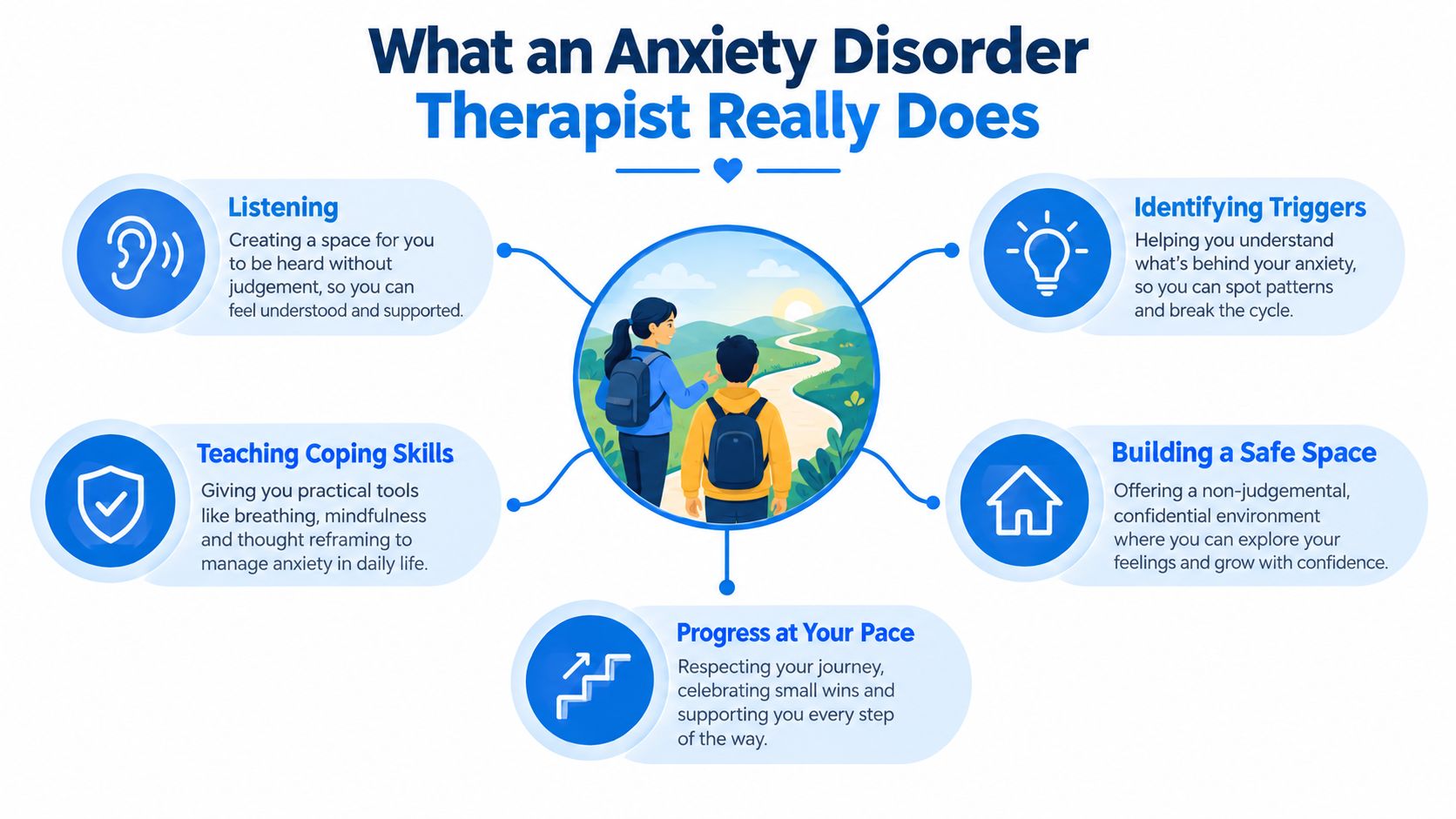
Third, a good therapist tracks progress with you. That may include sleep, panic symptoms, avoided situations, and simple symptom scores over time. Progress isn't only feeling calmer in the room, it's also returning to work, study, travel, or social life with less fear.
Who does what
Titles can feel confusing, so here's a plain guide. A psychologist is trained in assessment and psychological therapy. A counsellor often focuses on supportive counselling, coping, and life concerns, while a psychotherapist may offer longer or specialised talk therapy.
A psychiatrist is a medical doctor who can diagnose, prescribe medication, and coordinate care for complex or severe symptoms. Many people see one professional, while some benefit from coordinated support. Reading about broad anxiety therapy options can help you compare paths before you decide.
Your first month may involve understanding your history, naming triggers, setting one or two goals, and learning a grounding or breathing practice. You might also complete a screening tool. Remember, assessments are informational, not diagnostic. They support self-awareness and planning, they don't define you.
That distinction also matters for safety. India's Tele-MANAS programme was launched nationwide in October 2022 and provides free, round-the-clock support through 14416 or 1-800-891-4416, as described in the British Journal of Psychiatry overview of Tele-MANAS. If you're in immediate danger, use emergency or crisis support rather than waiting for a screening result.
Therapy should feel collaborative. You bring lived experience, and the therapist brings training, structure, and a calm outside view.
Therapy Approaches That Work for Anxiety
Anxiety therapy isn't one vague conversation repeated for months. It's a small toolkit of studied approaches, chosen for your symptoms, history, and preferences. A good therapist should explain why they're suggesting one method over another.
Cognitive behavioural therapy, or CBT, is like learning to debug an oversensitive alarm system. You notice anxious thoughts, test them gently, and practise new responses instead of automatic avoidance. The Indian Psychiatric Society clinical guidance identifies CBT as a first-line psychological intervention for anxiety disorders, as summarised in the Indian guidance document on anxiety disorder prevalence and care.
Four tools you may hear about
Acceptance and commitment therapy, or ACT, works a little like making peace with difficult weather. You don't have to like anxious thoughts, but you learn to let them pass while you move toward what matters. It's especially helpful when fighting every thought leaves you exhausted.
Exposure therapy is a gradual, guided return to avoided places, sensations, or situations. You and your therapist build small steps, so your brain learns that discomfort can rise and fall without danger. It is commonly used for phobias, panic, and obsessive-compulsive patterns.
EMDR may be offered when anxiety is linked with distressing memories. It uses structured eye movements or similar bilateral stimulation while you process difficult experiences with a trained clinician. It isn't right for everyone, which is why assessment matters.
Common Therapy Approaches for Anxiety at a Glance
| Approach | What It Targets | Typical Length | Best Fit For |
|---|---|---|---|
| CBT | Anxious thoughts, avoidance, safety behaviours | Often brief and structured | Generalised anxiety, panic, social anxiety |
| ACT | Struggle with thoughts, values-based action | Structured, varies by goal | Chronic worry, avoidance, perfectionism |
| Exposure therapy | Feared situations, sensations, triggers | Stepwise, paced to readiness | Phobias, panic, OCD related patterns |
| EMDR | Distress linked to memories | Planned in phases | Trauma related anxiety |
Some people also explore sleep routines, movement, mindfulness, and medical care as part of wider support. If you're curious about integrative perspectives, this overview of holistic anxiety care in Houston can sit alongside, not replace, evidence-based therapy. Lifestyle support should strengthen care, not delay it when symptoms are severe.
The best fit isn't about trends. It's about matching the method to the pattern keeping anxiety going, then reviewing whether it's helping. Depression, trauma, substance use, or physical health issues can also shape the plan, so tell your therapist the whole story.
Credentials and Red Flags Worth Knowing
Choosing a therapist in India can feel daunting because titles and training routes vary. You don't need to become an expert in regulation. You only need a few calm checks before you book.
A clinical psychologist in India typically has an M.Phil or Psy.D in clinical psychology and registration with the Rehabilitation Council of India. A counsellor may hold a relevant master's degree, supervised training, and certification in counselling methods. A CBT practitioner should be able to describe specific training in that model.
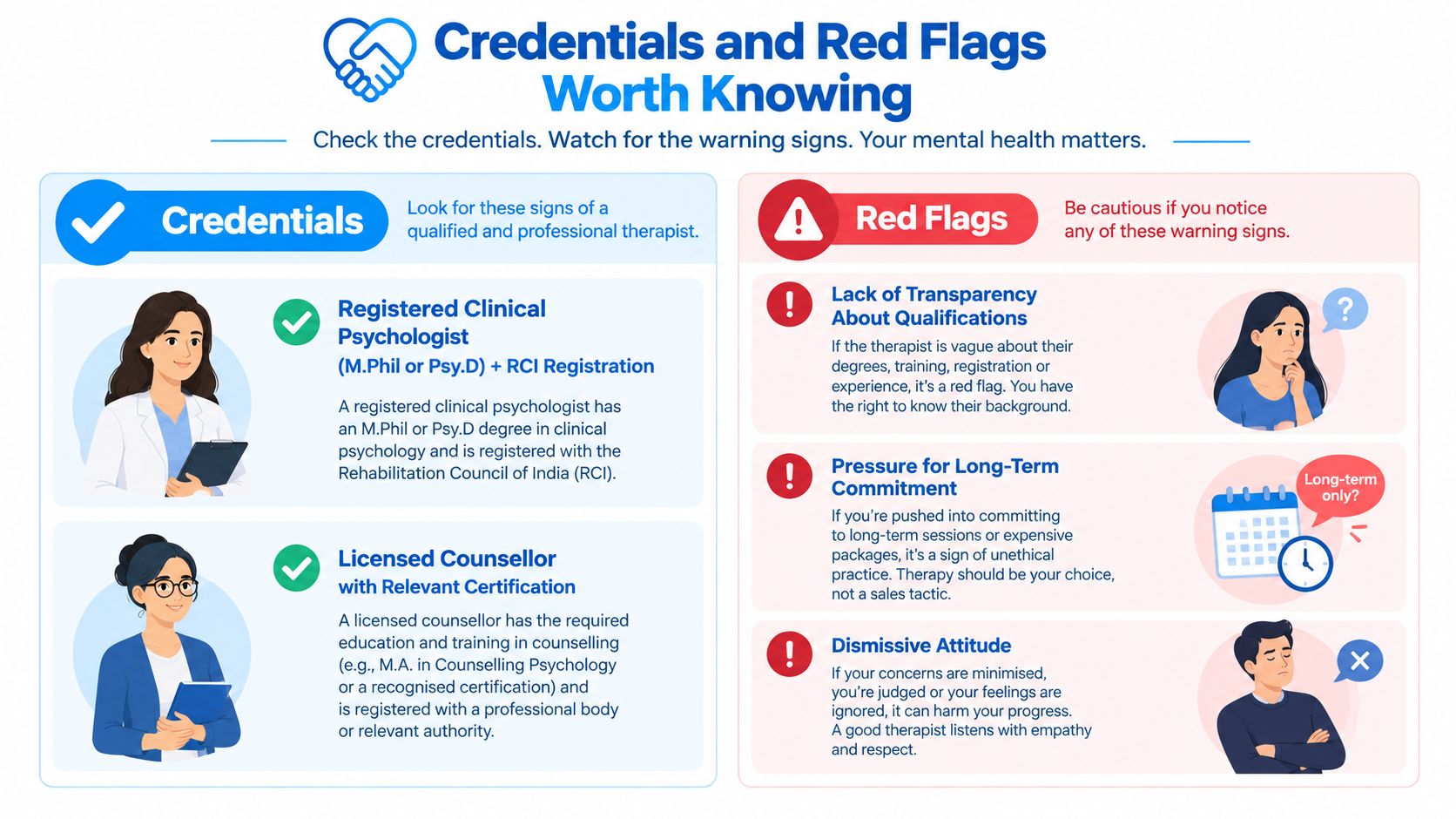
A life coach may support goals and habits, but coaching isn't treatment for an anxiety disorder. That's not a judgement on coaches. It's a safety and scope issue, especially if panic, trauma, or major impairment is present.
Five quick trust checks
- Verifiable registration: Ask for a registration number or credential you can check.
- Supervised experience: Ask where they trained and who supervised their clinical work.
- Approach-specific training: Look for clear training in CBT, exposure, ACT, or EMDR.
- Clear fees: Fees, cancellations, and session length should be stated upfront.
- Openness about outcomes: A trustworthy therapist welcomes questions about progress.
Quiet red flags include promises of a cure, pressure to buy a long package before assessment, or discomfort when you ask about qualifications. Dismissive language is another warning sign. You should never feel shamed for anxiety, workplace stress, or needing time to decide.
Scarcity makes these checks even more important. A government summary cited an estimate of 0.75 psychiatrists per 100,000 people in India compared with the World Health Organization benchmark of at least 3 per 100,000, in the Government of India release on mental health services and workforce. Coordinated care across psychologists, counsellors, and psychiatrists matters because no single route can meet every need.
Keep your checklist in your phone. Compare two or three profiles slowly, and trust clear information over confident marketing.
Smart Questions to Ask in Your First Session
Your first session is a two-way interview. The therapist is learning about you, and you're learning whether their style, training, and plan feel right. Bringing questions isn't rude, it's part of good care.

Clear expectations may help you stay engaged after that first meeting. A report on access in India noted that nearly 40% of people do not return after their first mental-health consultation, as covered in The Week report on mental health services in India. Poor fit or unclear next steps can be part of that story, so ask early.
Seven questions worth bringing
- What training do you hold: This helps you confirm scope and specialisation.
- Which approach would you use for me, and why: The answer should link method to your symptoms.
- How will we measure progress: Look for goals, check-ins, or symptom tracking.
- What happens if I feel unsafe or much worse: You need a clear crisis and referral plan.
- How does confidentiality work: Ask about family, employers, insurers, and record keeping.
- What happens between sessions: Homework or exposure practice should feel explained, not imposed.
- How long might this take: A range with review points is more honest than a guarantee.
This short video can help you picture how a supportive first conversation may sound before you attend your own session.
Notice how answers feel. Considered, plain language is a good sign, while rushed or defensive replies are useful information too. Take notes, ask for repetition, and pause before booking a package.
Practical rule: You are allowed to leave a first session with information, not an obligation.
Therapy works best when you can say, that didn't help, I felt misunderstood, or I need this slower. A therapist who welcomes that honesty is showing you something important.
Two Realistic Paths Through Anxiety Therapy
Progress rarely looks like a straight line. These are composite examples, not real clients, but they show how therapy can unfold when measurement, honesty, and fit are taken seriously.
Path A: steady steps for constant worry
A young professional in Bengaluru arrived exhausted by generalised anxiety, poor sleep, and Sunday night dread about work. Her therapist began with psychoeducation, a sleep routine, and CBT exercises for catastrophic thinking. She tracked worry, avoidance, and rest each week.
By the middle of a planned course of weekly sessions, she wasn't anxiety-free. She was, however, catching spirals earlier, sending emails without endless rereading, and sleeping more steadily. The work then shifted toward relapse prevention, so she could handle busy weeks without returning to old safety behaviours.
Indian evidence supports this kind of time-bounded review. A randomised feasibility trial among 41 Indian university students with social anxiety used six weekly two-hour sessions and found significant improvement at post-treatment and two-month follow-up, as reported in the Indian Journal of Psychological Medicine trial of brief group CBT. The lesson isn't that everyone needs six sessions. It's that goals and review points help.
Path B: when changing therapists is progress
A mother of two with health anxiety started therapy and felt understood at first. After several weeks, reassurance seeking and body checking remained strong, and sessions felt repetitive. She raised this openly rather than dropping out without notice.
Her therapist responded respectfully and supported a referral. The second psychologist used exposure-based CBT and ACT skills, with clear practice between sessions and monthly review. Change came gradually, through fewer urgent searches, calmer clinic visits, and more presence with her children.
Both paths carry the same message. Burnout, anxiety, and low mood can overlap, and care may need adjustment. Saying this isn't working yet isn't failure. It's information your therapist can use to reassess diagnosis, comorbidity, adherence, or the need for psychiatric input.
What matters is whether you're moving toward a fuller life. Less avoidance, better role functioning, and kinder self-talk are meaningful signs, even before every symptom fades.
How DeTalks Helps You Take the First Step
For many people in India, the hardest part isn't accepting support. It's finding a qualified person, in the right language, at a workable time, without stigma or a long search. A directory can lower that first barrier.
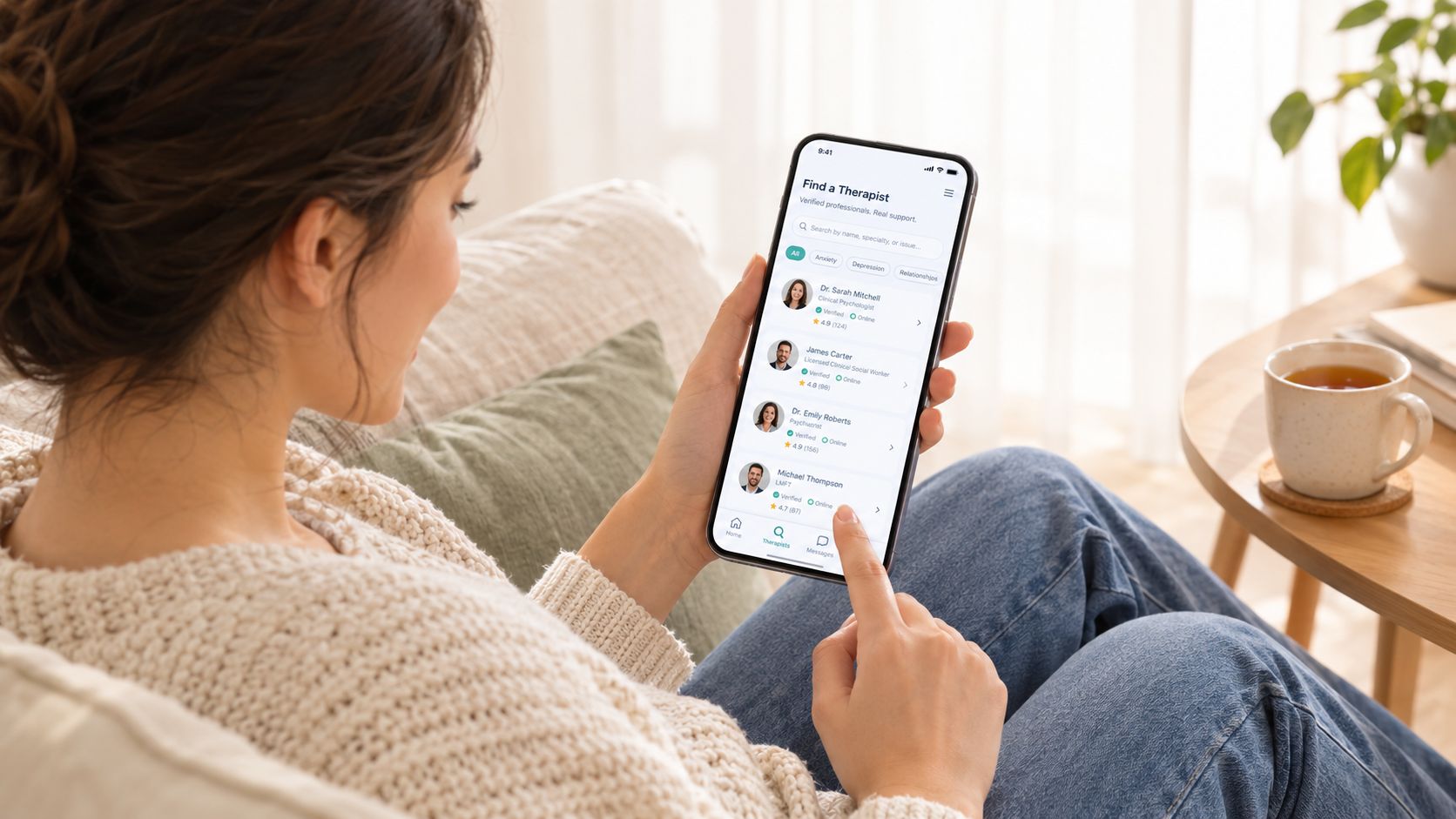
On DeTalks, you can browse verified therapist and psychologist profiles by concern, including anxiety, and book online consultations. You can also explore confidential, science-backed self-assessments, including tools for anxiety symptoms. Assessments are informational, not diagnostic, and they're best used to guide a conversation about next steps.
Why easier access matters
The National Mental Health Survey reported a treatment gap of 85.0% for common mental disorders and 73.6% for severe mental disorders, as detailed in the National Mental Health Survey report on prevalence and treatment gaps. Behind those figures are cost, stigma, low awareness, and uneven specialist availability. Online discovery can't solve all of that, but it can make the front door easier to find.
Language and follow-through still matter. Government material notes that the Tele-MANAS app expanded to 10 regional languages in addition to Hindi and English in 2025, as set out in the Government of India document on digital mental health access. Good platforms should think beyond video calls, including privacy, low bandwidth, family involvement, and escalation when in-person or psychiatric care is needed.
Use the platform at your pace. Read a few profiles, note language and approach, take an assessment for reflection, and book one first session when you're ready. You're looking for fit, clarity, and care you can return to.
Starting Today, Gently and on Your Terms
You don't need a perfect plan to begin. Start with one honest observation from your week, such as I avoid calls, I wake up tense, or I can't switch off after work. That small note can become your opening line in therapy.
A gentle starting checklist
- Notice one pattern: Write when anxiety peaks and what you do next.
- Write one question: Choose the question you'd most like a therapist to answer.
- Reflect with an assessment: Treat results as information, not a diagnosis.
- Browse a few profiles: Compare credentials, language, approach, and fees.
- Book one session: A first meeting is a conversation, not a long commitment.
The goal isn't to become a different person. It's to build resilience, compassion for yourself, clearer thinking, and room for happiness alongside ordinary stress. Positive change can look quiet, like resting without guilt or joining a plan you once avoided.
Switching therapists isn't failure, and pausing to choose well isn't delay. Supportive care should respect your culture, family context, budget, and pace. If symptoms feel severe, if you're harming yourself, or if daily functioning drops sharply, seek urgent help promptly.
Asking for help is itself a skill. You can practise it in small steps, with support that meets you where you are.
If you're ready to explore therapy for anxiety, DeTalks lets you browse therapist profiles in India, try confidential assessments for self-reflection, and book a first session when it feels right. Visit today to compare approaches, languages, and availability, then take one gentle step toward support on your terms.
Leave a Reply