
You might be tired, distracted, and still trying to function. Maybe anxiety is showing up as racing thoughts, poor sleep, or constant tension. Maybe depression feels more like numbness, low motivation, or getting through work on autopilot. In that state, it's natural to search for the best therapist for depression and anxiety, then realise you're not even sure what “best” should mean for you.
For one person, the right fit is a therapist who works in their preferred language and offers online evening sessions. For another, it's a clinic that can add psychiatric support if symptoms get heavier, or a provider that keeps counselling affordable enough to continue. In India, that question matters even more because access is still uneven. The National Mental Health Survey estimated treatment gaps ranging from 70% to 92% across disorders, with about 85.0% for common mental disorders, including concerns relevant to anxiety and depression, which means many people who need care still don't receive it at all (National Mental Health Survey findings).
So this comparison doesn't pick one universal winner. It looks at seven India-focused options by the problem they solve best, from matching and transparency to integrated care and broader well-being. If you're also exploring anxiety treatment and recovery options, this guide can help you narrow down what kind of therapy or counselling support fits your life. Any screening tools mentioned here are informational, not diagnostic. Therapy can support distress, but it can also support resilience, compassion, happiness, and day-to-day well-being.
1. DeTalks
If your biggest problem is not motivation but confusion, DeTalks stands out. It's built for people who need help sorting through different kinds of support, from self-guided resources to therapy, counselling, and psychiatric referral when needed.
DeTalks brings together a directory of psychologists, therapists, and counsellors with bookable profiles, confidential assessments, and educational content. That combination matters because many people don't start with a clean answer like “I need CBT” or “I need a psychiatrist.” They start with stress, low mood, burnout, relationship strain, sleep issues, or a sense that something feels off.
Why DeTalks works well for matching
The platform's strongest advantage is guided discovery. Its science-backed screening tools help users understand whether they may be better served by self-help, coaching, therapy, or a higher level of care, while still keeping the message clear that assessments are informational, not diagnostic.
That's useful in India's current access reality. Government-linked reporting notes a severe shortage of qualified mental health professionals, with independent reporting citing about 1.36 psychiatrists per 100,000 people against a WHO benchmark of 3 per 100,000, and Tele-MANAS has handled more than 34.34 lakh calls since launch, showing how much unmet need exists before people even reach formal therapy (Parliamentary mental health access summary).
Practical rule: If you're unsure whether you need counselling, structured therapy, or medication support, a platform with assessments plus a clinician directory is usually more useful than a simple booking marketplace.
DeTalks also covers a wide range of concerns. That includes depression, anxiety, trauma-related difficulties, OCD, ADHD, bipolar concerns, autism spectrum challenges, grief, exam anxiety, parenting stress, family conflict, workplace stress, and low motivation. It doesn't stop at distress. It also offers content around resilience, mindfulness, emotional intelligence, purpose, and broader well-being.
Where DeTalks has trade-offs
The main drawback is pricing transparency. Fees aren't presented as a single site-wide standard, so you'll need to check individual practitioner profiles and booking pages to compare costs.
Its current footprint is India-focused, though the company has said it plans broader expansion. For many readers, that won't be a problem. For readers outside India, it may limit immediate options.
A final strength is trust framing. Founder Abhay Singhal, with an IIT Bombay and ISB background, has publicly emphasised helping clinicians build compliant, safe, and sustainable practices. That doesn't replace your own fit check, but it does signal that the platform is thinking beyond lead generation.
- Best for people who need direction: Good when you're deciding between self-help, therapy, counselling, or referral.
- Best for broader goals: Useful if you want help for anxiety or depression but also care about resilience, compassion, or happiness.
- Less ideal for instant price comparison: You may need extra clicks to compare session fees.
You can explore the platform at DeTalks.
2. Amaha
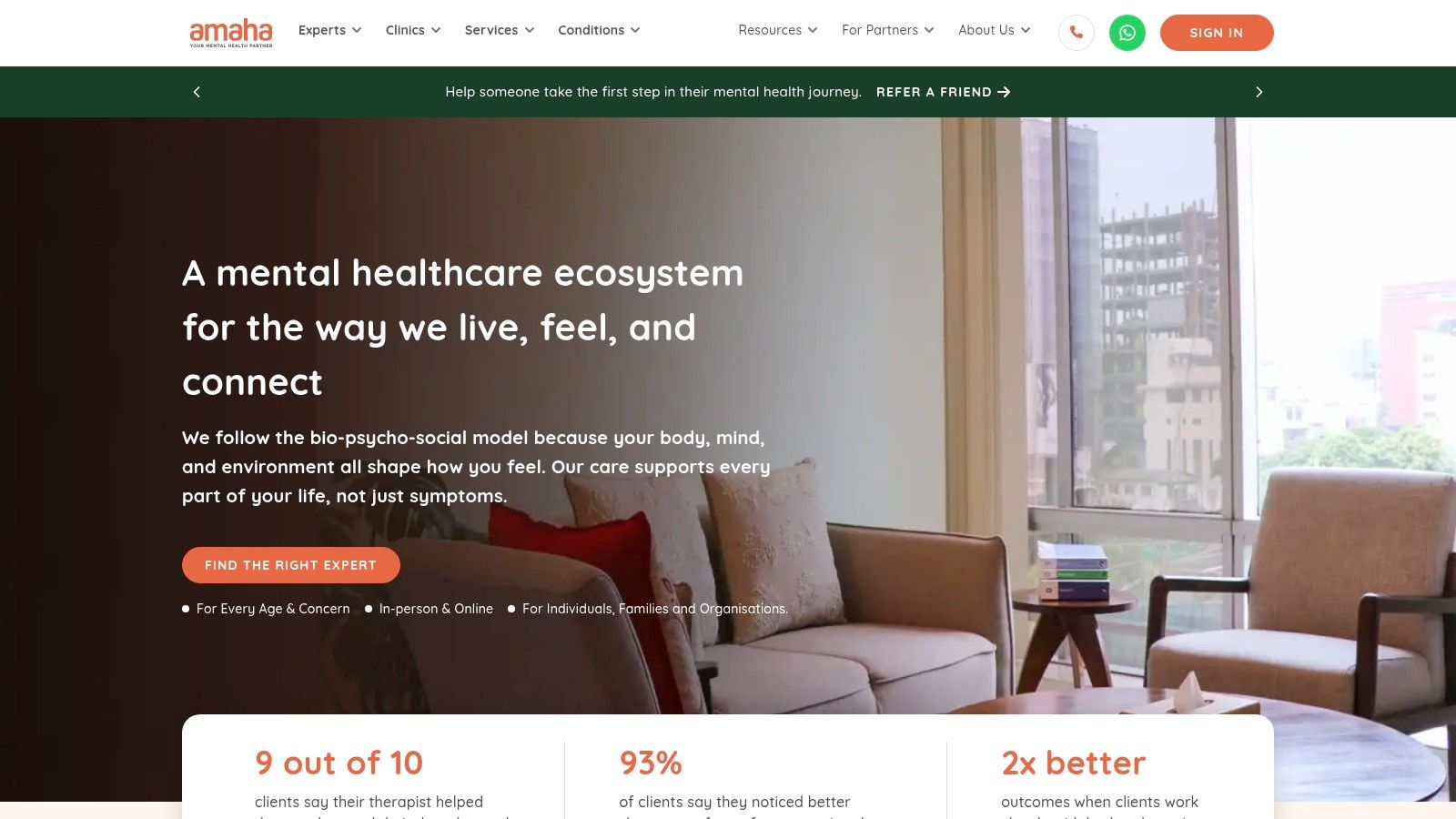
Amaha is a strong option when you don't want to manage your care in pieces. It combines therapy, psychiatry, online support, in-person clinics in Bengaluru, Mumbai and Delhi, and an in-patient mental health hospital in Bengaluru.
That integrated setup changes the decision. If you begin with counselling for anxiety or depression and later need medical review, you don't have to start over on another platform. Amaha's self-care app also gives people a lower-pressure entry point before or alongside sessions.
Where Amaha is strongest
Amaha is especially useful for people who want escalation paths built in. Some users start with stress, burnout, or low mood, then realise they need more structured treatment. A system that can move from OPD support to psychiatry and hospital care can reduce disruption during a hard period.
India's need for this kind of organised access is substantial. A government summary noted that 15% of India's adult population needs mental health intervention, and that urban prevalence is higher than rural prevalence at 13.5% versus 6.9% (Press Information Bureau mental health summary).
When symptoms start affecting work, sleep, appetite, or daily functioning, continuity matters as much as the therapist's style.
Amaha also benefits from scale. A large in-house clinical network and central matching can help if you need language options or a therapist with experience in a specific issue area.
Where Amaha may feel limiting
Amaha doesn't publish simple per-session pricing on the main site, so cost comparison is less straightforward before booking. Popular slots at known centres can also fill up quickly, which matters if you need a very specific schedule.
Still, if your top priority is integrated care rather than cheapest entry, Amaha is one of the clearest choices in this list. Visit Amaha.
3. Heart It Out
Some people don't need the largest network. They need pricing they can understand before they commit. Heart It Out is one of the more straightforward options for that.
Based in Bengaluru, Heart It Out offers online and offline sessions, a large therapist roster, and published packages that make the financial side less opaque. It also supports couples therapy and has tools for booking and progress tracking, which can make care feel more structured.
Why Heart It Out appeals to planners
Transparent package design reduces a common early barrier. Many first-time therapy users hesitate not because they doubt therapy, but because they can't estimate what ongoing care will look like. Heart It Out helps by showing subscription and bundle pathways rather than keeping every detail behind an intake call.
That structure can help working professionals in particular. A Delhi workplace mental health study summarised in a peer-reviewed review found that among 1,764 white-collar employees in urban India, 29% showed moderate-to-severe signs of depression, 55% had moderate-to-severe signs of anxiety, and 78% had moderate-to-high stress (urban India workplace mental health review).
- Best for cost visibility: You can compare packages before speaking to someone.
- Best for routine-oriented users: Progress tracking and structured plans may suit people who like clear process.
- Best for Bengaluru locals: In-person care is stronger if you're in that city.
What to watch before booking
The subscription style may feel a bit complex if you're brand new to therapy. If you just want one low-commitment starting conversation, another platform may feel simpler.
Physical presence is also concentrated in Bengaluru. If you live elsewhere, Heart It Out becomes primarily an online option. You can browse Heart It Out.
4. The Mood Space
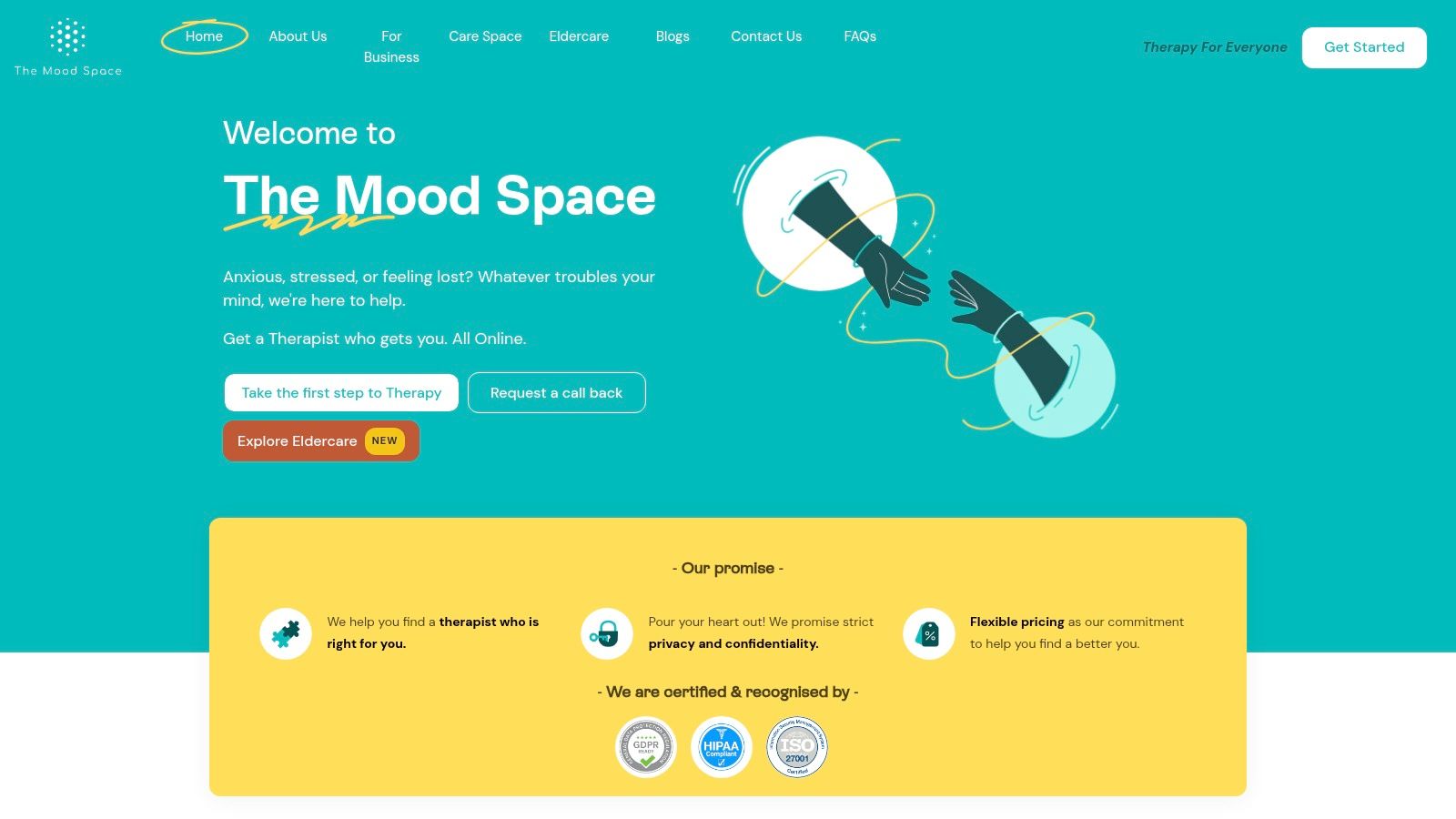
If affordability is the reason you've delayed therapy, The Mood Space deserves a serious look. Its model lowers the commitment needed to start, with trial-style entry options, human matching, and financial-aid routes.
That matters because many people don't need a perfect long-term plan on day one. They need a manageable first conversation with a real person, and they need it soon.
Why The Mood Space is good for first steps
The platform matches users to a small set of therapists quickly and keeps onboarding fairly simple. It also offers support groups and workplace programmes, which broadens its value beyond one-to-one therapy.
The affordability angle is especially relevant because access isn't only about awareness. A more recent India-focused summary citing WHO and National Mental Health Survey figures stated that about 56 million Indians had depression and 38 million had anxiety disorders, while one cited estimate suggested only 36.9% of people with anxiety received any form of treatment (India mental health statistics overview).
A lower-cost trial can be useful when your real question is simple: “Can I talk to this person openly, and do I want to come back?”
Where it may not fit everyone
The Mood Space is online only. If you know you want in-person sessions, or think you might later want clinic continuity, another provider may fit better.
Therapist choice and fee variation also depend on the practitioner and package. That's normal, but it means you should ask about the exact structure before assuming all options will look the same. You can review its options at The Mood Space.
5. MindPeers
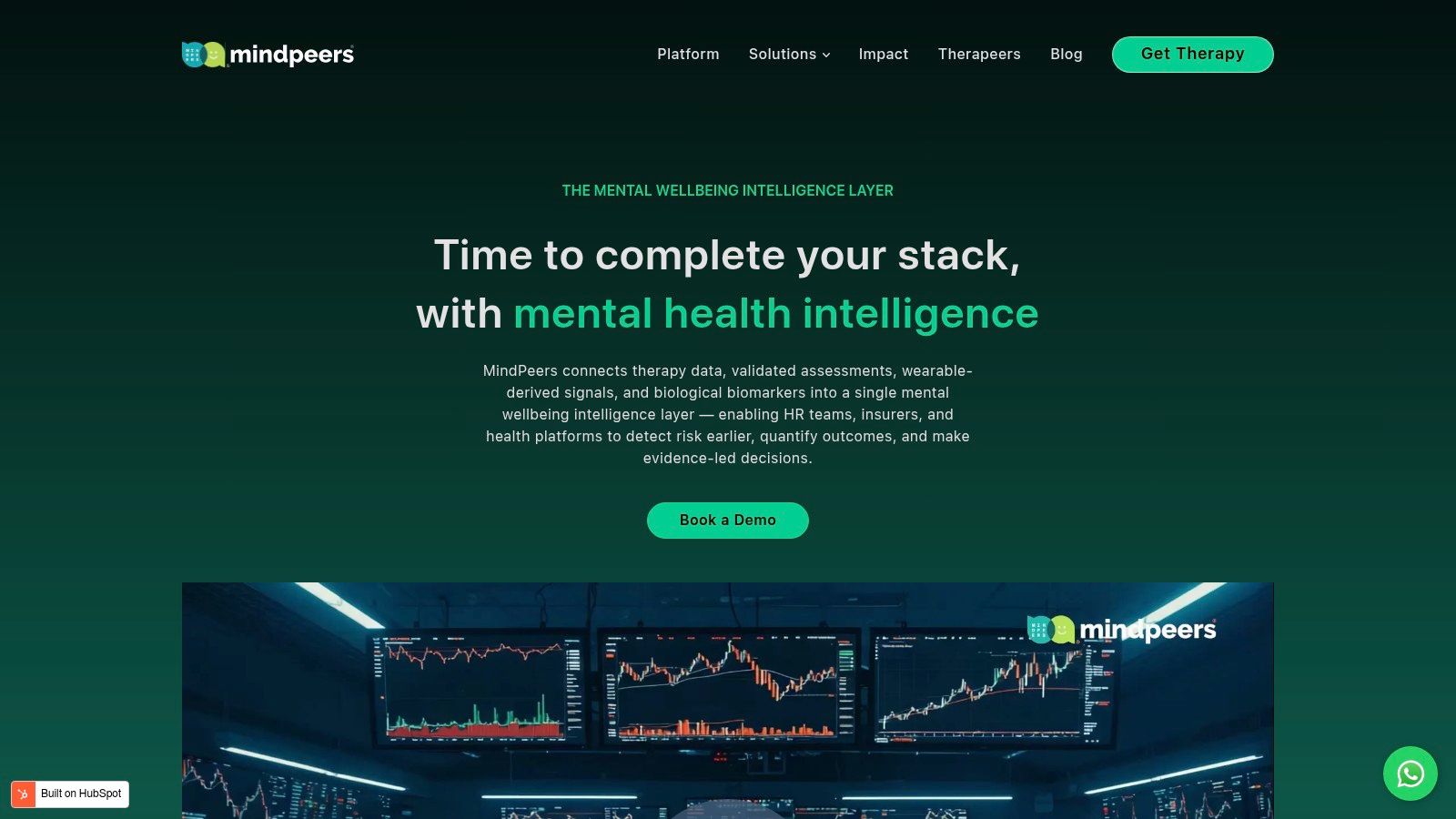
MindPeers is a comparison shopper's platform. If you want to see profiles, filter by language or special issue, and get a feel for fees before booking, it does that clearly.
This can be reassuring if you've been burned by vague intake processes. Some people feel calmer when they can browse, compare, and choose without a sales-style conversation first.
Where MindPeers helps most
MindPeers suits users who want visible therapist profiles and practical filters. If you care about modality, language, or a therapist's focus area, it gives you a more marketplace-style experience than a heavily guided one.
That approach also reflects a real demand pattern. India's mental health market was valued at USD 20.82 billion in 2025 and is projected to reach USD 27.36 billion by 2034, with depression and anxiety representing the largest disorder segment at 32% of market share, while outpatient counselling leads service types at 35% (India mental health market outlook).
- Best for transparent browsing: Easier to compare therapists side by side.
- Best for budget-conscious users: Lower-cost options are visible at booking.
- Best for users who know what they want: Helpful when you already have a sense of your preferred approach.
Where the trade-off sits
A larger open marketplace can mean more trial and fit work on your side. You may find a strong therapist quickly, or you may need to test a couple of options before the relationship feels right.
That doesn't make the platform weaker. It just means MindPeers is best for users who prefer choice over hand-holding. Visit MindPeers.
6. Kaha Mind
Kaha Mind feels more like a curated practice than a broad platform. That makes it appealing for people who want a smaller clinical environment and the possibility of moving from online care into in-person sessions in Bengaluru.
Its appeal is less about scale and more about continuity. If you're the kind of person who values staying with one practice as your needs change, that can matter a lot.
Why Kaha Mind may feel steadier
The team focuses on talk therapy for mood and anxiety concerns, along with couples therapy. Online sessions are available across India, and in-person options in Bengaluru create a bridge for people who begin remotely but later want face-to-face sessions.
That flexibility lines up with what many patients value in digital care. A telepsychiatry satisfaction survey in India reported 99.2% satisfaction for appointment ease, 99.2% for audio and video quality, 99.2% for doctor concern, and 98.3% for time spent listening, suggesting that attentiveness and access often matter more than whether care starts online (India telepsychiatry patient satisfaction survey).
Online therapy isn't automatically “less serious.” For many people, the better test is whether the clinician listens well, follows through, and offers a plan you understand.
The main downsides
Kaha Mind's website is being rebuilt, which limits self-service. That can make first contact feel less polished than on larger platforms.
Pricing also isn't publicly listed, so you'll need to ask during intake. If you want instant price comparison without back-and-forth, that's a real drawback. You can still contact Kaha Mind directly.
7. HopeQure
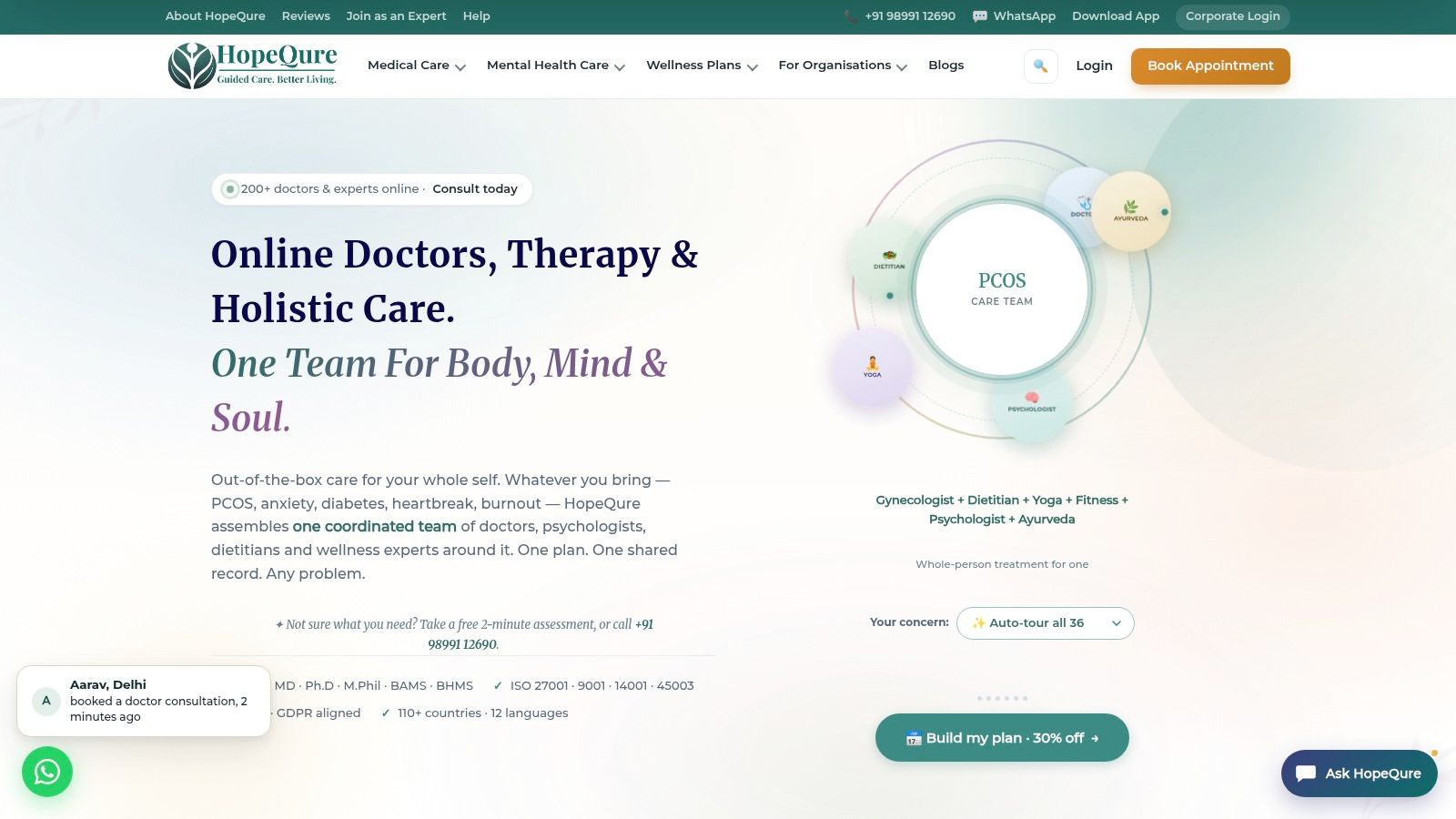
HopeQure is one of the better options if you want central pricing and a clear path to combined care. It offers psychologist-only plans as well as psychologist-plus-psychiatrist bundles, which can help when you want coordination without building it yourself.
That makes HopeQure practical for people who suspect talk therapy alone may not answer every question. It can also help people who feel reassured by published starting prices and multi-session programme pages.
Where HopeQure is most useful
The platform is strongest when you want fee clarity plus psychiatric access in one place. Instead of guessing what combined care might involve, you can compare plan structures before booking.
That's relevant because depression and anxiety are not niche concerns in India. A Lancet Global Burden of Disease analysis reported that in 2017 India had 45.7 million people with depressive disorders and 44.9 million with anxiety disorders, out of 197.3 million people living with mental disorders overall (Lancet analysis of India's mental health burden30475-4/fulltext)).
- Best for combined treatment planning: Useful if you want therapy with access to psychiatry when appropriate.
- Best for pricing clarity: The starting-price model removes some uncertainty.
- Best for online convenience: Everything is structured for remote care.
What to be careful about
Some plan pages emphasise short audio consults. Those can be fine for orientation, but if you want deeper therapy work, it's worth actively selecting longer sessions.
HopeQure is also fully online. For many people that's a benefit. For others, it will feel limiting if in-person care is important from the start. You can compare plans at HopeQure.
Top 7 Therapy Platforms for Depression & Anxiety, Comparison
| Service | Implementation complexity 🔄 | Resource requirements ⚡ | Expected outcomes ⭐📊 | Ideal use cases 💡 | Key advantages ⭐ |
|---|---|---|---|---|---|
| DeTalks | 🔄 Medium, directory + validated screening tools and booking workflows | ⚡ Medium, clinician network, assessment engine, content curation | ⭐⭐⭐ / 📊 Strong matching accuracy and combined self-help + clinical pathways | 💡 Users seeking evidence-based screening, matched therapy, and self‑guided growth | ⭐ Clinician-led directory, validated assessments, blended recovery & positive‑psychology content |
| Amaha (formerly InnerHour) | 🔄 High, integrated therapy, psychiatry and in‑patient escalation | ⚡ High, large in‑house clinician team, multi‑city clinics, hospital resources | ⭐⭐⭐ / 📊 High clinical continuity for moderate-to-severe cases | 💡 Patients needing stepped care, psychiatric escalation or local in‑person treatment | ⭐ National-scale clinical network, clear escalation pathways, centralized matching |
| Heart It Out | 🔄 Medium, subscription/program management plus booking and tracking | ⚡ Medium, therapist panel, subscription infrastructure, in‑person centres (Bengaluru) | ⭐⭐ / 📊 Predictable engagement via structured programs and progress tracking | 💡 Users wanting transparent packages, subscription plans, or local clinic access | ⭐ Transparent pricing, packages and progress tracking; mix of online and in‑person care |
| The Mood Space | 🔄 Low, online-first matching and streamlined onboarding | ⚡ Low, online platform, rapid human matching, sliding-scale options | ⭐⭐ / 📊 High initial access and trial uptake; affordability improves start rates | 💡 First‑time therapy seekers on a budget; those needing rapid, low-commitment entry | ⭐ Budget-friendly trials, fast human matching, financial-aid options |
| MindPeers | 🔄 Low, marketplace with searchable profiles and booking tools | ⚡ Low, large therapist pool, profile/fee visibility, filtering UI | ⭐⭐ / 📊 Good price transparency; easier therapist comparison and entry | 💡 Cost-conscious users comparing therapists by fee, language or modality | ⭐ Visible fees, filters for matching, many low-cost options |
| Kaha Mind | 🔄 Medium, curated practice with clinic continuity for Bengaluru | ⚡ Medium, selected therapist team, clinic + online setup (website rebuilding) | ⭐⭐ / 📊 Strong personalized continuity for clients moving from online to clinic | 💡 Clients who value a curated therapist team and clinic continuity in Bengaluru | ⭐ Curated clinicians, clinic-style continuity and positive local reputation |
| HopeQure | 🔄 Medium, coordinated therapy + psychiatry bundles and program pages | ⚡ Medium, coordinated clinician teams, standardized fee bands, program design | ⭐⭐⭐ / 📊 Clear plan-driven outcomes especially when medication + therapy needed | 💡 Users seeking transparent plans with psychiatry access and predictable pricing | ⭐ Published starting prices, coordinated psychologist+psychiatrist bundles, plan clarity |
Choose the Next Right Step
The best therapist for depression and anxiety usually isn't the most famous one, or the one with the slickest website. It's the provider whose approach, access, cost, and level of support fit your actual life right now.
Start by defining your main concern in plain language. You don't need a perfect label. “I'm anxious all the time,” “workplace stress is spilling into my sleep,” “I feel flat and unmotivated,” or “I want support with burnout and resilience” is enough for a first conversation.
Then decide what format is realistic. If travel, privacy, or scheduling are barriers, online therapy may help you start sooner. If you know you open up better face to face, prioritise a provider with in-person availability in your city.
Next, check practical fit. Look at language, session timings, the therapist's qualifications, and whether their approach sounds structured, reflective, skills-based, or more exploratory. If cost matters, confirm the exact fee, session length, cancellation policy, and whether you're seeing a fixed provider or being matched from a pool.
A good early question is how progress will be reviewed. You don't need guarantees. You do need a clinician or service that can explain how they'll understand whether the work is helping, and what happens if it isn't.
It also helps to treat the first session as a fit check, not a lifelong commitment. You're allowed to ask how the therapist works. You're allowed to say that you want support for anxiety, depression, stress, burnout, or workplace stress, but also care about building resilience, compassion, happiness, and well-being.
If symptoms feel severe, keep daily life from functioning, or seem like they may need medical input, ask about psychiatric support early. If there's any urgent safety concern, seek immediate local emergency or crisis support rather than waiting for a standard therapy appointment.
The broader context matters too. An Aon survey of 1,500 people in India found that 60% felt more sensitive to stress than the previous year and 43% felt unsettled and nervous, while Gallup found that 28% of employees in India experienced stress “a lot” on the previous day (Aon India mental health index report, Gallup India workplace stress data). You're not the only person trying to sort this out.
Therapy and counselling can support people facing anxiety, depression, stress, burnout, and low mood. Positive psychology tools can support resilience, compassion, happiness, and daily well-being too. Assessments can offer useful direction, but they're informational, not diagnostic. The goal isn't to find a perfect platform on paper. It's to take the next right step with enough clarity to keep going.
If you want one place to explore therapists, counsellors, validated assessments, and self-help resources together, DeTalks is a strong place to start. It's especially useful when you're trying to figure out whether you need therapy for anxiety or depression, broader counselling for stress and burnout, or tools that support resilience and well-being alongside professional care.
Leave a Reply