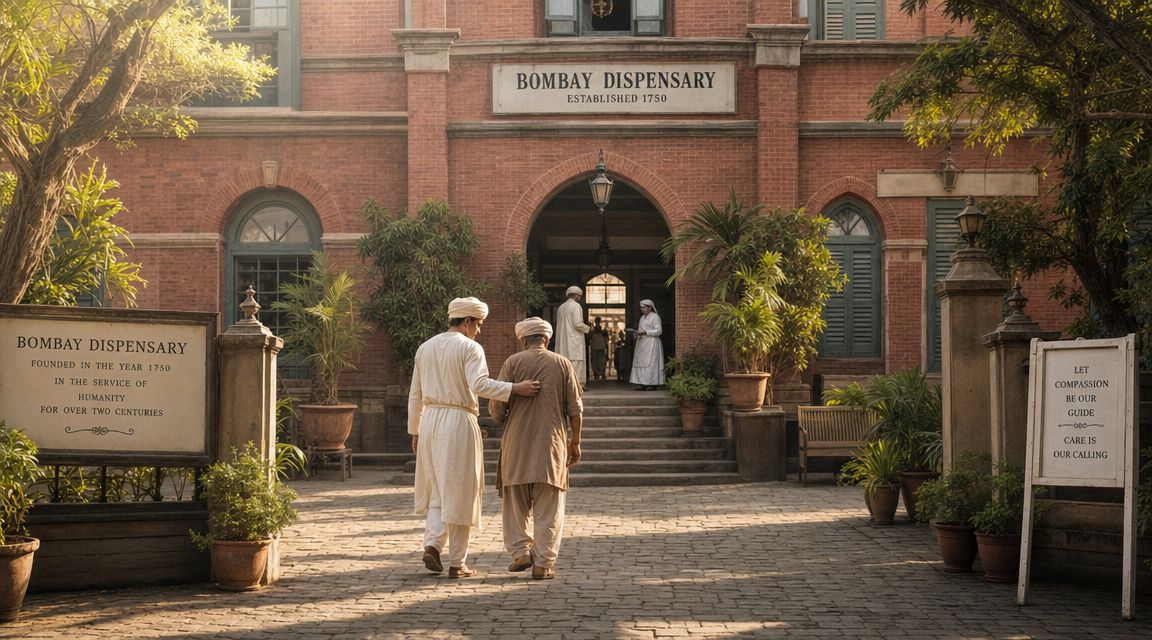
The first mental hospital in India is widely traced to a facility established in Bombay in 1745 to house around 30 patients. That small colonial-era institution marks the beginning of formal mental-hospital care in India, and its story still shapes how we think about therapy, counselling, and mental well-being today.
A person standing outside that early hospital might have seen a building of control more than a place of healing. Yet history rarely stays still. What began as a limited form of institutional care has slowly evolved into a wider conversation about dignity, anxiety, depression, workplace stress, resilience, compassion, and the right to seek support without shame.
Many readers come looking for a simple historical answer. They often leave with a deeper question: how did India move from confinement-based care to a world where therapy and counselling are part of everyday language? That journey matters, because when we understand the past, we often feel less afraid of asking for help in the present.
The Dawn of Mental Healthcare in India
The history of the first mental hospital in India isn't only about dates and buildings. It's also about how a society understood emotional suffering, unusual behaviour, distress, and care.
In earlier periods, families and communities often carried much of the responsibility for supporting people in mental distress. Under colonial administration, that support began to shift into organised institutions. This changed the language of care, the location of care, and the people who controlled it.
Why this history still matters
Many people think mental health history belongs in a museum. It doesn't. It helps explain why some families still feel nervous about psychiatry, why the word “hospital” can sound frightening, and why many people today prefer gentler pathways such as therapy, counselling, peer support, and community care.
The past also reminds us that mental healthcare has never been fixed. It keeps changing. That's good news for anyone who feels overwhelmed by burnout, anxiety, or low mood, because it means systems can improve and conversations can become more humane.
Practical rule: Learning where mental healthcare began can make today's options feel less mysterious and less intimidating.
From one institution to many forms of support
What started in a colonial city eventually grew into a much broader scope. Today, support may come through a psychiatrist, a psychologist, a counsellor, a general hospital, a workplace well-being programme, or an online therapy platform.
That variety matters because people don't all need the same kind of help. One person may need a careful psychiatric evaluation. Another may need counselling for grief, stress, or relationship strain. Someone else may only need a safe place to talk before distress grows into something harder to manage.
A helpful way to think about this journey is to compare the older model with the newer one:
| Then | Now |
|---|---|
| Care often happened in isolated institutions | Care can happen in hospitals, clinics, schools, workplaces, and online |
| The focus was often control and supervision | The focus is increasingly dignity, recovery, and well-being |
| Patients had limited voice | People are encouraged to ask questions and make informed choices |
| Mental illness carried intense stigma | Stigma still exists, but more people openly discuss therapy and support |
If you've ever wondered whether seeking help means losing control, history offers reassurance. India's mental health story has moved, slowly but meaningfully, towards more choice, more understanding, and more respect for the person behind the symptoms.
India's First Mental Hospital A Look Back at 1745
The clearest starting point in this history lies in Bombay in 1745, where a facility was established to house around 30 mentally ill patients, according to a historical review in the Indian Journal of Psychiatry archive. Historians widely treat this as the earliest mental hospital in India.

That detail can feel surprisingly small. Around 30 patients suggests not a sprawling medical campus, but a modest institution shaped by the needs and attitudes of its time. It existed under colonial urban administration, which means mental healthcare began, in this formal sense, inside systems of governance and social order rather than in a modern therapeutic framework.
What “care” probably meant then
Readers sometimes hear “hospital” and picture doctors, therapy rooms, and treatment plans. That wasn't the reality in the way we'd understand it today. In the eighteenth century, institutional care was often basic, custodial, and shaped by the belief that disturbed behaviour had to be managed physically and socially.
That doesn't mean no one intended to help. It means the tools, language, and ethics of mental healthcare were still significantly limited. Compassion may have existed at an individual level, but the structure itself was not built around today's ideas of informed consent, emotional safety, recovery goals, or personalised counselling.
Why Bombay came first in the timeline
Bombay's place in history matters because it came more than five decades before the first government-run lunatic asylum was opened at Monghyr on 17 April 1795, as noted in the same historical account. That makes the Bombay institution a foundational milestone rather than a footnote.
Three ideas help make sense of its importance:
- It marks a beginning: Formal mental-hospital care in India can be traced to a specific place and year.
- It reflects colonial priorities: The institution emerged from administrative systems concerned with order and containment.
- It shaped what came after: Later hospitals and asylums grew from this early model, even when they later tried to reform it.
The first mental hospital in India is historically important not because it solved mental suffering, but because it reveals how the state first tried to organise a response to it.
When people learn this history, they often feel two things at once. One is discomfort, because early institutions could be harsh and impersonal. The other is perspective, because modern mental health care in India did not appear suddenly. It grew out of a difficult past, and recognising that can deepen our appreciation for today's more humane approaches.
The Shift from Care to Containment in Colonial India
As more institutions appeared, the logic of care often changed. Instead of asking what would help a person recover, many systems asked how a person could be supervised, separated, or controlled.
That distinction is important. Care tries to understand distress. Containment tries to manage it. In colonial settings, large institutions often leaned towards the second approach.
Why asylum systems grew
Colonial administrators worked through categories, records, and control. When someone's behaviour seemed difficult, disruptive, or socially troubling, institutional placement could seem like an administrative solution.
This didn't happen only because of medicine. It also reflected power. The asylum model fit a broader governing style that preferred separation over community-based support.
A reader might ask, “Did families stop caring?” Not necessarily. But institutional systems can weaken older patterns of support by relocating responsibility from home and community to official structures. Once that happens, the person in distress may be seen less as a family member needing understanding and more as a case to be managed.
What patients likely experienced
We should be careful not to flatten every experience into one story. Some staff may have acted with sincerity. Some families may have hoped an institution would offer safety.
Still, the larger design had serious limits. People in such places often had little say in their daily lives. Privacy, autonomy, and emotional understanding were not central values in many asylum environments.
When a system is built mainly for supervision, healing becomes harder to recognise and even harder to measure.
A simple comparison helps:
- Community support: familiar people, local knowledge, emotional bonds
- Institutional confinement: distance, routine, surveillance, reduced personal voice
Neither model is perfect in every case. But the colonial asylum era made one problem very clear. Removing people from society does not automatically reduce suffering. Sometimes it adds a second layer of pain: loneliness and loss of dignity.
Why this still affects people today
The shadow of that era still lingers in public memory. Many Indians still associate mental healthcare with being labelled, isolated, or judged. That fear can delay help-seeking for depression, anxiety, or burnout.
This is one reason destigmatisation matters so much. Modern therapy and counselling work best when people don't feel they're walking into a system designed to silence them. They need to know that support can be collaborative, respectful, and rooted in well-being rather than mere control.
A Century of Change Key Reforms and Milestones
Change didn't arrive all at once. It came through institutions, debates, training, and a gradual move away from the old asylum model.
One especially important benchmark was the opening of the Ranchi Mental Asylum in 1918, later known as the Central Institute of Psychiatry, which was initially intended for European patients and later became one of India's premier psychiatric institutes, as described in the historical review of Indian psychiatry. That shift matters because it points to a new phase: from segregation-based institutions towards specialised psychiatric training and service delivery.

Ranchi and the rise of specialist psychiatry
Ranchi represents more than another hospital opening. It stands for a technical and professional transition. Institutions were no longer only places of custody. They also became places where psychiatric knowledge, clinical practice, and structured training could grow.
That doesn't erase the colonial inequalities built into the system. The asylum was initially intended for European patients, which tells us a lot about hierarchy at the time. But over time, the institution evolved into a major centre for psychiatric work in India.
The post-independence turning point
Another major shift followed the Bhore Committee's recommendations. Historical accounts note that the modernisation of psychiatry in India accelerated after these recommendations, leading to the All India Institute of Mental Health in 1954, which was later renamed NIMHANS in 1974.
These developments changed the direction of mental healthcare in practical ways:
- Teaching and training expanded: India needed professionals who could move beyond custodial care.
- General-hospital psychiatry gained importance: Mental healthcare began moving closer to mainstream medicine.
- Outpatient thinking became more realistic: Not everyone needed to be kept inside an institution to receive support.
- Evidence-based service delivery strengthened: Care gradually became more structured and clinically informed.
A useful way to read this transformation
The older asylum model created a problem that later reformers had to solve. Once institutions became places of long-term confinement, the need for better alternatives became obvious. Teaching hospitals, psychiatric departments, and specialist centres emerged because the old model could not meet the fuller human needs of patients.
A society often reforms mental healthcare when it finally realises that custody is not the same as treatment.
This is the deeper lesson of the century-long transition. India did not move in a straight line from darkness to enlightenment. It moved through contradiction. Colonial institutions created the framework. Later reformers pushed that framework towards education, clinical skill, and broader access.
Milestones that changed the conversation
A short timeline makes the progression easier to follow:
| Milestone | Why it matters |
|---|---|
| 1745 Bombay facility | Earliest widely traced mental hospital in India |
| 1795 Monghyr government-run asylum | Shows state-run expansion after Bombay's earlier start |
| 1918 Ranchi Mental Asylum | Marks a more specialised institutional phase |
| 1954 All India Institute of Mental Health | Signals post-independence modernisation |
| 1974 NIMHANS | Reflects consolidation of advanced psychiatric teaching and service delivery |
By this stage, mental healthcare in India had started to move closer to something many readers would recognise today. Not perfect. Not equally accessible. But noticeably more focused on treatment, learning, and the possibility of recovery.
The Modern Landscape of Mental Well-being
Today's mental health situation in India looks very different from the world of early asylums. Support can come through psychiatric care, therapy, counselling, school-based services, wellness centres, peer communities, and digital platforms that help people begin privately.

That shift matters because modern distress doesn't always look like what old institutions were built to handle. A person may appear “functional” while struggling with workplace stress, sleep problems, anxiety, depression, or emotional numbness. They may need support long before a crisis.
From institutions to flexible support
The biggest change is not only medical. It is cultural. More people now understand that mental well-being exists on a spectrum. You don't have to wait until life falls apart to speak with a therapist or counsellor.
Here's how the modern approach differs from the old one:
- Choice matters more: People can often choose between therapy, counselling, psychiatry, group support, or self-help tools.
- Settings are more varied: Care may happen in a hospital, private clinic, university service, or online session.
- Daily life is part of the conversation: Work stress, family pressure, social isolation, and burnout are treated as real mental health concerns.
- Strengths matter too: Support isn't only about illness. It also includes resilience, compassion, meaning, and happiness.
Many workplaces are also learning that well-being isn't separate from performance or culture. For readers trying to understand how employers can respond more thoughtfully, Mesmos' mental health support guide offers a practical workplace-focused overview.
What modern help can look like
A first appointment today is often more collaborative than people expect. The professional may ask about your symptoms, routines, relationships, physical health, and what kind of help you're comfortable exploring. That could involve therapy, counselling, lifestyle changes, psychiatric referral, or a mix of supports.
Some people still fear that asking for help means they'll be judged or forced into a path they don't want. In practice, good care usually begins with listening. It aims to understand your experience before deciding what support fits best.
The change becomes easier to see when you hear professionals speak about current care in everyday terms:
Mental healthcare today works best when it meets people where they are, not where old systems expected them to be.
This doesn't mean every barrier has disappeared. Cost, stigma, location, and long waiting times still affect access. But the overall direction is hopeful. India's mental health journey has moved from a single institutional model towards a more human, flexible, and preventive understanding of well-being.
Your Path to Resilience and Support Today
History can inform us, but it can also release us. When you realise that mental healthcare has evolved so much, it becomes easier to treat your own needs with less shame and more honesty.
If you're dealing with anxiety, depression, burnout, or workplace stress, the first step doesn't have to be dramatic. It can be a quiet act of self-respect. You might book a counselling session, speak with a therapist, consult a psychiatrist, or begin with an informational self-assessment that helps you reflect on patterns. Those assessments can be useful, but they are informational, not diagnostic.

A gentler way to begin
You don't need to “prove” that you're unwell enough to deserve help. Support can begin when something feels off, heavy, or persistent.
Consider starting with one or two of these actions:
- Notice your pattern: Are stress, irritability, hopelessness, panic, or exhaustion showing up again and again?
- Name the context: Is this linked to work pressure, grief, conflict, loneliness, sleep loss, or a longer emotional struggle?
- Choose one support door: Therapy, counselling, a psychiatric consultation, or a trusted support group can all be valid entry points.
- Write down what you want help with: Even a few notes can make the first conversation easier.
- Stay open to a process: Relief may come through skills, medication, reflection, habit changes, or a combination.
Resilience is not pretending you're fine
People often misunderstand resilience as toughness without tears. Real resilience is more flexible than that. It includes asking for support, resting when needed, repairing relationships, and building habits that protect your emotional balance.
Positive psychology can help here, not as forced positivity, but as a reminder that mental health includes strengths as well as symptoms. Compassion, gratitude, mindfulness, emotional insight, and purpose can sit alongside treatment. They don't replace professional care when it's needed. They strengthen it.
A simple framework can help:
| If you're facing | A supportive response |
|---|---|
| Workplace stress | Boundaries, counselling, manager conversation, rest planning |
| Anxiety | Therapy, grounding skills, medical review if needed |
| Depression | Professional assessment, structured support, daily routine care |
| Burnout | Workload review, recovery time, emotional support |
| Emotional confusion | Journalling, counselling, self-reflection tools |
You don't have to choose between healing distress and building happiness. A good support plan can hold both.
What to remember when seeking help
Some people improve through talk therapy alone. Others benefit from psychiatric care. Many need a combination over time. There is no single “correct” path.
What matters most is taking your experience seriously. If you've been carrying too much for too long, reaching out is not weakness. It is a practical, thoughtful move towards better well-being.
The story of the first mental hospital in India began in a narrow institutional world. Your story doesn't have to stay narrow. Today, mental healthcare can include understanding, agency, resilience, and hope. That's not a promise of quick fixes. It's an invitation to keep moving towards support that respects your full humanity.
If you're ready to explore support in a more practical way, DeTalks can help you find therapists, psychologists, and mental health professionals, while also offering informational assessments that support self-understanding and guide your next step with more clarity.
Leave a Reply