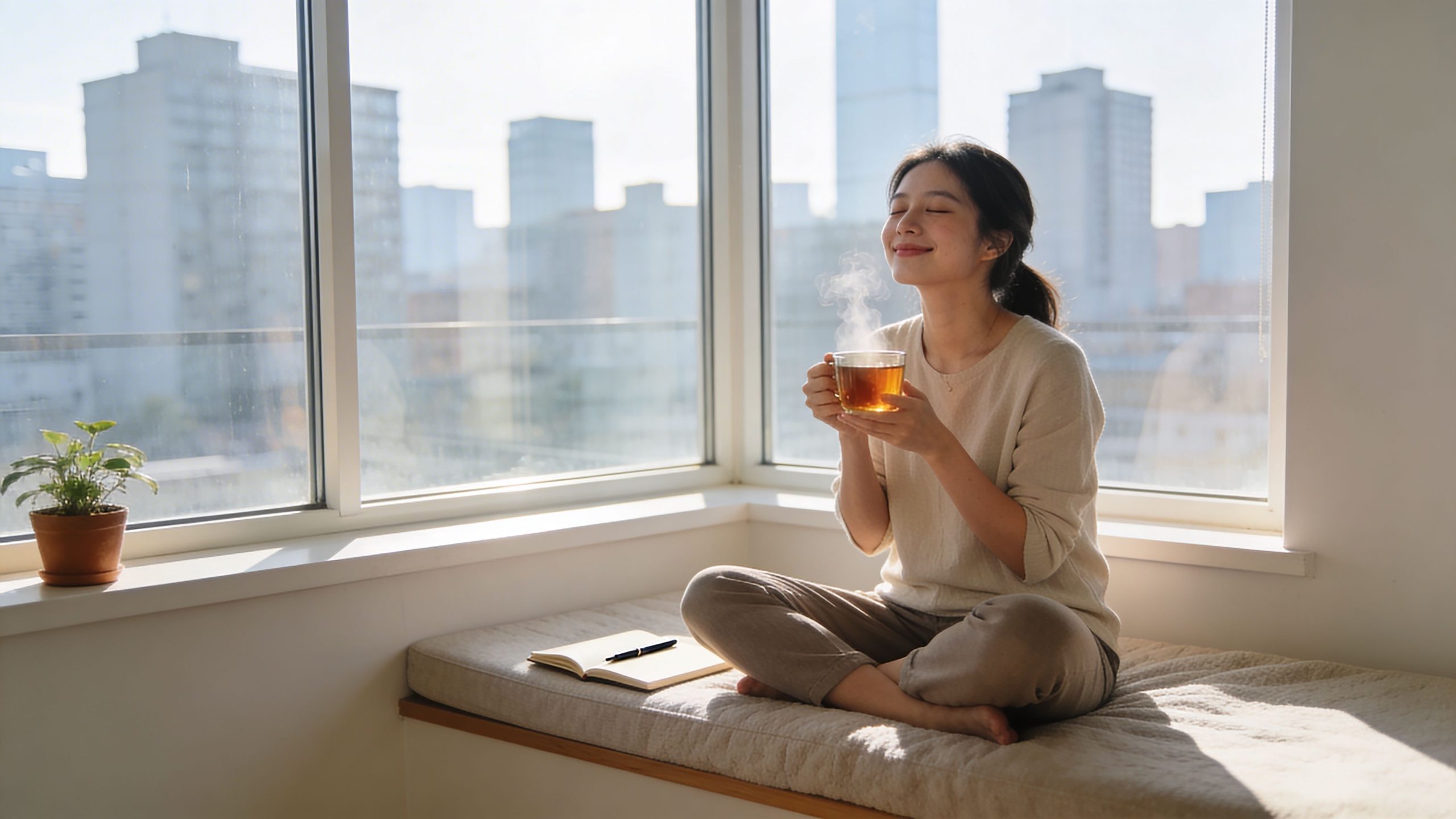
There are moments when the house is full, the phone won't stop buzzing, and everyone around you seems to need something. You may be at a family gathering, in a shared flat, or on a work call in Bengaluru, Mumbai, Delhi, or any busy city where silence feels rare. And yet, what you want most is ten quiet minutes with tea, a closed door, and no conversation.
If that sounds familiar, nothing is wrong with you.
Many people feel guilty for wanting space. In India especially, closeness is often seen as love, and constant availability can feel like duty. So when you realise you're happiest in certain moments of aloneness, it can bring confusion. Am I becoming distant? Am I lonely? Am I avoiding people? Or am I tired?
The wish to be happy to be alone is not the same as rejecting others. It can be a healthy need for rest, reflection, and emotional balance. Solitude can support well-being, strengthen resilience, and help you respond to workplace stress, anxiety, and daily overload with a steadier mind.
At the same time, not all aloneness is nourishing. Sometimes what looks like peace can hide burnout, social withdrawal, or the early signs of depression. That distinction matters.
The Quiet Joy of Your Own Company
Riya comes home after a long day of meetings. Her mother asks about dinner, a cousin calls, and messages pile up in three WhatsApp groups. Everyone means well. Still, all she wants is to sit near the window for a few minutes and breathe.
That small wish often carries unnecessary shame. People may say, "Why are you sitting alone?" or "You've become so quiet." But needing space doesn't mean you've stopped caring. It often means your mind is asking for recovery.

Alone doesn't always mean lonely
A person can sit alone and feel calm, restored, even joyful. Another person can sit in a crowded room and feel alone. The difference is not the number of people nearby. The difference is what the experience feels like inside.
Healthy solitude usually feels chosen. It gives you room to settle your thoughts, notice your emotions, and return to people with more patience.
Loneliness feels different. It often carries pain, disconnection, and the sense that you don't have the closeness you need.
You don't have to prove your love for people by being available every minute.
Why this matters in everyday life
Many readers struggle with a quiet contradiction. They enjoy their own company, but they also worry that enjoying it means something is off. That worry can grow stronger if you've been praised for being "adjusting" or "social" all your life.
Being happy to be alone can be a skill. It can help when you're overstimulated, emotionally exhausted, or trying to think clearly. It can also support creativity, self-respect, and compassion.
Here are a few ordinary examples:
- After work: You need a silent commute home before talking to anyone.
- During exams: You study best when no one is speaking around you.
- In family settings: You step onto the balcony for air, not because you're upset, but because your mind needs a pause.
- On weekends: You enjoy eating alone, journalling, praying, reading, or taking a walk without explanation.
None of these make you cold. They make you human.
If you've been feeling torn between your need for connection and your need for quiet, start with this gentler thought. Solitude can be an act of care, not a sign of failure.
Understanding Healthy Solitude
Healthy solitude is chosen time with yourself. It isn't a punishment, and it isn't evidence that you can't maintain relationships. It's a way of creating enough mental space to hear your own thoughts again.
A useful way to understand this is to think of a garden. If every plant is pressed too tightly against another, roots struggle. Air doesn't move well. Growth becomes harder. People are similar. We need closeness, but we also need space.

What healthy solitude looks like
In healthy solitude, you're not disappearing from life. You're stepping back for a while so you can return with more steadiness.
That might mean:
- A quiet morning routine: Tea, prayer, stretching, or sitting without your phone.
- A solo commute ritual: No calls, no reels, just noticing your breath or the road outside.
- An hour of focused work: Headphones on, notifications off, mind less scattered.
- A personal hobby: Reading, sketching, cooking, stitching, music, gardening, or journalling.
These moments create emotional breathing room. They can improve self-awareness and help you respond rather than react.
What loneliness and isolation feel like
Painful aloneness usually isn't chosen in the same way. It can feel heavy, unwanted, and draining. Instead of helping you reconnect with yourself, it can make you feel cut off from others and from your own energy.
A quick comparison can help.
| Experience | Healthy solitude | Social isolation |
|---|---|---|
| Choice | Feels voluntary | Feels forced or hard to change |
| Emotional effect | Calming or clarifying | Distressing or numbing |
| Relationship to others | Temporary pause from people | Ongoing detachment from people |
| After-effect | You feel restored | You often feel more depleted |
This is why the phrase happy to be alone can confuse people. It sounds simple, but the emotional reality isn't simple at all. The same closed door can mean rest for one person and distress for another.
Why many people misread their own needs
Some people assume, "If I need alone time, I must be antisocial." Others assume, "If I can handle being alone, I must be strong enough without support." Both ideas can be misleading.
You may need solitude because your mind works best in quiet. You may also need support because stress, conflict, burnout, or anxiety has piled up. These truths can exist together.
Practical rule: Ask not only, "Am I alone?" Ask, "How do I feel after being alone?"
If the answer is calmer, clearer, or more grounded, that's often a sign of healthy solitude. If the answer is emptier, more hopeless, or more cut off, that deserves attention.
Solitude as self-connection
Positive psychology often focuses on strengths such as meaning, gratitude, compassion, and purpose. Solitude can support all of these because it gives you time to notice your inner life rather than only reacting to outer demands.
That doesn't mean you must become highly introspective or meditate for long periods. It means you allow yourself regular moments where you are not performing, pleasing, or responding.
For many people, that is where real self-respect begins.
How Alone Time Boosts Your Well-being
You may have felt this without having words for it. After a crowded family weekend, a long office commute, or a day of constant WhatsApp messages, even fifteen quiet minutes can make your mind feel less crowded.
That shift is not selfish. It is often your nervous system settling down.
In many Indian homes, privacy is limited and togetherness is treated as love, duty, or respect. Because of that, people sometimes ignore their need for solitude until they become short-tempered, mentally foggy, or emotionally flat. Chosen alone time helps create a pause between pressure and reaction. It gives your mind a small room to breathe.
A clearer mind under stress
Healthy solitude often improves well-being in ordinary, practical ways. You may reply less impulsively, recover faster after conflict, or find it easier to focus on one thing at a time. Solitude works like mental digestion. Just as the body needs time to process food, the mind needs time to process noise, emotion, and expectation.
This matters even more in collectivist settings, where many decisions are shaped by family routines, shared space, and social obligations. If you are always available, always responsive, and always adjusting to other people's needs, your inner voice can become faint. Quiet time helps you hear it again.
A solo walk after work, ten minutes of prayer before the house wakes up, or a phone-free tea break on the balcony can all serve the same purpose. They reduce overload.
Solitude can improve how you relate to others
People sometimes assume alone time pulls them away from relationships. Healthy solitude often does the opposite. It can make connection kinder and steadier.
When your mind is less overstretched, you are more likely to listen with patience, speak with intention, and notice what you feel before it spills out as irritation. A parent may respond more gently to a child's demands after a brief early-morning pause. A student may feel less snappy with roommates after sitting and journalling. An employee may enter a family dinner with more presence after commuting home without calls or scrolling.
Quiet does not always disconnect you. It can restore your capacity to connect.
Meaning grows in silence too
Some benefits of solitude are immediate. You feel calmer. Others are slower and deeper. You begin to notice what matters to you when no one is asking you to perform a role.
That may sound abstract, but it is very real. A young professional in Bengaluru may realise she is not lazy, only exhausted. A college student in Delhi may notice that his anxiety drops when he spends time sketching alone. Someone caring for ageing parents may discover that twenty undisturbed minutes with music, prayer, reading, or easy crafts to do at home helps him return to family life with more steadiness.
These are not dramatic breakthroughs. They are small acts of self-contact. Over time, they support better decisions and a stronger sense of identity.
What healthy solitude often supports
Chosen alone time can help with:
- Better concentration: Your attention stays with one task for longer.
- Emotional processing: Feelings become easier to name and understand.
- Less reactivity: You pause before replying in anger or panic.
- More grounded choices: Decisions reflect your values, not only outside pressure.
- Warmer relationships: Rested people often have more patience.
Why intention matters
The effect of alone time depends on what kind of alone time it is. Passive scrolling at midnight can leave you more restless. Quiet activities with some structure, such as writing, stretching, praying, reading, crafting, or sitting without notifications, are more likely to feel restorative.
That difference matters if you feel guilty about wanting space. Healthy solitude is not disappearing from people who care about you. It is a form of self-care that helps you return with more clarity.
If you are unsure whether your alone time is helping, pay attention to the after-effect. Do you feel more settled, more present, and more like yourself? If yes, your solitude is probably serving you well. If you feel increasingly numb, detached, or unwilling to reconnect, that may be a sign to assess your stress more closely and consider speaking with a mental health professional.
Practical Strategies to Embrace Solitude
You finish dinner, the family is still talking, the TV is on, and WhatsApp keeps buzzing. Yet one part of you wants ten quiet minutes in your room or on the balcony. In many Indian homes, that wish can bring guilt. You may wonder, "Why do I need space when everyone else wants connection?" The answer is often simple. Your mind is asking for recovery, not rejection.

Learning to enjoy your own company begins with small, repeatable habits. Solitude works like letting a phone charge before the battery hits 1%. You do not need a dramatic personality change. You need a few steady practices that make quiet feel safe and useful.
Put solitude on your schedule
If alone time depends only on mood, it often gets pushed aside by chores, calls, and other people's needs. A planned pause is easier to protect.
Choose one small pocket of the day:
- Before the house gets busy: Sit with chai for ten minutes without conversation or scrolling.
- During your commute: Skip one non-urgent call and stay with your thoughts for part of the ride.
- After work or classes: Spend a short period in silence before joining the next task at home.
Start small. Ten minutes counts.
Make one corner feel like yours
Many people do not have the luxury of a separate room. That does not mean solitude is impossible. A chair near a window, one side of the bed, a terrace step, or even a parked scooter before going upstairs can become a pause point.
Your brain responds to repetition. If you return to the same spot for quiet, your body starts to associate that place with settling down, much like a child begins to feel sleepy when bedtime routines repeat.
A few simple cues can help:
- A notebook for racing thoughts
- A shawl or cushion for comfort
- A cup of tea to slow the pace
- A timer so you are not checking the clock
Choose an activity that gives your mind somewhere to rest
Many people feel uneasy with silence at first. That is common. Healthy solitude does not have to mean sitting still with a blank mind. It can involve gentle action.
Hands-on activities often help because they keep your hands busy while your mind softens. Drawing rangoli patterns on paper, tending to balcony plants, knitting, sorting old photos, or trying easy crafts to do at home can make solitude feel welcoming instead of awkward.
Reduce noise before bed
Sometimes the body is alone, but the mind is still in a crowd. Notifications, reels, and group chats keep your attention switched outward.
Pick a time in the evening when input stops unless something needs your attention. This could be after dinner, after prayers, or one hour before sleep. Treat it as a gentle closing ritual for the day.
If you are not sure what to do with that time, try this:
| If your mind feels… | Try… |
|---|---|
| Restless | A short walk on the terrace or outside |
| Heavy | Free-writing in a journal |
| Numb | Gentle stretching or music without multitasking |
| Crowded | Reading a few pages of a physical book |
Here's a simple guided option if you prefer support rather than silence straight away.
Give your alone time a job
Solitude feels easier to keep when you know why you are taking it. Some days it is for rest. Some days it is for thinking clearly before a difficult conversation. Some days it is for hearing your own preferences again in a culture that often asks you to adjust.
You might ask yourself:
- What has felt too loud or demanding lately?
- What do I need today. Rest, clarity, or expression?
- After this quiet time, do I feel more ready to reconnect?
These questions help you tell the difference between healthy self-care and drifting away from people.
A steady solitude practice helps you come back to your relationships with more patience, not less.
Use assessments and therapy as support, not labels
If you keep craving more and more time alone, or if solitude starts to feel flat rather than nourishing, it may help to look more closely at what is happening. A mental health assessment can help you notice patterns in stress, anxiety, low mood, burnout, or emotional exhaustion.
Assessments do not diagnose you on their own. They are starting points. If your answers suggest deeper strain, talking with a counsellor or therapist can help you understand whether you are recovering, overwhelmed, or slipping into isolation.
That distinction matters in collectivist settings like India, where quiet can be misunderstood by others and even by you. Solitude is healthy when it helps you return to life with more steadiness. If it keeps pulling you away from life, support can help you find balance again.
Navigating Social and Family Expectations
You step into your room after a long day, close the door, and within minutes someone calls out, "Why are you sitting alone?" In many Indian homes, solitude is rarely seen as neutral. It can be read as hurt feelings, attitude, family tension, or a sign that something is wrong.
That misunderstanding can create guilt, especially in a culture that values togetherness, shared meals, open doors, and staying involved in one another's lives. Wanting quiet does not make you cold or ungrateful. It often means your mind is full and needs a little room to settle.
This task is communication. Solitude in a collectivist setting often needs explanation in the same way a medicine label needs instructions. Without context, people may guess. With context, they are more likely to understand your intention.
Say what your solitude means
Family members and friends usually react to the meaning they attach to your behaviour. If you go silent and disappear, they may fill in the blanks with fear. A brief explanation can lower that anxiety.
Use simple, specific language.
- To a parent: "I need half an hour of quiet so I can clear my head. I am okay, and I'll come sit with you after that."
- To a partner: "I care about you. I just reset better with a little silence."
- To a friend or roommate: "I've had too much stimulation today and need some offline time. I'll reply later."
These responses do two jobs at once. They protect your space and they reassure the other person that the relationship is still safe.
Guilt can show up even when your choice is healthy
Many people raised to be available, polite, and involved feel uneasy when they ask for time alone. That feeling is understandable. In close family systems, saying "I need space" can sound, even to your own ears, like "I am pushing you away."
A more accurate frame helps. Healthy solitude works like a pressure valve. It releases mental strain so you do not carry irritation, exhaustion, or resentment into every interaction.
Quiet time can support closeness because it gives you a chance to return with more steadiness.
Handle expectations with small, visible actions
In Indian families, trust often grows through behaviour more than theory. If you say you need 20 minutes and then rejoin the family, people learn that your solitude has a boundary. If you consistently communicate with warmth, your need for space starts to feel less threatening.
Try this approach:
- Be clear about time: Say how long you need.
- Offer brief reassurance: "Nothing is wrong. I just need a little quiet."
- Come back when you can: This helps others believe what you said.
- Keep your tone gentle: Boundaries are easier to accept when they are calm.
This may feel awkward at first. That is normal.
Notice what family stress is doing beneath the surface
Sometimes the pressure is not only about noise or tiredness. It is about conflict, criticism, comparison, or the feeling that you are always being watched. A student preparing for exams, a young adult living with parents after graduation, or a married person balancing in-laws and work may all need solitude for different reasons.
If tension with family keeps replaying in your mind, reflective tools can help you name the pattern. Some people find resources on themes like dreams about arguments with parents useful as a starting point for self-reflection, especially when direct conversations feel difficult.
Reflection helps with awareness. Support helps with change. If guilt, conflict, or emotional shutdown keeps growing around your need for space, a therapist or counsellor can help you assess whether you are setting a healthy boundary, reacting to burnout, or getting stuck in a painful family dynamic.
You do not have to choose between connection and solitude. In many cases, learning how to ask for space with clarity is what protects both.
When Solitude Becomes Isolation
Riya starts by taking one evening for herself after work. Then she skips a cousin's call, avoids dinner with her family, and keeps her room door shut through most of the weekend. At first, the quiet feels like relief. After a while, it feels dull, heavy, and strangely exhausting.
That change matters.

In many Indian homes, it can be hard to tell the difference between healthy solitude and painful withdrawal. Family members may see any wish for privacy as rude, selfish, or worrying. At the same time, a person who is struggling may tell themselves, "I just need space," because that feels easier than admitting they feel low, overwhelmed, or emotionally shut down.
Healthy solitude works like sleep. It restores you and helps you return to life. Isolation often does the opposite. It cuts you off from the very support that could steady you.
Warning signs to watch for
A useful question is this: after time alone, do you feel more settled, or less able to cope?
You may need extra support if being alone starts to look like this:
- You avoid people because contact feels frightening, exhausting, or unbearable.
- Time alone leaves you more tense, numb, or hopeless instead of calmer.
- You stop enjoying activities, routines, or relationships that used to matter to you.
- You use isolation to hide from conflict, burnout, or emotional pain for long stretches.
- People you trust keep expressing concern about how much you've pulled away.
This can show up. A college student may stay in the hostel room for days and call it "focus" when they are sinking into distress. An employee may keep refusing team lunches, not out of preference, but because ordinary conversation now feels draining. A homemaker or parent may ask for rest, then notice that even after rest, they still feel disconnected.
Why isolation can increase stress
Being alone does not always calm the nervous system. If your mind is looping through worry, shame, resentment, or sadness, silence can become an echo chamber.
That is one reason unstructured isolation can feel worse over time. There is no rhythm to the day, no grounding contact, and no outside check on what your thoughts are doing. In collectivist settings like India, the problem can become even more confusing. A person may crave distance from constant demands, but once they withdraw completely, guilt and loneliness start piling up alongside the original stress.
A simple self-check
You can use this quick comparison to reflect on where you are right now:
| Question | More likely healthy solitude | More likely isolation |
|---|---|---|
| Did I choose this time alone? | Yes, mostly | It feels hard to do anything else |
| How do I feel afterward? | Clearer, rested, more like myself | Heavier, flatter, more stuck |
| Am I still in contact with supportive people? | Yes, enough to stay connected | I'm drifting away from everyone |
| Can I rejoin daily life when I need to? | Usually | It feels harder each time |
This is not a diagnosis. It is a simple way to notice a pattern before it grows.
When therapy or counselling may help
Sometimes solitude is a healthy boundary. Sometimes it is a sign that your mind is overloaded and needs care.
If your alone time is mixed with persistent sadness, panic, dread, numbness, or severe workplace stress, it may help to speak with a mental health professional. Therapy or counselling can help you assess what is happening. Are you protecting your energy? Recovering from burnout? Avoiding people because of anxiety? Sliding into depression? Those are different experiences, and they need different kinds of support.
That support can be especially helpful if solitude has become tied to:
- Social anxiety or fear of being judged
- Depression, emptiness, or low motivation
- Burnout and emotional exhaustion
- Workplace harassment or career-related stress
- Painful family dynamics that make closeness feel unsafe
If you feel confused, start small. Notice your pattern for a week. Ask yourself whether your time alone is helping you return to life, or helping you disappear from it. If the answer is unclear, an assessment or a conversation with a therapist can give you a clearer map.
Seeking help does not mean you are weak or "bad" at being alone. It means you are paying attention to what your mind and body are asking for.
Finding Your Path to Balanced Well-being
Being happy to be alone is rarely about choosing solitude over people forever. It's about balance. It's about learning when quiet restores you, when connection grounds you, and when you may need extra support to tell the difference.
Healthy solitude can strengthen resilience, improve emotional clarity, and protect your well-being in a noisy world. It can help with overstimulation, workplace stress, and the mental crowding that often comes from being constantly available. But solitude works best when it stays connected to life, not cut off from it.
If you've recognised yourself in the more difficult patterns, pause before blaming yourself. Sometimes people need rest. Sometimes they need a better routine. Sometimes they need counselling or therapy for anxiety, depression, burnout, or relationship strain.
One useful next step can be a psychological assessment. These tools can help you reflect on stress, loneliness, emotional patterns, and coping styles. But it's important to keep the meaning clear. Assessments are informational, not diagnostic. They can help you ask better questions and decide whether to seek professional guidance.
Support is not a dramatic last resort. It can be part of living with more honesty.
A balanced life often includes both kinds of nourishment. Time with others. Time with yourself. And when needed, time with a skilled professional who can help you understand what your mind has been trying to say.
Frequently Asked Questions About Solitude
Is it selfish to want to be alone when I have family responsibilities
No. Wanting some quiet doesn't mean you love your family less. It usually means you need a short reset so you can be more present later. The key is to communicate it kindly and clearly.
How much alone time is too much
There isn't one perfect amount for everyone. A better question is how the time affects you. If you feel calmer, clearer, and still able to stay connected, it's probably helpful. If you feel increasingly cut off, low, or unable to rejoin daily life, it may be tipping into isolation.
What if my partner doesn't understand my need for solitude
Try explaining the purpose, not just the preference. Saying "I need space" can sound scary. Saying "I recharge in quiet and then I can be more present with you" often lands better.
Can being happy to be alone still exist with anxiety or depression
Yes. Some people enjoy solitude and also struggle with anxiety or depression. The important part is noticing whether your alone time feels nourishing or whether it has become a place where distress grows unchecked.
Should I take an assessment before seeking therapy
You can, if it helps you reflect. But remember that assessments are informational, not diagnostic. They can highlight patterns and help you decide whether therapy or counselling might support you.
If this brought up questions about your own patterns, DeTalks can help you take the next step. You can explore mental health assessments for self-reflection, keeping in mind that they're informational, not diagnostic, and connect with qualified therapists and counsellors for support with anxiety, depression, workplace stress, loneliness, family conflict, and personal growth.
Leave a Reply