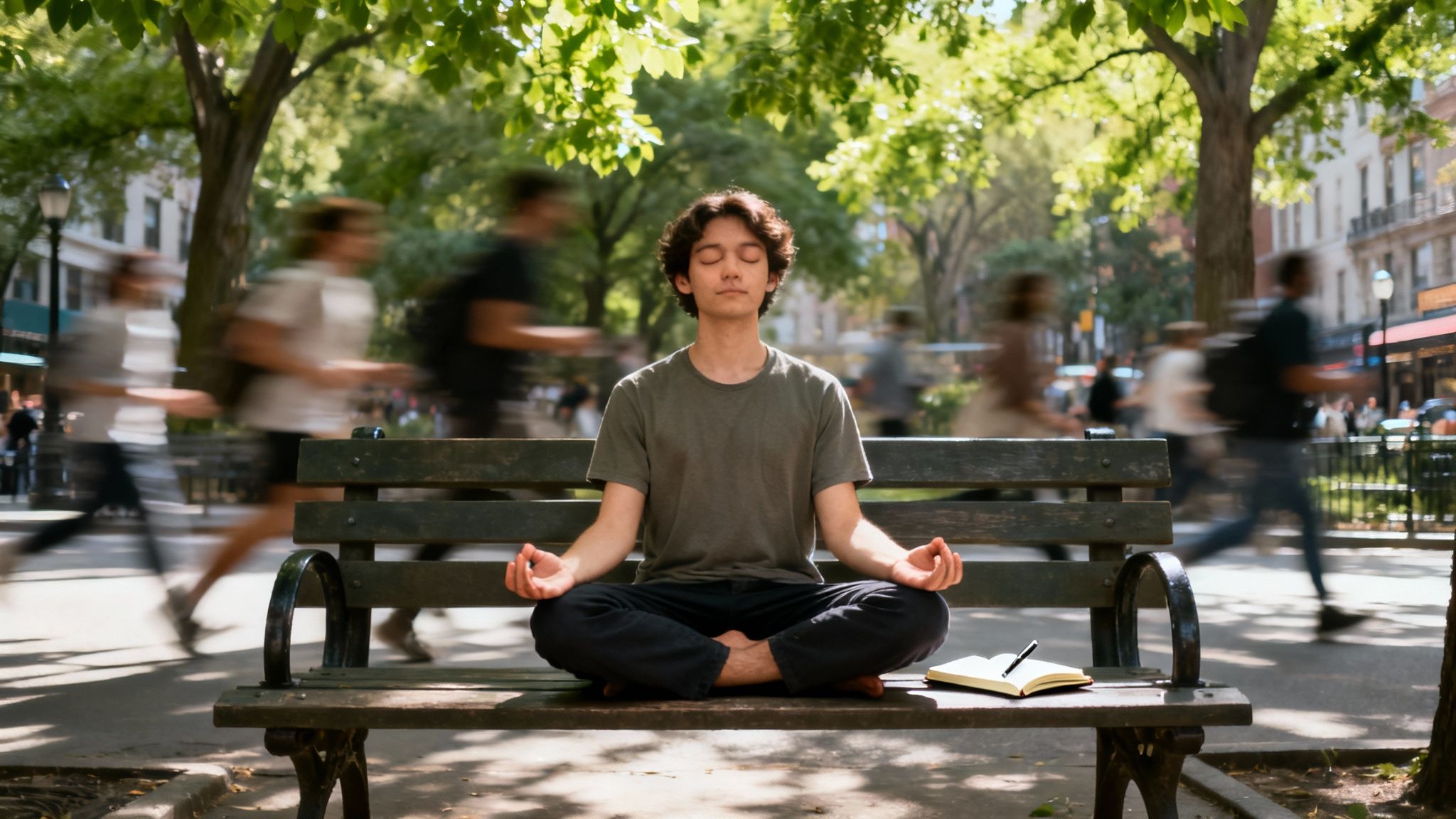
Finding peace isn't about chasing a mythical, stress-free life. Instead, it's about learning how to stay calm and centred even when things get tough. It's about building genuine resilience and emotional balance through small, consistent actions that start with understanding yourself.
Your Search for Inner Peace Begins Now
In a world that feels like it’s constantly on fast-forward, finding a moment of quiet can feel impossible. If you’re wrestling with relentless workplace stress, difficult relationships, or just feeling overwhelmed, please know you are not alone. So many of us are navigating similar challenges, whether in the busy cities of India or anywhere else in the world.

This guide offers practical, real-world strategies grounded in positive psychology. The goal is to help you build a lasting sense of calm and resilience, whether you're dealing with mild anxiety, burnout, or simply want to improve your overall well-being.
Redefining What Peace Means
First, let's adjust our perspective on what peace truly is. Inner peace is not the complete absence of challenges or difficult emotions; that's simply not how life works.
Think of peace not as a destination free of storms, but as the skill of navigating those storms with a steady mind and a compassionate heart.
This simple shift is powerful because it puts you back in control. You stop waiting for the world to change and start building the internal skills needed to stay grounded, no matter what happens.
Your Journey Is Supported
Starting this path can feel a bit intimidating, but you don’t have to do it by yourself. Excellent resources are available to make the journey feel less lonely and more manageable.
Platforms like DeTalks can offer guidance by connecting you with professional therapy and counselling services. Whether you need support for depression or want to build a more mindful life, help is within reach. Acknowledging you might need support is a sign of great strength.
Understanding What's Robbing You of Your Peace
Before building new habits, let’s gently look at what's getting in the way of your peace. The journey to a calmer mind often begins with compassionate awareness of your inner world, not with blame or judgment.
Many of us are just trying to keep up with a constant current of demands. This could be the exhaustion from workplace stress, academic pressure, or family expectations. These feelings are universal, whether you live in a bustling Indian city like Delhi or a much quieter town.

Noticing the Early Warning Signs of Burnout and Anxiety
Sometimes, peace erodes so gradually we don't even notice. It might start with feeling constantly tired, finding it harder to focus, or feeling that familiar knot of anxiety on Sunday evenings. These are often the first quiet whispers of burnout.
Learning to pinpoint your personal triggers is a game-changer. Simply acknowledging them without self-criticism is the first step toward managing them more effectively and building resilience.
The Push and Pull of Internal and External Pressures
The things that disrupt our well-being often come from both the outside world and within our own minds. External pressures are tangible demands like your job or finances, while internal pressures are the stories we tell ourselves, like perfectionism or fear of failure.
It’s helpful to know the difference:
- External Stressors: Things in your environment, like a tough project at work or a chaotic commute.
- Internal Stressors: Your mindset, including negative self-talk or worrying about things you can't control.
Understanding this distinction helps you strategise. While you might not change an external problem overnight, you can always work on how you respond to it, often with the help of therapy.
Seeing Your Struggle in a Broader Context
It’s also crucial to remember these feelings are part of a larger picture. In India, for example, mental health is a significant national conversation, with many people seeking ways to manage challenges like anxiety and depression. You can read about the alarming mental health statistics in India.
Realising that your struggles are part of a shared human experience can lift a tremendous weight. It removes shame and reminds you that seeking support is a sign of strength.
Platforms like DeTalks connect people with qualified therapists who can help. And if you encounter a psychological assessment, remember it's an informational tool to provide insight, not a diagnosis. It's there to help you understand your inner world so you can build the resilience and happiness you deserve.
Practical Ways to Cultivate Calm and Resilience
Now, let's move from understanding the why to the how. Finding peace is like building a muscle—it happens through small, consistent habits woven into your daily life.
These simple, proven techniques can offer relief from things like workplace stress and help you make sense of difficult emotions. Many are foundational practices used in professional counselling and therapy to boost overall well-being.

Grounding Yourself With Mindful Breathing
When anxiety hits, your breath is the fastest tool to regain control. Mindful breathing is an anchor that pulls you out of racing thoughts and into the present moment, calming your nervous system.
A simple technique is Box Breathing, which you can do anywhere without anyone noticing.
- Inhale through your nose for a slow count of four.
- Hold that breath for a count of four.
- Exhale slowly through your mouth for a count of four.
- Hold again at the end for a final count of four.
Just a few cycles can lower your heart rate and bring a wave of calm.
Processing Your Thoughts Through Journaling
Our minds can feel cluttered with worries and to-do lists. Journaling is a private, no-judgment zone where you can untangle your thoughts and find clarity.
A few minutes a day is all it takes. If you're stuck, try a simple gratitude prompt.
Journaling Prompt: "What is one small thing that brought me a moment of comfort or joy today?"
This question trains your brain to notice what's going right, a core practice for building resilience and pushing back against feelings of depression.
Challenging Your Negative Thought Patterns
The stories we tell ourselves shape how we feel. A therapy technique called Cognitive Reframing helps challenge unhelpful thoughts, not by ignoring them, but by finding a more balanced view.
When you catch yourself in a negative spiral, gently ask yourself:
- What's the actual evidence for this thought?
- Is there a more realistic or positive way to look at this?
- What would I tell a friend who had this same thought?
This small shift takes the emotional sting out of setbacks and gives you a path forward. For those who find comfort in creating a tranquil physical environment, you might explore this guide to crystals for peace and serenity.
Simple Practices to Begin Your Journey to Peace
| Practice | How It Helps Immediately | Long-Term Goal |
|---|---|---|
| Mindful Breathing | Lowers heart rate and calms the nervous system in moments of stress. | Develops the ability to stay present and manage emotional reactions. |
| Daily Journaling | Provides clarity by untangling thoughts and reducing mental clutter. | Builds self-awareness and rewires the brain to focus on positivity. |
| Cognitive Reframing | Stops negative thought spirals and reduces the emotional impact of setbacks. | Fosters a more resilient, balanced, and compassionate inner voice. |
Remember, building inner peace is a practice. Every time you choose one of these small actions, it's a win for your well-being.
Designing a Life That Supports Your Well-Being
Lasting peace isn’t just about what you think; it’s about the life you build. Mindfulness practices can feel like an uphill battle if your daily routine constantly drains you. The key is to design a lifestyle that actively protects your mental and emotional energy.
This means being intentional about where your time and attention go. It’s about building a life where peace has a chance to flourish.
Setting Boundaries That Protect Your Energy
Setting healthy boundaries is one of the most powerful things you can do for your well-being. Think of them as fences to protect your energy so you can be present for what truly matters. This is critical for managing workplace stress and avoiding burnout.
Learning to politely say no to extra work when you're at capacity isn't a failure—it's an act of self-preservation. The same goes for your personal life; it's okay to decline a social event if you need a quiet night in to recharge.
The Foundational Role of Sleep and Nutrition
Your physical and mental health are completely intertwined. Poor sleep harms your ability to regulate emotions, leaving you more vulnerable to stress and low moods. Treating sleep as non-negotiable is one of the best forms of mental self-care.
Small tweaks can have a huge impact:
- Keep a Consistent Schedule: Try to go to bed and wake up around the same time daily.
- Optimise Your Bedroom: Keep it dark, quiet, and cool.
- Power Down Before Bed: Avoid screens for at least an hour before sleep.
Likewise, a balanced diet supports stable moods and clear thinking, while processed foods can amplify feelings of anxiety and lethargy.
Cultivating Movement and Supportive Connections
Movement is another fantastic tool for finding your centre. When you're physically active, your body releases endorphins—natural mood-lifters—and helps process the stress hormone cortisol. A brisk 20-minute walk can work wonders.
Finally, never underestimate the power of your social circle. We are wired for connection, and having supportive people in your corner provides a vital buffer against life’s storms.
Your environment—from your daily routines to the people you surround yourself with—can either be a source of chronic stress or a foundation for deep, lasting peace. Choose to build a life that nurtures you.
Investing in something like a day to focus on wellbeing can provide dedicated space to kickstart this journey. Designing a life that allows for more happiness is a powerful act of self-compassion.
When to Seek Professional Support for Your Mental Health
While self-help strategies are powerful, the journey to find peace sometimes calls for a guide. Realising you might benefit from professional support is a profound act of strength and a smart step toward lasting resilience.
There are times when our own efforts aren’t enough. Seeking help is a compassionate choice, especially if you feel trapped, overwhelmed by anxiety or depression, or if challenges are affecting your daily life.
Recognising the Signs It’s Time to Talk
How do you know when it’s time? Be honest with yourself. If low moods, constant worries, or burnout have lasted for weeks, it might be time to reach out. Another clue is when your usual coping skills aren't working anymore.
Here are a few common indicators that professional help could make a real difference:
- Overwhelming Emotions: Persistent sadness, hopelessness, or worry you can’t shake.
- Difficulty Functioning: Your mental state makes it hard to concentrate, manage responsibilities, or maintain relationships.
- Loss of Interest: You’ve lost your spark for hobbies that once brought you joy.
- Feeling Isolated: You feel completely alone in your struggles.
This diagram shows the core pillars that support your well-being. When these start to wobble, it’s a clear signal that you may need additional support.
When your boundaries, sleep, and social connections falter, it's often a sign that your internal resources are running low.
Navigating Your Options for Support
You’ll see terms like therapy and counselling. Counselling often focuses on specific issues like workplace stress, while therapy may go deeper to explore long-standing patterns of thought and behaviour.
You don’t have to figure it out alone. Platforms like DeTalks simplify this process, connecting you with qualified professionals who can offer the right support for your unique situation.
"Seeking therapy is not about admitting defeat. It's about choosing to arm yourself with new tools, insights, and strategies to live a more peaceful and fulfilling life."
This shift in perspective reframes seeking help as an act of empowerment.
Using Assessments as a Guide, Not a Label
You may come across psychological assessments. It’s crucial to see these as informational tools, not diagnostic labels. They provide valuable insights into your emotional state to help guide your journey.
Think of an assessment as a map that helps you and your therapist understand the terrain of your inner world. It offers a starting point for meaningful conversations and helps tailor your path toward greater well-being.
The need for accessible support has never been greater, especially in places like India where the treatment gap remains wide. As a recent report shows, telehealth is reshaping India's mental health market, making support more accessible than ever. Taking that first step to seek guidance is a courageous move.
Your Path Forward: Supportive Takeaways
Finding inner peace is a continuous practice, not a final destination. It's about returning to yourself with grace and self-awareness, day after day. You now have a set of tools to help you navigate life's challenges with more calm.
Some days you will feel grounded, and other days, the weight of workplace stress or anxiety may return. That is perfectly normal. The goal is steady progress and a kinder relationship with yourself.
Walk the Path With Self-Compassion
If there is one thing to take with you on this journey, let it be self-compassion. It’s the gentle voice that reminds you that a tough day isn't a failure. Building resilience takes practice, and every small effort is a win for your well-being.
Remember these practical steps:
- Mindful Moments: When thoughts spiral, return to your breath as an anchor.
- Conscious Choices: Intentionally design your days by setting boundaries, getting sleep, and connecting with supportive people.
- Gentle Observation: Notice your thoughts without judgment and learn to reframe your inner critic.
These small, consistent actions build a foundation for lasting peace. You are teaching yourself a new way to respond to life with greater choice and less reaction.
Hope, Empowerment, and Where to Find Support
The biggest takeaway is hope. You are not powerless against feelings of burnout or depression. You have the ability to cultivate calm from within, and now you have strategies to guide you.
Peace isn't the absence of storms. It's the inner strength to sail through them with your calm intact. This is a skill you can build, a muscle you can strengthen, and a state you can always return to.
This journey is personal, but you don't have to walk it alone. Knowing when to ask for help is a sign of strength. Whether you're just starting or feel ready for professional guidance, support is available.
Professional therapy or counselling offers a safe space to develop strategies tailored just for you. Please remember, seeking help is a courageous, proactive step toward a healthier, more peaceful you.
At DeTalks, we're committed to making sure everyone can find the right mental health support. Our platform connects you with qualified therapists and provides science-backed assessments to help you understand what you need to build a more resilient, fulfilling life. You can start exploring your path to well-being with us today. Find your therapist on DeTalks.
Leave a Reply