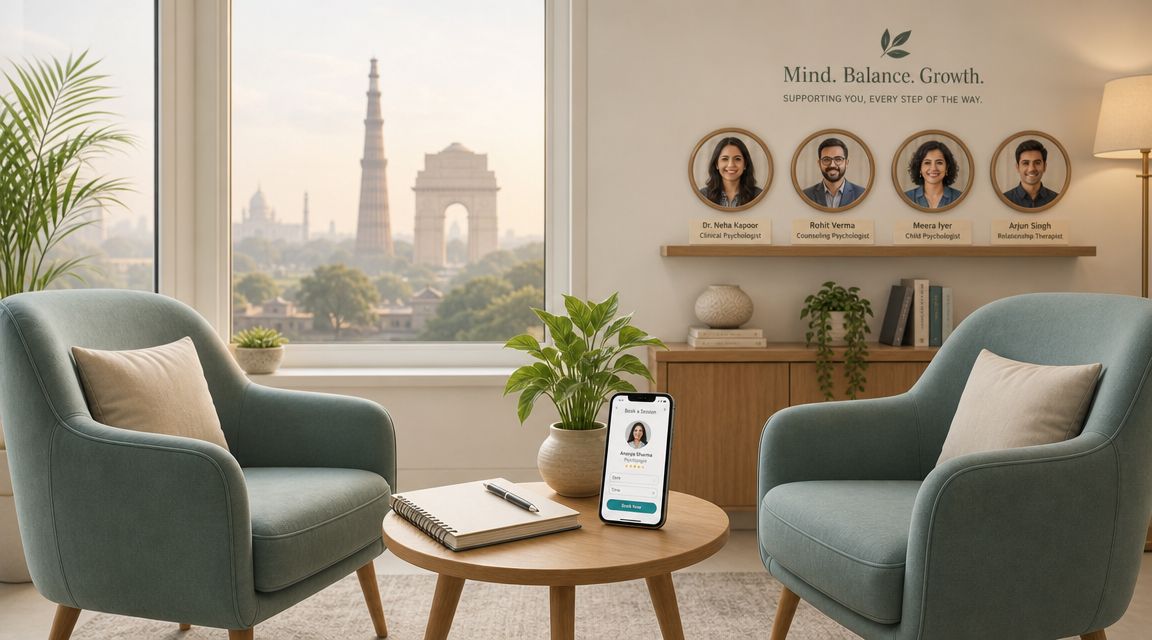
Tag: anxiety therapy

  • What Is Gestalt Therapy: A Guide to Presence and Well-Being

    What Is Gestalt Therapy: A Guide to Presence and Well-Being

    Gestalt therapy is a warm, person-centred approach to counselling that focuses on the present moment. It's a hands-on, experience-focused method that helps you connect with what's happening in the here and now, rather than getting lost in the past or feeling anxious about the future.

    This approach helps you become more aware of your thoughts, feelings, and actions. It empowers you to see your life with greater clarity and authenticity.

    Understanding Gestalt Therapy in the Here and Now

    Have you ever felt disconnected from your own life, as if you're just going through the motions? Gestalt therapy offers a way back to yourself by gently drawing your attention to what you're thinking, feeling, and doing in this very moment.

    Think of it like focusing a camera lens. Instead of a blurry, confusing picture, you begin to see your immediate experience with clarity. This isn't just about talking about your problems; it's about actively experiencing and working through them as they show up in the therapy session.

    A serene Asian man sits peacefully by a sunlit window, practicing mindfulness or a meditative therapy exercise.

    This is a journey of self-discovery, grounded in the belief that true change happens when you pay attention to the present. The goal isn't to erase the past, but to understand how it influences your life today. This focus makes it an incredibly practical tool for managing challenges like workplace stress and anxiety.

    A Holistic Path to Well-being

    Gestalt therapy views you as a whole person, recognizing that your mind, body, emotions, and environment are all deeply connected. It looks at the entire picture of your life rather than focusing on a single symptom like anxiety or a specific feeling of depression.

    This is a key difference from other therapies that might focus on thoughts or past events alone. By emphasizing your complete experience, Gestalt therapy helps you recognize underlying patterns and make meaningful changes. Research has shown its effectiveness in addressing anxiety, stress, and depression, helping people build greater self-awareness and emotional resilience. You can explore a full study about Gestalt therapy's clinical effectiveness.

    The Core Principles of Gestalt Therapy

    What makes Gestalt therapy work? To understand its power, we can look at the foundational ideas that guide each session. These are practical tools for living, designed to help you build genuine self-awareness and navigate challenges like workplace stress, anxiety, and depression.

    Think of these principles as the pillars that hold up the entire approach. By getting to know them, you can see a clear path toward personal growth and improved mental well-being.

    A woman stands barefoot in the center of a dark, empty room under a single spotlight.

    Awareness in the Here and Now

    Everything in Gestalt therapy circles back to one core idea: awareness. It’s about paying close attention to what’s happening in the "here and now"—your thoughts, feelings, and even sensations in your body. It’s like shining a light on your present moment to see what’s really going on inside.

    This doesn't mean ignoring the past or the future. Instead, we look at how past events and future worries affect you right now. This focus helps you notice automatic habits and patterns, which is the first step toward change.

    The goal isn't to analyze your problems from a distance, but to step into them and experience them fully. True awareness is what gives you the clarity to make new, healthier choices.

    Embracing Personal Responsibility

    This principle is about empowerment, not blame. It’s easy to feel stuck and ask, "Why is this happening to me?" Gestalt therapy gently guides you toward a more helpful question: "What can I do now?" The focus shifts to the choices you have in how you respond to life.

    This simple shift can help you move from feeling like a passive observer to feeling like you're in the driver's seat of your life. When you take ownership of your feelings and actions, you begin to realize your own strength. This is a vital skill for managing burnout and building resilience.

    The Dance of Contact and Withdrawal

    In Gestalt terms, contact is how we connect with the world around us—our environment, our work, and other people. A healthy life involves a natural rhythm of making meaningful contact and then withdrawing to rest and recharge.

    This dance plays out in several ways:

    • Making Meaningful Connections: We explore the quality of your interactions. How do you connect with friends, family, and colleagues? The goal is to make these connections more authentic and satisfying.
    • Setting Healthy Boundaries: Knowing when to pull back is just as important as knowing how to engage. Therapy can help you learn to say "no" when you need to, protecting your energy and well-being.
    • Recognising Your Patterns: You might notice you avoid contact when you feel vulnerable or seek it out because you fear being alone. Seeing these patterns clearly is essential for growth.

    Resolving Unfinished Business

    We all carry echoes from the past—lingering resentments, unspoken grief, or words we never got to say. Gestalt therapy calls this unfinished business. These incomplete emotional experiences often silently influence our present lives.

    For example, a difficult experience with a manager years ago might be the real reason you feel anxious around your boss today. By using therapeutic techniques to safely revisit and "complete" that business, you can free yourself from its grip. This is key to relieving chronic stress and anxiety.

    A Look Inside a Gestalt Therapy Session

    Walking into a therapy session for the first time can feel uncertain. A Gestalt therapy session is not a formal interview but a creative and collaborative exploration of your world.

    Your therapist is an active guide, partnering with you to uncover your own insights. Together, you create a safe space to notice and explore your feelings, thoughts, and behaviours as they happen.

    A woman sits in a chair during a therapy session, speaking with her therapist in a room.

    The focus isn’t on dissecting the past but on your present-moment awareness. The goal is to help you understand not just what you feel, but how you are experiencing those feelings, right here and now.

    Exploring Through Creative Experiments

    A unique part of a Gestalt session is the use of "experiments." These are creative activities you and your therapist develop together, tailored to what you need in that moment. The aim is to heighten your self-awareness and discover new ways of navigating life.

    Two well-known techniques you might encounter are:

    • The Empty Chair Technique: Imagine an empty chair in front of you. Your therapist might invite you to visualize a person, a part of yourself, or a difficult emotion sitting in it. This powerful technique helps you gain fresh insight into relationships, work through internal conflicts, and give a voice to unspoken thoughts, which is especially helpful for exploring feelings of anxiety or depression.

    • Dialogue Experiments: These exercises are about the internal conversations we have with ourselves. For instance, you might explore the tension between your "ambitious self" and your "self that's afraid of failure." By allowing each part to speak, you can start to understand and integrate these conflicting feelings, fostering greater self-compassion and resilience.

    These tools are flexible and can be adapted to your journey, whether you're dealing with low self-esteem or navigating workplace stress.

    A Collaborative and Client-Led Process

    The relationship you build with your therapist is the foundation of the work. It’s a true partnership built on trust and mutual respect. Your therapist is there to support you, not to judge you or tell you what to do.

    The session is a safe laboratory where you can try out new ways of being and behaving. It’s about discovering your own answers, with a skilled guide by your side.

    This therapeutic approach, developed by Fritz Perls, Laura Perls, and Paul Goodman, is widely practised across India today. It helps people with anxiety, depression, and relationship issues, with session costs typically ranging from ₹1,000 to ₹3,500. Therapists often incorporate mindfulness-based exercises to help you "own" your experiences, which builds a profound sense of personal responsibility and resilience. You can learn more about how Gestalt therapy is applied in India.

    A Gestalt therapy session is a deeply personal and active experience. It moves beyond just talking about problems to engaging with them directly, empowering you to build a stronger connection with yourself.

    Who Gestalt Therapy Can Help Most

    Therapy is not just for moments of crisis. While Gestalt therapy is a powerful support during challenges, it’s also valuable for anyone who wants to understand themselves better and live a more authentic, engaged life.

    This approach is especially helpful if you feel stuck in your head, replaying the past or worrying about the future. It’s a great fit for people feeling the pressures of modern life—from students in cities like Delhi facing exam stress to professionals in Mumbai and Bangalore managing busy careers.

    For Those Navigating Life’s Challenges

    Many of us first seek therapy when dealing with something painful. Gestalt therapy offers a non-judgmental space to explore these struggles as experiences happening right now. Its practical techniques can be a support for working through:

    • Anxiety and Depression: Instead of just talking about anxiety, you'll explore how it feels in your body in the moment. This helps you get to the root of these feelings and discover new ways to respond, so you feel less controlled by them.
    • Workplace Stress and Burnout: This therapy can shine a light on patterns—like people-pleasing or an inability to set boundaries—that lead to burnout. You'll learn to recognize these habits and make choices that protect your energy and well-being.
    • Difficult Relationships: By looking at how you connect with others, you can understand why certain conflicts repeat. This clarity is the first step toward building healthier, more honest connections.

    For Those Seeking Personal Growth

    You don't need to be in a crisis to benefit from counselling. Many people are drawn to Gestalt therapy out of a desire for a richer, more meaningful life. It’s a fantastic tool for self-discovery and building skills to flourish, such as resilience and compassion.

    The goal isn't just to solve problems, but to enhance your capacity for joy, connection, and purpose. It's about moving from simply functioning to truly thriving.

    This approach is about actively cultivating the things that make life feel worthwhile, like happiness and connection. By connecting more deeply with yourself, you build the resilience to handle life’s inevitable challenges with more grace.

    In India, Gestalt therapy is recognized for its success in addressing anxiety, depression, and the effects of trauma. For example, one study found a measurable drop in anxiety among parents after a short Gestalt-based program. Its focus on awareness makes it a natural fit for tackling workplace stress and fostering genuine personal growth. You can explore more findings on Gestalt therapy's applications.

    Gestalt therapy is for anyone courageous enough to be curious about their inner world. If you're ready to feel more present and live with greater awareness, it could be a supportive path for you.

    How Gestalt Therapy Compares to Other Approaches

    If you're exploring therapy, you've likely noticed there are many different types. Making an informed choice is about understanding the core philosophies behind them.

    The world of counselling is filled with different maps for navigating human experience. Gestalt therapy, Cognitive Behavioural Therapy (CBT), and Psychodynamic therapy are three of the most well-known, but they each offer a different route to tackling issues like anxiety and depression.

    Understanding the Key Differences

    Gestalt therapy stands out with its creative, in-the-moment style. While other therapies might focus on dissecting your past or reframing thoughts, Gestalt is all about the here and now. The guiding questions are, "What are you experiencing right now, and how is it showing up?"

    The best therapy isn’t a specific brand or technique; it’s a connection. It’s the approach that clicks with you and a therapist you trust to guide you through your own process of discovery.

    Let’s take a practical example, like dealing with persistent workplace stress.

    • A CBT therapist would likely help you identify and change negative thought patterns about your job.
    • A Psychodynamic therapist might guide you to explore how early life experiences could be shaping your reactions to your boss today.
    • A Gestalt therapist would bring your attention to how you experience that stress in the room. They might use an experiment, like speaking to an empty chair representing your stress, to help you understand your feelings on a deeper level.

    This chart quickly breaks down the fundamental differences between these common therapeutic models.

    A comparison chart outlining the primary focus and session style of Gestalt Therapy, CBT, and Psychodynamic Therapy.

    As you can see, the focus shifts dramatically—from the experiential "doing" of Gestalt to the structured thinking of CBT and the historical exploration of Psychodynamic therapy.

    Comparing Therapeutic Approaches

    This table contrasts Gestalt therapy with two other common types of therapy to help you understand which approach might be the best fit for your needs.

    Therapeutic Approach Primary Focus Typical Session Style
    Gestalt Therapy The present moment; self-awareness through direct experience; the "what" and "how" of your feelings. Creative, experiential, and collaborative. Often involves experiments, role-playing, and body awareness exercises.
    Cognitive Behavioural Therapy (CBT) Identifying and changing destructive thought patterns and behaviours; the link between thoughts, feelings, and actions. Structured and goal-oriented. Often includes homework, worksheets, and skill-building exercises.
    Psychodynamic Therapy Unconscious thoughts and feelings rooted in past experiences, especially childhood; the "why" behind your current patterns. Exploratory and insight-oriented. Focuses on talk therapy, dream analysis, and the therapeutic relationship itself.

    Each path offers a valid and effective way to work through challenges, but the journey itself will feel quite different.

    So, Which One Is for You?

    Choosing a therapy is a personal decision. Think about what resonates most with you right now.

    • If you're drawn to a creative process that helps you build resilience and self-awareness by exploring your immediate experience, Gestalt therapy could be a fantastic match.
    • If you want a clear, structured approach with practical tools to manage specific thoughts and behaviours, CBT is a very strong contender.
    • If you feel your current issues are deeply connected to your past and you want to understand those unconscious drivers, Psychodynamic therapy might be the most rewarding path.

    Ultimately, this information is just a guide. The most crucial factor in successful therapy is the relationship you build with your therapist. Platforms like DeTalks can be a great starting point for finding qualified professionals from various specialities, allowing you to find someone whose approach and personality truly support your goals for well-being.

    Your Next Steps on the Path to Well-Being

    Taking the time to learn about Gestalt therapy is a significant first step. You've already done something important just by being curious. This isn't about finding a quick fix, but about starting a more honest and connected relationship with yourself.

    The power of this approach lies in the lasting change it creates. When you learn to stay with the present moment, you are building skills to regulate your emotions, improve your relationships, and handle pressures like workplace stress with a new awareness. It’s about building a quiet confidence that you can handle what comes your way.

    How to Begin Your Journey

    So, what’s next? Deciding to look for therapy or counselling can feel like a big decision, but the first step is straightforward. Your goal is simply to find a qualified therapist you trust—someone who makes you feel seen and safe.

    Taking the first step toward getting help is often the hardest, yet most empowering, part of the process. It's an act of profound self-compassion and a testament to your own resilience.

    For those in India, platforms like DeTalks can help you find experienced Gestalt therapists. Many services offer introductory assessments, which can offer useful insights. Please remember, these assessments are informational tools for your own understanding, not a substitute for a professional diagnosis.

    Exploring what Gestalt therapy is all about is an invitation to live a more authentic life. It’s a powerful reminder of your own capacity for growth, connection, and deep resilience.

    Frequently Asked Questions About Gestalt Therapy

    It’s completely normal to have questions when you’re thinking about starting therapy. Here are some answers to common queries about the Gestalt approach.

    What Kind of Issues Does Gestalt Therapy Help With?

    Because it’s so focused on present-moment awareness, Gestalt therapy is a powerful way to work through many of life's challenges. It’s particularly effective for common struggles like anxiety, which often involves worrying about the future, or depression, which can tie you to the past.

    Beyond that, it’s also widely used for:

    • Tackling workplace stress and burnout by helping you see patterns that drain your energy.
    • Improving relationship difficulties by changing how you connect with others.
    • Building self-esteem and finding a sense of direction by fostering a deeper connection to yourself.
    • Navigating grief and loss in a supportive space.

    This isn’t just for moments of crisis. Many people turn to Gestalt therapy for personal growth, hoping to build greater resilience and live a more genuine, fulfilling life.

    How Long Does Gestalt Therapy Take?

    There's no one-size-fits-all answer here, and that’s by design. The length of your therapy journey is based on your unique situation and what you hope to achieve. For some, a few sessions might be enough to gain clarity on a specific problem. For others, longer-term counselling provides the space needed to work through more deep-seated patterns.

    This is a collaborative process. You and your therapist will check in regularly to talk about your progress. The focus is on supporting your growth at a pace that feels right for you.

    The goal isn’t to keep you in therapy indefinitely. It’s to empower you with the self-awareness and tools to navigate life’s ups and downs with more confidence and authenticity on your own.

    Exploring counselling is a journey toward greater well-being. Any initial assessments are for your information and are not a clinical diagnosis. The real value is in the supportive relationship you build and the resilience you develop along the way.


    Taking this first step is a courageous move towards personal growth. At DeTalks, we make finding a qualified Gestalt therapist simple. You can explore our platform to connect with experienced professionals and begin your journey to well-being today at https://detalks.com.

  • Find a Therapist in Delhi: 7 Vetted Options for 2026

    Find a Therapist in Delhi: 7 Vetted Options for 2026

    You open your phone, search for a therapist in Delhi, and suddenly you're looking at dozens of profiles, unfamiliar titles, and booking buttons that all seem to promise support. If you're already carrying workplace stress, anxiety, low mood, grief, or simple emotional exhaustion, that much choice can feel like one more burden.

    Delhi is a city where people often keep going even when they're overwhelmed. Students push through exam pressure, professionals absorb burnout, parents juggle family demands, and many people wait until things feel unmanageable before seeking therapy or counselling. The hopeful part is that support is easier to access than it once was, especially online.

    A useful way to choose is to keep it simple. Start with four questions. Does this provider match your concern, such as anxiety, depression, trauma, relationship conflict, or resilience building? Can you verify the clinician's training and role? Does the format fit your life, online, in person, or both? And does the first interaction feel clear, respectful, and non-judgmental?

    That clarity matters in India, where many people still struggle to access mental health care. An India mental-health market review notes that a large share of people with mental disorders do not receive adequate care, and that psychological interventions make up more than 60.52% of the treatment market, which reinforces how central talk-based support is for everyday help-seeking in cities like Delhi (India mental-health market analysis).

    If you're also trying to understand the practical side of care delivery, this explainer on understanding mental health practice billing gives helpful background.

    1. DeTalks

    You open a dozen tabs after a long day in Delhi. One therapist profile sounds warm, another lists degrees you do not fully understand, and a third asks you to book before you even know what kind of help you need. DeTalks fits this early stage well because it brings the first steps into one place. You can read, reflect, use confidential assessments, and then decide whether to book a session.

    That matters because choosing a therapist is often less like buying a service and more like finding the right guide for a difficult stretch of road. Before you commit, you usually need help with three things. Understanding your concern. Checking whether the clinician's role and training match that concern. Finding a format you can sustain, especially if your schedule is packed.

    DeTalks supports that process with therapist discovery tools, self-help resources, and informational assessments that help you put words to what you are feeling. The assessments are not diagnostic. They work more like a starting map. If your thoughts feel tangled, a simple structure can make the first conversation with a professional much easier.

    Why DeTalks works well for Delhi users

    People looking for therapy in Delhi often get stuck on one question. Who is the right kind of professional for this problem? A psychologist, counsellor, psychotherapist, or psychiatrist can each play a different role, and the differences are not always explained clearly on directory-style pages. A Psychology Today page discussing therapist search intent in Delhi reflects this confusion and the trust gap many people feel while trying to choose care (Delhi therapist search context).

    DeTalks is helpful because it does more than list names. It gives people a way to sort their needs before booking. That is useful for someone dealing with anxiety, depression, trauma, grief, relationship stress, work burnout, or exam pressure. It also suits people who are not in crisis but still want support with resilience, mindfulness, emotional awareness, or day-to-day well-being.

    For parents seeking a therapist in Delhi for a child, and for adults trying therapy for the first time, that broader entry point can lower the pressure. You do not need a perfect label for what you are feeling before you start.

    Practical rule: If you are unsure what kind of support fits, begin with an informational assessment and then book a first conversation. Clarity often comes from talking things through with a qualified professional, not from trying to solve the whole question alone.

    What makes it different

    Another useful sign is that DeTalks also serves practitioners. That may sound like a background detail, but it affects the client experience. A platform that pays attention to professional standards, practice operations, legal awareness, and clinician support is more likely to create a clearer and safer process for the people booking sessions.

    A few points are worth keeping in mind. Public pricing is not always easy to compare upfront, so you may need to enquire directly before deciding. The platform is also primarily focused on India, which is helpful for local relevance, though broader expansion appears to be a future direction rather than a current core feature.

    Best for

    • First-time seekers: Helpful if you are still working out what kind of support you need.
    • Busy professionals and students: A good fit for online therapy, counselling, and flexible booking.
    • Growth-focused users: Useful for support with distress as well as resilience and well-being.
    • Practitioners too: Psychologists may appreciate a platform that considers both care quality and practice realities.

    2. Sukoon Health

    Sukoon Health

    Sukoon Health suits people who want therapy inside a larger, coordinated mental health system. That can be reassuring if you're not sure whether you only need counselling, or whether you may also want psychiatric input, medication support, or a more structured care plan later.

    Its setup is especially useful for someone whose situation feels layered. For example, you might be dealing with anxiety and sleep disruption, or burnout that's starting to affect your relationships and work functioning. In those cases, having psychologists, counsellors, and psychiatrists within one provider can make the process feel less fragmented.

    Why someone might choose it

    Sukoon Health publishes therapist profiles and sample fee ranges for many clinicians, which helps if you prefer more transparency before reaching out. It also offers online and in-person care, so you can start in the format that feels easiest and switch if needed.

    A hospital-style or chain-style setting isn't everyone's preference. Some people feel more comfortable in a smaller private clinic because it feels less formal. But if your priority is structure, multidisciplinary oversight, and a provider with clear clinical systems, Sukoon Health is a strong option.

    Some people don't want to retell their story to three different providers. Integrated settings can reduce that friction.

    Good fit and possible trade-offs

    Why it may fit

    • Coordinated care: Helpful if therapy and psychiatry may need to work together.
    • Multiple access points: Useful for Delhi NCR users who want more than one location option.
    • Transparent browsing: Published profiles and fee examples make early comparison easier.

    What to watch

    • Longer waits for senior clinicians: Popular providers often book up quickly.
    • Less boutique feel: If you want a quieter, highly personal private-practice atmosphere, this may feel more institutional.

    You can review services and clinician information on Sukoon Health.

    3. CIMBS

    CIMBS, also known as Cosmos Institute of Mental Health & Behavioural Sciences, is a practical choice if you want a clinic that brings psychiatry and psychology together without the scale of a big hospital network. Many people prefer that middle ground. It feels more focused than a large hospital, but still offers integrated care if your needs shift over time.

    Its New Friends Colony presence makes it especially relevant for South and Central Delhi users who want an established centre rather than a broad marketplace. If you already know you're looking for structured psychotherapy, this can be a useful place to start.

    What stands out here

    CIMBS highlights approaches such as CBT, DBT-informed work, family therapy, and care for both adults and children. That matters because therapy often works best when the method matches the concern. Someone handling panic or repetitive worry may want a structured framework. A family dealing with repeated conflict may need a very different kind of room and conversation.

    The centre also offers online and in-person appointments. In a city like Delhi, that flexibility isn't just convenient. It helps people stay consistent when commuting, work hours, or family duties get in the way.

    Best matched for

    • People who want both therapy and psychiatry available
    • Parents seeking one centre for adult and child support
    • Clients who prefer a recognised clinic over a marketplace directory

    A note on digital convenience

    Online therapy in India is no longer a side option. It's becoming a central part of how people access support. An IMARC market projection values the India online mental health market at USD 151.4 million in 2025 and projects growth to USD 464.4 million by 2034, which helps explain why providers with online booking and digital access are increasingly relevant for Delhi users (India online mental health market projection).

    CIMBS appears well positioned for that shift. The trade-off is that a busy, established centre can mean premium fees and peak-slot wait times.

    You can explore appointments and services through CIMBS.

    4. Fortis Healthcare Mental Health & Behavioural Sciences

    Fortis Healthcare, Mental Health & Behavioural Sciences (Delhi NCR)

    Fortis is the option many people consider when they want therapy within a large medical network. That can be especially useful if emotional distress overlaps with sleep issues, chronic health concerns, adolescent behavioural changes, or a need for formal reports and medical documentation.

    For some people, hospital infrastructure feels too clinical. For others, it feels safer because everything is in one place. If you're someone who likes clear departments, established protocols, and the ability to move between mental health and other medical services, Fortis makes sense.

    Where it can help most

    Fortis Mental Health & Behavioural Sciences departments across Delhi NCR include psychologists and psychiatrists, with options for individual, couples, and family therapy. That broad network can be helpful if you want a known healthcare brand or if family members may also need support through the same system.

    This kind of setting can also be practical when school documentation, workplace paperwork, or coordinated referrals matter. It won't feel as intimate as a small therapy-first clinic, but it may feel more straightforward for people who are used to hospital-based care.

    A useful question for your first call: “Will I be seeing a therapist only, or is there a broader care team if I need one later?”

    Strengths and limitations

    Strengths

    • Large network: Easier to find a location across Delhi NCR.
    • Medical coordination: Helpful when mental and physical health concerns overlap.
    • Structured pathways: Good if you prefer formal systems and referrals.

    Limitations

    • Pricing can be less transparent online: You may need to call for specifics.
    • Hospital feel: Not ideal if you want a softer, more private-practice atmosphere.

    One broader reason providers like Fortis matter is that India's specialist supply remains limited. A review in the Indian Journal of Psychiatry reported that India had about 9,000 psychiatrists, or roughly 0.75 psychiatrists per 100,000 people, and estimated that around 36,000 would be needed to reach a benchmark of 3 per 100,000. It also noted that about 700 psychiatrists graduate each year, yet the country remains far below need (Indian psychiatrist workforce review). In practical terms, larger systems often become important access points because demand is high.

    You can find locations and mental health services on Fortis Healthcare.

    5. VIMHANS

    VIMHANS (Vidyasagar Institute of Mental Health & Neuro Allied Sciences)

    VIMHANS is one of the names many Delhi residents already recognise, especially when the need goes beyond straightforward weekly therapy. It's a dedicated mental health and neuro-allied setting, which makes it relevant for people who may need assessment, psychotherapy, psychiatry, rehabilitation, or multiple services under one roof.

    That doesn't mean it's only for severe situations. It can also be a good choice when someone wants a fuller evaluation because the picture is complicated. Maybe a person is experiencing depression along with concentration problems, or a family is trying to understand behavioural changes and needs more than one specialist perspective.

    When this setting can be helpful

    VIMHANS may suit people who want access to allied therapies and rehabilitation in addition to counselling. That's different from a simple therapist directory. It's more of a campus-style mental health environment, where care can become more extensive if required.

    The downside is emotional, not just logistical. Some people feel uneasy entering a hospital-like setting for therapy because they want the experience to feel less clinical and more conversational. That's a valid preference. The best fit often depends on whether you're seeking warmth and privacy first, or breadth of services first.

    A strong fit for

    • Complex cases: When therapy may need assessment or rehab support alongside it
    • Families seeking multidisciplinary input
    • People who prefer established referral pathways inside one institution

    A simple way to decide

    If your main goal is talk therapy for stress, anxiety, relationship issues, or workplace burnout, a platform like DeTalks or a smaller clinic may feel easier to start with. If your concerns seem layered, long-standing, or connected with functioning in several areas of life, VIMHANS may be worth considering.

    You can enquire directly through VIMHANS.

    6. Children First with Amaha

    Children First (with Amaha)

    Children First is the most specialised option on this list. If you're searching for a therapist in Delhi for a child, teenager, or young adult, this is the one to keep near the top. Its work is developmentally informed, which matters because young people don't present distress the same way adults do.

    A teenager with anxiety may look irritable rather than frightened. A child under stress may show it through sleep changes, school avoidance, clinginess, or emotional outbursts. General adult therapy services can miss those patterns. Children First is designed for that age-specific reality.

    Why families often need this kind of care

    The service includes therapy, standardised assessments, parental guidance, family-based work, and school liaison. That broader ecosystem is often what families need. A child doesn't live in isolation. Home routines, school demands, friendships, and parent stress all affect well-being.

    The Amaha connection may also help with continuity as a young person grows older and their needs change. That can matter for families who don't want to restart the search every few years.

    Children often need support around them, not just support directed at them.

    Best fit and limits

    Best fit

    • Children and teens: Especially for school, emotional, behavioural, or family concerns
    • Parents who want guidance too: Useful when adults need help supporting a child at home
    • Young adults in transition: Helpful where developmental context matters

    Less ideal for

    • Adults seeking only individual therapy: Other options on this list are better suited
    • People who want instant cost comparison: Pricing isn't clearly listed online

    One local signal of online readiness in Delhi comes from a therapist directory page for New Delhi. It reports that listed therapists there average 19 years of experience, and that all listed profiles offer online sessions. The same page shows stress, trauma and PTSD, and loss or grief appearing across the listed profiles, alongside self-esteem, depression, and anxiety or fears (New Delhi therapist listing overview). That doesn't replace direct vetting, but it does show how normal digital access has become.

    You can learn more or enquire through Children First.

    7. Antarman MHS

    Antarman MHS

    Antarman MHS feels different from the hospital and multi-specialty options above. It's more of a therapy-first clinic, which can be exactly what some people want. If a large institution feels intimidating, a smaller setting in Green Park with online continuity may feel easier to approach.

    This is the kind of option people often prefer when they want regular psychotherapy without the atmosphere of a hospital. It may appeal to adults dealing with anxiety, depression, trauma, relationship concerns, burnout, or ADHD-related challenges who want a quieter, more focused therapeutic experience.

    What stands out in practice

    Antarman MHS emphasizes RCI-licensed clinical psychologists, confidentiality, and evidence-based approaches. That's reassuring if you care about clinician qualifications and don't want to sort through a huge directory on your own.

    A smaller team has pros and cons. You may get a more personal feel, but you'll usually have fewer on-site add-ons than in a larger centre. If you later need psychiatry, testing, or a highly multidisciplinary setup, you may need an external referral.

    Why people choose boutique clinics

    • More personal atmosphere: Often feels less formal than a hospital
    • Therapy focus: Better if you know talk therapy is your main priority
    • Location plus online flexibility: Useful for South Delhi users who want both

    One thing to ask before booking

    Ask how they handle referrals if your needs change. Good therapy doesn't mean staying in one model forever. It means getting the right level of support at the right time.

    You can contact the clinic through Antarman MHS.

    Top 7 Therapy Providers in Delhi, Comparison

    Service Implementation complexity 🔄 Resource requirements ⚡ Expected outcomes ⭐ 📊 Ideal use cases 💡 Key advantages ⭐
    DeTalks Moderate 🔄, digital platform & clinician onboarding Digital infrastructure, large therapist directory, validated assessments ⚡ Faster access to vetted care; validated screening → stepped care ⭐⭐⭐ 📊 Quick therapist search, self-help + referral pathways, clinicians seeking practice support 💡 Evidence-forward library + practitioner enablement; scalable access ⭐
    Sukoon Health High 🔄, multi-site clinical operations and protocols Outpatient/inpatient centres, multidisciplinary teams, NABH systems ⚡ Coordinated therapy + psychiatric care; continuity across settings ⭐⭐⭐ 📊 Complex cases needing medication + therapy; local in-person care in Delhi NCR 💡 Strong clinical governance, transparent sample fees, multidisciplinary oversight ⭐
    CIMBS High 🔄, integrated psychiatry/psychology workflows Psychiatrists + psychologists, structured therapy programs, booking systems ⚡ Structured CBT/DBT-informed therapy with psychiatric step-up when needed ⭐⭐ 📊 Clients needing evidence-based psychotherapy with psychiatry access 💡 Longstanding centre with integrated medical-psychological care ⭐
    Fortis Healthcare, MH & BS High 🔄, hospital-grade processes & cross-referrals Hospital infrastructure, specialty clinics, multidisciplinary staff ⚡ Hospital-standard assessments and coordinated medical-psychiatric care ⭐⭐⭐ 📊 Cases requiring medical work-ups, insurance facilitation, severe presentations 💡 Strong brand, easier insurance/documentation, broad specialty clinics ⭐
    VIMHANS High 🔄, specialised hospital systems for rehab & neuro care Dedicated mental health campus, rehab/OT services, multidisciplinary teams ⚡ Comprehensive assessment, rehab and long-term management for complex needs ⭐⭐ 📊 Rehabilitation, neuro-related or long-term psychiatric care 💡 Recognized mental health hospital with broad service lines ⭐
    Children First (with Amaha) Moderate 🔄, child-focused clinical pathways Child/adolescent psychiatrists, standardized assessments, school liaison ⚡ Developmentally informed assessments and family-based outcomes ⭐⭐⭐ 📊 Children, adolescents, transition planning to adult services, school-related issues 💡 Deep child specialization and family-oriented interventions ⭐
    Antarman MHS Low–Moderate 🔄, boutique clinic + teletherapy workflows Small RCI-licensed team, secure online platform, clinic space ⚡ Focused psychotherapy outcomes with continuity and confidentiality ⭐⭐ 📊 Adults/couples preferring therapy-first boutique care and online sessions 💡 Therapy-centric model, convenience, strong confidentiality emphasis ⭐

    Your Path Forward Supportive Steps for Your Well-being

    You finally decide to look for a therapist in Delhi after another difficult week. Then the primary question shows up. Who feels qualified, practical to book, and right for your situation?

    That is why it helps to use a simple choosing framework instead of relying on guesswork. Start with fit. Are you looking for support with anxiety, low mood, grief, relationship strain, work stress, parenting concerns, or something more medically complex? Then check clarity. A trustworthy provider should make it easy to understand who they serve, what kind of therapy or treatment they offer, and what the first step looks like. Last, check access. In a city like Delhi, timing, travel, privacy, and online options often matter just as much as credentials.

    DeTalks can be a practical starting point because it brings these decisions into one place. You can review therapist options, use confidential informational assessments to organize what you have been feeling, and book support without having to sort out every clinical title on your own at the start. Those assessments do not diagnose a condition. They work more like a map. They help you describe where you are before you meet someone trained to guide the next step.

    Therapy also serves more than moments of crisis. People reach out to improve communication, build emotional resilience, understand patterns, strengthen self-esteem, or handle stress in healthier ways. That still counts. Support does not need to wait until life feels unmanageable.

    Different providers suit different kinds of needs. Larger centres such as Sukoon Health, CIMBS, Fortis, and VIMHANS may be a better match for urgent concerns, psychiatric input, or care that involves several specialists. Children First fits child and adolescent needs more naturally. Antarman MHS may appeal to adults or couples who prefer a smaller therapy-focused setting.

    Keep one final point in mind. An article, profile, or screening result can guide your choice, but only a qualified clinician can assess your concerns in context. You do not need perfect language before booking. You only need an honest starting point.

    If you'd like another gentle self-care resource alongside therapy, you might also explore music therapy for mindfulness.

    One conversation can be enough to begin. For a practical place to start, DeTalks offers a clear way to search, compare, and book a qualified therapist in Delhi while keeping the process private and manageable.