Tag: mental well-being

  • How to deal with negative friends: 7 practical steps to protect your energy

    How to deal with negative friends: 7 practical steps to protect your energy

    Navigating friendships that leave you feeling more drained than uplifted is a common challenge. Learning how to deal with negative friends involves setting boundaries to protect your emotional energy. This guide offers supportive steps to understand the impact of these relationships and foster your own well-being.

    The Hidden Toll of Negative Friendships on Your Well-Being

    A distressed young man sits alone on a couch, looking down with a somber expression.

    A friend should be a source of support, but sometimes you may walk away from your time together feeling exhausted or anxious. If this sounds familiar, you're not alone. These kinds of friendships can subtly affect your mental peace and overall happiness over time.

    Recognising this pattern is the first step toward reclaiming your energy. Understanding how these dynamics can lead to stress or burnout empowers you to protect your well-being and build emotional resilience.

    Understanding the Emotional Cost

    Friendships should add joy to our lives, but some connections can become a source of ongoing stress. This often happens when interactions are consistently one-sided or pessimistic. Over time, exposure to such negativity can affect your self-esteem and outlook on life.

    Perhaps you've shared good news, only to be met with a cynical comment that deflates your joy. Or maybe conversations always revolve around their problems, with no space for your experiences. This constant emotional work is draining and can lead to resentment.

    In India, the connection between social circles and mental health is significant, highlighting a globally relatable issue. Studies show that negative peer groups can increase feelings of anxiety. You can explore the broader context of mental health trends in India30475-4/fulltext) to see how our relationships and well-being are linked.

    Recognising the Signs of a Draining Friendship

    Identifying the specific behaviours that drain you is an important step. This isn’t about labelling someone as a "bad friend" but observing the dynamic and how it makes you feel. Think of this as an informational assessment for your own well-being, not a diagnostic judgment.

    Comparing what you feel with a healthy, supportive connection can bring clarity.

    Spotting the Difference Between Supportive and Draining Friendships

    This table helps you quickly identify the emotional impact of different friendship dynamics, clarifying whether a connection is nurturing or draining your energy.

    Behavior Pattern How It Feels in a Negative Friendship What a Supportive Friendship Looks Like
    Sharing News You hesitate to share good news, fearing jealousy or dismissal. You're excited to share because you know they'll celebrate with you.
    Conversations The talk is dominated by their complaints and problems. You feel like a sounding board. There's a mutual exchange. You both get to share, listen, and feel heard.
    Emotional State You feel mentally and emotionally exhausted after spending time with them. You feel energised, understood, and uplifted after you hang out.
    Your Problems Your challenges are minimised, ignored, or turned into a competition. They listen with empathy and offer genuine support, even if it's just an ear.
    Boundaries They consistently overstep your boundaries and dismiss your needs. They respect your limits and understand when you need space.

    Seeing these differences can validate your feelings and provide a starting point for change.

    Here are a few more specific signs that a friendship may be taking a negative toll:

    • You feel emotionally exhausted after spending time with them. Instead of feeling recharged, you feel depleted, like your energy has been siphoned off.
    • Conversations are dominated by their negativity. They might complain endlessly, focus on problems, or dismiss any positive perspective you offer.
    • You hesitate to share your own successes or joys. You hold back good news because you anticipate a critical or dismissive response.
    • You feel unheard or unappreciated. Your thoughts, feelings, and experiences are regularly overlooked or made to feel small.

    Acknowledging these patterns is an act of self-compassion. It means you are tuning into your emotional needs and recognising that your well-being matters. This is the foundation for building healthier, more supportive relationships.

    Learning how to handle negative friends is a skill that strengthens your emotional resilience. It gives you the power to manage difficult interactions, whether navigating workplace stress or personal relationships. Professional guidance through therapy or counselling can also provide valuable tools for this journey.

    Getting to Grips with Different Patterns of Negative Behaviour

    Three diverse individuals expressing negative emotions: a sad woman, an angry man, and a confused man.

    Before you can decide how to handle a draining friendship, it helps to pinpoint what is causing the issue. This is about observing behaviours calmly, not applying unhelpful labels.

    When you see these dynamics as patterns, the goal shifts from blame to understanding. This assessment is informational, not diagnostic, and serves as a tool to protect your own well-being.

    The Constant Complainer

    We all need to vent sometimes, but for some friends, complaining is their main way of communicating. The Constant Complainer often focuses on what's wrong, and their pessimism can be contagious. You might walk away from conversations feeling heavy and exhausted.

    For example, you might be excited about a new project, only for them to respond with a comment about workplace stress. This can deflate your positivity and pull the conversation back into a negative cycle.

    The Crisis Magnet

    Some friends seem to move from one drama to the next, expecting you to be their constant support. The Crisis Magnet often operates with an intensity that demands your immediate attention. While you want to be there for a friend, it becomes exhausting when crises are constant.

    Your evenings might be interrupted by calls over minor issues, which can fuel your own anxiety. This constant state of alert leaves little room for a calm, balanced friendship.

    The Subtle Critic

    This pattern can be tricky because the negativity is often disguised as a "joke" or "helpful" advice. The Subtle Critic makes small, cutting remarks about your choices or dreams. These comments can wear away at your self-esteem over time.

    For instance, if you share a new goal, they might say, “Are you sure you can stick with that?” While it may sound like concern, the underlying message is one of doubt. This can impact your mental health and contribute to feelings of depression.

    Understanding these patterns isn't about boxing someone in. It's about naming the behaviours that drain your energy, which helps you choose the right strategy for your situation.

    The Competitive Friend

    With this friend, life can feel more like a competition than a shared journey. The Competitive Friend might subtly one-up your stories or downplay your achievements. This dynamic makes it difficult to celebrate your wins without them trying to top you.

    Imagine sharing photos from a nice holiday, and they immediately start talking about their own more "exotic" trip. This constant competition creates a tense atmosphere where you can never fully relax.

    Learning how to deal with negative friends starts with recognising these patterns. By identifying the root behaviour, you can protect your own peace of mind.

    Building this awareness is a great boost for your emotional resilience. Once you see the pattern, you are less likely to take the negativity personally. This allows you to make conscious choices about how you engage, improving your overall well-being with support from counselling or therapy if needed.

    Practical Ways to Start Setting Healthy Boundaries

    Setting boundaries is a powerful act of self-respect that protects your emotional energy for the people and things that matter. Here, we'll explore kind but firm ways to manage draining interactions. These strategies can help reduce personal anxiety and manage workplace stress.

    The goal is not to create conflict but to create the mental space you need to thrive.

    Start Small, Stay Consistent

    You don’t need a dramatic confrontation to set a boundary. The most effective way is to start with small, consistent actions that gently redraw the friendship's lines. This approach is less intimidating for everyone involved.

    A simple first step is to limit the time you spend together. If long hangouts become negative, suggest a quick coffee instead. This allows you to connect without getting stuck in a negativity loop.

    Another gentle tactic is to redirect the conversation when it turns negative.

    • Limit your availability: It's okay not to be on call. Try saying, "I only have about 15 minutes before my next task, but I'd love to catch up quickly!"
    • Redirect the spiral: If a friend is complaining, you could say, "That sounds really tough. On a different note, did you see that movie we talked about?" This acknowledges their feelings but shifts the focus.
    • Bring in reinforcements: Suggest meeting in a larger group. The presence of others can naturally dilute the intensity of a one-on-one conversation.

    Lead with Empathy, Follow with a Boundary

    This powerful technique involves acknowledging your friend's feelings before stating your own need or limit. It shows you are listening and you care. This is a way of saying, "I hear you, and this is what I need."

    This approach helps prevent the other person from becoming defensive. You are being honest about what you can offer in that moment. It's a compassionate way to protect your mental health.

    "I can hear how frustrated you are, and I'm sorry you're going through that. Right now, I don't have the emotional space to talk about stressful topics. Could we chat about something else?"

    This script is both honest and kind, communicating care and a clear limit. This is crucial for building your resilience. For more on this, explore this guide on practicing boundaries in conversations.

    Use "I" Statements to Own Your Needs

    When communicating a boundary, your choice of words matters. Using "I" statements focuses on your feelings and needs, which is less likely to be seen as an attack. It turns a potential confrontation into a conversation.

    Instead of an accusatory "You're always so negative," try framing it from your perspective.

    Here are a few examples:

    • "I feel a bit overwhelmed when our chats focus a lot on problems."
    • "I need our time together to feel more balanced for my own well-being."
    • "I find it hard to be supportive when I'm feeling drained myself."

    This is a cornerstone of healthy communication that can lower stress. Empathetic yet firm responses can have a positive impact on your well-being.

    Be Prepared for How They Might React

    When you start setting boundaries with someone used to you having none, they may not react positively. Be prepared for some resistance, confusion, or even frustration. It is a natural response to a change in the dynamic.

    Your role is to stay calm and hold your ground without needing to over-explain or apologize. A simple, firm, and consistent response is your best tool.

    If they push back, you could say, "I understand this feels different, but it's what I need for my own well-being right now." Consistency reinforces the new boundary and validates your needs. This is vital for managing anxiety and preventing feelings of depression, and therapy or counselling can offer a space to practice these skills.

    Navigating the Decision to End a Friendship

    Choosing to end a friendship is one of the toughest decisions you can make. It's often a last resort after you've tried setting boundaries and communicating your needs, but nothing has changed. This isn’t giving up; it’s a powerful act of self-care and a recognition that your mental well-being is a priority.

    If you consistently feel drained, anxious, or small after seeing a friend, it’s fair to question if the relationship is healthy for you. When your boundaries are repeatedly ignored, it's a sign that the dynamic is unlikely to change on its own.

    Knowing When It’s Time to Let Go

    There's no magic formula, but some signs are clear. Do you feel dread before seeing them? Do you walk on eggshells during conversations? Does your self-esteem drop after you spend time together? These indicate the friendship may be more harmful than helpful, and building resilience is more important than enduring a draining connection.

    This visual decision tree can help you map out your feelings and decide on the next steps when a conversation starts to drain you.
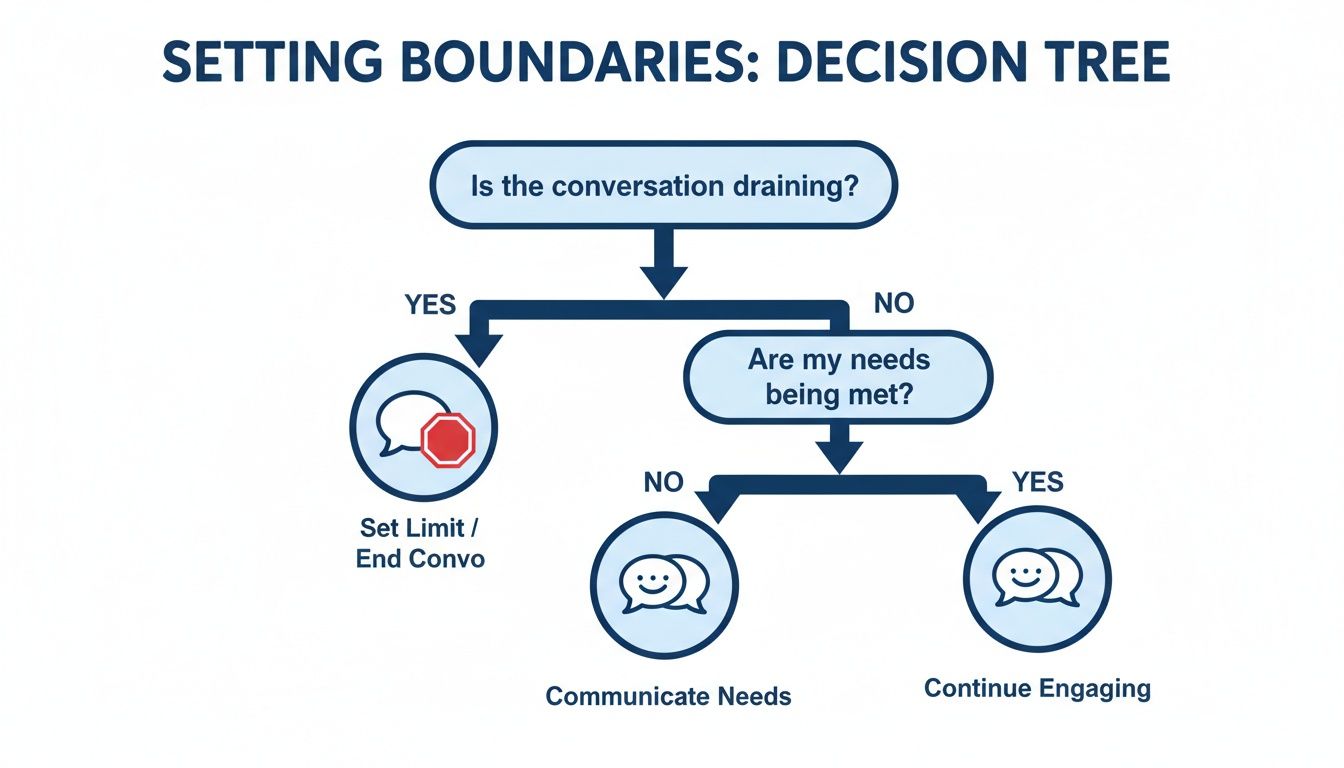
    Decision tree for setting boundaries in conversations: assess if draining, if needs are met, then act.

    Your emotional response—whether you feel drained or energized—is a valid signal. Trust it when deciding whether to set a new boundary or create distance.

    Different Approaches for Different Friendships

    How you end a friendship depends on the relationship. Not every parting requires a dramatic conversation.

    • The Gradual Fade-Out: For casual friendships, slowly pulling back can be the kindest and least confrontational path. This might mean taking longer to reply to messages and politely declining more invitations.
    • The Direct Conversation: With close, long-term friends, a direct but gentle conversation is often the most respectful approach. It honours your history while being clear about your need to step away.

    It's okay to outgrow friendships. Acknowledge the good times you shared, but don't let guilt keep you in a dynamic that harms your mental health and contributes to feelings of anxiety or depression. Your peace is a priority.

    Gentle Scripts for a Difficult Talk

    If you choose a direct conversation, focus on your feelings using "I" statements rather than placing blame. The goal is to be clear and compassionate, not to start an argument.

    Here are a few ways you could phrase it:

    • "I’ve been thinking a lot about my own well-being lately, and I’ve realised that our friendship dynamic isn't healthy for me right now. I need to take a step back."
    • "I value the friendship we’ve had, but I feel we’ve grown in different directions. For my own mental health, I need to create some space."
    • "I feel that our conversations often leave me feeling drained, and I need to focus my energy on more balanced and supportive relationships."

    It's also worth considering your online presence. Learning how to strategically remove friends for improved well-being can be an important part of protecting your energy in the digital world.

    Ending a friendship is a loss, and it's normal to feel sad or guilty. Be kind to yourself, lean on supportive friends, and consider talking to a counselling professional if the feelings are overwhelming. This is a brave move toward a happier, healthier life.

    Cultivating Positive Connections and Rebuilding Your Circle

    Joyful diverse friends sharing a laugh on a park bench bathed in warm light.

    Letting go of a draining friendship creates space for healthier, more uplifting connections. Think of this as a new beginning focused on nurturing your social well-being. It's an opportunity to intentionally build a support system that truly enriches your life.

    This process is a crucial part of building resilience. It involves consciously choosing who gets your time and energy. By focusing on quality over quantity, you can create a social circle that champions your personal growth and happiness.

    What Makes a Friendship Healthy

    Before building new connections, it helps to be clear on what you're looking for. A healthy friendship is built on mutual respect, where both people feel seen and valued. It’s a two-way street where support flows in both directions.

    These relationships have a few key ingredients:

    • Shared Joy: You celebrate each other's successes without envy. Their wins feel like yours, and vice versa.
    • Genuine Support: During tough times, you can count on them for empathy and a listening ear, not judgment.
    • Mutual Respect: You honour each other's boundaries, opinions, and life choices, even when they differ.
    • Trust and Safety: You feel safe to be your authentic self, knowing you can be vulnerable without fear.

    When friendships have these qualities, they become a buffer against life’s challenges, from workplace stress to feelings of anxiety or depression. These are the connections that refuel your spirit.

    Reconnecting with Old Friends and Finding New Ones

    Rebuilding your social circle doesn’t have to mean starting from scratch. You can start by rekindling positive connections that may have faded over time. A simple message is all it takes to reach out to a friend who always made you feel good.

    At the same time, stay open to forming new bonds. Joining a class or community group around your interests is a great way to meet like-minded people. In India, for example, joining a local book club or a volunteer organisation can introduce you to people who share your passions.

    Investing in positive relationships is an act of self-care. It's about surrounding yourself with people who reflect the person you are and want to become, fostering a genuine sense of belonging and well-being.

    This isn’t about rushing to fill a void. It's about mindfully curating a community that aligns with who you are.

    The Power of Positive Psychology in Friendships

    Positive psychology offers valuable insights into creating a thriving social life. It encourages us to focus on strengths like compassion, gratitude, and optimism. Applying these principles to your friendships can deepen connections and boost your own happiness.

    A simple practice is to express gratitude, like sending a quick text to a friend to say their chat lifted your spirits. Another is to be a "positive responder" by reacting with genuine enthusiasm to a friend's good news. This amplifies their joy and reinforces your supportive bond.

    These actions help build social capital—the supportive network of relationships that contributes to better mental health.

    Ultimately, learning how to deal with negative friends leads to self-discovery. It teaches you to value your emotional health and empowers you to build authentic connections. If this process feels challenging, seeking guidance through therapy or counselling can provide invaluable support on your journey to a resilient and joyful life.

    Your Questions, Answered

    Navigating a difficult friendship can bring up confusing feelings. It’s normal to feel unsure about what to do next. Let's walk through some common questions about handling friendships that have become challenging.

    This is supportive guidance, not a substitute for professional advice. If you feel stuck, reaching out for therapy or counselling is a sign of strength.

    Am I a Bad Person for Distancing Myself from a Negative Friend?

    Not at all. Stepping back to protect your mental well-being is an act of self-care. Healthy friendships should be reciprocal; they should lift you up, not consistently pull you down.

    When a friendship leaves you feeling drained or anxious, creating distance is a healthy response. It's about protecting your energy so you can be present in your own life. Taking care of yourself allows you to be a good friend to others and, most importantly, to yourself.

    What If My Negative Friend Has Depression or Is Going Through a Tough Time?

    This is a compassionate question and a very difficult situation. The key is to find the balance between supporting a friend and protecting your own mental health. You can offer a listening ear and encourage them to seek professional help.

    At the same time, you must protect your own emotional reserves. It's okay to set a boundary by saying something like, "I care about you and I'm sorry you're going through this, but I don't have the emotional capacity to give you the full support you need. Have you considered talking to a counselling professional?" Supporting a friend should never come at the cost of your own mental health, especially if it's contributing to your own feelings of anxiety or depression.

    How Do I Handle a Negative Friend I Cannot Avoid?

    This is a common challenge with colleagues experiencing workplace stress or even certain family members. When physical distance isn't possible, the goal is to create emotional distance. This is where firm and consistent boundaries are essential.

    Keep interactions brief, polite, and focused on necessary topics. Make a conscious effort not to get drawn into their complaints or drama.

    An effective technique for this is 'grey rocking,' which involves making yourself as uninteresting as a plain grey rock.

    • Keep your answers short and non-committal. Use simple replies like "I see," or "Okay."
    • Don't overshare. The less personal information you give, the less they have to comment on.
    • Stick to neutral ground. Talk about impersonal topics like the weather or a work project.

    This approach makes you a less satisfying target for negativity and helps conserve your emotional energy. It can also help to interact with them in group settings to diffuse the intensity.

    Learning to hold your emotional boundaries is a powerful skill for building resilience. It reminds you that you can stay calm and centred, no matter what someone else is doing. You are not responsible for managing their emotions.

    When Should I Consider Therapy for a Friendship Issue?

    Reaching out for professional support is a smart move if a friendship is causing you serious distress. It might be time to consider therapy if a relationship is triggering your anxiety, harming your self-esteem, or leaving you feeling completely overwhelmed.

    A therapist can help if you feel guilty about setting boundaries or notice a pattern of draining friendships. Professional counselling provides a safe space to work on communication, build emotional resilience, and learn how to foster healthier, more fulfilling connections.


    If you're looking for guidance on how to build healthier relationships and improve your overall well-being, DeTalks is here to help. Our platform connects you with qualified therapists and provides scientifically validated assessments to give you deeper insights into your mental health. Take the first step towards a more balanced and fulfilling life by exploring our resources at https://detalks.com.

  • What Is the Complicated Relationship Meaning? Signs and Causes

    What Is the Complicated Relationship Meaning? Signs and Causes

    When someone says their relationship is “complicated,” they are often describing a connection filled with uncertainty. It’s more than just a rough patch; it’s a persistent pattern where the future feels unclear, leaving people feeling emotionally drained. This guide offers a warm and supportive look into what this really means.

    What Does a Complicated Relationship Actually Mean?

    The social media status "it's complicated" captures the feeling well. It signals a connection that isn't a stable partnership, but isn't over either. It exists in a confusing grey area, like trying to solve a puzzle with missing pieces.

    Living in this state of limbo can be exhausting and take a toll on your mental well-being. The cycle of good and bad days can lead to chronic anxiety, stress, and burnout. Understanding the dynamic is the first step toward finding clarity and peace.

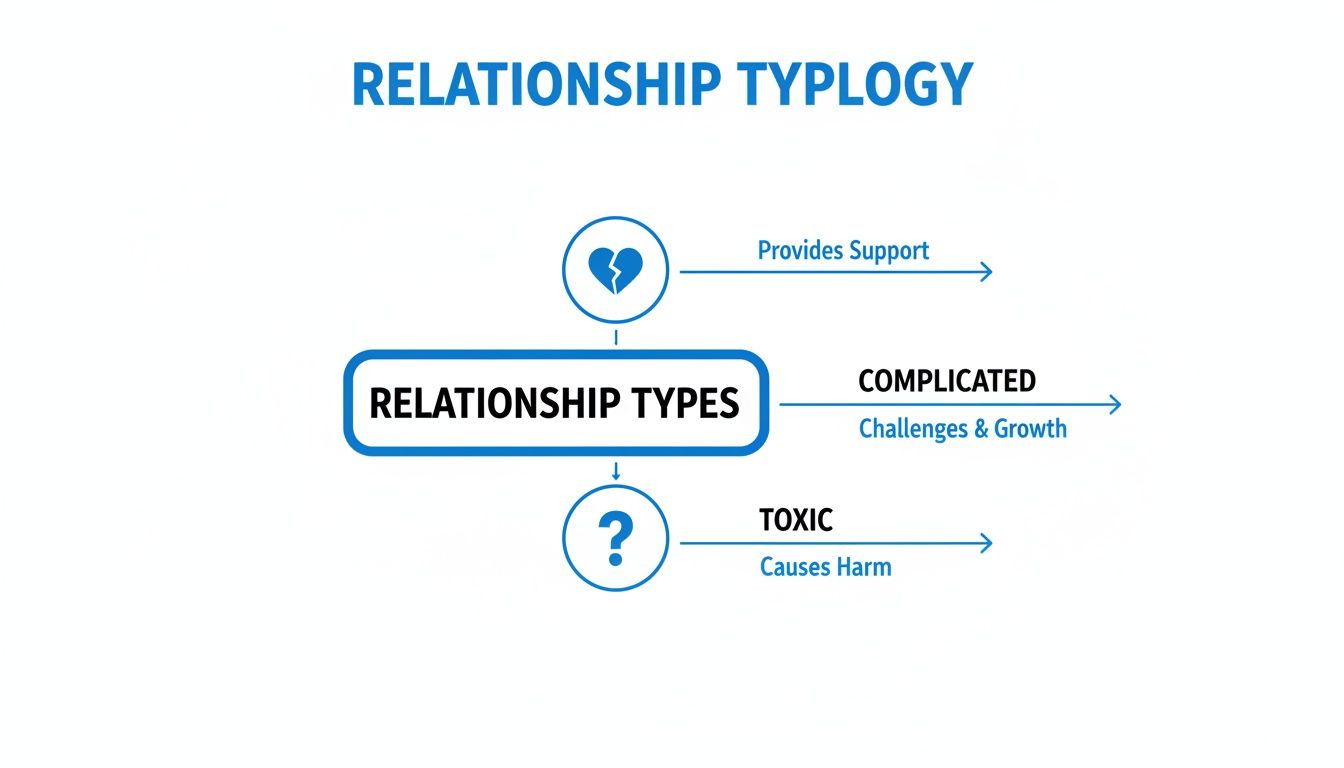
    To give you a better picture, here’s a quick breakdown of where complicated relationships fit.

    Diagram outlining relationship typology, categorizing types as supportive, complicated with challenges and growth, and toxic causing harm.

    As you can see, healthy relationships are built on support, while toxic ones cause harm. Complicated relationships occupy the tricky middle ground, defined by persistent challenges that can lead to distress but also potential growth.

    Complicated vs Healthy vs Toxic Relationships

    Seeing things side-by-side can bring clarity. A healthy bond feels supportive and secure. A toxic one is harmful and controlling, while a complicated one often leaves you feeling stuck in between.

    To make this distinction even clearer, here's a quick comparison table. Please remember, this is for informational purposes only and is not a diagnostic tool.

    Characteristic Healthy Relationship Complicated Relationship Toxic Relationship
    Communication Open, honest, and respectful. Inconsistent; frequent misunderstandings. Manipulative, critical, or nonexistent.
    Boundaries Clear and mutually respected. Blurry, shifting, or frequently crossed. Constantly violated; lack of respect.
    Emotional State Feel secure, happy, and supported. Feel anxious, confused, and drained. Feel scared, controlled, and devalued.
    Future Together A shared vision and clear commitment. Uncertain, ambiguous, and often avoided. Unstable, often used as a threat.
    Conflict Resolved constructively with mutual effort. Recurring issues are rarely resolved. Destructive, involves blame and control.
    Personal Growth Encouraged and celebrated by both partners. Stifled by the relationship's instability. Actively undermined or discouraged.

    Being in this situation is a deeply human experience, not a personal failure. In an India-first context, family expectations can add more complexity, making it harder to find a clear path forward.

    The goal is to honestly assess the relationship's impact on you and your long-term happiness. Gaining this awareness is the first step toward building resilience and making choices that support you. Professional therapy or counselling can offer a safe space to explore these feelings.

    A complicated relationship thrives on ambiguity. Its defining feature is a persistent lack of clarity that keeps you guessing about where you stand, what to expect, and whether the connection is truly sustainable for your well-being.

    Recognising the Signs of a Complicated Relationship

    Two hands reaching out towards a glowing, transparent question mark in the center.

    Understanding the theory is one thing, but spotting the signs in your own life can be difficult. These patterns often develop slowly until they feel normal. The goal isn't to assign blame but to gain clarity.

    Many people describe being on an emotional rollercoaster, swinging between incredible highs and draining lows. This constant emotional whiplash is a classic sign that something isn't right.

    The On-Again, Off-Again Cycle

    A very telling sign is being stuck in an on-again, off-again cycle. You break up only to get back together, trapped in a loop of hope and disappointment. The same problems resurface, pulling you apart once more.

    This pattern can harm your mental well-being, leaving you in a state of instability. This cycle can easily lead to anxiety and emotional burnout over time.

    Constant Uncertainty and Ambiguity

    Another major sign is a persistent lack of clarity about the future. Conversations about commitment or defining the relationship are often avoided or end without resolution. You may feel like you are perpetually waiting for the other person to decide.

    A core part of being in a complicated relationship is the feeling that you can never truly relax. The ground beneath you feels unstable, and you might find yourself constantly over-analysing every word and action for clues about where you really stand.

    This ambiguity is incredibly stressful and chips away at the trust needed for a happy relationship. The constant guessing game is often what makes the experience so emotionally draining.

    Communication Breakdowns

    Healthy relationships rely on clear communication. In complicated ones, conversations are often filled with misunderstandings and arguments that never get resolved.

    You might notice these patterns:

    • Recurring Arguments: You have the same fight repeatedly with no change.
    • Avoiding Difficult Topics: Important issues are ignored to avoid conflict.
    • Feeling Unheard: You feel your needs and feelings are dismissed.

    When communication fails, distance and resentment can grow, making it nearly impossible to solve problems as a team. This can worsen workplace stress and contribute to feelings of anxiety or depression.

    If this sounds familiar, professional counselling can provide a safe space to build personal resilience. Please note, these observations are informational and not a substitute for a professional diagnosis.

    What Puts the 'Complicated' in a Relationship?

    A man and a woman sit back-to-back on a bench, a toy roller coaster between them, depicting a strained relationship.

    Relationships become complicated over time, layer by layer. The cause is usually a mix of personal histories, shared dynamics, and external pressures. Understanding these root causes is not about blame.

    It is more like untangling a knot to see how it got so tight. This awareness is the first step toward building resilience and figuring out what to do next.

    Mismatched Goals and Values

    A common cause is when two people realize their life plans are heading in different directions. One person might want marriage and family, while the other values independence and isn't ready for that commitment. These are fundamental conflicts that communication alone can't always fix.

    This can also apply to core values, like views on money or family involvement. In the Indian context, family expectations can add immense pressure, making these differences feel more strained.

    When your visions for the future don't align, the relationship can feel like you're both pulling a rope in opposite directions. The constant tension creates an environment of uncertainty, making it difficult to feel secure or build a shared life.

    Unresolved Personal Histories

    We all bring our past experiences into our present relationships. Wounds from previous connections or childhood can significantly impact how we interact with our partners.

    These unresolved issues can show up in real ways:

    • Fear of Commitment: A past painful breakup may cause someone to hold back emotionally.
    • Insecure Attachment: Early life experiences can create a push-pull dynamic, fueling anxiety.
    • Trust Issues: Past betrayals can make it hard to trust a new partner.

    When personal history isn't addressed, it can create repeating cycles of conflict. Professional counselling offers a supportive space to unpack these patterns and improve your overall well-being. Remember, these insights are informational and not a formal diagnosis.

    Understanding the Impact on Your Mental Well-Being

    The constant uncertainty of a complicated relationship can damage your mental and emotional health. Living this way feels like walking on shaky ground, where you can never fully relax. This is a normal human response to a stressful and unstable environment.

    This emotional wear and tear can often lead to serious relationship anxiety. The cycle of hope and disappointment can lead to burnout. Protecting your well-being must become the top priority.

    The Connection Between Relational Stress and Mental Health

    Your body is wired to respond to threats. When a relationship is constantly unstable, it can trigger a chronic stress response. Over time, this state of high alert can contribute to mental health challenges.

    This link is particularly relevant in the Indian context, where societal and family expectations can increase relationship stress. According to government data, a significant portion of the population faces mental health conditions, often worsened by relationship conflicts. You can find more insights on India's mental health landscape from the Press Information Bureau.

    A complicated relationship can quietly eat away at your self-esteem. The constant ambiguity makes you doubt yourself—your judgment, your decisions, and your own worth. That can be one of its most damaging long-term effects.

    From Anxiety to Burnout

    The emotional fallout from a complicated relationship is often a gradual process. Naming your feelings is the first step toward regaining your emotional balance and showing yourself compassion.

    Here’s what the emotional and psychological impact often looks like:

    • Chronic Stress: Constant worry creates a background hum of tension, affecting sleep and concentration.
    • Persistent Anxiety: You might replay conversations and worry about the relationship, which can become a more generalized anxiety.
    • Symptoms of Depression: Feelings of hopelessness, sadness, or losing interest in things you once enjoyed are significant red flags.
    • Emotional Burnout: You may reach a point of total exhaustion where you feel numb and detached.

    Recognizing these signs is an act of self-compassion. Understanding the real impact on your health is key. Reaching out for therapy or counselling is a powerful way to build resilience and prioritize your happiness.

    Finding Your Footing: Practical Ways to Navigate the Maze

    Realizing you're in a complicated relationship is one thing; figuring out what to do next is another. The goal is to shift your focus back to yourself, building your resilience and reclaiming control over your emotional well-being.

    Think of these strategies as practical tools to help you find solid ground. They are designed to empower you to put your mental health first, even when things feel chaotic.

    Cultivating Stronger Communication

    Clear and honest communication is often the first casualty in a tangled relationship. It's important to express your own needs without attacking your partner. One of the most powerful tools for this is setting firm boundaries.

    Boundaries are not walls; they are guidelines for how you need to be treated. They protect your energy and well-being with calm, clear statements.

    Here are a few examples of what healthy boundaries can sound like:

    • Time Boundaries: "I need some space to think. Can we talk about this later this evening?"
    • Emotional Boundaries: "I feel overwhelmed when we shout. I will step away until we can both speak calmly."
    • Behavioural Boundaries: "It’s not okay for you to go through my phone. I need my privacy to be respected."

    Setting boundaries might feel uncomfortable at first, but it is a fundamental act of self-respect. It builds personal strength and brings much-needed clarity.

    Building Your Well-Being from Within

    Your personal well-being cannot be put on hold. Positive psychology shows us that happiness and inner strength are skills we can develop. It’s about finding sources of joy that belong entirely to you.

    Your sense of self-worth should never be entirely dependent on your relationship status. Nurturing your own happiness creates an internal anchor that keeps you steady, no matter how turbulent the external situation becomes.

    Pour energy back into yourself by reconnecting with hobbies and supportive friends. When you build a life you love outside the relationship, you create stability and remind yourself of your strength. For those navigating neurodiversity, specific advice on managing ADHD and relationship problems can offer tailored strategies.

    Navigating a complicated relationship requires immense self-compassion. Acknowledge the hurt without judgment and take small, consistent steps to support your mental health. The goal is to move forward with clarity, always putting your well-being first.

    Knowing When to Seek Professional Support

    Footprints and a long rope lead across a sandy beach to a person by a calm lake.

    While personal reflection is valuable, sometimes the weight is too much to carry alone. Reaching out for professional help is a courageous act of self-care and a step toward reclaiming your well-being.

    A therapist can act as a guide, helping you read the map of your own emotions. A clear sign you may need support is when the stress starts affecting other areas of your life, such as work or friendships.

    Signs It Might Be Time for Therapy

    Recognizing you need help is the first step toward building resilience. You don’t have to wait until you hit rock bottom to seek support.

    It might be time to reach out if you’re experiencing:

    • Constant Anxiety or Sadness: The relationship is a primary source of your anxiety or feelings of depression.
    • Impact on Daily Functioning: You struggle to sleep, concentrate, or have lost interest in hobbies.
    • A Feeling of Being Stuck: The same painful patterns keep repeating despite your best efforts.
    • Eroding Self-Esteem: The dynamic consistently makes you doubt your self-worth.

    The connection between relationship distress and mental health is significant. Prioritizing your mental health is vital for your overall quality of life.

    What Therapy and Counselling Can Offer

    Therapy and counselling provide a confidential, non-judgmental space to find clarity. A professional can equip you with tools to understand the dynamics, develop healthier coping mechanisms, and rebuild your sense of self. It is important to remember that online assessments are for informational purposes only and are not a substitute for a professional diagnosis.

    Platforms like DeTalks connect you with qualified therapists specializing in relationship challenges. Whether you choose individual therapy or couples counselling, professional guidance can light a path forward.

    The goal isn't always to "fix" the relationship. The focus is on helping you find peace, clarity, and lasting happiness, whatever the outcome may be.

    Got Questions About Complicated Relationships? We've Got Answers.

    Can a Complicated Relationship Ever Become Healthy?

    Yes, but it requires genuine commitment from both people. Real change involves addressing the root causes of conflict, learning to communicate effectively, and often seeking outside help through counselling. Both partners must truly want to create a stable, safe, and supportive partnership.

    How Do I Know When It’s Time to Leave?

    This is a deeply personal decision. Ask yourself: does this relationship consistently drain my energy and harm my mental well-being? If you have tried to fix things and are still stuck in the same painful cycle, it may be time to prioritize your own health.

    Is It My Fault That Our Relationship Is So Complicated?

    It is rarely one person's fault. Complications usually arise from a mix of different communication styles, past experiences, and mismatched life goals. Shifting from blame to understanding your role in the dynamic is a key step toward growth and building your personal resilience.


    Navigating these challenges is tough, but you don’t have to do it alone. DeTalks offers a supportive space to speak with qualified therapists who can guide you toward clarity and emotional well-being. Explore our network of professionals and take a supportive step forward for yourself.

  • A Guide to the Family Life Cycle Stages and How to Navigate Them

    A Guide to the Family Life Cycle Stages and How to Navigate Them

    The idea of family life cycle stages offers a warm and helpful way to see how families grow and change. Like individuals, families evolve through a series of predictable phases. Each stage brings its own unique joys, learning opportunities, and a fresh set of challenges.

    This framework helps normalise the hurdles we all face on this journey. It reframes them not as personal failings, but as natural parts of a shared human experience, fostering resilience and understanding.

    Understanding Your Family's Evolving Journey

    While every family’s story is unique, there is a common rhythm to how most of us grow and transition. Thinking about your family's path in terms of these stages can act like a roadmap, helping you anticipate what’s next and navigate challenges with more compassion.

    It's a way of realising that the stress of new parenthood or the quiet of an empty home is a well-trodden path. This perspective shifts the focus from "what's wrong with us?" to "how can we grow through this?", empowering you to see challenges as opportunities for connection and well-being.

    The Natural Flow of Family Life

    Looking at your family this way builds resilience and encourages open conversations about what each person is experiencing. This shared understanding is the first step toward strengthening your family's mental health and finding healthier ways to relate to one another.

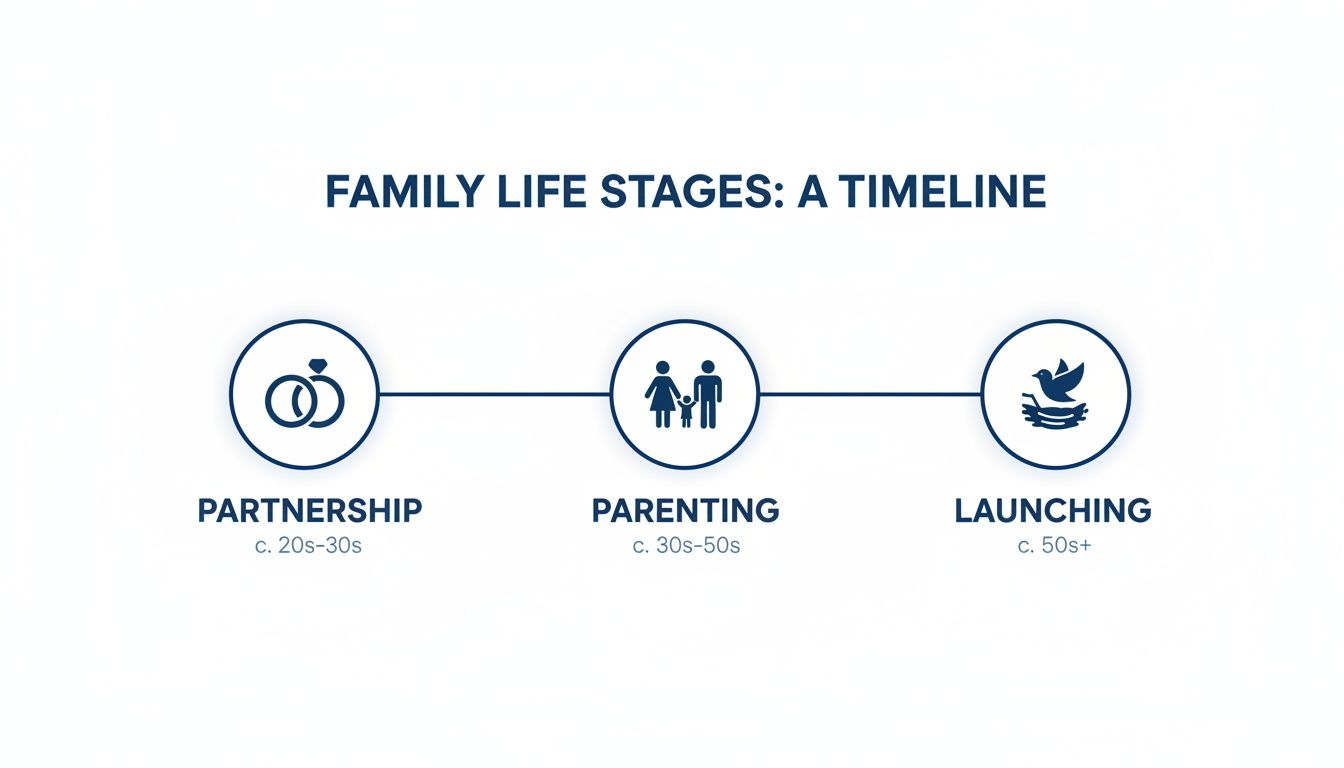
    The timeline below gives a simple visual of the core phases many families experience.

    Timeline diagram showing family life stages: Partnership, Parenting, and Launching, with age ranges.

    As you can see, each stage—from building a partnership to parenting and eventually launching children—marks a major shift in the family’s focus and priorities.

    To give you a clearer picture, here’s a quick breakdown of what to expect at each stage.

    Overview of Key Family Life Cycle Stages

    Stage Primary Task Common Challenge
    1. Single Young Adult Establishing independence & identity Balancing career goals with personal relationships
    2. The New Couple Merging two lives into a new system Navigating differences in values, habits & finances
    3. Family with Young Children Adjusting to new parenting roles Exhaustion, loss of personal time & couple intimacy
    4. Family with Adolescents Increasing flexibility of family boundaries Managing conflicts over independence & responsibility
    5. Launching Children Releasing adult children into the world Adjusting to the "empty nest" & redefining roles
    6. Family in Later Life Accepting shifting generational roles Coping with health issues, retirement & new family dynamics

    This table is just a snapshot, but it illustrates how the focus and pressures on a family naturally change over the years.

    Understanding these stages feels especially relevant in an India-first context, where family is central but modern pressures like intense workplace stress are common. Seeking support through counselling during these transitions isn’t a sign of weakness; it’s a proactive step toward building a happier, stronger family and nurturing your well-being.

    Building a Foundation: From Independence to Partnership

    The journey into adulthood often unfolds in two parts: first, learning to stand on our own, and then, learning to walk alongside someone else. These early family life cycle stages are about laying a foundation of independence, communication, and mutual respect. This exciting and sometimes messy period is filled with growth but also brings its own pressures.

    The first major step is becoming your own person, which involves both financial and emotional independence. Young adults are often juggling career-building, managing finances, and discovering their identity away from their family. It's no surprise that this can be a time of significant workplace stress and personal anxiety.

    The Young Adult Journey

    In many cultures, including India, it's common for young adults to live at home while establishing their careers. This dynamic calls for a delicate balance of honouring family traditions while carving out space for personal freedom. It requires patience and clear communication from everyone involved.

    Ultimately, the goal is to develop a strong, secure sense of self. This personal foundation is what you'll carry into future relationships. Building resilience now—learning to manage stress and bounce back from setbacks—is a direct investment in your long-term well-being.

    Moving from dependence to independence is a profound emotional shift. It's not just about what you do, but about how you see yourself—as capable, responsible, and ready for the next chapter of life.

    Forming a New Partnership

    The next stage begins when two people decide to build a life together. This "new couple" phase is a beautiful, yet intricate, process of merging two separate worlds. You’re blending habits, values, family stories, and deeply held hopes for the future.

    This is where the real work of creating a partnership begins. As the initial glow settles, the practical realities of daily life emerge. Disagreements over money or chores aren't signs of trouble, but normal growing pains as a couple learns to function as a team.

    In India, this transition can be particularly intense for newly married couples. While marital happiness is often high initially, challenges in adjusting can cause friction for some. A significant factor is communication, with many young couples reporting that simple gaps in understanding lead to conflict. You can find more insights on these family connection trends on the ASPE website.

    Creating a Resilient Bond

    Strong communication is the bedrock of a lasting partnership, helping you solve problems, share dreams, and support each other through tough times. When communication falters, small misunderstandings can grow into larger conflicts, leading to feelings of loneliness or resentment.

    This is why seeking support early on can make a profound difference. Relationship counselling or therapy isn't about admitting failure; it’s a smart, proactive step to build healthy communication skills. Learning to listen actively and express needs constructively is one of the most powerful things you can do for your relationship's happiness.

    By investing in their connection during this foundational stage, couples build a resilient bond that can handle the pressures of later family life cycle stages. This early effort creates a deep sense of security and teamwork, helping them face future storms, including potential struggles with anxiety or depression, together.

    Navigating the Intensity of the Parenting Years

    The arrival of children marks a huge shift in the family dynamic, launching one of the most intense and rewarding phases of the family life cycle stages. Life is completely reorganised around the needs of a new, dependent person. This is a fundamental recalibration of your identity, responsibilities, and daily rhythm.

    Almost overnight, a couple must learn to operate as a parenting team, which can strain time, energy, and emotional reserves. The spotlight naturally moves to the child's well-being, and finding moments for connection as a couple can feel like a challenge. For most, this period is a powerful mix of profound joy and significant stress.

    A happy Asian couple smiling while planning schedules with a laptop and calendar at home.

    The Demands of Parenting Young Children

    Raising small children is an all-consuming job that can easily lead to parental burnout. It's common to feel overwhelmed by the constant demands, and some mothers may grapple with challenges like postpartum depression. These feelings are not a sign of failure, but a normal human reaction to a life-altering event.

    This is where building a strong support system becomes essential. This might mean leaning on family, connecting with other new parents, or seeking professional counselling to navigate the emotional journey. Simply acknowledging the struggle is a crucial first step toward building the resilience you need to thrive.

    To better understand your child’s evolving needs on this journey, exploring a guide on the various stages of child development by age can be an invaluable resource.

    Navigating the Adolescent Years

    Just when you think you've mastered parenting, the teenage years arrive and change the game again. This stage is built around a key challenge: adolescents need both firm boundaries and growing freedom. Their main task is to form their identity, which often involves pushing back against family rules.

    For parents, this can feel like walking a tightrope as a child who once clung to your hand now seeks more privacy. This is a healthy and necessary part of growing up, but it can create friction. Open communication becomes more critical—and often, more challenging—than ever.

    The goal is not to control your teen, but to coach them. It’s about shifting from being a manager of their life to a consultant they can trust, helping them make good choices while allowing them the space to learn from their mistakes.

    In many Indian families, this stage is heightened by immense academic pressure, which can lead to a rise in family conflicts. Studies show that many parents in urban areas experience burnout tied to competitive schooling. This pressure also impacts mental health, with a significant number of adolescents showing signs of depression linked to high parental expectations. You can discover more insights about family life cycle pressures from this study.

    Fostering Connection and Resilience

    Throughout these demanding parenting years, leading with compassion—for your children and yourself—is key. It's about balancing expectations with unconditional love and support.

    Here are a few practical ways to nurture your family's well-being:

    • Schedule One-on-One Time: Even 15 minutes of focused, distraction-free time with each child can strengthen your bond and keep communication open.
    • Practice Active Listening: When your teen talks, put your phone away and just listen. Resisting the urge to jump in with advice helps them feel heard and understood.
    • Establish Family Rituals: Consistent rituals, like a weekly movie night, build a comforting sense of stability and connection during a time of constant change.
    • Prioritise Self-Care: You cannot pour from an empty cup. Making time for your own mental health isn’t selfish; it’s an essential part of being a present and patient parent.

    The added pressure of parenting can sometimes bring back old challenges like unresolved workplace stress or personal anxiety. Seeking therapy is a powerful step toward creating a healthier family environment. It also models for your children that asking for help is a sign of strength, building a foundation of emotional intelligence and resilience.

    Embracing Change as Children Leave Home

    The day your child leaves home is a massive turning point in the family journey. After years of a life built around their needs, the house suddenly becomes quiet. The daily rhythm you took for granted is gone.

    This stage is often called the "empty nest," but it's more helpful to see it as a profound transition. It is an ending, but it is also a beginning that opens new doors for personal growth and for reconnecting with your partner.

    It's completely normal to feel a mix of emotions, including sadness, loneliness, and anxiety, as you adapt to this new reality. After pouring so much of yourself into parenting, it's natural to ask, "What now?" This shift can feel especially jarring in nuclear families where the parent-child bond is so central.

    A father and son sit on a couch, talking seriously, with school supplies on the coffee table.

    Rediscovering Life Beyond Parenting

    While this is a time for letting go, it's also a powerful opportunity to rediscover yourself. Now is the time to turn your focus inward and remember who you were before you were a parent. It’s your chance to dust off old hobbies, find new passions, and invest energy back into your own well-being.

    This period can also test your relationship as a couple. For many years, the shared project of raising children may have masked underlying issues. With the kids gone, those challenges might surface, which is an invitation to strengthen your bond and redefine your partnership.

    This stage isn’t really about an empty home, but about newly available space. It's a chance to refill your life with personal passions, renewed connections, and a different kind of purpose.

    Strengthening Your Partnership

    Successfully navigating this stage is about turning toward each other, not away. With the children gone, you have the time and space to remember why you fell in love. It’s an opportunity to be partners and friends again, not just co-parents.

    To build resilience as a couple and find happiness in this new phase, try these supportive strategies:

    • Communicate Openly: Talk about your feelings—the good and the bad. Acknowledging the sadness alongside the excitement builds empathy and compassion.
    • Create New Rituals: The old family routines are gone, so create new ones for just the two of you, like a weekly date night or planning a trip together.
    • Respect Individual Growth: Encourage each other to pursue separate interests. This brings fresh energy and new experiences back into your relationship to share.

    When to Seek Professional Support

    Sometimes, this transition can feel overwhelming and may bring feelings of anxiety or depression to the surface. If you feel stuck in sadness or find that old conflicts are causing distress, professional therapy can be an incredible help.

    Couples counselling offers a safe, structured space to work through issues and learn healthier ways to communicate. Seeking support is a proactive step toward protecting your collective well-being as you step into this next phase of life. It is an investment in a happy and fulfilling future, together.

    Finding Meaning and Well-Being in Later Life

    The later stages of the family journey bring a shift in our roles and responsibilities. This chapter often begins with being part of the "sandwich generation"—those caught between caring for their children and supporting their ageing parents. It’s a time defined by giving, which can easily lead to personal strain and burnout.

    Juggling the needs of multiple generations, a career, and your own life can stretch you emotionally and financially. This balancing act is a common cause of high workplace stress and caregiver burnout, especially when self-care gets pushed aside.

    A somber elderly couple in a child's room, holding a framed picture of a young girl, gazing upward.

    Navigating the Demands of Caregiving

    In an India-first context, the sandwich generation experience often defines the middle-age stage of the family life cycle. Many adults find themselves grappling with this dual duty to parents and children, which can contribute to burnout.

    Later on, as retirement begins, a new set of challenges appears. A growing number of older adults in urban areas live alone, which can fuel feelings of loneliness. You can learn more about these family life cycle trends to see how these patterns play out.

    Feeling overwhelmed when pulled in so many directions is completely normal. Acknowledging the anxiety or stress is an important first step. Leaning on support systems—family, friends, or professional counselling—is crucial for protecting your own well-being.

    Embracing the Retirement Years

    The shift into retirement marks another massive chapter in the family life cycle stages. After decades built around work and family, the sudden influx of unstructured time can feel both freeing and unsettling. For many, a career is a source of identity, purpose, and social connection.

    Losing that familiar structure can leave you feeling adrift. This is also a time when health concerns may come to the forefront, requiring lifestyle adjustments. The key to a happy retirement is to proactively build new routines and find new sources of meaning that fit who you are now.

    Retirement isn’t just an ending. It’s an invitation to consciously design a life filled with purpose, connection, and joy—on your own terms. It's a time to finally invest in yourself.

    This stage is a powerful opportunity to pour energy into personal passions and nurture a positive outlook. By embracing ideas from positive psychology, you can build resilience and find genuine happiness and satisfaction in your later years.

    Cultivating Happiness and Purpose

    Finding meaning in later life is an active process of rediscovery. It’s about shifting focus from the roles you used to have to the joys you can find today.

    Here are a few gentle but powerful ways to boost your well-being:

    • Practise Gratitude: Making a daily habit of noticing the good things can dramatically improve your mood and foster happiness.
    • Maintain Social Connections: Be intentional about staying connected with friends and family to combat loneliness. These bonds are a lifeline for your emotional health.
    • Embrace New Hobbies: This is the perfect time to learn something new, which keeps your mind sharp and can introduce you to new friends.
    • Focus on Mindfulness: Simple practices like meditation can help manage anxiety and keep you grounded in the present, helping you appreciate the simple joys of life.

    If adjusting to these changes feels like a struggle, or if feelings of depression persist, reaching out for professional support can make all the difference. Therapy provides a safe, compassionate space to explore what you're feeling and create a plan for a truly fulfilling life in your later years.

    Supportive Steps for Your Family's Well-Being

    Moving through the different stages of family life is a journey filled with wonderful moments and some tough challenges. The first step to building a stronger, more connected family is acknowledging that struggles are a normal part of the story. You don't have to navigate these transitions alone; support is available to help your family thrive.

    Knowing when to reach out for help is a sign of strength. Professional support can offer tools to communicate better, handle disagreements constructively, and boost your family's overall well-being. It’s about learning how to grow together through life's inevitable ups and downs.

    Finding the Right Support for Your Family

    Different challenges call for different solutions. The key is finding a type of support that fits what your family is going through.

    • Individual Therapy: Personal struggles like anxiety, depression, or workplace stress can affect the whole family. Individual therapy provides a safe, one-on-one space to work through these issues.
    • Couples Counselling: This is a proactive step for partners looking to strengthen their relationship. Counselling can help you navigate big changes, from new parenthood to life after the kids have moved out.
    • Parenting Guidance: This type of support offers parents practical strategies to create a calmer, more positive home and navigate behavioural challenges.

    Using Assessments for Personal Insight

    On the path to better understanding, tools like psychological assessments can offer valuable clues. These screeners can help you get a clearer picture of your emotional habits, personality traits, or symptoms of stress.

    It is critical to remember that these assessments are informational tools, not diagnostic ones. Think of them as a personal snapshot—a helpful starting point for self-reflection or a conversation with a mental health professional, but not a final verdict.

    A crucial aspect of ensuring long-term family well-being involves engaging in comprehensive estate planning to secure everyone's future. This practical step provides peace of mind across all life stages.

    Taking these supportive steps is an investment in your family’s happiness and resilience. Every action you take helps build a stronger foundation for whatever comes next.

    Frequently Asked Questions About the Family Life Cycle

    Thinking about how families grow and change often brings up some common questions. Here are some clear answers to help guide you.

    Do All Families Follow These Stages Exactly?

    Absolutely not. Think of this framework as a helpful map, not a strict set of rules. Every family’s journey is unique, and modern family life is incredibly diverse.

    Single-parent households, blended families, couples without children, and LGBTQ+ families all carve their own paths. The key insight is that all families face transitions that call for new skills, patience, compassion, and fresh ways of relating to each other.

    How Can I Tell if Stress Is Normal or a Sign of a Deeper Problem?

    A bit of stress or sadness is completely normal during a big life change. These feelings are usually tied to a specific challenge and tend to ease as you adjust.

    A red flag may be when those feelings stick around, feel overwhelming, or interfere with your daily life, work, or relationships. If it feels like you're constantly struggling, it could be a sign of something more, like depression or an anxiety disorder. That's a good cue to consider seeking professional support for your well-being.

    Remember, reaching out for counselling is a proactive step toward building resilience. It's not about waiting for a crisis but about learning better ways to cope with life's challenges.

    How Do I Talk to a Family Member About Therapy?

    Bringing up therapy can feel tricky, so it’s important to lead with kindness and genuine concern.

    Find a quiet, private time to talk. Start by using "I" statements to share your feelings, such as, "I've been feeling worried about us lately," which feels softer than an accusation.

    Frame it as a team effort to make your family life stronger and more connected. Normalising the idea by saying something like, "Lots of families get support to get through tough patches" can also help. Be patient, as your goal is to open the door with compassion, not force them through it.


    Navigating your family's unique journey is easier with the right support. DeTalks connects you with qualified therapists and counsellors who can provide guidance at every stage, helping you build stronger bonds and greater well-being. Start your journey toward a healthier family life with DeTalks.

  • A Guide to Modern Techniques of Counselling

    A Guide to Modern Techniques of Counselling

    Welcome to the world of therapy—a space designed for growth, healing, and self-discovery. This guide is here to explain the core techniques of counselling in a simple, warm way. These are structured, proven methods that therapists use to help you navigate life's challenges, from everyday anxiety and workplace stress to building deeper happiness.

    Think of these techniques as a practical toolkit for building resilience and nurturing your mental well-being. This journey is about understanding yourself better and finding supportive ways to move forward.

    Your Journey into Counselling Techniques

    Deciding to start counselling is a brave and powerful step towards a healthier, more fulfilling life. It’s a partnership where a trained professional uses specific, thoughtful approaches to help you make sense of your thoughts, feelings, and behaviours. The entire process is designed to create a safe, supportive space for you to heal and grow.

    A person walks down a foggy park path at sunrise, holding a book, surrounded by trees.

    In this guide, we'll walk through everything from foundational skills like active listening to powerful, structured approaches like Cognitive Behavioural Therapy (CBT). Our aim is to give you a clear, empathetic overview, showing how different techniques are matched to different needs. Understanding these methods helps demystify what happens in a therapy session, making it feel much more approachable.

    The Evolution of Counselling in India

    The practice of counselling in India has grown immensely, blending global knowledge with local understanding. Early psychological labs, like the one at Calcutta University in 1915, laid the groundwork for modern mental health support.

    Today, the field has moved far beyond simple advice-giving, embracing evidence-based methods to address common challenges like anxiety and depression. This shift reflects a global move towards care that truly works, tailored to be relatable and effective for people across India and the world.

    Why Understanding These Techniques Matters

    When you know the basics of counselling techniques, you become an active partner in your own healing journey. Understanding the "why" behind your therapist's approach allows you to engage more deeply and build a stronger therapeutic relationship.

    This knowledge is helpful for managing issues like workplace stress and for cultivating positive qualities like resilience, compassion, and happiness. It’s about finding what works for you and gathering the tools to build a more balanced life.

    The most important thing to remember is that therapy is not a one-size-fits-all solution. The rich variety of techniques ensures that the support you receive can be tailored to your unique personality, background, and goals.

    For those considering a professional path in this field, grasping adult learning theory principles can make a world of difference in mastering these techniques. Ultimately, this journey is about finding what works for you and gathering the tools to build a more resilient, balanced life.

    The Power of Being Truly Heard

    Every meaningful counselling journey starts with something simple, yet incredibly profound: being truly heard. Active listening and empathy are the bedrock techniques of effective therapy. At its core, therapy provides a unique space where you can feel completely seen and understood, often for the very first time.

    When a counsellor truly tunes in, they are listening for the feelings beneath your words, which builds a powerful sense of trust. For anyone navigating the fog of depression or the constant buzz of anxiety, this simple act of being understood can be the first real step towards healing.

    What Active Listening Really Means

    Active listening is a structured way of hearing and responding that creates genuine understanding. It is one of the most vital techniques of counselling, involving more than just staying quiet while you talk. It's a fully engaged, dynamic process.

    Your therapist acts as an emotional mirror, reflecting back your thoughts and feelings without judgment. This helps you see your own emotions more clearly and feel validated for having them. This is especially important when you’re wrestling with overwhelming feelings from workplace stress or difficult relationships.

    Here’s what it looks like in practice during therapy:

    • Undivided Attention: Your therapist shows they are focused entirely on you with their body language and focus. It’s a non-verbal way of saying, "You matter."
    • Paraphrasing for Clarity: They might rephrase what you’ve said, like "It sounds like you're feeling completely overwhelmed." This isn't just repetition; it's a check to ensure they understand.
    • Reflecting Feelings: A good therapist listens for the emotion behind your words, saying something like, "That must feel incredibly frustrating."

    The Role of Empathy in Building Trust

    If active listening is the 'how', then empathy is the 'why'—it's the soul of the therapeutic connection. Empathy is the ability to genuinely step into your shoes and understand your experiences from your point of view.

    This authentic understanding forges the therapeutic alliance, the strong, trusting bond between you and your counsellor. Research shows that a strong alliance is one of the biggest predictors of a positive therapy outcome, no matter which techniques of counselling are used.

    A therapeutic relationship built on empathy creates a safe harbour. It’s a space where you can be vulnerable without fear of judgement, allowing for deeper exploration and growth toward better well-being.

    Empathy tells you that your feelings are valid, which is an incredibly powerful experience. When someone truly understands, the weight of carrying difficult emotions alone begins to lift. For anyone looking to foster this in other settings, exploring community circle questions to spark deeper connection can offer practical ideas.

    From Listening to Healing

    Active listening and empathy are powerful healing actions in themselves. This foundation is what allows all other therapeutic techniques to work effectively. It creates a stable ground from which you can start to build resilience and explore real change, transforming the counselling room into a space of safety.

    Ultimately, being truly heard is a fundamental human need. When that need is met within a professional, caring environment, it opens the door to self-compassion, new insights, and lasting positive change.

    How CBT Retrains Your Brain for Well-Being

    Of all the modern techniques of counselling, few are as widely practiced as Cognitive Behavioural Therapy, or CBT. The idea at its heart is simple and powerful: your thoughts, feelings, and actions are all connected. When you change one, the others follow.

    A man places sticky notes on a whiteboard labeled 'Negative' and 'Reframe'.

    This means that if you can learn to change unhelpful thought patterns, you can directly influence your emotional well-being and how you act. CBT is a hands-on, skill-building approach that gives you the tools to navigate life’s challenges long after your sessions are over.

    The CBT Triangle in Action

    Let’s make this real with an example of workplace stress. Imagine you have a big presentation coming up, and the thought, "I'm going to mess this up," pops into your head. That thought triggers a knot of anxiety in your stomach, which then leads you to avoid practicing.

    CBT works by showing you how to break this cycle at the source: the thought. A counsellor helps you spot these automatic patterns and gives you practical strategies to challenge that initial negative thought, building emotional control and resilience.

    "CBT is less about dwelling on the past and more about equipping you with practical skills for the present and future. It’s an active, collaborative form of therapy where you learn how to retrain your brain for healthier responses."

    Modern counselling in India has been profoundly shaped by these cognitive-behavioural techniques. Structured approaches like CBT have gained serious traction in both research and clinical practice. You can dig deeper into the growth of these methods in psychotherapy with Indian clients.

    Key CBT Tools for Your Everyday Life

    CBT is a collection of practical tools, and your therapist acts as a coach, guiding you through exercises to reshape how you think and act. While some assessments might be used to identify patterns, they are always informational tools, not rigid diagnostic labels.

    Here are a couple of the most common and powerful CBT techniques:

    • Cognitive Restructuring: This is the core skill of identifying, questioning, and changing unhelpful thoughts. You learn to catch "automatic negative thoughts" and examine the actual evidence for and against them.
    • Behavioural Activation: This technique is a game-changer for tackling depression and low motivation. It involves intentionally scheduling positive activities into your day to counteract the tendency to withdraw and help lift your mood.

    The table below summarises some key CBT techniques and where they are most helpful.

    Common CBT Techniques and Their Applications

    CBT Technique What It Does Commonly Used For
    Cognitive Restructuring Identifies and challenges negative or irrational thought patterns. Anxiety, depression, phobias, low self-esteem
    Behavioural Activation Schedules positive, rewarding activities to combat withdrawal. Depression, apathy, lack of motivation
    Exposure Therapy Gradually exposes a person to their fears in a safe setting. Phobias, panic disorder, obsessive-compulsive disorder (OCD)
    Journaling Tracks thoughts, feelings, and behaviours to identify patterns. General anxiety, stress management, self-awareness
    Problem-Solving Skills Breaks down overwhelming problems into manageable steps. Stress, anxiety, decision-making difficulties

    These techniques are the building blocks of CBT, helping you develop a more balanced and realistic perspective on life's challenges.

    Putting CBT into Practice

    So, what does this look like in the real world?

    Example 1: A Student with Exam Anxiety

    • Automatic Thought: "If I fail this exam, my future is ruined."
    • Cognitive Restructuring: A therapist would help the student challenge this by reframing it: "This exam is important, but my worth isn't defined by a grade."
    • Behavioural Activation: Instead of avoiding study out of fear, the student creates a structured study plan with small, achievable goals to build confidence.

    Example 2: A Professional Facing Workplace Burnout

    • Automatic Thought: "I can't cope with this workplace stress. I'm a complete failure."
    • Cognitive Restructuring: A counsellor helps them question this, reframing the thought to: "I'm feeling overwhelmed, which is normal. I need to find better strategies to manage my workload."
    • Behavioural Activation: The professional intentionally schedules restorative activities, like taking a proper lunch break or dedicating time to a hobby, to fight burnout.

    With practice, these CBT skills start to feel natural. You learn to pause, notice your thoughts without judgment, and choose a more helpful way forward, building lasting pathways to greater mental well-being.

    Fostering Growth with Person-Centred Therapy

    Person-centred therapy is built on a simple yet powerful idea: you already have the capacity to grow and find your own answers. The therapist is not an expert with all the solutions, but a genuine, supportive guide on your journey.

    This gentle form of therapy is all about helping you tap into your own inner resources. It creates a safe, non-judgemental space where you can freely explore your true feelings, build self-worth, and uncover the path that feels right for you. It's a journey of self-discovery, perfect for anyone looking to grow, boost their self-esteem, or find a clearer sense of purpose.

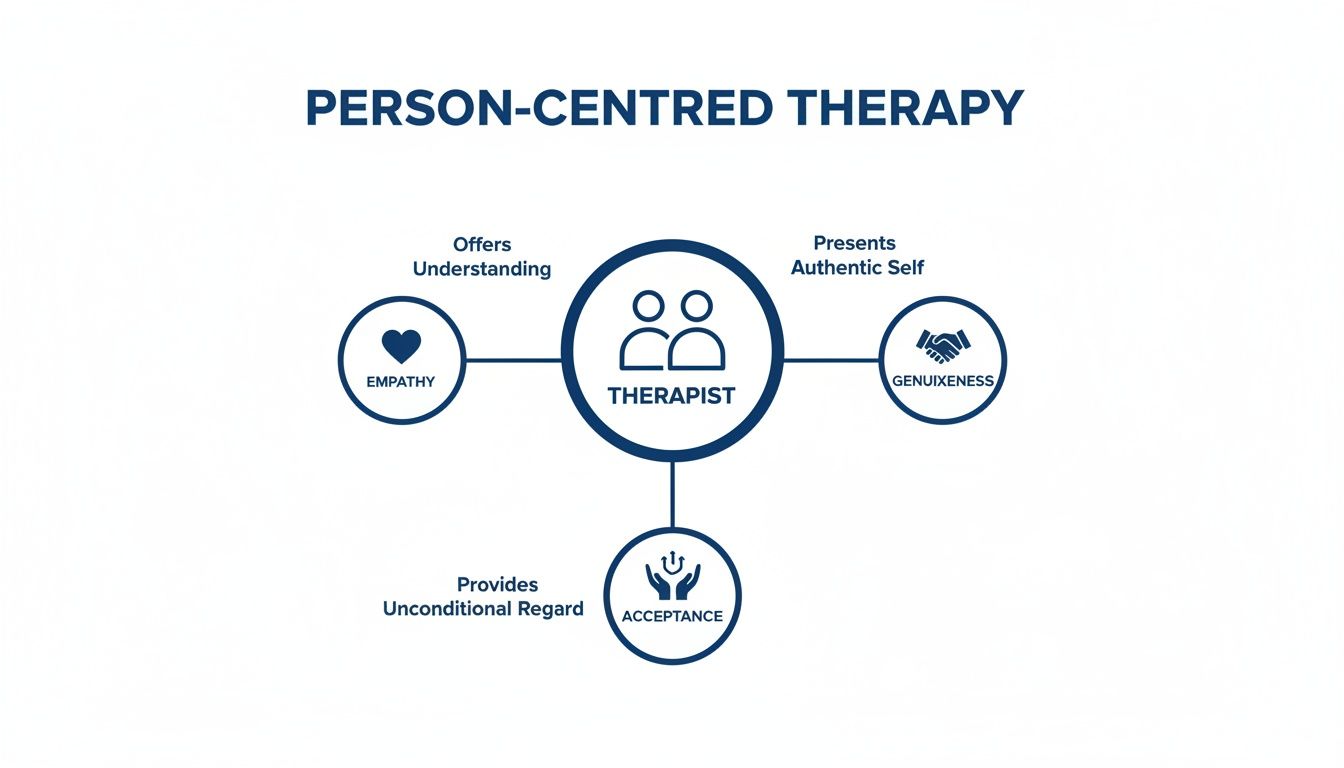
    The Three Core Conditions

    For person-centred therapy to work, the therapist cultivates a nurturing environment based on three core conditions. When a therapist embodies these qualities, they create the ideal soil for emotional growth and healing.

    These conditions are:

    • Unconditional Positive Regard: The therapist accepts you completely, without any "ifs" or "buts." You are valued for exactly who you are.
    • Empathy: The therapist works hard to understand your world from your point of view, helping you feel truly seen and understood.
    • Genuineness (or Congruence): Your counsellor is real with you, without a professional mask. This encourages you to be your true self, too.

    This approach is fantastic for improving your overall well-being by strengthening your relationship with yourself. It helps you move away from a harsh inner critic and towards a place of genuine self-acceptance and compassion.

    How Person-Centred Counselling Feels in Practice

    Unlike more structured therapies, a person-centred session feels more like a natural conversation. The session flows based on whatever you feel is most important to talk about that day. The focus is on your immediate experience—what you’re thinking and feeling in the here and now.

    Let's say you come to a session feeling overwhelmed by workplace stress. A person-centred therapist would first listen with deep empathy as you talk about feeling inadequate. They might reflect back with something like, "It sounds incredibly draining to feel like you have to be perfect all the time."

    Hearing your experience mirrored back without judgement is incredibly powerful. This process validates your feelings, helps you untangle them, and builds your resilience from the inside out.

    Who Benefits Most from This Approach

    While its core principles are a cornerstone of any good counselling relationship, this approach is brilliant for certain goals. It's an excellent choice if you're grappling with self-esteem, figuring out your identity, or feeling "stuck" in life.

    It's also a powerful way to work through mild to moderate anxiety and depression. By nurturing a strong sense of self-worth, it empowers you to manage your emotional world with more confidence. The skills you learn—like self-acceptance and trusting your inner voice—are tools you can carry with you for life.

    A Look at Other Powerful Counselling Methods

    The world of therapy is rich and varied, and different challenges call for different tools. Understanding the breadth of options can make the journey towards feeling better seem more hopeful. Specialised techniques offer unique pathways to healing, whether you're navigating family dynamics or processing a painful past.

    Exploring these different techniques of counselling reveals that support should be shaped to fit your life story and goals. It’s not about finding one "best" method, but about discovering the approach that resonates with you.

    Understanding Our Connections with Systemic and Family Therapy

    Sometimes, the problems we carry are tangled up in our relationships. Systemic and Family Therapy looks at us not in isolation, but within the context of our family and community. The core idea is that our struggles often emerge from the systems we're a part of.

    Instead of singling out one person as "the problem," this form of therapy explores the unspoken rules and communication habits within a group. It’s useful for resolving family conflicts or helping partners communicate better, aiming to forge healthier connections for everyone.

    The image below shows the core conditions of Person-Centred Therapy, which often provides a vital foundation for relationship-focused approaches.

    Diagram illustrating person-centred therapy, highlighting therapist conditions: empathy, genuineness, and acceptance.

    It’s a great visual reminder of how a therapist’s empathy, genuineness, and unconditional acceptance create the safe space needed to explore sensitive relationship issues.

    Finding Your Own Drive with Motivational Interviewing

    Have you ever felt completely stuck, knowing you need to make a change but lacking the motivation? That's where Motivational Interviewing (MI) comes in. It’s a collaborative counselling style designed to help you unearth and strengthen your own internal drive for change.

    A therapist using MI acts as a partner, helping you explore your own reasons for wanting something different. This technique works wonders for making lifestyle changes or breaking unhelpful habits. Because it’s built on respect for your autonomy, it empowers you to become the expert on your own life and build the resilience to follow through.

    Motivational Interviewing is based on a powerful idea: real, lasting change comes from within. A therapist's role is simply to help you find your own compelling reasons to grow, making the whole process feel more authentic and sustainable.

    In India, counsellors are brilliant at adapting Western models like these to better fit local culture. You can learn more about how Indian therapists adapt these models to provide care that’s both culturally sensitive and highly effective.

    Healing from Trauma with EMDR

    For anyone who has experienced trauma, certain memories can get "stuck," causing ongoing distress, anxiety, or other difficult symptoms. Eye Movement Desensitization and Reprocessing (EMDR) is a structured therapy developed to help people process these traumatic memories.

    During an EMDR session, the therapist guides you to focus on a memory while engaging in bilateral stimulation, like following their fingers with your eyes. This process helps the brain reboot its natural healing system, allowing you to reprocess the memory so it loses its disruptive emotional charge. EMDR is a well-researched technique for helping people find relief from the heavy weight of past trauma.

    Each of these methods shows that no matter what you're facing—from workplace stress to deep-seated trauma—there are effective techniques of counselling out there. The journey is about finding the right key to unlock your own path to healing and growth.

    Finding a Therapist Who's Right for You

    Taking that first step towards counselling is a huge win, and often the hardest part of the process. Now, let's talk about how to find a therapist and an approach that genuinely clicks with who you are. The secret isn't finding the "best" technique, but discovering what feels right for you.

    Remember, starting therapy is a proactive move towards building your well-being and resilience, not a quick fix. The connection you have with your therapist is one of the biggest factors in your progress, so it pays to find someone you trust.

    Starting Your Search with DeTalks

    Trying to find a qualified professional can feel overwhelming. Platforms like DeTalks make the process much clearer. You can easily browse profiles of verified therapists, read about their specialties, and get a sense of the techniques of counselling they use.

    As you look, see whose approach resonates with you. Maybe the practical nature of CBT appeals to you, or perhaps the gentle, self-exploratory space of Person-Centred therapy feels more fitting. Whatever it is, trust your gut.

    What to Look for in a Therapist

    When sifting through profiles, a few key things can help you narrow the field. A great therapeutic relationship is built on trust, respect, and feeling that someone truly understands you.

    Here are some practical points to keep in mind:

    • Specialisation: Does the therapist have experience with what you're dealing with, like workplace stress, anxiety, or relationship troubles?
    • Therapeutic Approach: Do they focus on a technique that interests you? Many therapists are integrative, but it’s helpful to know their main style.
    • Initial Consultation: Many therapists offer a short introductory call. This is your chance to ask questions and check the vibe. Do you feel comfortable opening up to them?

    It's completely okay to chat with a few different therapists before you decide. This is your journey, and finding a partner you connect with is the most important ingredient for success.

    Using Assessments to Point You in the Right Direction

    If you’re looking for more clarity on what you need, the scientifically validated psychological assessments on DeTalks can be a great resource. These tools can offer useful insights into your emotional patterns, personality, or specific challenges like depression.

    It’s crucial to remember that these are for information, not diagnosis. They act as a helpful starting point, giving you and a potential therapist some shared language for your first conversations. Your path to healing is your own, and finding the right support is a powerful first step.

    Frequently Asked Questions

    It’s completely normal to have questions when you’re thinking about starting counselling. Let's walk through some of the most common ones to help clear things up.

    How Do I Know Which Counselling Technique Is Right for Me?

    The good news is, you don’t have to have this figured out beforehand. A skilled therapist will get to know you first, often drawing from different techniques of counselling to create a plan that fits you perfectly.

    Those first few sessions are about conversation and connection. Your therapist will focus on understanding what you're going through, and together you will decide on the best way forward.

    Are Online Therapy Sessions as Effective as In-Person Ones?

    Yes, they absolutely can be. Research confirms that for common concerns like anxiety and depression, online therapy works just as well as face-to-face sessions. It offers a level of convenience that can make all the difference when you're juggling a busy life or dealing with workplace stress.

    What truly makes therapy work is the connection you have with your therapist. That sense of trust and rapport is the foundation for real progress, whether online or in an office.

    What Is the Difference Between Counselling and Therapy?

    You'll often hear these words used to mean the same thing, and that's generally okay. Both involve a trained professional helping you improve your mental health in a supportive way. Some might say counselling is for shorter-term problems, while therapy tackles deeper patterns, but in practice, the lines are blurry.

    The real goal for both is the same: to help you understand yourself better, learn new ways to cope, and build a more satisfying life. The most important thing isn't the label, but finding a qualified person you feel a genuine connection with.

    How Long Does Counselling Usually Take?

    There’s no one-size-fits-all answer, as everyone's journey is different. Some people get what they need in a few sessions, while for others, exploring deeper-rooted issues like chronic anxiety might mean longer-term support is more helpful.

    It’s something you and your therapist will figure out together. The focus is always on your progress and what you need to feel confident and supported, not on a rigid schedule.


    This guide is meant to offer supportive takeaways, not promises of a cure. The journey toward well-being is personal, and finding the right person to talk to is the most important step you can take. DeTalks makes that step easier by connecting you with verified therapists and providing informational assessments to help point you in the right direction. You can start exploring your options and find a professional who understands you at https://detalks.com.

  • Understanding Moderate Depression (ICD-10: F32.1)

    Understanding Moderate Depression (ICD-10: F32.1)

    Hearing a clinical term like moderate depression ICD 10 can feel a bit formal, but it simply points to a specific code: F32.1. This code helps healthcare professionals understand the level of depression someone is experiencing. It describes a challenge that is more disruptive than mild depression but not yet considered severe, offering a clear starting point for a supportive plan.

    Demystifying the Moderate Depression ICD 10 Code

    Hand holding a card displaying 'F32.1 – Moderate depression' against a blurry background with a window showing a rain cloud.

    A phrase like "moderate depression ICD 10" might sound intimidating, but it's just a tool to bring clarity to your feelings. The International Classification of Diseases, 10th Revision (ICD-10) is a global system that helps doctors and therapists speak the same language about health conditions.

    Think of it like a weather report. Knowing a "moderate storm" is expected helps you prepare better than just hearing "it might rain." Similarly, the code F32.1 helps a professional understand the intensity of the challenges you're facing, including feelings of anxiety or stress.

    To give you a clearer picture, here’s a quick breakdown of how the ICD-10 system categorises single depressive episodes.

    A Simple Guide to Depression Levels in ICD-10

    Severity Level ICD-10 Code General Description
    Mild F32.0 Symptoms are present but often manageable. Daily activities can be done, though with some difficulty.
    Moderate F32.1 Symptoms are more pronounced and cause significant trouble with work, social life, or home duties.
    Severe F32.2 / F32.3 Symptoms can feel overwhelming, making it nearly impossible to continue with daily routines.

    This table helps show where F32.1 fits, creating a shared understanding between you and your care provider.

    A Tool for Understanding, Not a Label

    It is so important to remember that a diagnostic code is not a permanent label. It is a snapshot in time—an informational starting point that guides conversations about therapy and counselling. It describes what you are going through right now, not who you are.

    In India, conversations around mental health and well-being are growing. With millions of people experiencing depressive disorders, codes like F32.1 are vital for ensuring people get the right kind of support. This clarity is the first step toward building resilience and finding effective ways to feel better.

    An assessment offers a shared language between you and your healthcare provider. It transforms a vague feeling of being unwell into a recognised condition with established pathways for support.

    This structured approach allows professionals to tailor support for challenges like workplace stress and anxiety. Staying informed about latest ICD-10 coding updates helps them provide accurate care. By demystifying these terms, we can focus on what truly matters: your journey toward compassion, happiness, and lasting well-being.

    Recognising the Signs of a Moderate Depressive Episode

    A thoughtful young man sips a steaming hot drink at his desk beside a laptop.

    Understanding what a moderate depressive episode feels like is a meaningful step toward seeking support. It is more than a bad day; it’s a persistent cloud that can make every part of life feel heavier. Learning to see these signs, in yourself or a loved one, is an act of strength.

    While everyone's experience with depression is unique, there are common patterns that clinicians look for. These signs often affect your thoughts, feelings, and even your physical health. Gently taking stock of them can bring much-needed clarity.

    Core Emotional and Mental Signs

    At the heart of a depressive episode are two key experiences: a persistent low mood and a loss of interest in things you once enjoyed. This is a deep feeling of emptiness or hopelessness that lasts for weeks. It can feel like the colour has drained from your world, making it hard to find joy.

    For example, a young professional in Delhi who loves meeting friends might suddenly find the thought exhausting. This loss of interest is a significant sign that something more than everyday stress or anxiety is happening.

    Physical and Behavioural Changes

    Depression doesn’t just stay in your head; it often shows up in your body and actions. These physical shifts can be some of the most disruptive parts of a moderate depressive episode.

    Common physical signs include:

    • Sleep Disturbances: You might struggle with sleeplessness or find yourself sleeping far more than usual without feeling rested.
    • Appetite and Weight Changes: You could lose your appetite and weight, or you might turn to food for comfort, leading to weight gain.
    • Pervasive Fatigue: This is a deep exhaustion that sleep doesn't seem to fix, making even small tasks feel difficult.
    • Difficulty Concentrating: Trouble focusing at work or making decisions is very common and can add to workplace stress.

    Noticing these changes is not about finding fault. It's about compassionately acknowledging that your mind and body are signalling a need for support, a courageous first step toward building resilience.

    Research from India highlights how common these experiences are. One study using the moderate depression ICD 10 classification noted that many patients experienced physical symptoms that worsened their fatigue. You can learn more in this study on Indian patients with depression.

    Acknowledging these signs opens the door to seeking professional help. Through therapy or counselling, you can find the tools and support needed to navigate these challenges and move toward a greater sense of well-being.

    How Professionals Assess Moderate Depression

    An assessment might sound clinical, but it's really a compassionate conversation to understand what's going on. It's not about judging a bad day but about exploring a pattern of feelings you've had for at least two consecutive weeks. This timeframe helps distinguish a temporary reaction to stress from a more persistent challenge.

    A mental health professional, like a counsellor or therapist, will listen to your story in a safe space. They are trained to gently explore your experiences to understand your overall well-being. Please remember that any assessment is for informational purposes and is not a final diagnosis.

    A Collaborative Conversation

    Think of the assessment as a partnership, not an interrogation. A clinician’s goal is to get a full picture of your well-being, including workplace stress or personal struggles. This open dialogue is the foundation for creating a support plan that truly fits you.

    They will gently ask about your mood, energy levels, sleep, and how these are impacting your daily life. It is a completely confidential space for you to share honestly without fear of judgement.

    Differentiating Depression from Other Challenges

    A key part of a professional’s role is to distinguish moderate depression from other common experiences. Many challenges, like burnout or anxiety, can look similar on the surface. Getting this right is crucial for ensuring you receive the best support.

    Here’s how they might differentiate them:

    • Depression vs. Burnout: Burnout is almost always linked to your job and often improves with a break from that environment. Depression, however, tends to cast a shadow over all areas of life and doesn’t disappear with a holiday.
    • Depression vs. Anxiety: These two often appear together, but they are different. Anxiety is typically driven by intense worry about the future, while depression is rooted in a persistent low mood and loss of interest in the present.
    • Depression vs. Grief: Grief is a natural response to loss that comes in waves, with moments of happiness still possible. Depression is more like a constant, heavy blanket that makes it hard to feel anything positive.

    An accurate assessment isn't about putting you in a box. It's about unlocking the right door to effective therapy and counselling, creating a clear path toward building resilience and reclaiming your well-being.

    Ultimately, this careful process builds trust and ensures the support you receive is right for your journey. It is the first, most important step toward feeling heard, understood, and ready to move forward.

    Pathways to Managing Your Mental Well-being

    A serene counseling room with two light-colored armchairs, a wooden table, and a green plant.

    Recognising that you might be dealing with a moderate depressive episode is a huge first step. While the journey is personal, you don't have to walk it alone. There are effective approaches that offer support, hope, and practical tools for managing your mental health.

    Choosing to speak with a professional is a powerful act of self-care. It creates a safe space to explore your feelings and learn new ways to cope with pressures like workplace stress or anxiety.

    The Role of Psychotherapy and Counselling

    Psychotherapy, often called talk therapy or counselling, is a cornerstone of managing depression. It’s a collaborative partnership where you work with a trained therapist to understand your thoughts, feelings, and behaviours.

    A well-researched approach is Cognitive Behavioural Therapy (CBT). CBT helps you identify and challenge unhelpful thought patterns that can fuel depression. By reframing thoughts, you can build resilience and find more compassionate ways of relating to yourself.

    Other effective therapies include:

    • Interpersonal Therapy (IPT): This focuses on your relationships, helping you improve communication and build a stronger support network.
    • Mindfulness-Based Cognitive Therapy (MBCT): This blends CBT with mindfulness, teaching you to observe your thoughts without getting carried away by them.

    Therapy isn't about "fixing" something broken. It's about learning new skills and gaining fresh perspectives to navigate life’s challenges with greater ease and compassion.

    Considering Medication as Part of a Plan

    For some, medication prescribed by a psychiatrist can be a helpful part of a broader care plan. It isn't a quick fix, but a tool that can help lift symptoms, giving you the energy to engage fully in therapy and other positive changes.

    This is always a decision made carefully with a qualified doctor who can explain the potential benefits. The most effective strategy often involves a combination of therapy for skill-building and medication for symptom management.

    Building Resilience with Positive Psychology

    Beyond formal treatment, you can actively support your well-being by incorporating principles of positive psychology. These practices focus on building your strengths and fostering positive emotions like happiness and resilience.

    Learning strategies for cultivating self-compassion can be a powerful starting point. Simple habits like mindfulness, gratitude journaling, or gentle physical activity can create small but significant shifts in your daily experience. These practices are powerful additions to professional support, empowering you on your journey.

    Your Active Role in the Healing Journey

    Overhead shot of hands writing 'Self-care notes' in a journal, with a small plant and tea on a sunny table.

    While professional support from a therapist or counsellor is vital for managing moderate depression, the small steps you take each day build the foundation for your well-being. Self-care isn't another chore; it's about making gentle, kind choices for yourself.

    Your therapist helps plant the seeds of recovery, but you tend to the soil. Simple lifestyle adjustments can create an environment where the work you do in therapy can grow, giving you a sense of agency on your path to feeling better.

    Building Resilience with Small Daily Actions

    You don't need to change your entire life overnight. Real power lies in small, consistent habits that can ease the weight of workplace stress and anxiety.

    Consider these simple adjustments:

    • Gentle Physical Activity: A short walk, a few minutes of stretching, or dancing to a favourite song can release endorphins and lift your mood.
    • Balanced Nutrition: Eating regular, nourishing meals can help stabilise your energy and mood throughout the day.
    • Prioritising Sleep: A calming bedtime routine can signal to your body it’s time to wind down, promoting more restful sleep.

    Each of these small acts is a way of showing yourself compassion and care.

    Recovery is not a race to a finish line. It is a gradual process of building resilience, one small, compassionate step at a time, contributing to your overall well-being.

    The Importance of Your Support System

    Depression can make you feel isolated, but it is important to remember you don't have to carry this alone. Leaning on trusted friends, family, or a support group can be a lifeline.

    Sharing what you're going through with people who care can make the load feel lighter. Reaching out is an act of bravery that reinforces your connection to others and supports your journey toward happiness and health.

    Supportive Takeaways for Your Path Forward

    Navigating mental health can feel confusing, but understanding terms like moderate depression ICD 10 can bring clarity. This is not a label but a tool that helps you and your care provider map out a path toward well-being. Recognising the signs in yourself is a brave first step.

    This single moment of awareness can shift everything. It moves you from a place of confusion to a space where you can start making positive changes in your life.

    Embracing Your Unique Journey

    Healing is not a straight line; it is a personal journey with its own ups and downs. Some days will feel easier than others, and that is completely normal. The most important thing is to treat yourself with kindness and compassion through it all, which builds true resilience.

    Seeking support through therapy or counselling is one of the most powerful ways to care for yourself. It is a safe space to learn practical ways to cope with challenges like workplace stress or persistent anxiety.

    Remember, you do not have to walk this path alone. Reaching out for help is a sign of incredible strength and an investment in your well-being.

    Your journey forward is about taking small, manageable steps. Every positive choice—a nourishing meal, a five-minute walk, or booking a therapy session—is a step in the right direction. Be patient and kind with yourself as you move toward a brighter future.

    When you're ready, resources like DeTalks can connect you with qualified therapists. Finding a professional who understands your experience can guide you with empathy on your path to emotional well-being.

    Frequently Asked Questions

    It's normal to have questions as you learn more about mental health. Here are some common queries about moderate depression to help bring some clarity.

    Can I feel better from moderate depression without therapy?

    While self-care practices like exercise and mindfulness are helpful, moderate depression often involves patterns that are difficult to navigate alone. Professional counselling offers a supportive space to understand your feelings and build lasting coping skills for challenges like anxiety and depression.

    Is an ICD-10 code a permanent label?

    Not at all. A moderate depression ICD 10 code like F32.1 is an informational tool for your healthcare provider. It helps them create the best plan for you right now and is not a permanent part of your identity. As you heal, this information may change or no longer apply.

    Remember, a diagnostic code is a snapshot in time, not a life sentence. It is the starting point for a supportive conversation about your well-being and recovery.

    How can I tell if it’s moderate depression or burnout?

    This can be tricky, as they feel similar. The key difference is often scope: burnout is usually tied to workplace stress and tends to improve with a break. Depression is more pervasive, affecting all areas of your life, from work to relationships. A mental health professional can provide an assessment for clarity.

    What’s the first step to getting help in India?

    Taking that first step is simpler than you might think. You can speak to a trusted general practitioner for a referral or reach out directly to a qualified mental health professional for therapy. Online platforms are great resources for finding therapists who specialise in challenges like depression and anxiety.


    If you feel ready to take that next step, DeTalks is here to help. Our platform simplifies the process of finding and connecting with qualified therapists and counsellors across India. You can explore our directory and book a session that works for you today at https://detalks.com.

  • What Is Neurotherapy and How Can It Help Your Brain?

    What Is Neurotherapy and How Can It Help Your Brain?

    Think of neurotherapy as personal training for your brain. It's a gentle, non-invasive approach that helps you learn how to guide your brain toward better emotional balance and focus. Using technology, it gives you a window into your brain's activity, helping you build skills for lasting well-being.

    Understanding Neurotherapy and Your Well-Being

    Life today can feel overwhelming. Many of us in India and across the globe are seeking sustainable ways to manage challenges like stress and anxiety. Neurotherapy offers a unique path by working directly with the source of our thoughts and emotions: the brain.

    It’s all about learning to regulate your brain's own patterns. This therapy empowers you to shift from a state of distraction or worry to one of calm and clarity. It's a practical way to take an active role in your mental health journey.

    A Gentle Approach to Brain Health

    Neurotherapy is not a quick fix but a process of building skills for life. It begins with an assessment to understand your brain's unique patterns, which helps create a therapy plan just for you.

    It's important to know these assessments are informational tools, not diagnostic labels. They simply provide a helpful starting point, whether you're seeking support for anxiety, depression, or personal growth.

    This approach is especially vital in India, where access to specialized care can be a challenge. You can learn more about the state of neurological care from recent reports that highlight a significant gap in services. Accessible options like neurotherapy are crucial for supporting community well-being.

    Neurotherapy provides a mirror for your mind, allowing you to see your brain's activity in real time. By observing these patterns, you can learn to guide them toward healthier, more balanced states, fostering resilience and calm from within.

    Moving Beyond Challenges Toward Happiness

    While neurotherapy is a powerful tool for navigating difficulties like workplace stress and anxiety, it also supports positive growth. It helps you not just manage challenges but actively cultivate your inner strengths.

    By training your brain, you can enhance your natural capacity for qualities like resilience, compassion, and happiness. This therapy can work beautifully alongside traditional counselling, offering a more complete approach to your well-being. The goal is to equip you with skills for greater emotional balance and clarity in life.

    How Neurotherapy Works Its Magic on Your Brain

    At its core, neurotherapy is a form of guided learning for your brain. It's not about a pill, but about teaching your brain to create and maintain healthier patterns. This approach is built on the brain's natural ability to change and adapt, known as neuroplasticity.

    Neuroplasticity is the brain's incredible capacity to forge new connections between its cells. Neurotherapy harnesses this power, helping your brain shift away from unhelpful patterns—like those tied to anxiety or poor focus—and toward states of calm and clarity.

    The Mirror for Your Brain: Neurofeedback

    The most common neurotherapy technique is neurofeedback. Think of it as a high-tech mirror that lets you "see" your brain activity as it happens. A therapist places small sensors on your scalp that listen to your brainwaves.

    This information is translated into a simple signal on a screen, like a game or music. When your brain shifts into a more desirable state, like calm focus, you get a positive reward—the game moves forward or the music becomes clearer. This immediate feedback teaches your brain to produce these helpful patterns more often, leading to lasting improvements.

    This concept map shows how neurotherapy helps to train, balance, and focus your brain.

    As you can see, the goal is to build up your brain's fitness, regulate its internal systems for better emotional balance, and sharpen your ability to pay attention.

    Tuning Into Your Body: Biofeedback

    Another powerful tool is biofeedback. It works like neurofeedback but focuses on other body signals you're usually unaware of, like heart rate, breathing, and muscle tension.

    Sensors give you real-time feedback, helping you learn how to consciously influence these physical responses. By practicing how to slow your breathing to calm your heart rate, you gain a practical skill to manage stress anytime, anywhere. To see how complex processes like this are made easier to understand visually, resources on medical procedure animation can provide some interesting examples.

    Biofeedback makes you an active participant in calming your own nervous system. By learning to directly influence your body's stress signals, you also influence your mind's ability to cope with challenges like anxiety or workplace pressure.

    What Does This Mean for You?

    Ultimately, neurotherapy techniques are about empowerment. They are active training processes where you learn to regulate your own mind and body. Instead of just talking about feeling calmer, you’re practicing the brain and body states that create that feeling.

    It’s important to remember that this journey is unique for everyone and often works best alongside other supports like talk therapy, or counselling. Neurotherapy is a gentle, non-invasive process that focuses on building lasting skills for emotional balance. It helps you guide your own nervous system, putting you back in control of your well-being.

    Who Can Neurotherapy Help?

    Neurotherapy is a versatile approach that can help a wide range of people. It’s for anyone who wants to learn how to actively manage their brain's activity for better mental and emotional states. This can feel incredibly empowering, especially if other approaches haven't felt like the right fit.

    Addressing Specific Mental Health Challenges

    Neurotherapy has shown promise in helping people manage various conditions by addressing underlying brainwave patterns. It teaches the brain how to shift out of inefficient states and into more flexible, regulated ones.

    For attention-related difficulties, it offers a way to train the brain for sustained focus. For emotional regulation challenges like anxiety or depression, it provides real-time feedback to help quiet overactive circuits or encourage a more balanced mood. It offers a concrete way to manage feelings of worry or sadness.

    Neurotherapy acts as a guide, helping your brain find its way back to more balanced and resilient patterns. It’s a collaborative journey where technology and your mind's natural learning ability work together to foster lasting well-being.

    The need for supportive therapies is significant in India. Studies show the prevalence of various neurodevelopmental conditions where additional support can make a difference. You can discover more insights about these findings on NDD prevalence. Neurotherapy provides another valuable tool for individuals and families seeking support.

    Enhancing Performance and Building Resilience

    Neurotherapy isn’t just for managing challenges; it’s also a powerful tool for peak performance. It can help you make good things even better. This is particularly useful for students and professionals in the high-pressure environments often found across India.

    It can help sharpen focus for exams, manage workplace stress to prevent burnout, and improve decision-making clarity. This proactive approach is all about building strengths like creativity, focus, and resilience. It helps you cultivate the mental states needed to not just cope with life's demands, but to truly thrive.

    A Supportive Tool, Not a Standalone Cure

    It's vital to see neurotherapy as a powerful supportive tool, not a magic bullet. While it can produce incredible results, it often works best as part of a broader mental wellness plan. It can be a wonderful partner to traditional counselling.

    Here’s a look at how it complements traditional counselling.

    Neurotherapy vs Traditional Counselling: A Complementary View

    This table breaks down how neurotherapy and traditional talk therapy focus on different aspects of your well-being, highlighting how they can work together to create a more holistic and effective path to healing and growth.

    Aspect Neurotherapy Traditional Counselling/Therapy
    Primary Focus Regulating the brain's electrical activity and physiological states (the "bottom-up" approach). Exploring thoughts, feelings, and behaviours through conversation (the "top-down" approach).
    Core Method Using real-time biofeedback to train the brain to self-regulate more efficiently. Talk-based exploration, insight-building, and developing coping skills (like CBT or psychodynamic therapy).
    How They Complement Neurotherapy can calm the nervous system, making it easier to engage in and benefit from talk therapy. Counselling provides the context to understand and integrate the brain changes you're making, applying them to your life and relationships.

    Pairing these approaches creates a comprehensive strategy. Neurotherapy helps stabilize the biological foundation, while counselling helps you make sense of it all and build a meaningful life on that stronger foundation.

    Your First Neurotherapy Session and What to Expect

    It’s normal to feel curious when starting any new therapy. Knowing what to expect can make the process feel more comfortable. Let’s walk through what a neurotherapy journey looks like, step by step.

    Your journey starts with a simple conversation. Your first appointment is a chat with a therapist about what you’re hoping to achieve, whether it’s managing workplace stress, finding relief from anxiety, or building more resilience. This is your chance to see if it feels like the right fit.

    The Initial Assessment and Brain Mapping

    After your first talk, the next step is often a brain map, also known as a Quantitative Electroencephalogram (qEEG). You’ll wear a cap with small sensors that listen to your brain's electrical activity while you relax. It's completely painless; the sensors only record information.

    This assessment is an informational tool, not a diagnostic test. It provides a snapshot of your brain's communication patterns, helping the therapist create a personalized plan to guide your therapy. This baseline ensures the sessions are tailored just for you.

    What a Typical Session Feels Like

    During a session, you’ll get comfortable while a therapist places a few sensors on your scalp. These sensors link to a computer that turns your brainwave activity into real-time feedback, often disguised as a simple game or video.

    For example, a movie might stay clear only when your brain is in a focused state, or you might guide a game character using only your brain's activity. You don’t have to consciously try to do anything; your brain naturally seeks the positive feedback and learns to create healthier patterns on its own.

    A neurotherapy session is a gentle, guided exercise for your brain. It’s a space where you learn to cultivate inner calm and focus through positive reinforcement, building mental skills that support your overall well-being.

    Setting Realistic Expectations for Your Journey

    Progress in neurotherapy is gradual and requires consistency, just like building a new skill. Some people notice subtle shifts after a few sessions, while for others, the changes are more cumulative over time. Your therapist will track your progress with you and adjust the plan as needed.

    The goal is empowerment, not a quick cure. Neurotherapy, especially when paired with counselling, is about giving you the tools to better regulate your own emotions and attention. It’s a supportive journey toward building lasting resilience, self-compassion, and a more balanced life.

    Finding a Qualified Neurotherapy Provider

    Choosing the right professional is one of the most important steps in your well-being journey. It’s about finding someone you trust and feel comfortable with. This connection is the foundation for a positive, supportive experience.

    As awareness around mental health grows, more professionals are offering specialized services. This is especially true in India, where the demand for effective therapy for conditions like anxiety and depression is rising. The field of neurocognitive therapies is expanding quickly; you can read the full research about the neurocognitive market growth to learn more.

    What to Look for in a Provider

    When you evaluate potential therapists, look for proper credentials and certifications in neurofeedback or related fields. Experience with the specific challenges you're facing, whether that's managing stress or building resilience, is also crucial.

    A good provider will be transparent, explaining their methods clearly without jargon. To get a sense of how professionals reach out, you can explore various patient-centric digital marketing strategies for healthcare. This open communication builds trust and makes you an active partner in your care.

    Important Questions to Ask

    Your initial consultation is the perfect time to ask questions and find the right match. A conversation can bring a lot of clarity and help you feel confident in your choice.

    Here are a few essential questions to get you started:

    • What are your qualifications and certifications in neurotherapy?
    • What's your experience with concerns similar to mine?
    • How do you handle the initial assessment? (Remember, assessments are informational, not diagnostic.)
    • What does a typical session look like, and how long does it last?
    • How do you measure progress, and how often will we review it?

    The right therapist-client relationship is built on trust, clear communication, and a shared understanding of your well-being goals. Your initial conversation is a vital step in finding a professional who empowers you on your path forward.

    Making the Final Choice

    Ultimately, choosing a provider is a personal decision. Pay attention to how you feel during the consultation. Do you feel heard, respected, and understood? That connection is just as important as any qualification.

    The goal is to find a supportive guide who can help you learn about your own brain and give you tools for lasting well-being. That sense of empowerment is the true sign of a successful therapeutic partnership.

    Got Questions About Neurotherapy? Let's Talk.

    It’s completely normal to have questions when exploring a new path toward well-being. This section answers common questions in a straightforward way, so you can make an informed choice. We’ll cover safety, timelines, and how it fits with other forms of support.

    Is Neurotherapy Safe? What About Side Effects?

    Yes, neurotherapy is widely considered very safe. Methods like neurofeedback and biofeedback are non-invasive, meaning they only 'listen' to your brain's activity without sending any signals into it.

    Side effects are rare and usually very mild, like feeling a bit tired after a session, similar to how you might feel after deep concentration. Working with a certified, experienced professional ensures the training is suited to your needs, which helps maximize benefits and ensure a comfortable experience.

    How Long Does It Take to See Results?

    Patience and consistency are key in neurotherapy. Just like learning any new skill, your brain needs repetition to build and strengthen healthier new pathways.

    The timeline is different for everyone. Some people notice small, positive shifts within a few sessions, like feeling calmer or more focused. For more significant, lasting change, a typical course often runs between 20 to 40 sessions, but this can vary. Your therapist will track your progress and adjust the plan with you.

    The journey with neurotherapy is a gradual unfolding. Each session is a step toward building a more resilient and regulated brain, with progress measured not in overnight changes but in steady, meaningful improvements to your daily life.

    Can I Combine Neurotherapy With Other Treatments?

    Absolutely. In fact, neurotherapy often works best as part of a complete wellness plan. It pairs brilliantly with traditional talk therapy or counselling.

    Neurotherapy can help regulate your nervous system, making it easier to engage more deeply in counselling, where you explore your thoughts and feelings. Open communication with your entire healthcare team is key. A collaborative approach ensures everyone is working together to support your journey to better health.

    How Do I Know if Neurotherapy Is Right for Me?

    Figuring out if neurotherapy is a good fit starts with a simple conversation. The best first step is to book an initial consultation with a qualified mental health professional who specializes in neuro-informed therapies.

    In that chat, you can talk about what you're hoping to achieve—whether that's managing workplace stress, overcoming anxiety, or building more emotional resilience. Remember, this isn't about getting a diagnosis; it’s about seeing if this approach aligns with your needs. A good therapist will help you understand the potential benefits and set realistic expectations.


    Your mental health journey is deeply personal, and finding the right support is a crucial first step. Whether you're dealing with specific challenges like depression or seeking to build skills for happiness and compassion, help is available. At DeTalks, we connect you with qualified therapists and provide science-backed assessments to guide you toward clarity and well-being. Take the next step and find the right therapist for you on DeTalks.

  • A Compassionate Guide on How to Heal from Childhood Trauma

    A Compassionate Guide on How to Heal from Childhood Trauma

    Healing from childhood trauma isn't about erasing the past, but learning to live alongside it so it no longer controls your future. It's a journey of understanding how early experiences affect you today and building a life defined by your own strength and compassion.

    This process often involves professional support, like therapy or counselling, combined with small, kind habits you build for yourself each day. It is a path toward greater well-being, one step at a time.

    Understanding the Echoes of Childhood Trauma

    Woman on windowsill with glowing inner child, reflecting on past trauma at dusk.

    Childhood trauma is not always a single, major event. Often, it's the ongoing stress of feeling unsafe, emotional neglect, or witnessing conflict that leaves a lasting mark.

    These experiences can shape how your nervous system develops, creating automatic responses and beliefs that carry into adulthood. Understanding this is the first step toward compassion for yourself.

    The effects can appear in unexpected ways, such as overwhelming workplace stress, constant anxiety, or feelings of depression. These are not character flaws; they are understandable human responses to experiences that were too difficult for a child to process alone.

    The Lasting Impact on Well-being

    Think of your nervous system as being wired for high alert after difficult childhood experiences. This can make it hard to relax, trust others, or feel truly safe in the world.

    This constant state of "fight or flight" can affect your relationships, career, and overall happiness. Sadly, these experiences are widespread in India, where studies on child maltreatment in India show a significant link between childhood adversity and later mental health challenges like depression and anxiety.

    Recognising the Signs in Adulthood

    The first step toward healing is recognising how past trauma may be showing up in your life today. The signs are often subtle and can be mistaken for parts of our personality.

    The table below outlines common ways these past experiences can manifest in adulthood. Seeing your own experiences here can be a validating reminder that you are not alone.

    Area of Impact Common Manifestations
    Emotional Intense mood swings, chronic anxiety, feelings of numbness or emptiness, difficulty managing anger.
    Behavioural Perfectionism, people-pleasing, substance misuse, self-sabotaging behaviours, difficulty with motivation.
    Relational Fear of intimacy or abandonment, difficulty trusting others, repeating unhealthy relationship patterns, social isolation.
    Cognitive Negative self-talk, persistent feelings of shame or guilt, difficulty concentrating, a sense of a foreshortened future.
    Physical Chronic fatigue, unexplained aches and pains (like headaches or stomach issues), sleep disturbances, heightened startle response.

    Recognising these signs can be both difficult and empowering. It is a shift away from self-blame and toward self-compassion.

    Healing begins when you accept that your feelings are valid reactions to what you went through, not a reflection of who you are.

    At DeTalks, we offer assessments to help bring clarity to your well-being. Please remember, these are informational tools to support your journey, not diagnostic labels.

    Finding Your Footing with Safety and Stability

    Before you can explore the past, your mind and body need to feel safe in the present moment. Creating a sense of stability is the foundational first step in the healing process.

    When a difficult memory or feeling arises, your nervous system can react as if the threat is happening now. The goal is to gently bring yourself back to the present, reminding every part of you that you are safe.

    Simple Grounding Techniques for Immediate Relief

    Grounding techniques are simple, sensory-based tools to reconnect with the present when you feel anxious or overwhelmed. They are especially helpful for managing sudden waves of workplace stress or anxiety.

    A straightforward and effective method is the 5-4-3-2-1 technique. It pulls your attention away from distressing thoughts and anchors it in your immediate surroundings.

    Here’s how it works:

    • 5 Things You Can See: Look around and name five objects you see, like a book, a plant, or a pen.
    • 4 Things You Can Touch: Notice four physical sensations, such as the texture of your clothing or the feeling of your feet on the floor.
    • 3 Things You Can Hear: Listen for three distinct sounds, like distant traffic, a clock ticking, or your own breath.
    • 2 Things You Can Smell: Focus on two scents in your environment, such as coffee brewing or soap on your hands.
    • 1 Thing You Can Taste: Notice one thing you can taste, like a sip of water or the lingering taste of your last meal.

    This simple act engages your senses and interrupts the panic cycle. It’s a powerful way to signal to your nervous system that you are safe, which can reduce feelings of anxiety.

    Creating Your Personal Sanctuary

    A sanctuary can be a real or imagined space where you feel completely safe and calm. It’s a mental retreat you can access whenever you need comfort and security.

    To create one, close your eyes and picture a peaceful place, like a quiet beach or a cosy room. Fill this imagined space with comforting details: the warmth of the sun, the sound of gentle waves, or the scent of rain.

    Your ability to create safety for yourself is a testament to your resilience. It's about building a present where you have the tools to feel steady.

    Setting boundaries is another way to build a sanctuary in your daily life. Saying "no" to draining situations or limiting contact with stressful people is an act of self-preservation that protects your well-being and builds resilience against burnout.

    Navigating Professional Paths to Healing

    Seeking professional help is a courageous step on the path to healing. Therapy provides a safe, confidential space to explore difficult memories and feelings with a trained guide.

    It’s a partnership where you learn new ways to relate to your past so it no longer dictates your present. This process helps you build a future filled with greater peace and well-being.

    Understanding Different Therapy Approaches

    Different therapy approaches are like different tools for healing. Finding what works for you will depend on your personal history and comfort level.

    Trauma-Focused Cognitive Behavioural Therapy (TF-CBT)

    This structured therapy helps you understand the connection between your thoughts, feelings, and behaviours. TF-CBT teaches practical skills to challenge unhelpful thought patterns and manage overwhelming emotions.

    Eye Movement Desensitisation and Reprocessing (EMDR)

    EMDR uses bilateral stimulation (like following a light with your eyes) to help your brain reprocess traumatic memories. It helps reduce the emotional intensity of triggers and flashbacks, allowing memories to be stored in a less disruptive way.

    Somatic Therapies

    This body-centered approach recognises that trauma is held in the body as well as the mind. Somatic therapies use techniques like breathwork and mindful movement to release stored tension and calm the nervous system.

    Comparing Trauma Therapy Approaches

    Here’s a simple comparison to help you understand these methods. The best option is the one that feels right for your unique needs.

    Therapy Type What It Focuses On Who It Might Help
    Trauma-Focused CBT (TF-CBT) Changing unhelpful thought patterns and behaviours linked to the trauma. Individuals who want a structured, skills-based approach to challenge negative thinking.
    Eye Movement Desensitisation and Reprocessing (EMDR) Using bilateral stimulation to help the brain reprocess and integrate "stuck" traumatic memories. People who struggle with intense flashbacks or find it difficult to talk about the trauma directly.
    Somatic Therapies Releasing trapped trauma from the body through physical awareness and movement. Those who experience a lot of physical symptoms (like tension or pain) and feel disconnected from their body.

    Remember, all these approaches aim to help you heal in a safe environment. The path you choose is less important than your commitment to the journey.

    A flowchart titled 'Feeling Overwhelmed?' directs to Grounding, Set Boundaries, or Breathe if yes, and You're Safe if no.

    When you feel overwhelmed, simple actions like grounding yourself or taking deep breaths can be a lifeline. These small steps bring you back to the present and reinforce your sense of safety.

    Finding the Right Therapist in India

    The relationship with your therapist is as important as the type of therapy. Feeling seen, heard, and understood is the foundation of healing.

    In India, trauma-informed care is becoming more accessible, which is vital. Research from the International Society for Traumatic Stress Studies highlights how childhood emotional abuse is a significant predictor of adult depression and anxiety.

    Your first call with a therapist is a chance to see if they are the right fit for you. Trust your instincts; a good therapist will make you feel respected and hopeful.

    Don't hesitate to ask questions during your first conversation. You might ask about their experience with childhood trauma or what a typical session feels like. Finding the right guide is a powerful act of self-care and an investment in your resilience.

    Building Your Personal Support System

    Three young adults sitting on a couch, smiling and holding hands during a supportive conversation.

    While professional therapy is key, your healing journey also happens outside the counselling room. Building a personal support system is about surrounding yourself with compassion and understanding.

    This involves intentionally cultivating relationships and routines that nurture your spirit. It’s a network that offers a sense of safety and belonging.

    Finding Your People: Identifying Nourishing Relationships

    Take a gentle look at your existing relationships. Notice who leaves you feeling seen and respected, and who leaves you feeling drained or anxious.

    A nourishing relationship is one where you feel safe to be yourself and express your needs. Prioritising these connections is an act of self-compassion that builds emotional resilience.

    A true support system doesn’t try to fix you; it creates a safe space where you can heal yourself. It's about the quality of connection, not the quantity of friends.

    Focus your energy on relationships that lift you up. This conscious choice is a key part of healing and contributes to long-term well-being and happiness.

    Learning to Ask for What You Need

    It can be hard to talk about your healing journey, but clear communication can turn a well-meaning friend into a true ally. You don't have to share every detail; instead, focus on what you need in the present.

    For example, you could say, "I'm feeling overwhelmed today and could use someone to listen without offering advice." Being specific helps others support you in a way that truly helps.

    This kind of open communication strengthens your bonds and reduces feelings of isolation. It teaches others how to show up for you effectively.

    Creating Your Toolkit of Healthy Coping Skills

    Your support system also includes the relationship you have with yourself. Developing healthy coping skills gives you reliable tools to turn to when you feel overwhelmed.

    Consider adding these practices to your toolkit:

    • Creative Expression: Drawing or writing can be a powerful outlet for emotions that are hard to put into words.
    • Mindful Movement: Gentle activities like yoga or walking can help release physical tension and calm your nervous system.
    • Journaling: Writing down your thoughts and feelings can bring clarity and help you process experiences without judgement.

    Online tools can also be part of your support system. You might explore resources like Lunabloom AI for personalized well-being to find guided exercises that support your journey toward lasting happiness and compassion.

    Reclaiming Your Narrative with Self-Compassion

    A person writes on a lined paper with a pen at a wooden desk with a notebook and tea.

    Childhood trauma often leaves behind a harsh inner critic that fosters shame and self-blame. A vital part of healing is learning to treat yourself with the same kindness you would offer a friend.

    This practice is about fundamentally changing your relationship with yourself. Self-compassion means acknowledging your pain with warmth and understanding, which is essential for building emotional resilience.

    Practical Exercises to Cultivate Kindness

    Learning self-compassion is a skill that grows with practice. It may feel unfamiliar at first, but starting with small, gentle exercises can make a big difference.

    Here are a few practices to try:

    • Compassionate Letter Writing: Write a letter to the younger version of yourself who went through those painful experiences. Offer the words of comfort, validation, and protection they needed to hear.
    • The Self-Compassion Break: When you feel a wave of self-criticism, take a minute to pause. First, acknowledge your pain ("This is a moment of suffering"). Second, connect to your shared humanity ("Suffering is a part of life"). Finally, offer yourself kindness ("May I be kind to myself").

    From Surviving to Thriving: Post-Traumatic Growth

    Healing can also lead to something hopeful called post-traumatic growth. This is the idea that overcoming adversity can lead to positive psychological changes, like a new sense of purpose or deeper relationships.

    This growth does not erase the pain but coexists with it. It’s the strength you find in your own resilience and the new empathy you develop for others.

    Healing isn't about erasing your story. It's about realising you are the author and can write a new chapter filled with compassion, purpose, and well-being.

    The statistics can be difficult, but there is hope. We know from these findings from the National Center for Biotechnology Information that early, trauma-informed care is proven to reduce long-term anxiety and depression. Confidential assessments and connecting with the right therapist can break cycles of pain and turn statistics into stories of resilience.

    This journey is about moving forward with all parts of yourself. It’s about holding your past with tenderness while creating a future defined by the resilient and compassionate person you are becoming.

    Answering Your Questions About the Healing Journey

    Taking the first steps toward healing is a courageous act, and it’s natural to have questions. This section addresses common concerns to offer clarity and reassurance for the path ahead.

    Remember, healing is not about achieving a flawless, pain-free state. It’s about learning to live with your story, building resilience, and creating a more authentic and whole life.

    How Long Does It Take to Heal From Childhood Trauma?

    There is no set timeline for healing; it is a deeply personal journey. The goal is not to be "cured" but to loosen the hold that trauma has on your daily life, so you feel more present and in control.

    Some people notice shifts in a few months of therapy, while for others, it's a more gradual process. A good counsellor will help you move at a pace that feels safe for you.

    Can I Heal From Trauma Without Professional Therapy?

    You can certainly make progress on your own with self-help strategies like mindfulness, journaling, and nurturing strong relationships. These tools build a strong foundation for well-being.

    However, deep-seated trauma often benefits from professional guidance. A therapist trained in trauma can offer specialised techniques like EMDR or somatic therapies that are difficult to do alone. If you feel stuck or overwhelmed by anxiety or depression, seeking counselling is a sign of strength.

    Think of therapy as specialised support for emotional wounds. It's a safe space designed to help you heal what hurts.

    What If Talking About the Trauma Makes Me Feel Worse?

    This is a valid and common fear. A good trauma therapist will never push you to discuss painful memories before you are ready.

    The first phase of therapy is always about building safety and stability. Your counsellor will help you develop coping skills first, so you have the tools to manage difficult emotions. If you consistently feel worse after sessions, it's important to discuss this with your therapist.

    Is It Ever Too Late to Start Healing From Past Trauma?

    No, it is never too late to begin healing. The brain has an incredible capacity for change at any age. I have seen people start their journey decades after the trauma occurred and still find profound relief and peace.

    Taking that first step, no matter your age, is a powerful act of self-compassion. It's an investment in a future that can be brighter, more connected, and more fulfilling than you might imagine. Your story is still being written.


    At DeTalks, we believe everyone deserves compassionate, professional support. Our platform connects you with qualified therapists across India who specialise in trauma, anxiety, depression, and overall well-being. Whether you’re ready to start therapy, explore a science-backed assessment, or simply learn more, we are here to help you take the next step. Visit https://detalks.com to begin your journey toward healing and resilience today.

  • How to Deal with Rejection and Build Lasting Resilience

    How to Deal with Rejection and Build Lasting Resilience

    Rejection stings, but how you respond to it matters most. Having a plan can help you navigate the difficult emotions. Think of it as a three-step process: manage your feelings, reframe your perspective, and connect with your support system.

    This approach isn't about avoiding pain. It’s about moving through it in a way that builds you up, helping you develop resilience and protect your well-being.

    Understanding the Experience of Rejection

    Rejection is a universal human experience, yet it always feels deeply personal. Whether it’s a job you wanted in Bengaluru, a relationship ending in Mumbai, or a creative idea being dismissed, the emotional impact can be strong.

    There's a scientific reason for this. Our brains process social rejection in the same regions that register physical pain, which explains why it can hurt so much.

    That initial pain can spiral into self-doubt, anxiety, or even symptoms of depression if not addressed. The goal isn’t to become immune to rejection, but to learn how to process it constructively for your long-term well-being.

    Why Rejection Impacts Us So Deeply

    At our core, humans are wired for connection. Belonging was essential for our ancestors' survival, and that need is still a powerful part of us today. When we face rejection, our brain can interpret it as a threat, triggering a stress response.

    This experience can show up in several ways:

    • Emotional Distress: It's normal to feel sadness, anger, shame, or loneliness.
    • Negative Thoughts: Your mind might jump to conclusions, telling you that you aren't good enough.
    • Behavioural Changes: You might feel an urge to withdraw and avoid similar situations in the future.

    For some, especially after repeated rejections, these feelings can contribute to challenges like social anxiety disorder. Acknowledging these reactions is the first step toward developing healthier ways to cope and building resilience.

    This simple flow chart breaks down a healthy way to process the experience.

    A three-step process flow illustrating how to deal with rejection: manage emotions, reframe perspective, and connect support system.

    As you can see, managing your immediate emotions is the foundation. You can’t think clearly or reach out for support until you’ve given yourself a moment to feel.

    When rejection hits, the initial shock can feel overwhelming. Your heart might race, and your mind might spin. This is a normal stress response, and the key is to manage that first emotional wave.

    The goal isn't to solve the problem right away. It's about creating space between the event and your reaction to prevent the initial hurt from turning into a crisis of confidence.

    Your First Aid Kit for the Immediate Sting

    So, what can you do in those first raw moments? It’s all about creating a buffer to calm your nervous system.

    Here’s a quick guide to help you navigate those first feelings.

    Immediate Responses to Rejection

    Feeling Initial Thought A Healthier First Response
    Shock/Disbelief "This can't be happening." Take a slow, deep breath. Acknowledge the feeling without trying to fix it.
    Sadness/Hurt "I'm not good enough." Say to yourself, "This hurts, and it's okay to feel sad right now."
    Anger/Frustration "This is so unfair!" Notice the anger in your body, but pause before acting on it.
    Anxiety/Panic "What am I going to do now?" Focus on your senses. Name five things you can see in the room to ground yourself.

    This isn't about suppressing what you feel. It's about giving yourself a moment to breathe so you can respond thoughtfully instead of reacting from a place of pain.

    Acknowledge the Feeling Without Judgement

    Your first instinct might be to push the feeling down and pretend you're fine. But bottling up emotions like hurt or disappointment often makes them feel more intense.

    Instead, try to turn toward the feeling with compassion. Silently tell yourself, "Wow, that stings," or "I'm really disappointed, and that makes sense." This is a powerful act of self-kindness.

    Remember, feelings are temporary signals, not permanent truths about who you are. By acknowledging them, you reduce their power over you and take the first step toward building resilience.

    "The moment you accept what troubles you've been given, the door will open." – Rumi

    Fighting a feeling takes a lot of energy. Acceptance is what allows you to release your grip and begin to move forward.

    Use Your Breath to Calm Your Body

    When you're experiencing stress, your breathing often becomes shallow and fast, sending panic signals to your brain. You can interrupt this cycle with simple breathing exercises anywhere, anytime.

    • Box Breathing: Inhale for a count of four, hold for four, exhale for four, and hold for four. Repeat this a few times to steady yourself under pressure.
    • 4-7-8 Breathing: Breathe in through your nose for 4 seconds, hold for 7 seconds, then exhale slowly through your mouth for 8 seconds. This is especially helpful for calming a racing heart.

    These techniques won't make the problem disappear. They calm your nervous system so you can think more clearly, which is essential for managing workplace stress and personal challenges.

    Engage Your Senses to Ground Yourself

    If your mind is stuck replaying what happened, grounding techniques can bring your focus back to the present moment. They shift your attention from the painful story in your head to your physical surroundings.

    Try the 5-4-3-2-1 method. It's simple and effective.

    1. 5: Look around and name five things you can see.
    2. 4: Acknowledge four things you can touch.
    3. 3: Identify three things you can hear.
    4. 2: Notice two things you can smell.
    5. 1: Name one thing you can taste.

    This exercise reconnects you with the world outside your head, providing a necessary mental break. Learning how to build emotional intelligence can also support your long-term well-being.

    These immediate actions are a crucial first line of defence. They create the stability you need to shift from reacting emotionally to responding thoughtfully.

    Turn Rejection From a Setback Into a Stepping Stone

    Once the initial sting begins to fade, the story you tell yourself about the rejection will shape its impact. This is your chance to shift your perspective from a place of hurt to one of growth.

    This is known as cognitive reframing—actively changing how you view an experience. It’s not about pretending it didn’t hurt. It's about challenging the automatic negative thoughts to build resilience and protect your self-esteem.

    Peaceful woman sits by a window with closed eyes and hands on her chest.

    Spotting Unhelpful Thought Patterns

    Our minds often fall into negative traps when we feel vulnerable. Learning to recognise these automatic thoughts is the first step toward changing them.

    Two common patterns after a rejection are:

    • Personalising: This is when you assume you are the sole reason for a negative outcome. For example, if a project is rejected, you might think, "My ideas are terrible," ignoring other factors like budget or timing.
    • Catastrophising: This involves blowing the consequences out of proportion. If a date doesn't call back, your mind might jump to, "I'm going to be alone forever," turning a single event into a forecast of a bleak future and fueling anxiety.

    Learning how to deal with rejection means learning to spot these mental shortcuts. Once you can label a thought, it loses some of its power over you.

    Challenging Your Automatic Thoughts

    After you've identified a negative thought, gently question it. The goal is to find a more balanced and realistic viewpoint.

    Imagine you were passed over for a promotion at your job in Hyderabad. Your instant thought might be, "I'm a failure. My boss must think I'm incompetent."

    To challenge this, ask yourself a few questions:

    • "Is there any other possible explanation?" (Perhaps the other candidate had specific experience required for the role.)
    • "Is this thought 100% true, or is it an assumption?" (You don't actually know what your boss is thinking.)
    • "What would I tell a friend in this situation?" (You would likely offer a kinder, more balanced perspective.)

    This process helps you shift from emotional reasoning to a more objective space. It's a crucial practice for protecting your mental well-being and managing workplace stress.

    Finding the Lesson or Opportunity

    Every experience, especially a difficult one, holds a potential lesson. Shifting your focus from the pain to the opportunity for growth is a cornerstone of building resilience.

    Ask yourself, "What can I learn from this?" instead of getting stuck on "What's wrong with me?" For example, feedback on a rejected project might highlight a skill you can develop.

    This approach reframes rejection not as a final judgment but as useful information. In India, where social pressures can sometimes intensify feelings of isolation, positive psychology tools can be very helpful. You can explore more about mental health in India to understand these challenges better.

    Reframing is a practice that becomes a healthier mental habit over time. For structured support in developing this skill, professional counselling or therapy can be very effective.

    Navigating Rejection in Your Career and Workplace

    Professional setbacks can feel intensely personal. Whether you were passed over for a promotion or a project was declined, it can shake your confidence and increase workplace stress.

    Handling rejection at work isn’t about pretending it doesn’t hurt. It’s about having strategies to process what happened, protect your well-being, and turn a difficult moment into an opportunity for growth. This is how you build genuine resilience and avoid burnout.

    A person walks on stepping stones towards a glowing sunset over the ocean, symbolizing a new path.

    Separate Your Performance From Your Person

    This is a critical mindset shift. A rejected proposal is a decision about a specific piece of work at a specific time, not a rejection of you as a person.

    Your mind might jump to, "I'm not good enough." Catch that thought and reframe it: "This particular approach didn't meet the requirements this time." This subtle shift removes the personal sting.

    Practising this separation is vital for your long-term mental health. It prevents professional pressures from spiralling into chronic anxiety or depression.

    Seek Constructive Feedback Gracefully

    While your first instinct might be to withdraw, seeking clarity can be an empowering move. Approaching the decision-maker with a calm, professional attitude can provide valuable insights.

    Avoid defensive language. Instead, frame your request as a genuine desire to learn and grow.

    Sample Script for Seeking Feedback:

    "Thank you for letting me know the outcome. I respect the decision and am always looking to improve. Would you be open to sharing any feedback that I could learn from for my future growth?"

    This transforms a moment of disappointment into a chance to learn. It shows you can handle setbacks with grace, which is a sign of true professionalism.

    Create a Plan to Move Forward

    Once you’ve processed the emotions and gathered feedback, it’s time to take action. This puts you back in control and helps you move forward.

    Look at the feedback and identify one or two actionable steps. For example, if you were passed over for a promotion, your plan might be to take a course to build a specific skill.

    This proactive approach is the essence of resilience. It shifts your focus from the past to the future. You can learn more about the alarming mental health statistics in India and the difference professional support can make.

    Navigating professional rejection is a skill built over time. If feelings of workplace stress linger, seeking therapy offers a supportive space to build these crucial coping skills.

    Building Your Personal Support System

    When you’re hit with rejection, your instinct might be to withdraw. But connection is one of the best antidotes to the loneliness that rejection can create.

    Leaning on your support system—close friends, family, or a trusted mentor—is a vital part of bouncing back. It’s about being real about how you feel in a safe and supportive environment.

    In India, community and family ties are often strong, but showing vulnerability can still feel challenging. Being open is an act of courage that deepens relationships and builds your own inner resilience.

    Who’s Really in Your Corner?

    Think about your support system. It’s not about how many social media followers you have, but who makes you feel seen and valued.

    Take a moment to identify the people who genuinely lift you up. These are the friends who listen without judgment and remind you of your strengths.

    A solid support network is a powerful buffer against the kind of chronic stress that can contribute to anxiety or depression. It provides a needed reality check and reminds you that you aren't alone.

    How to Ask for What You Actually Need

    Asking for support can be difficult. We often worry about being a burden, but being specific makes it easier for others to help.

    Instead of a vague "I'm feeling down," try being more direct. Do you need someone to listen, a fun distraction, or just a hug?

    Here are a few ways to phrase your needs:

    • "I had a rough day and just need to vent. Do you have a few minutes to listen?"
    • "I’m feeling discouraged. Could we grab a coffee and talk about something else? I need a distraction."
    • "I don't need advice right now, but a hug would be amazing."

    Communicating your needs clearly is a skill that builds healthier, more honest relationships.

    When to Bring in a Professional

    Friends and family are incredible, but sometimes, professional support is needed. If you feel stuck or overwhelmed by sadness, it might be time to consider therapy or counselling.

    A therapist is a trained, impartial expert who provides a safe space to work through your feelings. They can offer proven tools and strategies to help you navigate difficult emotions and build lasting resilience.

    Seeking professional help is a proactive and empowering step to protect your long-term mental well-being. Remember, informational assessments are tools to understand your needs, not diagnoses. They can be a helpful first step in figuring out if professional support is right for you.

    When to Seek Professional Support

    Self-help strategies and support from loved ones are powerful tools. But sometimes, the pain of rejection becomes too much to carry on your own.

    Recognising that you might need more support is a sign of self-awareness and strength. It's about giving yourself the dedicated space and expert guidance you need to heal and grow.

    Three smiling young Asian people, two women and one man, sitting closely on a park bench, looking at each other.

    Signs It Might Be Time to Reach Out

    How do you know when it’s time to seek professional help? While everyone is different, there are a few common signs that therapy or counselling could be beneficial.

    Consider if any of these sound familiar:

    • Lingering Sadness: The hurt isn’t lifting, and you’ve felt sad or hopeless for several weeks.
    • Changes in Habits: Your sleep or appetite has significantly changed.
    • Social Withdrawal: You're avoiding friends, family, and activities you used to enjoy.
    • Difficulty Focusing: The rejection is constantly on your mind, making it hard to concentrate on daily tasks.

    These signs might indicate that the rejection has triggered deeper issues, such as persistent anxiety or depression. These challenges are highly manageable with the right support.

    What to Expect from Therapy

    The idea of therapy can feel intimidating, especially where conversations about mental health are still evolving. A professional offers a safe, confidential, and non-judgmental space to talk freely.

    A therapist will work with you to:

    • Explore Deeper Feelings: Understand if this rejection has touched on older wounds related to self-worth.
    • Build a Toolkit: Learn practical techniques to manage emotional pain and challenge negative thought patterns.
    • Develop Real Resilience: Build the emotional strength to bounce back from future setbacks.

    Remember, therapy is an investment in yourself. The goal is to empower you with tools for long-term emotional well-being and happiness.

    While an online assessment can be a good starting point, it's not a substitute for a conversation with a professional. If the pain of rejection is keeping you from living your life, reaching out for counselling is a kind and powerful choice.

    Frequently Asked Questions

    It's normal to have questions when you're working through the pain of rejection. Here are answers to some common questions to provide practical clarity.

    How Long Does It Take to Get Over a Significant Rejection?

    There is no fixed timeline for healing. The time it takes depends on the situation's significance to you and your personal way of processing emotions. The goal is to move through your feelings constructively, not to rush the process.

    If the pain remains intense and interferes with your daily life after several weeks, it may be a sign that something deeper is going on. In that case, professional counselling can provide the support you need to move forward.

    What if I Keep Replaying the Rejection in My Head?

    This is called rumination, a common cycle that can fuel anxiety. It’s like having a thought stuck on a loop.

    To break the cycle, try a mindfulness exercise to bring your attention to the present. You could also schedule a "worry time"—a short, specific window to think about it, then consciously switch to an engaging activity.

    If you still feel stuck, cognitive-behavioural therapy (CBT) offers practical ways to challenge and change these persistent thought patterns.

    Is It Better to Try Again Immediately After Being Rejected?

    This depends on the situation. Sometimes, jumping back in can build resilience, but it's often wise to take a moment to reflect.

    Rushing back in without processing what happened can lead to more disappointment. It is more powerful to use the rejection as a learning opportunity. Give yourself some time and move forward when you feel genuinely ready. This self-compassion is a key part of learning how to deal with rejection.


    At DeTalks, we believe finding the right support for your mental well-being should be straightforward. Whether you're navigating a setback or want to build emotional resilience, our platform connects you with qualified therapists and evidence-based tools. Find the clarity and support you deserve at https://detalks.com.

  • What Is Natural Acceptance? A Guide to Finding Calm and Resilience

    What Is Natural Acceptance? A Guide to Finding Calm and Resilience

    Have you ever felt exhausted from fighting your own feelings? We often push away sadness or try to fix anxious thoughts, but this internal battle can be draining. What if there was a gentler way to relate to our inner world?

    This is where natural acceptance comes in. It is the simple, innate ability to allow your thoughts and feelings to exist without judging them or needing to change them. This shift can be the first step toward greater inner peace and a stronger sense of well-being.

    Finding Calm in a Hectic World

    A person sits on a bench, eyes closed, basking in golden sunlight amidst city blur.

    Life, especially in a fast-paced environment like modern India, can feel relentless. The pressure to succeed and juggle countless responsibilities often leads to workplace stress, anxiety, and even burnout.

    Many of us learn early on to treat difficult emotions as problems to solve. This creates a constant struggle within our minds, which can deepen feelings of depression and overwhelm. Natural acceptance offers a more compassionate and intuitive path forward.

    "Our natural acceptance is aligned with what we truly desire to be. That is our intention. It is a fundamental aspect of human existence. Although we may not be aware of it right now, it is constantly present."

    What Natural Acceptance Truly Means

    At its heart, natural acceptance is about observing your inner world—thoughts, emotions, and sensations—without needing to change anything. It means creating space for all your experiences, whether they bring you joy or pain.

    This practice is built on a few core ideas that help us understand it better.

    Natural Acceptance At a Glance

    Core Principle What It Means in Practice
    Non-Judgement Observing thoughts and feelings without labelling them as "good" or "bad."
    Allowance Letting emotions come and go naturally, without suppressing or fighting them.
    Mindfulness Staying present with your experience without getting carried away by it.
    Self-Compassion Treating yourself with kindness, especially during difficult moments.

    This isn't about resigning yourself to hardship. It's a wise way to save your mental energy for what truly matters, rather than using it up in an internal struggle.

    Building Resilience and Compassion

    When you stop wrestling with your own mind, you can respond to life’s challenges with greater clarity and calm. Natural acceptance helps you build a healthier, more compassionate relationship with yourself.

    This gentle shift offers powerful benefits for your mental health and overall happiness.

    • Reduces Stress: By not fighting your feelings, you naturally lower your internal stress levels.
    • Builds Resilience: You learn to navigate challenges without being overwhelmed by your emotions.
    • Fosters Happiness: Accepting where you are is a vital first step toward genuine, lasting happiness.

    It’s important to clarify that while tools like psychological assessments can offer valuable insights, they are for informational purposes only and are not a substitute for a professional diagnosis. They are simply there to support your journey toward greater well-being.

    Distinguishing Acceptance from Resignation

    To fully grasp natural acceptance, it's important to understand what it isn't. The word "acceptance" is sometimes misunderstood as giving up or passively letting bad things happen. That's not acceptance; that's resignation.

    Resignation is a heavy, helpless feeling that drains your energy and leaves you feeling stuck. Natural acceptance is an active, empowering choice.

    Imagine you're caught in a traffic jam in Delhi. Resignation is slumping over the wheel and thinking, "My day is ruined." Natural acceptance is taking a breath and thinking, "Okay, I'm in a traffic jam. Raging won't move the cars. What can I do now?" This small shift moves you from feeling like a victim to someone who can act wisely within their circumstances.

    Acceptance Is an Active Choice, Not a Passive State

    It’s easy to think of acceptance as doing nothing, but it's an active decision to stop fighting reality. This constant internal battle often fuels feelings of anxiety and overwhelming workplace stress.

    Natural acceptance means consciously allowing your feelings—frustration, sadness, disappointment—to be there without letting them control you. This is a key part of building true resilience, as it frees you to respond to life with a clear head.

    "Finding inner harmony leads to happiness. Unhappiness arises from internal contradictions and that is what natural acceptance of human values is about."

    This practice doesn't mean you have to like difficult emotions. It just means you stop struggling with them, which ironically is what often makes feelings of depression or stress more intense.

    Natural Acceptance vs Resignation vs Radical Acceptance

    To make this clearer, let's compare natural acceptance with related ideas you might hear in therapy or counselling. They may sound similar, but their impact on your well-being is very different.

    The table below breaks down these subtle but crucial differences.

    Concept Core Idea Typical Feeling
    Natural Acceptance Acknowledging your inner reality (thoughts and feelings) without judgement to respond wisely. Calm, clear, and empowered.
    Resignation Giving up on a situation with a sense of defeat and hopelessness. Powerless, stuck, and drained.
    Radical Acceptance An active skill, often taught in therapy, of completely accepting reality, especially painful events you cannot change. Grounded, but can be difficult.

    Understanding these distinctions is key to your well-being. Natural acceptance is an intuitive, gentle process of making peace with what's happening inside you. This gives you the strength and clarity to handle whatever is happening outside.

    The Benefits of Accepting Your Inner World

    Constantly fighting your thoughts and feelings is exhausting and is often the real source of chronic stress, anxiety, and burnout. Cultivating natural acceptance offers a gentler path that can profoundly improve your mental and emotional well-being.

    When you learn to allow difficult feelings to be present without struggling, you change your relationship with pressure. This shift is especially helpful for managing workplace stress. Instead of resisting that overwhelmed feeling, you simply acknowledge it, which often lessens its power.

    Diagram illustrating natural acceptance, distinguishing it from resignation, and relating it to radical acceptance.

    As this illustrates, natural acceptance is an empowering stance, not a passive one. It's a practice that leads to positive action and inner strength.

    Building Authentic Resilience and Compassion

    True resilience isn't about being tough or emotionless; it's about navigating life with flexibility and inner strength. When you stop wasting energy fighting your own mind, you can redirect it toward what truly matters.

    This approach also nurtures self-compassion. Instead of criticizing yourself for feeling anxious or sad, you learn to treat yourself with the kindness you'd offer a friend. This compassionate stance is a cornerstone of healing and long-term well-being.

    Natural acceptance is not about getting rid of difficult feelings. It’s about creating space for them, which frees you to live a fuller, more meaningful life alongside them.

    This practice helps break the cycle where feelings of anxiety or depression are made worse by the struggle against them. To support this journey, some find complementary tools, like this guide to crystals for peace and serenity, helpful in finding balance.

    A New Perspective on Happiness

    Many of us believe that happiness means the absence of negative feelings. Natural acceptance offers a different view: genuine happiness comes from embracing the full range of human experience. This creates a stable foundation for well-being that doesn't depend on life's ups and downs.

    It’s important to remember this psychological concept of acceptance is very different from its use in other fields. For example, in statistics, an "acceptance region" is a technical term in hypothesis testing that has nothing to do with emotional well-being.

    Ultimately, this journey isn't about reaching a perfect, problem-free state. It's about building a kinder, more honest relationship with yourself, which can be a valuable step to take before or during therapy or counselling.

    How Natural Acceptance Looks in Real Life

    Theory is one thing, but seeing a concept in action makes it real. Natural acceptance is a practical way to handle everyday challenges. Let's look at how this subtle shift can transform our reactions in common situations, guiding us from stress to calm.

    These examples show the difference between fighting a feeling and simply allowing it to be—which is the heart of natural acceptance.

    A young man meditating with closed eyes at a desk with books and a pen.

    Scenario 1: Facing Exam Nerves in Mumbai

    Meet Priya, a university student in Mumbai facing the pressure of final exams. A familiar knot of anxiety is building in her stomach, and her mind is racing with "what if I fail?" scenarios.

    A typical response is to fight it by scolding herself: "I can't be anxious, I have to focus!" This internal struggle only makes the anxiety louder and often leads to more stress and procrastination.

    Natural acceptance offers a different path. Priya can pause, take a deep breath, and acknowledge, "Okay, anxiety is here." By allowing the feeling to exist without judgment, she stops adding fuel to the fire.

    This small shift frees up her mental energy. While the anxiety may linger, it no longer has her in a chokehold. From this clearer space, she can decide to study for 30 minutes and then take a break, responding with wisdom instead of panic.

    Scenario 2: Handling Workplace Pressure in Bengaluru

    Now, consider Arjun, a tech professional in Bengaluru facing an impossible project deadline. The wave of workplace stress is instant and overwhelming, making his shoulders tense and his thoughts race.

    His first instinct might be to push the stress down and carry on. This resistance is a fast track to irritability, sleepless nights, and burnout, and can intensify feelings of anxiety or even depression.

    Here’s how natural acceptance helps:

    • Acknowledge the Feeling: Arjun can notice the physical signs of stress and name them without judgment: "This is stress."
    • Create Some Space: By not fighting it, he creates breathing room. He sees the stress as an experience, not as his entire identity.

    • Respond with Intention: From this calmer place, he can break the project into smaller steps and communicate with his team about the timeline.

    This approach changes everything. Instead of being frozen by stress, Arjun channels his energy into constructive action, building resilience by navigating pressure without being consumed by it. These stories show that this practice, supported when needed by counselling or therapy, helps us use our inner resources wisely.

    Simple Practices to Cultivate Natural Acceptance

    You don't need complicated techniques to begin your journey with natural acceptance. It starts with small, gentle steps you can weave into your daily routine. Think of these as invitations to build a kinder relationship with yourself, one moment at a time.

    A calm Asian woman meditates with closed eyes, hands on belly, beside tea and a plant.

    The goal isn't to erase difficult feelings but to change your relationship with them. By meeting your experiences with curiosity and care, you take a huge step toward greater well-being and emotional resilience.


    The Notice and Name Technique

    One of the simplest ways to start is to 'Notice and Name'. The next time a strong feeling like anxiety or frustration arises, just pause. Without judging it, simply observe it and silently label it: “Ah, here is anxiety,” or “This is sadness.”

    This simple act creates a little space between you and the emotion. It helps you realize that you are experiencing a feeling, not that you are the feeling. This can reduce the overwhelming power of difficult emotions tied to workplace stress or personal challenges.

    This isn’t about analyzing or fixing the feeling. It's simply a moment of quiet acknowledgement of what's happening in your inner world right now.

    Mindful Breathing and Allowing

    Mindful breathing is another wonderfully effective practice. Find a quiet spot to sit comfortably for a few minutes. Gently bring your attention to your breath, noticing the sensation of air moving in and out of your body.

    When thoughts and feelings arise, your only job is to let them float by like clouds. There's no need to engage with them or push them away. Just notice them, and then gently guide your attention back to your breath.

    • Observe Without Attachment: See thoughts as temporary mental events, not absolute truths.
    • Stay Grounded: Use the physical sensation of your breath to anchor you in the present moment.
    • Practice Self-Compassion: When your mind wanders, kindly and gently bring your focus back without any self-criticism.

    This exercise slowly trains your mind to be less reactive, helping you build resilience against challenges like anxiety and depression.

    It's interesting that "acceptance" can mean different things in different fields. In statistics, for example, you can learn about acceptance and rejection regions here, a technical concept unrelated to emotional well-being.

    Remember, these practices are not a quick fix. If your feelings consistently feel too big to handle, seeking professional therapy or counselling is a sign of strength and a great way to deepen your journey.

    Recognising When to Seek Professional Support

    Practicing natural acceptance is a powerful skill for building a healthier relationship with your inner world. However, some challenges are too heavy to carry alone, and that is completely okay.

    Reaching out for professional support from a therapist or counsellor is not a sign of failure. It is a courageous act of self-care and a true sign of strength.

    If you find that feelings of anxiety or sadness consistently get in the way of your daily life, it may be time to talk to a professional. Their guidance can offer structure and support that self-practice alone cannot always provide.

    Signs It Might Be Time for Therapy

    Knowing when to ask for help is a key part of your well-being journey. While this is not a diagnostic checklist, these signs may suggest that professional counselling or therapy could make a real difference.

    Consider reaching out if you are experiencing any of these:

    • Persistent Overwhelm: You constantly feel that life’s demands, including workplace stress, are too much to handle.
    • Difficulty Functioning: Your emotional state makes it hard to keep up with responsibilities at work, home, or school.
    • Loss of Interest: You have lost interest in activities and hobbies you once enjoyed.
    • Unhealthy Coping: You notice you're relying on unhealthy habits to manage difficult feelings.

    Therapy provides a safe, confidential space to explore what you're feeling without judgment. A trained professional can help you understand underlying patterns and build practical strategies for managing challenges like anxiety and depression.

    It's also helpful to remember that tools like the psychological assessments offered by DeTalks are designed to provide insights, not a diagnosis. Think of them as a supportive starting point for better understanding your needs.

    Taking the step to seek help is a powerful, proactive investment in your long-term resilience and happiness.

    Supportive Takeaways

    It’s completely normal to have questions when exploring a new way of thinking. The goal of natural acceptance is not to achieve a perfect, painless state but to build a kinder, more honest relationship with yourself. This journey is about progress, not perfection.

    Does Natural Acceptance Mean I Have to Like My Negative Feelings?

    Not at all. This is a common misunderstanding. Natural acceptance isn't about forcing yourself to like feeling sad or anxious.

    It is more like acknowledging the weather. You don’t have to enjoy a rainy day, but fighting it is pointless. By simply noticing your feelings are there, without the struggle, you often find they have less of a grip on you.

    How Is It Different from Ignoring My Problems?

    This is a very important distinction. Ignoring a problem is avoidance—actively pushing it away. This can worsen challenges like workplace stress and lead to burnout.

    Natural acceptance is the opposite. It's about turning toward your inner experience with gentle awareness. This gives you the clarity to see the issue for what it is and respond from a place of strength.

    Can I Still Have Goals if I Practise Natural Acceptance?

    Absolutely. In fact, natural acceptance can be a great asset for personal growth. It helps you relate to your inner experience differently, not your external circumstances.

    By accepting your current feelings—perhaps frustration or dissatisfaction—without judgment, you stop wasting energy fighting yourself. This allows you to channel that energy more effectively toward achieving your goals, starting from a place of reality.

    If you’re looking for more information, you might find answers to additional frequently asked questions on similar topics. And if difficult feelings consistently get in your way, remember that professional therapy and counselling provide a supportive space to work through them.


    Ready to better understand your own path to resilience and well-being? DeTalks offers confidential, science-backed psychological assessments to provide you with valuable insights. Explore our assessments today and take the next step on your journey.

  • Difference Between Counselor and Psychologist: Choosing the Right Support for You

    Difference Between Counselor and Psychologist: Choosing the Right Support for You

    Deciding between a counsellor and a psychologist comes down to their training and the kind of support they offer. A psychologist often has advanced education, including formal assessments, preparing them to help with persistent mental health conditions. A counsellor typically uses talk therapy to help you navigate specific life challenges, like workplace stress or grief.

    Navigating Your Path to Mental Well-being

    A man speaks and gestures to a woman sitting at a desk during a professional consultation.

    Taking the first step to seek support is an act of strength. It can also feel confusing, as terms like 'counsellor' and 'psychologist' are often used interchangeably. Understanding the difference is key to finding the professional who best aligns with your personal journey.

    This guide is here to bring clarity and help you choose with confidence. It’s not about which professional is “better,” but about finding the right fit for your unique needs and goals for your well-being. We'll explore their education, the concerns they handle, and how their approaches to therapy can differ.

    Counselor vs Psychologist at a Glance

    To start, here is a simple summary of the key differences between these two mental health professionals. This can help you understand their primary distinctions.

    Aspect Counselor Psychologist
    Primary Focus Addresses specific life challenges, like workplace stress or relationship issues, through supportive talk therapy. Works with a range of mental health concerns, from anxiety and depression to more complex conditions.
    Approach Goal-oriented and supportive, focusing on building coping strategies for improved emotional well-being and resilience. May use a combination of therapy, psychological assessments, and structured treatment plans.
    Education Typically holds a Master’s degree in counselling or a related field, with a focus on therapeutic techniques. Holds advanced degrees (Master's, M.Phil, or Doctorate) with extensive training in human behaviour and psychological theory.
    Assessments Generally does not conduct formal psychological testing; these assessments are informational, not diagnostic. Trained and often licensed to perform psychological assessments to help inform the therapy process.

    This table provides a quick overview, but the details are what will help you find the right support. Both professionals are dedicated to helping you build resilience, find compassion, and lead a more fulfilling life.

    Why This Distinction Matters for You

    Understanding these roles empowers you to choose a path that feels right from the start. This ensures your journey to well-being begins on a solid foundation of understanding and trust.

    Are you looking for practical guidance to navigate a period of burnout or build more happiness in your life? A counsellor could be an excellent partner for that journey. Their focus on therapy and practical skills can help you build resilience and compassion.

    However, if you're dealing with persistent feelings of anxiety or depression that impact your daily life, a psychologist’s expertise might be a better fit. They are trained to explore the deeper patterns of thought and behaviour that may be holding you back.

    Comparing Education, Training, and Licensure

    One of the clearest ways to understand the difference between a counsellor and a psychologist is by looking at their education. Their training paths are quite different, shaping their skills and the kind of support they can offer. This foundational training builds trust and clarifies why their roles are distinct yet equally important for your mental well-being.

    A counsellor’s education focuses on building strong therapeutic and supportive skills. In India, this usually means a Master’s degree in counselling or psychology. Their training emphasizes talk therapy techniques and creating a safe space to work through life’s challenges.

    The goal is to prepare them to help with common issues like workplace stress, relationship problems, or grief. Their education shapes them into empathetic guides who can help you build resilience and find practical ways to move forward.

    The Psychologist’s Rigorous Path

    The journey to become a clinical psychologist in India is more intensive and specialised. It typically requires an M.Phil in Clinical Psychology, a demanding two-year training program. This advanced qualification is essential for licensure by the Rehabilitation Council of India (RCI).

    This process involves deep training in psychological theories, research, and administering psychological assessments. These assessments are informational tools that help create a clearer picture of what might be causing challenges like severe anxiety or depression. They are not about assigning labels.

    The RCI license is a crucial differentiator. It signifies that a professional has met a high standard of training, allowing them to work with a broader spectrum of mental health concerns and conduct formal psychological evaluations.

    Why Licensure and Regulation Matter

    In India, these educational requirements create a clear distinction between counsellors and psychologists. Counsellors, with their Master's degree, are well-qualified for many support roles without a specific license for formal diagnosis. Psychologists, however, must complete an RCI-approved M.Phil to practice clinically.

    The RCI, established in 1993, is the regulatory body. As of 2023, there were only about 4,200 RCI-licensed clinical psychologists in India, compared to over 50,000 counsellors. You can find out more about how these paths shape psychologist salaries and career trajectories in India.

    This distinction ensures that professionals who handle more complex mental health conditions have standardised training. While counsellors are skilled at providing therapy and support for personal growth, the RCI license gives psychologists a specific scope of practice that includes formal assessment. To learn more about different roles, a guide to the Top 10 Roles in Mental Health Careers can provide excellent context.

    Global Perspectives on Training

    While the RCI framework is specific to India, this difference in training is consistent globally. In countries like the USA or the UK, psychologists also complete more extensive doctoral-level education and must be licensed to practice. Counsellors in these regions also require a Master’s degree and a license but focus on therapeutic counselling.

    Both paths create dedicated professionals committed to supporting mental health. Understanding their training helps you appreciate their unique strengths, ensuring you find the right expertise for your needs.

    Exploring Their Scope of Practice and Therapeutic Approaches

    To truly understand the difference between a counsellor and a psychologist, it’s helpful to look at what they do in a session. Their scope of practice is a direct result of their training and dictates the kind of support they are best suited to provide. This knowledge helps you connect with the right professional, whether you're looking to build resilience or work through deeper mental health concerns.

    A clinical psychologist's role is often more structured. They are trained to use formal psychological assessments to better understand patterns behind conditions like major depression, severe anxiety, or trauma. These assessments are informational tools, not labels. They help create an effective, personalised therapy plan aligned with your unique situation.

    A person sits at a desk with a laptop, facing a calm counseling room with two armchairs.

    A Counsellor’s Focus on Guidance and Well-being

    A counsellor’s work is centered on providing guidance, support, and a safe space to explore life challenges. Their primary tool is talk therapy, a collaborative conversation where you can speak freely. They help you develop practical coping strategies for issues like workplace stress, relationship hurdles, or grief.

    Their approach is typically goal-oriented, focusing on your present situation and empowering you with self-awareness and skills. The goal is to foster personal growth, a better sense of well-being, and stronger resilience.

    In India, the scope is quite defined: psychologists are authorised for formal diagnosis and therapy, while counsellors primarily offer guidance. This specialisation affects session fees, and you can learn more about how this impacts psychology-related careers and salaries in India.

    Therapeutic Approaches: A Side-by-Side Look

    The methods used by counsellors and psychologists often reflect their distinct training. While both may use similar talk therapy techniques, the application and depth can vary.

    Here’s a simple way to think about their common therapeutic approaches:

    • A Counsellor often uses:
      • Client-centred methods like Person-Centred Therapy, where you guide the conversation in a supportive, non-judgmental space.
      • Solution-Focused Brief Therapy (SFBT) to help you identify your strengths and find practical solutions for immediate problems, like managing burnout.
    • A Psychologist may employ:
      • Specialised therapies like Cognitive Behavioural Therapy (CBT), an effective approach for anxiety and depression that helps change unhelpful thought patterns.
      • For more complex issues, they might use psychodynamic therapy to explore how past experiences shape the present or other evidence-based treatments.

    Key Takeaway: A counsellor's approach often focuses on improving your well-being and managing life's stressors. A psychologist's toolkit is built to handle both life challenges and more complex mental health conditions.

    Real-World Scenarios: Making the Choice Clearer

    Let’s bring this to life with a couple of common situations.

    Scenario 1: Dealing with Workplace Stress
    Anjali feels overwhelmed by constant pressure at her job, leading to burnout and a loss of happiness. She needs practical strategies to manage her workload and set boundaries. In this case, a counsellor would be an excellent choice to provide the guidance and support she needs to navigate workplace stress.

    Scenario 2: Persistent Feelings of Sadness
    Rohan has been experiencing a deep sadness for months, affecting his sleep, relationships, and enjoyment of life. A psychologist would be better suited to help him explore the root causes of his feelings. They could develop a structured therapy plan to address what might be depression.

    Both professionals are dedicated to helping you live a healthier, more fulfilling life. Understanding their unique roles and approaches allows you to make an informed choice on your journey toward well-being.

    Common Conditions They Address and Where They Work

    One of the easiest ways to understand the difference between a counsellor and a psychologist is by looking at where they work. Their professional settings often indicate their training and the type of support they offer. This can help you decide if you need help building resilience or navigating a more persistent mental health challenge.

    A counsellor's work is often embedded in everyday life settings focused on personal growth and well-being. The goal is to make support accessible where people need it most, helping them handle life's hurdles.

    Psychologists, with their specialised training in assessment and complex conditions, are generally found in more clinical environments. Their work often involves a deeper exploration of mental health patterns to develop structured treatment plans.

    Illustrations showing people in different professional counseling and psychology settings: school, corporate, and clinical.

    Where You Might Meet a Counsellor

    Counsellors shine in environments that prioritize proactive well-being and personal development. They help people build skills like resilience and self-compassion to manage challenges before they grow.

    You’ll commonly find counsellors in settings like:

    • Schools and Universities: Guiding students through academic stress, career choices, or personal anxieties.
    • Corporate Wellness Programmes: Helping employees manage workplace stress, avoid burnout, and improve work-life balance.
    • Community Centres: Providing accessible support for relationship problems, grief, or parenting difficulties.
    • Private Practice: Offering talk therapy for clients who want to build self-esteem, improve communication, or find more happiness.

    Their focus is on building your inner strengths and equipping you with practical tools for specific challenges, from stress to enhancing well-being.

    Where You Are Likely to Find a Psychologist

    Given their rigorous training, psychologists tend to work where a more intensive level of care is required. These settings support individuals dealing with significant mental health concerns like anxiety and depression.

    Psychologists are typically based in:

    • Hospitals and Mental Health Clinics: Collaborating with medical teams to treat conditions like severe anxiety or major depression.
    • Private Practice: Providing specialised therapies and conducting psychological assessments for various conditions.
    • Rehabilitation Centres: Assisting individuals with the psychological aspects of recovery.
    • Research and Academic Institutions: Advancing the field of psychology through teaching and study.

    Looking at current psychologist job opportunities can give you a practical glimpse into the breadth of their roles.

    A key takeaway is that both professionals are vital to our collective well-being. A counsellor is often a great first contact for life's challenges, while a psychologist provides specialised care for more complex mental health conditions.

    The professional's work setting often tells you what kind of support to expect. Whether you're aiming to boost your well-being or need help with persistent symptoms, there is someone trained to help.

    Navigating Costs and Accessibility in India

    Making the decision to seek mental health support is a significant step, and practical considerations like cost are important. Understanding the financial aspect can make the process feel less overwhelming. In India, there is often a difference in session fees between a counsellor and a psychologist.

    This price difference is mainly due to their training and qualifications. Psychologists complete a longer, more intensive education, often including an RCI-approved M.Phil. This equips them for formal psychological assessments, which contributes to higher session fees. Budget is a valid and real-world part of choosing the right professional.

    Understanding Session Fees

    Session fees can vary based on experience, specialisation, and location. However, we can look at general price ranges to give you a starting point for therapy costs.

    • Counsellors: A session with a qualified counsellor in India typically costs between ₹800 and ₹2,500. This often makes them an accessible option for working through issues like workplace stress or building personal resilience.
    • Psychologists: With their advanced qualifications, a session with a licensed clinical psychologist usually ranges from ₹1,500 to ₹5,000. Specialists in major cities may charge more.

    This difference in fees is also reflected in their earning potential, as seen in psychologist salary structures in India.

    Think of therapy as a long-term investment in your mental and emotional well-being. Many professionals offer sliding scale fees based on income or discounted session packages, so don't hesitate to ask.

    Accessibility and Finding the Right Fit

    Cost isn't the only practical factor; availability is also key. It can sometimes be harder to find a licensed clinical psychologist due to their smaller numbers, especially outside major cities.

    The good news is that the mental health landscape is improving. Platforms like DeTalks are making it easier to connect with qualified professionals across India. These services help bridge the accessibility gap, allowing you to find someone who fits your budget and understands your specific needs, whether for anxiety, depression, or personal growth.

    The goal is to find support that feels right on every level. Understanding the costs and availability empowers you to make a decision that works for you, so you can focus on your well-being journey.

    How to Choose the Right Professional for You

    Deciding to get help is a courageous first step. The next is choosing the right person to guide you. This isn't about finding the "best" professional, but the one who is the best fit for you right now.

    When you understand the difference between a counsellor and a psychologist, you can make a choice that feels right. Taking a moment to think about what you’re hoping to gain from therapy can offer incredible clarity.

    Reflect on Your Current Needs

    Take a gentle look at what's going on. Are you navigating a specific life event, like a stressful project at work, or is it a persistent feeling of unease?

    Thinking about your challenges in these terms can help:

    • Situational Hurdles: Things like managing workplace stress, grief, or adjusting to change are often well-suited for a counsellor.
    • Deeper Patterns: Repeating cycles of anxiety or long-term feelings of depression that interfere with daily life may be better explored with a psychologist.

    This flowchart can offer a quick visual guide for which path might make sense for your current situation.

    Flowchart guiding choices between a counselor and psychologist for mental health support, based on symptom severity.

    As you can see, a counsellor is a great choice for targeted support with life's challenges. A psychologist is trained to help with more severe, persistent symptoms that might have deeper roots.

    Clarify Your Goals for Well-being

    Now, think about what you want to achieve. Are you looking for a practical toolkit, or do you want to understand why you feel the way you do? Both are valid goals.

    Consider if your aim is:

    • Building Skills: If you want to learn coping mechanisms, improve communication, or build resilience, the practical approach of counselling is a great fit.
    • Exploring the 'Why': If you’re curious about how your past influences your present, a psychologist’s training in human behaviour can help you connect those dots.

    Your goals may change, and that's okay. Starting with a clear intention helps you find someone whose methods align with what you're trying to achieve.

    The first meeting is a two-way conversation. It's your chance to see if you connect with the professional and their style. If it doesn't feel right, it's perfectly okay to look for someone else.

    Questions to Ask a Potential Professional

    Once you have a better sense of your needs, it's time to talk to a few professionals. The initial consultation is the perfect time to ask questions and see if their approach aligns with what you’re looking for.

    Here are a few helpful questions:

    1. "Can you tell me a bit about your therapeutic approach?" This gives you a feel for their style—whether it's structured or more flexible.
    2. "What's your experience with challenges like mine?" Whether you’re dealing with anxiety, burnout, or relationship issues, it helps to know they have relevant experience.
    3. "What can I expect in our first few sessions together?" This helps set expectations and clarifies their process.
    4. "How do you and your clients track progress?" It’s useful to know if their idea of progress matches yours.

    Asking these questions makes you an active partner in your well-being journey.

    Your Supportive Takeaway

    Choosing between a counsellor and a psychologist is a personal decision, and there is no wrong answer. Both are skilled professionals dedicated to helping you live a better, more meaningful life. The key is finding someone whose approach makes you feel safe, heard, and understood.

    Taking time to reflect on what you need is a powerful act of self-care. It's the first step toward building a healthier, more resilient you.

    Frequently Asked Questions

    Stepping into the world of mental health support can bring up many questions. Here, we answer some common queries about counsellors and psychologists to help you move forward with confidence.

    Can a Counsellor Help with Anxiety or Depression?

    Yes, a counsellor can be a great support for mild to moderate anxiety or depression. Through talk therapy, they can help you build coping skills, manage daily symptoms, and improve your emotional resilience. The focus is often on your immediate challenges.

    If your symptoms feel severe or persistent, a psychologist might be a better choice. Their training allows them to explore and treat more complex conditions and the underlying patterns that may be contributing to them.

    Do I Need a Referral to See a Psychologist in India?

    No, you do not need a referral to see a clinical psychologist in India. You can contact them directly to book an appointment. This direct access makes seeking specialised mental health care simpler and faster.

    Which Professional Is Better for Workplace Stress?

    For issues like burnout and workplace stress, a counsellor is often an excellent starting point. Their work is typically solution-focused, providing practical tools to manage stress, set boundaries, and improve work-life balance. They help you develop skills to navigate your professional life more effectively.

    Ultimately, the right professional is the one you connect with. A strong therapeutic relationship is one of the most powerful predictors of positive outcomes, regardless of their title.

    How Do I Know If I Need Formal Assessments?

    You don't have to figure this out on your own. A psychologist uses formal assessments as informational tools to get a clearer picture when a more complex issue might be involved. They are not diagnostic labels.

    Whether you start with a counsellor or a psychologist, they will listen to your concerns. If they believe a formal assessment could provide valuable insights, they will discuss it with you. Think of it as a way to get a more accurate map of what's happening.


    Finding your way to mental well-being is a deeply personal journey, and the right guide makes all the difference. At DeTalks, we simplify the process of finding and connecting with vetted counsellors and psychologists across India. You can find the support that truly fits your needs. Take the first step by exploring our network of professionals today at https://detalks.com.