
Have you ever felt exhausted from fighting your own feelings? We often push away sadness or try to fix anxious thoughts, but this internal battle can be draining. What if there was a gentler way to relate to our inner world?
This is where natural acceptance comes in. It is the simple, innate ability to allow your thoughts and feelings to exist without judging them or needing to change them. This shift can be the first step toward greater inner peace and a stronger sense of well-being.
Finding Calm in a Hectic World

Life, especially in a fast-paced environment like modern India, can feel relentless. The pressure to succeed and juggle countless responsibilities often leads to workplace stress, anxiety, and even burnout.
Many of us learn early on to treat difficult emotions as problems to solve. This creates a constant struggle within our minds, which can deepen feelings of depression and overwhelm. Natural acceptance offers a more compassionate and intuitive path forward.
"Our natural acceptance is aligned with what we truly desire to be. That is our intention. It is a fundamental aspect of human existence. Although we may not be aware of it right now, it is constantly present."
What Natural Acceptance Truly Means
At its heart, natural acceptance is about observing your inner world—thoughts, emotions, and sensations—without needing to change anything. It means creating space for all your experiences, whether they bring you joy or pain.
This practice is built on a few core ideas that help us understand it better.
Natural Acceptance At a Glance
| Core Principle | What It Means in Practice |
|---|---|
| Non-Judgement | Observing thoughts and feelings without labelling them as "good" or "bad." |
| Allowance | Letting emotions come and go naturally, without suppressing or fighting them. |
| Mindfulness | Staying present with your experience without getting carried away by it. |
| Self-Compassion | Treating yourself with kindness, especially during difficult moments. |
This isn't about resigning yourself to hardship. It's a wise way to save your mental energy for what truly matters, rather than using it up in an internal struggle.
Building Resilience and Compassion
When you stop wrestling with your own mind, you can respond to life’s challenges with greater clarity and calm. Natural acceptance helps you build a healthier, more compassionate relationship with yourself.
This gentle shift offers powerful benefits for your mental health and overall happiness.
- Reduces Stress: By not fighting your feelings, you naturally lower your internal stress levels.
- Builds Resilience: You learn to navigate challenges without being overwhelmed by your emotions.
- Fosters Happiness: Accepting where you are is a vital first step toward genuine, lasting happiness.
It’s important to clarify that while tools like psychological assessments can offer valuable insights, they are for informational purposes only and are not a substitute for a professional diagnosis. They are simply there to support your journey toward greater well-being.
Distinguishing Acceptance from Resignation
To fully grasp natural acceptance, it's important to understand what it isn't. The word "acceptance" is sometimes misunderstood as giving up or passively letting bad things happen. That's not acceptance; that's resignation.
Resignation is a heavy, helpless feeling that drains your energy and leaves you feeling stuck. Natural acceptance is an active, empowering choice.
Imagine you're caught in a traffic jam in Delhi. Resignation is slumping over the wheel and thinking, "My day is ruined." Natural acceptance is taking a breath and thinking, "Okay, I'm in a traffic jam. Raging won't move the cars. What can I do now?" This small shift moves you from feeling like a victim to someone who can act wisely within their circumstances.
Acceptance Is an Active Choice, Not a Passive State
It’s easy to think of acceptance as doing nothing, but it's an active decision to stop fighting reality. This constant internal battle often fuels feelings of anxiety and overwhelming workplace stress.
Natural acceptance means consciously allowing your feelings—frustration, sadness, disappointment—to be there without letting them control you. This is a key part of building true resilience, as it frees you to respond to life with a clear head.
"Finding inner harmony leads to happiness. Unhappiness arises from internal contradictions and that is what natural acceptance of human values is about."
This practice doesn't mean you have to like difficult emotions. It just means you stop struggling with them, which ironically is what often makes feelings of depression or stress more intense.
Natural Acceptance vs Resignation vs Radical Acceptance
To make this clearer, let's compare natural acceptance with related ideas you might hear in therapy or counselling. They may sound similar, but their impact on your well-being is very different.
The table below breaks down these subtle but crucial differences.
| Concept | Core Idea | Typical Feeling |
|---|---|---|
| Natural Acceptance | Acknowledging your inner reality (thoughts and feelings) without judgement to respond wisely. | Calm, clear, and empowered. |
| Resignation | Giving up on a situation with a sense of defeat and hopelessness. | Powerless, stuck, and drained. |
| Radical Acceptance | An active skill, often taught in therapy, of completely accepting reality, especially painful events you cannot change. | Grounded, but can be difficult. |
Understanding these distinctions is key to your well-being. Natural acceptance is an intuitive, gentle process of making peace with what's happening inside you. This gives you the strength and clarity to handle whatever is happening outside.
The Benefits of Accepting Your Inner World
Constantly fighting your thoughts and feelings is exhausting and is often the real source of chronic stress, anxiety, and burnout. Cultivating natural acceptance offers a gentler path that can profoundly improve your mental and emotional well-being.
When you learn to allow difficult feelings to be present without struggling, you change your relationship with pressure. This shift is especially helpful for managing workplace stress. Instead of resisting that overwhelmed feeling, you simply acknowledge it, which often lessens its power.
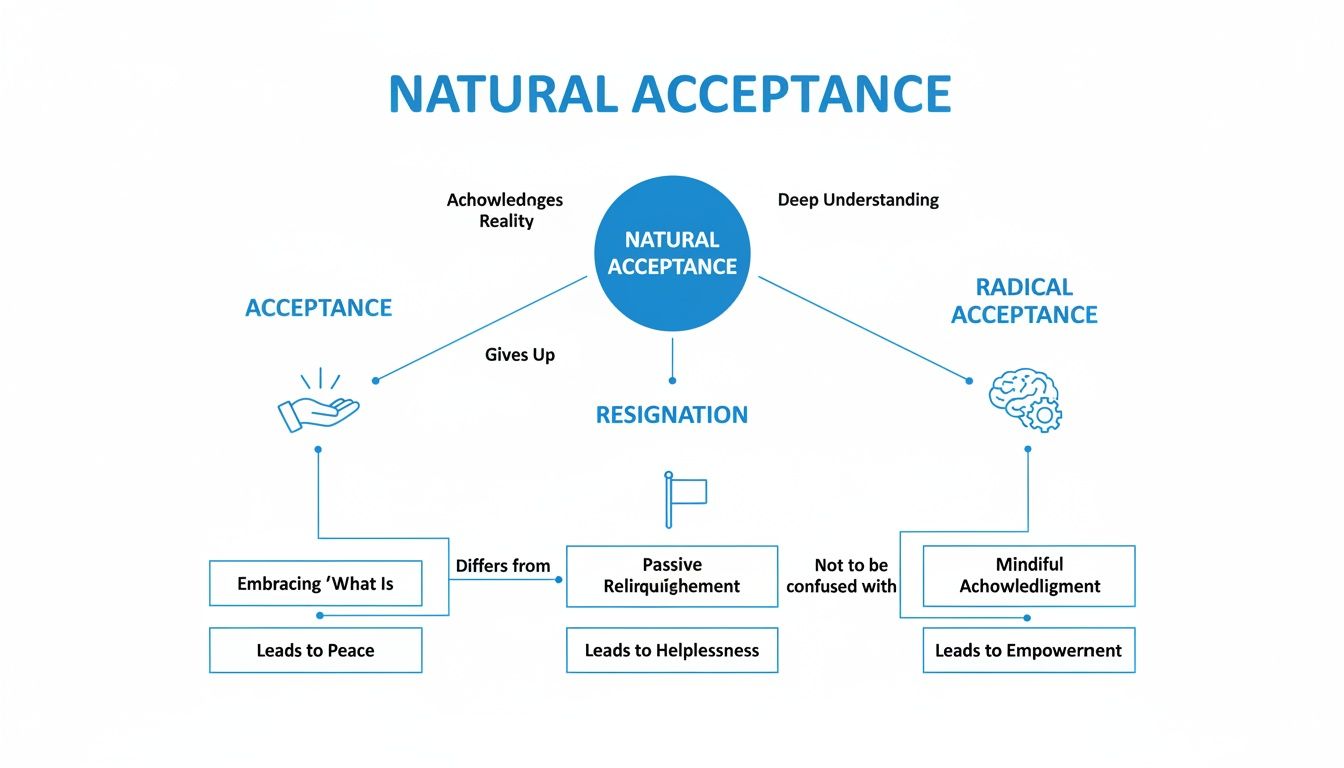
As this illustrates, natural acceptance is an empowering stance, not a passive one. It's a practice that leads to positive action and inner strength.
Building Authentic Resilience and Compassion
True resilience isn't about being tough or emotionless; it's about navigating life with flexibility and inner strength. When you stop wasting energy fighting your own mind, you can redirect it toward what truly matters.
This approach also nurtures self-compassion. Instead of criticizing yourself for feeling anxious or sad, you learn to treat yourself with the kindness you'd offer a friend. This compassionate stance is a cornerstone of healing and long-term well-being.
Natural acceptance is not about getting rid of difficult feelings. It’s about creating space for them, which frees you to live a fuller, more meaningful life alongside them.
This practice helps break the cycle where feelings of anxiety or depression are made worse by the struggle against them. To support this journey, some find complementary tools, like this guide to crystals for peace and serenity, helpful in finding balance.
A New Perspective on Happiness
Many of us believe that happiness means the absence of negative feelings. Natural acceptance offers a different view: genuine happiness comes from embracing the full range of human experience. This creates a stable foundation for well-being that doesn't depend on life's ups and downs.
It’s important to remember this psychological concept of acceptance is very different from its use in other fields. For example, in statistics, an "acceptance region" is a technical term in hypothesis testing that has nothing to do with emotional well-being.
Ultimately, this journey isn't about reaching a perfect, problem-free state. It's about building a kinder, more honest relationship with yourself, which can be a valuable step to take before or during therapy or counselling.
How Natural Acceptance Looks in Real Life
Theory is one thing, but seeing a concept in action makes it real. Natural acceptance is a practical way to handle everyday challenges. Let's look at how this subtle shift can transform our reactions in common situations, guiding us from stress to calm.
These examples show the difference between fighting a feeling and simply allowing it to be—which is the heart of natural acceptance.

Scenario 1: Facing Exam Nerves in Mumbai
Meet Priya, a university student in Mumbai facing the pressure of final exams. A familiar knot of anxiety is building in her stomach, and her mind is racing with "what if I fail?" scenarios.
A typical response is to fight it by scolding herself: "I can't be anxious, I have to focus!" This internal struggle only makes the anxiety louder and often leads to more stress and procrastination.
Natural acceptance offers a different path. Priya can pause, take a deep breath, and acknowledge, "Okay, anxiety is here." By allowing the feeling to exist without judgment, she stops adding fuel to the fire.
This small shift frees up her mental energy. While the anxiety may linger, it no longer has her in a chokehold. From this clearer space, she can decide to study for 30 minutes and then take a break, responding with wisdom instead of panic.
Scenario 2: Handling Workplace Pressure in Bengaluru
Now, consider Arjun, a tech professional in Bengaluru facing an impossible project deadline. The wave of workplace stress is instant and overwhelming, making his shoulders tense and his thoughts race.
His first instinct might be to push the stress down and carry on. This resistance is a fast track to irritability, sleepless nights, and burnout, and can intensify feelings of anxiety or even depression.
Here’s how natural acceptance helps:
- Acknowledge the Feeling: Arjun can notice the physical signs of stress and name them without judgment: "This is stress."
- Create Some Space: By not fighting it, he creates breathing room. He sees the stress as an experience, not as his entire identity.
- Respond with Intention: From this calmer place, he can break the project into smaller steps and communicate with his team about the timeline.
This approach changes everything. Instead of being frozen by stress, Arjun channels his energy into constructive action, building resilience by navigating pressure without being consumed by it. These stories show that this practice, supported when needed by counselling or therapy, helps us use our inner resources wisely.
Simple Practices to Cultivate Natural Acceptance
You don't need complicated techniques to begin your journey with natural acceptance. It starts with small, gentle steps you can weave into your daily routine. Think of these as invitations to build a kinder relationship with yourself, one moment at a time.

The goal isn't to erase difficult feelings but to change your relationship with them. By meeting your experiences with curiosity and care, you take a huge step toward greater well-being and emotional resilience.
The Notice and Name Technique
One of the simplest ways to start is to 'Notice and Name'. The next time a strong feeling like anxiety or frustration arises, just pause. Without judging it, simply observe it and silently label it: “Ah, here is anxiety,” or “This is sadness.”
This simple act creates a little space between you and the emotion. It helps you realize that you are experiencing a feeling, not that you are the feeling. This can reduce the overwhelming power of difficult emotions tied to workplace stress or personal challenges.
This isn’t about analyzing or fixing the feeling. It's simply a moment of quiet acknowledgement of what's happening in your inner world right now.
Mindful Breathing and Allowing
Mindful breathing is another wonderfully effective practice. Find a quiet spot to sit comfortably for a few minutes. Gently bring your attention to your breath, noticing the sensation of air moving in and out of your body.
When thoughts and feelings arise, your only job is to let them float by like clouds. There's no need to engage with them or push them away. Just notice them, and then gently guide your attention back to your breath.
- Observe Without Attachment: See thoughts as temporary mental events, not absolute truths.
- Stay Grounded: Use the physical sensation of your breath to anchor you in the present moment.
- Practice Self-Compassion: When your mind wanders, kindly and gently bring your focus back without any self-criticism.
This exercise slowly trains your mind to be less reactive, helping you build resilience against challenges like anxiety and depression.
It's interesting that "acceptance" can mean different things in different fields. In statistics, for example, you can learn about acceptance and rejection regions here, a technical concept unrelated to emotional well-being.
Remember, these practices are not a quick fix. If your feelings consistently feel too big to handle, seeking professional therapy or counselling is a sign of strength and a great way to deepen your journey.
Recognising When to Seek Professional Support
Practicing natural acceptance is a powerful skill for building a healthier relationship with your inner world. However, some challenges are too heavy to carry alone, and that is completely okay.
Reaching out for professional support from a therapist or counsellor is not a sign of failure. It is a courageous act of self-care and a true sign of strength.
If you find that feelings of anxiety or sadness consistently get in the way of your daily life, it may be time to talk to a professional. Their guidance can offer structure and support that self-practice alone cannot always provide.
Signs It Might Be Time for Therapy
Knowing when to ask for help is a key part of your well-being journey. While this is not a diagnostic checklist, these signs may suggest that professional counselling or therapy could make a real difference.
Consider reaching out if you are experiencing any of these:
- Persistent Overwhelm: You constantly feel that life’s demands, including workplace stress, are too much to handle.
- Difficulty Functioning: Your emotional state makes it hard to keep up with responsibilities at work, home, or school.
- Loss of Interest: You have lost interest in activities and hobbies you once enjoyed.
- Unhealthy Coping: You notice you're relying on unhealthy habits to manage difficult feelings.
Therapy provides a safe, confidential space to explore what you're feeling without judgment. A trained professional can help you understand underlying patterns and build practical strategies for managing challenges like anxiety and depression.
It's also helpful to remember that tools like the psychological assessments offered by DeTalks are designed to provide insights, not a diagnosis. Think of them as a supportive starting point for better understanding your needs.
Taking the step to seek help is a powerful, proactive investment in your long-term resilience and happiness.
Supportive Takeaways
It’s completely normal to have questions when exploring a new way of thinking. The goal of natural acceptance is not to achieve a perfect, painless state but to build a kinder, more honest relationship with yourself. This journey is about progress, not perfection.
Does Natural Acceptance Mean I Have to Like My Negative Feelings?
Not at all. This is a common misunderstanding. Natural acceptance isn't about forcing yourself to like feeling sad or anxious.
It is more like acknowledging the weather. You don’t have to enjoy a rainy day, but fighting it is pointless. By simply noticing your feelings are there, without the struggle, you often find they have less of a grip on you.
How Is It Different from Ignoring My Problems?
This is a very important distinction. Ignoring a problem is avoidance—actively pushing it away. This can worsen challenges like workplace stress and lead to burnout.
Natural acceptance is the opposite. It's about turning toward your inner experience with gentle awareness. This gives you the clarity to see the issue for what it is and respond from a place of strength.
Can I Still Have Goals if I Practise Natural Acceptance?
Absolutely. In fact, natural acceptance can be a great asset for personal growth. It helps you relate to your inner experience differently, not your external circumstances.
By accepting your current feelings—perhaps frustration or dissatisfaction—without judgment, you stop wasting energy fighting yourself. This allows you to channel that energy more effectively toward achieving your goals, starting from a place of reality.
If you’re looking for more information, you might find answers to additional frequently asked questions on similar topics. And if difficult feelings consistently get in your way, remember that professional therapy and counselling provide a supportive space to work through them.
Ready to better understand your own path to resilience and well-being? DeTalks offers confidential, science-backed psychological assessments to provide you with valuable insights. Explore our assessments today and take the next step on your journey.
Leave a Reply