
Hearing a clinical term like moderate depression ICD 10 can feel a bit formal, but it simply points to a specific code: F32.1. This code helps healthcare professionals understand the level of depression someone is experiencing. It describes a challenge that is more disruptive than mild depression but not yet considered severe, offering a clear starting point for a supportive plan.
Demystifying the Moderate Depression ICD 10 Code
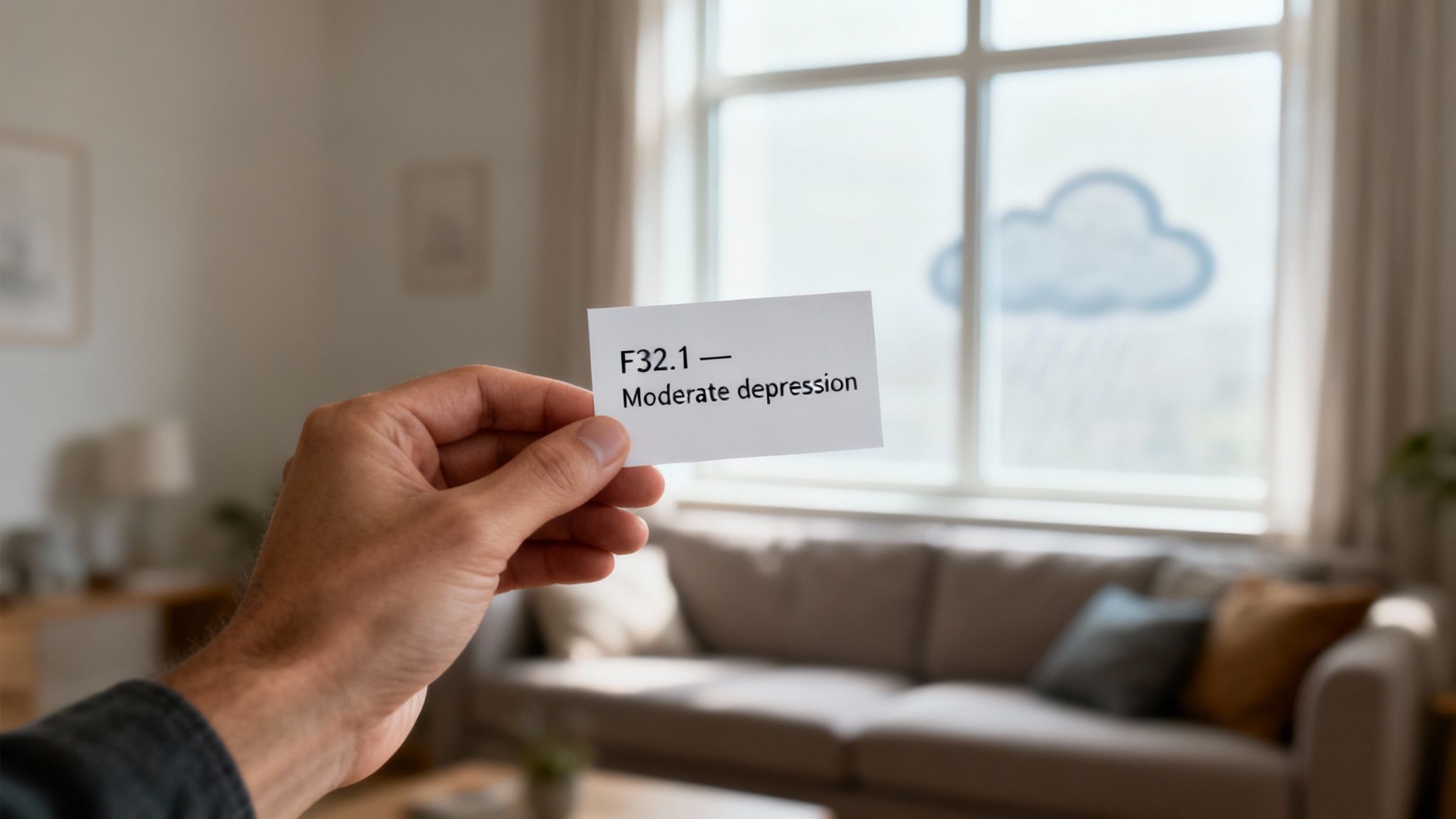
A phrase like "moderate depression ICD 10" might sound intimidating, but it's just a tool to bring clarity to your feelings. The International Classification of Diseases, 10th Revision (ICD-10) is a global system that helps doctors and therapists speak the same language about health conditions.
Think of it like a weather report. Knowing a "moderate storm" is expected helps you prepare better than just hearing "it might rain." Similarly, the code F32.1 helps a professional understand the intensity of the challenges you're facing, including feelings of anxiety or stress.
To give you a clearer picture, here’s a quick breakdown of how the ICD-10 system categorises single depressive episodes.
A Simple Guide to Depression Levels in ICD-10
| Severity Level | ICD-10 Code | General Description |
|---|---|---|
| Mild | F32.0 | Symptoms are present but often manageable. Daily activities can be done, though with some difficulty. |
| Moderate | F32.1 | Symptoms are more pronounced and cause significant trouble with work, social life, or home duties. |
| Severe | F32.2 / F32.3 | Symptoms can feel overwhelming, making it nearly impossible to continue with daily routines. |
This table helps show where F32.1 fits, creating a shared understanding between you and your care provider.
A Tool for Understanding, Not a Label
It is so important to remember that a diagnostic code is not a permanent label. It is a snapshot in time—an informational starting point that guides conversations about therapy and counselling. It describes what you are going through right now, not who you are.
In India, conversations around mental health and well-being are growing. With millions of people experiencing depressive disorders, codes like F32.1 are vital for ensuring people get the right kind of support. This clarity is the first step toward building resilience and finding effective ways to feel better.
An assessment offers a shared language between you and your healthcare provider. It transforms a vague feeling of being unwell into a recognised condition with established pathways for support.
This structured approach allows professionals to tailor support for challenges like workplace stress and anxiety. Staying informed about latest ICD-10 coding updates helps them provide accurate care. By demystifying these terms, we can focus on what truly matters: your journey toward compassion, happiness, and lasting well-being.
Recognising the Signs of a Moderate Depressive Episode

Understanding what a moderate depressive episode feels like is a meaningful step toward seeking support. It is more than a bad day; it’s a persistent cloud that can make every part of life feel heavier. Learning to see these signs, in yourself or a loved one, is an act of strength.
While everyone's experience with depression is unique, there are common patterns that clinicians look for. These signs often affect your thoughts, feelings, and even your physical health. Gently taking stock of them can bring much-needed clarity.
Core Emotional and Mental Signs
At the heart of a depressive episode are two key experiences: a persistent low mood and a loss of interest in things you once enjoyed. This is a deep feeling of emptiness or hopelessness that lasts for weeks. It can feel like the colour has drained from your world, making it hard to find joy.
For example, a young professional in Delhi who loves meeting friends might suddenly find the thought exhausting. This loss of interest is a significant sign that something more than everyday stress or anxiety is happening.
Physical and Behavioural Changes
Depression doesn’t just stay in your head; it often shows up in your body and actions. These physical shifts can be some of the most disruptive parts of a moderate depressive episode.
Common physical signs include:
- Sleep Disturbances: You might struggle with sleeplessness or find yourself sleeping far more than usual without feeling rested.
- Appetite and Weight Changes: You could lose your appetite and weight, or you might turn to food for comfort, leading to weight gain.
- Pervasive Fatigue: This is a deep exhaustion that sleep doesn't seem to fix, making even small tasks feel difficult.
- Difficulty Concentrating: Trouble focusing at work or making decisions is very common and can add to workplace stress.
Noticing these changes is not about finding fault. It's about compassionately acknowledging that your mind and body are signalling a need for support, a courageous first step toward building resilience.
Research from India highlights how common these experiences are. One study using the moderate depression ICD 10 classification noted that many patients experienced physical symptoms that worsened their fatigue. You can learn more in this study on Indian patients with depression.
Acknowledging these signs opens the door to seeking professional help. Through therapy or counselling, you can find the tools and support needed to navigate these challenges and move toward a greater sense of well-being.
How Professionals Assess Moderate Depression
An assessment might sound clinical, but it's really a compassionate conversation to understand what's going on. It's not about judging a bad day but about exploring a pattern of feelings you've had for at least two consecutive weeks. This timeframe helps distinguish a temporary reaction to stress from a more persistent challenge.
A mental health professional, like a counsellor or therapist, will listen to your story in a safe space. They are trained to gently explore your experiences to understand your overall well-being. Please remember that any assessment is for informational purposes and is not a final diagnosis.
A Collaborative Conversation
Think of the assessment as a partnership, not an interrogation. A clinician’s goal is to get a full picture of your well-being, including workplace stress or personal struggles. This open dialogue is the foundation for creating a support plan that truly fits you.
They will gently ask about your mood, energy levels, sleep, and how these are impacting your daily life. It is a completely confidential space for you to share honestly without fear of judgement.
Differentiating Depression from Other Challenges
A key part of a professional’s role is to distinguish moderate depression from other common experiences. Many challenges, like burnout or anxiety, can look similar on the surface. Getting this right is crucial for ensuring you receive the best support.
Here’s how they might differentiate them:
- Depression vs. Burnout: Burnout is almost always linked to your job and often improves with a break from that environment. Depression, however, tends to cast a shadow over all areas of life and doesn’t disappear with a holiday.
- Depression vs. Anxiety: These two often appear together, but they are different. Anxiety is typically driven by intense worry about the future, while depression is rooted in a persistent low mood and loss of interest in the present.
- Depression vs. Grief: Grief is a natural response to loss that comes in waves, with moments of happiness still possible. Depression is more like a constant, heavy blanket that makes it hard to feel anything positive.
An accurate assessment isn't about putting you in a box. It's about unlocking the right door to effective therapy and counselling, creating a clear path toward building resilience and reclaiming your well-being.
Ultimately, this careful process builds trust and ensures the support you receive is right for your journey. It is the first, most important step toward feeling heard, understood, and ready to move forward.
Pathways to Managing Your Mental Well-being

Recognising that you might be dealing with a moderate depressive episode is a huge first step. While the journey is personal, you don't have to walk it alone. There are effective approaches that offer support, hope, and practical tools for managing your mental health.
Choosing to speak with a professional is a powerful act of self-care. It creates a safe space to explore your feelings and learn new ways to cope with pressures like workplace stress or anxiety.
The Role of Psychotherapy and Counselling
Psychotherapy, often called talk therapy or counselling, is a cornerstone of managing depression. It’s a collaborative partnership where you work with a trained therapist to understand your thoughts, feelings, and behaviours.
A well-researched approach is Cognitive Behavioural Therapy (CBT). CBT helps you identify and challenge unhelpful thought patterns that can fuel depression. By reframing thoughts, you can build resilience and find more compassionate ways of relating to yourself.
Other effective therapies include:
- Interpersonal Therapy (IPT): This focuses on your relationships, helping you improve communication and build a stronger support network.
- Mindfulness-Based Cognitive Therapy (MBCT): This blends CBT with mindfulness, teaching you to observe your thoughts without getting carried away by them.
Therapy isn't about "fixing" something broken. It's about learning new skills and gaining fresh perspectives to navigate life’s challenges with greater ease and compassion.
Considering Medication as Part of a Plan
For some, medication prescribed by a psychiatrist can be a helpful part of a broader care plan. It isn't a quick fix, but a tool that can help lift symptoms, giving you the energy to engage fully in therapy and other positive changes.
This is always a decision made carefully with a qualified doctor who can explain the potential benefits. The most effective strategy often involves a combination of therapy for skill-building and medication for symptom management.
Building Resilience with Positive Psychology
Beyond formal treatment, you can actively support your well-being by incorporating principles of positive psychology. These practices focus on building your strengths and fostering positive emotions like happiness and resilience.
Learning strategies for cultivating self-compassion can be a powerful starting point. Simple habits like mindfulness, gratitude journaling, or gentle physical activity can create small but significant shifts in your daily experience. These practices are powerful additions to professional support, empowering you on your journey.
Your Active Role in the Healing Journey

While professional support from a therapist or counsellor is vital for managing moderate depression, the small steps you take each day build the foundation for your well-being. Self-care isn't another chore; it's about making gentle, kind choices for yourself.
Your therapist helps plant the seeds of recovery, but you tend to the soil. Simple lifestyle adjustments can create an environment where the work you do in therapy can grow, giving you a sense of agency on your path to feeling better.
Building Resilience with Small Daily Actions
You don't need to change your entire life overnight. Real power lies in small, consistent habits that can ease the weight of workplace stress and anxiety.
Consider these simple adjustments:
- Gentle Physical Activity: A short walk, a few minutes of stretching, or dancing to a favourite song can release endorphins and lift your mood.
- Balanced Nutrition: Eating regular, nourishing meals can help stabilise your energy and mood throughout the day.
- Prioritising Sleep: A calming bedtime routine can signal to your body it’s time to wind down, promoting more restful sleep.
Each of these small acts is a way of showing yourself compassion and care.
Recovery is not a race to a finish line. It is a gradual process of building resilience, one small, compassionate step at a time, contributing to your overall well-being.
The Importance of Your Support System
Depression can make you feel isolated, but it is important to remember you don't have to carry this alone. Leaning on trusted friends, family, or a support group can be a lifeline.
Sharing what you're going through with people who care can make the load feel lighter. Reaching out is an act of bravery that reinforces your connection to others and supports your journey toward happiness and health.
Supportive Takeaways for Your Path Forward
Navigating mental health can feel confusing, but understanding terms like moderate depression ICD 10 can bring clarity. This is not a label but a tool that helps you and your care provider map out a path toward well-being. Recognising the signs in yourself is a brave first step.
This single moment of awareness can shift everything. It moves you from a place of confusion to a space where you can start making positive changes in your life.
Embracing Your Unique Journey
Healing is not a straight line; it is a personal journey with its own ups and downs. Some days will feel easier than others, and that is completely normal. The most important thing is to treat yourself with kindness and compassion through it all, which builds true resilience.
Seeking support through therapy or counselling is one of the most powerful ways to care for yourself. It is a safe space to learn practical ways to cope with challenges like workplace stress or persistent anxiety.
Remember, you do not have to walk this path alone. Reaching out for help is a sign of incredible strength and an investment in your well-being.
Your journey forward is about taking small, manageable steps. Every positive choice—a nourishing meal, a five-minute walk, or booking a therapy session—is a step in the right direction. Be patient and kind with yourself as you move toward a brighter future.
When you're ready, resources like DeTalks can connect you with qualified therapists. Finding a professional who understands your experience can guide you with empathy on your path to emotional well-being.
Frequently Asked Questions
It's normal to have questions as you learn more about mental health. Here are some common queries about moderate depression to help bring some clarity.
Can I feel better from moderate depression without therapy?
While self-care practices like exercise and mindfulness are helpful, moderate depression often involves patterns that are difficult to navigate alone. Professional counselling offers a supportive space to understand your feelings and build lasting coping skills for challenges like anxiety and depression.
Is an ICD-10 code a permanent label?
Not at all. A moderate depression ICD 10 code like F32.1 is an informational tool for your healthcare provider. It helps them create the best plan for you right now and is not a permanent part of your identity. As you heal, this information may change or no longer apply.
Remember, a diagnostic code is a snapshot in time, not a life sentence. It is the starting point for a supportive conversation about your well-being and recovery.
How can I tell if it’s moderate depression or burnout?
This can be tricky, as they feel similar. The key difference is often scope: burnout is usually tied to workplace stress and tends to improve with a break. Depression is more pervasive, affecting all areas of your life, from work to relationships. A mental health professional can provide an assessment for clarity.
What’s the first step to getting help in India?
Taking that first step is simpler than you might think. You can speak to a trusted general practitioner for a referral or reach out directly to a qualified mental health professional for therapy. Online platforms are great resources for finding therapists who specialise in challenges like depression and anxiety.
If you feel ready to take that next step, DeTalks is here to help. Our platform simplifies the process of finding and connecting with qualified therapists and counsellors across India. You can explore our directory and book a session that works for you today at https://detalks.com.
Leave a Reply