
Sliding scale therapy adjusts session fees to your actual income, making counselling more accessible across different economic backgrounds. In India, average out-of-pocket spending for mental-health hospitalisation is ₹7,947 in public facilities and ₹37,152 in private facilities, while outpatient care averages ₹544 and ₹2,358 respectively.
Why do we often treat emotional support as a luxury, even when financial stress is one of the reasons people need help? A flexible fee can create room for therapy without asking someone to choose between professional care and essential household needs.
What Is Sliding Scale Therapy and Why Does It Matter?
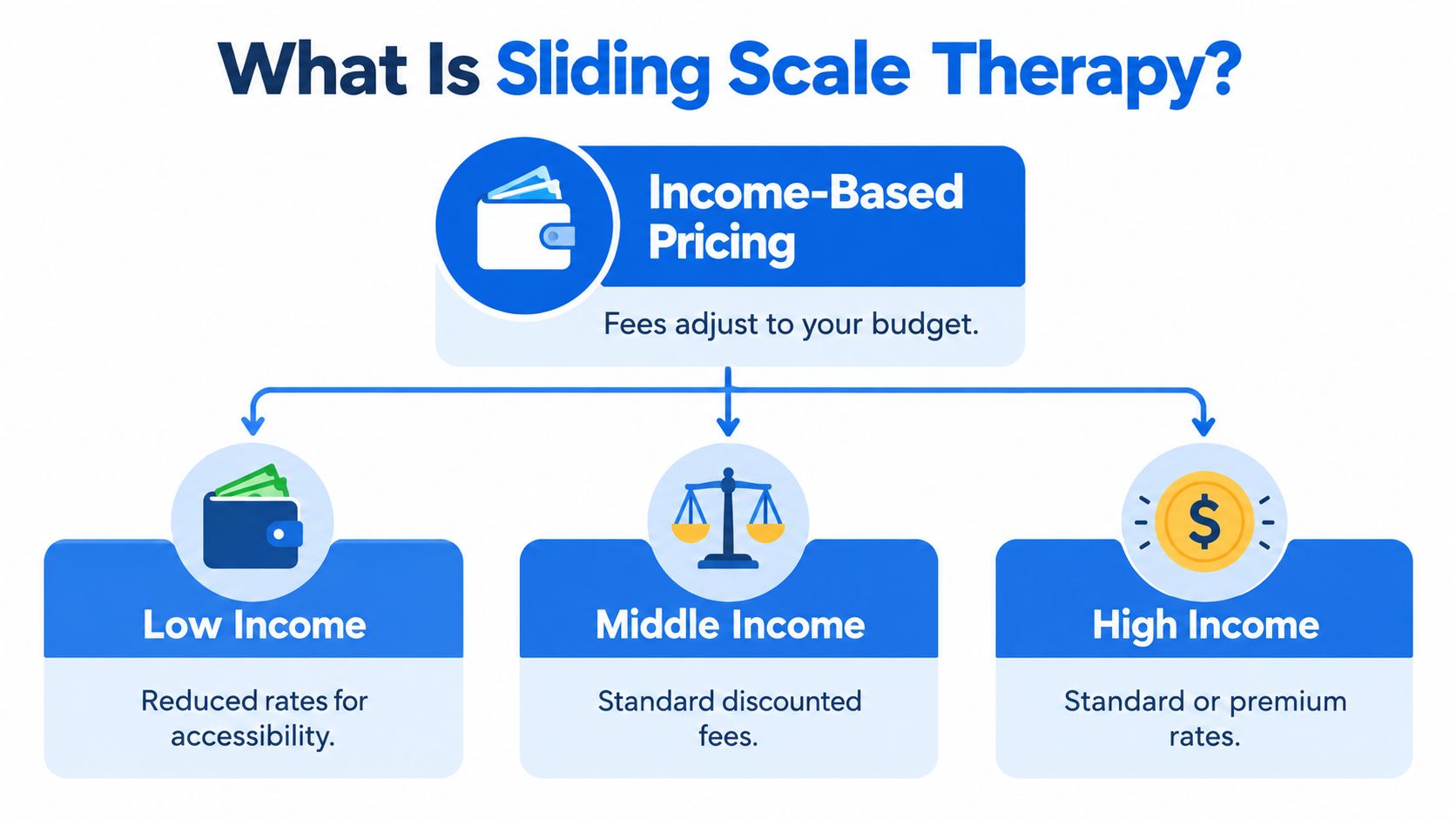
Sliding scale therapy is a payment arrangement in which a therapist adjusts the session fee according to a client's ability to pay. Instead of every person receiving the same fixed price, the practice uses agreed factors such as income, employment, student status, dependants, and sudden financial hardship to set a more manageable rate.
That doesn't mean the therapy becomes less professional. The session length, confidentiality, safeguarding, clinical boundaries, and therapist qualifications should remain consistent. Only the financial arrangement changes.
Why India needs flexible fees
The difference between public and private care makes affordability especially important in India. Nationally representative survey analysis found that mental-health hospitalisation costs averaged ₹7,947 in public facilities compared with ₹37,152 in private facilities, around 4.7 times higher in private care. For outpatient treatment, the average was ₹544 per visit in public facilities and ₹2,358 in private facilities, approximately 4.3 times higher. These figures include more than professional fees. Medicines, travel, other non-medical expenses, and income lost while attending care can add to the household burden. The Indian cost analysis also reports that an estimated 85% of people with mental disorders seek treatment from the private sector.
Public services may be unavailable, far away, difficult to access, or unable to offer timely appointments. Some people also prefer private or independent care because they want more choice and privacy. Sliding scale therapy can't solve the entire access problem, but it can reduce one important barrier, the price of each session.
A fair fee isn't a favour. It's a practical way to recognise that people can need comparable psychological support while having very different financial resources.
This model applies beyond therapy. If you're also exploring flexible pricing in coaching, make coaching accessible with Coachful offers useful context on building an income-sensitive arrangement.
How Therapy Fees Are Calculated for Lower Incomes
A responsible sliding scale shouldn't feel like a surprise discount negotiated under pressure. It works best as a clear, written structure that explains which factors affect the fee, what information is needed, and when the arrangement will be reviewed.
The factors that shape a fee band
A therapist or platform might consider:
- Household income: This can show the resources available for recurring care, especially when several people share expenses.
- Employment pattern: Salaried work, unemployment, freelance work, and daily-wage work can create very different levels of financial predictability.
- Student status: Students may have limited personal income while depending on parents or guardians for essential expenses.
- Financial dependants: Children, older relatives, or family members requiring care can reduce disposable income.
- Sudden hardship: Medical bills, job loss, debt, or an abrupt change in household income may not be reflected by an older payslip.
In India, the National Mental Health Survey reported median monthly out-of-pocket mental-health spending of approximately ₹1,000–₹1,500. The same cost-of-care brief records average private psychiatric and neurological hospitalisation of ₹41,239, compared with ₹7,235 in public hospitals. These figures provide a useful affordability benchmark, but they aren't a universal therapy fee cap because they include different forms of care and vary by diagnosis, geography, and provider type. The cost-of-care brief explains why recurring outpatient fees can become difficult well before someone needs intensive treatment.
A practical calculation
A provider might organise fees into low, middle, and standard bands. The lowest band could be reserved for a person whose proposed therapy cost would take up a substantial share of monthly disposable income. Someone with a more stable income and fewer dependants might qualify for a middle band, while clients able to pay the standard rate help keep reduced-fee places available.
The calculation should consider sustainability for both sides. A therapist needs enough income to maintain supervision, administration, training, and their own well-being. A client needs a fee they can pay reliably, without repeatedly postponing sessions or ending care as soon as a crisis settles.
Community-based care shows how strongly delivery and pricing affect sustainability. In a study of 95 people with severe mental illness in rural Karnataka, 84% had previously received private-sector treatment. Average annual treatment expenditure fell from ₹15,074 per person to ₹492, a reduction of about 96.7%, after people moved to community-based rehabilitation. The Karnataka study also describes spending on medicines, psychiatrist consultations, transport, and lost wages.
That model isn't identical to individual psychotherapy, but it offers a valuable lesson. Affordability works better when it's designed into the care pathway, not added as an occasional personal favour. Providers building a sustainable service can also review practical guidance on pricing for small clinics, while clients should receive a written explanation of their own fee.
Who Qualifies and Who Else Can Get Help
Eligibility shouldn't depend on having a neat salary slip. A person may have a reasonable annual income on paper and still have very little money available for therapy after rent, food, debt, education, healthcare, or family responsibilities.
Sliding scale support often makes sense for students, unemployed people, informal workers, daily-wage earners, freelancers, single-income households, and people facing sudden financial hardship. It can also help someone whose income changes from month to month and can't be represented accurately by one document.
Protecting dignity and privacy
A provider might use self-attestation rather than demanding extensive financial records. Useful information could include a broad income range, employment situation, number of dependants, and a short explanation of changed circumstances. A person should be able to ask:
- What information is required: Is a payslip necessary, or can self-attestation work for cash-income and informal workers?
- Who can see it: Will the therapist review the information, or will an administrative team handle it?
- How long it is kept: Are documents stored separately from clinical notes, and can they be deleted or returned?
- How decisions are reviewed: Can a client request reconsideration without disclosing a diagnosis?
- What happens after a change: Is the fee reviewed periodically rather than changed unexpectedly?
Research on Indian service use highlights high costs and substantial out-of-pocket payments as barriers, while government schemes may be difficult to access or not universally accepted. This discussion of Indian mental-health access also points to the importance of privacy-preserving affordability assessments for informal workers, students, and people with fluctuating incomes.
Alternatives to a sliding scale
A free government service usually depends on eligibility, location, capacity, and the rules of the programme. It isn't the same as a private therapist reducing a fee according to income. A student discount may be available to anyone with valid student status, even if their financial situation differs from another student's, while a sliding scale considers broader circumstances.
Community clinics, supervised trainee therapists, non-profit services, group counselling, teletherapy, insurance benefits, and employer-supported counselling may offer additional routes. Each option has different standards, waiting times, confidentiality arrangements, and clinical scope, so ask what happens if you need psychiatric care, crisis support, or a referral.
How to Request a Sliding Scale Session
Talking about money can feel exposing, particularly when you're already dealing with anxiety, depression, workplace stress, or burnout. You don't need to justify your entire life to ask whether an affordable appointment is available.
Start with a direct search
Look for therapists, counselling services, and directories that clearly mention reduced-fee or income-based sessions. Before booking, check whether the fee applies to the initial assessment, follow-up sessions, couples counselling, online appointments, and cancellations.
Then contact the provider with a short, practical message. You can ask about availability without sharing a diagnosis or detailed personal history.
A useful script: “I'm looking for therapy and would like to ask whether you offer sliding scale fees. My current financial situation makes the standard rate difficult to sustain. Could you explain the eligibility process, the available fee range, what information you need, and how often the arrangement is reviewed?”
Clarify the arrangement before the first session
Ask for the actual amount you'll pay, the payment date, the accepted payment methods, and whether the rate can change. Find out whether the reduced fee applies for a defined period or continues until a review.
It's also reasonable to ask how many reduced-fee places are available and what happens if none are open. A responsible provider won't pressure you to accept a fee that you can't maintain. They may offer a referral, a different appointment frequency, a group option, or another service with a more sustainable cost.
Keep the conversation collaborative
Share only what the provider needs. If your income fluctuates, explain that plainly and offer a broad range or self-attestation if formal documents aren't safe or available.
Before agreeing, consider whether you can attend consistently. A slightly higher fee that you can pay reliably may support continuity better than a very low fee that creates repeated cancellations. If the arrangement becomes difficult, tell the therapist early. Financial changes are part of treatment planning, not a personal failure.
Benefits, Drawbacks, and Ethical Considerations
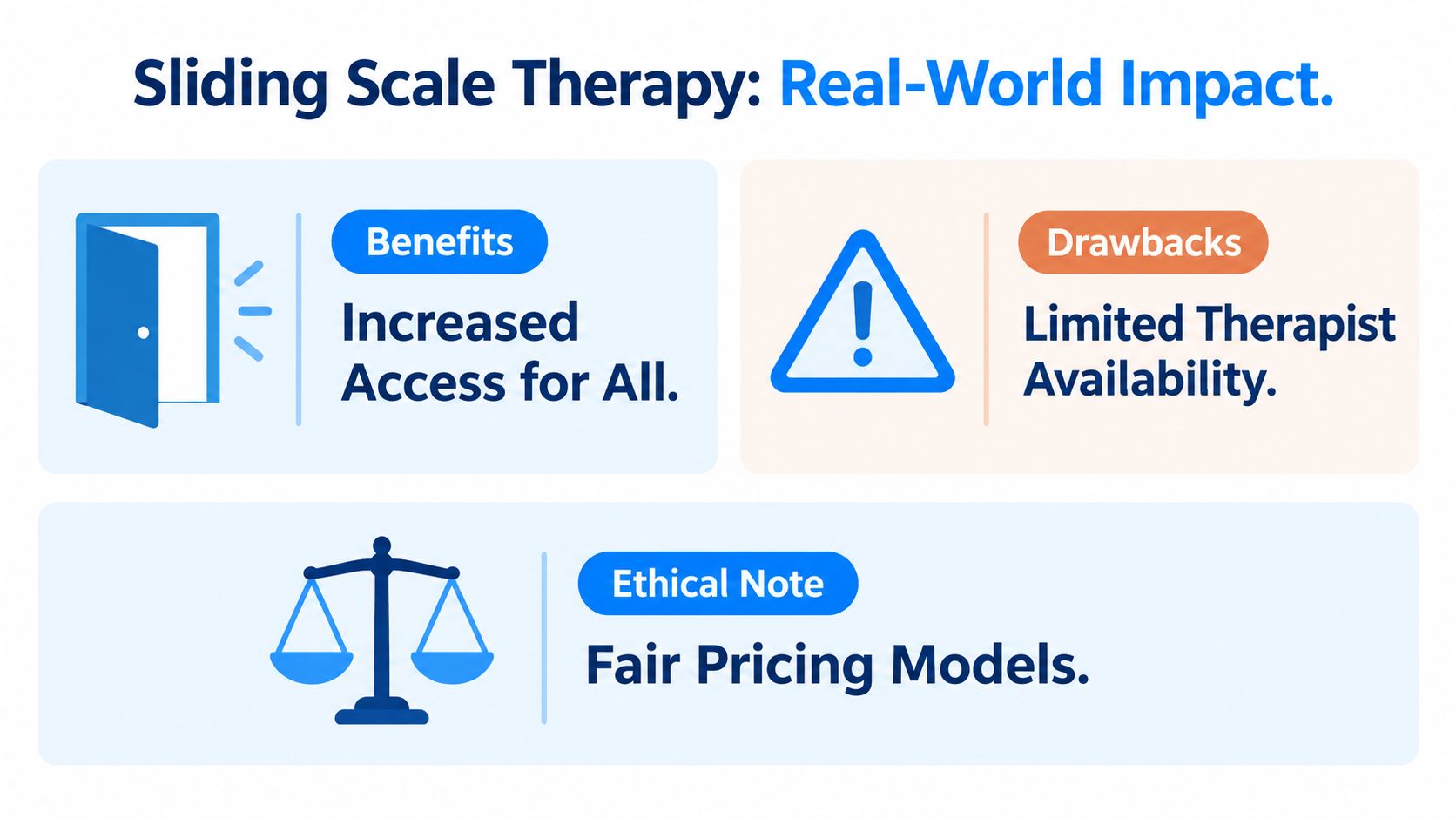
Sliding scale therapy can turn an impossible price into a manageable commitment. It may reduce the shame of asking for help because the process is based on a clear policy rather than a therapist deciding whether an individual appears deserving.
The benefits include greater choice, earlier access, and a better chance of continuing counselling through ordinary financial pressures. For a therapist, a carefully limited reduced-fee caseload can support community access without making the practice financially unstable.
The limitations are real. Reduced-fee places may be limited, and a suitable therapist may not have an opening. If demand is high, people may face longer waits or need to consider teletherapy, group support, or a referral. A low-cost appointment that can't be delivered promptly doesn't fully address the access barrier.
The ethical standard stays the same
A lower fee must never mean lower clinical quality. Therapists should preserve confidentiality, informed consent, safeguarding, appropriate boundaries, qualified care, crisis-referral standards, and the agreed level of clinical attention for every client.
Providers should also examine whether their system works in practice. Useful measures include wait time, attendance, cancellations, therapist workload, completion of an initial treatment block, and symptom change across fee bands. If people paying reduced fees leave care earlier, the answer may involve instalments, recurring billing, shorter assessment-to-treatment delays, or limited-session packages, not merely a lower advertised fee.
India's treatment gap makes this capacity question urgent. WHO reports treatment gaps ranging from 28% to 83% across mental-health conditions, including an 85.2% gap for common mental disorders, while the National Mental Health Survey found that 70%–92% of people with mental disorders do not receive proper treatment. The Government of India's reported mental-health data shows why affordability must be paired with enough qualified professionals and dependable follow-up.
Watch this short video for another accessible introduction to how flexible mental-health care plays out in practice.
Affordable therapy is not automatically ethical therapy. The strongest model combines fair pricing, transparent eligibility, privacy, clinical continuity, and a workload that therapists can sustain.
Finding Support with DeTalks and Alternative Tools
People seek therapy for many reasons, including anxiety, depression, burnout, grief, relationship strain, workplace stress, or a wish to build more resilience and happiness. Positive psychology adds another useful perspective by focusing on compassion, gratitude, emotional balance, purpose, and well-being, without pretending that these practices replace clinical care.
A self-check can help someone notice patterns and decide whether to explore counselling, self-help, coaching, or psychiatric care. It cannot establish a diagnosis. India's Ministry of Health and Family Welfare distinguishes community screening from diagnosis, noting that validated checklists can support detection while a healthcare facility and qualified professional confirm a diagnosis using tools such as the Patient Health Questionnaire-9 for depression and AUDIT for alcohol-use concerns. The Ministry's operational guidance supports a careful approach: assessments offer signals, not definitive answers.

Workplace strain can affect concentration, energy, and emotional steadiness. A 2024 Aon India report found that 77% of surveyed workers faced a moderate-to-high risk of mental-health problems, while 52% ended the workday feeling mentally or physically exhausted, 45% reported difficulty concentrating, and 43% felt unsettled and nervous. The Aon India report is a reminder that these experiences deserve support, but a survey or self-check still isn't a diagnosis.
DeTalks helps people across India browse a growing directory of qualified psychologists, therapists, and mental-health professionals, explore confidential assessments, and find support for concerns such as anxiety, depression, burnout, workplace stress, relationships, and personal growth. Visit DeTalks to explore therapy and counselling options, consider your affordability needs, and take a thoughtful next step toward resilience and well-being.
Leave a Reply